Buyer Fit Snapshot
| Best fit | To Retail Packaging Margins for Better Pricing projects where brand print, material claims, artwork control, MOQ, and repeat-order consistency need to be specified before quoting. |
|---|---|
| Quote inputs | Share finished size, material target, print colors, finish, packing count, annual reorder estimate, ship-to region, and any compliance wording. |
| Proofing check | Approve dieline scale, logo placement, barcode or warning zones, color tolerance, closure strength, and carton packing before bulk production. |
| Main risk | Vague material claims, crowded artwork, missing packing details, or unclear freight terms can make a low unit price expensive after revisions. |
Fast answer: To Retail Packaging Margins for Better Pricing: Material, Print, Proofing, and Reorder Risk should be specified like a repeatable production item. The safest quote records material, print method, finish, artwork proof, packing count, and reorder notes in one written spec.
Production checks before approval
Compare the actual filled-product size with the drawing, then confirm tolerance on folds, seals, hang holes, label areas, and retail display edges. Reserve space for logos, QR codes, warning copy, and material claims before decorative graphics fill the panel.
Quote comparison points
Review material grade, print process, finish, sampling route, tooling charges, carton quantity, and freight assumptions side by side. A quote is only useful when the supplier can repeat the same color, closure quality, and packing count on the next order.
Guide to Retail Packaging Margins for Better Pricing starts with a lesson I learned on a damp August afternoon in Allentown, Pennsylvania, where a polished carton program looked profitable until freight from Newark, spoilage at 4.5%, and hand assembly at the co-packer in Reading quietly ate the margin alive. The guide to retail packaging margins matters because the printer quote is only the first chapter, not the whole ledger, and I have watched too many teams stop reading after the clean-looking unit price of $0.18. That is where Packaging Cost Analysis, landed cost, and real-world production behavior begin to matter more than the quote sheet alone.
I remember one quote review at a folding-carton plant in Sheboygan, Wisconsin, where the brand team nearly celebrated a $0.19 per unit price on a 48-point SBS carton with aqueous coating and a 2-color litho print. Then we added a $1,250 die charge, a 6% spoilage allowance, split freight across two pallets at $184 each, and hand assembly at the co-packer, and suddenly the margin was shrinking before the cartons ever touched a shelf in Minneapolis or Chicago. That is the part of the guide to retail packaging margins most teams miss: the invoice is not the full story, and the invoice can be a polished liar if nobody checks the freight, setup, and labor lines.
In plain language, retail packaging margin is the gap between what you spend to get packaging into the market and the value that packaging helps you capture at retail. Gross margin, markup, and net margin are not the same thing, and mixing them up can make a healthy-looking order turn into a fragile one with no room for a 28% trade spend or a $0.07 freight swing. A practical guide to retail packaging margins keeps those numbers separate so the team can price more accurately, protect shelf appeal, and avoid chasing the lowest bid without seeing the full cost path from board mill to shelf tag. It also keeps everyone honest about unit economics, which is usually the difference between a strong launch and a slow bleed.
Guide to Retail Packaging Margins: What They Really Mean
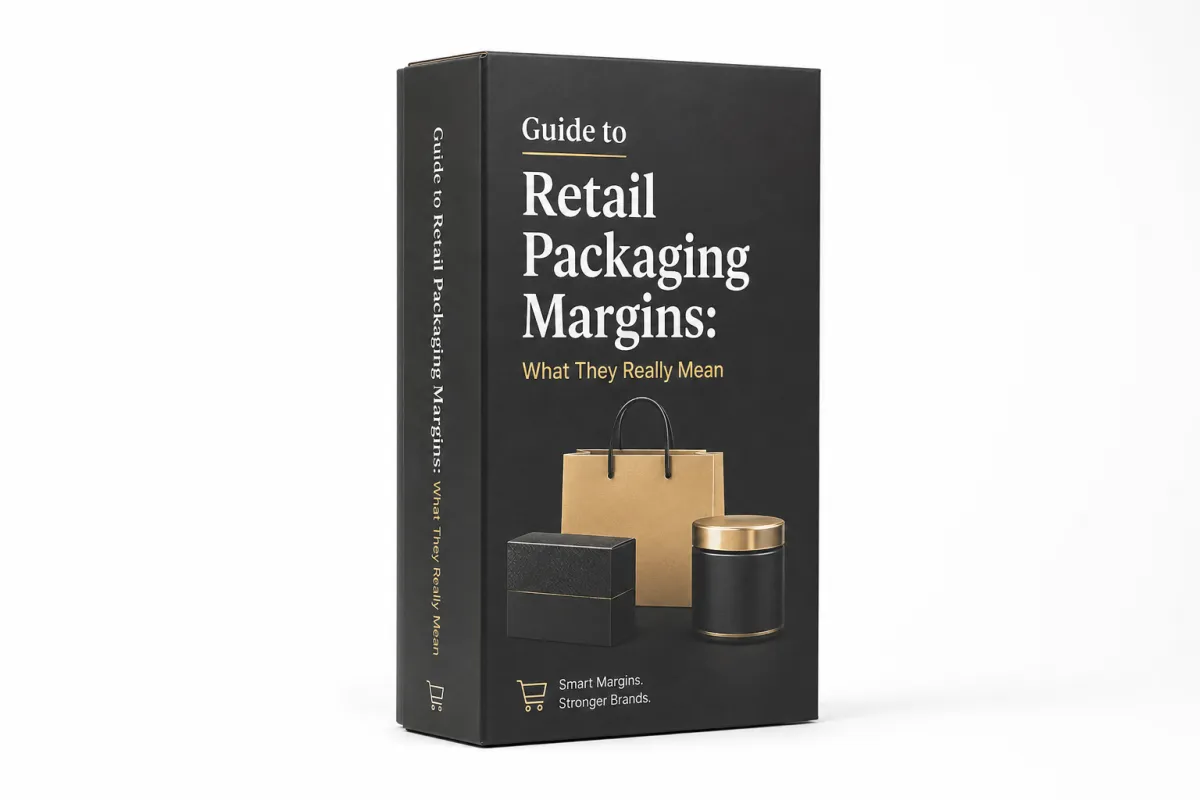
The simplest way I explain the guide to retail packaging margins is this: the package is not just a container, it is a cost center, a brand signal, and often a sales tool all at once. A 350gsm C1S folding carton with matte aqueous coating behaves very differently from a 16-point bleached kraft mailer with no finish, even if the unit price gap is only $0.03 on the quote sheet from a plant in Dongguan or a converter in Ohio. I have seen that tiny coating difference protect a $1.50 shelf price because the carton felt more premium, passed the buyer's table test, and earned better placement near checkout.
Gross margin measures the difference between revenue and direct cost, markup measures how much you add on top of cost, and net margin is what remains after the rest of the business expenses show up. That distinction matters in the guide to retail packaging margins because a supplier quote can look attractive while the landed cost still leaves too little room for freight, retailer discounts, or spoilage. A brand selling through a chain store with a 28% trade spend requirement needs a very different margin target than a direct-to-consumer box that ships one unit at a time from a warehouse in Nashville or Reno.
Here is the part I tell clients who hesitate before raising packaging standards: the cheapest package is not always the most profitable package. During a quote review for a cosmetics client in Orange County, a buyer wanted to save $0.04 per unit by dropping soft-touch lamination, but the sales team argued the finish helped the carton feel like a gift rather than a commodity. We kept the finish, upgraded the board to a 400gsm C1S artboard, and the shelf conversion moved enough in a 90-day test to cover the added cost. That is a practical lesson from the guide to retail packaging margins that more teams should learn before the first purchase order is signed.
"We thought the carton was our problem, but the real leak was all the extra handling after print," a procurement manager told me after we traced $4,800 in hidden labor across a single seasonal program in Ohio. That kind of line-item creep is exactly why the guide to retail packaging margins has to include operations, not just design.
Strong margin decisions balance shelf impact, conversion, and operational efficiency. A package with better package branding can justify a higher retail price, but only if the line can pack it at speed and the freight profile stays reasonable at 24 to 30 cases per pallet. That balance sits at the center of the guide to retail packaging margins, and if someone tells you otherwise, I would keep one eyebrow raised and the calculator open. Shelf-ready packaging is not just a logistics choice; it is part of the pricing story too.
How Retail Packaging Margins Work From Quote to Shelf
The margin chain begins at the supplier quote, then keeps moving through production, assembly, warehouse handling, freight, and finally the retail shelf. A careful guide to retail packaging margins follows the numbers from raw board or film through printing and finishing into kitting, storage, transport, and shelf placement in cities like Atlanta, Charlotte, and San Diego. If any one step adds an extra 8% to 12% in cost, the final margin can move faster than the sales forecast, which is a polite way of saying it can run away from you with no warning and a very expensive appetite.
Raw materials set the baseline, and print method changes the shape of the cost curve. Offset litho, flexo, digital, and gravure all behave differently across run length, ink coverage, and lead time, which is why the same Custom Printed Boxes can vary so much from one project to the next. In the guide to retail packaging margins, I always tell teams to compare apples to apples: same board grade, same finish, same quantity, same delivery term, same adhesive spec, and the same headache factor on a Tuesday at 4:30 p.m.
MOQ pressure is another quiet margin killer. A small startup asking for 1,500 units of a complex rigid box may pay more per unit than a chain rollout ordering 25,000 folding cartons, simply because press setup, die cutting, and make-ready costs get spread differently. I saw that firsthand at a Shenzhen facility where a buyer wanted premium foil, a magnetic closure, and a two-piece setup on a short run; once tooling, ocean freight, and inland drayage were added, the margin made sense only if the retail price stayed above a very specific threshold of $34.99. Nobody loved that conversation, but that is business in plain clothes.
| Packaging Option | Typical Starting Cost | Margin Effect | Best Use |
|---|---|---|---|
| 350gsm folding carton with aqueous coating | $0.16-$0.32 per unit at 5,000 pieces | Usually favorable if artwork is simple | Beauty, wellness, food, and light retail items |
| Corrugated mailer or RSC | $0.28-$0.85 per unit | Good for shipping strength, moderate shelf appeal | DTC fulfillment and store replenishment |
| Rigid setup box with wrap and insert | $1.20-$3.80 per unit | Tightens margin unless ticket price supports it | Luxury, gifting, and premium launches |
| Specialty substrate with foil or embossing | $0.90-$2.50 per unit | Strong branding, but easy to overbuy | Limited editions and hero SKUs |
Retail channels change the math too. A club store in Kansas City may demand strong case pack efficiency and low-touch labor, while a boutique retailer in Portland may accept a more decorative box if the package branding helps sell through at a higher ticket. The guide to retail packaging margins has to account for retailer discounts, promo funding, returns, and chargebacks, because those costs often show up long after the print invoice has been paid and everyone has moved on to the next launch.
If you want a technical benchmark for shipping abuse and product protection, the test methods from ISTA are worth reviewing before you approve a design lock. That matters in the guide to retail packaging margins because one failed drop test can turn into rework, spoilage, and expedited freight in a single week, and a single pallet failure in Memphis can wipe out the savings from a whole print run.
Cost and Pricing Drivers That Move Retail Packaging Margins
The biggest cost driver is usually substrate choice, and I have watched it change a project by tens of thousands of dollars. A 24-point SBS carton, a 32 ECT corrugated shipper, and an FSC-certified rigid board sleeve all behave differently in the pressroom and in the warehouse, which is why the guide to retail packaging margins always starts with the board callout. Even a small move from heavy ink coverage to a cleaner design can save 3% to 7% without weakening the presentation, and sometimes the cleaner layout looks better anyway, especially on a matte white carton under 5000K lighting.
Decoration choices add value, but they also squeeze margin if they are stacked too aggressively. Foil stamping, embossing, spot UV, and soft-touch lamination can make branded packaging feel more expensive in a shopper's hands, yet each option adds tooling, labor, and spoilage risk. I have seen one beauty brand spend an extra $0.11 per unit on foil and embossing, only to discover that a single embossed panel communicated just as well and kept the guide to retail packaging margins on target. The second panel was pretty, sure, but pretty does not pay invoices by itself when the shipment hits a dock in Columbus.
Structural complexity is another hidden lever. A tuck-end carton with a dust flap is usually easier to run than a box with a window patch, a glued insert, and a tamper-evident seal, and that difference shows up in labor minutes per thousand. In the guide to retail packaging margins, I often recommend simplifying the engineering before cutting the print quality, because a smarter structure can reduce both scrap and setup time while preserving the look. That is the kind of tradeoff I actually like; it feels honest and it usually saves 15 to 20 minutes on the line.
Hidden costs deserve their own line on the worksheet. Rush freight, warehouse handling, rework from late art changes, and sampling fees can add $500 here and $1,800 there without anyone noticing until the PO is closed. That is why the guide to retail packaging margins should include spoilage assumptions, especially on metallic inks, heavy flood coats, and tight registration jobs where press waste rises fast. I have sat in meetings where everyone stared at the same spreadsheet and somehow no one had budgeted for the last-minute copy correction from legal in Boston. Magical thinking is not a cost-control strategy.
Product packaging also has to survive the real floor, not just the render. I once watched a corrugated line in Grand Rapids lose 900 good boxes because the registration marks were off by a hair and the crew had to restart after a 14-minute setup correction. Those lost pieces did not just affect the print bill; they hit labor, schedule, and margin all at the same time. The press operator just looked at the stack, sighed, and said the sort of sentence that cannot be printed in a family newsletter.
For materials that need sourcing discipline, I like to ask whether the board is recyclable, responsibly managed, and traceable enough for the brand story. A certified option from the Forest Stewardship Council can support a stronger retail pitch, and that can matter in the guide to retail packaging margins if the brand can justify a slightly higher shelf price or win a better retailer conversation in Minneapolis, Toronto, or London. Sometimes the extra certification cost is the easiest cost in the room to defend because it creates a story buyers can repeat without blinking.
Materials and margin behavior
Folding carton usually gives the best mix of print quality and cost control at volumes above 5,000 units, while corrugated performs well when shipping strength matters more than a glossy exterior. Rigid board tends to protect premium positioning, but it can eat margin quickly if the ticket price is only $12 to $18 at retail. Specialty substrates are best used sparingly, because the guide to retail packaging margins gets harder to defend once the base cost crosses a certain threshold and every extra flourish starts acting like a tax.
- Folding carton: efficient for shelf appeal, light weight, and fast retail conversion.
- Corrugated: stronger for transit, better for ship-ready product packaging.
- Rigid board: strong perceived value, higher labor and freight sensitivity.
- Specialty films or paper: useful for differentiation, but best reserved for hero SKUs.
Step-by-Step Guide to Retail Packaging Margins
The cleanest way to work through the guide to retail packaging margins is to build from landed cost upward. Start with unit price, then add tooling, freight, storage, sampling, assembly, damage allowance, and any outside labor tied to handling. A box quoted at $0.22 per unit can easily become $0.31 landed once those pieces are counted, and yes, I have seen people blink twice at that number and then ask if the spreadsheet was joking.
Here is the formula I use with clients: Margin % = (Selling Price - Total Cost) / Selling Price x 100. Markup is different, because it measures cost added on top of cost, not profit remaining after cost, and that distinction matters in the guide to retail packaging margins. If you price a carton at $0.40 and it lands at $0.28, your markup is not the same as your margin, and that small difference can distort a forecast by several points before anyone notices.
A sample calculation makes the problem concrete. Imagine a retail box sells at $3.99 and the total packaging cost lands at $0.74 after tooling amortization, freight, and spoilage; the packaging-only margin impact is still only one part of the full product margin, but it gives you a clear checkpoint. The guide to retail packaging margins is really about seeing those checkpoints before the order is locked and the factory schedule starts moving in stone.
Channel strategy changes the margin target. A direct-to-consumer launch can tolerate a higher pack cost because it may save on retailer allowances, while a big-box chain may require more discipline because trade spend can take 20% to 35% off the top. That is why the guide to retail packaging margins should never use one universal percentage for every SKU. I have seen teams try that in Denver and Atlanta, and it usually ends with somebody in finance sighing over a second spreadsheet.
Before signing off, I ask three questions: does the package support the price point, does it tell the brand story in less than three seconds, and does it still leave enough room for discounts, returns, and freight? If any one of those answers is weak, the guide to retail packaging margins says the design is not ready yet. A nice-looking box that cannot protect profit is a bad box, no matter how good the render looks on a screen in a conference room with a $6 latte on the table.
If you need a place to compare formats before you request numbers, our Custom Packaging Products page is a sensible starting point because it lets you line up structures before you ask for quotes. That saves time in the guide to retail packaging margins process, especially if you are comparing Custom Printed Boxes against corrugated or rigid options across multiple SKUs.
- Gather the supplier quote and confirm the board, finish, and quantity.
- Add freight, tooling, sampling, storage, and any packing labor.
- Calculate landed cost for each SKU separately.
- Compare the result to your target margin by channel.
- Check whether the package still supports shelf appeal and conversion.
Retail Packaging Margins and Production Timeline: What to Expect
Timeline has a direct effect on margin, even though teams often treat schedule as a separate issue. In the guide to retail packaging margins, the path from brief to dieline to proof to production to delivery should be planned with the same care as the material spec, because every rushed handoff raises the chance of premium charges from a plant in Chicago, Monterrey, or Ho Chi Minh City. A project that starts late usually pays late, and somehow the universe always bills interest.
Sampling is the first place where margin can begin to slide. A first round of structural samples might take 3 to 5 business days, while printed mockups, if required, can add another 5 to 7 business days depending on the finish and whether the foil or embossing dies are already on hand. In the guide to retail packaging margins, I treat those early days as insurance, because catching a dieline or copy error before production is much cheaper than correcting 20,000 bad units later. I have seen one misplaced barcode become a very expensive lesson in humility.
Production itself carries its own timing chain: plate making, die cutting, printing, finishing, converting, packing, and outbound freight. A typical run can take 12 to 15 business days after proof approval, but only if the artwork is locked and the substrate is in stock. If the order has to switch to another board grade or another lamination because a supplier is short, the guide to retail packaging margins changes immediately. The schedule is not a side note; it is part of the cost structure and often the most expensive part to compress.
I remember a beverage client in Austin that approved artwork on a Friday and then changed the bottle neck finish the following Tuesday. That one revision forced a new insert dimension, a re-cut tool, and two extra sample rounds, and the margin dropped by nearly 4 points before the first carton left the plant. The guide to retail packaging margins is full of moments like that, where a small delay becomes a real cost and everyone pretends it was unavoidable.
Longer planning windows unlock better freight options and more efficient run lengths. A truckload shipment can be far cheaper than split parcel moves, and a plant that can schedule a 25,000-unit run in one block usually runs more efficiently than one that has to break the job across several shifts. That is one reason the guide to retail packaging margins and production planning belong in the same meeting, preferably before people start promising delivery dates with unreasonable confidence and a calendar full of red flags.
For brands building seasonal or giftable programs, I always advise leaving enough room for final proofing and physical testing. A box that passes an art proof but fails a compression check or shipping vibration test does not protect margin; it just moves the cost to a later stage. That is the kind of operational reality the guide to retail packaging margins should make impossible to ignore, even if the creative team would rather not hear it on a Thursday afternoon in the middle of launch week.
Common Mistakes That Shrink Retail Packaging Margins
The most common mistake is judging packaging by unit cost alone. I have seen teams fixate on a $0.02 savings per box and miss a $900 freight surcharge, a 5% spoilage rate, and a week of production delay that erased the real gain. The guide to retail packaging margins works only if the full landed cost is visible on the page, not buried in twelve tabs and a prayer.
Another mistake is over-specifying every SKU. A brand may need premium finishing on a hero item, but not every low-volume variant needs foil, embossing, and a soft-touch wrap. In the guide to retail packaging margins, I usually recommend saving premium touches for the items that actually carry the story, because package branding can be smart and restrained without looking cheap. In fact, restraint often reads more confident, especially on a shelf in a store with strong lighting and tight planograms.
Poor forecast planning hurts more than most people expect. A plant that planned for 15,000 units and receives only 8,000 orders will pay more per unit for setup, warehousing, and line time, and those costs rarely show up in the original budget. I have seen this happen in a contract pack room outside Louisville where a run got split into three smaller batches, and the labor rate climbed by 17% with no change to the carton itself. Nobody was happy, especially the people who had to explain it later.
Another trap is approving designs before testing pack-out and shipping strength. A beautiful box that cannot survive pallet compression or a simple drop test is a margin risk, because the reprint bill usually exceeds the cost of one careful prototype round. The guide to retail packaging margins should always include a real-world test plan, not just a PDF approval cycle. I have never met a pallet in a freight trailer that was impressed by good typography or a perfectly kerned headline.
People also forget retailer chargebacks and shrink. A store that rejects damaged cases or an e-commerce warehouse that records 2% shrink can quietly erase the profit from an otherwise strong run. In the guide to retail packaging margins, those after-the-fact losses matter just as much as the press sheet, because money lost after production is still money lost, and finance will still ask who signed the release.
- Unit price blindness: looking at one number instead of the full landed cost.
- Too many finishes: adding premium details where customers never notice them.
- Weak forecasting: creating short runs that raise setup cost per box.
- No physical testing: approving a package before compression and transit checks.
- Ignored shrink: forgetting chargebacks, spoilage, and damaged inventory.
How Do You Calculate Retail Packaging Margins?
The fastest answer is that you calculate retail packaging margins by starting with total landed cost, then comparing that number with the selling price. In practice, the guide to retail packaging margins means adding the supplier quote, freight, tooling, sampling, handling, storage, and spoilage allowance before you divide by the retail or wholesale price. If the math feels fuzzy, the package is probably hiding a cost somewhere, and hidden costs are exactly what hurt project profitability.
Here is the basic formula again: Margin % = (Selling Price - Total Cost) / Selling Price x 100. A $0.28 landed carton sold into a $3.99 item does not behave the same way as a $0.28 carton sold into a $1.29 item, which is why channel context matters so much in the guide to retail packaging margins. The lower the ticket, the more carefully every packaging dollar has to earn its keep.
If you want a quick decision rule, use the package only if it supports the sales story, the retail channel, and the fulfillment method all at once. That is the practical version of the guide to retail packaging margins, and it is usually enough to spot when a package is elegant but too expensive, or efficient but too plain for the shelf it needs to win. A good margin model should be boring in the best possible way: clear, repeatable, and hard to argue with.
Expert Tips to Protect Retail Packaging Margins and Plan Next Steps
My first tip is simple: get three apples-to-apples quotes. The guide to retail packaging margins only works if the quotes compare the same material, the same finish, the same quantity, and the same delivery term, because otherwise the numbers tell different stories. A quote that looks 10% cheaper can become more expensive once freight or setup is normalized, and that little trick has fooled better people than it should.
Standardize a few packaging platforms wherever you can. If five SKUs can share one dieline family, one insert size, or one carton board spec, you reduce tooling, line setup, and approval time, and those savings usually help more than shaving a fraction of a cent off print coverage. That is one of the oldest lessons in the guide to retail packaging margins, and it still holds on modern lines in facilities from Sparks, Nevada to Tilburg, the Netherlands.
Review packaging with finance and operations before design lock. A creative team may love a heavy magnetic rigid box, while operations may be dealing with a co-packer that can only handle two-minute changeovers, and those two realities need to meet before the purchase order goes out. The guide to retail packaging margins is strongest when design, procurement, and production sit in the same conversation instead of sending emails that breed more emails and one very confusing spreadsheet.
Build a margin worksheet that separates quote, freight, spoilage, and labor for each SKU. I like to see one line for the supplier price, one for transportation, one for handling or kitting, and one for damage allowance, because that makes hidden costs visible. A clean worksheet is often the fastest way to see whether the guide to retail packaging margins is being followed or guessed at. And if it turns into a mess, that is usually the spreadsheet telling you something useful before the order goes to print in North Carolina or Guangzhou.
Here is the practical path I suggest after every review: audit one current package, compare its landed cost against the target margin, and identify the biggest lever first. Sometimes the answer is a simpler structure, sometimes it is a different substrate, and sometimes it is just allowing one extra week so freight and production can be scheduled more intelligently. That kind of discipline protects both the shelf look and the profit line, which is the whole point of the guide to retail packaging margins.
If you want a better starting point for your next quote, keep the conversation anchored to real specs like board grade, finish, quantity, and delivery date. That is how I have seen the best purchasing teams work for years, and it is still the cleanest way to keep branded packaging attractive without letting cost run away. The guide to retail packaging margins is not about cutting corners; it is about knowing which corners matter and which ones are just expensive decoration from a process that was never fully scoped.
For teams building custom printed boxes or revisiting product packaging across a line, the smartest next step is usually a quick internal cost review, followed by one supplier comparison and one physical sample. That small discipline often saves more than a last-minute rework ever could. If you keep the guide to retail packaging margins grounded in numbers, the package can support the brand story and still leave room for profit, whether the run is 3,000 units or 30,000.
Guide to Retail Packaging Margins becomes much easier to manage once you stop treating the box as a separate expense and start treating it as part of the selling system. I have seen that shift rescue weak programs in factory after factory, from carton converting lines in Pennsylvania to corrugated plants in Tennessee, and the result is usually the same: tighter pricing, fewer surprises, and better retail packaging decisions. That is the kind of guide to retail packaging margins worth keeping on the desk, right next to the coffee stain and the old quote spreadsheet nobody wants to delete.
The most actionable move is also the least glamorous: pick one SKU, build the landed-cost sheet all the way out, and do not approve the art until the quote, freight, spoilage, and labor numbers are sitting on the same page. That single habit catches the margin leaks that hide in plain sight, and it is usually the difference between a box that looks good in a mockup and a program that actually makes money.
How do I calculate retail packaging margins from a supplier quote?
Add every packaging cost to get landed cost, including freight, tooling, sampling, storage, and any handling labor. Then subtract that landed cost from the selling price, divide by the selling price, and you have the margin percentage. In the guide to retail packaging margins, the supplier invoice is only step one, because the real number appears after the extras are counted and the budget stops daydreaming.
What margin should I target for custom retail packaging?
There is no universal percentage, because volume, material choice, and retail channel change the math. Set the target based on the profit you need after discounts, returns, and distribution costs are included, and leave a buffer for freight swings of 5% to 10%. That is one reason the guide to retail packaging margins should be tied to channel strategy, not a single blanket rule that pretends every product lives the same life.
Which packaging costs most often hurt retail packaging margins?
The usual offenders are rush freight, small-run setup costs, tooling, rework, and damage during handling. Premium finishes can also hurt margins if they are added without a clear sales advantage or shelf benefit. The guide to retail packaging margins gets much easier once those costs are visible on one worksheet instead of scattered across separate POs and five different inboxes.
How can I improve retail packaging margins without making the package look cheaper?
Simplify the structure before reducing the print quality, because smart engineering often saves more than visual cutbacks. Use selective premium details instead of covering every surface with expensive finishes, and standardize carton sizes or components where possible. In the guide to retail packaging margins, restraint often looks more polished than piling on extra effects, which is a relief because not every box needs to shout.
How far in advance should I plan to protect retail packaging margins?
Start early enough to allow for sampling, proofing, and material selection without rush fees. Early planning gives you more control over run length, freight, and scheduling, and a longer runway usually means fewer costly changes. A well-timed project follows the guide to retail packaging margins better because it gives the factory room to work efficiently instead of throwing the job in through the side door on a Friday.


