For ceramic studios, the Hang Tags Unit Cost for ceramic studios is not just a packaging line item. It sits at the intersection of product presentation, retail pricing, and margin control. A tag may be small, but it carries a surprising amount of work: identifying the piece, reinforcing the brand, and surviving handling without bending, smudging, or looking temporary. In a category where handmade value matters, that little rectangle can either support the price or quietly undermine it.
The difficulty is that ceramics do not ship or sell like a single standard product. Mugs, bowls, pitchers, vases, ornaments, and gift sets often need different tag sizes, different barcode placement, and different wording for care instructions or SKU separation. So the Hang Tags Unit Cost for ceramic studios only makes sense when you compare the full spec, not just the headline price.
Why ceramic studios care about unit cost before the first order
Ceramic brands often operate on tighter margins than buyers outside the category expect. Small-batch production, breakage allowances, seasonal demand, and multiple SKUs all eat into the budget before packaging even enters the conversation. A tag that is $0.05 cheaper sounds minor until it is multiplied across 2,000 pieces, then repeated across several collections. That is why the Hang Tags Unit Cost for ceramic studios should be reviewed before artwork is locked.
There is also a retail perception issue. Buyers and shoppers notice when the tag feels too flimsy, too large, or too generic. In a handmade category, packaging does not need to be expensive, but it does need to feel deliberate. A clean, well-made tag can make a collection look organized and retail-ready. A thin, poorly printed tag can make even good pottery feel unfinished.
Before comparing quotes, a packaging buyer should look at the elements that usually change price:
- Paper stock and thickness, usually measured in gsm or pt
- Print method, such as digital, offset, or specialty finishing
- Cut style, including rounded corners or custom die-cut shapes
- Attachment method, such as string, cord, or elastic loop
- Setup charges, proofing, and tooling fees
The lowest quote is not always the lowest total spend. If a supplier leaves out setup, charges separately for drilling or hole punching, or adds hand-assembly later, the final cost per piece rises quickly. That is why the real conversation around Hang Tags Unit Cost for ceramic studios starts with specs, not with a vague price request.
Product details that change hang tag cost
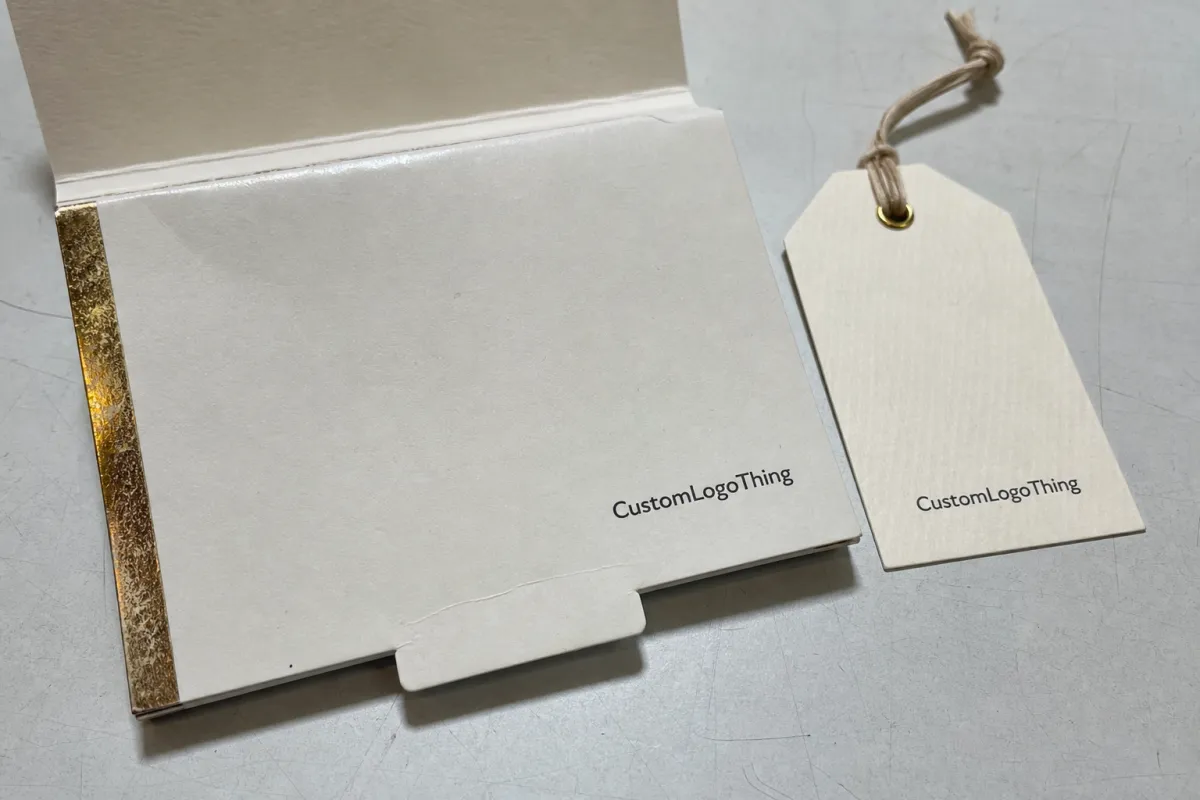
Material choice is usually the first cost lever. Ceramic studios tend to choose between coated card, uncoated paperboard, kraft stock, linen-textured paper, and thicker premium boards for more boutique positioning. A 300–400gsm stock is common because it feels sturdy without becoming overbuilt. Kraft works well for earthy or recycled branding, while a smoother premium card suits lines that need a more polished retail look. The hang tags unit cost for ceramic studios rises as the stock becomes heavier, more textured, or more specialized.
Print complexity changes the price just as quickly. A one-color black tag on kraft stock is usually far less expensive than a full-color, front-and-back piece with multiple callouts, a barcode block, care instructions, and a variable SKU field. White ink on dark stock, foil stamping, spot UV, or embossed elements all add production steps. They are not wrong choices; they simply increase the cost to make each tag.
Finishing is where many studios get surprised. Matte lamination gives a cleaner surface and better scuff resistance. Soft-touch coating feels more premium but usually raises cost. Rounded corners, drilled holes, and foil accents also move the quote. If the goal is to keep the hang tags unit cost for ceramic studios under control, choose the finish based on how much value it adds to the product, not on habit.
Attachment options matter too. Cotton string has a handmade feel, wax cord looks slightly more refined, and elastic loops can work well for some necked vessels or bundled sets. Pre-threaded tags save your team labor, but they add labor somewhere else in the process. That means the supplier’s unit price may look higher while your in-house handling cost drops. For smaller teams, that trade can make sense.
| Tag option | Typical look | Cost impact | Best fit for ceramic studios |
|---|---|---|---|
| Standard rectangle, one-color print | Clean, simple, retail-ready | Lowest setup and unit cost | Core SKUs, reorder lines, value-focused collections |
| Kraft stock with front/back print | Handmade, earthy, natural | Moderate unit cost | Artisan brands, gift sets, rustic positioning |
| Premium card with soft-touch coating | Refined, soft, upscale | Higher unit cost | Boutique gifts, holiday launches, higher ASP items |
| Custom die-cut with foil | Distinctive, highly branded | Highest setup and finishing cost | Signature pieces, seasonal campaigns, premium retail |
For many studios, the smartest move is not the most decorative one. A mid-weight uncoated stock with clear typography often performs better than a long stack of effects. The tag should be legible, durable, and aligned with the product. Too many finish layers can create a premium impression in a photo while adding little value at retail.
For related packaging programs, many buyers pair tags with Custom Labels & Tags so the labeling system stays consistent across product lines and reorders.
Specifications ceramic buyers should lock in early
The fastest way to get an accurate quote is to define the spec before asking for pricing. That means finished size, stock thickness, number of print sides, color count, hole placement, and whether the artwork includes bleed and safe margins. If one supplier is quoting a 2 x 3 inch tag and another is pricing a 2.25 x 3.5 inch version, the numbers are not directly comparable, even if the line item looks similar.
For ceramic goods, the tag size has to make sense next to the piece. A large tag hanging from a small mug handle feels heavy. A tiny tag on a gift set can disappear. For mugs and tumblers, compact rectangular formats are common because they leave room for branding on the front and a barcode or care note on the back. Vase and bowl lines can usually support a slightly larger tag if the shelf display and packaging allow it.
Durability should be part of the conversation from the start. Tags in studio environments are handled repeatedly, stacked with packing materials, or exposed to humidity during storage and shipping. If the pieces are headed into wholesale, market setups, or repeated handling by store staff, scuff resistance and tear resistance matter. Uncoated stock can be enough for some brands. Others need a matte laminated surface to protect the print during transit.
Artwork files should ideally be delivered in vector format, especially when a barcode, small type, or precise line logo is involved. Keep barcode placement away from the drill hole and any fold or cut edge. If the tag includes variable data such as collection names or SKU ranges, mark those fields clearly before proofing. Clean files reduce revision rounds and cut the risk of schedule drift.
A useful quote request should also reflect how the product will actually be sold. If the tags need to survive repeated handling by customers, cashiers, and wholesale buyers, say so. If the tag is decorative and will be removed after purchase, that is a different durability requirement. Those details affect the hang tags unit cost for ceramic studios because they influence stock selection, finishing, and print protection.
For handling and sourcing references, packaging teams often look at industry guidance such as the ISTA testing framework for transport protection and the FSC system for responsibly sourced paper options at fsc.org. Those references do not dictate design, but they help buyers ask sharper questions about material selection and shipping performance.
Hang tags unit cost, MOQ, and quote factors
The biggest price drivers are quantity, size, stock, print colors, special finishes, stringing, and whether the tag is a standard shape or a custom die-cut. In practice, the hang tags unit cost for ceramic studios drops as the run size increases because setup, cutting, and finishing are spread across more pieces. Smaller runs carry more overhead per tag. That part of the pricing curve is consistent across most packaging jobs.
MOQ matters more than many buyers expect. A studio testing three new collections may want separate tags for each line, but three small jobs can cost more than one base format with variable text. One structure with swapped product names or barcode lines can lower total spend while keeping the design system consistent. It also makes reorders cleaner later, which matters once a collection proves itself.
| Order type | Typical MOQ behavior | Approximate unit cost trend | Why it changes |
|---|---|---|---|
| Simple rectangle, one-color print | Usually lowest MOQ option | Lowest | Fewer setup steps, standard cutting |
| Full-color front and back | Moderate MOQ | Mid-range | More press coverage and proofing |
| Custom die-cut with specialty finish | Higher MOQ often preferred | Higher | Tooling fees, extra finishing, slower throughput |
| Pre-threaded tags | Varies by assembly plan | Higher labor component | Additional handwork or machine threading |
For many ceramic studios, a realistic pricing conversation might land around $0.12–$0.28 per tag on simpler higher-quantity runs. More complex versions with premium stock, specialty finishing, or pre-threading can move above that range. Exact numbers depend on the spec, so a range is only a planning tool, not a promise. Even so, it helps explain why the hang tags unit cost for ceramic studios can vary so much between two quotes that look similar at first glance.
Ask directly whether the quote includes setup charges, proofing, die costs, or tooling fees. Those expenses can be included in the unit price or listed separately. If they appear later, the comparison becomes misleading. A transparent estimate should show what is included, what is optional, and what changes if the quantity goes up.
One more detail: if you are ordering multiple SKUs, ask whether they can be ganged on one sheet or one press run. That can reduce waste and improve cost efficiency. If each SKU needs its own separate setup, the overall packaging spend climbs quickly. For small studios, even a small avoided fee can matter more than a fancy finish.
Process and lead time from proof to shipment
The production path is straightforward, but each step can add time if something is missing. The usual sequence is artwork review, digital proof, approval, printing, cutting, finishing, stringing if required, packing, and shipment. If any one of those steps stalls, the schedule slips. For a ceramic studio planning a launch, that can become the bottleneck that delays product photos, wholesale samples, and retail deliveries.
Most delays happen before the press starts. Missing artwork, unclear hole placement, barcode corrections, and delayed approvals from multiple people can each add days. That is why a simple, clean brief is so valuable. It keeps the supplier from chasing details while your launch calendar keeps moving.
Lead time depends on complexity. Simple printed tags usually move faster than custom die-cut shapes or specialty-finished work. If stringing is required, add more time. If the tag uses foil, embossing, or mixed-stock construction, expect a longer production window. A realistic lead time is often around 10–15 business days after approval for uncomplicated jobs, with more complex orders taking longer depending on material availability and finishing capacity.
Approving the proof quickly helps, but only after checking the details that matter. Review typography, barcode readability, spelling, hole position, and the spacing around the edge. A rushed approval can lock in a mistake, and correcting it later may cost more than the original print run. That is especially true when you are trying to protect the hang tags unit cost for ceramic studios while also keeping the launch date intact.
For buyers who need packaging that holds up in transit, general shipping and handling considerations can be informed by standards groups and testing bodies such as ISTA. Tags themselves are not protective packaging, but they still need to arrive flat, clean, and ready to attach without extra sorting.
What makes hang tags practical for ceramic studios
The best hang tag is usually the one that fits the brand, the product, and the budget without forcing compromises elsewhere. That means consistent cutting, clean print registration, dependable stock options, and finishing choices that look appropriate beside handmade work. A tag should support the product rather than compete with it.
Function comes first. Does the tag need to carry pricing, care instructions, barcode data, or only branding and collection name? Does it hang from a mug handle, tie around a vase neck, or sit with a gift set insert? Once those questions are clear, choosing the right stock and finish gets much easier, and the hang tags unit cost for ceramic studios becomes easier to predict.
Flexibility matters as studios grow. A brand may start with rustic kraft tags, then move to a cleaner premium stock as the collection matures or enters larger retail accounts. If the base format stays consistent, reorders are easier and the packaging system stays recognizable. That continuity is valuable when product lines evolve because it keeps the studio from redesigning every time a new SKU is added.
If your team needs packaging support across more than one label type, pairing hang tags with Custom Labels & Tags can keep the visual system aligned. One approval path, one type of typography system, fewer variations to manage at reorder time.
“A good ceramic tag does three jobs at once: it identifies the piece, supports the brand, and survives handling without making the product feel overpackaged.”
Next steps to quote and order with confidence
If you want the most accurate quote, gather four inputs before you request pricing: quantity, finished size, print colors, and whether stringing or special finishing is needed. Those four details usually tell the supplier more than a long paragraph of brand language. They also help you compare true unit cost instead of guessing from a rough estimate.
Then prepare one primary design and mark any variable fields clearly. If a back panel changes by SKU, show that in the file or in a simple spec sheet. If barcodes are included, note the exact placement and reserve enough quiet space around them. That reduces revision rounds and helps the supplier price the job correctly the first time.
If you are deciding between kraft, premium card, and coated stock, ask for sample photos or a material recommendation before final approval. A good supplier should be able to explain how each option behaves in production and what it means for cost per piece. For many studios, the best answer is not the fanciest finish; it is the one that keeps the brand looking clean, the order easy to repeat, and the budget predictable.
So the practical path is simple: confirm specs, compare the true hang tags unit cost for ceramic studios, approve the proof quickly, and place the order early enough to protect launch dates and retail deliveries. That approach keeps the packaging aligned with the product, which is exactly what ceramic buyers need when margins are tight and presentation still has to feel finished.
What affects hang tags unit cost for ceramic studios the most?
Quantity is the biggest driver because setup costs are spread across the run. Stock choice, print colors, and finishing options also change the final per-tag price. Custom shapes and pre-stringing usually increase labor and production cost.
Can I lower the unit cost without making the tags look cheap?
Yes. Use a standard shape, limit the print colors, and choose a solid mid-weight stock. A clean design with strong typography often looks premium even without expensive finishes. Ordering a larger run for multiple collections can also improve unit pricing.
What MOQ is typical for custom hang tags for ceramic products?
MOQ varies by size, material, and finish, but Custom Printed Tags are often priced around practical short-run quantities rather than huge retail volumes. If you need multiple SKUs, one base format with variable text can help you stay within MOQ more efficiently. Ask for the exact MOQ tied to your chosen specs before finalizing artwork.
How long does production usually take after approval?
Simple printed tags usually move faster than custom die-cut or specialty-finished tags. Lead time depends on proof approval, material availability, and whether assembly is needed. Approving artwork quickly is the best way to keep the schedule on track.
What should ceramic studios send for the most accurate quote?
Send quantity, finished size, stock preference, print colors, and any finishing or assembly requirements. Include artwork details such as bleed, barcode placement, and any variable text fields. A clear spec sheet reduces revisions and helps produce a more accurate unit cost.