For beer brands, Hang Tags Unit Cost for beer brands is usually a better buying question than “How cheap can we make this?” A hang tag can carry flavor notes, legal copy, promo messaging, and a more premium shelf presence without changing the primary bottle or can label structure. That makes it one of the few packaging add-ons that can influence both presentation and sell-through without forcing a full redesign.
The practical value is not just decoration. A well-specified tag can make a seasonal SKU easier to spot, give a limited release a clearer story, and help mixed packs or taproom-only drops look intentional instead of improvised. That matters in beer, where packaging has to do a lot of work in a very small space.
Why hang tags can reduce shelf friction for beer
Beer cans and bottles do not always leave much room for messaging. Once you account for mandatory labeling, barcode placement, style identification, and brand marks, the remaining space can be tight. A hang tag adds a separate surface for the information buyers actually scan first: product name, tasting notes, pairing suggestions, release date, taproom exclusivity, or a short promo message that explains why the SKU matters.
That is why tags are often less about design flair and more about retail function. A retailer can distinguish a seasonal stout, a gift-ready bottle, or a mixed six-pack faster when the tag makes the purpose obvious. Faster recognition often translates into less hesitation at shelf level, and hesitation is expensive.
The cost question should be tied to that function. A cleanly printed tag on a good cardstock can add more perceived value than a more expensive upgrade to the primary pack, especially for short runs. If the tag supports a higher shelf price, helps a release move faster, or reduces confusion across multiple SKUs, the unit cost belongs in the margin model rather than being treated as a standalone embellishment.
“A beer tag is small, but it can carry shelf visibility, SKU clarity, and a bit of brand story in one place.”
Buyers usually compare paper stock, print method, quantity, and finishing before deciding whether a hang tag is a low-cost add-on or a strategic packaging component. For related structures, many teams review Custom Labels & Tags and compare them with broader packaging programs, then check Case Studies to see how similar jobs were specified in production.
| Beer hang tag use case | Typical spec focus | Buyer goal | Cost pressure |
|---|---|---|---|
| Core retail SKU | Standard cardstock, single-sided print, clean hole punch | Clear branding and style ID | Keep unit cost low |
| Seasonal or limited release | Premium stock, stronger finish, maybe spot UV | Lift perceived value | Moderate to high |
| Gift pack or taproom bundle | Double-sided print, textured stock, stringing or assembly | Presentation and gifting appeal | Higher, but tied to margin |
| Promotional campaign | Fast-turn print, variable messaging, simpler finish | Speed and quantity flexibility | Managed through quantity breaks |
So the real question is simple: does the tag improve shelf clarity, support margin, and fit the product’s sales context? If yes, the unit cost is part of the packaging system, not just a print line.
Beer hang tag materials, shapes, and print details
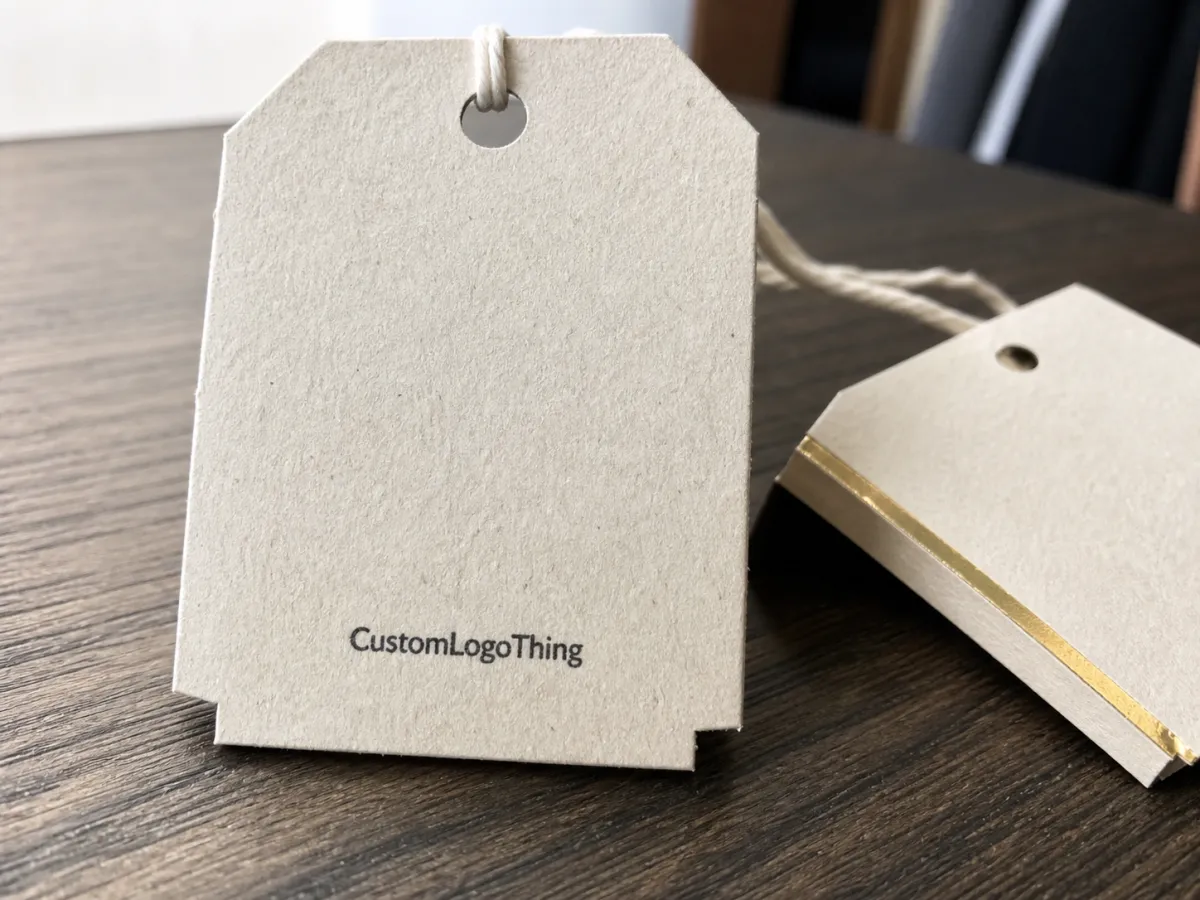
Material choice changes both the feel in hand and the production cost. Coated cardstock is common because it prints cleanly and holds color well, especially when brands want sharp logos and strong contrast. Uncoated stock feels more tactile and suits craft-forward brands that want a softer, less polished look. Kraft paper creates a rustic signal, though it can mute some colors and needs artwork planned around that limitation. Specialty textured stocks can look excellent, but they should be justified by the campaign because they usually add cost without adding durability.
Size changes the equation too. A bottle neck tag, a can bundle tag, a carton tag, and a gift pack tag all behave differently on press and on the line. Larger formats use more material and can alter die-cut cost because the cutter must handle a larger footprint. Even a small change in width or height can change how many tags fit on a sheet or press layout, which affects both unit price and waste.
Finish is not only about appearance. Matte varnish gives a softer look and reduces glare under store lighting. Gloss adds brightness and can make color look more saturated. Soft-touch lamination adds a tactile premium feel, but it is rarely the best choice for every SKU because it increases cost and can be unnecessary for high-volume beer packaging. Spot UV and foil can create strong premium cues, though both increase setup complexity and may raise tooling or finishing charges.
Beer tags also have to survive actual handling. They may sit near ice, move through cold storage, rub against other packs, or travel in secondary packaging where abrasion is common. If the stock is too light, corners can curl and the tag can look tired before it reaches shelf. If the coating is too weak, moisture can dull the surface. In other words, the best spec is not always the fanciest one; it is the one that stays legible and intact in the environment where beer is sold.
Design choices also affect manufacturing efficiency. A one-sided tag with two ink colors is easier to run than a dense double-sided layout with full bleed on both sides, tiny legal copy, and a heavy reverse. Variable data can be useful for numbered releases or batch-specific messaging, but it needs planning so the print file and finishing steps stay controlled. Hole size, hole position, and attachment method matter as well, because a tag meant for an elastic loop is not built the same way as one designed for stringing or hand application.
When a brand asks about Hang Tags Unit Cost for beer brands, the answer starts with the physical spec. Paper, shape, print coverage, and attachment method drive the job more than most buyers expect.
How print specs change the unit price
The biggest price drivers are straightforward: stock choice, tag size, print sides, number of colors, specialty finishes, hole drilling, stringing, and how the tags are packaged for delivery. One-sided printing is usually less expensive than double-sided because it uses less press coverage and fewer production steps. Heavy ink coverage can also increase drying or curing time, especially on coated or laminated surfaces, and that can affect scheduling.
Quantity breaks matter because setup charges, plate costs, die-cut preparation, and press time do not disappear just because the order is small. They get spread across the run. A 1,000-piece order can have a noticeably higher unit cost than a 5,000-piece order even if the material itself differs only slightly. That is the basic logic behind bulk pricing in print production.
Premium does not always mean better value. A thick specialty stock with foil and soft-touch lamination may look impressive, but if the tag is going on a core beer SKU with fast inventory turnover, that extra spend may never be recovered. Many brands overspend by treating every tag like a luxury release when only a portion of their line needs that treatment.
A better approach is to match the tag to its job. If it supports a seasonal launch, a gift program, or a high-margin mixed pack, it may be worth paying for tactile feel and visual impact. If it is a repeat retail tag that only needs to identify the beer clearly and survive handling, then a clean print on solid cardstock is usually the smarter purchase.
Typical cost ranges by spec
| Spec level | Common features | Indicative unit cost | Best fit |
|---|---|---|---|
| Value | Standard cardstock, one side, simple die cut, no special finish | $0.12-$0.22 per unit at larger quantities | Core SKUs, promo tags |
| Mid-range | Better stock, double-sided print, matte or gloss varnish | $0.18-$0.32 per unit | Seasonal releases, retail presentation |
| Premium | Specialty stock, lamination, foil, spot UV, stringing | $0.30-$0.75+ per unit | Gift packs, limited editions, premium gifting |
Those numbers are directional, not fixed. Exact pricing depends on artwork complexity, finishing, and order volume, and a supplier may quote differently if the tags ship flat versus assembled with string. Still, the table gives a useful working range for cost per piece planning.
Buyers should also watch the hidden variables. Reverse printing, tiny type on dark backgrounds, and a need for both sides to carry different content can push the price up. So can custom shapes with tight corners or unusual cut lines. A simple circle or rectangle is usually less expensive than an intricate silhouette because the die and finishing path are easier to control.
If the budget is tight, the best savings usually come from simplification rather than material downgrade. Reduce the number of finishes. Remove unnecessary full-bleed areas. Keep the shape efficient. Use one strong design instead of trying to cram too much messaging into the tag.
Hang tags unit cost for beer brands: MOQ and quote factors
Hang Tags Unit Cost for beer brands is shaped first by MOQ, because setup costs are fixed and material cost becomes efficient only after volume rises. A small pilot order can be perfectly workable, but the per-unit price will usually be higher because the press has the same start-up burden whether the run is 500 or 5,000 pieces.
That is why buyers should never compare a small quote against a large one without checking the production assumptions. A lower-run quote may include higher setup charges, different finishing allowances, or more manual handling. On the other hand, a larger run can unlock a better bulk pricing tier that drops unit cost enough to justify holding a little extra inventory.
For an accurate quote, a supplier usually needs the following:
- Finished tag size and shape
- Paper stock or board preference
- One-sided or double-sided print
- Number of colors, including any white ink or reverse print
- Finishing details such as varnish, lamination, foil, or spot UV
- Hole size and placement
- Stringing, elastic loop, bundling, or flat pack requirements
- Quantity and shipping destination
That list looks basic, but it is where quote accuracy comes from. If the spec is vague, the estimate usually has to carry more cushion, and that cushion shows up in the price. Clear input shortens revisions and makes the quote easier to trust.
Beer brands should also plan orders by campaign type. Seasonal releases may need moderate quantities with a premium appearance. Taproom launches may need fewer units but faster turnaround. Variety packs often need consistent branding across several SKUs, which can make it worth ordering a shared tag format with variant content swapped in. Distributor promotions may need larger counts and a sharper focus on cost per piece.
Comparing quotes fairly matters as much as collecting them. A lower number may not be the better number if it excludes finishing, uses thinner stock, or assumes flat delivery when the actual need is assembled tags. Compare like with like: same paper weight, same print sides, same finish, same assembly, same tolerance for color variation.
For brands that want a broader view of packaging economics and recycled material choices, trusted references such as the Packaging Machinery Manufacturers Institute, the EPA recycling resources, and FSC certification information are useful for checking material guidance and certified paper options.
Production steps and turnaround from proof to delivery
The production path is usually straightforward, but each step affects cost and timing. First comes the request for specs and artwork. Then the supplier reviews the job and returns a quote. Once the order is placed, the artwork is checked and turned into a proof. After proof approval, the job moves into print, finishing, inspection, and shipping. If the tag needs stringing, bundling, or another manual assembly step, that work is usually scheduled after print and before final packing.
Turnaround depends on how clean the job is at the start. A file with final dimensions, correct bleeds, and a stable spec can move quickly. If the artwork needs compliance edits, if the die line changes, or if the finish is more complex, extra days can disappear fast. In a beverage launch, that buffer matters because a one-week delay can disrupt a retailer window or a seasonal display plan.
From a production-floor perspective, the biggest risks are predictable. Misaligned die cutting, poor color management, and incomplete count verification can create waste or rework. Good production teams control those points with proof checks, press checks where needed, and careful final packing. For beer tags, clean cut edges and accurate hole placement matter because the tags are handled repeatedly during attachment and distribution.
A realistic schedule for standard jobs is often 12-15 business days from proof approval, though simple quantities with standard stock can move faster and more complex finishing can extend that. If a brand is planning around a hard launch date, extra room for revisions and shipping time is wise even when the print portion looks simple on paper.
One more practical point: if a job includes moisture-sensitive stock, cold-chain handling considerations, or special attachment methods, the supplier should know that early. That helps avoid choosing a material that looks fine in a sample but performs poorly in actual shipping conditions.
Fast jobs usually share three traits: final artwork, clear specs, and a quantity target that does not keep changing. The more the order is locked before proofing, the more likely the production run will stay on schedule.
What beer brands should compare before placing an order
Before placing an order, compare more than price. Review durability, tactile quality, print sharpness, color accuracy, ease of attachment, and whether the tag actually supports the setting where it will live. A taproom release may reward richer texture and a more premium finish, while a high-volume retail tag may need a simpler spec that can withstand handling without adding unnecessary cost.
Sampling helps, especially when small type, fine lines, dark coverage, or a custom shape are involved. A digital mockup is useful, but it does not show how ink sits on the stock or how the cut edge will feel. If the tag carries legal copy or flavor information, readability matters as much as the creative treatment.
The common mistakes are predictable, and they become expensive when they happen late. Undersized bleed causes cropping issues. Missing dielines delay proofing. Low-resolution images weaken the final look. Last-minute changes after proof approval can create extra setup work, raise cost, and push shipping out. A little planning saves money in ways that do not always show up on the first quote.
Here is a short checklist that keeps the buying process grounded:
- Does the tag have a clear job in the packaging mix?
- Is the stock strong enough for handling and moisture exposure?
- Is the finish doing useful work, or just adding cost?
- Is the print layout efficient for the chosen quantity?
- Does the quote match the same spec across all suppliers?
A responsive supplier can help reduce waste by steering the design toward a more practical spec, not just a prettier one. That might mean suggesting a different board, simplifying the finish, or changing the attachment method so the tag can be produced more efficiently. Good packaging support is not about pushing the highest price; it is about matching the tag to the beer application and the real budget behind it.
Next steps to price and order beer hang tags
If you are ready to price a job, gather the essentials before requesting a quote: finished size, stock preference, quantity, print sides, finish, attachment method, and destination ZIP or shipping country. If you already have artwork, send the final file or even a rough layout early so potential issues can be flagged before production starts.
The cleanest decision path is usually this: confirm the tag’s job, choose the stock and finish based on the budget, then lock the quantity to get the best possible unit cost. That order matters because it keeps the packaging choice tied to business purpose instead of visual preference alone.
It also helps to compare at least two options. One should be value-focused and one should be more premium, so you can see where the performance and cost balance lands for the brand. Often the middle option is the one that makes the most sense, because it keeps the tag strong enough for the beer environment without loading the quote with extra finishing you do not need.
For buyers asking about Hang Tags Unit Cost for beer brands, the smartest move is to treat the tag like a packaging component with a job to do. When the specs are clear, the quote becomes clearer, the production path gets simpler, and the final cost per piece is easier to defend inside the brand. If you are Ready to Order, Custom Logo Things can help you compare spec options and build a hang tag that fits the product, the campaign, and the budget.
FAQ
What affects hang tag unit cost for beer brands the most?
The biggest drivers are quantity, stock choice, size, print sides, and finishing. Specialty coatings, foil, lamination, and manual assembly usually raise the per-unit price. A clear spec sheet helps reduce quote variance and avoids unnecessary upgrades.
What is a typical MOQ for custom beer hang tags?
MOQ depends on the print method and finishing, but custom tags are often priced with volume breaks in mind. Smaller orders can be possible, though the unit cost is usually higher because setup is spread across fewer pieces. The best MOQ is the lowest quantity that still supports the campaign and budget.
Do double-sided hang tags cost much more for beer packaging?
Yes, double-sided printing usually increases cost because it adds press coverage and can change finishing requirements. The increase is often worth it when the back side carries legal details, flavor notes, QR codes, or promo messaging. For simple branding only, single-sided tags may be the more efficient choice.
How long does production usually take after proof approval?
Turnaround depends on artwork readiness, order size, finishing, and assembly needs. Simple jobs with approved art and standard stock move faster than tags with specialty finishes or stringing. A realistic schedule should include buffer time for proof revisions and shipping.
What should beer brands send to get an accurate quote fast?
Send tag dimensions, quantity, stock preference, print sides, finishing, attachment method, and destination ZIP or country. If you have artwork, include final files or a mockup so the supplier can spot problems early. Clear specs shorten the quoting process and help lock in a more accurate unit cost.