Custom Retail Hang Tags unit cost for boutique orders can look straightforward at first glance, yet the number behind each tag shifts once you account for stock, size, print coverage, finishing, and the labor needed to thread, bundle, or package them for shipment. Two tags that appear nearly identical on a rack can end up in very different price bands when one uses premium board, foil, and a custom cut while the other stays with a standard rectangle and basic print.
That is why boutique buyers in apparel, jewelry, accessories, and gift retail need a pricing view that goes beyond the face of the tag. The real question is not only what looks good, but which construction gives you the right shelf presence, durability, and brand feel without paying for extras that do not help sell the product. For many boutique programs, the best result is a clean, well-printed tag that fits the rest of the retail packaging system and keeps the unit cost manageable.
Why boutique hang tag pricing can vary more than most buyers expect
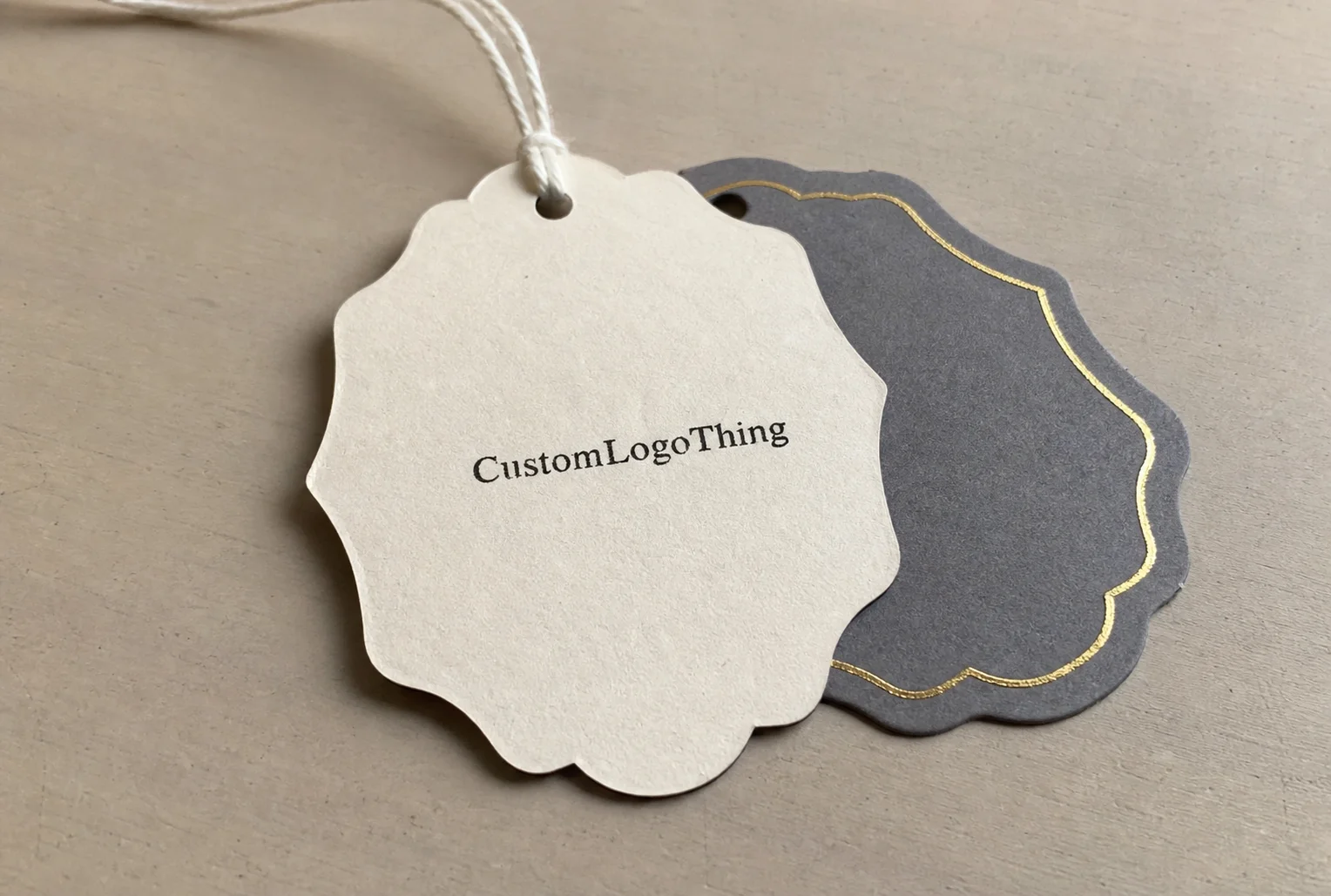
From a packaging buyer’s point of view, hang tag pricing can be misleading because the visual difference between options is often smaller than the production difference. A flat 14 pt cardstock tag and a 24 pt premium board tag may both measure 2 x 3.5 inches, yet the heavier board costs more to source, prints differently, and usually needs more careful cutting and handling. Add a die-cut shape, foil accent, or pre-threaded string, and the quote can move quickly.
The main cost drivers are easy to identify once you know where to look. Paper stock thickness affects material cost and how substantial the tag feels in hand. Shape complexity changes die-cut tooling and cutting time. Print coverage matters because full-bleed, full-color layouts use more ink and often require tighter press control than a simple one-color logo. Assembly labor also matters, and many buyers underestimate it until they see the line item for stringing, bundling, or attaching fasteners.
Small-order boutique work is priced differently from large retail programs because setup time has to be recovered across fewer pieces. If a press run requires the same proofing, make-ready, and cutting setup whether you order 500 tags or 10,000, the per-piece price will naturally be higher on the smaller run. That does not mean the order is overpriced; it means the fixed costs are being spread over fewer units.
A useful quote explains what is driving the price instead of giving only a single number. When stock, printing, finishing, and threading are separated, the buying decision becomes much clearer.
The goal for most boutiques is simple: choose a hang tag that looks premium enough to support the brand, then keep the cost tied to actual selling value. Spend on the details shoppers can see and feel, but skip the ones that only look impressive in a spec sheet.
Retail hang tag constructions that fit boutique apparel and gift items
The most common boutique hang tags begin with a few proven constructions. Flat cardstock tags are the workhorse choice because they print cleanly, stack well, and suit apparel, candles, body care, and gift items. Folded tags give you more room for care instructions, origin details, or brand story without taking up much more shelf space. Rounded-corner tags soften the look and reduce edge wear. Shaped die-cut tags create a stronger visual signature, though they cost more because of tooling and extra cutting steps.
Material choice matters just as much as shape. Coated cover stock gives crisp color and sharp type, which works well for modern branding. Uncoated textured stock feels warmer and more artisanal, especially for boutique labels that want a natural touch. Kraft paper still has a strong place in package branding because it signals earthy, handmade, or eco-minded positioning, while recycled boards can support sustainability messaging without sacrificing stiffness. If you are comparing options for broader Custom Packaging Products, the hang tag should match the tone of your other product packaging components so the whole presentation feels intentional.
Attachment method affects both appearance and cost. Pre-punched tags with cotton string are common and relatively affordable. Elastic loops work well for jewelry or accessories that need a low-profile attachment. Plastic fasteners are fast to apply in volume, though they read more utilitarian. A custom ribbon can elevate the look, but it adds labor and often increases waste if the assembly is done by hand.
For garments that get handled a lot, a heavier board is usually the safer choice, especially if the tag must stay presentable through shipping, store setup, and repeated customer handling. Jewelry cards, scarf tags, and accessory hang tags all benefit from a stock that resists curling and edge damage. A boutique tag that looks premium on day one but scuffs before it reaches the shelf is not a good value, even if the quote was low.
| Tag style | Typical feel | Best use | Cost impact |
|---|---|---|---|
| Flat cardstock | Clean, simple, efficient | Apparel, candles, general retail | Lowest |
| Folded tag | More room for content | Care details, storytelling, compliance copy | Moderate |
| Rounded-corner tag | Softer premium look | Fashion, accessories, gift items | Moderate |
| Die-cut shape | Distinctive, branded, custom | Signature collections, seasonal launches | Highest |
Specs that matter before you request a quote
A quote is only as useful as the spec behind it. If you want a realistic view of custom retail Hang Tags Unit Cost for boutique orders, start with the fields that truly affect production. Size is first. A standard 2 x 3.5 inch tag usually costs less than a large folded format because it uses less board and fits press sheets more efficiently. Shape is next. A simple rectangle or rounded rectangle is cheaper than a custom silhouette.
Side count matters too. Front-only print is faster and less expensive than front-and-back print, especially when both sides carry full-color artwork. A single-sided tag with a logo, size, and short brand line may be enough for some boutiques, while others need care instructions, origin copy, or a QR code on the reverse. If the back is blank, that saves both print time and ink coverage, although not always enough to justify a design compromise if the space is needed for selling information.
Finishing can change the look dramatically. Matte lamination gives a smooth, modern surface and helps resist fingerprints. Soft-touch adds a velvety feel that reads upscale but increases unit cost. Gloss aqueous creates a brighter surface and can protect the print, while foil stamping and embossing introduce premium cues at the cost of extra setup and additional process steps. Spot UV is useful when you want one area to pop, but it should be used with restraint because it is easy to overdo on a small tag.
For artwork, the basics still matter. Vector files are best for logos and text-heavy layouts because they stay sharp at any size. Bleed should extend beyond the trim line so the cutter does not expose white edges. Safe area matters for small tags more than many buyers realize, because a barcode, size number, or logo sitting too close to the cut can feel cramped or get clipped. If you need variable data, SKUs, or a barcode sequence, tell the supplier early so the production workflow includes the correct imposition and data handling.
If your Custom Labels & Tags program is tied to a broader packaging design refresh, keep the tag spec consistent with the rest of the collection. Matching board tone, typography weight, and finish level across branded packaging pieces can make a small boutique line feel more polished without increasing every line item.
Custom retail hang tags unit cost for boutique budgets
Here is the part most buyers want spelled out plainly. Custom Retail Hang Tags unit cost for boutique orders is usually driven by a small group of variables: quantity, size, material thickness, print complexity, special finishes, die cutting, and any threading or bundling labor. If one quote looks much lower than another, check whether it excludes setup, finishing, or shipping, because those items can change the true landed cost significantly.
MOQ has a direct effect on the price tier. A lower MOQ protects cash flow, which matters when a boutique is testing a new collection or seasonal drop, but the per-piece price will usually be higher because the fixed costs do not have enough units to absorb them. As quantities rise, the unit cost falls, though the total spend climbs. That is normal pricing structure, not a trick.
For planning, simple Custom Hang Tags in standard sizes might land around $0.10 to $0.22 per unit at higher boutique-friendly quantities, while heavier stocks, front-and-back printing, or modest finishing can move the range to $0.20 to $0.45 per unit. Add foil, embossing, custom shapes, or hand assembly, and the number can climb further. These are broad working ranges, not fixed pricing, because stock market conditions, order quantity, and specification detail all matter.
The cleanest way to compare quotes is to break them into pieces:
- Base tag cost — stock, print, and cut
- Finish cost — lamination, foil, embossing, spot UV, or coating
- Assembly cost — threading, fasteners, bundles, or bagging
- Shipping cost — carton weight, destination, and delivery speed
- Setup charges — plates, dies, file prep, or data setup where applicable
If you want to lower the quote without making the tag look cheap, simplify the shape, reduce finish layers, and choose a standard size that fits press sheets efficiently. It also helps to keep the design disciplined. A strong one-color or two-color design on a good board often looks better than a crowded tag trying to do too much. In many boutique programs, clear typography and a well-chosen stock outperform decorative excess.
Here is a simple comparison many buyers find useful when reviewing options for retail packaging budgets:
| Option | Appearance | Typical unit cost pressure | Buyer takeaway |
|---|---|---|---|
| Standard stock, single-sided print | Clean and efficient | Lowest | Best for tight budgets and repeat runs |
| Heavier board, front-and-back print | More substantial and informative | Moderate | Good balance for most boutique apparel programs |
| Soft-touch or matte laminated with foil accent | High-end and tactile | Higher | Use for hero products or seasonal launches |
| Custom die-cut with threading | Distinctive and brand-specific | Highest | Best when the tag itself is part of the brand story |
It is also wise to look at package branding as a whole. If you are already investing in custom printed boxes, tissue, or inserts, your hang tag does not need to carry every premium effect. Sometimes the most effective move is letting one packaging element lead while the others support it quietly. That creates a stronger presentation and keeps unit cost under control.
Production steps and turnaround from artwork approval to delivery
The production path is fairly standard, but every step affects schedule and final quality. It usually starts with a quote request that includes size, quantity, artwork, finish, and attachment method. After that comes proofing, where the supplier should show the layout, spelling, cut line, and any finish callouts. Once the proof is approved, printing begins, followed by cutting, hole punching, threading or fastener insertion, quality checks, and carton packing.
Lead time depends on more than press speed. Fast proof approval often shortens the overall schedule more than trying to rush the press room. Material availability can add days if the chosen board is not in stock. Complex finishing, such as foil or embossing, adds process steps and may require additional setup. Peak-season scheduling can also stretch delivery windows, especially if the same production line is balancing multiple product packaging projects at once.
For a simple tag on standard stock, many orders can be turned in roughly 10 to 15 business days after proof approval, though that changes with quantity, finish, and shipping method. Once premium finishing or custom assembly enters the mix, plan a longer window and confirm it clearly before committing to a launch date. A buyer should always ask whether the timeline is quoted from order placement or from proof approval, because those are not the same thing.
One other practical point: if your line launch depends on coordinated packaging, including labels, boxes, and hang tags, request delivery in a sequence that matches your production calendar. That matters for boutique replenishment runs, where the next drop may need a small revision rather than a full redesign. For reference on sustainability and material choices, the EPA’s paper and paper products guidance is a useful resource, especially when you are comparing recycled content and recovery considerations.
If transport durability matters, especially for tags with delicate finishes, the supplier should pack them so corners do not crush and thread does not knot up in transit. Good packing is not glamorous, but it prevents rework and saves time on receiving. That is the kind of detail that separates a smooth reorder from a frustrating one.
What makes a dependable hang tag supplier for boutique reorders
Boutique brands live and die by repeatability. The color on the second run should match the first run closely enough that customers do not notice a shift, and the board should feel consistent from order to order. Paper sourcing stability matters here more than many people realize. If a supplier changes stock without warning, the tag can come back with a slightly different tone, stiffness, or print response.
Good communication is another sign of a reliable partner. Boutique collections change often, and a supplier should be able to handle small revisions without forcing a complete rework of the setup. A size code may move, a QR code may be updated, or the back copy may change to reflect a new care note. Those are normal adjustments, and the best vendors make them manageable.
Practical production guidance is worth more than vague reassurance. A supplier who can explain why a matte uncoated board will reduce glare under store lighting, or why a foil accent should stay small on a 2 x 3 inch tag, is helping you buy smarter. That kind of advice comes from production constraints, not marketing language.
There are also service cues buyers can evaluate before placing an order:
- Proof clarity with obvious size, cut, and finish calls
- Sampling support when you need to feel stock before committing
- Transparent lead times tied to actual proof and production stages
- Packaging protection that keeps tags flat, clean, and ready to use
- Reorder consistency for color, cutting, and threading
For buyers comparing suppliers across a wider set of Custom Packaging Products, the better partner is usually the one that talks plainly about tradeoffs. That honesty is a better long-term value than a low quote that does not hold up once the details are counted.
If sustainability is part of your brand story, look for suppliers who can confirm FSC-certified paper options where available. The FSC is a useful reference point for responsible sourcing claims, and it gives boutique brands a more credible basis for packaging communication.
Next steps to price and place a boutique hang tag order
If you are ready to price a run, gather the five essentials first: size, quantity, artwork, finish preference, and attachment style. With those in hand, a supplier can give you a quote that is far more accurate than a rough estimate. If you also need barcodes, SKUs, or variable data, include that up front so the production plan reflects the full scope.
It is smart to compare two or three material-and-finish combinations rather than chasing the lowest number alone. A standard board with a careful design may outperform a more expensive option once it is on the shelf. For many boutique brands, the best balance is a well-weighted cover stock, clean print, and one restrained finish detail, if any. That usually gives enough polish without overloading the quote.
Ask for a plain-language quote that separates tag printing, finishing, threading, and shipping. That makes the comparison easy and helps you see where the money is going. If a supplier can also show the effect of MOQ changes on the unit price, even better. You want to know what happens at 500 pieces, 1,000 pieces, and 5,000 pieces before you commit.
Once the proof is approved, confirm the ship date, carton count, and reorder plan for the next drop. That final step is often overlooked, but it matters for boutique operations that work in small seasonal batches. The right hang tag should support the collection, fit the budget, and arrive ready to use, which is why custom retail Hang Tags Unit Cost for boutique orders should be reviewed with the same care you would give any other branding purchase.
What affects custom retail hang tags unit cost for boutique orders the most?
Quantity, stock choice, print coverage, special finishes, and any threading or assembly work usually have the biggest impact. Smaller orders carry more setup cost per piece, so the unit price drops as quantity increases.
What is the best material for boutique retail hang tags?
A sturdy cover stock is the most common choice because it prints cleanly and holds up well on apparel and accessories. Kraft, textured, or soft-touch stocks can create a more premium feel if the budget allows.
Do foil stamping and embossing raise the unit price a lot?
Yes, these finishes add setup and production steps, so they increase the per-piece cost compared with standard print alone. They are usually best reserved for front-side branding or a small accent area rather than full coverage.
How do I lower the quote without making the hang tags look cheap?
Use a standard size, simplify the shape, reduce finish layers, and choose one strong print style instead of multiple premium effects. A well-designed matte or uncoated tag can still feel elevated if the typography and stock weight are chosen carefully.
What should I have ready before requesting a boutique hang tag quote?
Have your tag dimensions, quantity, artwork files, finish preferences, and attachment method ready. If you need a barcode, SKU, or variable data, note that early so the quote includes the correct production steps.


