For candles, reed diffusers, and room sprays, the small card hanging from the neck or box often does more selling than the carton itself, which is why hang tags unit cost for Home Fragrance Brands deserves attention before artwork is approved. Buyers notice paper feel, print sharpness, and finish long before they study the copy. A tag that looks deliberate can lift the whole package without pushing the line into unnecessary spend.
From a packaging buyer’s point of view, the smartest hang tag is rarely the fanciest one. It is the one that supports scent notes, warning copy, barcode needs, and gifting details while staying inside the target cost per piece. That balance is where savings show up, because Hang Tags Unit Cost for home fragrance brands is shaped by material and production decisions, not just order quantity.
Why hang tags can change the shelf value of home fragrance packaging
Home fragrance packaging lives or dies by first impression. A candle sitting in a retail tray, or a diffuser boxed for gifting, can look finished and premium if the hang tag feels intentional, even when the rest of the structure stays simple. In practice, a well-designed tag often carries the story that the outer pack does not have room to tell.
That matters because the tag is one of the first tactile points in the buyer’s hand. A coated stock with crisp type, or an uncoated kraft tag with controlled ink coverage, sends a different message than a flimsy piece of paper with soft print and poor cut accuracy. Most shoppers do not know the spec sheet, but they absolutely feel the difference.
For fragrance brands, the tag also has a practical job. It may need to hold scent notes, safety text, batch code space, barcode data, or gifting details. Once those elements are required, the layout gets tighter, and the production choice starts influencing hang tags unit cost for Home Fragrance Brands from the beginning of the project.
A hang tag should earn its place. If it adds shelf value, carries the right information, and stays within the line’s margin, it is doing its job.
That is why buyers should not treat hang tags as an afterthought. A simple rectangular tag with good print control can be a better business decision than a complex custom shape that looks impressive but consumes budget in tooling fees, setup charges, and finishing time. The point is not to spend more; the point is to spend where the customer can actually see it.
Tag construction and print choices that affect the final quote
The material choice drives a large part of the quote. Coated paper stock gives sharp type and cleaner image reproduction, which suits modern candle brands that rely on minimal layouts and high-contrast graphics. Uncoated text stock feels softer in the hand and works well for natural or apothecary-style collections. Kraft paper can support a handmade look, but it needs smart artwork choices because heavy ink coverage can flatten the texture and increase the chance of color variation.
Specialty textures, such as felt-marked or lightly woven stocks, bring depth to the presentation, but they usually cost more and require tighter proofing. If a fragrance line wants a premium feel without pushing the unit cost too far, a midweight stock with one or two well-chosen finishes often makes more sense than a fully embellished build.
Print method matters just as much. Offset printing is efficient for larger runs and gives strong consistency across repeated orders. Digital printing can be the right call for shorter runs or more variable artwork, especially if different fragrance SKUs need different notes, scents, or barcode data. Spot-color printing works well when a brand uses a limited palette and wants tighter color control, while full-color process printing is better for image-rich designs and gradients.
Finishing adds both value and cost. Matte lamination gives a clean, modern look and helps protect the surface from handling marks. Soft-touch coating adds a velvety feel that many premium home fragrance brands like, although it usually increases the unit cost. Foil stamping brings brightness and contrast, embossing adds physical depth, and rounded corners improve handling while reducing the chance of edge wear. Every one of these details adds labor, time, or tooling, so they should be chosen with purpose.
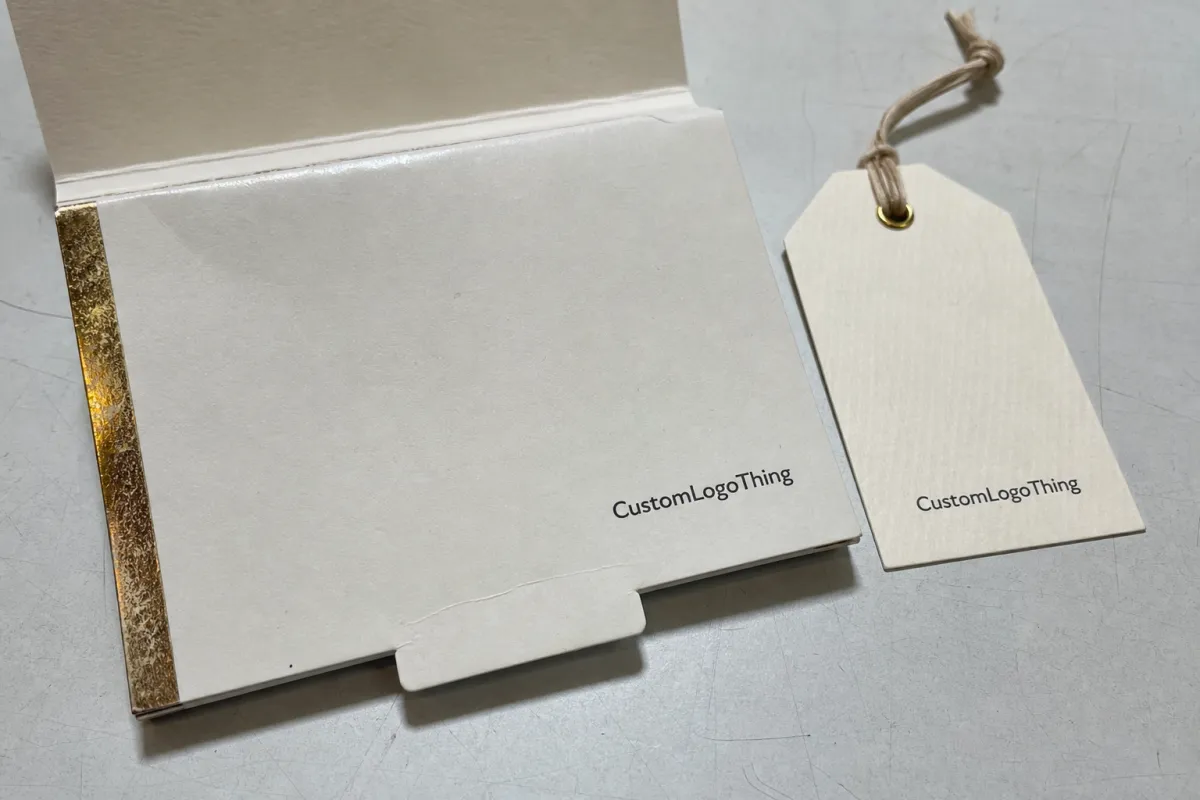
Attachment details are easy to overlook, yet they matter a great deal in production. Hole drilling, eyelets, twine, cotton cord, elastic loops, or simple stringing all change how the tag sits on a bottle neck, a candle jar, or a gift set. If the tag must hang neatly without twisting, the punch location and attachment method need to be specified early. A poorly placed hole can make a beautiful tag look awkward on shelf.
Artwork setup also affects cost and schedule. Printers need clean bleed, accurate dielines, and final copy at the correct resolution. If the brand wants variable data such as SKU-specific notes, fragrance names, or batch codes, that has to be defined before production starts. The more custom the layout, the more important the prepress review becomes.
| Option | Typical use | Cost impact | Best fit |
|---|---|---|---|
| Uncoated paper, simple cut | Natural or artisan fragrance lines | Lower setup charges, lower cost per piece | Budget-conscious launches |
| Coated stock, spot colors | Retail-ready candle and diffuser programs | Moderate pricing, efficient for bulk pricing | Mid-tier to premium lines |
| Soft-touch, foil, custom die cut | Gift sets and prestige collections | Higher tooling fees and finishing cost | Brands aiming for a luxury look |
If you want to see how these decisions play out in finished programs, the right place to review structure and presentation is the Custom Labels & Tags page, which helps buyers compare options before locking a spec.
Spec sheet essentials for retail-ready hang tags
Before asking for pricing, a buyer should decide the basics: finished size, shape, stock weight, print sides, finish, attachment method, and quantity. That sounds simple, but in practice it is where many quotes get delayed. A printer can estimate a range from partial information, yet a tight quote needs a complete spec sheet.
Size matters because it changes both material usage and usability. A larger tag may look more premium, but on a small diffuser bottle or a narrow candle neck, it can become awkward and visually heavy. A 2 x 3 inch tag may fit some lines perfectly, while a 2.5 x 4 inch version may overpower the package. The right answer depends on the vessel, the carton, and how much information the tag must carry.
Paper weight is another decision with real consequences. A 14pt or 16pt board feels sturdy and handles well, while a lighter text stock can be more economical but may feel too flimsy for a retail shelf. In the home fragrance category, buyers often prefer enough stiffness to prevent curling or bending, especially if the tag will remain attached through shipping, warehouse handling, and store display.
Readability is not optional. If the tag needs scent notes, instructions, compliance text, or barcode placement, the layout must allow for clear type sizes and white space. Crowding the tag to save a few millimeters usually creates a worse customer experience and can make the brand look rushed.
For multi-fragrance ranges, consistency matters. A launch with three candles and two diffusers should feel like one family, not five separate print jobs. Aligning tag size and structure across SKUs can improve efficiency, reduce reproofing, and keep Hang Tags Unit Cost for home fragrance brands more predictable across reorder cycles.
- Finished size and orientation
- Stock type and weight
- Print method and color count
- Front/back copy and barcode needs
- Finish selection such as matte, foil, or lamination
- Attachment style including hole size and stringing
- Quantity and reorder expectations
Brands that think ahead here usually get better quotes, fewer surprises, and a cleaner production path. That is especially true for launches tied to retail deadlines or seasonal gifting windows.
Hang tags unit cost: pricing, MOQ, and what moves the number
Now to the part most buyers care about: price. The actual Hang Tags Unit Cost for home fragrance brands depends on quantity, stock choice, print coverage, finishing, shape, and tooling. A plain rectangular tag in a standard size can quote at a very different rate than a custom die-cut tag with foil and embossing, even if both carry the same copy.
MOQ plays a big role in that math. Lower quantities usually carry a higher unit cost because setup, proofing, press preparation, and finishing are spread across fewer pieces. Once the quantity rises, the per-piece cost typically comes down. That is why bulk pricing can look attractive, but only if the brand truly needs the volume and has the launch or sell-through to justify it.
Simple jobs are usually the most economical. A one- or two-color digital tag on a standard stock, with a clean round hole and no specialty finish, can keep the quote in a much friendlier range than a premium build. Add foil, embossing, a custom punch, or an unusual attachment, and the cost rises for very real reasons: extra tooling, extra handling, and extra inspection.
Here is a practical way to think about it:
| Spec level | Typical features | Relative cost | Best use case |
|---|---|---|---|
| Basic | Standard stock, simple print, round hole | Lowest unit cost | Launches, seasonal tests, high-volume basic lines |
| Mid-tier | Better stock, two-sided print, matte coating | Moderate | Mainline retail fragrance programs |
| Premium | Soft-touch, foil, embossing, custom shape | Highest | Gift sets, luxury candles, prestige collections |
One point buyers often miss is that the quote should be viewed as total landed cost, not just the unit price. Freight, proofing, packaging for shipment, and any rush charges all affect what the order actually costs to receive. A lower unit cost can be misleading if it comes with expensive freight or multiple revision rounds.
Repeat orders can improve economics, especially when the same structure is used across several scent collections. If the brand standardizes the tag size, hole placement, and stock, the printer can work more efficiently on future runs. That is a straightforward way to reduce setup charges and keep future quotes easier to forecast.
From a buyer’s standpoint, the best quote is not always the lowest line item. It is the one that fits the brand margin, the retail channel, and the production calendar without creating waste or rework. That is where hang tags unit cost for home fragrance brands should always be evaluated: against real packaging needs, not just a short price list.
Production steps and lead time from proof to shipment
The production path is usually straightforward, but only if the artwork and specifications are clean. It begins with quote review, then artwork check, dieline confirmation, proof approval, production, finishing, packing, and shipment. Each stage is simple on paper, yet a delay in any one step can push the full schedule.
Where do delays usually happen? Artwork often arrives without correct bleed, or the dieline does not match the intended cut. Spot colors may need adjustment if the brand is matching an existing candle carton or diffuser sleeve. Sometimes the finish needs a second approval because the buyer wants to compare matte, gloss, or soft-touch samples before releasing the order. None of that is unusual, but it does extend lead time.
For simple digital tag runs, turnaround is typically faster because setup is lighter and the production path is shorter. More complex specialty jobs take longer because of drying, curing, foil setup, or extra finishing steps. If the tag needs eyelets, stringing, or custom die cutting, that also adds processing time.
Here is the difference most brands should plan around:
- Standard digital tags: often suitable for shorter timelines after proof approval
- Offset-printed tags: better for larger quantities and stable color control
- Specialty-finished tags: longer schedule due to finishing and inspection
- Rush jobs: possible in some cases, but usually with fewer material options and higher cost
Internal approval matters more than many teams expect. Fragrance marketing, compliance review, and retail launch coordination all need time, especially when the tag includes warning copy or multilingual content. A production team can move quickly once the order is released, but it cannot replace a delayed internal sign-off.
Build the schedule backward from the shelf date, not forward from the quote. That simple habit prevents a lot of expensive scrambling.
Brands shipping product to multiple retailers should also keep transit time in mind. A tag order that leaves the plant on time is still late if it misses the assembly window or the filling date. That is why lead time should always be discussed alongside the unit cost and the actual launch plan.
How Custom Logo Things supports repeatable fragrance packaging programs
For custom packaging buyers, consistency is the real advantage. A fragrance line that uses the same print logic, the same cut style, and the same materials across reorders is easier to manage and easier to price. That is where Custom Logo Things fits well: clear spec handling, stable print quality, and support that focuses on what actually affects production.
Good prepress work prevents a surprising amount of waste. When the dieline is checked carefully, the bleed is right, and the typography is readable, the order moves through production with fewer interruptions. Material guidance also matters, because not every stock is a match for every fragrance application. A candle tag that will sit in a box for months has different durability needs than a room spray tag that will be handled frequently at retail.
There is also value in aligning tags with the rest of the package family. If the candle carton, diffuser sleeve, and hang tag all share the same design language, the brand looks more coherent on shelf. That does not mean every item has to be identical. It means the system feels planned, which is what buyers and retailers usually respond to.
For brands that already have an existing label structure, the team can help keep the tag compatible with the broader packaging program. For new launches, the discussion can start with what matters most: the right size, the right stock, and the right finish for the channel. From there, it becomes much easier to decide where a premium touch makes sense and where it would simply add cost.
If you want to review related applications and program options, the Case Studies page is a useful way to see how packaging decisions connect across product lines. For buyers balancing quality and budget, that context often clarifies which features are worth paying for.
We also stay grounded in recognized packaging and shipping standards where relevant. For example, buyers who need shipment durability for bundled or retail-ready packs can review resources from the ISTA testing organization, while brands emphasizing responsible paper sourcing can look to FSC for certified material guidance. Those references do not replace a spec review, but they help buyers ask better questions.
Good packaging programs are not built on guesswork. They are built on repeatable specs, controlled finishes, and honest discussion about where the budget should go. That is the practical path to better hang tags unit cost for home fragrance brands over time.
Next steps to request an accurate tag quote
If you want a quote that is actually useful, send the full package of information up front. The most helpful details are finished size, quantity, preferred stock, finish, attachment style, artwork, and target ship date. With those pieces in hand, the quote will be much closer to the final order.
Product type should be included too. A candle tag may need a different layout and durability profile than a reed diffuser or a room spray. The attachment method can change as well, especially if the tag needs to hang from a neck, loop through a carton, or sit on a gift set without interfering with opening.
If you are not fully locked in on the spec, ask for a few quote scenarios. A simple version, a mid-tier version, and a premium version can show exactly how much foil, soft-touch, or custom die cutting adds to the total. That comparison is often more useful than a single number on its own.
For launch planning, get the ordering sequence right. Finalize the tag before filling and assembly dates are set in stone. That gives room for proof approvals and avoids the expensive scramble that happens when packaging arrives late. It also makes hang tags unit cost for home fragrance brands easier to control because the spec is set early, not modified under pressure.
In the end, the smartest buy is the one that matches the fragrance line, the shelf strategy, and the margin target. Keep the specs clean, choose finishes with intent, and review the full landed cost before signing off. That is how you protect both presentation and profit when evaluating hang tags unit cost for home fragrance brands.
What affects hang tag unit cost for home fragrance brands the most?
Quantity, stock choice, print coverage, and finishing are usually the biggest cost drivers. Custom shapes, foil, embossing, and extra setup work raise the unit cost faster than simple layout changes. Accurate specs make quoting faster and reduce surprise charges.
What is the typical MOQ for custom hang tags?
MOQ depends on the print method, finish, and size, but higher quantities usually produce better per-piece pricing. Simple digital jobs often allow lower starting quantities than specialty-printed tags. The best MOQ is the one that matches your sales volume and launch plan.
How long does hang tag production usually take?
Simple jobs can move quickly after proof approval, while specialty finishes and custom die cutting take longer. Artwork approval, proofing, and material selection are the main factors that affect turnaround. Rush timelines may be possible, but they can limit finishing options.
Can hang tags include scent notes and regulatory information?
Yes, many home fragrance brands use tags for scent notes, care instructions, warnings, and barcode data. The layout needs enough space and strong legibility so the information remains useful in retail. The spec should be planned around both branding and compliance needs.
How do I get a more accurate quote for custom fragrance tags?
Send final size, quantity, stock preference, finish request, artwork, and expected ship date. Include the product type and how the tag will attach to the item. The more complete the specs, the closer the quote will be to the final order.