Heavyweight Winter Beanies Embroidery Cost Guide: Buy Bulk
Ordering winter headwear gets complicated once a dense knit, a small logo, and a tight deadline meet the quote sheet. The heavyweight winter Beanies Embroidery Cost guide buyers need is less about hype and more about the variables that actually move price: blank quality, stitch count, placement, minimums, lead time, and how much cleanup the factory needs before a sample is approved.
For team merch, employee gifts, school programs, and retail winter stock, the cheapest quote is often the one with the most assumptions buried inside it. A more stable blank and a simpler stitch plan may cost more up front, but they usually reduce puckering, thread breakage, and rework.
Why Dense Knit Beanies Cost More To Embroider Cleanly
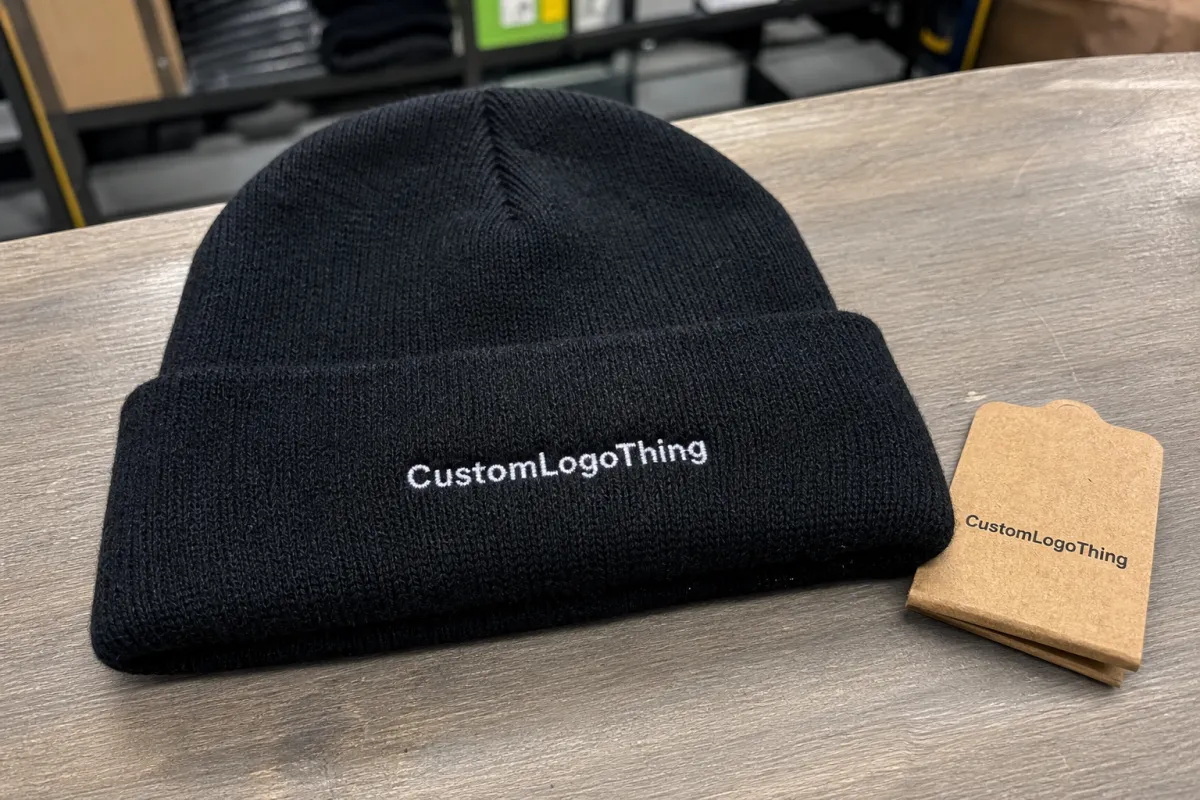
Thick knit and embroidery do not naturally cooperate. Dense yarn, stretch, and a small decoration area all compete for control, so the factory has to stabilize the surface and use a stitch plan that sits on top of the knit instead of disappearing into it. That is a major reason heavyweight winter beanies embroidery cost rises on cleaner jobs.
Small text is usually the first thing to fail. A logo that looks crisp on a flat screen can turn muddy once it stretches across ribbing or a cuff. Buyers usually solve that by enlarging the logo, moving it to a flatter zone, or adding backing so the stitches stay lifted. Those fixes cost money, but they usually cost less than redoing hundreds of hats.
A design that only works on a mockup is not ready for dense knit. The problem is rarely the machine alone. It is usually the mismatch between art, fabric, and placement.
If the logo only works on a flat mockup, it is not ready for a heavyweight beanie.
Winter headwear also gets handled, folded, and stretched more than many other decorated items. That makes weak planning obvious fast. Crowded crests, thin fonts, and loose-recovery knits can produce edges that curl or designs that disappear into the ribbing after a few wears.
Heavyweight Winter Beanie Product Details Buyers Should Lock First
Before anyone quotes embroidery, lock the blank. A useful quote needs the actual product decisions: cuff height, knit thickness, yarn type, lining, and stretch recovery. Those details change both unit cost and how well the logo holds up.
Cuffed rib-knit beanies usually give the best embroidery surface because the cuff is flatter and more consistent. Loose slouch styles can work, but they give the needle less control. Lined styles often feel better, yet the lining changes how backing and stitches behave. If the fabric rebounds too hard after stitching, the logo can pucker or tilt.
Material matters too. Acrylic is usually the easiest to source and embroider cleanly. Wool blends can feel more premium, but they are not always as forgiving under dense stitching. For buyers comparing quotes, the first question should be whether everyone is pricing the same construction. A cuffed acrylic beanie, a double-layer rib knit, and a fleece-lined style are not interchangeable just because the photos look similar.
Color and finish affect MOQ and cost as well. Stock shades such as black, navy, gray, and charcoal are easier to source and often keep minimums lower. Custom-dyed colors, heather effects, and special trims usually push minimums up because the mill needs enough volume to justify the run.
The blank also shapes how the logo reads. A balanced cuff and a clean front mark look intentional. A logo placed too high, too low, or too small looks rushed. That is a planning issue as much as a decoration issue, and it shows up in the quote.
Embroidery Specifications That Protect Logo Clarity
Buyers get better quotes when they speak the factory's language. The useful specs are straightforward: logo width, stitch count, placement, thread colors, and backing method. If those are clear, the factory can tell you whether the design is realistic on dense knit.
For most heavyweight winter beanies, a logo around 2.25 to 3.25 inches wide on the cuff is a realistic starting point. Larger marks can work if the design is bold and the stitch count stays controlled. A medium logo often lands somewhere around 3,000 to 7,500 stitches. More stitches are not automatically better; once the count climbs too high, the beanie gets stiffer and the edge usually gets less clean.
Placement matters just as much. Center front cuff is the safest and most common option. Side placement can look more restrained, but it gives less room for error if the beanie shifts during stitching or during wear. If the logo is too detailed for thread, a woven patch or woven label may be the better answer. That changes pricing because it is a different decoration method, not just a different file.
Thread color count also affects cost. One-color embroidery is usually the cleanest and least expensive. Two- and three-color logos add machine time, thread changes, and more chances for alignment issues. Metallic thread can look strong on winter hats, but it is less tolerant of dense knit and may require slower runs.
Simple art on a stable blank is still the cheapest clean result. Complex art on a stretchy knit is how quotes drift.
Heavyweight Winter Beanies Embroidery Cost Guide: Cost, Pricing, MOQ, and Unit Cost Drivers
A useful heavyweight winter beanies embroidery cost guide separates the blank from the decoration. That is where buyers stop comparing apples to apples and start comparing paperwork to assumptions. For bulk orders, the main pricing levers are order quantity, stitch count, thread colors, setup complexity, sample requirements, and whether the blank has to be sourced specially.
Typical decorated pricing for stocked heavyweight beanies can land in these ranges before shipping:
| Option | Typical MOQ | Approx. Cost Per Piece | Notes |
|---|---|---|---|
| Stock cuffed acrylic beanie, one-color embroidery | 100-300 pcs | $3.00-$5.80 | Lowest risk, easiest to source, cleanest if the logo is bold |
| Heavy rib-knit or lined beanie, two-color embroidery | 100-300 pcs | $5.00-$8.80 | Better handfeel, more stability needed, slightly higher setup charges |
| Custom-dyed blank or special finish with complex embroidery | 300-500 pcs | $7.00-$11.50 | Higher tooling risk, longer lead time, tighter sourcing rules |
Those numbers move quickly if the blank is scarce or the logo is complicated. A lower MOQ usually means a higher unit price because setup charges are spread across fewer pieces. The reverse is also true: once the order reaches 500, 1,000, or 2,500 units, unit cost usually drops because the prep is amortized over a larger run.
Ask for a line-item quote every time. Separate blank cost, embroidery cost, digitizing, sampling, and shipping. That makes comparisons useful. A quote that hides setup in one number may look attractive, but it is hard to tell whether the factory is pricing efficiently or just burying the expensive parts.
Embroidery digitizing or setup often sits around $25-$60 per logo, depending on complexity and whether the file needs cleanup. A clean one-color wordmark and a detailed crest are not the same job, even if they fit on the same hat.
Unit cost also moves with finish level. Individual polybags, size stickers, woven labels, custom hangtags, or carton labeling can change the landed price. A buyer comparing decoration-only quotes to retail-ready quotes will get the wrong answer every time.
Process and Timeline: From Artwork Proof To Ship Date
The order flow should be boring: request quote, confirm specs, submit artwork, approve mockup, approve sample if needed, then start production. If a factory skips steps, it is not being efficient; it is skipping risk control.
The first digital proof should show size, placement, thread colors, and any limits caused by the knit. That proof is the first chance to catch a logo that is too small, too high, or too dense before the machine starts stitching into inventory. Once production starts, changes get expensive fast.
Simple runs on stocked blanks often need about 12-15 business days after proof approval. Add a few days if you want a sample first, and add more if the blank color is custom or inventory is thin. Low stock can quietly add a week. Complex art can add time because digitizing and test stitching need more attention. Shipping time sits on top of that.
Winter orders bunch up. Once fall buying starts, lead times stretch because every buyer wants the same thing at the same time. Even if the embroidery is simple, blank availability can become the bottleneck. For a bulky knit item, a delay in yarn or dyeing is often more damaging than a delay in thread matching.
For packed retail orders, transit planning matters as much as decoration planning. If the beanies need to arrive before a launch or event, build buffer into the calendar. Industry groups like ISTA publish useful transit test standards for packaging and shipping, and FSC certification can matter if your cartons, inserts, or hang tags need sourced paper.
Artwork Prep That Prevents Revisions And Delays
Vector art is best. A clean AI, EPS, or PDF file gives the digitizer something usable without rebuilding your logo from scratch. If you only have a PNG, that can still work for an initial quote if the file is clean and the intended size is stated clearly.
Include exact logo size, preferred placement, thread color references, and any brand restrictions in the first email. That saves time and cuts down on avoidable back-and-forth. If the logo must match a Pantone tone, say so. If a close thread match is acceptable, say that too.
The usual problem areas are easy to spot: tiny text, gradients, overly thin rules, and complicated crests designed for jackets rather than knit headwear. Logos built for flat tees often need simplification before they work on a dense winter beanie.
Request the embroidery simulation on a beanie-style mockup, not just a flat logo floating on white space. That catches placement problems faster than a long email chain. It also helps decide whether to approve direct embroidery or switch to a woven patch, which may hold detail better on a textured surface.
If the art includes very small type, ask for a recommendation on minimum letter height before approval. Many production issues start with text that looked fine in a presentation deck but shrank below what thread can realistically reproduce.
Quality Controls That Keep Bulk Runs Predictable
Predictable runs come from predictable inputs. Consistent blanks, tighter QC, and clear embroidery specs reduce drama on dense winter knit orders. Many buyers approve a vague mockup and hope the factory will figure it out. Hope is not a production plan.
The checks that matter most are simple. Confirm cuff width before digitizing. Confirm logo placement on a stretched sample, not just a relaxed one. Inspect thread tension on the first output. Verify that the backing is cut cleanly and does not show through lighter knits.
Color accuracy needs a realistic standard too. Thread is not paint. Exact Pantone matching is often impossible on textured yarns and dark blanks, so the useful question is whether the match is close enough for the brand and whether the contrast reads properly from a normal viewing distance.
Trim and packaging deserve the same attention. Loose fibers, crooked labels, uneven fold lines, and inconsistent bag sealing all make a bulk order feel less finished. None of those issues are dramatic on their own, but together they change how the product is received.
A dependable knit headwear run should also have a clear approval trail: initial proof, sample if requested, final sign-off, and production record. If something changes midway, the paper trail matters. Without it, a dispute over logo position or shade match becomes a memory contest.
From a buyer's point of view, the payoff is simple. Strong QC keeps unit cost stable, protects launch dates, and reduces the odds of rework.
How To Request A Quote Without Guesswork
Send the request with quantity, beanie style, logo file, preferred placement, target delivery date, and any color requirements. That is the minimum useful input. If the goal is a meaningful answer rather than a generic brochure response, the brief has to be specific.
Ask for two options if possible. One can be the lower-cost version with simple one-color embroidery and a stock blank. The other can be a premium version with more stitch detail, a better yarn hand, or a lined construction. That makes the tradeoff visible instead of buried inside one number.
Before production starts, lock the blank color, embroidery size, thread count, and whether a sample is required. Those four decisions affect almost everything else. If vendors are being compared, compare the same spec, not two different products with similar names.
This heavyweight winter beanies embroidery cost guide works best as a comparison tool. Use it to line up quotes on the same spec set, not on vague promises. If the numbers are separated clearly and the mockup looks right on the actual knit style, the order is probably on the right track.
How much does heavyweight winter beanies embroidery cost per piece?
Pricing usually depends on order size, stitch count, logo complexity, blank quality, and whether setup or sample fees apply. For stocked heavyweight beanies, simple bulk orders often land around $3.00-$5.80 per piece before shipping, while more complex decorated versions can move into the $7.00-$11.50 range. Larger bulk orders usually lower unit cost because setup gets spread across more pieces.
What MOQ is typical for heavyweight winter beanies with embroidery?
Many factories quote around 100-300 pieces, but the real minimum depends on decoration method and blank availability. Simple one-color embroidery on stocked blanks is usually easier to produce than complex, multi-color requests. If you need a lower MOQ, expect a higher unit price and fewer blank color choices.
Does thick knit fabric change the embroidery price on winter beanies?
Yes. Dense knit usually needs a cleaner stitch plan, stronger backing, or a larger logo area to avoid distortion. Very small text and detailed art can add production risk, which can push pricing up or force a simplified design. The safest move is to quote the art against the actual beanie style, not just a flat mockup.
How long does production take after approval?
Simple bulk runs can move in about 12-15 business days after proof approval, but sample approval, custom blanks, and complex embroidery add lead time. Production time is only part of the schedule; shipping time still has to be added on top. If you have a hard event date, build a buffer so a small proofing delay does not derail the order.
What files do you need for an accurate heavyweight winter beanies quote?
A vector file is best, but a clean PNG or PDF can work for the first quote if the logo is clear. Include the logo size, preferred placement, thread colors, and quantity so the factory does not have to guess. The more exact the artwork notes, the faster the quote and the fewer revisions later.

