If you are pricing branded winter merch for a candle launch, reed diffuser set, or holiday gift program, a home fragrance Cuffed Knit Beanies unit cost review is the fastest way to keep the quote from drifting. The blank beanie is rarely the real cost problem. Decoration, packaging, packing labor, and freight usually carry more weight than buyers expect.
That matters because home fragrance teams often judge merchandise by the same standards they apply to packaging: shelf appeal, tactile quality, and how well the item supports a premium story. A beanie that looks cheap next to a well-designed jar or carton can weaken the whole set. One that is specified carefully can do the opposite, even if the garment itself is simple.
The useful way to think about this purchase is as a landed-cost review, not a fashion exercise. A quote should cover the product, the method of branding, the way it is packed, inspection, and the route it will travel. If those pieces are not visible, the lowest number on the page is usually the least meaningful one.
Seasonal runs make this more sensitive. Home fragrance programs often move quickly, ship into a narrow selling window, and need a clean margin. A small shift in knit gauge, embroidery count, or packaging spec can turn a workable item into an overpriced one. That is why the better question is not “how much is the beanie?” but “what does the finished, packed unit actually cost to land?”
For transit-heavy programs, suppliers should also be able to explain how the packed goods hold up in cartons and mixed freight. Testing references such as ISTA transit testing are useful when the route is long or the distribution chain is rough. Packaging discipline matters more than most buyers think, especially when the item is soft goods paired with fragile retail product.
Quote the job the way it ships. If a supplier only gives you a blank beanie price, you are looking at a starting point, not a usable quote.
Why a home fragrance cuffed knit beanies unit cost review matters before you quote
The most common mistake is simple: buyers compare only the garment price. Then the invoice arrives with embroidery, label work, polybags, carton marks, fold-and-pack labor, and freight on top. A beanie that looked acceptable at $4.20 can end up closer to $6.80 landed. That is not a small gap when margin is tied to a seasonal launch.
A sound unit-cost review starts with the use case. Is the item a premium add-on for a candle collection, a staff gift, a gift-with-purchase, or a retail accessory? A retail-ready run usually needs more careful finishing, tighter color control, and cleaner packaging. A basic promo order can stay leaner, but it still needs the real landed number before approval.
Home fragrance buyers also tend to care more about presentation than a standard promotional customer. That changes the spec. The cuff, rib texture, logo placement, and color tone have to support the brand, not just cover a head. Soft goods can look elevated or disposable with surprisingly little change in spec. In practice, the difference is often a better yarn hand, a flatter decoration, and less clutter on the pack.
Low MOQ is not free. Small runs spread setup fees across fewer pieces, and the unit cost rises quickly. That does not make the order a bad idea. It just means the buyer needs to know where the money goes before the artwork is approved.
A careful quote also reduces the chance of hidden substitutions. Some suppliers will quote one decoration method and quietly shift to another if the artwork is difficult or the schedule gets tight. That creates a mismatch between the sample and the production run, which is a problem for a brand that needs consistency across a bundled set.
There is a useful discipline here: ask for the cost by component, not by hope. Blank beanie. Decoration. Packaging. Setup. Freight. Sample. The more clearly those are separated, the easier it is to compare one supplier against another without mixing up real savings with missing charges.
Product details that affect hand feel, fit, and shelf appeal
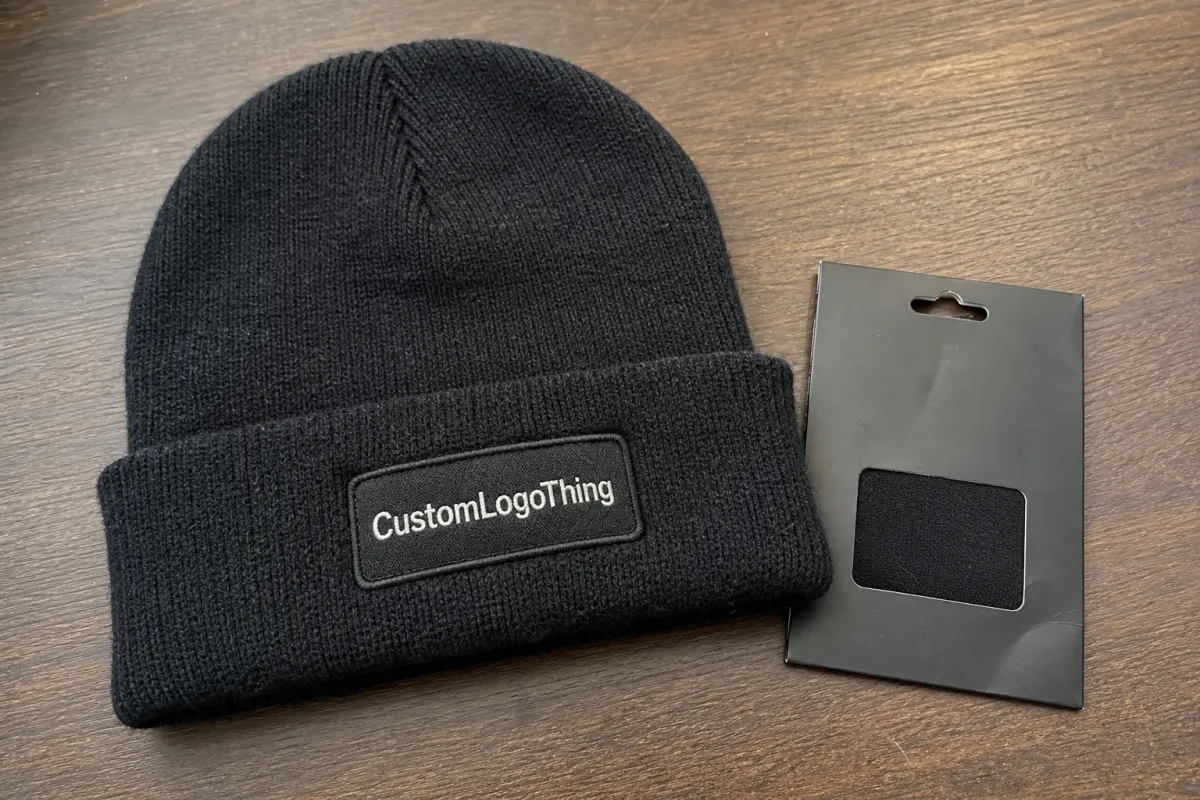
A cuffed knit beanie works because the form is simple and versatile. The folded brim gives a natural branding zone, while the rib knit body stretches enough to fit most heads without a size chart conversation. That practicality is part of its appeal. It also makes the item forgiving enough for gifting and retail, which is useful for home fragrance brands that do not want apparel complexity.
Material choice drives both cost and perception. Acrylic remains the most common body yarn because it is easy to knit, relatively stable in color, and controllable in cost. Wool blends cost more, but they usually deliver a warmer hand and a more premium impression. Recycled yarns are increasingly available, though they can carry tighter color tolerances and sometimes slightly longer sourcing lead times if the exact shade is hard to match.
Feel matters more than many buyers expect. A soft acrylic with decent recovery can outperform a scratchy wool blend if the end user is wearing it casually. Pilling resistance matters too. A beanie that fuzzes after a few wears can make a gift set feel cheaper than it should, especially beside a fragrance product designed to signal refinement. The garment does not need luxury-level yarn, but it does need to survive the customer’s first impression and a few winters of normal use.
Knit gauge changes the look and the cost. A tighter knit, often around a 7-gauge or finer rib, tends to read cleaner and more retail-ready. A chunkier knit looks cozier and more seasonal, but it can use more yarn and add cost. Cuff depth matters for the same reason: a deeper cuff creates more visual weight and more decoration space, while a shallow cuff can look understated and modern.
Fit is not a trivial detail. A snug cuffed beanie looks tidy and premium. A slouchier style feels more relaxed and streetwear-adjacent. Add a pom-pom and the product turns playful, which may suit a holiday campaign but not a polished fragrance launch. The best choice depends on whether the item is meant to feel giftable, retailable, or purely promotional.
For paper components, consider the source and finish of the insert card or hangtag. If the program needs a cleaner sustainability story, FSC-certified paper is a practical benchmark. It does not make a weak product strong, but it does remove one more point of friction when the buyer has to explain the packaging mix internally.
Spec choices worth locking early:
- Body material: acrylic, wool blend, or recycled yarn
- Knit gauge: finer knit for cleaner retail presentation, chunkier knit for heavier winter feel
- Cuff depth: enough room for the logo and any label work
- Finish: no pom-pom for a cleaner brand story, or pom-pom for a seasonal look
- Pack style: folded flat, tissue-wrapped, or polybagged depending on channel
These details look small on a spec sheet. They are not small in production. A cuff that is half an inch deeper, a yarn that is marginally softer, or a label moved from side seam to cuff can change how the item is sampled, priced, and packed.
Decoration and specification choices that move the price
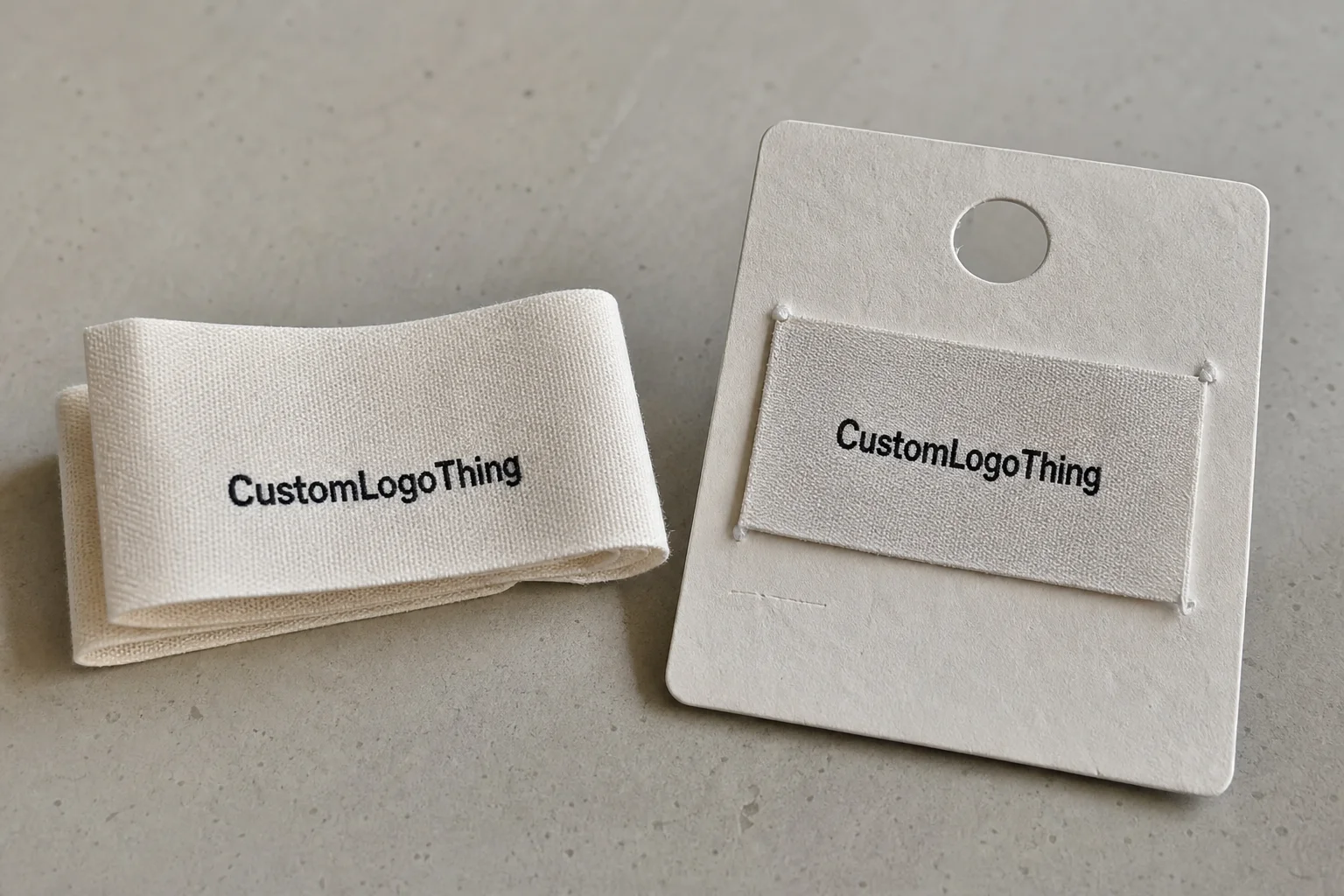
Decoration is where the quote starts to separate into real choices. Small embroidery is usually the simplest and most durable option. A woven patch gives a cleaner retail finish and can handle fine detail better than thread alone. Faux leather patches create more contrast and can feel premium, though they are not always the right visual language for a soft home fragrance campaign. Heat transfer is often the cheapest route, but it can look less permanent and may age less gracefully than stitched work.
On a cuffed beanie, the cuff is usually the best decoration zone. It is flat, visible, and easy to position. Body embroidery can work, but it often needs more stitch control because knit fabric stretches. Side seam labels help when the brand wants a restrained look or the front of the beanie needs to stay uncluttered. If the logo is tiny, a label or woven patch is usually safer than forcing tiny stitching that disappears into the knit.
Setup charges deserve attention. Digitizing an embroidery file can run about $35-$85 depending on stitch complexity. Woven patch tooling can land around $60-$180 if the patch is being built from scratch. Faux leather patch tooling typically sits in a similar range. Add more decoration zones and the setup charges stack quickly. A one-location logo almost always costs less than a front logo plus side label plus hangtag combination.
| Decoration option | Typical setup | Per-piece add-on | Best use case |
|---|---|---|---|
| Small embroidery | $35-$85 digitizing | $0.55-$1.20 | Simple logos, durable branding |
| Woven patch | $60-$180 tooling | $0.40-$0.90 | Fine detail, cleaner retail look |
| Faux leather patch | $50-$150 tooling | $0.45-$1.10 | Premium feel, bold logo contrast |
| Heat transfer | Lower setup, artwork dependent | $0.30-$0.85 | Lower budgets, softer hand feel |
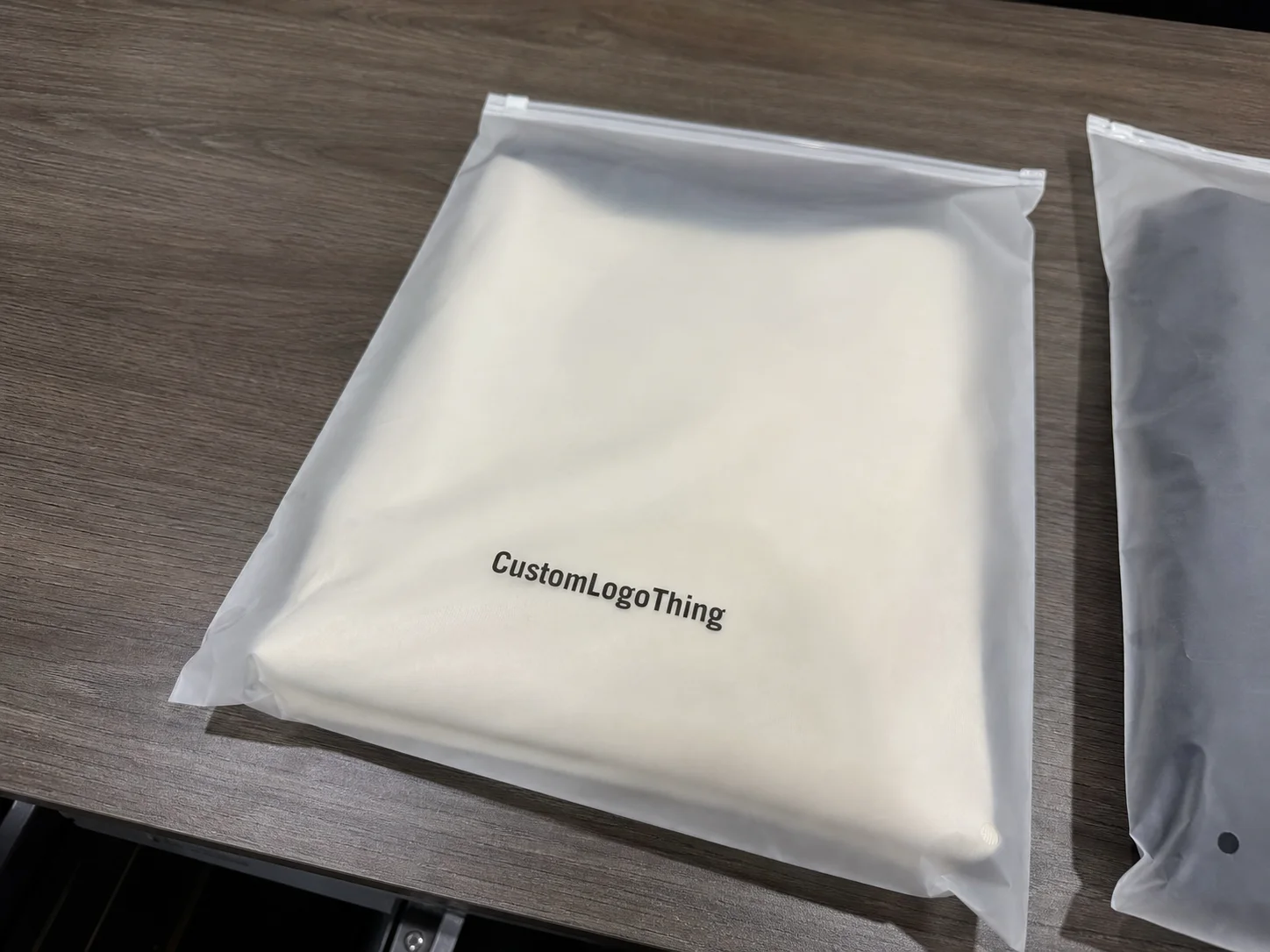
Packaging can add almost as much complexity as the decoration itself. Individual polybags typically add $0.08-$0.18. A hangtag can add $0.12-$0.35. Tissue, insert cards, barcode stickers, fold cards, and size labels all seem minor until they are multiplied across hundreds or thousands of units. The total is rarely dramatic in isolation. Combined, it can change the quote enough to affect approval.
There is also a quality tradeoff. Dense embroidery looks durable, but too many stitches can stiffen the cuff and pull the knit. Oversized patches can feel heavy or awkward in hand. A useful supplier will warn about that before production, not after the first sample is already in motion.
Ask for line-item pricing. Blank product, decoration, packaging, freight, sample cost. If a supplier only gives a single bundled number, comparison becomes guesswork.
Home fragrance cuffed knit beanies unit cost review: pricing and MOQ
Here is the blunt version: small orders are expensive because setup work has to be absorbed by fewer pieces. That is not a penalty for ordering less. It is how production works. Once that is clear, the buyer can decide whether the branding value is worth the spend.
A realistic pricing structure usually has five parts: blank product, decoration, packaging, setup, and freight. The blank beanie is only one line. In many cases, it is not even the biggest one. The buyer who sees only the garment price is missing most of the cost structure; the buyer who sees landed unit cost can actually compare programs.
| Order size | Typical blank beanie | Decoration and packaging | Estimated landed cost per piece |
|---|---|---|---|
| 100 units | $3.80-$6.50 | $2.50-$5.50 | $7.00-$13.50 |
| 300-500 units | $3.25-$5.80 | $1.75-$3.50 | $5.25-$9.80 |
| 1,000+ units | $2.70-$4.80 | $1.10-$2.75 | $4.25-$7.50 |
These ranges shift with yarn type, decoration complexity, and packing spec. A wool blend with multi-location embroidery will sit higher than a stock acrylic beanie with a single woven patch. Mixed colorways often add cost as well, because each shade can require a separate knit run. Mixed sizing is uncommon for beanies, but alternate trims or custom labeling can still create extra handling steps.
MOQ is where the real negotiation begins. Lower MOQ means more machine time per piece, more setup, and more risk for the supplier. If you need 100 units, the unit price will almost always be higher than a 1,000-piece run. If you need multiple colors, confirm whether the MOQ applies per color or across the full order. That detail can change the economics more than the logo method does.
Sample charges should also be explicit. A plain sales sample may be credited back, but a custom sample with the logo and packaging usually carries a real cost. Depending on the build, sample fees often run from $35-$120, and rush samples can cost more. If a supplier says the sample is free, ask what is included. Sometimes “free” only means the cost is hiding inside the production quote.
Freight is the other line item that gets underestimated. Soft goods ship compactly, but cartons still add up, and air freight can erase any savings from a lower factory price. If a supplier is quoting a production number without a shipping method, the comparison is incomplete. A useful quote shows both the ex-factory and landed view so the buyer can see whether the margin still works after transit.
Tradeoff to remember: the cheapest quoted unit cost is not always the lowest landed cost. A low garment price can be offset by packing fees, freight handling, or a packaging spec that is cheap to make and expensive to move.
Sampling, production steps, and lead time from PO to ship
A clean production flow should be easy to follow. First comes the brief and the quote. Then artwork proofing. Then a sample or pre-production sample. After approval, production starts, followed by inspection and shipment. If a supplier cannot explain that sequence in plain language, the process probably is not well controlled.
Lead time depends on the materials and decoration. Stock yarn and simple embroidery can often move in about 12-18 business days from approval, assuming the factory is not overloaded. Custom color matching, patch tooling, or detailed packaging can stretch that to 20-30 business days. Complicated packaging or multiple decoration points can push it further. When a quote promises unusually fast turnaround on a detailed build, the schedule deserves skepticism.
The biggest delays are usually ordinary. Artwork arrives late. Color references are incomplete. A buyer changes the packaging after sample approval. The timeline slips not because the factory cannot knit a hat, but because the approval chain keeps moving. Clear specs shorten the cycle more effectively than pressure ever does.
Simple decoration shortens the schedule. So do stock colors. So does one approved version instead of three variants. Rush orders are possible, but speed usually costs something: higher unit price, fewer color choices, or less flexibility on packaging. That is not a moral issue. It is production capacity.
Inspection should not be treated as optional. A sensible supplier will check stitch consistency, cuff recovery, color match, logo placement, fold style, and carton counts before release. Better suppliers will also provide photo approval or inline QC updates so errors are caught before freight booking. For a branded program, that is not extra polish. It is risk control.
Lead time should be discussed by version, not just by promise. A stock acrylic beanie with one woven patch may ship a week earlier than a wool-blend piece with custom dye lot and printed insert. If those paths are lumped together, the schedule is fiction. Buyers who separate the versions early usually avoid the last-minute scramble that eats margin and patience at the same time.
What a reliable beanie supplier should prove before you place the order
A reliable supplier should prove consistency, not just quote a number. That means stitch quality, cuff recovery after folding, embroidery tension, trim placement, and color control. If the beanie looks clean in one photo and messy in the next, the process is not stable enough for a branded run.
Documentation matters too. A useful quote should include the material description, decoration method, packaging spec, carton dimensions, and a realistic ship date. If the program needs testing or compliance records, those should be addressed early rather than treated as an afterthought. For paper inserts or hangtags, FSC documentation may be relevant. For freight resilience, an ISTA-aware approach is useful. Buyers do not need paperwork theater. They need the right documents for the channel.
Communication is part of quality. Fast, specific answers usually tell you more than a polished deck. A supplier that explains setup charges, flags limitations, and separates exclusions from the base quote is easier to work with than one that says yes to every request and sorts it out later. Later is expensive.
Inspection checkpoints should be visible before release. Good factories will review decoration placement, pack counts, and carton labels before the goods leave the floor. Better ones will share photos so the buyer can approve what matters before freight moves. That reduces rework and avoids the awkward receiving conversation where the merchandise is technically delivered and practically wrong.
There is a simple rule here: if a supplier cannot explain where the unit cost comes from, they probably cannot control it either. That is a serious risk for any program that has a margin target, a launch date, or a retail presentation standard.
One more buyer truth: the most attractive quote is often the one with the clearest exclusions. If freight, sample credits, or carton packing are vague, treat that as unfinished pricing, not savings.
What to send for a fast quote and a clean next step
If you want a sharp quote, send a sharp brief. Quantity, target landed cost, logo file, color references, decoration choice, and packaging needs should all be included. If there is a deadline, state it clearly. If the goods ship to another country, say that too. A quote without destination is just a guess with stationery.
For a home fragrance brand, it also helps to say whether the beanie is for retail, promo, or gifting. Those are different jobs. Retail needs stronger shelf appeal. Promo needs strict cost control. Gifting usually needs cleaner presentation and more careful pack-outs. The more direct the use case, the cleaner the pricing.
A practical approval checklist is short:
- Confirm the size and fit profile.
- Approve the color reference and yarn type.
- Lock decoration placement and artwork size.
- Sign off sample quality before bulk production.
- Confirm carton labels and pack counts.
That sequence keeps the order from drifting. It also makes the unit-cost review useful instead of decorative. Buyers who compare sample quality, production timeline, and landed price together usually make better decisions than buyers who chase the cheapest line item and hope the rest sorts itself out.
Tiered pricing is worth asking for, even if the order is modest. It shows where the breakpoints sit and whether a slightly larger run would improve the economics enough to justify the extra inventory. In soft goods, those breakpoints are often more useful than a single quoted figure because they reveal how much of the price is setup and how much is the actual product.
For most programs, the next move is straightforward: request a tiered quote, request sample cost, and request landed pricing with packaging included. Then compare the total against your margin target. If the supplier can hit the spec and the timing, move forward. If not, adjust the spec before you start squeezing the price.
That is the point of a home fragrance cuffed knit Beanies Unit Cost Review: remove guesswork, expose the real cost drivers, and give the buyer a number that can actually be approved.
What is the typical home fragrance cuffed knit beanies unit cost at low and mid MOQs?
At around 100 pieces, the unit cost is usually highest because setup and labor are spread across fewer hats. At 300 to 500 pieces, pricing usually drops enough to make custom decoration worthwhile. At 1,000-plus units, simple specs and stock materials usually give the best value.
Which decoration keeps a cuffed knit beanie quote the most affordable?
Small embroidery or a woven label is usually the most cost-controlled choice with solid durability. Dense stitch counts, multi-location decoration, and oversized patches raise the quote fast. If price matters most, keep the artwork simple and the placement limited.
How does MOQ change the unit cost review for cuffed knit beanies?
Lower MOQ means setup costs hit each piece harder, so the unit price goes up. Mixed colors or mixed trims can require separate runs and add to the total. Ask for tiered pricing so you can see where the breakpoints actually are.
What should I ask for in a beanie pricing quote before I approve it?
Request separate lines for blank product, decoration, packaging, freight, and sample cost. Confirm whether sample charges are refundable or credited back to production. Ask for lead time on each version, not just the fastest one.
Can home fragrance brands use cuffed knit beanies as bundled merchandise?
Yes, if the beanie is treated as a clean giftable item with simple branding and compact packing. Keep packaging efficient so shipping cost does not erase the margin. Use neutral colors and flexible artwork so the item works across seasonal campaigns.