For buyers quoting a cold-weather favor with actual staying power, a wedding embroidered beanies Unit Cost Review usually tells a more honest story than candles, cookies, or trinkets that disappear before the room is cleared. A beanie gets worn again. That single difference changes the economics. Instead of paying for something that lives and dies on the reception table, you are buying repeated impressions every time a guest pulls it on for a school run, a ski weekend, or a chilly commute.
That matters because wedding budgets are still being squeezed from both ends: guests expect thoughtful details, and planners still need hard numbers. A custom embroidered beanie can work as a favor, a bridal party gift, a welcome-bag insert, or a practical accessory for an outdoor ceremony. The purchase only makes sense, though, if it is quoted like a production item rather than treated as decor.
The useful questions are not glamorous. Which styles actually hold embroidery well? Which specs drive cost? Where does a quote hide the real expense? Those answers decide whether the order feels efficient or merely cute.
Why embroidered wedding beanies outlast disposable favors
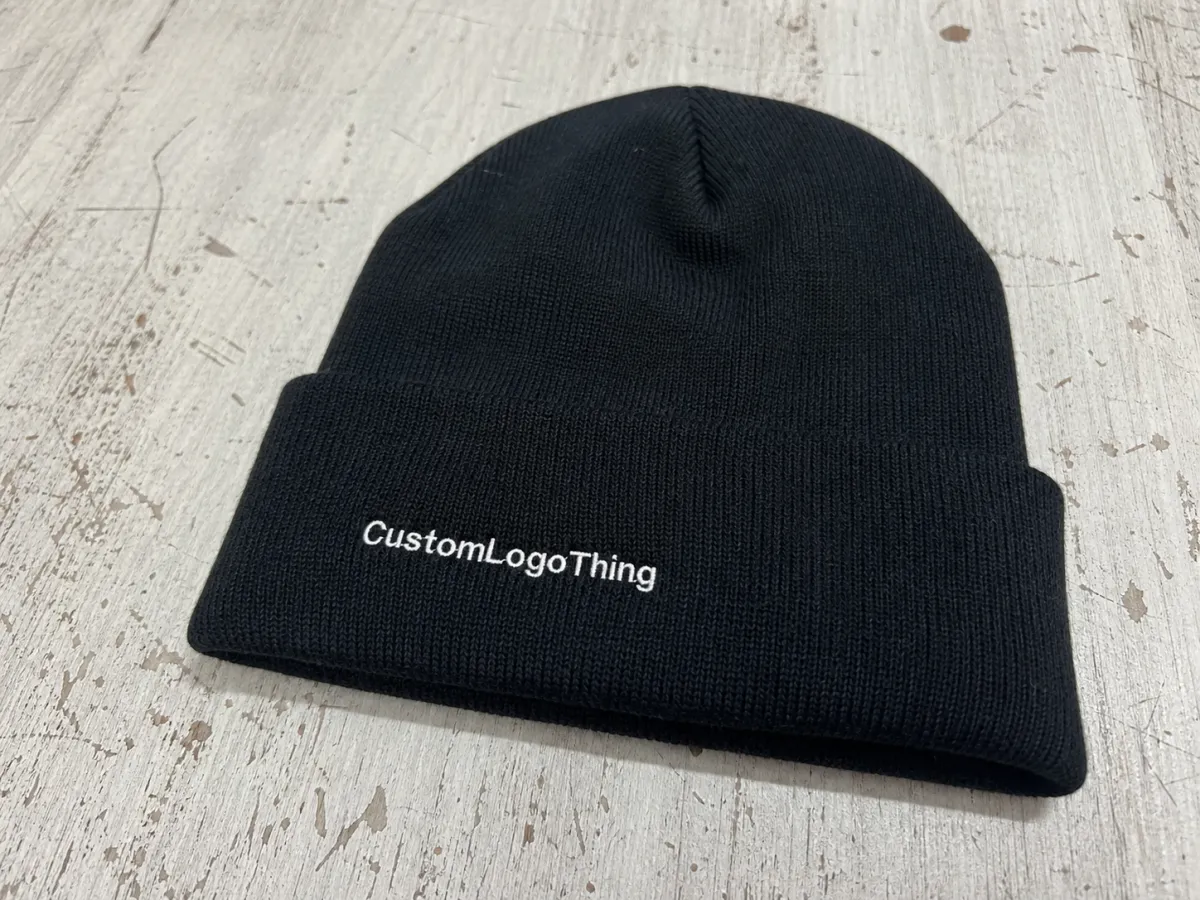
Most disposable favors have a very short half-life. Candles get forgotten, sweets get eaten, and novelty items get left in hotel rooms. A beanie behaves differently because it has utility built in. It protects against cold, fits into daily life, and does not require the guest to find a place for it on a shelf.
That reuse matters. A favor worn ten times has a much lower cost per impression than an item used once, even if the upfront unit price is higher. For a winter wedding, mountain ceremony, or lodge reception, the wear rate is especially strong because guests actually need the item. The same is true for destination events where the beanie doubles as a practical travel piece.
There is also a presentation advantage. A cuff with clean embroidery can carry initials, a date, or a small icon without turning the hat into advertising. The item stays giftable. It reads as intentional, not promotional. That balance is hard to hit with many other favors.
The best orders usually keep the decoration restrained. A 2 to 3 inch mark on the cuff often looks more polished than a larger, crowded logo. Smaller artwork is easier to read, easier to stitch cleanly, and less likely to make the beanie feel like leftover merch. In photographs, restraint usually wins.
“A useful favor rarely feels expensive in hindsight. A forgotten favor always does.”
That is why beanies show up in bridal party boxes, welcome kits, and event merch more often than people expect. The value is not just in the embroidery. It is in the second, third, and tenth use after the event ends.
Product styles that fit the event, not just the mood board
Start with the shape. The most quote-friendly styles are the ones factories already make in volume: Cuffed Knit Beanies, slouchy beanies, ribbed beanies, pom-pom styles, and occasional hybrid knits for warmer climates. Each changes the decoration area, the fit, and the way the logo photographs.
Cuffed Knit Beanies are the safest choice for embroidery because the cuff gives the decorator a flat, visible zone. That makes initials, monograms, and short wordmarks easier to place. Slouchy beanies feel looser and more relaxed, but the decoration can drift visually as the fabric drapes. They work best with compact marks. Pom-pom styles add personality, though the top detail can compete with the logo if the art is too large or too busy.
Color should follow the event palette, not the trend cycle. Ivory, heather gray, charcoal, navy, forest green, and soft taupe photograph well across skin tones and hold up in most wedding environments. Darker neutrals tend to perform better in snow, lodge interiors, and low light. Muted earth tones often look more deliberate than bright seasonal colors for fall ceremonies or coastal events.
The guest mix matters too. A younger group may accept a more relaxed fit and bolder color. An older crowd usually prefers classic structure, familiar neutrals, and a modest logo. Bridal party gifts can carry more personalization; guest favors should stay simpler. The most order-friendly style is usually the one that gives embroidery a calm surface and does not force the design to do extra work.
Use case changes the product choice:
- Bridal party gifts: initials, names, or a private reference can justify a more personal layout.
- Guest favors: smaller logos, cleaner packaging, and predictable sizing reduce risk.
- Planner or vendor apparel: repeatable color and durability matter more than novelty.
- Destination wedding merch: strong visual identity can support a slightly higher perceived value.
The cheapest path is usually stock beanies plus embroidery. Custom yarn, custom knitting, or special trims can make the order look bespoke, but they also add time and minimums that a wedding calendar often cannot absorb.
Specs that control embroidery quality, hand feel, and fit
Three decisions drive the result more than anything else: fabric blend, knit structure, and decoration size. Acrylic, acrylic-wool blends, and polyester blends all appear in this category. Acrylic is common because it keeps prices manageable and feels soft enough for most wearers. Wool blends can feel more premium, but they can add cost and sometimes create comfort concerns for people with sensitive skin.
Knit density matters just as much. A tighter knit gives embroidery a cleaner base and reduces puckering. A looser knit can feel warmer and more casual, but small lettering can get lost faster. Cuff depth is another quiet detail with a real effect. A deeper cuff gives the logo more visual authority, especially for front-center placement. For most wedding orders, one-size-fits-most construction is practical as long as the stretch range is generous and the hat does not squeeze the head.
Decoration size changes both the appearance and the cost. A 2-inch logo with 6,000 to 8,000 stitches is one category. A 4-inch emblem with dense fill and thin linework is another. The second version requires more machine time, more thread changes, and more checking. If the artwork uses tiny script, overlapping letters, or narrow lines, it should be simplified before digitizing. A good embroidery proof is usually cleaner than the original artwork, not more literal.
Placement changes the tone. Front cuff is standard for most wedding orders because it is readable and easy to inspect. Side cuff works when the goal is subtle branding or a small monogram. Center front on the body of the beanie can work, but only when the knit has enough stability. In some cases, a woven patch produces better detail than direct embroidery, especially on ribbed surfaces where fine letters can blur.
Thread count and thread color count deserve close attention. One-color embroidery is usually the simplest and most predictable. Two or three thread colors still stay within a normal production lane. Once the art asks for gradients, small shade changes, or multiple accents, the quote can rise quickly. Simplifying the art often improves the final result rather than weakening it. Embroidery needs to read from a distance, not imitate a printed file pixel by pixel.
Packaging and shipping specs matter more than many buyers expect. If the beanies will go into welcome boxes or mailers, ask how they are folded, polybagged, and carton-packed. The better suppliers think about moisture, creasing, and presentation before the boxes move. For buyers comparing shipping or sustainability standards, resources like the ISTA testing framework and the FSC certification system can help shape expectations around transit and paper-based materials.
Wedding embroidered beanies unit cost review: pricing, MOQ, and setup fees
This is where many buyers misread the quote. A wedding embroidered Beanies Unit Cost Review is not just about the lowest headline price. The real question is how blank product cost, decoration cost, setup, and freight combine into a landed number. A supplier can present a low unit rate and still add digitizing, proofing, rush charges, and shipping later. By the time those are added, the “cheap” quote may be more expensive than a cleaner, more transparent one.
Typical pricing often breaks down like this:
- Blank beanie: often $1.20-$4.50 depending on blend, thickness, and style.
- Embroidery: often $0.80-$2.50 per piece for a simple cuff logo, more for dense stitching.
- Digitizing or setup charges: commonly $25-$100 one time, depending on artwork complexity.
- Sample or pre-production proof: sometimes free, sometimes billed at a one-off rate.
- Shipping and packaging: highly variable, especially when timing is tight or shipments are split.
MOQ changes the math fast. If a factory prefers 100 pieces and the buyer only needs 40, the order usually absorbs more of the setup cost per unit. The vendor may also limit color choices or decoration complexity. Once the order moves into the 100 to 250 range, the per-piece price often drops sharply because the fixed costs are spread out more efficiently. That is why a quote for 50 pieces can look stiff while a 150-piece order lands in a much more attractive band.
Here is a practical way to compare quote tiers:
| Order tier | Typical unit price | Setup impact | Best for |
|---|---|---|---|
| 25-49 pieces | $6.50-$11.00 | Setup charges hit harder per unit | Small bridal parties or VIP gifts |
| 50-99 pieces | $4.25-$7.50 | Digitizing is easier to absorb | Mid-size guest favors and welcome bags |
| 100-249 pieces | $3.25-$5.50 | Better spread on tooling fees | Destination weddings and planner programs |
| 250+ pieces | $2.50-$4.25 | Lowest cost per piece, if art stays simple | High-volume event merch or resale |
The phrase “tooling fees” gets used loosely in apparel, but on embroidery orders it usually means digitizing, machine setup, or program preparation. Ask what is actually included. Does the quote cover artwork conversion, proof revisions, and one round of changes? Or is each correction billed separately? That answer can move the final total more than thread color changes.
A good quote should separate the blank beanie, decoration, setup, and freight. If it does not, ask for a landed-cost version. Comparing only the unit price misses the point. Comparing the delivered cost shows whether the order is truly competitive.
One more caution: custom yarn colors and specialty knit specs can raise minimums and slow production. If the wedding date is fixed, stock beanies with simple embroidery are usually the safer trade. They cost less to produce, carry less schedule risk, and are easier to replace if something goes wrong.
Proofing, sampling, and turnaround from art file to delivery
The production flow is straightforward on paper, but every missed detail adds time. It starts with the file. Vector artwork is best: AI, EPS, or PDF with clean paths. A low-resolution PNG can help as a reference, but it should not be the digitizing source. From there, the supplier creates a mockup showing placement, stitch style, and thread colors. That proof should be checked carefully. A rushed approval can create an expensive problem that only becomes visible after the hats are stitched.
Sampling usually happens in one of two ways. Some buyers approve a digital proof and go straight to production. Others want a physical sample first. A sample is worth the extra time when the artwork is detailed, the guest count is high, or the event deadline leaves no room for error. For simple logos and short timelines, skipping the physical sample may be reasonable. The right answer depends on risk, not habit.
Typical turnaround after proof approval is often 2 to 4 weeks, but that window can stretch with larger quantities, dense embroidery, or peak-season demand. Rush production exists, though it usually increases cost and leaves less room for corrections. In practice, the cheapest timeline is the one with enough breathing room to avoid rush pricing in the first place.
Freight needs its own buffer. Even a well-run production schedule can be held back by shipping delays. For destination weddings or split delivery addresses, the ship-to details should be locked early. A wrong address is more expensive than an extra week of lead time. Venue drops are particularly sensitive because nobody wants boxes arriving after the rehearsal dinner has already started.
There is one inspection step that too many buyers skip: ask for a photo of the finished embroidery before the boxes leave the warehouse. Check placement, thread color, cuff alignment, and pack count. On a wedding favor order, even a small mismatch can stand out because the items are often handed out all at once.
A clear process usually looks like this: file received, mockup issued, revisions handled, sample approved if needed, production run, inspection, pack-out, and shipment. If a supplier cannot explain that sequence in plain language, the order carries more risk than it should.
What separates a dependable beanie supplier from a bargain quote
Low price is easy to put in an email. Reliability takes work. The stronger vendors confirm the beanie style, knit structure, thread colors, decoration size, packaging, and delivery window before production starts. They do not guess. They do not leave room for “close enough.” That discipline matters on wedding orders because the entire shipment rides on one date.
Good suppliers also document the details. A proper proof should show artwork scale, estimated stitch count, placement measurements, and any limitations tied to the fabric surface. If the beanie is ribbed, the vendor should explain whether the art needs to be flattened or simplified. If the order includes initials or a date, spelling should be checked more than once. These are ordinary controls, but they prevent the kind of errors that are painful to fix later.
Bargain quotes usually reveal themselves through omissions. Vague lead times. No sample policy. Hidden freight. No digitizing charge listed up front. A quote that skips those items may look lower at first and cost more in practice. The same warning applies when a supplier promises perfect color matching without asking for references or approved brand colors. Accuracy should be described, not assumed.
Packaging can expose the difference between a careful supplier and a weak one. If the beanies are going into welcome boxes, the folding method, polybag count, and carton layout matter. A supplier that understands packing logic will think about moisture, damage, and presentation before the goods ship. A supplier that ignores it may deliver a technically correct product in a format that creates extra work on arrival.
For event orders, the real cost of a poor supplier is rarely the quoted price. It is rework, missed deadlines, and last-minute substitutions. A slightly higher upfront number is often the safer buy if it comes with better control. In this category, the difference between a dependable vendor and a bargain quote usually appears in the communication trail long before the boxes arrive.
One useful test is to ask the vendor to restate the order in plain language. If they can repeat the style, logo placement, thread count, packaging request, and delivery window without drifting, they probably understand the job. If they cannot, keep comparing.
Next steps to lock quantities, artwork, and ship dates
Before approving anything, lock five facts: guest count, size expectations, color choice, logo file format, and event date. If the beanies are favors, gifts, or merchandise, say so plainly. The purpose affects the quote. A favor order usually favors lower cost and broader fit. A gift order can justify a softer yarn or a more polished presentation.
Ask for two quote versions if possible. One should reflect the target MOQ. The other should show a higher-volume tier so you can see where the cost per piece drops. That comparison often reveals the real break-even point. Sometimes adding 20 or 30 units barely changes the total, which can be useful if a planner wants a cushion for damaged packaging or late additions.
Then review the proof with the wedding calendar in mind. Placement should sit where it will actually be seen. Thread colors should stay close to the event palette. The shipping window should leave room for freight delays, venue changes, or a backup address. If the event is in a cold region, ordering a few extras is often wise because guests tend to keep the hats instead of leaving them behind.
Use the wedding embroidered Beanies Unit Cost Review lens to compare the final numbers, not just the first line on the quote. A well-quoted order should give you clear unit cost, clear MOQ, clear setup charges, and a realistic ship date. That is the combination that arrives on time, looks right, and stays in use after the reception is over.
What affects the unit cost of embroidered wedding beanies most?
Quantity usually has the biggest effect, followed by stitch count, embroidery size, and thread color count. Setup or digitizing fees can raise the first order, but they spread out better on larger runs. Rush timing, custom colors, and extra packaging can also push the final number up.
What MOQ should I expect for wedding embroidered beanies?
Many suppliers price more favorably at 50 to 100 pieces, with better bulk pricing as the run gets larger. Below MOQ, buyers often face a higher cost per piece or fewer decoration options. If the event is small, ask about stock beanie styles or partial custom runs.
How long does production usually take after proof approval?
Standard timelines often run about 2 to 4 weeks from proof approval to shipment, depending on quantity and decoration complexity. Custom yarn requests, dense artwork, and peak-season demand can stretch that window. Leave extra time for freight and any wedding schedule changes.
Can wedding beanies match specific colors and initials?
Yes, most orders can match thread colors closely and place initials, monograms, or date marks on the cuff. Color matching works best when buyers provide Pantone references or approved brand colors. Very small text or dense artwork may need simplification so it stitches cleanly.
How do I compare quotes without missing hidden charges?
Check whether the quote includes digitizing, samples, freight, rush fees, and packaging. Make sure the beanie style, decoration location, and stitch count match across every vendor quote. Ask for landed cost, not just the unit cost, so the final budget is accurate.

