ecommerce soft touch poly mailers Bulk Order Planning sounds like a procurement line item until the first packed sample hits the bench. Then the details show up. A mailer that looked fine in a mockup may be too narrow for a folded hoodie, too slick for quick packing, or too fragile once a box corner presses against the seam.
The soft-touch finish is part of the appeal. It gives the package a more premium feel and makes the brand look considered instead of disposable. But that finish also raises the bar on quality control. Scuffs show sooner. Dark solids can pick up rub marks. Print placement matters more because a soft matte surface reveals inconsistency faster than a shiny one.
A mailer that works on paper but slows down the pack line is not a bargain. It is a problem with a nicer surface.
Why specs break bulk orders
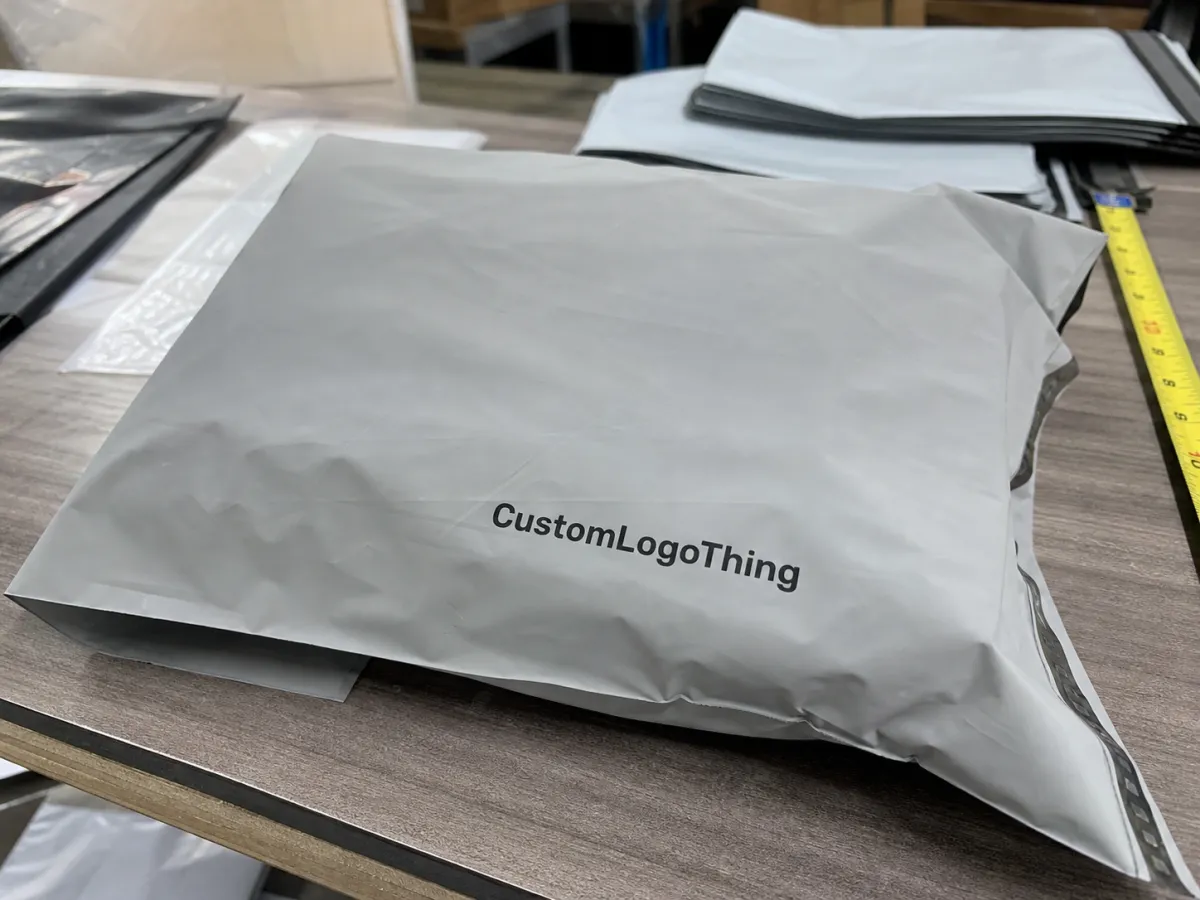
Most bulk-order mistakes start with vague specs. Buyers often approve a render, then discover the real product does not fit the way the flat artwork suggested. The usable interior space shrinks once side seals, adhesive flaps, and print-safe margins are counted. That is why ecommerce soft touch poly mailers Bulk Order Planning should begin with the packaged item, not the design file.
It helps to think in terms of how the mailer will behave through the full fulfillment path. The item gets folded, packed, sealed, stacked, shipped, dropped, and handled again at arrival. A good spec has to survive all of that without popping open, scuffing the print, or turning the packing table into a rework station.
Before asking for quotes, lock down the numbers that actually shape the order:
- Finished packed size, including inserts, tissue, or a return label pocket.
- Typical packed weight and the heaviest SKU that will use the mailer.
- Closure style, such as peel-and-seal, tamper-evident, or tear strip.
- Print zone so logos stay clear of folds, seams, and the adhesive edge.
- Fulfillment path from pack table to carton to carrier pickup.
Those details make the difference between a tidy reprint and a costly correction. If the team still needs a baseline construction to compare against, the Custom Poly Mailers category is a practical starting point before artwork decisions start pulling the spec in five directions.
Material, finish, and print details
Poly mailers are usually made from layered polyethylene film. The actual question is not whether the bag looks good on the table, but whether the structure stays intact after packing, stacking, and transit. A lighter build in the 2.5 to 3 mil range is often enough for apparel and accessories. Heavier products, sharper corners, or mixed-content orders usually need closer to 4 mil, plus stronger seams and a more forgiving seal area.
That thickness choice affects cost, feel, and production time. It also changes how the mailer behaves in the hand. A thicker bag can feel more substantial, but if the film is overbuilt for the product, the price climbs without adding real protection. The point is not to make the mailer as heavy as possible. The point is to match the build to the shipped item.
Soft-touch finishes are not all the same. Some suppliers use a matte soft-touch lamination over printed film. Others use a coated layer or surface treatment that gives a velvety feel without adding much bulk. The first option often gives a deeper tactile effect. The second can keep cost and weight under better control. Either way, the finish needs to be checked against the artwork, because large solid areas and dark colors show wear faster than simple graphics.
Printing deserves the same attention. Confirm the number of colors, the total coverage area, and the registration tolerance before the quote is locked. If the design uses a flood background, ask how it behaves around the seal and side edges. Flexible packaging does not always hold razor-sharp edges the way a rigid carton might, and buyers should see that in a proof instead of discovering it on arrival.
Useful options to confirm early include:
- Peel-and-seal adhesive for quick packing and a clean closure.
- Tear strip for easier opening without tearing the print face.
- Tamper-evident seal for higher-value goods or mixed fulfillment lines.
- Reinforced seams where hard edges or shifting contents may press against the bag.
For buyers building a larger packaging program, the Custom Packaging Products page helps keep mailers, cartons, inserts, and labels aligned as one system instead of a stack of unrelated buys. That matters more than people admit. Packaging issues rarely happen in one component alone.
Durability testing does not need to be elaborate to be useful. A few checks inspired by ISTA methods are enough to catch obvious weak points. The ISTA testing guidance is a solid reference if you want a practical benchmark for drops, vibration, and rough handling. A mailer that rubs off in transit is not premium. It is just more expensive damage.
Size, strength, and fit specifications
The most expensive sizing error is the one that appears after production starts. A catalog dimension can sound right and still fail in real use once the flap, seams, and margin allowances are counted. Buyers should document the internal usable dimensions, not just the flat outer size, and tie those dimensions to the heaviest or bulkiest SKU in the range.
ecommerce soft touch poly mailers Bulk Order Planning also has to account for product mix. A single hero item may fit beautifully, then a second item with a box, label, or insert forces the whole packout to bulge. That is where puncture resistance, seal width, and film thickness stop being spec-sheet language and become the difference between a smooth line and a return pile.
Pack samples are the fastest way to reduce that risk. Put the actual product inside the mailer. Close it the way fulfillment will close it. Then test the sample with the basic abuse it will see in the warehouse: stack it, bend it, shake it, and see whether the seal starts to lift or the corners start to bite through the film. If the product is on the edge of the size range, compression matters more than elegance.
Some teams also use simple references from ASTM standards such as ASTM F88 for seal strength and ASTM D882 for film performance. Those references do not replace a real pack test, but they give procurement and production a shared language. That helps when one team is talking about cost and the other is talking about whether the bag actually holds.
Do not ignore the small operational details. Flat-packed or nested bags change how quickly the warehouse can use them. Carton counts affect storage. A return label pocket may take space away from artwork. If inserts or tissue are part of the order, they need to be included in the size spec up front. A tight pack that forces repacking is not efficient. It just moves labor from one person to another.
For repeat programs, record these items in the spec sheet:
- Usable interior dimensions measured against the real packed product.
- Minimum film gauge acceptable for the product range.
- Seal width and where the adhesive begins and ends.
- Artwork safe zone around folds, gussets, and closures.
- Packing format, including carton count and whether bags are flat or nested.
Pricing, MOQ, and unit cost drivers
Soft-touch poly mailer pricing is shaped by more than quantity. Material gauge, finished size, number of print colors, finish method, pack format, and freight method all move the final number. Two quotes can look close on unit price and still land very differently once setup, shipping, and storage are included.
MOQ changes the math fast. Short runs carry more setup overhead per piece because the supplier still has to prep files, plates, line time, and packing labor. Larger runs spread those fixed costs across more bags, which is why a 1,000-piece order often feels expensive while a 10,000- or 20,000-piece order can be easier to justify for a repeat program. For teams comparing volume tiers, the Wholesale Programs page is a good reference for how pricing behaves as quantity climbs.
| Quantity tier | Typical unit price range | Main cost pressure | Best fit |
|---|---|---|---|
| 1,000-2,000 pieces | $0.40-$0.75 each | Setup fees and short-run overhead | Launch tests, seasonal drops, small SKU trials |
| 5,000 pieces | $0.18-$0.35 each | Balanced setup spread and moderate freight | Growing brands with steady weekly ship volume |
| 10,000-20,000 pieces | $0.12-$0.24 each | Material efficiency and better production economy | Repeat programs and predictable fulfillment cycles |
Indicative only: those ranges move with size, print coverage, film gauge, and freight lane. I would rather see a buyer compare landed cost than chase the lowest unit number. Freight, duties if applicable, storage space, and internal pack labor can erase a cheap quote very quickly. That is especially true for mailers with heavy print coverage or a specialty finish.
There is another hidden cost: waste from bad fit. A mailer that is too small creates repacks. A mailer that is too large wastes material and takes up more carton space. If the product range has only a few variants, it can be cheaper to standardize on one or two sizes instead of squeezing every SKU into a different bag. That is not glamorous. It is just good purchasing.
Process, proofing, and lead time
A clean order usually follows the same sequence: spec review, artwork proof, sample approval, production scheduling, packing, and shipment booking. The part that gets people into trouble is not the factory work. It is the delay between each approval step. Someone wants a color tweak. Someone else wants a different seal note. Then the sample sits while five people stare at it from different angles.
That is why ecommerce Soft Touch Poly mailers Bulk Order Planning works better when production time and total turnaround time are kept separate. A supplier may quote 10 to 15 business days after approval, but that is not the same as door-to-door delivery. Freight method, carton volume, destination, customs timing, and consolidation schedules all affect the real date. Domestic trucking may only add a few days. International freight can add much more, especially if the order lands near a busy shipping window.
For planning purposes, a realistic window often looks like this: 1 to 3 business days for artwork proofing, 5 to 10 business days for a physical sample, 10 to 20 business days for production after approval, and then shipping time based on the lane. That is not a promise. It is a useful guardrail. It keeps a launch date from floating because someone assumed proofing would move faster than it actually does.
For teams that need a shared vocabulary before issuing a request for quote, packaging.org is a useful reference for packaging terms and category basics. It will not make a slow approval cycle faster, but it does help prevent confusion between bag styles, materials, and print methods.
The cheapest way to miss a launch date is to treat proofing like a formality. It is not a formality.
One habit saves a surprising amount of money: approve a physical sample or a production proof with the exact finish and closure style before the full run starts. That simple step catches color issues, seal questions, and awkward fit problems before they turn into air freight charges or a warehouse rework.
Supplier quality and reorders
Repeatability is the real test. A supplier can get one order right and still be poor to work with if the second order drifts in color, finish, thickness, or seal performance. The first order is about approval. The second and third are about whether anyone is keeping records properly.
Ask what gets stored with the job file. A decent record should include approved artwork, dieline, measured dimensions, sample photos, seal notes, and any packing instructions that affect the finished product. That file matters when the brand wants the same run repeated months later. It also matters when a new buyer inherits the account and needs to understand what “same as last time” actually meant.
Quality control should be visible, not implied. Good checks usually include print inspection, seal verification, carton labeling review, and sample retention from each run so there is something real to compare against later. If the supplier mentions seal testing, ask whether they use a simple pull test, a visual checklist, or a lab-style reference such as ASTM F88. The answer does not need to sound impressive. It just needs to be specific.
Suppliers that handle repeat programs well also answer plainly about material limits, minimums, and realistic timelines. That kind of straight talk matters more than polished reassurance. If the supplier also manages broader sourcing through Custom Packaging Products or ongoing Wholesale Programs, ask how they separate standard replenishment from fully custom work so one project does not block the next.
If the order includes paper inserts, cartons, or other fiber-based components, the FSC system matters for those pieces, even though the mailer film itself is plastic. Buyers sometimes blur those claims together. They should not. A clear spec keeps sustainability language honest and avoids mixing two different material stories in the same packout.
Good suppliers also flag the limits of the finish. Soft-touch coatings can look excellent, but they are not magic. They still need sensible storage conditions, clean handling, and realistic artwork choices. A full black flood with a lot of handling abuse is going to show wear sooner than a lighter design. Pretending otherwise does no one any favors.
Next steps and checklist
Start with one clean brief. Keep the key facts in a single document: finished size, packed product weight, artwork files, target quantity, closure type, and any warehouse constraints. If the product comes in several sizes, note the largest packed version first and build backward from there. It is much easier to trim a spec later than to fix an undersized mailer after approval.
Ask for a quote that separates unit price, setup cost, sample cost, freight, and optional upgrades. That makes comparison much easier. A low unit price can hide expensive shipping or a slow proof cycle. If the order will repeat monthly or quarterly, ask for tiered pricing so you can see where the real breakpoints begin.
Before release, approve a physical sample or production proof if the finish, color match, or seal performance affects the customer experience. Save the approved sample details in the job record. That gives procurement a reference for the next reorder and gives operations a clear point of comparison if the shipment ever needs a quality review.
Handled that way, ecommerce soft touch poly mailers bulk order planning stops feeling like guesswork. It becomes a repeatable purchasing process with a cleaner spec, better cost comparison, and fewer surprises once fulfillment starts moving at volume.
- Confirm fit with the real packed item, not only the flat size.
- Choose finish and film gauge together so the look does not outrun the structure.
- Request landed cost instead of comparing unit price alone.
- Approve a sample before production starts, especially for new artwork or a new finish.
- Save the approved spec so the next reorder matches the first one.
Frequently asked questions
What should I confirm before ordering ecommerce soft touch poly mailers in bulk?
Confirm the finished size, the heaviest product weight, closure type, print coverage, and how the mailer will be packed in fulfillment. Ask for a sample or proof so you can check fit, seal strength, and the soft-touch finish before approving the full run.
Does a soft-touch finish change the way bulk poly mailers perform?
Yes. The finish affects scratch visibility, tactile feel, and how well the printed surface holds up during shipping and storage. It does not replace the need for proper film thickness, seam strength, and adhesive performance.
What MOQ is typical for custom soft-touch poly mailers?
MOQ varies by size, print complexity, and production setup. Smaller quantities usually carry a higher per-unit cost. Ask for tiered pricing so you can compare the MOQ option against the next price break before committing.
How long does the bulk order process usually take?
Timing depends on proofing, sample approval, production scheduling, and the freight method you choose. The fastest orders are the ones with locked artwork, clear specs, and a quick approval cycle.
How can I lower unit cost without weakening the mailer?
Use the smallest practical size, avoid unnecessary print complexity, and compare pricing across several quantity tiers. Keep the functional spec consistent first, then adjust finish or add-ons only where they improve the customer experience.


