Hotel amenity buyer Corrugated Mailer Boxes cost guide is the kind of search phrase people type after a cheap order has already gone sideways. The quote looked tidy. The fallout did not. Damaged kits, repacking labor, label rework, and emergency reships tend to hide off the spreadsheet until they hit a budget line nobody planned to defend. A box is never just a box once a guest is waiting for the room to be ready.
For hotels, resorts, and property groups, a corrugated mailer does more than move product from point A to point B. It protects the contents, shapes the guest's first impression, and reduces handling time for staff who already have enough moving parts in a shift. A good mailer keeps amenity kits aligned in transit and presentable on arrival. A weak one bends, crushes, and sends the whole program back through housekeeping for a second pass. That second pass is where the real expense starts, and it is usually the part nobody budgeted for.
I have sat through sample reviews where the box looked perfect on a desk and failed the first time it was loaded on a housekeeping cart. That is why this hotel amenity buyer Corrugated Mailer Boxes Cost guide stays practical. I am not trying to romanticize cardboard. I am trying to show what actually pushes the quote up, what controls MOQ, where setup charges creep in, and how to ask for pricing that can be compared without guesswork.
Hotel Amenity Buyer Corrugated Mailer Boxes Cut Damage and Repack Waste
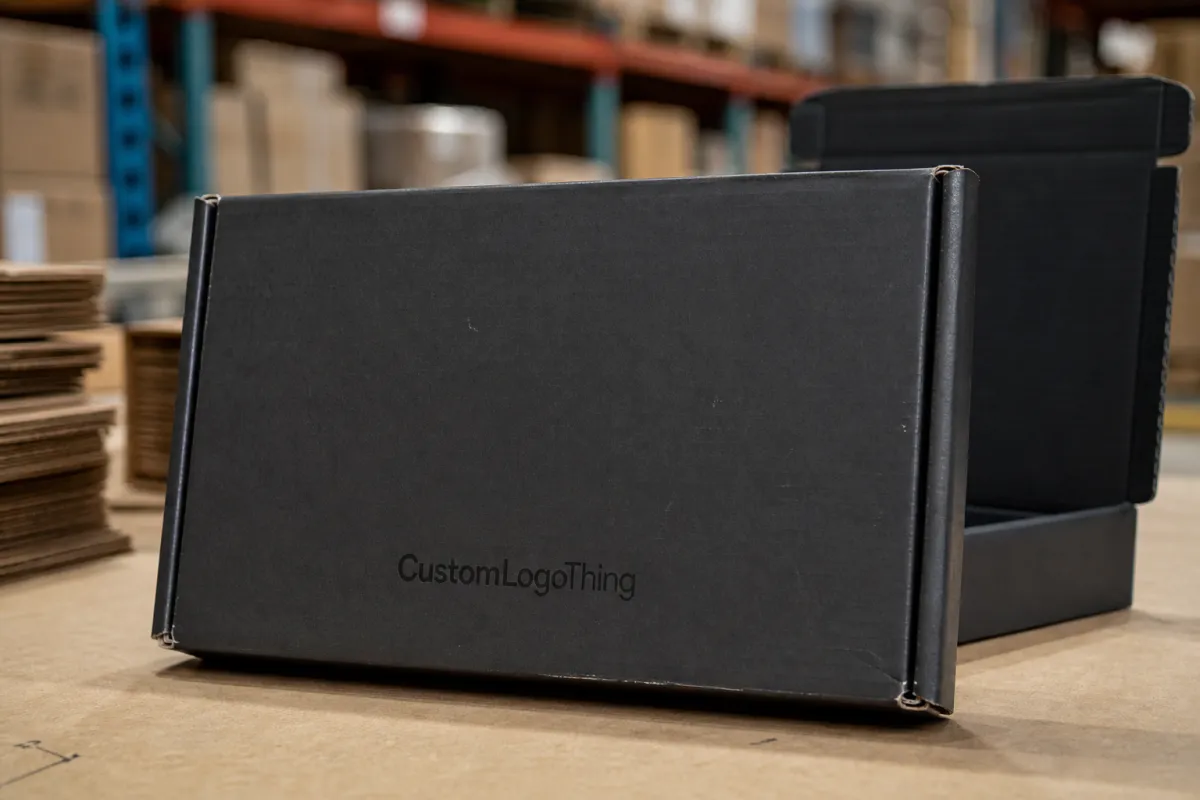
The cheapest-looking carton often becomes the most expensive one. That sounds backward until you count bent corners, torn sleeves, broken bottles, and staff time spent fixing a shipment that should have arrived ready to hand over. The hotel amenity buyer Corrugated Mailer Boxes cost guide starts there, with the hidden cost of failure rather than the price printed on the quote.
Take a standard welcome kit: toiletries, a linen slip, slippers, and a note card. If the board flexes too much, the pieces shift. If the walls are too light, the box crushes on a cart or in a holding area before it ever reaches a guest. Better corrugated structure keeps the set square, stacks cleanly, and lowers the odds that housekeeping has to open and repack anything. That is labor saved, not just packaging improved.
Format matters as much as board strength. Corrugated mailers sit in a useful middle zone. They offer more protection than poly mailers, more durability than folding cartons, and less cost than rigid gift boxes when the order volume is high enough that premium presentation has to be controlled. The hotel amenity buyer Corrugated Mailer Boxes cost guide only makes sense if the box type matches the job. Otherwise the quote is just a number floating free from the actual operation.
- Poly mailers work for soft, low-risk items, but they offer little structure and almost no crush protection.
- Folding cartons suit lighter retail-style packs, though they do not love rough handling.
- Rigid gift boxes look elegant and then remind finance how fast elegance adds up.
- Corrugated mailer boxes land in the useful middle: steadier structure, lower repack waste, and more predictable cost.
A box that saves fifty cents and creates ten minutes of repacking is not a bargain. It is just gonna move cost from materials to labor.
That middle ground matters in hotel operations because most buyers are not chasing a trophy package. They want consistent handling, a neat presentation, and a carton that stays intact on a luggage cart or in a back-of-house stack. A hotel amenity buyer corrugated mailer boxes cost guide should begin with the cost of a bad choice, not the cost of cardboard by itself.
If your program uses more than one packaging format across properties, it helps to compare corrugated mailers with other options in Custom Packaging Products. Softer sets may still fit Custom Poly Mailers. Larger dispatches and bulk amenity shipments may belong in Custom Shipping Boxes.
Hotel Amenity Buyer Corrugated Mailer Boxes: Product Details That Matter
A corrugated mailer is a shipping and presentation box built from fluted board so it can hold items snugly without crushing them. Simple definition. Messy quote sheet. The hotel amenity buyer corrugated mailer boxes cost guide only becomes useful once the structure behind the price is visible.
Flute style is the first fork in the road. E-flute is thinner, prints cleanly, and often shows up in amenity kits that need a sharper retail look. B-flute is thicker and gives more crush resistance, which helps when boxes are stacked, handled often, or shipped through less forgiving channels. Single-wall board handles many hotel applications well. Double-wall becomes relevant only when the kit is heavy, the route is rough, or the box has to survive more abuse than a normal amenity shipment.
The closure style changes both the user experience and the cost structure. Tuck-top mailers assemble quickly and suit straightforward packout. Roll-end front-lock mailers feel more secure and usually stack better. Sleeve-style packaging can create a more elevated reveal, yet it also adds complexity and labor. Insert-ready builds keep contents from sliding, which matters when the kit combines items of different shapes that would otherwise knock against each other in transit.
Branding shifts the budget faster than most buyers expect. Kraft stock gives a natural, quiet look and often keeps print cost lower. White linerboard supports cleaner color reproduction. Full-color outside print makes a stronger visual statement, while inside printing can create a nice reveal without turning the whole box into a premium gift item. Spot color sits in a practical middle position for buyers who want a logo, a clean label, and a professional finish without paying for broad coverage everywhere.
The pattern is easy to miss if you only look at the sample in front of you. The more the box has to do visually, the more the hotel amenity buyer corrugated mailer boxes cost guide shifts away from board price and toward print, coatings, and finishing work. A plain mailer is one cost profile. A branded mailer with inside print, matte coating, and custom inserts is another.
- E-flute: better for print detail, lighter in hand, common for presentation-focused kits.
- B-flute: thicker wall, more protective, useful for heavier or more exposed shipments.
- Single-wall: standard choice for many amenity mailers.
- Double-wall: best reserved for heavier loads or rough transit conditions.
- Tuck-top and front-lock: common closure styles for quick assembly and dependable hold.
Location matters too. A box that sits in a back office and leaves only when a guest requests it may only need a natural kraft finish. A box that opens in front of a guest needs stronger closure behavior, cleaner print registration, and a more disciplined edge finish. That is the real value of the hotel amenity buyer corrugated mailer boxes cost guide: it helps separate the useful upgrades from the decorative ones.
Specifications for Hotel Amenity Buyer Corrugated Mailer Boxes
Pricing gets sharper once the spec is real. The hotel amenity buyer corrugated mailer boxes cost guide becomes far more accurate when the supplier knows the inside dimensions, board grade, flute type, print coverage, and closure style. Leave those vague and the quote comes back vague too. That is how teams spend a week reconciling assumptions that should have been settled on day one.
Start with the contents. A compact amenity kit might include toiletries, a comb, a card, and a sachet set. A larger welcome pack may add slippers, snacks, or a folded garment. Useful internal sizes often land around 7 x 5 x 2 inches for smaller sets, 9 x 6 x 3 inches for medium kits, and 12 x 9 x 4 inches for larger presentations. Those numbers are starting points, not rules. Push a box too small and it bulges. Make it too large and everything rattles around like loose change in a drawer.
Performance questions come next. If the boxes are moving through a distributor, a fulfillment center, or several hotel properties, stacking strength matters. If the route includes humidity, temperature swings, or long storage periods, moisture tolerance matters too. An aqueous coating can help with surface handling, but it will not rescue a weak build. If the environment is demanding, ask for stronger board, a better flute, or an insert that actually locks the contents in place.
The production file should be clean before art is approved. Request a dieline early. Confirm bleed requirements, usually 0.125 inch unless the supplier says otherwise. Decide whether the box needs uncoated kraft, a coated branded surface, or a print-only front panel. If inserts are part of the job, quote them separately so labor is not hidden inside a single vague total. The hotel amenity buyer corrugated mailer boxes cost guide only works when the sample, the proof, and the production order agree.
For buyers who want outside benchmarks, the standards side is useful. ISTA protocols help validate shipping performance, while FSC certification matters when the board source must support sustainability claims. Neither one fixes a weak spec, but both make the conversation more precise. That matters because packaging teams are sometimes asked to prove a sustainability claim and a transit claim at the same time, which is fair enough, but not something a vague one-line spec can carry.
Useful spec checklist:
- Internal dimensions: measure the packed kit, not the theoretical size of the items.
- Board grade: confirm single-wall or double-wall, plus liner quality.
- Flute size: E-flute for cleaner print, B-flute for stronger protection.
- Closure style: tuck-top, front-lock, sleeve, or custom insert format.
- Print coverage: logo only, one-color, full-color outside, or inside print.
- Finish: kraft, white, matte, aqueous, or natural uncoated board.
- Inserts: paperboard, corrugated, or molded support depending on the kit.
The best quotes are boring in the right way. Exact. Comparable. Repeatable. That is the point of a hotel amenity buyer corrugated mailer boxes cost guide that actually helps purchasing instead of decorating a spreadsheet.
Hotel Amenity Buyer Corrugated Mailer Boxes Cost, MOQ, and Unit Price
This is the section most buyers scan first and understand last. The hotel amenity buyer corrugated mailer boxes cost guide is not about hunting the lowest sticker price. It is about understanding why one quote looks cheap until setup, tooling, inserts, and freight show up like uninvited guests.
The main cost drivers are not mysterious. Size determines board usage. Board grade changes raw material cost. Print coverage affects setup time and press time. Inserts add a second component and another layer of labor. Finishing changes both appearance and cost. Freight can stay modest or spike hard depending on volume and destination. A unit price only matters if you know what is included in it.
MOQ is where the market gets honest. Plain unprinted mailers can often start lower because the setup is simpler. Custom-printed runs usually need a higher minimum because the press, plates, die, or digital setup still has to be paid for. Small pilot runs almost always carry a higher per-piece cost. That is not a problem. It is simply how production works.
| Order Size | Typical Unit Cost Range | What Usually Changes | Buyer Takeaway |
|---|---|---|---|
| 250 units | $1.80-$4.25 | Setup charges and sample prep are spread across fewer boxes | Good for a pilot, not useful for pretending it is bulk pricing |
| 500 units | $1.25-$3.10 | Some cost relief starts to appear, though art and board choices still matter | Often the first quantity where a custom mailer starts to make operational sense |
| 1,000 units | $0.95-$2.40 | Unit cost becomes more efficient and freight starts to matter more | Common sweet spot for branded hotel amenity programs |
| 3,000 units | $0.72-$1.85 | Bulk pricing becomes more visible if the spec stays stable | Useful for recurring property rollouts or multi-property replenishment |
Those ranges are realistic, not promises. A plain kraft mailer with minimal print sits at the low end. A full-color branded build with inserts and coating pushes upward. That is how corrugated packaging behaves. Pretending otherwise is how teams get surprised by an invoice that looks nothing like the first quote. The hotel amenity buyer corrugated mailer boxes cost guide should make the spread obvious before the order goes live.
Ask for the pricing in separate line items. Box. Insert. Print. Sample. Freight. Tooling, too, if plates or dies have to be created for the job. Then compare landed cost, not just unit cost. A cheap carton with expensive freight can still lose to a slightly higher box price that ships more efficiently. I have seen that happen enough times to treat it like a pattern, not a fluke.
Use this quick pressure test on any quote:
- Check whether the number is for a plain sample, a printed sample, or full production.
- Confirm whether inserts are included or priced separately.
- Ask if freight is prepaid, collect, or estimated.
- Verify whether the MOQ is fixed or flexible.
- Compare 250, 500, 1,000, and 3,000 units so the break point is visible.
That takes a few minutes and saves a lot more later. It is also the simplest way to keep the hotel amenity buyer corrugated mailer boxes cost guide anchored in numbers rather than sales language.
Production Process and Timeline for Hotel Amenity Buyer Corrugated Mailer Boxes
A clean process matters because most delays can be prevented. The hotel amenity buyer corrugated mailer boxes cost guide gets more useful once the path from brief to delivery is visible. Otherwise the box is expected to move faster than the actual production schedule allows, which is how frustration gets mistaken for urgency.
The normal sequence is straightforward: intake, sizing, dieline, artwork review, sample approval, production, packing, and shipping. The real problem is usually missing information. If the dimensions are not final, the dieline gets revised. If the logo file is low resolution, artwork slows down. If the sample changes after approval, the timeline stretches again. Small misses create long delays.
Sample timing is often around 5-10 business days for a basic structure sample and a little longer for a printed one. Full production for a standard run often lands in the 12-18 business day range after approval, depending on quantity and finishing. Freight is separate. Domestic transit may take 3-7 business days. International shipping can run longer, and customs can still add a wrinkle if the paperwork is sloppy. The quote should say that plainly. If it does not, ask for the detail.
There is also a practical difference between a structure sample and a finished production sample. One proves the size and fold. The other proves the print, coating, and visual alignment. Buyers who skip the sample stage often discover the box is slightly too tight, the insert grip is too loose, or the logo sits closer to the edge than expected. None of that is dramatic. All of it matters.
For multi-property programs, reorder timing deserves its own calendar note. Corrugated mailers are not difficult to make, but they are not instant either. A sensible purchasing window leaves time for proofing, approval, and freight. The hotel amenity buyer corrugated mailer boxes cost guide should tell you both what a box costs and when that box will actually show up.
- Brief intake: 1-2 days if the spec is complete.
- Dieline and artwork review: 1-3 days, longer if the art needs cleanup.
- Sample turnaround: usually 5-10 business days.
- Production run: often 12-18 business days after approval.
- Freight: separate from manufacturing and easy to underestimate.
Good suppliers flag delays early. Better ones say what will move the date before the date moves. That is the kind of discipline buyers pay for in a hotel amenity buyer corrugated mailer boxes cost guide, whether the invoice spells it out or not.
Why Buyers Stick With a Packaging Partner, Not Just a Box Vendor
Anyone can sell a carton. Fewer people can make that carton come back the same way six months later. That is why the hotel amenity buyer corrugated mailer boxes cost guide quickly becomes a supplier discussion. Reliability shapes price even when it refuses to show up as a separate line item.
A packaging partner lowers internal workload. They catch artwork issues before plates or print runs start. They keep reorder records so the next run matches the last one. They can also recommend a cheaper build when the current spec is doing too much. Sometimes that means moving from double-wall to single-wall. Sometimes it means changing the insert style. Sometimes it means trimming the print program to one color while still keeping the kit polished. That kind of advice has value because it removes waste that never needed to happen.
Buyers also care about clear communication. If a supplier is vague about unit cost, hides setup charges, or hand-waves freight, the quote is not clean enough. A useful partner explains what changes cost per piece, what stays fixed, and what shifts with volume. That matters more than a polished brochure. The hotel amenity buyer corrugated mailer boxes cost guide is as much a filter for communication quality as it is a pricing reference.
Look for these signs of a dependable partner:
- Clear artwork checks before production starts.
- Repeatable sizing so reorders do not drift.
- Material consistency so the next batch feels like the first one.
- Realistic schedules instead of optimistic guessing.
- No mystery pricing hidden inside the quote.
There is a reason serious buyers stay with the supplier who can explain tooling fees, setup charges, and freight without stumbling over the details. That person is not just selling packaging. They are protecting the program. And yes, that is the kind of help you want managing a hotel amenity buyer corrugated mailer boxes cost guide order.
If you want a broader view of how packaging programs are built across formats, the same discipline applies across Custom Packaging Products. The details change. The math does not.
Next Steps: What to Send Before Requesting a Quote
If you want quotes that can actually be compared, send the right inputs first. The hotel amenity buyer corrugated mailer boxes cost guide only helps when the supplier is quoting the same item twice. Anything less becomes a stack of educated guesses.
Start with internal dimensions. Add a photo or sample of the amenity set. Include quantity, print intent, and destination address. If you already have a competitor sample, send that too. It removes guesswork around fit, board choice, and closure style. Time saved there is immediate.
Ask for two options side by side: a value build and an upgraded build. The value version might use kraft stock, one-color print, and no insert. The upgraded version might use white board, a stronger flute, and an insert tray or inside print. Seeing both makes the tradeoff obvious. It also keeps the discussion focused on unit cost instead of vague adjectives that sound nice and answer nothing.
A good first email can stay short. It still needs the basics:
- What is going inside the box?
- What are the internal dimensions?
- How many units do you need?
- Do you want print on one side or all sides?
- Where does it ship?
- Do you need a sample first?
That is enough to get a proper quote moving. Once the sample is approved, lock the production slot and plan the reorder window before stock gets thin. That is the simplest way to avoid panic buying. It is also the simplest way to use a hotel amenity buyer corrugated mailer boxes cost guide without wasting time on back-and-forth that should never have been necessary.
Bottom line: a practical hotel amenity buyer corrugated mailer boxes cost guide should help you balance fit, presentation, MOQ, lead time, and landed cost. Get the spec right, compare the real quote lines, and choose the build that protects the kit without padding the invoice. If the next order is a reorder, keep the approved dieline, the sample photos, and the landed-cost breakdown together so the following run stays boring in the best possible way.
Frequently Asked Questions
What affects hotel amenity buyer corrugated mailer boxes cost the most?
Size and board grade usually move price first because they change material usage. Print coverage, inserts, and specialty finishes raise cost faster than most buyers expect. Shipping can matter a lot too if the order is bulky or split across multiple locations. A short box with heavy print can end up pricier than a larger plain one, which feels odd until you look at the setup work.
What MOQ should I expect for hotel amenity buyer corrugated mailer boxes?
Plain boxes can often start lower because setup is simpler. Printed or custom-sized mailers usually need a higher MOQ to keep unit cost reasonable. If you only need a test run, ask for sample quantities or a short-run option before scaling. Some suppliers can do that without drama, but the per-piece price will usually be higher and that is normal.
Can I get a sample before placing a full order?
Yes, and you should, because fit problems are cheaper to catch at the sample stage. Ask for a plain structure sample if you are still deciding size, then a printed sample after artwork is approved. Confirm whether sample cost is credited back on the production order. If it is not credited, keep that in the comparison so the quote stays honest.
How long does production usually take for these mailer boxes?
Sample turnaround is usually faster than full production, but it depends on artwork approval speed. Production lead time is often measured in business days, not calendar days, so check that detail in the quote. Freight time is separate from manufacturing time, and it can be the part that slips most often. I have seen a perfectly solid production schedule undone by a late freight booking, so do not let shipping live in its own little corner.
What should I send for the fastest quote on hotel amenity buyer corrugated mailer boxes?
Send internal dimensions, quantity, print intent, and a photo or sketch of the amenity set. Include destination zip or country so freight is not guessed. If you already have a competitor sample, that is even better because it removes sizing confusion. The more exact the inputs, the less the supplier has to infer, and the less likely it is that the first quote will need a second pass.

