For buyers comparing Custom Bucket Hats for hospitality programs, the useful question is not just how low a supplier can go. It is whether the hat will be worn, photographed, packed safely, and reordered without friction. A cheap item that stays in storage is expensive in practice because it ties up budget without creating guest-facing value.
That is why hospitality teams judge soft goods differently from ordinary promo items. A bucket hat has to fit, shade, survive transit, and hold its shape after being packed and unpacked. Those requirements narrow the viable options quickly, especially once the order moves from a sample into bulk production.
Why bucket hats outperform standard giveaway caps for hotels
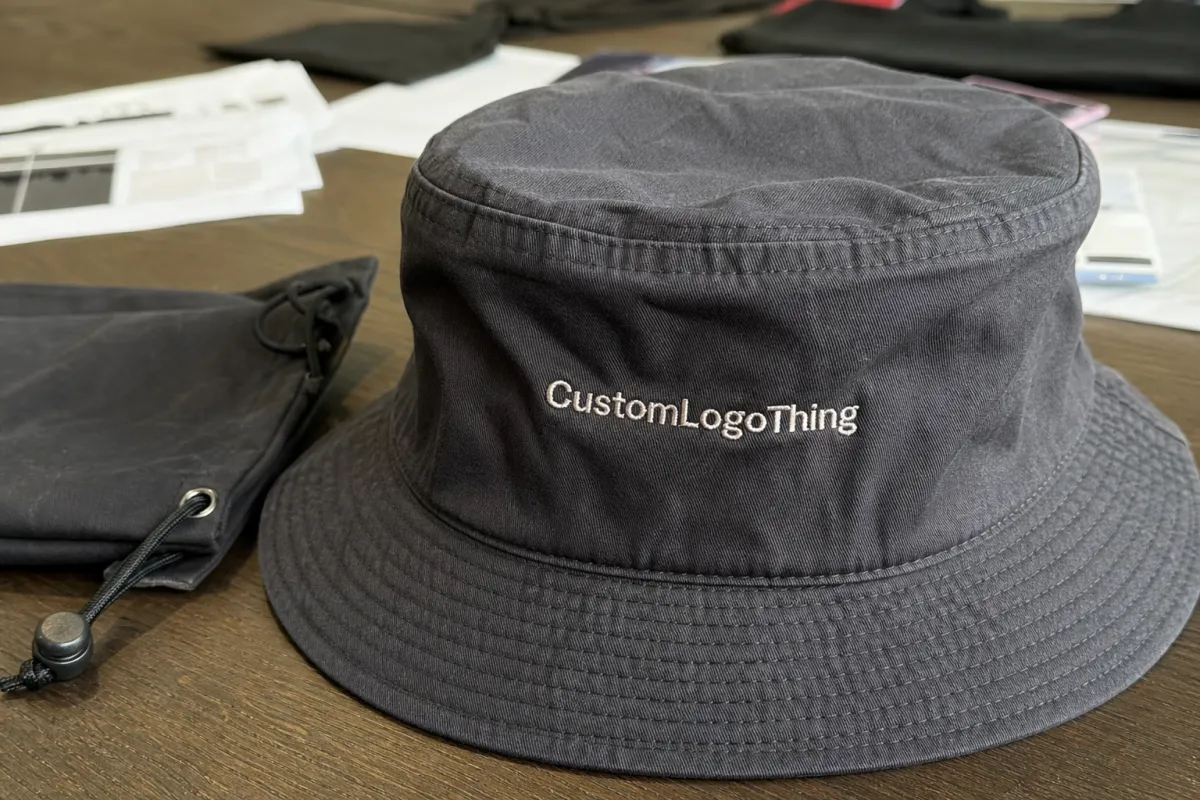
A bucket hat usually gets worn more often than a standard giveaway cap because it feels useful immediately. Baseball caps can work, but they depend more on fit and brand strength. Bucket hats signal sun protection and leisure, which makes them easier to put on and keep on during a stay.
The shape also gives hotels more practical branding space. A curved cap crown can compress a logo and make small text hard to read. A bucket hat offers broader panels and cleaner sightlines, which helps in resort photography and guest content where the item is seen from multiple angles.
The commercial value is simple: useful merchandise gets more exposure. A hat worn over several days may appear in lobby photos, pool shots, and social posts after check-out. That makes visibility per piece more meaningful than the purchase price alone.
- Resort use: beach service, poolside staff, excursion kits, and guest gifts.
- Spa use: understated branding that suits wellness-focused presentation.
- Staff use: coordinated summer uniforms for outdoor service.
- Retail use: a sellable piece for gift shops and welcome packs.
For that reason, discussions about Hotel Bucket Hats moq should start with guest behavior, not just order size. If the hat is likely to be worn, the value case changes quickly. If it is only going into a welcome box, the specification can stay much simpler.
Styles, fabrics, and decoration options for custom hotel bucket hats
Fabric choice affects comfort, drape, print clarity, and how the hat reads in photos. Cotton twill is the safest all-purpose option because it feels familiar, accepts embroidery well, and holds shape better than very soft fabrics. Washed cotton gives a more relaxed look. Canvas is heavier and more structured. Polyester dries faster and usually gives more consistent color. Terry cloth fits spa and pool programs, though it can read casual if the design is too busy.
Decoration method should match the use case. Embroidery is durable and classic, but it is not always the best answer for small text. Woven patches can carry more detail without forcing a dense stitch count. Heat transfer is useful for simpler graphics and lower volumes, while woven labels and side tags work well when the hotel wants restrained branding rather than a promotional look.
Structure matters more than many first-time buyers expect. An unstructured crown packs flatter and feels softer, which works for welcome kits or outbound gifts. A firmer body looks cleaner on shelves and photographs with more shape. Brim construction matters too: too soft and the hat collapses in transit; too stiff and it starts to look overly merchandised.
| Style option | Typical MOQ | Estimated cost per piece | Best use | Notes |
|---|---|---|---|---|
| Cotton twill + embroidery | 100-250 | $2.10-$4.25 | General hotel gifting | Balanced on price, durability, and appearance |
| Washed cotton + woven patch | 250-500 | $2.60-$4.90 | Resorts and lifestyle programs | Relaxed hand feel, strong photo appeal |
| Polyester + heat transfer | 100-200 | $1.75-$3.40 | Budget-conscious campaigns | Fast production, best for simple graphics |
| Terry cloth + woven label | 300-500 | $2.95-$5.60 | Spa and pool programs | Soft hand feel, leisure-oriented presentation |
A few spec details can move pricing more than many buyers expect:
- Crown height: usually 3.25-4.5 inches, depending on fit and silhouette.
- Brim width: often 2.25-3 inches for coverage without an awkward flop.
- Sweatband: cotton improves comfort; polyester lowers cost and dries faster.
- Stitch density: tighter finishing around the brim edge helps shape retention.
- Chin cord: useful for beach or boat properties, unnecessary for many urban hotels.
If the order needs retail-style packaging or inserts, FSC-certified stock is easy to specify and document. For shipment protection, carton testing is worth discussing before the run starts, especially if hats are packed with minimal internal support. The FSC and ISTA references are useful starting points for buyers who want the paper trail and transit plan to be defensible.
Hotel bucket hats MOQ, cost, and unit pricing
The phrase hotel bucket hats moq sounds like a single number, but in practice it depends on the base hat, decoration method, and packaging. A stock blank with a small embroidered logo may begin around 100 pieces. A fully custom build with special trim, woven labels, or bespoke packaging may not be realistic until 300, 500, or even 1,000 units.
The first quote should be broken into parts. Factory price alone rarely tells the whole story. Buyers should ask for the landed cost, not just the product cost. Freight, sample charges, setup fees, and packing changes can alter the economics enough to change the decision.
Setup charges usually cover artwork prep or embroidery digitizing. Tooling fees appear more often with custom woven patches, special labels, or other components that need a new production step. These costs are usually manageable, but they matter more on small runs.
A low MOQ only helps if the final hat still looks intentional. If the brim warps, the logo shrinks, or the color drifts, the savings disappear quickly.
To compare options sensibly, request pricing at 100, 250, 500, and 1,000 units. That spread usually reveals the breakpoints. Sometimes a supplier is a little higher at 100 pieces but much better at 500 because the decoration process runs more efficiently. Other times, the discount at 1,000 pieces is real, but only useful if the hotel can actually use that many hats before the design changes.
Inventory risk matters. Larger volumes reduce unit cost, but they also increase exposure if the logo changes or the hats are tied to one season. A smaller first run followed by a reorder is often the safer path for new programs because it lets the hotel see how guests respond before committing to more stock.
Typical bulk pricing, before freight, usually falls into these bands for simple hospitality runs:
- 100-250 units: often $2.50-$5.50 decorated, depending on fabric and logo method.
- 250-500 units: often $2.10-$4.75 decorated, a better middle ground for many hotels.
- 500-1,000 units: often $1.80-$4.10 decorated, assuming the spec stays straightforward.
Dense embroidery, a specialty patch, custom tape, or a more complex packing spec can move the number quickly. Still, these ranges are close enough to help procurement teams make an early decision without waiting on repeated clarification.
Artwork setup, sample approval, and production steps
Good production starts with clean artwork. A vector file in AI, EPS, or PDF format is the safest starting point because it preserves line quality for digitizing or patch development. A JPG can work as a reference, but it is not ideal for final production. If the logo contains thin lines, small type, or gradients, mention that early so the supplier can simplify the art if needed.
The normal workflow is predictable: artwork review, digital proof, sample or strike-off, approval, production, inspection, then shipment. Problems usually appear at the approval stage rather than on the machine floor. If colors, logo placement, or patch size are left vague, the supplier has to make assumptions that can be costly later.
Stitch count is one of the clearest examples. A simple front embroidery may sit around 6,000-10,000 stitches. A detailed patch can be much higher. Higher stitch counts increase machine time and can crowd details if the artwork is too small. A design that looks good on a screen may look muddy once it is sewn onto curved fabric.
Before approving the run, send the supplier everything in one file set:
- Vector artwork with editable text and clean outlines.
- Pantone references or another clear color target.
- Placement notes for front panel, side panel, or brim decoration.
- Packaging instructions if you need polybags, size stickers, or inserts.
- Shipping destination and any receiving rules at the property or warehouse.
The shipping destination sounds obvious, but it is a common source of delay. Suppliers need it to finalize carton counts, routing, and export documents. If the order is going to several properties, say that up front so the packing plan matches the delivery plan.
Lead time and delivery planning for bulk hotel orders
Lead time depends on whether the supplier is using a stock body or building something from scratch. For a standard hotel run, production often takes 12-18 business days after final approval if the hats use existing fabric and a straightforward decoration method. Custom fabric, woven labels, special trims, or more complex packaging usually push that to 18-28 business days.
Freight is part of the schedule, not an afterthought. Air freight is usually faster, commonly 3-7 days in transit, and works well for launches, openings, or short deadlines. Sea freight lowers the shipping cost on bigger orders, but the transit window is longer and more exposed to port delays. Saving a few hundred dollars on freight does not help if the hats land after the event.
Buyers should work backward from the in-hand date. Subtract the production window, then transit time, then customs clearance, then receiving and internal distribution. Multi-property hotel groups need one more buffer because the goods still have to be sorted and sent to the right site.
A workable planning frame looks like this:
- Days 1-3: artwork review and digital proof.
- Days 4-7: sample or strike-off approval.
- Days 8-20: production for stock-body embroidery runs.
- Days 21-35: freight, customs, and domestic delivery.
That schedule is a practical baseline. If a supplier promises a shorter timeline, ask whether that assumes air freight, in-stock bodies, or a reserved production slot. The difference between a real schedule and a promotional one tends to show up very late.
Quality checks, packing, and reorder consistency
For hospitality buyers, quality control should focus on what guests notice immediately. Logo placement has to be centered and consistent. Stitching should be even. The brim should hold a clean line. Color should stay close to the agreed target. Bucket hats are more exposed than many promo items, so small defects are harder to hide.
Packing influences transit safety and presentation. Polybags are common for basic protection. Paper bands can work if the presentation is more retail-oriented. Carton labels matter once the order is being sent to several properties or stored for staggered distribution. A carton packed too tightly can flatten the brim, while one that is too loose can waste freight and create messy unpacking.
Reorders are where many programs drift. The easiest way to keep the next run faithful to the first is to preserve the approved spec file. Save the final logo art, thread colors, patch dimensions, carton counts, and packing instructions. If the first sample approval is only stored in someone's inbox, the second order becomes a memory exercise.
Before the goods leave the supplier, confirm:
- Unit packing: polybag, paper band, or loose pack.
- Carton count: enough protection without making cartons unwieldy.
- Labeling: property name, PO reference, and size breakdown if needed.
- Reorder archive: approved sample photo and final spec record.
That archive is the quiet difference between a one-off purchase and a repeatable program. Once the approved version is documented well, the next order becomes faster and cheaper to execute.
Next steps to request an accurate bulk quote
If the goal is a useful quote rather than a vague estimate, the brief needs to be complete. The fastest way to get a serious response is to send the target quantity, fabric preference, decoration method, logo file, delivery date, and shipping destination in one go. If packaging preferences are fixed, include those too.
For buyers still choosing a run size, ask for two or three pricing bands. That shows whether a modest increase in quantity meaningfully improves the unit price or whether the discount is too small to justify extra stock. It also helps procurement compare MOQ options without restarting the quote process.
Before issuing a purchase order, confirm the sample expectation, freight method, and any labeling requirements. That is usually where avoidable confusion starts: Is there a setup charge? Does the patch need tooling? Is the color matched to Pantone or just a visual reference? Those questions are easiest to answer early.
For buyers of custom promotional goods, the best result usually comes from treating hotel bucket hats moq as a production and inventory decision, not a hunt for the lowest line item. Compare the tiers, check the landed cost, and choose the version that fits the property, the schedule, and the finish the guest will actually see.
Frequently asked questions
What is the usual MOQ for hotel bucket hats?
MOQ depends on the fabric, decoration method, and whether the hat is based on a stock body or a custom build. Simple embroidery on an existing style can start around 100-250 pieces. Custom fabrics, special trims, and woven labels usually raise the minimum and can push the order into 300-500 units or more.
Can I mix colors or sizes in one order?
Often yes, but the mix is easier when the base hat stays the same and only the color or size changes. A narrow mix usually keeps pricing stable and packing simple. A wide mix is possible, but it can increase labor and sometimes move the unit price upward.
How much do custom hotel bucket hats cost per unit?
Unit cost depends on the fabric, logo method, stitch count, packaging, and freight. For many hotel programs, decorated pieces fall somewhere in the $1.80-$5.50 range before shipping, with larger runs sitting lower. The landed cost is the number that matters most.
How long does production take after artwork approval?
Stock-body embroidery runs can often ship in 12-18 business days after approval, while more custom programs may take 18-28 business days. Freight, customs, and receiving time sit on top of that, so a fixed launch date should always include a buffer.
What artwork files do you need for a quote?
Vector files in AI, EPS, or PDF are preferred because they keep the logo sharp and easier to scale. Include Pantone colors, placement notes, and any patch or label preferences. If you only have a JPG, use it as a reference and expect the artwork to be rebuilt before approval.