A cap can be embroidered quickly once it is on the machine. That does not mean your hotel dad Hats Lead Time is only a few days, because the real schedule includes artwork review, digitizing, proof approval, blank-cap allocation, production queue position, inspection, packing, and freight.
That distinction matters for hotels. A boutique property ordering 300 relaxed Cotton Dad Hats for a pool launch is not just buying headwear. It is buying timing certainty for a date that probably cannot move. The same pressure shows up with staff uniform refreshes, loyalty gifts, golf weekends, wedding welcome bags, conference giveaways, and lobby retail merchandise.
Hotels are especially exposed to calendar risk. A retail shop can sell late-arriving hats the following month. A hotel cannot redo a grand opening, re-stage a corporate retreat, or ask wedding guests to return because the caps missed the room-drop deadline.
The hidden delay is rarely dramatic. More often it is a missing vector logo, an unapproved thread color, a final room-block count that changes after pricing, or a second department asking for a different cap color after the proof is already prepared. The fastest quote is not always the fastest delivered order.
The useful question is not simply, “How fast can hats be made?” A better question is, “Which decisions must be locked before the supplier can safely promise delivery?”
Hotel Dad Hats Lead Time Starts Earlier Than Most Buyers Think
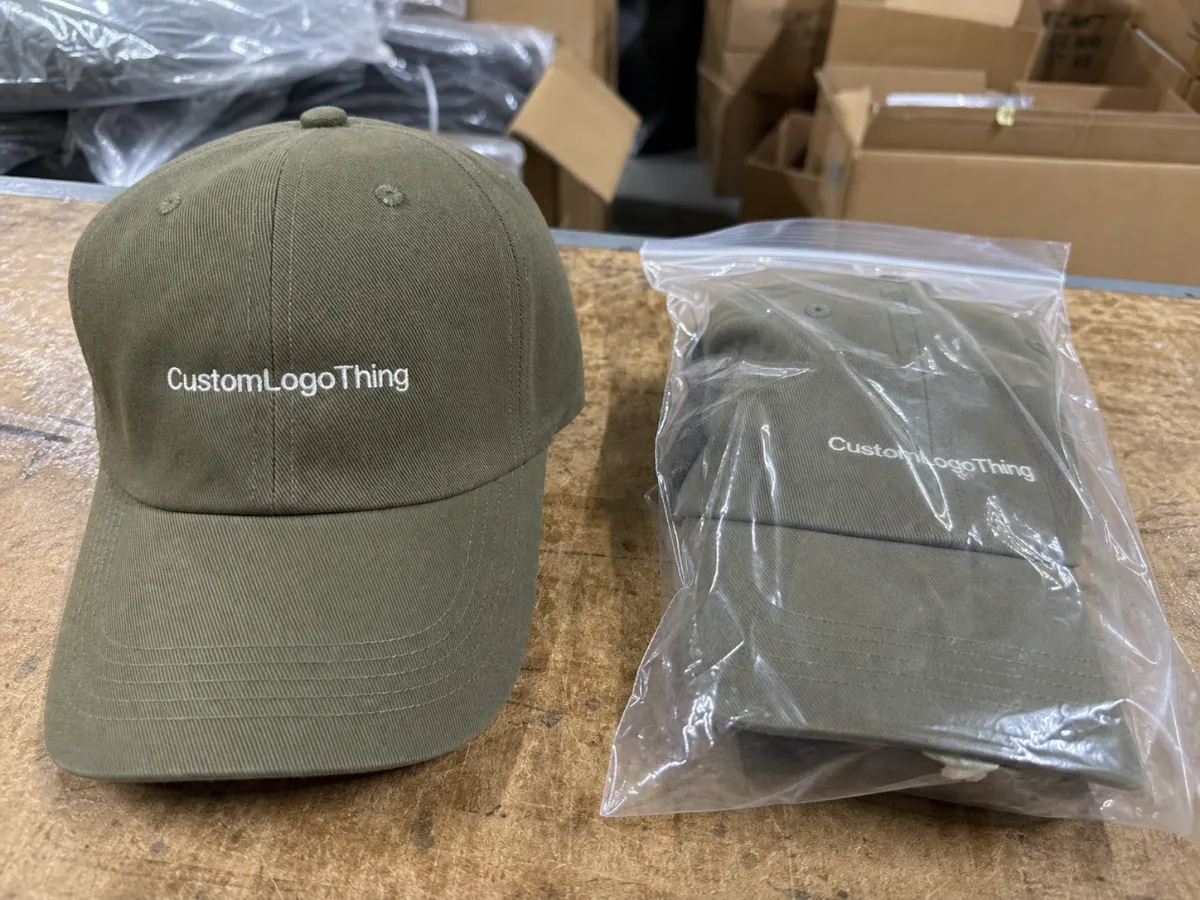
The phrase hotel dad hats lead time sounds like a production question, but in practice it is a coordination question. A typical order passes through several gates before a needle touches fabric: inquiry, specification, artwork review, proofing, approval, payment, blank-cap confirmation, decoration, quality control, packing, and shipping.
Each gate usually has a person attached to it. Marketing may approve the logo. Operations may choose the cap color. Events may control the delivery date. Purchasing may approve the quote. Ownership may ask why the hotel crest looks too small. That chain can work cleanly, or it can burn five business days before production begins.
Dad hats add their own production constraints. Unlike structured caps with firm front panels, dad hats have a soft, low-profile crown. That relaxed shape is why guests like them, but it also means embroidery needs discipline. A 3.25-inch-wide wordmark may sit nicely. A detailed architectural crest with tiny serif lettering may pucker, distort, or become unreadable.
For a standard stocked cotton dad hat with one front embroidery location, many buyers should plan around proofing, production, and shipping as separate pieces, often totaling roughly 12-20 business days after clean artwork and prompt approval. That range can shrink or expand depending on the supplier, cap availability, decoration complexity, order quantity, and freight choice.
Practical rule: if the event date cannot move, the approval deadline cannot drift either. Treat proof approval as a production milestone, not an administrative detail.
How Custom Hotel Dad Hat Orders Move From Logo File to Finished Cap
A custom hotel hat order usually starts with a short request: quantity, desired delivery date, cap style, logo, delivery location, and decoration preference. From there, the supplier checks whether the selected blank cap is available, whether the artwork can be stitched or applied cleanly, and whether the requested schedule is realistic.
The buyer journey typically looks like this:
- Inquiry with quantity, event date, delivery location, and preferred cap style.
- Cap selection, usually cotton twill, washed cotton, pigment-dyed cotton, canvas, or performance fabric.
- Logo review using AI, EPS, SVG, or high-resolution PDF files where possible.
- Decoration confirmation, such as flat embroidery, 3D puff, woven patch, leather patch, or screen print.
- Digital proof showing size, placement, thread colors, and cap color.
- Optional physical sample or pre-production approval for higher-value programs.
- Bulk production, quality control, packing, shipping, and receiving.
Flat embroidery is the workhorse for hotel programs because it looks clean, handles repeated wear, and suits logos with moderate detail. 3D puff can work for bold resort initials or short wordmarks, but it is unforgiving with tiny letters. Woven patches handle fine crests better than direct embroidery. Leather and faux-leather patches suit lodge, golf, ranch, and mountain properties. Screen printing can reduce cost on simple promotional runs, though it usually feels less premium on a cap than stitching or a patch.
Vector artwork matters because it removes guesswork. A screenshot from a website may look acceptable on a laptop, but it does not give a digitizer exact line weights, spacing, or scale. Redrawing a poor logo file can add 1-3 business days, and the revised artwork still needs approval.
If Custom Logo Things is also handling branded boxes, hang tags, insert cards, stickers, or welcome-kit sleeves, packaging artwork should move in parallel with hat proofing. Waiting until caps are in production to start packaging creates a second bottleneck. The product may be ready while the belly band is still waiting for a Pantone decision.
Timeline and Production Steps That Actually Control Delivery
A supplier’s stated production time is not always the same as total delivered time. Production may begin only after proof approval, deposit payment, blank-cap availability confirmation, and final quantity lock. If one of those pieces is missing, the order may be open in the system but not moving on the floor.
A realistic hotel dad hat schedule should be mapped in phases:
| Phase | Typical Range | What Can Delay It |
|---|---|---|
| Artwork review and digitizing | 1-4 business days | Low-resolution logo files, tiny text, unclear brand colors |
| Digital proofing | 1-3 business days | Multiple approvers, color changes, logo-size revisions |
| Bulk decoration | 5-12 business days | High stitch count, patches, multi-location decoration, queue pressure |
| Inspection and packing | 1-3 business days | Carton relabeling, split shipments, packaging inserts |
| Transit | 1-7 business days domestically | Service level, weather, hotel receiving hours, multi-property routing |
The fastest schedules usually share a few traits: approved vector files, standard cap colors, one-location embroidery, domestic stock, simple packaging, and one decision-maker who responds the same day. Slower schedules have their own fingerprints: custom-dyed caps, unusual thread colors, patch production, physical samples, several delivery addresses, or international freight.
A delayed proof approval can cost more calendar time than embroidery itself. The machine capacity may exist, but the order cannot move until the approval gate opens.
For fixed events, build backward. If hats are needed for a Saturday conference check-in, the hotel may want them on-site by Tuesday. That leaves time for receiving inspection, welcome-bag assembly, staff distribution, and a small freight buffer. For larger programs, a 3-5 business day cushion is usually safer than a heroic overnight shipment that turns the loading dock into the risk center.
Ask suppliers for milestone dates, not vague promises. A stronger quote lists the proof date, latest safe approval date, production start, estimated ship date, shipping method, and expected delivery date.
Key Factors That Push Hat Orders Faster or Slower
Four groups control timing: product complexity, decoration complexity, decision speed, and logistics complexity. Real orders often involve all four at once.
Product Complexity
Stock dad hats move faster than custom fabric, custom wash, specialty closures, contrast stitching, private labels, or fully bespoke silhouettes. A standard 6-panel unstructured cotton twill cap with an adjustable metal buckle is easy to source. A pigment-dyed cap with a custom strap, woven interior label, and exact resort shade needs a longer planning window.
Material choice also affects timing. Washed cotton and brushed cotton twill are common in hospitality because they feel broken-in without looking careless. Performance polyester may suit beach clubs, golf properties, and spa teams because it dries faster. Organic cotton or recycled fabric can support sustainability messaging, but buyers should ask for documentation rather than relying on a product description. For paper or board used in tags and packaging, FSC certification is a useful reference point.
Decoration Complexity
A small one-color embroidered logo is faster than a large multi-color crest. Tonal embroidery, raised puff, applique, and patches with merrowed edges all add variables. Fine serif type, star ratings, narrow building illustrations, and detailed coats of arms can look excellent on signage but weak at cap scale.
Most hotel logos were not designed for a curved, soft front panel. A property name that reads beautifully across a lobby wall may need a simplified mark on a 2.5-inch embroidery field. That is not brand dilution. It is production reality.
Quantity and Seasonality
Larger orders are not automatically slower per unit, but they need more machine time, more blank inventory, more inspection, and more cartons staged for freight. A clean 750-piece order with approved artwork can beat a 150-piece order that changes cap color twice.
Seasonality adds pressure. Hospitality orders cluster before summer travel, holiday gifting, wedding season, golf tournaments, sports weekends, and major conferences. During those periods, a lead time that looked comfortable last month can tighten quickly if the buyer waits for final headcount.
Compliance and Brand Standards
Corporate hotel groups may require legal approval, Pantone matching, sustainability documentation, vendor onboarding, or packaging claims review. These steps are manageable, but they should be on the timeline from the beginning.
If packaging will be shipped through parcel networks or packed into amenity kits, standards from groups such as ISTA can help frame transport-testing expectations. Not every hat order needs formal transit testing. Heavy welcome kits, rigid boxes, or multi-item gift packs deserve more scrutiny because damage in transit can undo good production work.
Cost, Pricing, and MOQ Signals Hidden Inside the Lead Time
Pricing and timing are tied together. Rush production, low quantities, specialty blanks, custom patches, branded packaging, and expedited freight usually raise unit cost. The cheapest quote may still be the most expensive choice if it misses the event.
MOQ means minimum order quantity. It is not only a sales rule. It reflects setup labor, machine scheduling, purchasing efficiency, decoration setup, carton handling, and quality-control overhead. For custom hotel caps, an MOQ might sit around 48, 72, 100, or 144 pieces depending on the supplier and decoration method. Fully custom caps often require much higher volumes.
A typical quote may include the blank cap, embroidery or patch cost, digitizing, setup, sampling, packaging, freight, rush fees, and split-shipment charges. If those items are not visible, ask. A low unit price can hide slower freight, limited stock colors, missing digitizing, or no allowance for branded inserts.
| Option | Typical Use | Indicative Cost Impact | Timing Impact |
|---|---|---|---|
| Stock cotton dad hat with flat embroidery | Staff caps, giveaways, welcome gifts | Often lower; commonly viable for mid-size runs | Usually fastest if artwork is ready |
| Woven patch on dad hat | Detailed crests, heritage hotel branding | Moderate to higher due to patch production | Adds time for patch manufacturing and application |
| Leather or faux-leather patch | Lodges, golf resorts, premium retail merch | Higher than basic embroidery in many cases | May add sampling or material approval |
| Custom packaging with hang tag or sleeve | VIP amenities, room drops, retail display | Can add roughly $0.25-$1.50+ per unit depending on format | Runs best when artwork starts alongside hat proofing |
For a simple 300-piece embroidered hotel dad hat order, buyers might see a broad range such as $6-$14 per unit before premium packaging or expedited freight, depending on cap quality, stitch count, decoration location, and supplier model. A branded hang tag might add cents. A rigid gift box can add dollars. These are planning ranges, not a universal price list.
There are sensible ways to control cost without damaging the schedule: choose stocked cap colors, reduce stitch complexity, avoid unnecessary sample rounds, approve proofs quickly, and consolidate delivery addresses. Paying more can be rational when it buys guaranteed event delivery, better cap fabric, cleaner embroidery density, retail-ready packaging, or milestone accountability.
Compare quotes by landed cost per usable hat delivered by the event date. That number is more honest than the cheapest unit price on paper.
Step-by-Step Ordering Plan for Hotels With Fixed Event Dates
A strong ordering plan starts with the event date and works backward. Do not start with cap color. Start with the in-hands date: the date hats must physically be at the hotel, not the date they leave production.
- Define the use case. Staff uniform, VIP amenity, retail merch, wedding guest gift, golf outing, brand activation, and conference giveaway all have different quality thresholds.
- Choose practical specifications. Decide cap color, material, closure, decoration location, logo size, quantity tiers, packaging needs, and delivery location before requesting formal pricing.
- Prepare artwork assets. Send vector logos, Pantone colors, brand guidelines, and any forbidden treatments from the hotel brand or management group.
- Request timeline milestones. Ask for proof timing, production time after approval, shipping method, expected delivery, and latest safe approval date.
- Review proofs with all decision-makers at once. Sequential review by marketing, operations, ownership, and events can consume a week without anyone noticing.
- Approve, pay, and freeze changes. After production begins, even a small logo revision can create rework, waste, and missed delivery windows.
- Inspect first cartons on arrival. Count units, check decoration, confirm color, and stage hats by property, department, or event function.
For hotel events, it helps to request two timeline scenarios. One is the standard schedule with better pricing. The other is a compressed schedule with rush fees and expedited freight stated clearly. That gives the team a real choice instead of a vague hope that everything will move faster.
A hotel dad hats lead time also needs an internal owner. One person should have authority to answer proof questions, approve thread color, and lock quantity. Without that person, the supplier may be waiting while every department assumes another department responded.
Common Mistakes That Delay Branded Hotel Caps
The most common delay is also the least glamorous: bad artwork. A screenshot, website logo, or low-resolution PNG can trigger redraw time, digitizing uncertainty, and a second approval loop. Send vector files whenever possible.
Another frequent mistake is treating proof approval like a casual admin task. In many orders, the production clock starts after approval, not after the first email. If a proof sits in an inbox for four business days, those days are not magically absorbed by embroidery.
Logo scale causes trouble too. Hotel marks often include thin type, detailed architecture, long property names, small stars, or established dates. Those details may be beautiful on a sign but unreadable on a curved cap front. A simplified icon, initials, or shorter wordmark may produce a better guest-facing product.
Late quantity changes create a different kind of drag. Concierge wants 40. Spa wants 25. Valet needs 18. Retail asks for another 100 because the hats might sell at the front desk. None of that is unreasonable, but late additions may require a new stock check, revised quote, and adjusted carton plan.
Receiving logistics can also sabotage a successful production run. Hotels have loading dock hours, package-room capacity limits, event storage constraints, and internal redistribution steps. A shipment that arrives Friday at 4:45 p.m. may technically be delivered and still miss the welcome-bag build.
Packaging is the sleeper issue. Branded boxes, belly bands, stickers, tissue, and insert cards need their own files, approvals, print time, and packing instructions. If the caps are ready but the welcome-kit sleeve is not, the guest experience still waits.
Finally, avoid comparing suppliers only by advertised turnaround. Ask how they handle proofing, inventory confirmation, quality checks, and freight visibility. A supplier with a slightly longer quoted timeline but better controls may be the safer choice for a fixed hotel event.
Next Steps Before You Request a Hotel Dad Hat Quote
Before asking for pricing, assemble a short pre-quote checklist. It should include event date, required in-hands date, quantity range, cap style, preferred colors, logo file, decoration method, packaging needs, ship-to address, and approval contact.
Then ask three precise questions:
- What date do you need proof approval to meet the delivery date?
- What could change the ship date after the quote is approved?
- What is included or excluded from the quoted unit cost?
Those questions separate a generic cap quote from a production plan. They also reveal whether the supplier has checked the details that matter: stock, artwork, decoration method, packaging, freight, and approval timing.
Identify the real approver early. In hotel purchasing, ownership, brand management, events, operations, and marketing can all influence the final design. That is normal. It becomes risky only when nobody owns the deadline.
The safest hotel dad hats lead time is built before the purchase order, when specifications are clear, artwork is clean, and the delivery date is treated as a production constraint rather than a hope. Order with the calendar in view, and the hats feel easy. Wait too long, and a simple cotton cap becomes a logistics problem with a curved brim.
FAQs
What is a typical hotel dad hats lead time for a standard embroidered order?
For a stocked dad hat with one-location embroidery, buyers should plan for proofing, production, and shipping rather than only counting machine time. A common planning range is roughly 12-20 business days after clean artwork and prompt approval, but the final schedule depends on cap availability, quantity, approval speed, and freight method. Ask for proof date, approval deadline, production window, ship date, and expected delivery.
Can hotel dad hats be rushed for a last-minute event?
Rush orders may be possible when the cap style is in stock, the logo is production-ready, decoration is simple, and the buyer can approve proofs quickly. Rush fees and expedited freight can increase the landed cost, so compare the cost of speed against the risk of missing the event. Avoid custom-dyed caps, complex patches, and multi-location decoration when the date is close.
Does embroidery take longer than patches for hotel dad hats?
Simple embroidery can be faster because it moves from digitizing and proof approval into machine production. Patches may add time because the patch itself must be produced, inspected, and applied to the cap. Patches can still be worth it for detailed crests, heritage branding, leather-look designs, or premium retail-style hotel merchandise.
How does quantity affect the turnaround for custom hotel hats?
Higher quantities can require more machine time, more blank inventory, longer inspection, and more freight planning. However, a clean 500-piece order with approved artwork may move faster than a 100-piece order with repeated logo changes. Ask for pricing and timing at multiple quantity tiers so operations, events, and retail teams can consolidate demand early.
What should I send to get the most accurate lead time quote for hotel caps?
Send the event date, required delivery date, quantity, cap color, decoration preference, logo file, brand colors, delivery address, and packaging requirements. Vector artwork and clear approval ownership help the supplier quote both cost and schedule more accurately. If multiple hotel properties need shipments, list each address and quantity split before the quote is finalized.


