A hotel Pom Pom Beanies quote should make three things clear right away: how the hat will feel, how the logo will read, and what the landed cost looks like after setup and freight. If a quote hides yarn choice, decoration, or shipping, you are not comparing suppliers. You are guessing.
That matters because winter headwear actually gets worn. Guests take it outside, photograph it, and carry it home. Compared with disposable giveaways, a beanie creates more repeated impressions for a similar spend, especially when the build is clean and the branding is restrained.
A winter giveaway earns twice: once at the counter, and again every time a guest wears it off-property.
The useful quote is the one that separates material, decoration, packaging, and freight. That breakdown is what lets a buyer compare real options instead of polished mockups.
Why pom-pom beanies beat another forgettable hotel giveaway
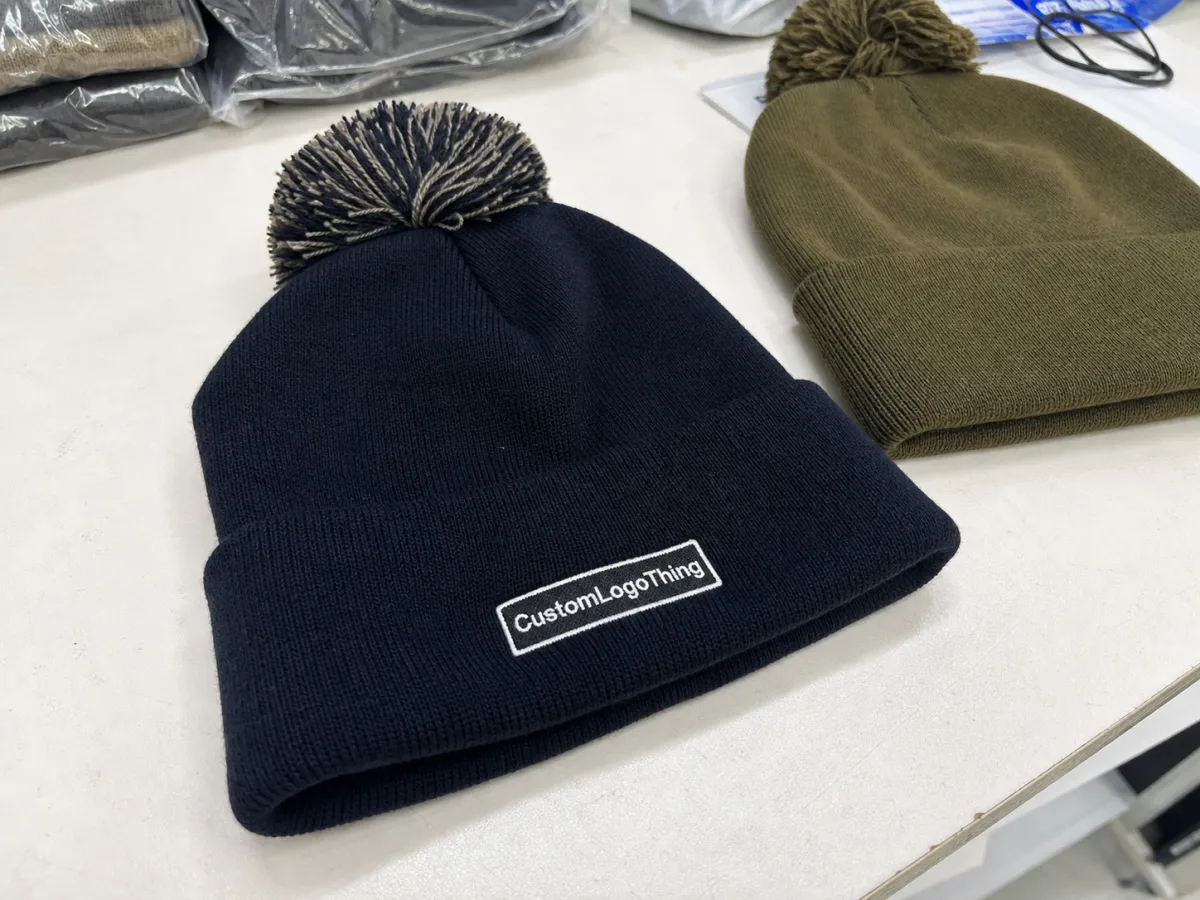
A pom-pom beanie works because it is practical first and branded second. It keeps a guest warm, travels outside the property, and stays visible in photos and in public. That gives it more staying power than items that never leave the room.
For hotels and resorts, the use case is flexible. A front desk can sell them, a retreat can include them in welcome kits, and a city property can use them for a seasonal campaign. The commercial logic is simple: one item can support sales, gifting, and brand visibility at the same time.
The perception is important too. A knit beanie with a tidy patch or clean embroidery can look like a retail item even when the production cost is modest. Thin yarn, loose stitching, or a pom-pom that overwhelms the crown makes the piece look cheap quickly. Guests notice that immediately.
That is why the quote should be treated as a decision tool, not an administrative step. Good suppliers show what affects cost and what affects appearance. Weak ones give a single number and leave the buyer to guess at the tradeoffs.
Beanie construction details that change the final look
The yarn choice drives most of the handfeel. Acrylic is the standard value option because it is consistent, easy to match, and usually keeps unit cost lower. Wool blends feel warmer and more retail-ready, but they increase price and can change care expectations. Recycled yarns work well for sustainability messaging if the surface still feels soft enough for guest wear.
Knit gauge changes the structure. A tighter knit feels more substantial and holds shape better. A looser knit is lighter, but it can stretch unevenly and look less polished. For hospitality use, many buyers land in the middle: enough structure to feel intentional, not so dense that the beanie turns stiff.
Shape matters as much as yarn. A shallow crown looks neater, while a taller crown gives more room for a larger pom-pom. Cuff height affects both style and the size of the logo field. If the cuff is too short, the artwork gets cramped; if it is too tall, the hat can look heavy.
The pom-pom needs its own decision. A compact one keeps the silhouette controlled. A larger one adds motion and a more retail feel, but it can overpower a small logo or make the hat look top-heavy. If the artwork is already busy, a smaller pom-pom usually works better.
Fit is another practical detail. Most hotel programs use one-size-fits-most adult sizing, but that still needs a laid-flat measurement. Ask for the cuff opening, crown height, and stretch range instead of relying on the label alone. That is the safest way to avoid surprises when the hats arrive.
Color blocking can add value without complicating production. A contrast cuff, a single stripe, or a pom-pom matched to a logo accent can make a basic beanie feel custom. Too many brand colors usually create clutter, not distinction.
- Acrylic keeps pricing accessible and color matching easier.
- Wool blends feel warmer and usually read more premium.
- Recycled yarns work well if the texture still feels soft.
- Cuff height changes both style and logo space.
- Pom-pom size affects the silhouette more than many buyers expect.
Decoration methods that survive real hotel wear
The decoration method should follow the artwork. Embroidery is the simplest option for wordmarks, small logos, and clean icons. It is durable and usually cost-effective. Woven patches handle fine detail and small text better because the edges stay sharper. Rubber patches give a more modern, tactile look. Woven labels are better when the branding should stay quiet.
Placement affects both visibility and style. A center-cuff logo is usually easiest to read and often the most efficient to produce. Side-cuff placement can feel more fashion-led, but it is less visible in photos and from a distance. Front-panel decoration works best when the beanie has enough height for the mark to breathe.
Color matching should be handled realistically. PMS references help, but yarn, thread, and patch materials are not exact paint chips. If brand color is important, ask for a physical sample or a previous production reference. That is the most practical way to see whether the navy is too bright or the gray is leaning warm.
Durability matters more than a polished mockup. Guests stretch cuffs, fold hats into pockets, and wear them in mixed weather. Embroidery and well-made patches usually hold up, provided the edges are secured and the attachment method is specified clearly. A decoration that only looks good in product photography is the wrong choice for hospitality.
| Option | Typical unit range | Best for | Tradeoff |
|---|---|---|---|
| Stock acrylic + embroidery | $2.40-$3.60 | Simple logos, lower MOQ, faster approvals | Fine detail is limited |
| Stock acrylic + woven patch | $2.90-$4.20 | Small text, crest-style artwork, cleaner edges | Patch feel is more visible |
| Wool blend + patch | $4.80-$6.80 | Premium guest gifts, retail-style presentation | Higher cost and longer lead time |
| Recycled yarn + label or patch | $3.20-$5.10 | Eco messaging with a softer brand story | Color and handfeel can vary by yarn lot |
Quality-control checks before you approve a run
Most problems are visible before production starts. A good sample should show whether the cuff holds shape, whether the pom-pom is secure, and whether the logo sits straight once the hat is folded.
Physical inspection catches things a mockup cannot. Check the beanie in daylight and under indoor light. Pull lightly on the cuff. Look at the patch edge or embroidery density. Some yarn lots reflect light differently, so a color that looks fine on-screen can look slightly off in person.
A few failure points come up often. Loose pom-pom attachment is one. Patch edges lifting after packing is another. Sparse embroidery can make a logo look thin and unfinished. Dye lot variation can also create visible differences between the body and the cuff, especially on dark colors. Those risks are worth asking about before approval.
- Check the cuff width and crown height against the spec sheet.
- Confirm the pom-pom is centered and securely attached.
- Inspect stitching density on embroidery or patch edges.
- Review colors in daylight, not just on a screen.
- Verify folding and packing do not distort the logo.
Packaging deserves a quick check too. A simple belly band or paper hang tag can make the hat feel finished. If sustainability is part of the brief, ask for FSC-certified paper options and keep the print size modest. A heavy tag on a small beanie usually adds cost without adding value.
Pricing, MOQ, and quote factors that change your unit cost
The price moves with quantity, decoration, yarn, packaging, and timing. A quote for 200 units will not match a quote for 2,000 units because setup is spread across fewer pieces at the smaller run. Custom yarns, specialty patches, and branded packaging push the number up further.
MOQ depends on how custom the build is. A stock-color beanie with a simple embroidered mark can usually stay at a lower minimum. Fully custom knit patterns, yarn-dyed stripes, and special pom-pom combinations raise the minimum because they require more setup and more machine time.
Ask for one-time charges separately from per-piece charges. Setup, digitizing, sample work, and color matching may sit in a one-time bucket. Production cost belongs in the per-unit bucket. Freight is another line entirely. That split matters because a low headline price can change once the cartons are packed and moved.
Tiered pricing is more useful than a single line item. A quote at 250, 500, and 1,000 units shows where the savings start to land. If the 500-unit price barely moves from 250, the run is not yet efficient. If 1,000 drops sharply, that tells you where the setup cost starts to spread properly.
Shipping deserves the same attention as decoration. Beanies are not fragile, but poor carton packing can flatten the pom-pom and soften the shape. Ask about carton counts, case pack size, and whether the shipping plan reflects transit expectations similar to ISTA standards.
If the order includes branded paper, ask for recycled content or forestry-certified stock through FSC-certified paper options. It is a small line item, but it affects how complete the final package feels.
Process and timeline: approval, sampling, production, delivery
The order flow is usually straightforward: inquiry, quote, artwork review, mockup, sample approval, production, packing, and shipping. Delays usually come from missing artwork, uncertain colors, repeated logo edits, or a quantity change after proofing.
Stock programs move faster than fully custom knit builds. If the beanie uses existing yarn colors with standard decoration, production can often move in the 12-18 business day range after approval. A physical sample can add another 5-10 business days. Custom knit patterns, special pom-pom combinations, and custom packaging extend the schedule, especially during peak cold-season demand.
Build buffer time before a guest-facing date. Holiday launches, ski-season openings, and winter events do not leave much room for late freight or slow proofs. Two extra weeks in the schedule is usually a smarter assumption than hoping for a perfect run.
If the order is going to multiple properties, ask for carton counts and clear receiving labels. Simple case packs and obvious labels reduce labor at the receiving end. That kind of detail is not exciting, but it keeps the program tidy.
Do not approve a proof before the art file, color callouts, and carton spec are all locked together. If one changes later, the rest of the order can drift. A supplier that records those details cleanly makes reorders easier later.
What to send for a faster hotel pom pom beanies quote
If you want a useful quote on the first pass, send the essentials together: logo file, quantity, preferred colors, decoration method, delivery ZIP code, and deadline. If you have a budget range, include that too. It helps narrow the build before the first round of revisions.
A reference photo helps more than most buyers expect. If you care about knit density, cuff height, or pom-pom proportion, a sample image gives the production team something concrete to follow. A previous hat that worked well is even better.
- Logo files: AI, EPS, or a clean vector PDF.
- Quantity: exact counts, not a vague range if you already know it.
- Color references: PMS codes, brand guide, or a prior product sample.
- Decoration choice: embroidery, woven patch, rubber patch, or label.
- Timing: standard, rush, or split delivery by property.
Be clear about the purpose. A resale-style item, a guest gift, and a staff uniform piece all push the spec in slightly different directions. The right yarn, decoration, and packaging depend on that decision. If the brief only says “nice beanies,” the project will drift.
The best hotel Pom Pom Beanies quote reads like a procurement tool, not a puzzle. It should show where the money goes, how the hat will wear, and what changes if the order size moves.
FAQ
What do you need to prepare a hotel pom-pom beanies quote?
Send the logo file, quantity, preferred colors, decoration method, and delivery ZIP. Include the target date so pricing reflects the right production speed. A sample photo or brand guide helps too because it cuts revision time.
What is the usual MOQ for custom hotel pom-pom beanies?
MOQ depends on whether the beanie uses stock colors or a fully custom knit build. Simpler decoration methods usually allow lower minimums than yarn-dyed patterns. If you need multiple sizes, patches, or special packaging, expect the MOQ to rise.
How long does production take after the quote is approved?
Simple orders can move quickly if the artwork is already ready. Samples and custom knit details add time, so build in buffer before a seasonal launch. Shipping time depends on destination and whether you choose standard or rush freight.
Can you match a hotel brand color on pom-pom beanies?
You can usually get close with PMS references, but yarn and thread are not exact paint chips. A physical swatch or prior product sample gives the best color reference. If color accuracy is critical, request a sample before full production.
Should hotels choose embroidery or a patch for branded beanies?
Embroidery works well for simple logos and usually keeps costs lower. Patches are better for detail, small text, and crest-style artwork. The better choice depends on logo complexity, budget, and the level of polish you want the hat to project.


