Hotel Snapback Caps Factory Quote: Specs, Price, Lead Time
A hotel snapback Caps Factory Quote is not just a price for a logo cap. Small spec changes can move the number more than most buyers expect: crown structure, embroidery type, closure, sweatband, packaging, and color matching all affect cost. For hotels, that matters because the same cap may need to work for staff, gift shop sales, and event giveaways.
The visual concept is only the starting point. A clean mockup can hide a stitch-heavy logo, a special closure, or a color that needs a fresh dye lot. If the cap has to look consistent across retail, front desk uniforms, and repeat orders, the quote has to reflect the production reality, not just the artwork.
For a basic six-panel cotton twill snapback, a common mid-volume range is about $1.80-$3.50 per piece, depending on decoration and finishing. Add woven patches, 3D puff, custom inner tape, or retail packaging, and the price rises quickly because the labor and setup change.
Hotel snapback caps factory quote: what drives the number
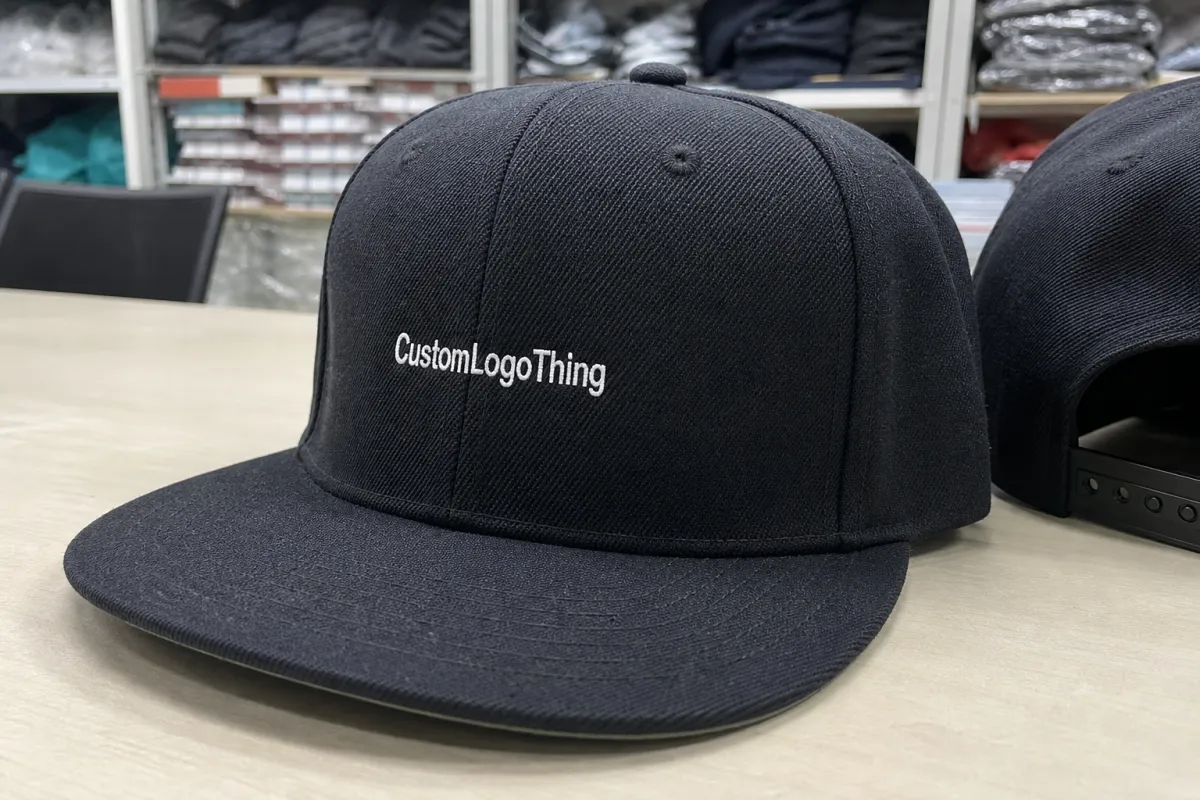
Most pricing differences come from details that seem minor in email. A structured six-panel cap with flat embroidery is one job. The same cap with buckram reinforcement, a woven patch, custom topstitching, and printed under-brim artwork is another. The factory is pricing materials, machine time, and QC steps, not the mockup style.
Hotels also need repeatability. A low first-run price is not useful if the next order cannot match the same color, thread shade, or back closure. In hospitality, consistency is part of the product.
Common quote gaps to avoid:
- Vague artwork - a JPG alone is not enough for stitch paths or patch borders.
- No Pantone reference - names like "navy" or "cream" can drift on reorder.
- Unclear closure - plastic snap, metal snap, and fabric strap do not price the same.
- No quantity split - one color is not the same as multiple color lots.
- Decoration not fixed - embroidery, patch, and print each carry different setup work.
The best quote is the one that removes ambiguity before production starts. Lower price is useful only when the spec is complete enough to compare apples to apples.
The cheapest quote is often the one that left out a cost you will pay later.
Build the spec sheet the factory can price fast
A factory can price a tight one-page brief much faster than a long email thread with half-finished art files. Cap pricing depends on fabric, decoration, packaging, and shipping weight. If any of those are unclear, the quote will be padded or delayed.
Include these details in the first request:
- Logo file type - AI, EPS, or PDF with outlines.
- Cap style - six-panel or five-panel, structured or unstructured, high or low profile.
- Visor shape - flat or curved.
- Closure - plastic snap, metal snap, or another adjustable back.
- Decoration method - flat embroidery, 3D puff, woven patch, printed patch, or under-brim print.
- Delivery target - a real in-hand date, not a vague rush request.
- Quantity by color - if the order splits, state the split up front.
Hotel programs often need different performance from the same silhouette. Front desk retail caps should have cleaner logo edges and nicer inside finishing because guests inspect them before buying. Staff caps need durability, darker colors, and a closure that can handle daily wear. Same brand, different spec priorities.
Placement notes save time later. If the logo should sit 2.5 cm above the seam, say so. If you want a woven label at the back instead of direct embroidery, state that. Factories move faster when they are not guessing from a mockup alone.
Fabric choice matters too. Cotton twill feels comfortable, while polyester twill often holds color better in heat and humidity. Blends are common when a hotel wants a balance of comfort and durability. If the caps will be worn outdoors or near pools, ask about colorfastness and sweat resistance before approving the fabric.
Choose structure, embroidery, and finishing that match hotel retail
Not every cap needs a premium build. It needs the right build for the audience. Structured crowns hold shape better on a shelf. Unstructured crowns feel softer. High-profile caps read bolder; low-profile caps sit closer to the head and usually feel more polished for staff use.
Brim shape changes the look more than many buyers expect. Flat brims create a sharper, more retail-forward appearance. Curved brims feel familiar and usually wear easier straight from the box. The choice should follow the brand tone, not the trend cycle.
Decoration method should follow the logo:
| Decoration method | Best use | Typical cost impact | Watch-out |
|---|---|---|---|
| Flat embroidery | Clean logos, staff caps, most hotel branding | Lowest to moderate | Very small text can lose sharpness |
| 3D puff embroidery | Retail-style caps with bold front logos | Moderate to higher | Thin lines and tiny details do not hold up well |
| Woven patch | Premium look, detailed logos, repeatability | Moderate | Patch shape and border style must be locked early |
| Printed patch or under-brim print | Design-led merch and special editions | Moderate to higher | Ink durability depends on fabric and use conditions |
For most hotel programs, flat embroidery is the safest starting point. It looks clean, wears well, and avoids an overdesigned look. 3D puff works when the logo shape supports it. Patches are useful when the brand wants a more premium finish or the artwork is too detailed for direct stitching.
Finish details affect whether the cap feels worth reordering. A soft inner sweatband helps staff on long shifts. Colorfast fabric matters in strong light. Clean seam alignment and trimmed threads matter because loose finishing makes even good branding look cheap.
Embroidery density is worth checking before approval. A simple-looking logo can require a high stitch count if the typeface is narrow or the art contains tight fills. Dense stitching adds time, stiffens the panel, and can change the hand-feel of the cap.
Cost drivers, MOQ, and sample fees explained plainly
The main cost drivers are fabric grade, stitch count, patch construction, panel structure, packaging, and quantity. Setup costs do not vanish on small orders; they are just spread across fewer units, which is why lower MOQ usually means a higher unit price.
Sample fees are easy to misunderstand. There are usually three separate charges:
- Development sample - the first version made from your artwork and notes.
- Pre-production sample - the approved spec rebuilt before bulk production.
- Courier and handling - shipping cost to send the sample.
On a basic embroidered cap, a sample may cost $35-$90. Patch-heavy or 3D puff versions can cost more. Some factories credit sample fees against the bulk order, while others do not, so get that in writing.
Typical order bands look like this:
| Order band | Typical unit price | What changes | Best for |
|---|---|---|---|
| 500-999 pcs | $2.90-$5.20 | Setup costs are heavy; sample fees matter more | Pilot launches, small retail tests |
| 1,000-2,999 pcs | $2.10-$4.00 | Better balance between setup and unit cost | Most hotel merch programs |
| 3,000+ pcs | $1.60-$3.10 | Best pricing if the spec stays frozen | Stable branding and repeat orders |
Compare quotes by checking what is included, not just the final number. Make sure thread, closure type, inner taping, polybagging, carton packing, and sample costs are aligned. If stitch count, patch size, or packaging differ, the quotes are not directly comparable.
MOQ is tied to sourcing and setup, not just factory preference. A custom patch order may have a higher minimum than direct embroidery because the patch itself needs artwork setup and edge finishing. If a supplier offers very low MOQ, ask what changed: stock colors, simplified decoration, or reduced packaging.
Production steps, lead time, and approval checkpoints
The workflow is predictable: brief review, artwork confirmation, sample approval, bulk production, inspection, and shipment. The schedule breaks when one of those steps is rushed or changed after approval.
Lead time depends on how complete the order is. A clean quote with final artwork can often come back in one business day. A sample usually takes 5-8 business days. Bulk production for a repeat spec is often 12-15 business days after sample approval. More complex decoration, special fabrics, or custom packaging can stretch that to 15-25 business days. Shipping and customs are separate.
Most delays come from the same issues:
- Logo corrections after sampling has started.
- Color approval delays because no Pantone reference was given.
- Last-minute quantity changes that force material rework.
- Confusion over closure type or label placement.
Use approval checkpoints. First, approve the artwork layout. Second, approve the physical sample, not only photos. Third, if the factory offers it, approve the first production run before final packing. That is basic process control, but it protects margin.
Packaging should be reviewed with the same care. If the caps ship in retail-ready cartons or display packs, ask how those cartons are spec'd and tested. For transit durability, ISTA test methods are a useful reference. If sustainability matters, ask for FSC-certified carton stock instead of vague "eco" language.
Lead time also depends on how many unknowns remain when the quote is requested. If the logo size changes after sampling begins, the cap may need a new stitch file. If the closure changes late, the factory may need a different back strap. If the color shifts, the mill may need another fabric lot. Small changes are not small once production is scheduled.
What to verify in a factory partner before you approve the order
Ask for production photos, stitch close-ups, packing shots, and examples of similar headwear. You want to see seam alignment, the underside of the brim, the closure, the inner tape, and the patch edge. Those details tell you more than a polished hero image.
It also matters whether sampling and bulk happen in the same place. If the sample is made in one facility and bulk in another, spec drift becomes more likely. The same applies to decoration. If embroidery is outsourced, ask who controls stitch count, thread color, and final QC before packing.
Check the operational answers, not the sales language:
- Defect rate - the supplier should have a real QC process.
- Shipping terms - EXW, FOB, and DDP are not interchangeable.
- Sample handling - who pays if the first sample needs revision?
- Color matching - what reference system is used and who signs off?
The best partner answers boring questions quickly and directly. If someone cannot explain what happens after a logo change, or how they handle a misaligned patch, they are not ready for a hotel program. They are ready for a presentation.
If the supplier cannot describe the reorder path, do not assume it exists.
Ask for reorder documentation before the first order is approved. Record the exact cap spec, thread colors, patch file, crown construction, and closure model so the next run does not need a rebuild. Good programs are repeatable.
Order the first run with cleaner quantities, artwork, and reorders
Before requesting the final quote, lock three things: exact quantity, final logo file, and the arrival date. Those decisions shape the price and timeline more than anything else.
If the hotel is testing a new merch line, start with one core color and one decoration method. That makes the first run easier to evaluate. You can see whether guests buy the cap, whether staff wear it, and whether the stitching survives daily use.
A practical reorder plan should answer four questions:
- Will the factory keep the same spec on the next run?
- Can they match the same Pantone reference again?
- Will embroidery files, patch tooling, or panel settings be retained?
- Is packaging, carton count, and label placement documented?
That documentation protects margin later. A hotel merch line should not need to be reinvented every time the property reorders. Weak suppliers improvise; good ones record details. The difference shows up in the second order.
Retail and staff use should be separated when possible. Guests may accept a bolder logo and a trend-led brim shape. Staff usually care more about comfort, washability, and how the cap looks after repeated shifts. If the first run mixes those uses, the quote will blur the spec.
Keep the first order narrow, freeze the spec, and make sure the quote reflects the final material and decoration choice. That is the cleanest way to get a number you can compare, approve, and repeat.
What should I include in a hotel snapback cap factory quote request?
Send the logo file, target quantity, cap color, closure type, and preferred decoration method. Add your delivery date, shipping destination, and whether you want samples before bulk production. If you already know the budget ceiling, include that too so the factory can quote the right build.
How does MOQ affect hotel snapback cap pricing?
Lower MOQ usually means a higher unit price because setup costs are spread across fewer caps. Higher quantities improve pricing only if the spec stays fixed and the factory does not need extra setup work. If you are testing a new hotel merch line, ask for two quote bands so you can compare pilot volume against full-run pricing.
Can I get a sample before placing a bulk hotel snapback caps order?
Yes, and you usually should if the logo is detailed or the color match matters. Ask whether the sample is a development sample, a pre-production sample, or a paid reference sample, because the fee and purpose are not always the same. Use the sample to check fit, embroidery quality, closure feel, and logo placement before approving bulk production.
Which decoration method works best for hotel snapback caps?
Flat embroidery is the safest default for most hotel logos because it looks clean and wears well. 3D puff works when you want a stronger retail look, but it is not right for every logo shape. Patches are useful when the hotel wants a premium feel or needs a logo that is too detailed for direct embroidery.
How long does a hotel snapback caps factory quote order usually take?
Fast quotes can come back in one business day if the artwork and specs are complete. Samples usually take 5-8 business days, and bulk production often takes 12-15 business days after approval. Special fabrics, custom packaging, or late changes can extend that timeline, so put the date in the first message.