A hotel Woven Label Beanies sample checklist exists to catch the problems that are expensive to fix later: a label that shifts when the knit stretches, a cuff that looks balanced flat but sits awkwardly on a head, or a yarn choice that feels fine in a photo and disappointing in hand. Hospitality buyers feel those misses quickly because the item is handled, worn, and judged in real use, not just on a product page.
The sample is where the body, trim, and finishing have to prove they work together. If the beanie is for guest gifting, spa retail, staff wear, or a welcome kit, the standard changes a little, but the review logic stays the same: it has to fit, look clean, and hold up to handling.
Woven labels are useful because they carry detail well on a small surface, but they also make production flaws obvious. If the label is too large, stitched into a high-stretch area, or matched to the wrong knit gauge, the sample will show it before bulk production starts.
If you are still comparing trim options, the Custom Labels & Tags page is a useful reference for size, placement, and finishing choices before production begins.
What This Hotel Woven Label Beanies Sample Checklist Prevents on a Hotel Beanie Order
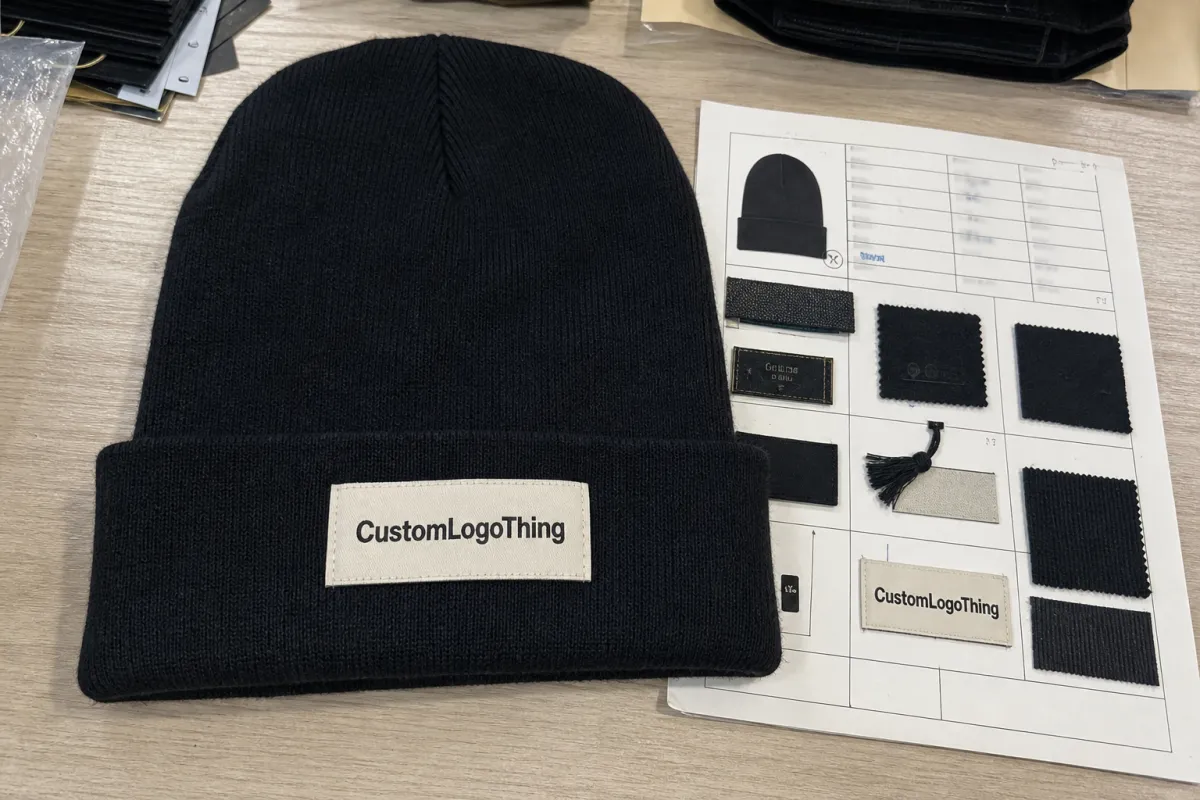
A good checklist keeps the buyer and factory focused on the same spec. Without it, feedback tends to become vague and subjective, which slows revisions and makes approval harder. With it, the review can be divided into fit, branding, construction, and packaging, each tied to a measurable standard.
The most common issues are small but visible. A label can look centered while the beanie is flat, then tilt once the knit stretches. A cuff can feel neat in the hand but ride too high on the forehead. Crown depth can read fine on paper and still feel shallow in wear. None of those failures is dramatic alone, but together they determine whether the item feels premium.
For hotel programs, consistency matters as much as style. Guest-facing items are handled by different people in different places, so any variation in label placement, color, or finish shows up quickly. The sample should prove repeatability, not just produce one attractive prototype.
Material choice also affects the decision. Acrylic is common because it is stable and cost-effective. Recycled polyester can support sustainability goals and usually has a clean hand feel. Wool blends can look more elevated, but they may introduce itch, shrink risk, and tighter care limits. The checklist should capture that tradeoff because it affects comfort, cost, and wash performance.
The label construction matters too. A damask woven label typically holds fine text well, while a satin finish can feel smoother but may show stitch lines differently. A fold-over label behaves differently from a flat one. On a rib knit beanie, the interaction between the trim and the stretch is not a minor detail; it decides whether the brand mark sits cleanly or puckers.
"If the sample feels right in hand but the label twists after washing, the bulk run will not fix itself."
That is why internal approvals work better when the body and branding are reviewed separately. The knit, cuff, and trim fail in different ways, and a clear record makes it easier to track what changed between revisions.
How the Sampling Process and Timeline Usually Unfold
A useful checklist follows the order of production: artwork review, label dimensions and placement, knit construction, then packing. That sequence matters because projects often move too quickly and someone signs off on the logo before the body spec is stable.
In a standard cycle, the factory checks the logo file, spelling, orientation, Pantone references, and whether the woven label size works on the chosen beanie body. It then builds the sample, finishes the trim, and inspects the piece before shipping. If the beanie needs a new knit pattern, a new yarn blend, or a different cuff length, the sample stage becomes a construction test, not just a branding check.
Timeline depends on how much changes. A label update on an existing body can move quickly because the knit structure already exists. A fully custom beanie with a new yarn composition or gauge takes longer because several variables are being tested at once. As a rough range, a straightforward branded sample may take 7-12 business days after artwork approval, while a new custom build often runs 12-20 business days before shipping, depending on queue time and complexity.
Delays usually come from preventable gaps: missing vector artwork, unclear placement notes, or color targets without a Pantone reference. Rush shipping can also make a well-made sample feel late, even when it finished on time. If the order is tied to a hotel opening or seasonal launch, build in room for at least one revision.
Pack-out is part of the sample too. If the beanie will ship folded, bagged, tagged, or paired with an insert, the sample should reflect that exact presentation. FSC-certified paper inserts can support a cleaner packaging story, and transit-testing guidance from groups such as ISTA is useful if the final set will move through cartons and distribution points.
What Drives Cost, MOQ, and Quote Accuracy
Price is where missing details show up fastest. Yarn type, knit gauge, label size, stitch count, packaging, and color count all affect the quote. Leave any of those vague and the factory has to guess, which usually means the estimate is less reliable than it should be.
Sample fees and production pricing are not the same thing. A sample includes setup, development labor, and manual handling that do not map perfectly to bulk production. Some suppliers credit the sample charge back if the order is approved; others keep it separate. Either model can work if it is explained early and written clearly.
| Sample / Production Option | Typical Sample Fee | Typical Bulk Price at MOQ | Best For |
|---|---|---|---|
| Simple logo label update on existing beanie body | $35-$75 | $2.80-$5.50 each | Fast approvals and lower development risk |
| Fully custom knit with woven label | $60-$140 | $4.50-$9.00 each | Hospitality gifts, retail resale, premium staff wear |
| Premium presentation sample with custom pack-out | $90-$180 | $6.50-$12.00 each | Higher-end hotel merch, welcome kits, and branded retail |
MOQ depends on the construction. Standard beanie builds often sit somewhere around 100-300 pieces, while custom yarn, specialty dye lots, or more complex packaging can push the minimum higher. A 300-piece run usually costs more per unit than a 1,000-piece run because setup is spread across fewer items.
The fastest way to improve quote accuracy is to send a complete spec sheet: dimensions, yarn, knit gauge, color targets, label size, label placement, stitch method, packaging plan, and quantity. If the beanie should ship folded, bagged, tagged, or retail ready, say so before the quote is confirmed.
One useful buying habit is to compare three versions before approval: the leanest acceptable build, the preferred version, and the most polished hospitality version. That keeps the conversation on value instead of false savings. For guest-facing items, a slightly better label or cleaner fold can matter more than trimming a few cents from the unit price.
Step-by-Step Sample Review for Fit, Labeling, and Finish
The sample review works best in a fixed order. Start with the body, then inspect the woven label, then check seams and edges, and finish with packaging. That order helps prevent one problem from hiding another.
1. Check the body first. Look at yarn consistency, crown shape, rib definition, and cuff balance. Pull the beanie gently, then let it recover. If the knit stays stretched, it may bag out after use. For hotel wear, that matters because guests often keep accessories on longer than shoppers do in a fitting room.
2. Test fit on an actual head. Not on a table. Not on a hand. The size and stretch need to be checked in context. A cuff that looks neat can create pressure if the crown depth is too shallow. If the beanie is meant for mixed head sizes, it needs enough recovery to feel secure without squeezing.
3. Measure the label against the approved spec. Confirm centerline, height from the hem, visible width when folded, and how the label sits on a stretched surface. On a knit body, even a 2-4 mm shift can change the appearance. If the trim moves when the cuff is stretched, note the direction and amount so the factory can correct it.
4. Inspect finish quality under bright neutral light. Loose yarn ends, weak seam joins, and untrimmed label stitches are easy to miss in warm office light. They stand out when the item is handled by housekeeping, front-desk teams, or retail staff.
5. Review packaging with the same care. A wrong bag size, missing insert card, or incorrect fold can slow receiving and make a good sample feel unfinished. If the item is going into a hospitality kit, confirm that the fold and pack order match the kit layout.
Document everything with photos, measurements, and plain notes. "Label too high by 5 mm" is useful; "looks off" is not. If there are multiple revisions, keep version numbers in one place so no one reopens the wrong mockup or approves an outdated photo.
Common Mistakes That Delay Approval
Vague feedback slows the process more than almost anything else. Comments like "make it nicer" or "the label feels wrong" force another interpretation round. If the issue is fit, say where it pinches. If the issue is color, say whether it is too dark, too cool, or too flat. If the label is off, give the measurement.
Reviewing in the wrong environment is another common mistake. A beanie can look polished under warm office lighting and then read differently in a hotel lobby, spa, boutique wall, or staff locker room. Check the sample under the kind of light and handling it will actually see in use.
Buyers also underestimate how stretch changes woven labels on knit goods. Flat on the table, everything can look centered. On a head, the knit pulls and the label can shift just enough to look uneven. That is why the sample should be worn, not just viewed.
Packaging gets skipped too often. The beanie may be approved, but the shipment arrives in the wrong bag size or with the wrong insert. Internal receiving slows down, and the unboxing feels less polished than intended.
If the beanies will be worn often or passed among staff, do a simple wash and abrasion check. One wash cycle and a basic rub test can reveal label distortion, shrinkage, yarn shedding, or seam weakness before the bulk lot is locked.
Expert Tips for Stronger Hotel-Ready Samples
Set two approval standards, not one: branding and comfort. A beanie can look sharp and still be uncomfortable. It can feel soft and still look under-finished. Hotel pieces need both.
Anchor the spec to the use case. A beanie for concierge gifting is not the same as one for staff winter wear or retail resale. Gifting tends to prioritize presentation. Staff wear leans toward comfort, stretch recovery, and repeat washing. Retail resale cares more about shelf appeal, packaging, and the way the label reads at a distance.
Ask for a flat lay photo and a close-up of the woven label before the sample ships. That step catches obvious problems early: label size too large, placement drifting off center, loose stitching, or artwork that looks thinner in thread than it did on screen. It does not replace the sample, but it can save shipping time.
A short pass/fail list makes review easier:
- Color: matches the approved target under neutral light
- Fit: comfortable after at least 15 minutes of wear
- Label: straight, readable, and centered as approved
- Construction: no loose threads, weak seams, or puckering
- Presentation: fold, bag, or tag matches the order plan
Version control matters as much as the sample itself. Once revision 2 is approved, close revision 1 and store the approved file in one location. That prevents the common problem of different teams working from different files during a busy buying cycle.
If you need to compare label constructions or adjust trim sizing before the next revision, the Custom Labels & Tags page is a practical place to line up artwork, dimensions, and finishing choices with the beanie body.
Next Steps After You Approve the Sample
Once the sample passes, turn the approval into a final record. Lock in artwork, dimensions, materials, packaging, and exact label placement so there is no uncertainty during bulk production.
Then confirm quantity, lead time, deposit terms, and ship window. If the order supports a hotel opening, seasonal launch, or uniform deadline, give the factory the real in-hand date, not just the date the purchase order was issued. That keeps timing honest and avoids a last-week shipping emergency.
Save the approved sample photos, the final spec sheet, and the measurement notes in one clean file. That record becomes the baseline for reorders, which matters more than many buyers expect.
Viewed that way, the hotel Woven Label Beanies Sample Checklist is not an extra step. It is the control point that keeps the order from turning into guesswork after the first sample looks good enough.
What should a hotel woven label beanies sample checklist include first?
Start with fit, label placement, and logo legibility. Those three items reveal the fastest mismatch between the artwork and the real sample. After that, confirm yarn feel, cuff shape, stitch quality, and packaging so the full guest experience matches the intended spec.
How do I check woven label placement on a beanie sample?
Measure the label against the approved spec for centerline, height from the hem, and visible width when the beanie is folded. Check the piece flat and worn, because stretch can shift the label enough to change how it reads in use.
How long does a custom beanie sample usually take?
A simple label update on an existing body often takes 7-12 business days after artwork approval. A new knit body, new yarn, or special packaging can take 12-20 business days or more, depending on complexity, revision count, and factory queue time.
Why does a sample quote sometimes differ from production pricing?
Sample pricing usually includes development labor, setup, and one-off handling that do not repeat in bulk production. Production pricing is lower per unit, but MOQ, yarn choice, label complexity, and packaging still affect the final number.
What should I do if the sample looks good but feels too tight?
Ask for a fit revision before approving bulk production. Small adjustments to knit tension, crown depth, or cuff length can improve comfort without changing the overall design. Be specific about where the pressure shows up so the factory can correct the right point.


