Buyer Fit Snapshot
| Best fit | Brand Packaging Inserts That Build Loyalty and Trust projects where brand print, material claims, artwork control, MOQ, and repeat-order consistency need to be specified before quoting. |
|---|---|
| Quote inputs | Share finished size, material target, print colors, finish, packing count, annual reorder estimate, ship-to region, and any compliance wording. |
| Proofing check | Approve dieline scale, logo placement, barcode or warning zones, color tolerance, closure strength, and carton packing before bulk production. |
| Main risk | Vague material claims, crowded artwork, missing packing details, or unclear freight terms can make a low unit price expensive after revisions. |
Fast answer: Brand Packaging Inserts That Build Loyalty and Trust: Material, Print, Proofing, and Reorder Risk should be specified like a repeatable production item. The safest quote records material, print method, finish, artwork proof, packing count, and reorder notes in one written spec.
Production checks before approval
Compare the actual filled-product size with the drawing, then confirm tolerance on folds, seals, hang holes, label areas, and retail display edges. Reserve space for logos, QR codes, warning copy, and material claims before decorative graphics fill the panel.
Quote comparison points
Review material grade, print process, finish, sampling route, tooling charges, carton quantity, and freight assumptions side by side. A quote is only useful when the supplier can repeat the same color, closure quality, and packing count on the next order.
How to Brand Packaging Inserts That Build Loyalty and Trust
I have spent enough time at packing tables to know that how to brand packaging inserts often decides whether a customer remembers the brand or just remembers the tape. One small card, tucked into a parcel, can outlast the box, the void fill, and even the shipping label. I still remember one skincare run where 18% of the cartons hit the recycling bin before the customer even got to the tissue, yet the insert with a 2-inch QR code and a short thank-you note stayed pinned to desks and fridges for weeks. That was not luck. It was package branding doing real work, which is more than I can say for some of the glossy mailers I have seen waste money on being "pretty" and saying almost nothing. On that job, the insert was a 4x6 card printed on 16pt C1S at $0.11 per unit for 5,000 pieces, which was cheaper than the outer sleeve and far more memorable.
For custom packaging teams, the practical question is not whether inserts matter. It is how to brand packaging inserts so they support repeat orders, cut support emails, and make the unboxing experience feel deliberate rather than generic. The strongest versions do three jobs at once: they reassure, they instruct, and they invite action. The inserts that win are rarely the flashiest. They are the ones with the clearest message hierarchy, the least clutter, and a finish that belongs with the product packaging instead of fighting it. Honestly, I think that last part gets ignored far too often, especially on runs where a $0.15-per-unit insert in a 10,000-piece order could have been enough but the team added foil, embossing, and a spot UV panel that did not earn its keep.
How to Brand Packaging Inserts: Why They Matter
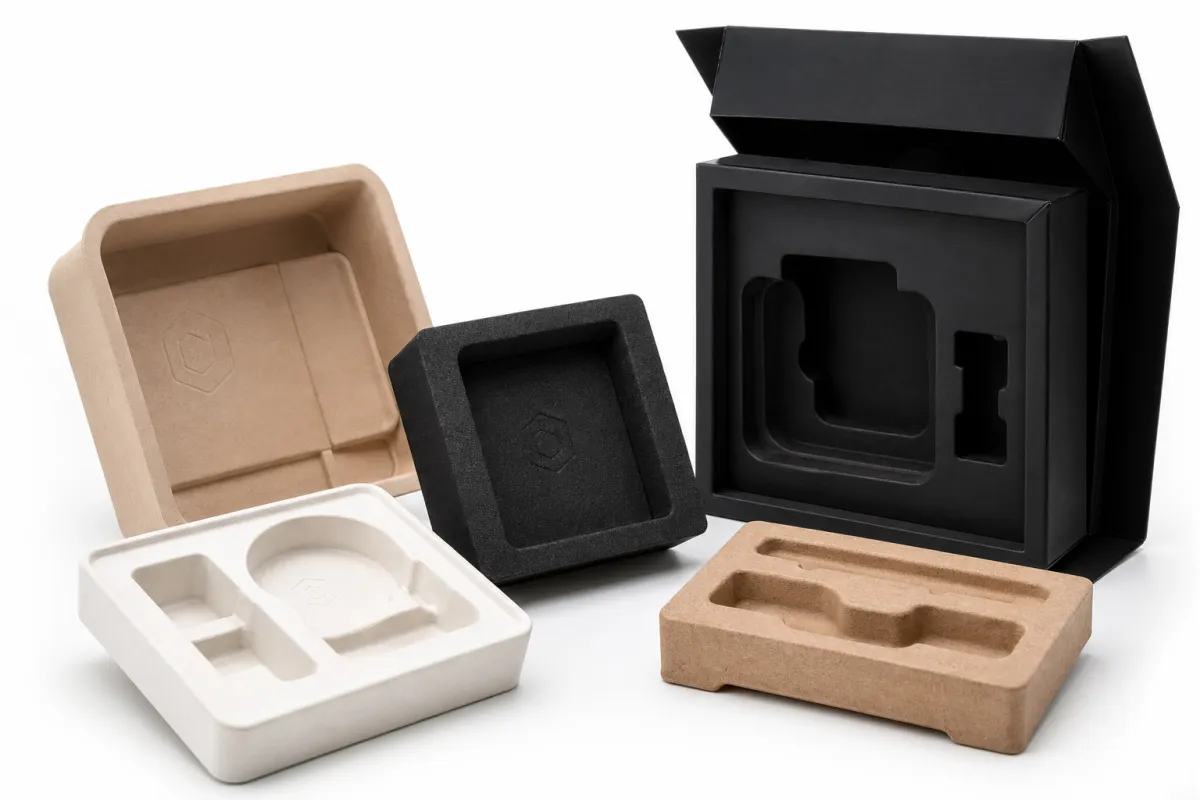
A box gets opened once. A good insert can get read three times. That difference explains why how to brand packaging inserts matters far beyond decoration. I saw it firsthand at a client meeting in Chicago where a direct-to-consumer candle brand was weighing whether to spend another $0.04 per unit on a printed thank-you card. Their product packaging already looked sharp, but the insert was the first place they could explain scent care, collect reviews, and point customers to a reorder code. The card cost less than the adhesive label on the mailer, yet it drove more revenue than the outer sleeve. I remember thinking, with a little envy, that the smallest piece in the box was doing the heaviest lifting. A 350gsm C1S insert with a matte coat later became the default, and the brand kept it because the reorder rate rose 6% over eight weeks.
Packaging inserts are the inside voice of the brand. The box carries the arrival moment; the insert carries the explanation. That is the part many teams miss when they ask how to brand packaging inserts. A generic card with a logo may look acceptable, but it does not extend the brand story. A branded insert can explain the ingredients in a soap bar, remind a tea customer how long to steep the leaves, or tell a wholesale buyer where to find reorder terms. In plain terms, it connects package branding to the next action. It also gives the brand a chance to sound like a real human, not a committee with a stack of fonts, especially if the production is happening in Dongguan, Guangdong, where a 7,500-piece run can move from proof approval to dispatch in 13 business days.
The business case is straightforward. Inserts can drive reviews, repeat purchases, referral codes, loyalty sign-ups, and support deflection. One apparel client I worked with saw support emails drop by 14% after adding a folding guide and a 3-step care note to a 5x7 insert, because the same piece that strengthened the unboxing experience also answered the top two post-purchase questions. That is the quiet power of how to brand packaging inserts: the card is small, but the behavioral effect can be large. I have seen bigger marketing spend produce less, including a $12,000 paid-social test that moved fewer orders than a $0.09-per-unit insert printed in Shenzhen and packed into 2,000 mailers.
There is also a useful distinction between three common formats. A generic card usually says thank you and little else. A product insert is functional, often explaining use, care, or safety. A branded insert does both while still feeling like part of the brand identity. Premium retail packaging calls for an insert that feels as considered as the outer carton. Utilitarian products can use a simpler piece, but they still need a point of view. That is why how to brand packaging inserts becomes a strategy decision, not a print decision. A 4x6 card in 14pt stock might be enough for a $22 candle, while a folded 8-page insert in 12pt stock makes more sense for a cosmetic kit with ingredient notes and a 30-day usage schedule.
"The insert is often the only piece a customer keeps after the box is recycled, which means it is the last physical brand impression you can control."
One more thing teams get wrong: they treat inserts like leftover real estate. I prefer the opposite. Start with the customer outcome first, then build the card around it. Ask what should happen in the first 10 seconds after opening, what should happen after 60 seconds, and what should happen after the product has been in use for a week. That sequence turns how to brand packaging inserts into a retention tool rather than a vanity print item. It also stops people from stuffing the card with every idea that happened to float through a brainstorming session, which can turn a 4x6 insert into a 12-point legal notice with a logo on top.
How Packaging Inserts Work: Design, Copy, and Materials
Good inserts work because the reader can process them fast. The headline does the first job, the subhead clarifies the promise, and the call to action gives the next step. That hierarchy matters more than ornament. When I reviewed inserts for a subscription snack company, the highest-performing version used only 19 words on the front and a 25-word CTA on the back, yet it outperformed a heavier, more decorative layout by 31% in QR scans. That is the practical side of how to brand packaging inserts: the best design is the one people can understand in one glance, not the one that wins a beauty contest on a mood board. On a 5,000-piece digital run, the winning card cost $0.13 per unit and paid for itself by lifting email captures by 9.4%.
Typography and spacing do a lot of heavy lifting. A 9.5pt serif can feel editorial and premium, while a clean sans serif at 10.5pt reads faster for instructions. Logo placement should be calm, not loud. White space is not wasted space; it creates breathing room and makes the insert look intentional instead of crowded. If you are building branded packaging for luxury cosmetics, a restrained layout with a centered logo and one illustration can feel elevated. If you are designing for practical retail packaging, the text may need to be larger and the instructions more direct. The visual language should echo the product category, not just the logo. I know that sounds obvious, but I have seen enough chaotic inserts to suspect it is not obvious at all, including one 6x9 sheet from a Miami warehouse that tried to fit seven fonts into 96 square inches.
Materials matter just as much as the copy. I have seen a 16pt C2S card with a gloss coat look out of place in a natural skincare kit, while a 350gsm uncoated artboard with a soft-touch lamination felt expensive in a premium gift set. For sustainability-led brands, recycled board and FSC-certified stock can support the message without shouting about it. If you want to understand the material side of how to brand packaging inserts, think in terms of touch, thickness, and ink absorption, not just color on screen. A slightly toothy surface can make the insert feel more human and less promotional. In practice, a 350gsm C1S artboard from a printer in Guangzhou can hold small black type more cleanly than a lower-density 14pt sheet, especially when the artwork includes a 2-color logo and a dense QR code.
The finish should match the shipping experience. A matte, uncoated card works well when the outer box already has strong graphics. Soft-touch coating can suit high-end product packaging, but I would not use it on every project because it can flatten the contrast in small text. Embossing, spot UV, and foil stamping can all be useful, but only when they support the message. If the insert’s job is to teach a customer how to use a refill pack, a complicated finish may get in the way. That is another reason how to brand packaging inserts should begin with purpose and not decoration. Fancy finishes are not villains, but they do love to steal attention if you let them. A gold foil logo on a 4x6 card may look excellent in a proof, yet on a 20,000-piece run it can add $0.07 to $0.12 per unit and delay shipment by 3 to 5 business days.
For brands comparing options, I often sketch it this way:
| Insert Type | Typical Stock | Estimated Unit Cost | Best Use | Notes |
|---|---|---|---|---|
| Simple thank-you card | 14pt C1S | $0.08 to $0.14 | Basic brand touchpoint | Fast, light, and easy to test |
| Branded product insert | 16pt recycled board | $0.12 to $0.22 | Instructions, care, review request | Good balance of cost and value |
| Premium insert with finish | 350gsm artboard | $0.24 to $0.48 | Luxury retail packaging | Soft-touch, foil, or embossing |
| Folded information card | 12pt to 16pt stock | $0.18 to $0.35 | Longer copy, compliance, FAQs | Useful for regulated or fragile goods |
If you need a practical benchmark, the right insert often looks less like advertising and more like editorial. A single photo, a short headline, two supporting sentences, and one CTA can beat a visually dense layout every time. That is why how to brand packaging inserts should be treated like packaging design with a message, not a flyer forced into a box. Flyers have a way of looking like they were printed on a lunch break. Inserts should not, especially when the job is running through a plant in Ningbo or a contract printer in Dallas where the tolerances are measured in millimeters.
For standards and sustainability guidance, I also tell teams to review the basics from the Forest Stewardship Council and the packaging-related guidance at EPA recycling resources. Those references do not choose the design for you, but they help keep material claims accurate and support cleaner decisions around recycled content and end-of-life handling. If a supplier says a board is FSC Mix, ask for the certificate number and a current chain-of-custody file before approving a 10,000-piece print order.
Key Factors That Shape Insert Strategy
The first question in how to brand packaging inserts is always: who is reading it? A first-time buyer needs reassurance. A repeat customer needs a reason to return. A gift recipient may need context because they did not choose the product themselves. Wholesale partners need more technical detail, including SKUs, reorder contacts, and case pack information. A subscription subscriber may need freshness dates, routine reminders, or a referral prompt. One message rarely serves all of those people well, and I have watched plenty of teams lose clarity by trying. On a 3,000-order monthly run, that mismatch can mean 3,000 chances to say the wrong thing.
Product risk matters too. A fragile item needs handling instructions. A consumable product may need dosage, storage, or expiration details. A regulated category, such as supplements or cosmetics, may require disclaimers and compliance language that cannot be pushed to the back page. That makes how to brand packaging inserts a coordination exercise between marketing, legal, and operations. The insert has to look on-brand, but it also has to be accurate enough to survive scrutiny from a retailer, a regulator, or a customer support agent. A 2-sided insert for a vitamin brand might need a 10-point disclaimer block, a batch code, and a 180-day shelf-life note; that is not decorative copy, it is operational insurance.
One of the simplest ways to stay focused is to assign a single primary goal to each insert. Choose one: education, upsell, review request, loyalty enrollment, or cross-sell. You can include a second message, but I would avoid stacking three or four objectives on one card. The brands that win are often the ones that know exactly what the insert is for. That discipline makes how to brand packaging inserts much easier to evaluate because the success metric is clear. If the insert is built to drive reviews, then the target is not "looks nice"; it is "moves the review rate from 2.8% to 4.1% over a 60-day window."
Brand voice also changes the answer. A playful DTC snack brand can use a light joke, a short mascot line, or a bright illustration. A clinical wellness brand may need quieter language and more factual claims. A luxury fragrance brand may want only a few words and a strong finish. Visual consistency matters as well. The insert should share the same color palette, type family, and icon style as the outer box so the customer experiences one coherent brand identity. If the insert feels borrowed from another business, the whole unboxing experience loses weight. That is especially obvious when the box ships from one region and the insert is printed in another, like a carton assembled in Vietnam and a card printed in Los Angeles, California, with mismatched ink density and a slightly different blue.
There is a final factor that gets overlooked: where the insert lands in the pack. An insert placed on top of tissue reads immediately. One buried under void fill may never be seen. If it contains safety information, put it where the customer notices it before use. If it contains a referral code, place it where it is easy to save. Thinking through placement is a core part of how to brand packaging inserts because the physical journey changes the reading behavior. I have seen brilliant copy vanish simply because it was packed like an afterthought, including a $0.16 card buried under kraft paper in a 6x6 mailer.
For teams that already have a strong outer package, inserts can extend the same system without adding clutter. If you are building a broader program, look at your Custom Packaging Products lineup and see which combinations already carry the same visual code. The insert should feel like a sibling to the carton, mailer, or sleeve, not a random add-on. A 4x6 insert with the same Pantone 7499 as the box and the same icon set as the shipping label can make the whole experience feel like it came from one design desk instead of three disconnected vendors.
How do you brand packaging inserts for repeat orders?
If the real goal is retention, how to brand packaging inserts changes in one important way: the card should make the next purchase obvious before it tries to make the customer impressed. That means fewer slogans and more utility. A reorder code, a care reminder, a refill path, or a loyalty prompt will usually do more for repeat orders than a paragraph of praise about the founder. In my experience, the best repeat-order inserts feel less like marketing collateral and more like a helpful shortcut. On a 4,000-unit run for a bath brand, a simple reorder card with a QR code and a 10% return discount outperformed a more decorative version by 22% in second-purchase clicks.
There is a reason this works. The customer already believes enough to buy once; the insert has to reduce the friction between satisfaction and action. That is the quiet logic behind how to brand packaging inserts for repeat orders. If the product is consumable, the insert can note when to reorder. If the product is instructional, the insert can show how to get better results. If the product is giftable, the insert can point to a second colorway or a matching item. The insert should make the next step feel like the natural next page, not a hard sell.
How to Brand Packaging Inserts Step by Step
Start with a brief, not a sketch. I ask teams to define audience, goal, box size, print method, budget, and deadline before anyone opens layout software. If the goal is review generation, the copy will differ from a warranty note. If the insert must fit inside a 4x6 mailer, the typography and margins change immediately. That early discipline is the foundation of how to brand packaging inserts without wasting proofs and revisions. It also saves everyone from the lovely chaos of "one more quick change" that somehow turns into six, which is how a 2-day job becomes an 11-day one.
Next, map the copy hierarchy. A strong structure usually looks like this: headline, subhead, proof point, action, and support detail. Keep the headline short, ideally under 8 words if the card is small. The proof point can be a number, a short claim, or a benefit statement. The action should be obvious, whether it is scanning a QR code, joining a loyalty list, or reading care instructions. If you are serious about how to brand packaging inserts, you need to make the next step impossible to miss. On a 5x7 insert, that often means a 1.5-inch QR code, 24-point headline type, and a single CTA line rather than a paragraph.
After that comes design comp and proofing. I like to review the insert as a flat PDF first, then as a printed sample on the actual stock. Screen color lies. A warm kraft board can dull blues. A soft-touch finish can deepen blacks. On a client project for a tea brand, the first proof looked elegant on screen but too dark in person because the 350gsm board absorbed more ink than expected. We adjusted the saturation by 8% and the final piece felt much more balanced. That kind of detail is exactly why how to brand packaging inserts should include physical samples before sign-off. I have also seen a proof that looked perfect in the file and then arrived with a border shift so obvious it made everyone in the room go quiet. Not the fun kind of quiet. The printer in that case was in Suzhou, and the fix was a 1.25 mm trim adjustment, which sounds tiny until you are staring at 8,000 misaligned cards.
Testing is where the smartest teams separate themselves. Print 500 copies of Version A and 500 copies of Version B. Change one variable at a time: headline, offer, CTA, or illustration. If the QR scan rate moves from 6% to 9%, you have evidence worth keeping. If a simplified card increases customer email replies, that tells you something too. I have seen a modest 2-line insert outperform a six-panel foldout because the shorter version respected the customer’s time. That is the real lesson in how to brand packaging inserts: clarity usually beats density. A 1,000-piece split test can tell you more than a 20-slide presentation ever will.
A production checklist helps avoid expensive surprises. Before release, confirm bleed, dielines, file resolution, color mode, proof approval, stock choice, ink coverage, and fulfillment handoff. If the piece is going into Custom Printed Boxes, confirm the timing with the packing team so inserts arrive before the run starts. If the insert must be packed by hand, test the fold and count the insert against the line speed. A project can be beautifully designed and still fail if the assembly process is ignored. In one warehouse outside Toronto, a 5-fold insert slowed packing by 19 seconds per carton, which turned into almost 11 labor hours on a single 2,100-order day.
- Bleed: 0.125 in minimum on standard cards
- Resolution: 300 dpi for images and logos
- Color mode: CMYK for print files
- Stock test: request a physical proof on final board
- Fulfillment note: confirm the insert count per carton and per order
If you want a real-world planning benchmark, I would build in 2 to 3 days for brief and copy, 3 to 5 days for design, 2 to 4 days for proofing, and 12 to 15 business days from proof approval to final print for standard offset work. Digital jobs can move faster, sometimes in 5 to 7 business days, but not if you are requesting specialty finishes or a custom fold. That timeline realism is part of how to brand packaging inserts without creating avoidable stress. Deadlines are charming until they start slipping, and then they are just expensive. If the insert is being produced in Ho Chi Minh City or Qingdao, add one to three days for freight coordination before the cartons reach your fulfillment center.
Packaging Insert Costs and Pricing: What Changes the Budget
Budgets swing because almost every choice on an insert has a cost consequence. Quantity matters first. A run of 1,000 units can carry a much higher unit cost than 10,000 because setup and proofing are spread over fewer pieces. Stock choice comes next. A 12pt card may be fine for simple thank-you notes, while a 16pt or 18pt board adds stiffness and perceived value. That is a practical reality of how to brand packaging inserts: the card is tiny, but the pricing logic is not. On a 500-piece order, a standard 4x6 thank-you card might land near $0.21 per unit, while the same file at 5,000 pieces might fall to $0.15 per unit.
Size also changes the equation. A standard 4x6 insert is often more economical than a square card or a folded piece with custom trimming. Color count matters, too. Full-color process on one side costs less than a full wrap with special spot colors. Then there are finish upgrades: soft-touch coating, foil stamping, embossing, spot UV, and die-cuts. Each one adds labor and setup time. I have seen a brand add a foil logo to a $0.19 card and end up with a $0.41 insert. Sometimes that is right. Sometimes it is wasted spend. The trick in how to brand packaging inserts is knowing whether the finish actually improves customer perception. A blush-colored foil on a beauty insert printed in South Korea may look justified for a $68 gift set, but the same finish on a $14 consumable often reads like costume jewelry.
There are also setup costs that clients often underestimate. Prepress checks, plate charges for offset, proofing fees, and rush charges can shift the final quote by 10% to 30%. If you are comparing vendors, ask what is included. A quote for 5,000 pieces at $0.18 per unit may look similar to another at $0.22, but one may include freight, while the other includes a hard-copy proof and the other does not. I have sat in supplier negotiations where the cheapest quote ended up costing more because the team had to reprint 800 misaligned cards after the trim line was missed by 1.5 mm. That kind of "saving" is the sort that makes accountants sigh and everyone else mutter under their breath. In one case, the reprint moved production from 9 business days to 17, which wiped out any budget advantage.
For small runs, digital print is often the smarter choice. It handles shorter quantities, faster turnarounds, and variable data more efficiently. Offset becomes better once the volume climbs, the color needs are tighter, or the job will repeat across multiple product launches. If your brand is experimenting with how to brand packaging inserts, digital lets you test copy at low risk. If the insert is locked in and you know the design will stay unchanged for a quarter, offset can lower the cost per piece. I have seen 250-piece digital runs from Austin cost more per card than a 7,500-piece offset job from Shenzhen, but the low run still made sense because the brand was testing two offers and did not want 7,250 obsolete cards sitting in a back room.
Here is a simple way to think about value: an insert that costs $0.14 but improves retention by 2% may outperform a $0.05 version that disappears into the pack. I would rather see a brand spend an extra $70 on a 500-piece test run than save pennies and learn nothing. That is not theory. It is the math of repeat purchases, fewer support calls, and better customer memory. If the insert helps reduce one support ticket per 40 orders, the economics can look better than almost any paid ad unit.
For brands that want a broader toolkit, the Case Studies page is a useful place to compare formats and results. Seeing how other teams handled branded packaging, retail packaging, or product packaging decisions can make the budget discussion far more concrete than a generic quote sheet. A case study from Montreal, for example, can tell you more about what a $0.17 insert achieved than three rounds of "rough estimate" emails.
Process and Timeline: From Brief to Packed Box
A clean process saves money because it reduces revisions. I usually break the work into six stages: brief, copy, design, proof, sample approval, and production. That sounds simple, and it should be. But each stage can slip by several days if the team is unclear on who owns approval. The best answer to how to brand packaging inserts is never just design skill. It is project discipline. A 14-day project can easily become a 28-day project if procurement, marketing, and fulfillment all assume someone else is signing off on the 300dpi proofs.
Missing artwork is the most common delay. Late approvals are next. Specialty finishes can also slow everything down because they require more setup and sometimes different vendors. Supply delays matter too, especially if the insert stock is imported or the foil film is limited. I once watched a beauty brand miss a launch by nine days because the paper mill substituted a similar-looking board that performed differently under the die-cutter. The visual difference was tiny. The production difference was not. That is why how to brand packaging inserts should always include a sample approval step on final materials. I still think about that job whenever someone says, "It looks close enough." Close enough has a weird way of costing real money. The replacement stock came out of a plant in Osaka, and the die needed a 0.4 mm adjustment to stop tearing at the fold.
Coordination between marketing, packaging, and fulfillment is where many good projects are won. If the insert asks customers to scan a QR code tied to a launch campaign, the landing page must be live before the first carton ships. If the insert is tied to a seasonal offer, warehouse staff need the right count in the right lane. If the insert is part of a subscription update, the list version and the print version should match. In other words, how to brand packaging inserts is partly a logistics problem disguised as a creative one. A 6,000-unit order in New Jersey can fail if the QR code points to a page that goes live 48 hours late.
Planning rules help. For a seasonal campaign, I would start 6 to 8 weeks ahead if the job is custom printed with a finish. For a standard insert with no specialty work, 3 to 4 weeks can be enough if copy is ready and the team responds quickly. For launches tied to influencer drops or wholesale rollouts, add extra time because the schedule is usually controlled by external dates rather than internal comfort. That is the reality of how to brand packaging inserts: the calendar often matters as much as the artwork. If the manufacturing base is in Foshan or Chengdu, I would also add two business days for freight handoff and carton consolidation.
One production note from the factory floor: the simplest inserts are often the fastest to pack, but only if the size is designed for the carton. I watched a team in a Midwest fulfillment center lose 40 minutes per shift because their card was 0.25 inches too wide and kept catching on the tissue fold. They solved it by trimming the width and changing the insertion sequence. Small fix. Big effect. That is the kind of operational detail that gives how to brand packaging inserts real commercial value. A 4.25 x 5.5 card slipped into the right pocket can save more labor than a second packer on the line.
For technical confidence, it also helps to understand basic shipment and transit standards. If your insert is part of a package that must survive parcel handling, the International Safe Transit Association has practical guidance at ISTA. That matters more than many brands realize, because the insert should arrive intact, flat, and readable, not curled, scuffed, or damp. A sample from a 2-day air test can tell you whether the laminate will hold up better than a raw sheet from the same batch.
Common Mistakes, Expert Tips, and Next Steps
The biggest mistake I see is overloading the card. Three CTAs, two QR codes, one discount, one apology, one loyalty pitch, and a long paragraph about the founder do not make a stronger insert. They make a confused one. If you are serious about how to brand packaging inserts, choose one clear promise and one clear action. Anything extra should earn its place. A 4x6 card with a single QR code and a 12-word thank-you note usually outperforms a cluttered 6x9 sheet trying to be a brochure.
The second mistake is making the insert feel like an ad that escaped from a browser tab. Customers can smell that instantly. A good insert reads like a helpful part of the package branding system, not a sales poster. The tone should feel useful, specific, and grounded in the product. When a brand sends out tea, give steeping details. When a brand ships skincare, give usage frequency and a warning about patch testing. That is how how to brand packaging inserts builds trust instead of fatigue. A note that says "Apply twice daily for 30 days" is more credible than three paragraphs of hype.
My third caution is generic copy. If your insert could belong to any business in the category, it is too vague. Add the brand’s point of view. Add a number. Add a specific promise. Add one line that sounds like the company actually knows the product. During a supplier review in Shenzhen, I saw a packaging buyer reject a polished insert because the language could have fit a candle, a lotion, or a protein bar. He was right. The design looked fine. The brand voice did not. That is the difference between decoration and how to brand packaging inserts with intent. A line like "Made in small batches in Portland" or "Packed within 24 hours of filling" changes how the card lands.
Here are the expert moves I recommend most often:
- Keep the first three seconds in mind; if the reader cannot grasp the point fast, shorten the copy.
- Use one measurable action, such as a QR scan, review submission, or loyalty sign-up.
- Match the insert stock to the product category, from kraft for earthy brands to coated board for polished retail packaging.
- Test one variable at a time so you know what changed the result.
- Check compliance language early if the product category needs it.
If you are ready to move from theory to action, the sequence is simple. Audit your current inserts and keep the best-performing one as a baseline. Pick one goal for the next version. Draft the copy. Ask for a print quote that includes stock, finish, proofing, and freight. Then run a small batch before you commit to a larger production order. That is the most practical route I know for how to brand packaging inserts without wasting budget. For a 5,000-piece run, I would want a written quote, a hard-copy proof, and a 12- to 15-business-day production window from proof approval before I signed off.
Honestly, the best inserts are neither loud nor cheap-looking. They are tuned. They reflect the product, the customer, and the operational reality in the warehouse. If your brand sells premium product packaging, the insert should feel like part of that promise. If your line is more utilitarian, the insert should still feel deliberate and useful. Either way, the goal is the same: make the inside of the box earn its place. That might mean a 350gsm artboard for one line and a 14pt recycled sheet for another, but the principle stays constant.
That is how to brand packaging inserts in a way that supports trust, repeat business, and a cleaner customer experience. Get the message right, Choose the Right stock, test the right detail, and let the insert do one job well. The most reliable rule is this: build the insert around one reader, one problem, and one next step. If the card does those three things clearly, the rest is just finishing.
How do I brand packaging inserts on a small budget?
Use one-sided printing, a standard 14pt or 16pt stock, and one clear goal instead of trying to fit three messages on the same card. A simple 4x6 insert printed in batches of 500 can cost far less than a folded piece, and it gives you room to test copy before scaling. I would also skip the temptation to add a finish just because it sounds fancy; a matte aqueous coat on a $0.12 card can be enough, while a foil stamp can jump the cost to $0.30 or more and push the timeline from 6 to 10 business days. Small budget does not mean small impact. It just means the card has to earn every inch.
What should a branded packaging insert include?
At minimum, include a headline, one brand message, one next action, and a visual cue that matches the box experience. Add QR codes, care instructions, or support details only if they answer the customer’s likely next question on that specific order. That keeps how to brand packaging inserts focused instead of noisy. For example, a candle insert might include burn-time guidance, a 2-inch QR code, and a reorder offer, while a supplement insert may need batch details and a 10-point disclaimer block. If the message can be removed without hurting the outcome, it probably should be.
How long does it take to design and print packaging inserts?
Simple inserts can move in under two weeks if copy is ready and approvals are fast. Specialty finishes, custom die-cuts, or multiple review rounds often add several days, so I usually plan 12 to 15 business days from proof approval for standard print work. If someone says, "Can we just sneak in one more change?" my answer is usually a long, polite stare. A 5,000-piece offset run from a printer in Ningbo, for example, may need 3 business days for proofing and another 10 to 12 for production. Add freight and fulfillment handoff if the insert is crossing regions.
Which materials work best for custom branded inserts?
Kraft works well for earthy, practical brands, while coated board suits polished retail packaging and a more refined look. Recycled paper and FSC-certified stock are strong choices for sustainability-focused programs, and thicker board helps the insert feel substantial without becoming wasteful. The best material is the one that matches the product and the promise, not the one with the flashiest sample swatch. A 350gsm C1S artboard from a supplier in Guangzhou may be the right choice for luxury goods, while a 16pt recycled sheet can be enough for a lower-priced subscription box.
How can I tell if packaging inserts are working?
Track the action the insert asks for, such as QR scans, review submissions, signups, or repeat orders. Compare one version against another, and do not stop at response rate; check whether the insert reduces support volume, improves retention, or raises customer satisfaction scores. That is the cleanest way I know to measure how to brand packaging inserts without guessing. If a $0.15-per-unit insert in a 5,000-piece order lifts repeat purchases by even 1.5%, the math can be better than a much larger ad spend. If it does not, you still learned something useful, which is more than most ad dashboards give you.

