How to Choose a Decoration Method for Acrylic Beanies in Bulk
An acrylic beanies Print Method Comparison is rarely just a choice between decoration types. The knit itself changes the result. A logo that looks sharp on a digital proof can stretch, bow, or disappear into ribbing once it lands on a cuffed acrylic beanie, especially if the front panel is soft or uneven. That is why the practical question is not which method looks best in isolation, but which one survives contact with the garment.
Bulk buyers usually care about four things: handfeel, durability, visual clarity, and cost. The priority shifts by use case. Retail merchandise can justify a more premium finish. Employee uniforms need consistency and repeatability. Giveaways often need a lower landed cost, even if the finish is less refined. The wrong choice usually shows up in sampling, not in the mockup.
The mockup is a promise; the sample is the proof. On acrylic knit, the difference is often bigger than buyers expect.
Acrylic Beanie Decoration: What Changes the Decision
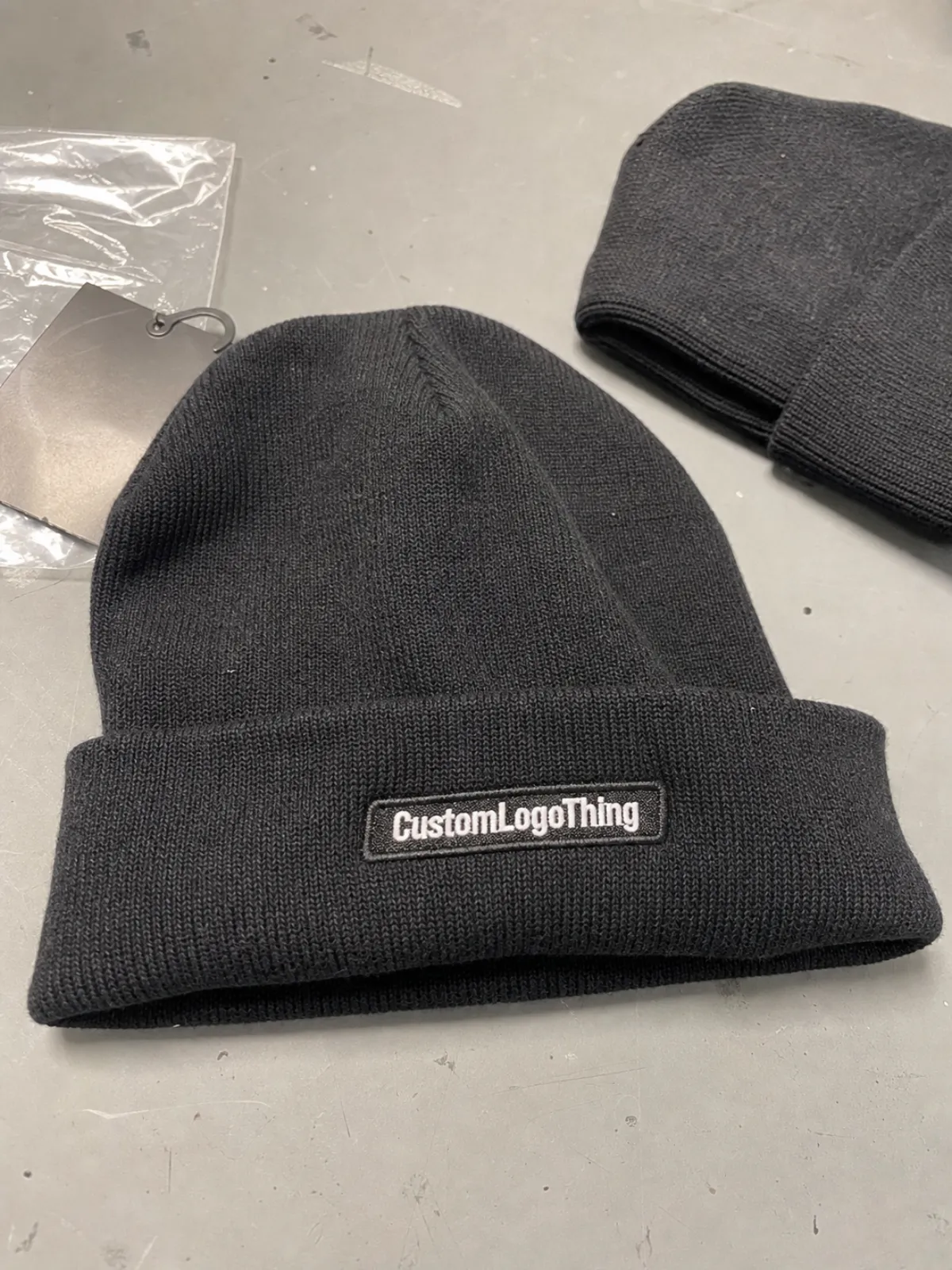
Acrylic is a useful material because it is affordable, common, and flexible enough for many decoration methods. It is also inconsistent enough to punish careless setup. Rib density, cuff thickness, yarn weight, and panel construction all affect how a logo sits on the surface. A 2x2 rib behaves differently from a looser fisherman-style knit. A tall cuff gives more usable real estate than a low-profile body panel. A flat front panel can take a cleaner transfer, while a highly textured rib can make embroidery look more dimensional and more forgiving.
The artwork matters, but the garment decides the ceiling. Fine lettering, narrow borders, and tight spacing can look clean on paper and still fail on a beanie because the knit moves under pressure. Large marks can also create problems if they pull the cuff or feel bulky against the forehead. The most reliable starting point is to decide what the decoration must do in hand. Should it disappear into the fabric, sit visibly on top, or carry a stitched texture that reads as premium?
Most buyers can narrow the options quickly by sorting the order into one of three goals:
- Lowest cost and broad visibility for promotions, events, or internal distribution.
- Premium appearance and durability for retail or higher-value branded merchandise.
- Small-detail reproduction for logos with gradients, fine text, or multi-color artwork.
Once that goal is clear, the shortlist usually gets much shorter. A beanie meant to be folded, packed, and worn repeatedly does not need the same finish as one that will be handed out once at an event. The more honest the buyer is about the real use case, the easier the method choice becomes.
Acrylic Beanies Print Method Comparison on Knit Fabric
For an acrylic beanies Print Method Comparison, the useful question is not “What is the best method?” It is “What behaves best on this knit, for this artwork, at this quantity?” Screen print, embroidery, heat transfer, and DTF each solve a different production problem.
Screen print works well for bold graphics, simple shapes, and spot-color logos. On a flatter cuff area, it can look clean and direct. The print is usually light in feel compared with stitched decoration, but heavier ink deposits can sit on top of the knit and reduce flexibility. Small type can fill in if the mesh, ink, or cure is not matched to the fabric movement.
Embroidery usually gives the strongest premium impression. Thread has texture, depth, and a tactile finish that buyers often associate with durable merchandise. It also handles wear well. The limit is structure. Dense stitch counts can distort lightweight acrylic, and very small lettering can lose legibility. Thin strokes and tight counters are the first things to disappear when the knit shifts.
Heat transfer and DTF are better choices for fine detail, color variation, and short runs. They preserve artwork more faithfully than embroidery and avoid the screen setup burden of multi-color printing. DTF is especially useful for CMYK-heavy artwork and one-off campaign designs. The tradeoff is surface feel. Transfers can create a film-like finish, and if press settings are wrong, the edges may lift where the fabric flexes most.
The simplest rule is still useful: bold and simple artwork tends to favor screen print, premium texture tends to favor embroidery, and detailed or color-heavy art often fits heat transfer or DTF better. That does not mean the choice is automatic. It means the default assumption should be tested against the beanie style before production starts.
| Method | Typical setup cost | Indicative unit cost at 250 pcs | Indicative unit cost at 2,500 pcs | Best fit |
|---|---|---|---|---|
| Screen print | $35-$90 per color/screen | $0.95-$1.80 | $0.35-$0.75 | Bold logos, spot-color art, larger volume runs |
| Embroidery | $25-$75 digitizing + sew-out | $2.25-$4.50 | $0.95-$2.10 | Durability, texture, premium retail presentation |
| Heat transfer | Low to moderate setup | $1.35-$2.90 | $0.75-$1.60 | Short runs, flexible art, fast proofing |
| DTF | Low artwork prep | $1.25-$2.75 | $0.70-$1.50 | Fine detail, gradients, CMYK-heavy logos |
These ranges are decoration-only. They do not include blanks, freight, or packaging. They also shift by region, artwork size, and schedule pressure. Still, they are useful for spotting quotes that are wildly high or suspiciously low.
Visual sharpness: DTF and transfer methods usually keep the most detail, while embroidery trades precision for texture. Handfeel: embroidery feels more substantial, screen print stays lighter, and transfers can feel smooth but more synthetic. Stretch tolerance: flexible transfers and lighter embroidery tend to handle movement better than thick ink or dense stitching. Wash resistance: embroidery is usually strongest, but printed methods can hold up well if cure temperature, adhesion, and handling are correct.
Packaging is a separate decision, but it affects how the finished order is judged. A printed insert, belly band, or retail sleeve may require offset printing for sharp images, digital printing for short-run flexibility, or flexographic printing for simpler high-volume labels. CMYK supports photographic work, while spot color is usually cleaner for brand reds and corporate blues. If the beanie is meant to feel retail-ready, the outer pack can matter almost as much as the decoration on the knit.
Cost, Pricing, MOQ, and Unit Economics
Per-piece pricing on beanies can be misleading. A buyer may compare two quotes and miss the fact that one includes setup, digitizing, art cleanup, sampling, or a rush charge while the other does not. The real comparison is total landed decoration cost.
Screen print often has the lightest setup burden for simple designs, but each color can add cost. Embroidery usually requires digitizing and a sew-out sample, and stitch count influences the final price more than many buyers expect. Heat transfer and DTF reduce setup friction, but the unit cost may stay higher than screen print once volumes rise. MOQ changes the equation quickly. A 100-piece order can make transfer methods attractive. A 2,500-piece run can push screen print back into contention for a simple logo.
Common hidden costs are predictable:
- Sampling: one decorated sample can prevent a much larger remake.
- Art cleanup: vector redraws, font corrections, and stitch file edits often carry a small fee.
- Color matching: Pantone matching, thread sourcing, or ink adjustment can extend the job.
- Rush handling: compressed schedules usually affect both production and freight.
- Spoilage: knit goods are not perfectly uniform, so a few rejects are normal in bulk.
Quotes only make sense if the assumptions match. A 2.75-inch logo is not directly comparable to a 3.25-inch logo. A cuff placement is not the same as a center-chest placement. A quote on one beanie style is not a quote on another, even if the yarn looks similar. Ask suppliers to price the same decoration width, the same placement, the same quantity, and the same blank style before comparing numbers.
For retail packaging, the printed components can rival the decoration cost on smaller runs. FSC-certified paperboard for hang tags or inserts may support a sustainability claim, but the bigger issue is usually presentation and transit durability. If the order ships in custom cartons or mailers, a transit standard such as ISTA becomes relevant, because crushed packaging can make a good decoration look poor on arrival.
Workflow, Lead Time, and Production Timeline
Most delays come from proofing and approvals, not the decoration machines themselves. A beanie order stays on schedule when the artwork is clear, the method is confirmed early, and the sample is approved without a long pause.
The usual workflow is straightforward:
- Artwork intake: vector files, logo guides, or a rough concept arrive first.
- Method check: the supplier reviews knit structure, decoration area, and method limits.
- Proofing: placement, size, and color are shown on a digital mockup.
- Prep: vector cleanup, digitizing, transfer file creation, or screen setup happens next.
- Sample or strike-off: useful when the knit is heavy, the logo is small, or the color must match closely.
- Bulk production: decoration, inspection, folding, bagging, and carton packing.
- Shipping: palletizing or cartonizing depends on the order size and distribution plan.
Typical lead times depend on method and inventory. Straightforward screen print runs can land around 7-12 business days after proof approval if blanks are already available. Embroidery often needs 10-15 business days because digitizing and sew-out approval add steps. Heat transfer and DTF can move faster at the front end, but only if the film, blank stock, and press settings are ready. If the beanie style has to be sourced, add time. If the buyer sends revisions after proofing starts, add more time again.
A few actions make the schedule far easier to manage:
- Send final art files in vector format rather than screenshots.
- Give precise placement notes, especially for cuff height and center alignment.
- Provide Pantone references or thread references if color fidelity matters.
- Confirm the quantity split by size, color, or destination before production starts.
- Approve samples quickly if the job includes one.
If printed packaging is part of the order, ask whether sleeves, cartons, or inserts need separate proofing. A digital insert can approve faster than a flexographic label run, but the whole timeline still depends on how many components sit around the beanie itself.
How to Match the Method to the Use Case
The cleanest way to choose a method is to start with the end use. Retail merch, employee uniforms, promotions, and seasonal giveaways tolerate different levels of detail, handfeel, and cost. A method that works beautifully for a boutique retail line may be too expensive for a conference handout. A method that is fine for a one-time giveaway may look underbuilt on a shelf.
Here is the practical breakdown:
- Retail merch: embroidery usually carries the strongest premium perception, especially on a cuffed acrylic beanie with a simple logo.
- Employee uniforms: screen print or embroidery both work, depending on whether the brand wants a cleaner graphic or a stitched finish.
- Promotions: screen print and transfer-based methods often win because unit economics matter more than texture.
- Seasonal giveaways: DTF or heat transfer can be strong if the art has small type, multiple colors, or a short campaign life.
The fastest way to narrow the field is to score each option against four criteria:
- Logo detail: does the artwork need fine lines, gradients, or small copy?
- Durability: will the decoration be washed, packed, worn, and reused often?
- Handfeel: should the decoration blend into the knit or stand out visibly?
- Order volume: is the buyer pricing 100 units, 500 units, or several thousand?
If two methods are close, sample both on the exact beanie style. That comparison usually settles the question faster than a spreadsheet. A logo that seems too plain in embroidery may look more refined than expected once it is stitched. A transfer that looks excellent in proofing can feel too slick in hand. The cuff construction often changes the final impression more than the artwork does.
There is no universal winner in an acrylic beanies print method comparison. There is only the method that best fits the fabric, the artwork, the quantity, and the brand expectation without creating hidden cost later.
Common Ordering Mistakes on Acrylic Beanies
The first mistake is approving a flat mockup and assuming the real product will behave the same way. Knit fabric bends light differently, stretches unevenly, and hides some details while exaggerating others. A centered logo in a proof can land slightly high or low once the beanie is worn.
The second mistake is oversizing the mark. Bigger is not always stronger on a beanie. Too much width can buckle the cuff, especially on ribbed knits or narrow front panels. Very thin lettering creates the opposite problem. It may look perfect on a screen and then vanish once the fabric flexes.
Other recurring issues are easier to avoid:
- Ignoring fabric weight: lighter acrylic can pucker under dense embroidery or heavy ink.
- Ignoring rib structure: a loose rib shifts more than buyers expect.
- Placing too close to the fold: the decoration can disappear into the cuff line.
- Skipping the sample: this is the fastest route to a remake or delay.
Heat-sensitive methods need extra care. Acrylic can handle decoration, but not every adhesive, press setting, or dwell time is equally safe. The supplier should test the exact beanie style before bulk production, because a method that works on one blank may behave differently on another with a different knit density or cuff thickness.
Care instructions matter more than many buyers realize. A finish that tolerates cool washing and low tumble drying is easier to support in retail and better for long-term wear. A decoration that cracks after two washes creates more damage than a slightly less polished method that lasts.
Packaging can distort perception too. A crushed mailer or folded carton makes the decoration look worse than it is. If the order includes retail packaging, ask about transit protection and whether the pack has been checked against a standard such as ISTA. The outer presentation and the beanie should work together, not compete.
Buyer Checklist and Final Recommendation
If the choice is still open, reduce uncertainty with a sample and a few direct questions. That usually costs less than guessing and remaking an order later.
- Ask for a decorated sample on the exact beanie style, not a similar one.
- Request placement mockups that show cuff height, width, and center alignment.
- Get wash guidance and any care notes for the chosen finish.
- Review finished examples on similar acrylic knit if the supplier has them.
- Confirm whether the quote includes art prep, digitizing, setup, revisions, and packaging.
The practical recommendation is simple. Choose screen print if the art is bold, the budget matters, and the logo needs to read from a distance. Choose embroidery if the brand wants a more premium finish and the design is not too small. Choose heat transfer or DTF if the artwork includes fine detail, gradients, or a short-run color story that would be expensive to reproduce another way.
If the order sits between two methods, let the sample decide. That is usually cheaper than guessing. If packaging is part of the plan, judge the outer box or sleeve at the same time as the beanie, because presentation is built from both pieces. For buyers comparing options across quotes, the best result is the method that matches the fabric, the artwork, the quantity, and the brand promise without leaving hidden cost behind.
What is the best decoration method for a simple logo on acrylic beanies?
Screen print is often the most cost-effective choice for bold, simple logos. Embroidery is worth comparing if the buyer wants a more premium, durable look. Keep the mark large enough to stay readable on a stretchy cuffed knit.
Does heat transfer work well on acrylic beanies?
It can work well, but the supplier should confirm safe press settings for acrylic fabric. The finish should stay flexible and avoid excessive shine or flattening the knit. Testing on the exact beanie style matters before bulk production.
Which method is usually cheapest for small orders?
Transfer-based methods can be competitive on small runs because they avoid heavy setup costs. Screen print becomes more attractive as quantity increases, especially for simple artwork. Compare total order cost, not just the unit price.
How long does acrylic beanie production usually take?
Lead time depends on proof approval, sample timing, and whether blanks are already in stock. Embroidery and print both add prep steps, but revisions usually create the biggest delays. Ask vendors to separate proofing, sampling, and bulk production in the timeline.
Can the same decoration method be used on all acrylic beanie styles?
Not always, because rib structure, cuff thickness, and fabric weight change the result. A method that looks clean on one beanie may pucker or warp on another. Request samples on the exact style before final approval.