Bucket hats Print Method Comparison for corporate gifting buyers starts with one practical issue: bucket hats are not flat. The crown curves, seams interrupt the decoration zone, and the brim changes how the logo reads in real use. That means a method that looks fine in a mockup can still fail on the finished item if it cannot handle the fabric, placement, or artwork detail.
For corporate gifting, buyers usually care about four things at once: how the hat looks, how much it costs, how fast it can be produced, and whether it feels worth keeping. The right method balances those pressures. A premium finish is useful only if the logo stays legible. A low-cost option is not useful if it weakens the brand mark or adds rework time.
Why Print Method Choice Changes the Result on Bucket Hats
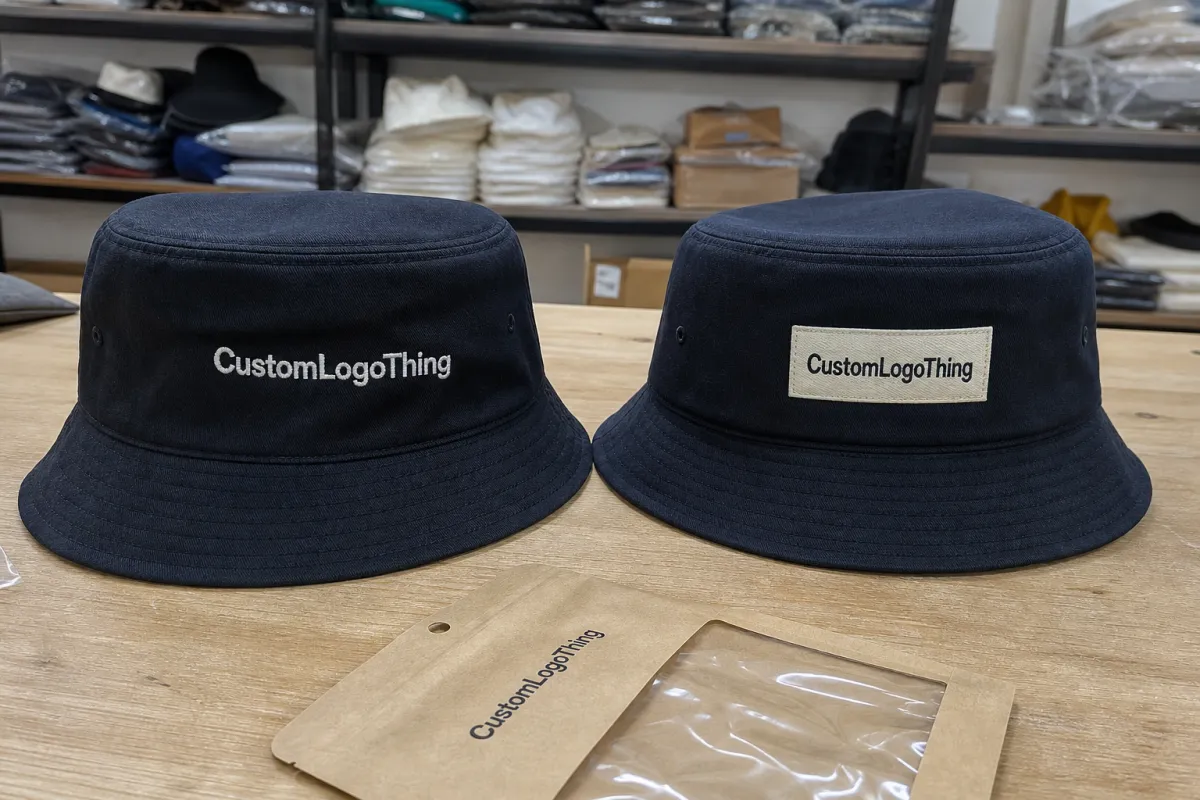
Bucket hats expose weak artwork quickly. The logo area is smaller than on many apparel items, the viewing angle changes constantly, and seams can cut into the usable space. A design that survives on a T-shirt may look cramped or distorted on a hat.
The method matters because each technique handles the curve differently. Embroidery adds texture and perceived value, but it reduces fine detail. Screen print keeps the art flat and economical, but it works best when the surface is smooth and the logo is simple. Transfers hold color detail better, but finish and durability depend on the film and application. Woven patches help when small text would be lost in stitching or ink.
- Logo detail - thin lines and small type need more support than bold lettering.
- Color count - one-color art is easier to produce than a multi-color mark.
- Fabric behavior - cotton twill, canvas, polyester, and recycled blends accept decoration differently.
- Placement - front crown is usually safest; brim and seams reduce usable space.
A clean proof is not enough if it ignores seam placement, crown curve, and the true size of the decoration zone.
Bucket Hats Print Method Comparison for Corporate Gifting Buyers
Most buyers need a fast comparison, not a technique lesson. The best method depends on artwork complexity, quantity, and deadline. For a premium client gift, embroidery often gives the strongest perceived value. For a simple giveaway, screen print is usually the most efficient. For full-color artwork or a short turnaround, transfer-based decoration is often the safest route.
| Method | Best Use | Typical Decoration Cost | Typical Setup | MOQ Range | Lead Time |
|---|---|---|---|---|---|
| Embroidery | Premium feel, simple logos, cotton twill, canvas | $1.20-$3.50 per unit | $25-$75 digitizing | 24-50 pieces | 10-15 business days |
| Screen print | Bold art, spot color logos, higher quantities | $0.60-$1.40 per unit | $35-$120 per color | 50-100 pieces | 10-18 business days |
| DTF / heat transfer | Full-color logos, short runs, fast approvals | $1.00-$2.80 per unit | Low to moderate | 25-50 pieces | 7-12 business days |
| Woven patch / applique | Small type, detail-heavy branding, premium finish | $1.50-$4.50 per unit | $40-$150 for patch prep | 50+ pieces | 12-18 business days |
Embroidery works best when the logo is simple and the hat fabric can support the stitch density. It suits executive gifts, partner programs, and recognition items where the item should feel substantial. The tradeoff is detail loss: tiny serif type, thin strokes, and gradients usually need simplification before digitizing.
Screen print is the cleanest value option for spot-color branding and larger quantities. It keeps the logo flat and direct, which many brands prefer. The limits are curve and texture. If the crown is soft or the art is too close to a seam, the print can look compressed.
DTF or heat transfer is practical for logos with gradients, multiple colors, or small elements that would be awkward to separate for print. It is often the easiest method for short runs. Buyers should still confirm edge sharpness, hand feel, and wash performance, because those vary by film and application quality.
Woven patches and appliques help when the logo is detail-heavy or too small for direct stitching. They separate the art from the fabric texture and often create the most premium finish after embroidery. The key is proportion: too large and the patch overwhelms the hat; too small and the detail advantage disappears.
As a buying rule, simple logos and higher quantities usually favor print, premium gifts favor embroidery, full-color art and speed pressure favor transfer, and fine detail favors a patch. That is not absolute, but it is enough to narrow the quote set quickly.
Product Details That Shape Decoration Quality
The blank hat affects the decoration as much as the method. A more structured bucket hat holds embroidery and patches better. A softer hat feels relaxed, but it moves more during wear. Wider brims improve sun coverage, but they can make a front logo feel lower and less visible.
Material choice matters too. Cotton twill is the safest middle ground because it feels familiar and supports embroidery well. Canvas brings more structure and a more premium hand feel, though it can run warmer. Polyester is often better for transfer decoration. Recycled blends are useful for sustainability goals, but surface variation can affect print clarity and color consistency.
Fabric weight also changes the result. Midweight cotton twill bucket hats often sit around 200-260 gsm, while heavier canvas styles can go above that. Heavier does not automatically mean better. More structure can improve appearance, but it can also reduce comfort for summer events.
Placement is another key variable. The front crown is usually the safest decoration zone. Side-panel logos work if the artwork is compact. The brim can carry a small accent or label, but it is usually the weakest place for a detailed mark. Seams, top stitching, and panel joins reduce the usable area more than flat artwork files suggest.
For approvals, buyers should ask for proofs that show the actual crown shape, seam lines, and true logo size. A generic silhouette is not enough. The buyer needs to see how the decoration sits on the real hat, not just on a flat mockup.
If the hats sit inside a larger gift pack, packaging should be checked at the same time. Buyers planning paper inserts can review FSC guidance at FSC. For transit-heavy programs, shipment durability is worth checking against ISTA testing references. The decoration may be the focus, but the packaging protects the first impression.
Specs Buyers Should Confirm Before They Request a Quote
Fast quoting depends on clear specs. The basics are the most important: hat shape, panel count, brim width, crown depth, fabric choice, and closure style. If the hat includes a cord, toggle, or unusual trim, that should be stated up front because it can affect both decoration access and packing.
Fit matters more than many procurement teams expect. Some bucket hats are true one-size styles. Others work better with a defined fit range, especially for mixed groups. If the audience is varied, ask whether the style wears shallow, snug, or relaxed. That can matter as much as the decoration choice.
Artwork should be locked early. Confirm the smallest readable text, minimum line thickness, and any stitch or print limits. A logo that looks refined in a brand deck may need simplification for embroidery. Complex color work may need spot-color conversion or a transfer method instead.
Send the essentials in one message:
- Artwork file - vector AI, EPS, or high-resolution PDF is best.
- Color target - Pantone references reduce thread and print guesswork.
- Placement - front, side, brim, or a small accent position.
- Packaging need - bulk packed, polybagged, insert card, or gift box.
The quickest approvals usually come from the shortest complete brief: logo file, quantity, deadline, delivery location, and placement preference.
Bucket Hat Pricing, MOQ, and Quote Drivers
Pricing is driven more by decoration than by the blank hat. A one-color logo on a stock cap is usually efficient. Add a second location, custom thread matching, a patch, or multi-color art, and the quote rises quickly. Setup, proofing, and packaging often matter as much as the garment itself.
Separate one-time charges from recurring charges. Embroidery usually includes digitizing. Screen print often includes a setup fee per color. Patches may require prep or construction charges. Transfers can be lower on setup, but the per-unit cost may be less forgiving on very small runs. Buyers should ask for those costs in plain language.
MOQ depends on the method and construction. A stock hat with straightforward embroidery may start around 24 to 50 pieces. Printed orders often begin higher, especially with multiple colors. Custom colors or special trims can push minimums up again. For corporate gifting, tiered pricing at 50, 100, 250, and 500 pieces gives the clearest view of scale.
Use landed cost, not just unit cost. Freight, taxes, split shipments, inserts, and individual packaging can erase a small decoration saving. A quote that looks cheaper at the product line can become more expensive once it is boxed for multiple offices or shipped direct to recipients.
Small changes often save the most money. Removing a second logo location usually saves more than changing suppliers. Choosing a stock hat color instead of a custom-dyed fabric can reduce both cost and lead time. Moving from full-color artwork to spot-color branding may also simplify approvals.
| Buyer Decision | Cost Effect | Speed Effect | Best Use Case |
|---|---|---|---|
| Remove a second logo location | Lower | Faster | Single-brand campaign, cleaner front view |
| Use stock hat color | Lower | Faster | Standard corporate giveaway or event gift |
| Switch from full color to spot color | Lower | Faster proofing | Simple logo with strong brand recognition |
| Add patch or applique | Higher | Usually slower | Premium client gift or detail-heavy logo |
Production Process, Turnaround, and Lead Time
A normal production flow is brief intake, artwork review, proof, sample if needed, bulk production, quality check, and shipment. Delays usually come from incomplete information rather than the sewing or printing itself.
Lead time varies by method. Embroidery can be quick once digitizing is approved, but it slows if the logo needs simplification. Screen print works well on higher quantities, but alignment gets harder with more colors. Transfers are often the fastest option for complex art, though they still depend on accurate heat application and stable placement.
For stock bucket hats, 7 to 15 business days after approval is a common target for simpler decoration. More complex builds, patch construction, or custom color matching can extend that to 2 to 4 weeks. If the order is tied to an event date, build in buffer time for proof revisions and freight.
Quality control should be defined before production begins. Ask what gets checked before shipment: logo placement, stitch count, color consistency, panel alignment, thread trimming, adhesive cleanliness, packaging count, and carton labeling. A client gift or senior staff gift usually needs tighter inspection than a casual internal giveaway.
Fast is not the same as careless. A good supplier can still hit a short deadline if the artwork is ready and the approval process is clear. The biggest delays are usually ambiguity and revision loops.
What Buyers Should Expect From a Supplier
Corporate buyers need honest method advice, predictable pricing, and a proof that reflects the real hat. A useful supplier should explain when embroidery will blur fine text, when screen print will feel too flat, and when a transfer is the safer option for a short deadline.
The best production partners show the actual decoration zone, not a generic silhouette. They flag when a logo needs simplification and tell the buyer if seams, stitching, or crown shape will create pressure on the layout. Those checks prevent the most common failure: approving artwork that cannot be made cleanly at scale.
Repeat programs benefit from that discipline. If hats are going to multiple regions or events, consistency matters more than one-off visual flair. Matching colors, repeatable placement, and predictable carton counts are what make reorders manageable.
The standard to hold onto is simple: a supplier should make the constraint visible before production starts. For bucket hats, the difference between a decent order and a polished one usually comes down to whether the decoration method fits the product instead of fighting it.
Next Steps for a Fast, Accurate Order
If you are requesting pricing, send the essentials in one message: logo file, quantity, deadline, delivery location, preferred hat color, and intended audience. Staff gifts, client gifts, and trade-show giveaways do not always want the same finish.
If you already know the decoration method you prefer, say so. If you do not, ask for side-by-side options so the tradeoff between finish, cost, and timing is visible immediately. It is usually easier to choose between two well-defined quotes than to revisit the brief after revisions start.
Before approval, confirm placement, packaging, and freight destination. Those details affect landed cost more than many people expect. If the order needs individual bags, branded inserts, or direct shipping to multiple offices, that should be clear before production begins.
For most programs, the best decision is the one that respects the artwork first and the budget second, without pretending both always point in the same direction. A clean logo on the right method will usually outlast a bargain solution that only looks good in the mockup.
Frequently Asked Questions
How should corporate gifting buyers compare bucket hat print methods?
Start with the logo, then check the fabric, quantity, and deadline. Bold one-color art can work well with screen print or embroidery. Small text and multi-color graphics often need a transfer or patch. The right method on paper is not always the right method for the production window.
Which decoration method is best for a premium corporate bucket hat gift?
Embroidery usually gives the strongest premium feel because it adds texture and depth. A woven patch can be better if the logo has tiny type or several colors. If the brand wants a flatter look, ask for a printed version as a comparison.
What MOQ should I expect for custom bucket hats?
MOQ depends on the method, the hat style, and whether the blank is stock or custom-built. Simple embroidery on a stock bucket hat can start lower than multi-color print or special construction. Tiered pricing at 50, 100, 250, and 500 pieces usually shows where scale improves the landed cost.
Can bucket hats carry full-color logos without looking crowded?
Yes, if the logo is sized correctly and the method matches the art. Transfer-based decoration and well-sized patches are usually better than direct stitching for full-color work. The main risk is compression from the curved crown and seams, so the proof should show true size and placement.
What should I send to get the fastest quote on bucket hats?
Send the logo file, quantity, deadline, delivery location, hat color preference, and any packaging requirement. If you have Pantone targets, include them. If the order needs a premium finish, say that clearly so the supplier can rule out methods that will not hold the detail.
For most corporate orders, the best bucket hats Print Method Comparison for corporate gifting buyers is the one that fits the artwork, the fabric, and the deadline before production begins.

