Buyer Fit Snapshot
| Best fit | design packaging for retail display for packaging buyers comparing material specs, print proof, MOQ, unit cost, freight, and repeat-order risk where brand print, material, artwork control, and repeat-order consistency matter. |
|---|---|
| Quote inputs | Share finished size, material target, print colors, finish, packing count, annual reorder estimate, and delivery region. |
| Proofing check | Approve dieline scale, logo placement, barcode or warning zones, color tolerance, and any recyclable or compostable wording before bulk production. |
| Main risk | Vague material claims, crowded artwork, or missing packing details can create delays even when the unit price looks attractive. |
Fast answer: Design Packaging for Retail Display: Dieline, Finish, Proof, and Buyer Review should be specified like a repeatable production item. The safest quote includes material, print method, finish, artwork proof, carton packing, and reorder notes in one written spec.
What to confirm before approving the packaging proof
Check the product dimensions against the actual filled item, not only the sales mockup. Ask for tolerance on folds, seals, hang holes, label areas, and retail display edges. If the package carries a logo, QR code, warning copy, or legal claim, reserve that space before decorative graphics fill the panel.
How to compare quotes without losing quality
Compare board or film grade, print process, finish, sampling route, tooling charges, carton quantity, and freight assumptions side by side. A lower quote is only useful if the supplier can repeat the same color, closure quality, and packing count on the next order.
How to Design Packaging for Retail Display That Sells
How to design Packaging for Retail display is never just a design question. It is merchandising, logistics, and sales psychology squeezed into a box, tray, or header card that has roughly three seconds to earn attention. I remember standing in a Target aisle in Minneapolis during a reset and watching a beautiful display get passed over because its main benefit sat 18 mm too low on the front panel. The buyer had approved the foil. The brand team had approved the color. The shopper, carrying a basket with 11 items already in it, did not even slow down. If you are researching how to design packaging for retail display, start by watching how fast a shopper moves, not how pretty the render looks.
The job sounds simple: make the product easier to notice, easier to understand, and easier to stock without creating a mess. The hard part is that every one of those goals pulls against the others. A display can be strong at 40 pounds compression and still fail if the shelf message is blurry at 5 feet. It can look elegant in a studio in Brooklyn and collapse in a club store in Dallas after two replenishments. If you are figuring out how to design packaging for retail display, start with the shelf dimensions, the case pack, and the lighting temperature, not the mood board.
I have seen a brand spend $4,800 on a soft-touch lamination and still lose money because the display could not survive a 1.2-meter drop test. I have also seen a 5,000-piece run at $0.18 per unit outperform a more expensive competitor because the shape was simple, the benefit was obvious, and the pack fit a 12-inch shelf opening in one motion. That gap between looking premium and selling well is where retail display packaging either earns its keep or quietly burns margin. In factories from Dongguan to Monterrey, the same pattern shows up over and over: a package is never just a box. It is a sales tool with freight on its back.
How to Design Packaging for Retail Display: What It Really Means
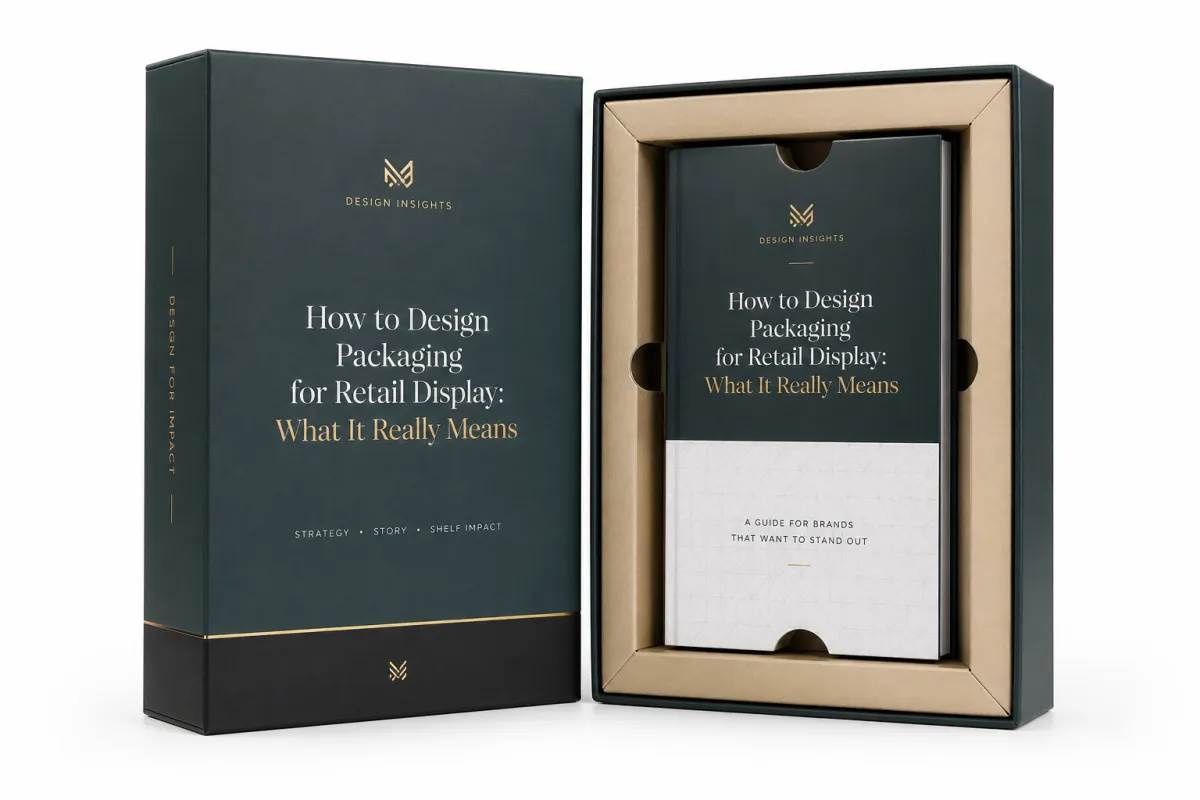
Retail display packaging sits at the intersection of merchandising, protection, and shelf visibility. Shipping packaging survives the truck from Chicago to Columbus. Shelf-ready packaging opens quickly and gets replenished by a store associate in under 60 seconds. Display packaging has to do both, then still look persuasive from 5 to 8 feet away. That is why how to design packaging for retail display starts with the store environment, not the color palette. A structure can be structurally sound and still fail if a shopper cannot decode it in one glance under a 3,200K fluorescent fixture.
On a production visit in Shenzhen, I watched a 24-count countertop display pass the paper compression test and then fail when loaded with the actual product. The CAD file looked clean, the glue points were correct, and the tray depth was 44 mm, but the filled bottles shifted the center of gravity forward by about 9 mm. The fix was not glamorous: a 2 mm base score change and a tighter internal lock. Packaging design works like that more often than most teams expect. Geometry usually beats decoration, which is inconvenient for anyone hoping the shiny finish will do the heavy lifting. In point-of-purchase packaging, the structure does more selling than the varnish.
In practical terms, how to design packaging for retail display means making the pack perform four jobs at once:
- Communicate the brand and offer fast enough for a shopper moving past at cart speed.
- Hold up through pallet handling, case cutting, and repeated stocking over 4 to 6 weeks.
- Fit the retailer's fixture, case pack, and promotional display rules exactly, down to the 1/8 inch.
- Keep print, conversion, freight, and damage costs under control at 2,000 to 10,000 unit runs.
That last point gets skipped too often. Packaging design may begin as a creative brief, but it ends as a supply-chain file with an invoice attached. A display that costs $0.42 more per unit can erase margin faster than weak copy ever will, especially if the SKU only turns 1.7 times per quarter. Retail packaging looks creative from the outside, but inside the business it behaves like a financial decision wearing better typography. Good retail-ready packaging makes the business case visible before the first shipment leaves the dock.
There is also an important distinction between the common formats. Shipping packaging protects product during transit. Shelf-ready packaging opens into a presentation unit for store staff. Display packaging is built to persuade, often with a front face, header card, die-cut window, or angled panel that helps the product stand apart from 12 near-identical competitors. Mix those jobs together without a plan and the result feels awkward. Separate them cleanly and the product becomes easier to shop. That is the boring truth, and the boring truth is usually the one with the shortest payback period.
For brands launching into retail, that difference matters as much as logo placement or spot color choices. It is why many teams begin with a custom packaging strategy and then work backward into Custom Printed Boxes or display trays that support the plan. If the pack cannot explain itself in one glance, the shelf will do the talking for you, and shelf commentary can be ruthless in a store where 86 other SKUs are competing for the same 36 inches. A strong shelf-ready packaging structure can also cut associate setup time, which matters more than most teams admit.
How Retail Display Packaging Works on the Shelf
The shelf is not a still image. It is a moving environment with hands, carts, restocks, and half-empty displays that look different at 9 a.m. and 4 p.m. How to design packaging for retail display properly means understanding the package in motion: it arrives in a corrugated shipper, gets opened by an associate in Nashville or Phoenix, gets handled by shoppers, and then gets replenished again and again. Every one of those moments can expose a weakness. I have seen a display look excellent on screen and then fail because the top flap tore after the third refill, which is a remarkably efficient way for a small defect to become a public problem.
Planograms change the equation. A peg-hook item needs a different silhouette than an end-cap unit. A countertop display needs a lower profile and a cleaner front panel than a floor-standing shipper. Shelf height matters too. A pack above eye level may need a 14 mm taller header or a stronger color block; a product below eye level may need a diagonal visual cue or a bright base edge that pulls the gaze downward. Packaging design cannot be separated from the retail setting and still do its job well. The store environment is not a backdrop. It is part of the design brief, along with the 18-inch shelf depth and the 10-pound stock limit.
Shoppers notice shape before they read copy. A sharp silhouette, a simple color block, a die-cut window, or a product angle that reveals part of the item can create a stop moment before the benefit statement is even read. In one client meeting, a hair tool brand wanted a premium matte finish and 6 lines of copy. We tested it under 4,000K store lighting in a mock aisle and found that the pack disappeared into the shelf like it had paid rent and left early. Cutting the text by half, raising the contrast, and adding a single angled window changed the result. Sales traction improved because the pack finally read like a clear signal instead of a tiny brochure pretending to be packaging.
Retail staff matter just as much as shoppers. If a package takes 90 seconds to assemble, gets crushed during replenishment, or leaves cardboard dust on the shelf, the store team will hate it even if the design department loves it. I ask one blunt question early in every project: "How many hands will touch this before it sells?" The answer shapes the structure, score lines, glue areas, and assembly logic. Good retail packaging helps staff work fast. Weak packaging creates friction exactly where speed matters most, especially during a 6:30 a.m. reset with one associate and 14 minutes before opening.
There is a hidden test built into every display: trust. A shopper standing in front of ten similar items scans for clues like print clarity, balanced hierarchy, and material quality. A blurry barcode, a crooked panel, or a crushed corner can quietly weaken confidence. Package branding is not only logo placement. It is the question of whether the entire unit feels deliberate. A rushed display often makes the product feel risky, even when the formulation is excellent. People may not say that out loud, but their hands do, usually by putting the item back in under two seconds.
Key Factors That Shape Retail Display Packaging
How to design packaging for retail display begins with hierarchy. A shopper should understand the brand, the product name, and the main benefit within a few seconds, ideally under 4 seconds if the aisle is busy. If everything is loud, nothing is legible. I tell clients to think in layers: logo first, product name second, benefit third, and promotional callout last. That sequence keeps the pack readable even at a 30-degree angle under harsh fluorescent light, which is not exactly the forgiving lighting of a photography studio in Santa Monica.
Material choice is not just a budget line. It is a design lever with measurable consequences. Paperboard gives crisp print quality and a lighter feel. Corrugated board gives strength, stacking performance, and more tolerance in transport. Recycled stock can support a sustainability story, but it may also affect print contrast, coating performance, and edge quality. I once negotiated with a supplier in Suzhou over a recycled SBS sheet that cost 7% more than expected because the fiber mix required a longer procurement window and an extra calendering pass. We kept the spec and changed the timeline. That kind of tradeoff rarely shows up in a mood board, which is probably why mood boards remain so popular.
For brands that need a credible sustainability signal, standards matter. FSC certification helps confirm responsible sourcing, while distribution testing often references ISTA protocols. If the pack must survive rough handling from a warehouse in Atlanta to a retail floor in Denver, those standards become practical tools instead of decorative badges. You can read more at FSC and ISTA. I also send teams to the EPA's recycling resources when we are deciding whether a format should be easier to recover after use: EPA recycling guidance.
Product weight and fragility shape the structure. A 120-gram cosmetic jar needs a different insert strategy than a 1.2-kilogram countertop appliance. Thickness, reinforcements, glue areas, and locking tabs all change. In a supplier review for a vitamin display, the decision came down to a 350gsm C1S artboard versus a 24pt corrugated alternative. The board option looked sharper and cost less. The corrugated option survived the retailer's handling standard better, including a 48-inch forklift transfer in a test warehouse outside Richmond. We chose the stronger substrate because a beautiful shelf display means very little if the tray folds after the first rush of shoppers.
Retail compliance also matters. Barcode placement, warning text, country-of-origin labeling, case-pack counts, and minimum dimensions can all decide whether the display gets accepted. A clever structure that misses the retailer's spec is not clever; it is expensive. Here, how to design packaging for retail display gets very concrete. The shelf opening is 12.5 inches. The end-cap depth is 16 inches. The case has to land squarely inside the fixture, or the concept fails before it reaches shoppers. No amount of enthusiasm changes that, and no amount of gold foil can fix a pack that is 3/8 inch too wide.
Audience and channel change the rules. Mass retail rewards clarity and speed. Specialty retail can tolerate more personality, more texture, and more narrative. Club stores often reward efficiency, stackability, and visibility from 15 feet away. A premium display in a boutique in Portland can carry more emotional weight; the same design in a discount aisle in Houston may feel fussy. The first question is not "What looks best?" It is "Where will this live?" That one question saves a lot of expensive embarrassment.
That is why I still insist on a retail shelf audit before graphics are finalized. Photograph the category. Measure the competitors. Count how many packs use red, how many rely on windows, and how many put the main claim in the top third of the panel. The pattern tells you what the aisle expects. Then you can decide whether to follow that pattern or break it on purpose. I usually prefer one deliberate break rather than five accidental ones, especially when the planogram is shared across 400 stores and one regional manager in Ohio has a strong opinion about end caps.
How to Design Packaging for Retail Display on a Budget
Budget pressure is real, and pretending otherwise helps nobody. How to design packaging for retail display on a budget starts by identifying the actual cost drivers: board grade, print complexity, specialty finishes, internal inserts, structural complexity, and order quantity. A pack with 5 PMS colors, 2 specialty coatings, and a custom die will cost more than a disciplined one-color structure with smart white space. That is not a value judgment. It is arithmetic with a deadline and a freight quote attached.
The fastest way to save money is to simplify the right thing. I have seen teams cut a foil stamp and use the savings to upgrade board stock, which was the correct move because the product needed stiffness more than shine. I have also seen the opposite: a premium rigid box with a gorgeous finish but a weak insert that let the product rattle in transit on a 240-mile truck route. The correction cost more than the original upgrade. Smart budgeting puts money where the shelf benefits, not where the mood board benefits. I wish that were a universal law. It is not, which is why packaging managers keep extra coffee in the drawer.
| Option | Typical Use | Approx. Unit Cost | What You Get |
|---|---|---|---|
| 350gsm C1S artboard | Lightweight retail display cartons and header cards | $0.15 to $0.18/unit at 5,000 pieces | Sharp print, lower weight, good for fast-turn product packaging |
| Corrugated E-flute | Shelf-ready trays, counter displays, small shippers | $0.26 to $0.31/unit at 5,000 pieces | Better stacking strength, improved protection, broader retail use |
| Rigid chipboard | Premium branded packaging and high-value presentation | $0.82 to $0.95/unit at 2,000 pieces | High perceived value, strong structure, more dramatic unboxing |
Those numbers move quickly with quantity. Prototypes cost more per unit because tooling and setup are spread across only a few samples. A 3-piece sample run can easily cost $18 to $35 per unit before freight. Larger runs lower the unit price, sometimes sharply. A custom dieline can change the economics overnight. If you already have a standard footprint, use it. If not, budget for the die and for at least one round of physical sampling. That is how how to design packaging for retail display stays practical instead of theoretical.
There are also budget-friendly moves that preserve shelf impact. Use one strong visual cue instead of three. Keep the palette tight. Let white space do some of the work. Standardize components across a product family so the same tray or insert can serve multiple SKUs. If you are building a launch system, browse Custom Packaging Products to see how shared structures can reduce redesign time without flattening the brand.
One more honest point: the cheapest package is often the most expensive package after damage, returns, and weak sell-through are counted. A display that looks "cheap" may also look inconsistent across the aisle. If it leaks product, crushes in freight, or forces a store associate to rebuild it twice, the hidden costs pile up fast. Budget should be measured against performance, not just the purchase order. A $0.12 savings can vanish the first time a carton splits on a pallet in Louisville.
If you need the design to stay efficient, use standard dielines, avoid unnecessary custom windows, limit embellishments, and keep the print count under control. I have watched a client save nearly 14% by dropping a spot gloss pass and moving the brand emphasis into color blocking and structure. The pack sold better because the message got cleaner. That is the kind of tradeoff that makes how to design packaging for retail display feel like a discipline rather than a guessing game.
How do you design packaging for retail display?
The most reliable way to approach how to design packaging for retail display is to follow a disciplined sequence. Start with the brief. Before anyone opens design software, define product dimensions, target shelf location, retailer requirements, brand goals, target margin, and launch date. Skip that step and the project becomes a chain of improvisations. I have seen enough "quick" packaging jobs to know that the first missing number often causes the longest delay. It is remarkable how one omitted measurement can turn into a full-blown fire drill across three departments.
Next, map the customer journey. A shopper sees the pack across the aisle, walks closer, reads the name, checks the promise, picks it up, and then decides. Each of those moments needs support from the structure and graphics. The front panel should stop the eye. Secondary copy should build confidence. The back or side panel can carry technical detail, ingredients, instructions, or social proof. If the first glance feels strong but the second glance feels confused, the package loses momentum. People do not linger forever. They either get it or they keep moving toward the next option.
Concepting comes after that. Sketch three or four directions, but do not fall in love with them yet. I usually ask for one conservative version, one bold version, and one "what if the shape changed?" version. That gives the team range without turning the process into chaos. Once the field narrows, build structural mockups in paper, corrugate, or 18pt SBS. Physical mockups reveal things CAD drawings hide: hand feel, opening friction, shelf footprint, and whether the product can actually be loaded without damage. Screens are useful. They are not honest enough.
Testing should happen with real product, not dummy weight. Put the package under store-like lighting in a room calibrated around 4,000K. Handle it with bare hands and with gloves if your retail staff does that. Shake it. Stack it. Open it twice. Check how the graphics read at 36 inches, 48 inches, and 72 inches. One of my best learning moments came during a beverage promotion meeting in Charlotte. The render looked balanced, but the real carton made the logo vanish under the store's warm lighting like it had been embarrassed. A small shift in contrast fixed it, but only because we tested the sample before committing to print.
Refinement comes next. Adjust copy length, font scale, panel ratios, insert depth, and sealing points. Packaging design and operations need to share the same table here. Marketing usually wants the pack to shout. Operations wants it to fold flat and ship cleanly. Production wants tolerances that do not create waste. If those groups do not agree early, the final file becomes a compromise nobody owns. Good retail packaging is collaborative because the physical object refuses to be otherwise. A box is a stubborn little diplomat with a die line.
Before production, run a prepress and approval checklist. Confirm artwork bleed, barcodes, legal copy, color profiles, dieline version, and finishing notes. Check the case-pack count and the pallet pattern if the display ships assembled. Make sure the final file matches the sample, not the original mood board. That sounds obvious. It is also exactly where expensive surprises are born. The pack on the screen must become the pack on the shelf, and the shelf has no patience for creative interpretation or a late file named "final_final_v7".
"We stopped thinking like designers and started thinking like store managers," one category manager told me after a display redesign for a Midwest grocery chain. "That changed everything."
That sentence stays with me because it captures the point of how to design packaging for retail display. The strongest design is not the one that looks smartest in a presentation deck. It is the one that moves cleanly from concept to line, from pallet to shelf, and from shelf to cart. If the package cannot survive that journey, the design is still unfinished, no matter how polished the render looks.
Process and Timeline for Retail Display Packaging
A realistic timeline keeps everyone honest. For most projects, the sequence is brief, concepting, structural design, mockups, revisions, prepress, sampling, production, and delivery. Simple jobs can move quickly if the artwork is nearly done and the retailer requirements are already locked. Complex jobs take longer because the packaging has to be validated in the real world. In practice, how to design packaging for retail display usually takes longer than the first estimate, not because people are careless, but because the physical sample changes the conversation. Paper has a habit of doing that, especially when the sample comes back from a plant in Dongguan with a slightly different board caliper than expected.
Lead times depend on dieline complexity, material availability, print method, finishing, and approval speed. A two-color run on standard board is one thing. A multi-SKU display with custom locks, spot UV, and retailer signoff is another. I often tell clients to expect 12 to 15 business days from proof approval for a straightforward print run, then add 5 to 8 more business days if the project needs custom tooling or multiple prototype rounds. That buffer matters. It is cheaper to plan for extra days than to pay for overnight corrections and the emotional damage that comes with them.
Delays usually come from the same four places: late copy changes, unclear specs, supplier constraints, and signoff bottlenecks. The odd part is that many of these delays are avoidable. Late legal edits can force artwork changes. Unclear shelf dimensions can trigger a structural rebuild. A supply shortage in a substrate can shift the schedule by a week. If the pack must survive distribution and still look good at retail, every one of those issues deserves attention early. Waiting until the end is how a manageable job becomes a mess with a Gantt chart and three apologetic emails.
Prototype testing deserves its own buffer. If the display holds multiple SKUs, each fill pattern needs to be tested. If the package is going through a rough channel, You Need to Know whether corner crush or flap fatigue will show up first. On one run for a household item shipping through Memphis, a display that looked stable in static testing tipped when the case was rotated onto a secondary pallet. We caught it because the timeline allowed a second prototype. Without that extra check, the launch would have arrived with a repair problem and a very unhappy sales team.
Some steps can overlap, but not all of them should. Concepting can begin while the brief is still being refined, yet prepress cannot begin before copy and dieline approval. Sampling can sometimes start before final finish decisions, but only if the remaining variables are known. The smart shortcut is not to skip steps; it is to sequence them well. That is the difference between an efficient process and a rushed one. Rushed projects always claim they are efficient right up until they are not, usually 48 hours before the truck leaves.
Launch calendars add another layer. Retail packaging for a promo end cap, seasonal display, or new product introduction has to arrive before the merchandising window opens. If the display lands late, the opportunity is already gone. I have seen teams win the design battle and lose the timing battle. If you are serious about how to design packaging for retail display, calendar planning belongs in the design work. Otherwise, the shelf date becomes a joke no one finds funny, particularly not the buyer who has already approved the reset.
My advice is simple: build the schedule backward from the shelf date. Add time for proofing, sampling, retailer review, and freight. Then protect that buffer. It may look conservative on paper, but it prevents the most expensive mistake in this category: having the right packaging arrive after the store reset. Nothing feels quite as useless as perfect packaging in a warehouse in Newark while the display slot on the sales floor sits empty.
Common Mistakes in Retail Display Packaging
One of the biggest mistakes is overdesign. Too many colors, too many claims, too many finishes, and too many fonts can make the package harder to read, not easier to sell. Shoppers do not reward complexity. They reward clarity. If you are learning how to design packaging for retail display, remember that a clean package often looks more premium than a crowded one because the eye can process it faster. The brain likes less work. It is rude that way, but reliable, especially in an aisle with 14 competing brands.
Another mistake is choosing a structure that fights the fixture. A display with a weak base, an awkward opening, or an oversized footprint may look good in a sample room and fail in the actual aisle. I once saw a counter display with a dramatic angled header get rejected because it blocked the adjacent SKU in a small-format store in San Diego. The art was fine. The fit was wrong. That is a structural problem, not a branding problem. And yes, the correction ate up 6 days of everybody's life, including a weekend approval.
Ignoring retailer rules is an expensive way to learn. A packaging unit that misses barcode placement, overhang limits, or case-pack specifications can get relabeled or sent back for revision. A design team may think it saved time by skipping the detail review. In reality, it only moved the cost to a later, more painful stage. Retail packaging is unforgiving in that way. The shelf is not impressed by excuses, and a receiving dock in Ohio is even less impressed.
Testing only in presentation mode is another trap. A pack that looks perfect on a render can fail once a real person grabs it, tears it, or drops it on a pallet corner. Real hands expose weaknesses faster than any deck. That is why I push for samples with real product, not foam inserts or empty shells. The difference shows up the second the pack gets loaded. If something squeaks, bows, or catches, trust me, a store team will find it faster than you do, usually before the first case is fully opened.
Finally, many teams forget replenishment. A display that looks elegant on day one but takes too long to refill can hurt sales velocity by day three. Store staff are the hidden customer. If the packaging slows them down, they may work around it, stack it differently, or avoid it entirely. Good retail packaging makes replenishment obvious and fast. That single choice can affect sell-through more than a spot varnish ever will. Pretty is nice. Easy is better, and easy is measurable when a refill takes 25 seconds instead of 75.
Expert Tips and Next Steps for Retail-Ready Packaging
Start with a shelf audit. Photograph three to five competitor packages in the same category, then look for patterns in color, shape, and copy hierarchy. You are not copying the market. You are reading it. That is one of the most practical ways to improve how to design packaging for retail display because it turns guesswork into observation. I know, observation sounds less glamorous than inspiration, but it pays the rent, especially when the category already has 9 red packs and 1 blue one.
Ask for one structural prototype and one print proof early. Digital mockups help with direction, but physical samples reveal edge quality, ink density, panel stiffness, and how the product actually sits inside the unit. I have watched teams save entire production runs because a sample exposed a bad insert height of 4 mm. One prototype can be worth far more than the cost of making it. A bad prototype is cheap. A bad production run is not.
Build a checklist that includes shelf fit, shipping durability, unit cost, visual hierarchy, compliance, and sustainability expectations. If the pack must satisfy more than one channel, note the differences clearly. A club-store version may need a stronger board and a broader message. A specialty-store version may need a more refined finish and less copy. A brand that tries to force one design into every channel often ends up pleasing none of them. That sounds harsh because it is harsh, but retail does not reward indecision, and buyers can spot indecision in under 10 seconds.
Align marketing, operations, and production around one approval path. That sounds bureaucratic until you see the alternative: three departments making late changes in different threads and nobody owning the final file. The cleanest projects I have managed all had one thing in common. Someone controlled versioning. That person knew which dieline was live, which copy deck was final, and which sample had buyer approval. The less glamorous the role, the more essential it usually is, particularly on a launch with a 28-day runway.
If your brand is planning a refresh, this is a good point to review your broader Custom Packaging Products options and decide whether the new display should fit into a family system or stand alone. Shared components can lower cost and reduce lead time. A one-off can still be justified if the product margin supports it. I am all for a dramatic display, but not if it requires a financial rescue mission later. The difference between a smart investment and a vanity spend is often just one shipping quote from Los Angeles to Atlanta.
Here is the short version: measure first, prototype early, test with real product, and refine before production. That is how to design packaging for retail display without turning the process into a guessing game. The strongest retail packaging usually looks inevitable once it reaches the shelf. It feels obvious only because the right decisions were made before the first box was printed. Retail-ready packaging works the same way: the selling job is built into the structure long before a shopper sees it.
How do you design packaging for retail display without making it too expensive?
Keep the structure simple and spend only where it affects shelf visibility or product protection. Use standard dielines, controlled color usage, and realistic quantities to lower unit cost. A 5,000-piece run on 350gsm C1S artboard may land near $0.15 to $0.18 per unit, while a more complex rigid format can move past $0.90 at 2,000 pieces. Test a prototype before you commit to a larger run so you do not pay for a redesign later. The cheapest route is not always the lowest quote; it is the one that does not boomerang back as waste. If you are evaluating how to design packaging for retail display on a budget, start with the parts the shopper can actually see.
What is the best material for retail display packaging?
Paperboard works well for lightweight products and sharp print quality. Corrugated board is better when the package needs more strength, stacking support, or shipping durability. For example, a 350gsm C1S artboard can work for a lightweight cosmetic kit, while E-flute corrugated is usually safer for a heavier countertop display that has to travel from Chicago to store shelves in one piece. The best choice depends on product weight, display format, and whether the package must survive distribution as well as shelf presentation. In retail-ready packaging, the material has to match the channel, not just the artwork.
How long does it take to design packaging for retail display?
Simple projects can move quickly if the dieline, copy, and approvals are already defined. Custom structural work, multiple prototype rounds, or retailer compliance reviews can stretch the timeline. A straightforward print run typically takes 12 to 15 business days from proof approval, and custom tooling or a second sampling round can add another week. The safest approach is to plan for extra time at the sampling and approval stages. A rushed calendar is how sensible projects become panic projects. For teams learning how to design packaging for retail display, the timeline should be built backward from the shelf date.
How can retail display packaging stand out in a crowded aisle?
Use a clear visual hierarchy so shoppers instantly know what the product is and why it matters. Choose one strong differentiator, such as color, shape, or benefit messaging, instead of trying to use all three at once. Match the category norms just enough to be recognizable, then break one rule deliberately to create contrast. If everything screams, nobody hears anything, and if the shelf is lit at 3,500K, weak contrast disappears even faster. A well-built point-of-purchase display also helps because it gives the product a shape that shoppers can remember after one glance.
Should retail display packaging be reusable or single-use?
Reusable packaging makes sense when the display structure stays in stores for longer periods or holds refillable inventory. Single-use packaging is often better for promotions, short runs, and products with fast turnover. The right answer depends on how often the product is restocked, how the retailer handles displays, and what the budget allows. I usually start by asking whether the display is meant to live for 90 days or just make one memorable appearance and move on. In some cases, a durable shelf-ready packaging unit pays off because it reduces labor on the store side.
If you want a practical starting point, measure the fixture, sketch the structure, and test a sample with real product before you order the full run. That is the most reliable way to approach how to design packaging for retail display, because it keeps the design grounded in the shelf, the staff workflow, and the sales goal. A ruler, a sample, and a store visit in one afternoon can prevent a week of revisions later.