Buyer Fit Snapshot
| Best fit | Order Printed Mailers projects where brand print, material claims, artwork control, MOQ, and repeat-order consistency need to be specified before quoting. |
|---|---|
| Quote inputs | Share finished size, material target, print colors, finish, packing count, annual reorder estimate, ship-to region, and any compliance wording. |
| Proofing check | Approve dieline scale, logo placement, barcode or warning zones, color tolerance, closure strength, and carton packing before bulk production. |
| Main risk | Vague material claims, crowded artwork, missing packing details, or unclear freight terms can make a low unit price expensive after revisions. |
Fast answer: Order Printed Mailers: Film, Print, MOQ, and Carton Packing should be specified like a repeatable production item. The safest quote records material, print method, finish, artwork proof, packing count, and reorder notes in one written spec.
Production checks before approval
Compare the actual filled-product size with the drawing, then confirm tolerance on folds, seals, hang holes, label areas, and retail display edges. Reserve space for logos, QR codes, warning copy, and material claims before decorative graphics fill the panel.
Quote comparison points
Review material grade, print process, finish, sampling route, tooling charges, carton quantity, and freight assumptions side by side. A quote is only useful when the supplier can repeat the same color, closure quality, and packing count on the next order.
How to order printed mailers sounds like a simple procurement task until the quote comes back with five variables you did not plan for. That is usually the moment the room gets quiet. A mailer is a shipping container, yes, but it is also a moving billboard, a handling surface, and the first physical proof that your brand can follow through on its own promise. A customer may only spend a few seconds looking at it, which is unfair in the same way first impressions are unfair: they matter anyway.
From a packaging buyer's point of view, how to order printed mailers is not just a matter of buying a pouch with a logo on it. It is the process of choosing a format that survives transit, fits the product, fits the packing line, and still looks like it belongs to the brand when it lands on a doorstep. The difference between a plain mailer and a printed one is not cosmetic alone. In my experience, it changes how teams think about fulfillment, how customers describe the package, and how often the packaging gets noticed before the product does.
The best results usually come from a methodical approach. Gather the size, quantity, artwork, material preference, and delivery timing before you ask for pricing. Do that and the quote becomes easier to compare, the proofing cycle gets shorter, and the odds of a messy reprint drop. Skip that step and the order can start to wobble. That is the real lesson behind how to order printed mailers: define the spec first, then move into pricing and production with your eyes open.
A useful rule of thumb: if the supplier has to guess the size, the print area, or the shipping method, the order is not ready for quoting yet.
How to Order Printed Mailers: What Buyers Miss First
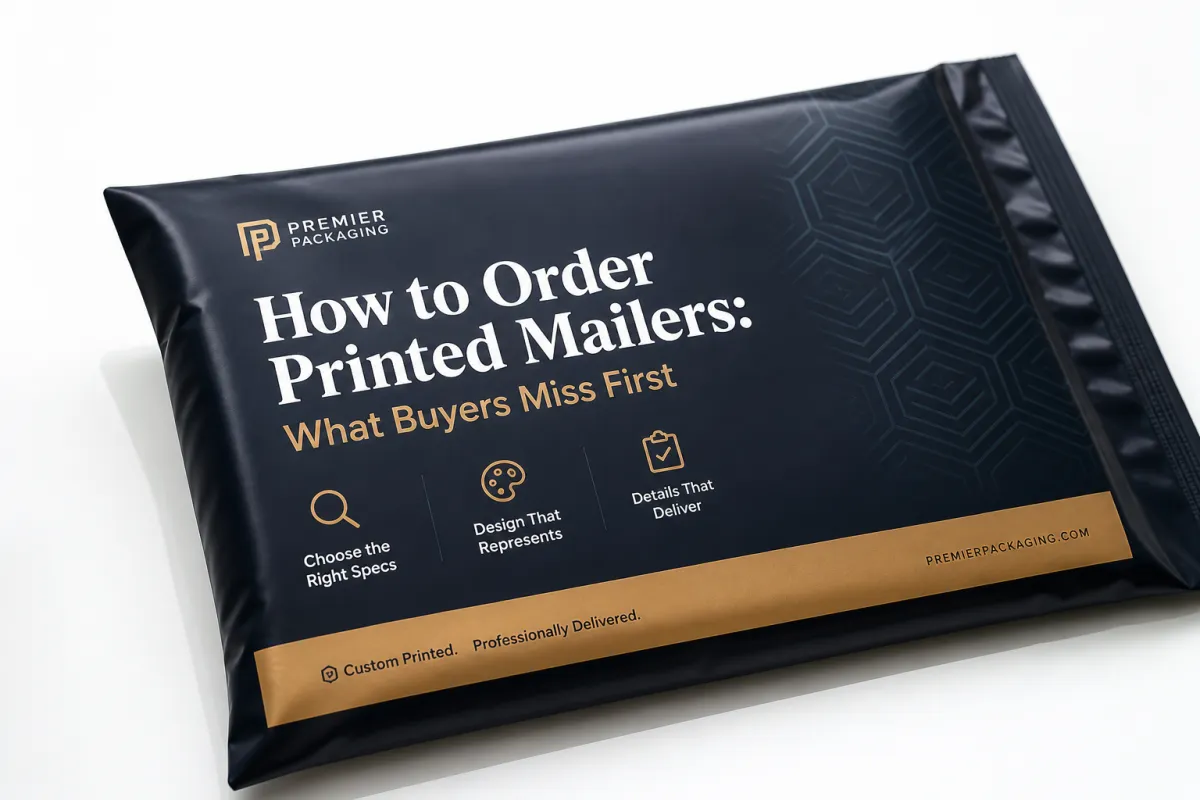
Most buyers underestimate how quickly customers judge the outer package. A printed shipper may sit in a warehouse for days, but the buyer sees it in seconds. That mismatch matters. The mailer is often the first branded object in the whole purchase journey, which gives it more influence than teams expect. It has to protect the product, carry the brand, and still look intentional. Three jobs. One surface.
That is why how to order printed mailers should start with the business reason, not the artwork file. Apparel, accessories, subscription kits, and small retail goods all benefit from packaging that signals care before the item is even touched. A plain mailer is functional. A printed one can feel considered. That distinction shows up in repeat purchase behavior, social sharing, and in the way people describe the order afterward. “It arrived.” Versus “it felt premium.” Those are not the same sentence.
There is also a less glamorous issue hiding under the branding conversation: operations. Teams sometimes talk as if they are buying a graphic treatment, then discover they are buying a packaging format that must fit packing stations, carrier handling, and transit stress. Too large, and material is wasted while parcels become bulky. Too small, and the line slows down while damage risk climbs. Learning how to order printed mailers means balancing the brand message against the physical job the mailer has to do.
Before pricing begins, collect the basics:
- Size: flat dimensions, gusset depth if applicable, and the actual product fit.
- Quantity: one run, repeat orders, or a seasonal replenishment cycle.
- Artwork: logo files, brand colors, and any copy or pattern elements.
- Timing: when the mailers need to arrive, not just when the order is approved.
- Use case: apparel, beauty, subscription, accessories, or mixed SKU shipping.
That list looks basic because it is basic. Basic does not mean optional. It prevents quote churn. Anyone learning how to order printed mailers should treat this stage like building a living spec sheet, one that can be reused when the reorder comes around. Stable order data makes packaging programs easier to run, easier to compare, and easier to keep consistent from cycle to cycle.
For brands comparing broader packaging options, it helps to browse Custom Packaging Products first so the mailer choice matches the rest of the shipping system instead of standing apart from it.
How Do You Order Printed Mailers?
The most practical answer is also the least dramatic: Choose the Right mailer type, confirm the size, prepare the artwork, request a quote, review the proof, and approve production only when the details match the brief. That is the backbone of how to order printed mailers, whether you are buying custom shipping mailers for apparel or branded packaging for accessories.
If you want the process to move quickly, think in this order:
- Select the format: poly mailers, paper mailers, padded mailers, or compostable mailers.
- Confirm dimensions: choose a size that fits the product without wasting material.
- Prepare artwork: send vector logo files, brand colors, and placement notes.
- Request a quote: include quantity, print coverage, and delivery timing.
- Check the proof: verify color, copy, bleed, and print placement.
- Approve production: sign off only when the spec and the proof agree.
That sequence keeps how to order printed mailers from turning into a revision loop. It also helps the supplier recommend the right material thickness, closure style, and print method before the order gets locked in. And yes, that part matters more than people think. A better spec on the front end usually beats three urgent emails after the proof lands.
If you are managing a new brand launch, a reorder, or a seasonal packaging refresh, the same rule applies. Start with the physical requirements, then move to the visual layer. It is kinda boring compared with the design review, but the boring part is usually the part that saves the order.
Printed Mailer Product Details You Need to Compare
Product choice changes everything. Two mailers can share a similar mockup and behave very differently on the production floor. That is why how to order printed mailers should begin with substrate and construction, not decoration. Once the product category is right, the print style and layout become much easier to judge.
The common options are poly mailers, paper mailers, padded mailers, and compostable styles. Each solves a different problem. Poly mailers are light, cost-efficient, and a natural fit for apparel and soft goods. Paper mailers create a more natural presentation and often appeal to brands that want a recyclable look. Padded mailers add extra protection for small fragile items. Compostable options can support an environmental story, though the structure and print limits need careful review before anyone signs off.
If you sell clothing, a Custom Poly Mailers spec is often the starting point because the format is light, efficient, and easy to print in multiple color styles. If the shipment includes boxed goods or delicate accessories, a padded or paper-based format may fit better. That distinction sits near the center of how to order printed mailers without paying for a format that does not match the product load.
Print options are wider than many buyers expect. A one-color logo can create a clean, restrained look. Full-color artwork works well when the brand wants a louder, more expressive mailer. Repeat patterns, border treatments, interior print, and exterior print all change the final effect. The right choice depends on whether the brand wants quiet recognition or a retail-style presentation that announces itself from across the room.
Construction details matter too. Closure style changes packing speed. Tear strips can improve the opening experience. Self-seal adhesives are convenient, but they need to hold in real transit conditions, not just in a test fit on a desk. Surface finish affects how the ink reads, especially when the design uses pale colors on a dark base. Those are not minor decisions. They shape labor, perception, and how the package behaves after it leaves the warehouse.
For teams that want a shipping benchmark, it helps to think in transit terms. Parcel handling expectations are often discussed alongside ISTA test methods, especially when brands want more confidence in how a mailer performs once it leaves the fulfillment floor. Not every order needs formal testing, but the mindset is useful: choose the mailer for the route it must survive.
The table below gives a practical comparison of the main product types buyers usually evaluate while learning how to order printed mailers. Prices are typical planning ranges at around 5,000 units and can move with print coverage, material availability, and freight.
| Mailer Type | Best For | Typical Print Style | Protection Level | Approx. Unit Range |
|---|---|---|---|---|
| Poly mailer | Apparel, soft goods, light accessories | 1-color logo, 2-color logo, full bleed graphics | Light protection, water resistance | $0.18-$0.35 |
| Paper mailer | Retail goods, subscription kits, brands wanting a natural look | Spot print, simple brand marks, repeat patterns | Moderate protection, better shelf appeal | $0.28-$0.55 |
| Padded mailer | Small electronics, fragile accessories, samples | Exterior print, limited coverage, cleaner one-side branding | Higher protection from impact and scuffing | $0.32-$0.70 |
| Compostable mailer | Eco-positioned apparel and lightweight goods | Simple logo work, limited color counts | Light-to-moderate, depending on construction | $0.30-$0.65 |
Those numbers are planning ranges, not a quote. That distinction matters because the pattern is easy to miss: more structure and more print coverage usually push the unit price upward. Buyers who understand how to order printed mailers compare the format first, then decide whether the visual upgrade earns its place in the budget.
If sustainability is part of the brief, material documentation matters more than a marketing claim. Paper sourcing, recycled content, and chain-of-custody documents should be reviewed carefully. Where appropriate, ask whether paper-based options are backed by FSC certification or similar documentation, then confirm what that certification covers. That is a better habit than assuming every green-looking mailer is automatically verified.
Printed Mailer Specifications to Confirm Before You Quote
Spec accuracy decides a lot more orders than buyers like to admit. A mailer can look right in a mockup and still fail in production if the dimensions, print area, or artwork setup are incomplete. That is why how to order printed mailers works best when the quote request reads like a production brief rather than a casual inquiry.
Start with the physical dimensions. Flat size is obvious, though expansion depth or gusset depth can matter just as much if the mailer needs to hold folded garments or unpredictable SKU thickness. The usable print area should also be confirmed. A logo that appears centered on a digital proof can drift too high or too low once sealing zones, tear strips, and edge tolerances are factored in.
Next comes material thickness. Poly film is often specified in microns or mils, while paper mailers are usually discussed by weight or board construction. Thicker material can improve durability, but it can also change cost and sometimes extend lead time. If the order will pass through automated packing or high-speed fulfillment, thickness should be chosen with handling in mind. That part of how to order printed mailers is less glamorous, and usually more consequential, than the artwork discussion that gets all the attention.
Artwork requirements should be settled early. Ask for:
- Logo format: vector files such as AI, EPS, or editable PDF when possible.
- Color target: Pantone reference, CMYK build, or a confirmed one-color match.
- Bleed: enough room for design elements that run to the edge.
- Safe zone: space that keeps text and logos away from seals and cut lines.
- Resolution: high-resolution raster assets when vector art is not available.
Most delays happen because a team sends a logo without sizing notes, or because the artwork has to be rebuilt from a low-resolution file. If you want how to order printed mailers to move quickly, the file package matters as much as the product spec. A supplier can only proof what they can actually print.
Print method is another variable that changes the order. Some mailers run best with one-color flexographic print. Others suit more decorative layouts or full-color digital treatments. Finish matters as well. Matte surfaces tend to mute glare and feel more restrained. Gloss can sharpen color and help dark designs stand out. If the brand uses light neutrals or metallic accents, that finish decision can alter the final look more than the logo itself.
The fastest orders are the ones documented in one place. A simple spec sheet should list dimensions, material, closure type, print count, print placement, color reference, shipping target, and any special handling notes. That is the backbone of how to order printed mailers without having to revise the quote three times before production starts.
One practical tip: if the mailer is expected to support a premium brand story, ask for a physical sample or a close production reference before approving the run. Proofs are useful, but they do not always show how the material feels in hand or how the print behaves under different light. That is especially true on paper-based or soft-touch surfaces.
How to Order Printed Mailers Without Overpaying
Price is never just price. It is a blend of material, setup, print coverage, quantity, freight, and how much risk the buyer is asking the supplier to absorb. That is why how to order printed mailers should include a cost review that goes beyond the unit number on the quote. A cheap-looking quote can turn expensive as soon as the add-ons appear.
The major cost drivers stay fairly consistent. Material selection is usually the largest one. A heavier film or a more premium paper structure will raise cost. Number of colors comes next. One-color branding is usually cheaper than full-color coverage. Quantity matters too, because setup gets spread across more pieces when the run is larger. Print coverage can also shift cost if the design runs full bleed or uses dense ink coverage.
MOQ, or minimum order quantity, is where buyers often feel the most friction. Lower quantities usually carry a higher per-unit cost because the setup work does not shrink much when the run size shrinks. That does not make a smaller run wrong. It means the buyer should understand why the price behaves that way. If a brand is testing a new package style, a smaller order can still make sense. If the format is stable and repeat orders are likely, a larger run often improves the economics of how to order printed mailers.
Here is a clean way to compare quotes:
| Quote Item | What It Covers | Why It Changes Cost | What to Ask Before Approving |
|---|---|---|---|
| Setup or plate fee | Prepress, tooling, or print preparation | Spread across the whole run | Is it one-time or repeatable? |
| Material upgrade | Thicker film, better paper, or recycled content | Changes raw material cost and handling | Does it change lead time or MOQ? |
| Print coverage | Spot logo versus full-coverage design | More ink and more print steps | What print area is actually included? |
| Freight | Shipping from production to receiving location | Distance, weight, and pallet volume matter | Is freight prepaid, quoted separately, or estimated? |
| Rush fee | Compressed production schedule | May force overtime or expediting | Is the schedule realistic if artwork is not final? |
If you want a fair comparison, ask every supplier to quote the same terms. Same size. Same print coverage. Same quantity. Same delivery location. Otherwise the lowest number on paper may be missing freight or setup. That is how teams misread how to order printed mailers and end up chasing a lower price that was never actually lower.
There is also a strategic question: should the brand buy for the next shipment only, or should it lock in a larger replenishment cycle? That is where a program like Wholesale Programs can matter. If order volume is steady, packaging buyers often benefit from better unit economics, fewer emergency reorders, and fewer proof cycles. The right answer depends on how predictable the brand's shipment volume really is.
Ask about hidden cost items directly. If a supplier charges for art changes, sampling, mixed pallets, or special cartonization, you want to know that before approval. Some teams overlook those items because they are small individually, but together they can shift a budget by a meaningful amount. A careful buyer treats how to order printed mailers like any other procurement decision: compare the whole landed cost, not just the unit print price.
Another practical check is payment timing. A quote that looks strong may still require a deposit, balance before shipment, or payment before proof release. None of those terms are unusual. The key is to plan cash flow around them so the production schedule is not blocked at the last minute.
How to Order Printed Mailers: Process and Timeline
The order flow is usually clear on paper and more conditional in practice. How to order printed mailers starts with a quote request, but the real schedule begins only after specs are confirmed and artwork is approved. If one of those inputs changes, the timeline changes with it.
A standard process usually looks like this:
- Request the quote: share size, material preference, quantity, print style, and delivery target.
- Confirm the spec: lock the dimensions, closure type, and print area before design work starts.
- Submit artwork: provide logo files, color references, and any copy or pattern details.
- Review the proof: check placement, spelling, color callouts, and edges with care.
- Approve production: sign off only when the proof matches the target spec.
- Schedule shipment: confirm pallet or carton delivery and check receiving requirements.
The biggest time variable is usually proof approval. If the file is clean and the spec is locked, the proof can move quickly. If artwork needs resizing, color correction, or a layout rebuild, the schedule slows down fast. That is why how to order printed mailers is easier when the creative team and operations team work from the same brief.
Lead time also depends on material availability. Some substrate choices are common and move faster. Others require more sourcing time. Print complexity matters too. A simple one-color logo is usually easier to schedule than a full-coverage design with multiple print zones. Quantity matters because larger runs take more press time and more packing time after the run is complete.
Typical planning ranges vary, but many standard jobs land somewhere around 12-15 business days after proof approval, with longer timelines if the order is large, custom, or material-specific. Rush options may exist, but they are only useful if the artwork is already final and the spec does not need revision. Otherwise the rush fee solves the wrong problem. Good planning is part of how to order printed mailers well; it keeps expensive urgency from becoming the main decision driver.
There is one more habit that saves time: keep a master spec record. If a size works, keep that data. If a logo placement is approved, save the proof. If the same packaging will be reordered seasonally, keep the supplier, quantity break, and delivery notes in one place. The next run becomes a repeat order instead of a fresh project.
That repeatable approach is especially useful for teams that want fewer surprises. A packaging program becomes easier to manage when the buyer can answer the same questions every time without starting from zero. That is the quiet advantage behind how to order printed mailers with a proper process instead of a one-off request.
If you need a place to handle common setup questions before you place the order, the FAQ can help narrow the details that usually slow down proofing.
Why Choose Us for Printed Mailers
Buying packaging is partly about the object and partly about the experience of getting it made correctly. At Custom Logo Things, the goal is to make how to order printed mailers feel controlled from the first quote through final delivery. That means clear specifications, practical guidance, and fewer chances for the order to drift away from the original intent.
What does that look like in practice? It starts with helping buyers Choose the Right format for the shipment, not just the most attractive mockup. A mailer for apparel should not be specified the same way as a mailer for accessories with sharper edges. A brand that needs a cleaner retail look may need a different finish than a brand that wants maximum shipping efficiency. The point is to match the packaging to the use case, then build the print around that decision.
It also means paying attention to quality control points that matter at scale. Print alignment, color consistency, and dimensional accuracy are not glamorous topics. They are, though, the difference between packaging that reinforces the brand and packaging that creates avoidable complaints. Buyers who understand how to order printed mailers usually want one thing above all else: the final run should match the approved proof as closely as possible.
Another advantage is communication. Packaging projects stall when the quote is vague or the proof leaves room for interpretation. A stronger process uses clear milestones: spec confirmation, artwork check, proof review, approval, and ship date. That structure saves time and reduces the chance that a small revision turns into a major delay. From a buyer's point of view, that is often more valuable than shaving a few cents off the headline unit price.
Service matters after the order is placed, too. If a customer wants to reorder, adjust a size, or compare a different print option, the next conversation should not start from scratch. Repeatability is part of how to order printed mailers successfully. The supplier should be able to work from the historical spec, not rebuild the entire program every time.
For buyers comparing packaging formats across categories, browsing Custom Packaging Products first can help keep the print strategy aligned with the wider packaging mix. The result is usually a cleaner brand presentation and less back-and-forth between procurement, design, and fulfillment.
Honestly, many packaging problems are not really print problems. They are specification problems. The right supplier helps catch those issues before production, which is where the real savings appear. That is the practical promise behind how to order printed mailers with a buyer's mindset instead of a guess-and-hope approach.
How to Order Printed Mailers: Final Next Steps
If the goal is to move from idea to purchase without delay, keep the next step sequence simple. Start by confirming the mailer type, then lock the size, print style, quantity, and delivery date. That order of operations matters. It keeps how to order printed mailers from turning into a loop of revisions after the quote is already in motion.
Then gather the files that make the proof faster: logo artwork, brand color references, product dimensions, and any sample images that show the look you want. If you have a sample mailer or a competitor reference that captures the feel you want, share that too. Visual references reduce ambiguity, and ambiguity is where proof cycles tend to stretch out.
Ask for a quote breakdown that separates unit price, setup, freight, and any optional add-ons. A single number is not enough for a commercial packaging decision. You want to know what is included, what is estimated, and what can change later. That is one of the cleanest ways to keep how to order printed mailers transparent from the beginning.
After that, approve the spec before approving the artwork. It sounds minor, but it protects the order from a common mistake: designing the mailer first and only later realizing the dimensions or closure zone are wrong. The best orders are usually the ones where the production logic comes first and the artwork follows the spec, not the other way around.
If you are managing multiple SKUs or planning repeat orders, write the approved details down where the whole team can find them. Then the next reorder will move faster, with fewer questions and a better chance of matching the original intent. That is the most practical way to keep how to order printed mailers efficient over time.
Use the checklist, confirm the details, and keep the process tight. That is how to order printed mailers without delays, re-quotes, or surprise costs.
Frequently Asked Questions
How do I order printed mailers with my logo?
Choose the mailer type and size first, then send your logo files, preferred colors, and quantity target so the supplier can build an accurate quote. Ask for a proof before production so you can confirm placement, color, and print coverage. That is the cleanest route for how to order printed mailers with a logo that prints the way you expect.
What information do I need to get a printed mailer quote?
Provide dimensions, material preference, print colors, artwork files, quantity, and delivery destination. If you know the shipping use case, include that as well, because it helps the supplier recommend the right construction. The more complete the brief, the easier how to order printed mailers becomes on the first pass.
How long does it take to order printed mailers?
Timeline depends on artwork approval, material availability, and order size, but proofing usually adds the most time. If you want the fastest possible production schedule, have files ready before requesting the quote. Buyers who plan ahead usually find how to order printed mailers is much quicker than they expected.
What is the minimum order for printed mailers?
MOQ varies by material and print method, and lower quantities usually cost more per unit because setup is spread across fewer pieces. Ask whether the supplier offers tiered pricing so you can compare the cost difference between smaller and larger runs. That comparison is often the turning point in how to order printed mailers economically.
Can I change the size after I start the order?
Changing size after quoting can affect pricing, fit, print layout, and lead time, so it is best to lock dimensions early. If you expect multiple SKUs, request separate size options up front to avoid re-quoting later. In practice, that is one of the easiest ways to keep how to order printed mailers on schedule and within budget.

