Buyer Fit Snapshot
| Best fit | Source Affordable Packaging Materials Without Risk projects where brand print, material claims, artwork control, MOQ, and repeat-order consistency need to be specified before quoting. |
|---|---|
| Quote inputs | Share finished size, material target, print colors, finish, packing count, annual reorder estimate, ship-to region, and any compliance wording. |
| Proofing check | Approve dieline scale, logo placement, barcode or warning zones, color tolerance, closure strength, and carton packing before bulk production. |
| Main risk | Vague material claims, crowded artwork, missing packing details, or unclear freight terms can make a low unit price expensive after revisions. |
Fast answer: Source Affordable Packaging Materials Without Risk: Material, Print, Proofing, and Reorder Risk should be specified like a repeatable production item. The safest quote records material, print method, finish, artwork proof, packing count, and reorder notes in one written spec.
Production checks before approval
Compare the actual filled-product size with the drawing, then confirm tolerance on folds, seals, hang holes, label areas, and retail display edges. Reserve space for logos, QR codes, warning copy, and material claims before decorative graphics fill the panel.
Quote comparison points
Review material grade, print process, finish, sampling route, tooling charges, carton quantity, and freight assumptions side by side. A quote is only useful when the supplier can repeat the same color, closure quality, and packing count on the next order.
How to Source Affordable Packaging Materials Without Risk
If you are trying to source affordable packaging materials without creating brittle cartons, weak seals, or shipping surprises, the first move is usually not a louder discount demand. In most live programs it is a cleaner diagnosis. I have sat through too many sourcing rounds where two plants quote the same structure and arrive at wildly different outcomes because one team trimmed the paper stack where it mattered and the other trimmed the wrong layer to hit a headline price. The outcome is the same: one package survives handling; the other creates avoidable returns and rework.
Another sign of a strong sourcing program is simple language around cost. If a carton fails in the warehouse, no discount is a win. If packaging hits on time, unscathed, and with predictable line performance, then a slightly higher unit price can still beat a “cheaper” quote when the true total cost hits month-end. In practice, teams who buy this way stop treating procurement as a payment line and start treating it as manufacturing risk management disguised as sourcing.
How to Source Affordable Packaging Materials by Exposing Hidden Markups
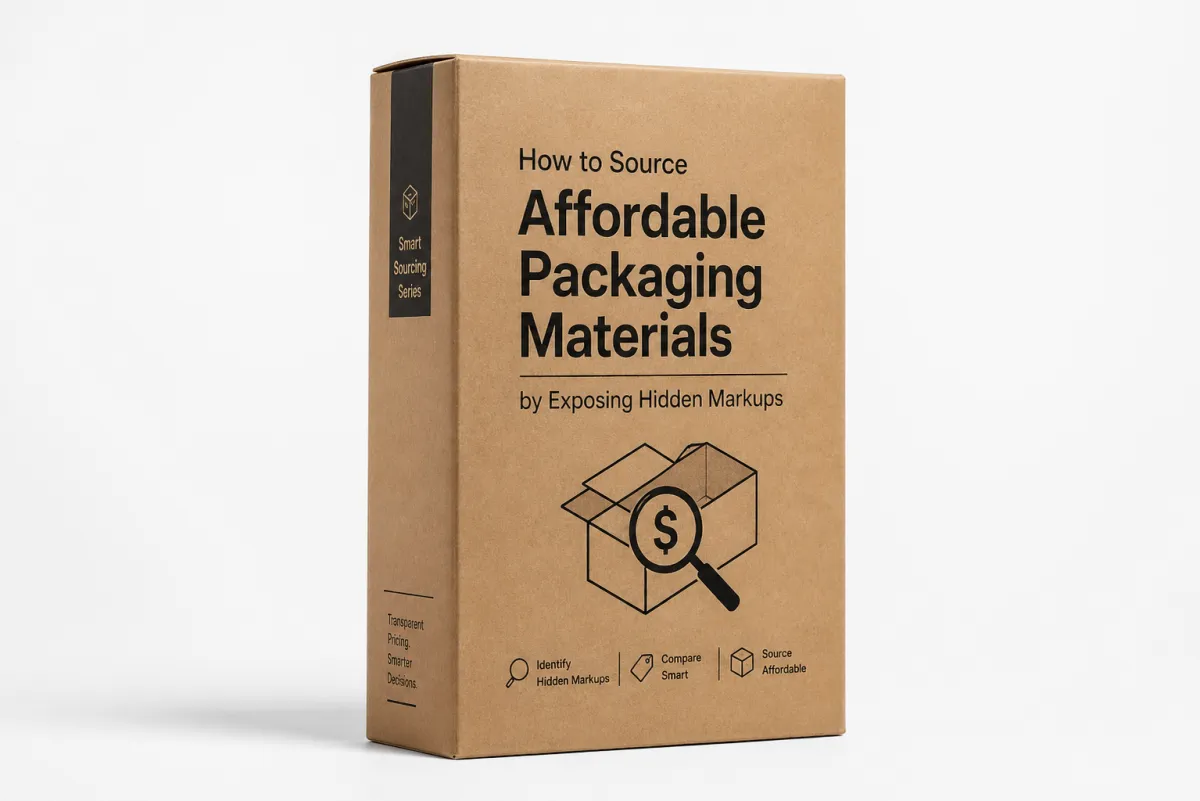
The fastest route to stronger margins is separating real fabrication cost from extras buried in a quote. In many packaging runs, how to source affordable packaging materials starts with uncovering 15-30% of spend that never needed to be in the budget. Wrong assumptions in quoting, overdesign, repeated proof cycles, and freight padding appear modest line by line, then compound into a heavy annual drag that looks invisible until audit season.
Start with a non-negotiable question: what does this package need to do once it leaves the shelf? A regional fulfillment path usually tolerates a different structure than export lanes that face heat, humidity, customs holds, and longer dwell times. Affordable still means robust protection, stable seals, and predictable handling. The trick is removing optional complexity before the press door closes.
In my own work, the core equation stays stubbornly simple: protect the product, protect the brand, protect the margin. A specification that serves only one of these three usually fails somewhere downstream. I remember a health-brand run where they loved the premium look of an extra laminate layer, then discovered repeated corner impacts at the dock caused as much damage as humidity swings. The laminate had looked “premium”; it had not performed.
Strong sourcing teams split features into must-haves and options early. Matte coat is useful in some contexts. Spot varnish can be right for specific campaigns. Embossing can justify cost when it drives shelf intent. But those choices only survive scrutiny if they improve shelf impact, shelf life, or buyer perception in a measurable way. If an expensive finish is visually interesting and operationally neutral, challenge it hard. This is where teams win on how to source affordable packaging materials without ending up in scope wars over one line item.
The right quote comparison is a three-number framework: material unit cost, failure rate, and correction burden. If a supplier is two cents cheaper but has higher crush failure, you are not comparing prices—you are comparing how much pain you are willing to carry. I have seen line operators spend more labor correcting micro-delamination during one shift than the savings from a lower price tag promised by procurement. That is the kind of math nobody wants to admit at first and everyone feels later.
Line speed is the quiet multiplier. Three extra seconds per carton in a labor-heavy operation can swallow a margin gain on a whole run. A stable, properly designed structure can cost more per sheet and still improve throughput because it reduces handling friction, misses less often, and keeps the line moving. That is why how to source affordable packaging materials becomes much clearer when labor and line reliability are part of the equation, not afterthoughts.
Order rhythm changes the playbook. Campaign spikes, subscription replenishment, and seasonal cycles do not respond to the same procurement logic. A steady weekly-volumized brand can benefit from a higher MOQ if it cuts setup churn and secures better repeated pricing. A short promo window usually benefits from avoiding overbuy, even when a tempting unit discount looks irresistible on a first buy.
One major confusion point: not all quotes are built on the same scope. Some include plate charges, some don’t. Some include setup waste and overages, some bury them across freight and handling. Some match your spec but quietly swap a board grade to something close enough for marketing and not for compression strength. Good teams compare landed cost from day one, because that is where discrepancies in scope get exposed.
If you only compare sticker price, hidden freight behavior becomes your surprise guest. A cheaper paper profile that shifts pallet geometry can increase forklift impacts and internal handling time, turning into a quarter-end cost event. That is why quote reviews must include the full chain from supplier gate to receiving dock, not just factory dispatch.
How do you source affordable packaging materials without hidden costs?
Start with landed cost, then validate with shipping and handling realism under your exact path. Compare setup fees, MOQ impact, freight assumptions, rework risk, and labor consequences on the same sheet. The cheapest paper quote can be the most expensive order after one broken pallet run, one rushed replacement cycle, and one missed replenishment window.
The practical method is a standardized comparison model. Force every supplier to price the same spec, the same handling path, and the same forecasted volumes. Once assumptions are fixed, savings usually appear in less obvious lines: less scrap, fewer defects, better packing speed, cleaner launches. There is no shortcut that replaces this discipline.
For teams asking for a quick signal, start with a damage-risk map: where the package bends, where it gets punctured, where seals fail after temperature changes. If the proposed design looks expensive but does not reduce those risks, it is hard to defend the cost unless it is tied to a measurable sales benefit. For a practical side-by-side of custom structures, you can also review our Custom Packaging Products page.
Product Details That Influence Real Savings on Custom Packaging
How to source affordable packaging materials becomes manageable when product behavior is translated into structure logic before color decisions. A fragile glass tube, a soft-gel supplement, and a lightweight accessory each respond differently to vibration, stacking load, and thermal shifts. Corrugated mailers, Rigid Setup Boxes, flexible pouches, and composite structures move differently through conversion and freight, so their true cost is not interchangeable.
The first job is choosing structure, not visual polish. If stack strength drives the use case, corrugated build with the right flute often beats premium alternatives on both durability and cost discipline. Shelf-led retail might still require custom print and tuned paperboard for visual performance, and that can make sense when it improves shelf conversion without reducing drop survival. Lightweight, volume-sensitive SKUs often ship cheaper and cleaner through flexible formats. How to source affordable packaging materials starts at this structural fork, because all downstream decisions sit on top of it.
Finish selection is a classic trap zone. Matte or gloss, soft-touch lamination, spot varnish, embossing, foil, or window patching each change labor profile, conversion risk, and quality tolerance. Some finish choices add handling complexity and curing time more than they add margin value. In large runs, these effects compound and become very real. Typical savings often come from removing one finish layer rather than chasing a tiny substrate discount.
Material families deserve direct comparison, not team preference. B-flute and C-flute differ in compression behavior and print texture. Kraft stock performs differently from bleached and coated alternatives in moisture and register consistency. BOPP laminates can strengthen barrier performance, but they can also complicate conversion and seam control. Crystal clear films look sharp, yet often require stricter puncture and sealing checks. Biodegradable blends can be the right move for brand alignment, but only if shelf life and cost are validated with real tests. How to source affordable packaging materials is always a performance decision with a price tag, never a color-card exercise.
Print method selection is another place teams leave money on the table. Process CMYK, flexo, digital, UV, water-based, and direct-to-substrate each carry different proofing cycles, setup time, and yield behavior. A high-volume repeat run can punish mismatched artwork complexity and drive repeated adjustments. A short-run mailing piece can often perform better with digital and tighter turnaround. Matching print technology to quantity and art complexity moves sourcing from negotiation theater to real cost control.
Build details are where many rework events start. In production, I check score accuracy, glue-window control, tear resistance, closure force, edge hold, and moisture sensitivity before anything goes live. If transit has vibration, thermal variation, and repeated drop events, pair sample planning with ISTA transport testing standards instead of assuming factory test conditions are enough.
Supplier sample approvals are not a box-tick folder. First-article review catches build risk early. Pre-production checks catch process drift. Line-run checks verify consistency under throughput. Ask each supplier how they are controlled, logged, and corrected. A vague “we can handle that” answer often means your next quarter contains a rework bill.
Here is one practical sequence I see rarely followed but always worth doing: design review, first article, pilot release, then recurring release under the same measurement baseline. If each stage has signed-off pass/fail metrics, how to source affordable packaging materials stops being guesswork and starts looking like manufacturing governance.
Specifications That Prevent Rework and Control Packaging Risk
Good specs lower cost because ambiguity is a hidden production fee. How to source affordable packaging materials without rework starts by defining non-negotiables first: burst strength, compression load, closure force, drop profile, and stacking limits. Once those are explicit, teams can negotiate finish, print, and secondary details around a stable engineering base instead of swapping requirements during bidding.
A clear specification template cuts disputes fast. Core fields should include dimensions, tolerances, dielines, artwork bleed, color standards, material grade, adhesive requirements, and pack-out method. I also include shipping context: forklift handling assumptions, pallet pattern, climate exposure, maximum stack height, and whether the SKUs pass through temperature-controlled zones. This is where many teams accidentally compare apples to oranges.
Inspection benchmarks belong in the bid, not after receiving. Seam uniformity, adhesive cure window, glue spread, pin-hole placement, registration tolerance, and visual defect thresholds are cost controls. Delay those decisions and you convert acceptance into argument. Defined criteria make supplier comparison fair, especially for recurring programs, and protect you when the volume repeats every quarter.
Revision control sounds dull until version bleed hits the press. Old dielines and stale logos are among the biggest waste drivers in my experience. Keep versioned assets in one place, with clear naming for approved versions and a controlled handoff path. A stale file in production creates scrap with no clean fix other than reprint, and reprint is expensive in both cash and calendar.
Pass/fail criteria tied to batch lot numbers can change negotiation leverage completely. If lot quality drifts past threshold, you have a trigger and a correction path, not a vague complaint. Teams who monitor defect trend, rework rate, and complaint type generally secure better pricing in later orders because suppliers can see that quality expectations are real and repeatable.
Fiber and sustainability requirements must be explicit in the same way as structural specs. If certification matters, require chain-of-custody documentation and verify alignment with FSC certification needs. Even when the unit cost does not move much, explicit rules reduce substitution risk and avoid relabeling or claim conflicts later. In sensitive channels, that is not just compliance; it is brand risk control.
My rule under review: if a requirement is not measurable, pricing is never fully comparable. Replace terms like “premium” or “heavy-duty” with quantifiable targets whenever possible. That is the route from opinion-based sourcing to evidence-based decisions, and it is the backbone of how to source affordable packaging materials at scale.
How to Source Affordable Packaging Materials: Pricing, Tooling, and MOQ
How to source affordable packaging materials becomes manageable when quote lines are split between fixed and variable cost. Fixed cost usually includes die-cut tooling, plate setup, data setup, and proofing overhead. Variable cost includes substrate, printing, finishing, hardware, inspection, and freight. If a supplier provides one blended number, ask for a breakdown. Without it, no one can tell if the saving is structural or temporary.
Landed cost is still the strongest lens in practice. A lower unit price can still lose once setup, freight, labor impact, and damage are added. A slightly higher-cost corrugated mailer may flatten better, pack faster, and reduce claims enough to beat a lower nominal quote. That is the cost logic that survives real operations.
| Option | Typical Unit Cost at 5,000 | Setup / Tooling | Best Fit | Main Tradeoff |
|---|---|---|---|---|
| Stock mailer with one-color print | $0.42-$0.68 | Low | Repeat shipments, low artwork complexity | Limited branding depth |
| Custom corrugated box with CMYK graphics | $0.55-$0.95 | Medium | Retail packaging and branded packaging | More proofing and setup control needed |
| Rigid setup box with wrapped exterior | $1.80-$3.20 | High | Premium product packaging | Longer lead time and higher labor |
| Flexible pouch with printed laminate | $0.18-$0.38 | Medium to high | Lightweight, volume-sensitive goods | Barrier validation is critical |
MOQ bands should be explicit, not implied. A useful quote shows cost behavior at 500, 1,000, 2,500, and 5,000 units, not just one point. That is how teams identify break-even windows and avoid paying too much during tooling amortization. If you want a practical format cross-check, our Custom Packaging Products page can help compare behavior across recurring runs and volume commitments.
Pilot pricing and full-run pricing are different economic events, especially if artwork or process is still stabilizing. A first article run often deserves a higher unit entry cost because it is effectively a controlled risk-reduction stage. In practical terms, that premium is insurance against expensive waste later.
When assessing bids, ask each supplier for three pricing models: lowest first-step spend, lowest recurring spend after tooling amortization, and lowest-risk option with a buffer stock plan. In my teams, this usually gives a clearer picture in under an hour. I have seen “cheap launch” quotes look attractive until volume scales; then the same supplier’s service cost explodes in handling and corrections.
Markets for paper, resin, and films can swing fast. A monthly fluctuation clause keeps these movements from becoming an annual argument. Strong agreements define valid pricing windows, index source, and adjustment formulas. That level of discipline protects a planned program from emergency repricing during raw-material spikes.
If suppliers resist transparent MOQ, tooling, and scope breakdown, the quote is often designed for negotiation theater. Clear commercial structure is not about paperwork comfort. It is a control system that keeps how to source affordable packaging materials from becoming a quarterly emergency.
Process and Timeline for How to Source Affordable Packaging Materials Fast
Speed in sourcing comes from sequence, not from skipping controls. A practical five-step model keeps teams from expensive reversals: lock the brief, issue a complete spec pack, open bids with fixed rules, run sample approvals, then launch a controlled pilot. Every step needs one owner and one deadline. Timeline drift is not just delay; it is margin leakage.
Urgency has tiers. A hot order can compress buffers, but it usually increases manual interventions and emergency freight risk. A standard timeline generally improves both quality and cost. Growth programs often justify longer preparation because the gains echo through future volumes. In most cases, how to source affordable packaging materials is not “get it done yesterday,” it is build a route that makes each launch cleaner than the last one.
Artwork should enter the bid cycle only when complete and controlled. Finalized PDFs, embedded fonts, linked images, and approved dielines are the minimum needed for fair comparison. One master RFQ with one complete file set keeps assumptions synchronized. If one supplier gets cleaner, fuller data, their pricing can look artificially strong because they are scoring on cleaner inputs.
Parallel supplier evaluation helps reduce fragility. While one partner runs process audit, another can validate samples in a separate lane. This reduces dependence on one path and lowers the damage a delayed proof can cause. If timing tightens, teams still keep momentum with alternatives already in motion.
Sample sequencing should include digital proof, physical sample, pilot, and stability under line-speed conditions. A perfect first sample is not always a strong production signal. At speed, print color can drift, glue behavior changes, and closure force can fluctuate after continuous runs. A two-week stability window catches these issues before they become full-scale rework and emergency labor.
Documentation is the hidden engine behind repeatable savings. Keep one project log per SKU with proof decisions, shipping lane changes, acceptance outcomes, and issue types. Reuse it on the next bid. The log becomes a map for faster decisions and a guardrail against repeat mistakes. If you want consistency, your records need to be boring, consistent, and reusable.
When uncertainty rises, use industry context to validate assumptions. General market perspective from packaging industry resources is useful, but every plan still has to reflect your route conditions. Customs dwell, humidity, and loading behavior change the real economics quickly if ignored.
Why Choose Us for sourcing affordable packaging materials at scale
We approach how to source affordable packaging materials as a manufacturing discipline, not a quoting exercise. That means specifications, conversion limits, and production planning are treated as one connected system. A useful quote has to tell you not just what the print costs, but how the package performs after making, packing, storage, and transport.
Open quotes are a reliable signal of sourcing maturity. A clear breakdown of consumables, reject allowance, setup assumptions, and process waste is easier to trust than one blended number. Whether the run is Custom Printed Boxes, corrugated mailers, or tightly controlled branded packaging, the line-item visibility determines how actionable the quote is.
Local and regional manufacturing can reduce freight exposure and tighten lead-time control. Freight spikes can erase quote savings quickly when programs rely on one long lane. Shorter routes also reduce damage exposure before goods reach the warehouse. For recurring replenishment programs, this routing logic is often one of the highest-impact cost controls.
Quality must be part of sourcing, not a post-launch complaint system. Dimensional checks, ink adhesion testing, and shelf-stress validation should happen before release. A supplier who talks only about unit pricing but cannot describe verification practices is usually shifting risk to your team at your cost.
Design-to-manufacture collaboration makes savings stick. Teams that catch wrong flute logic, over-specified laminates, and closing issues before release often reduce scrap and stabilize on-shelf performance. In some projects I have reviewed, these fixes saved more than material cost and prevented production rhythm collapses.
For high-volume programs, quarterly cost reviews keep assumptions current. Raw material curves, print technologies, and labor variables move in real time. A recurring review cadence prevents full re-bids for incremental drift and protects competitiveness through seasonal demand swings and supplier changes. That is the practical edge in how to source affordable packaging materials over multiple cycles.
In daily operations, the best signal is usually lowest cost-to-performance over time, not lowest quote line. A sourcing partner that can adapt to spec drift, material fluctuation, and shipping changes is often more valuable than a one-time bargain answer.
Actionable Next Steps to Source Affordable Packaging Materials Immediately
If you need a practical start now, map your top three to five SKUs by damage risk and monthly volume. Then label each as core, growth, or pilot. That simple structure keeps effort from flattening across too many unknowns and gives sourcing a sane sequence. Core SKUs need repeatability and unit economics; pilots need speed with controlled proof quality; growth SKUs need scalable guardrails from the beginning.
Next, build a one-page brief that is concise and difficult to misread. Include dimensions, substrate, print expectations, finish scope, performance limits, intended shelf path, and target landed cost by volume band. A clean brief often saves a week of clarification emails, because every supplier works from the same instructions instead of translating your intent. If you need to compare common formats quickly, start with Custom Packaging Products as a baseline.
- Issue a constrained RFQ with a strict comparison format.
- Ask for total cost at 500, 1,000, 2,500, and 5,000 units.
- Request separate sample, pilot, and production pricing.
- Set a 10-business-day sample decision window.
- Run a 250 to 500 unit pilot in your actual line environment.
Use that pilot as a decision instrument, not a formality. Measure crush damage, visual defects, and packing throughput in the real location where the package is handled. A sample that looks strong at the press can still slow operators or fail in storage conditions. That is how you know if the package only looks right or actually performs right.
Then run a 30-60-90 day rollout rhythm. The first checkpoint validates pilot acceptance. The second places the first production order. The third tracks monthly savings against cost, quality score, and on-time delivery. If numbers align, the system is stable. If not, fix early while errors are still contained.
My practical read is straightforward: how to source affordable packaging materials is not a price war with a spreadsheet. It is a structure that protects the product, preserves brand consistency, and keeps margin from leaking on the back end. Keep those three priorities in view, and your sourcing conversations become less emotional, more technical.
I am not pretending this is frictionless. Specs evolve, suppliers change performance, and freight can still throw curveballs at the worst moments. That said, teams that lock strong specs, compare true landed cost, and run repeating pilots usually do better than teams chasing headline discounts. Start with one SKU, prove it in the warehouse, then scale. If you do that, the savings usually stick where they matter—after the first shipment clears the dock.
How to source affordable packaging materials without overbuying at the first order?
Start with a locked dieline and a conservative pilot of 250-500 units, then scale with a total-cost review by SKU. A phased purchase order works best when phase two starts only after quality, speed, and handling checks pass against the original specification.
What is the best way to source affordable packaging materials when my MOQ is low?
Choose suppliers with modular tooling or short-run digital options for the first lot, then negotiate a staged price path for the next volume break. Shared setup windows across related SKUs can make how to source affordable packaging materials much more practical when launch volume starts low and builds over time.
How do I source affordable packaging materials while preserving brand standards?
Lock the core brand cues first: color control, logo placement, barcode positioning, and readability. Keep decorative extras for later once performance and shelf behavior are stable. Tight first-sample approval is essential when how to source affordable packaging materials must support brand identity without creating consistency debt.
How to source affordable packaging materials for international shipping without delays?
Build lead-time buffers for customs, documentation, and freight booking, then compare total landed cost rather than base factory price alone. Ask for durability testing tied to humidity, stacking, and compression scenarios, because how to source affordable packaging materials only stays reliable internationally when transit risk is already built into the spec.
Which specs should I compare first when sourcing affordable packaging materials?
Start with grammage, flute type, moisture resistance, closure system, ink compatibility, and rejection threshold before decorative features. A decision sheet with hard pass/fail metrics keeps how to source affordable packaging materials focused on reducing field defects and protecting fulfillment once the order is live.

