How to Spec Embroidered Baseball Caps: Materials and Sizing Guide
Use this Embroidered Baseball Caps material and sizing guide to compare fabrics, Fit, Pricing, and Lead Times before you approve a bulk order.
A good cap order starts with the body, not the logo file. Fabric weight, front-panel support, crown depth, and closure type all affect how embroidery looks and how the cap feels in real use. The sample on a screen can be misleading if the chosen hat body cannot support the stitch structure.
That is why this guide focuses on the details buyers actually need: material choice, fit, decoration limits, inspection points, cost drivers, and lead time. If you are ordering for retail, staff uniforms, events, or a private-label launch, the wrong spec can create extra revisions, slower production, or returns.
The simplest way to think about it is this: the best cap is the one that carries the logo cleanly, fits the intended wearer, and stays within budget and timeline without needing last-minute changes.
Why the Right Cap Body Changes Embroidery Results
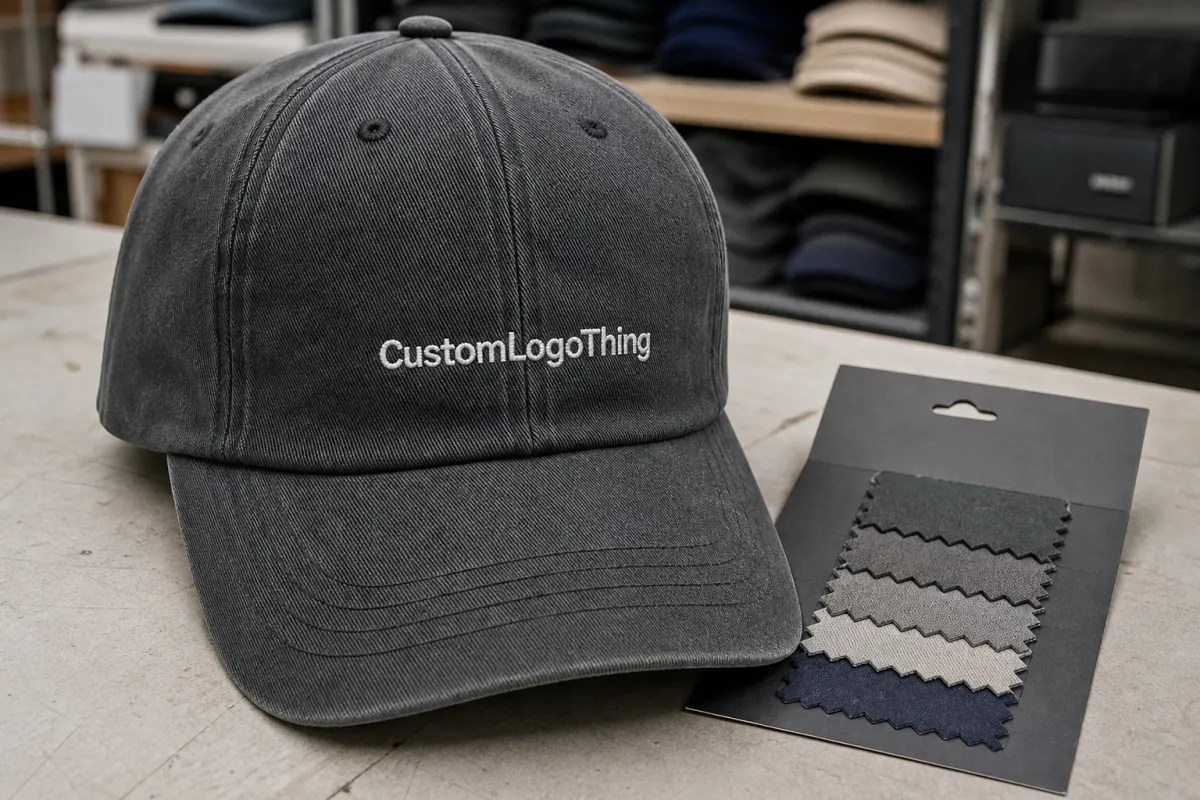
Cap construction affects embroidery more than many buyers expect. A structured front panel gives stitches a stable base, while an unstructured cap moves more and can let the logo distort slightly after hooping is removed. Even when the artwork is identical, the final look can differ noticeably from one body style to another.
Support matters most when the design has small text, dense fill stitches, or sharp corners. Those details pull on the fabric, so a firmer crown usually produces a cleaner result. Softer caps can still work, but they are better suited to simpler logos and looser design shapes.
The buying question is not just appearance. It is whether the cap will hold its shape after wear, whether the logo will remain readable, and whether the body style matches the audience. A retail customer, a field crew, and a tradeshow team often need different balances of structure, comfort, and breathability.
Practical rule: if the artwork depends on detail, choose a firmer front panel and keep the embroidery size realistic. If comfort and casual wear matter more than crisp structure, a softer body can be a better fit as long as the design is simplified.
How Embroidery Works on Structured and Unstructured Caps
Embroidery begins with digitizing, where artwork is converted into stitches. The shop then chooses backing, underlay, stitch direction, and placement before running a proof or sample. Each choice changes how the thread sits on the cap and how much the fabric can tolerate.
Structured caps usually give the best results because the front panel stays upright during stitching. That makes it easier to place dense embroidery without the logo collapsing into the curve of the crown. Unstructured caps are more sensitive to tension, so a design that looks fine in a mockup may relax or warp once the sample is removed from the hoop.
Placement is another key decision. Center-front embroidery uses the most usable surface and usually gives the cleanest read. Designs pushed too close to seams, vents, or the edge of the panel have less flat space and are more likely to lose sharpness. Side or back placements can work, but they should be sized with the smaller stitch area in mind.
Buyers should ask for the embroidery size, not just approve the art. A logo that only works when reduced to three inches wide may be too detailed for the chosen cap. The cleaner answer is often a simpler stitch file rather than forcing every detail into a small space.
Material Comparison: Cotton, Polyester, Mesh, and Foam
Material choice affects both stitch quality and wear life. Cotton twill is still a reliable option because it feels familiar, takes embroidery well, and offers a stable surface for most standard logos. It is a safe choice for retail, uniforms, and general promotional programs.
Polyester is often used when durability, color retention, or moisture resistance matters more. It performs well in outdoor use and activewear, but low-cost blends can feel thin or slick if the fabric weight is too light. For buyers comparing samples, check the hand feel and the recovery of the front panel after light pressure.
Mesh-back caps and foam-front trucker styles are different again. Mesh improves airflow, which makes it useful for warm conditions, but the front panel may not hold dense stitching as cleanly. Foam delivers the classic trucker look and a bold surface, but it is less forgiving with small text, high stitch counts, or heavy fill areas.
| Cap body | Embroidery behavior | Best use | Watch-outs |
|---|---|---|---|
| Cotton twill | Stable, clean stitch surface | Retail, uniforms, general promo | Can soften with repeated heavy wear |
| Polyester | Good durability and color hold | Sports, outdoor, active wear | Thin blends may feel less premium |
| Mesh-back | Works best with simpler logos | Hot weather, casual promos | Front panel can distort with dense stitching |
| Foam-front | Bold look, limited detail tolerance | Vintage trucker programs | Fine text and heavy fill stitches are risky |
If sustainability is part of the order, packaging should be specified clearly rather than assumed. Some buyers want corrugated cardboard cartons, kraft paper dividers, or recycled materials. Those details do not change embroidery performance, but they do affect how the order is received by procurement and operations teams.
In practice, the best-looking cap in a product photo is not always the best cap on a head. Heat, sweat, repeated wear, and logo complexity all change the outcome. That is why buyers should evaluate fabric, structure, and packaging as part of one spec review instead of separate decisions.
Fit, Crown Depth, and Sizing Checks Before You Order
Size is more than circumference. Crown depth determines whether a cap sits naturally or feels shallow, tall, or unstable. A cap can technically fit and still be uncomfortable if the shape does not match the wearer.
To check fit, measure head circumference with a soft tape above the ears and across the forehead. Then compare the result against the actual fit range of the cap, not just the label. One-size styles are convenient, but they are not a substitute for checking the user group.
Closure type matters just as much. Snapbacks give the broadest range and work well for mixed groups. Strapbacks feel a little more refined and are common in retail programs. Fitted caps look cleanest, but they need better size control and are less forgiving if the audience is wide-ranging.
Before ordering, confirm the following:
- Head circumference range for the intended audience
- Crown depth or a physical fit sample
- Closure type and adjustment range
- Whether users will wear the cap with hair tied back or over headphones
- Exact embroidery size on the exact cap body
For long shifts or repeated wear, comfort becomes a real spec issue. A cap that rides too high can feel unstable, while one that sits too deep can press into the ears or neck. Those problems are easy to miss in a photo review, which is why a fit sample is worth the time.
Production Steps, Proofs, and Turnaround Expectations
A clean order usually moves through artwork review, digitizing, proofing, sample approval if needed, bulk embroidery, inspection, and packing. Problems appear when buyers skip the review step and expect the factory to interpret unclear details later.
Lead time depends on where the order is in that chain. Proofs may take one to three business days if the artwork is clear. Sample approval can add several more days if the exact body or closure needs to be checked. Bulk production often takes 7 to 15 business days after approval, while larger runs, specialty materials, or revisions can extend that window. Shipping is separate.
The most common delays are preventable. Missing Pantone references slow color approval. Non-vector artwork slows digitizing. Late proof feedback pauses the schedule. Changing the cap body after the stitch file is built can require a new setup, which adds both time and cost.
That is why internal alignment matters. Marketing may want a sharper logo, procurement may want a lower unit price, and operations may care most about delivery timing. Getting all three groups to approve the same cap body and embroidery size reduces the risk of a rejected order after production has already started.
Cost Drivers: Pricing, MOQ, and Quote Variables
Cap pricing is usually driven by body cost, digitizing, stitch count, thread colors, decoration placement, backing, and finishing. Quantity matters too, because setup costs are spread over fewer units on small runs and diluted on larger ones.
As a general pattern, 50 caps and 5,000 caps are priced through very different production economics. Small orders carry more setup overhead per piece. Larger orders usually get better unit pricing because the fixed work is shared across the full run. MOQ can therefore change the price more than the cap body itself.
Special features raise the quote quickly. Puff embroidery costs more than flat embroidery. Premium closures, contrast underbrims, extra placements, and specialty fabrics all add cost. Even a simple one-color logo is easier to produce than a multicolor emblem with dense stitch logic.
Ask for pricing in separate lines so the quote is easier to compare:
- Cap body cost
- Decoration cost
- Digitizing fee, if applicable
- Sample or proof cost
- Freight and carton charges
That breakdown helps you see whether a low unit price is actually competitive or just missing setup and shipping. If one supplier includes a sample and another does not, the comparison is not equal until that difference is accounted for.
Common Mistakes That Cause Bad Fit or Weak Stitching
The biggest mistake is choosing a cap body from a photo instead of from a fit and decoration standpoint. A cap can look premium on screen and still perform poorly if the front panel is too soft or the crown depth is wrong for the audience.
Another common issue is approving artwork before the final embroidery size is set. Small text, thin outlines, and crowded details may need simplification to remain readable on a cap. If that decision happens too late, the result is usually a compromised logo rather than a clean one.
Skipping a sample is risky because a proof only shows the artwork, not the way the actual cap body behaves under thread tension. A sample reveals whether the front panel distorts, whether the logo sits well, and whether the closure and crown feel right when worn.
Closure mismatch causes avoidable complaints too. A one-size style may work on paper, but not every group has the same head range. Fitted caps are even less forgiving because a narrow size curve leaves little room for error. If the wearer list is mixed, build the sizing check into the approval process early.
Expert Tips and Next Steps for a Confident Order
Start with one approved sample in the exact fabric, closure, and embroidery size you plan to bulk order. Close enough is not enough here. The exact sample becomes the reference for fit, stitch clarity, and overall quality.
If the order is for retail, events, or staff uniforms, compare two or three cap bodies side by side. Small differences in hand feel and structure often matter more than a modest price gap, especially if the cap will be worn often.
Before requesting quotes, make sure the brief covers the essentials:
- Audience and head-size range
- Cap body material
- Structured or unstructured front panel
- Closure type
- Logo placement and maximum size
- Thread colors and stitch complexity
- Delivery deadline and ship-to locations
If sustainability is in scope, list packaging requirements with the cap spec. Ask for corrugated cartons, kraft paper dividers, or recycled materials where appropriate. Those details do not change the embroidery, but they do help the shipment arrive in the condition you approved.
Use this guide to confirm the spec, compare quotes, and lock the order only after fit, cost, and timing all line up. That is the point where the purchase becomes controlled instead of guessed.
FAQ
What material is best for embroidered baseball caps if I want clean stitch detail?
Cotton twill and structured polyester usually give the cleanest embroidery surface because they stay stable under dense stitching. Very thin or stretchy fabrics can distort the logo, especially if the design has small text or tight outlines.
How do I choose the right size for embroidered baseball caps for a mixed group?
Start with head circumference, then confirm whether the cap is adjustable or fitted. Crown depth and closure type matter too, because a technically correct size can still feel wrong if the fit profile is too shallow or too tall.
Does embroidery change the fit of baseball caps?
Yes. Dense embroidery can make the front panel feel stiffer and slightly tighter, especially on lighter fabrics or unstructured caps. The safest way to avoid surprises is to approve a sample in the exact cap body you plan to order in bulk.
What affects the price of embroidered baseball caps the most?
The biggest pricing drivers are quantity, stitch count, number of thread colors, cap material, and any special embroidery placement. MOQ matters because smaller runs spread setup and digitizing costs across fewer units.
How long does a custom embroidered cap order usually take?
Most timelines include proof approval, sample review if needed, production, and shipping, so the total lead time depends on how quickly each step is approved. Simple orders move faster; complex logos, specialty materials, or late artwork changes usually add extra days.


