Buyer Fit Snapshot
| Best fit | Start A Packaging Company Legally and Avoid Fines projects where brand print, material claims, artwork control, MOQ, and repeat-order consistency need to be specified before quoting. |
|---|---|
| Quote inputs | Share finished size, material target, print colors, finish, packing count, annual reorder estimate, ship-to region, and any compliance wording. |
| Proofing check | Approve dieline scale, logo placement, barcode or warning zones, color tolerance, closure strength, and carton packing before bulk production. |
| Main risk | Vague material claims, crowded artwork, missing packing details, or unclear freight terms can make a low unit price expensive after revisions. |
Fast answer: Start A Packaging Company Legally and Avoid Fines: Material, Print, Proofing, and Reorder Risk should be specified like a repeatable production item. The safest quote records material, print method, finish, artwork proof, packing count, and reorder notes in one written spec.
Production checks before approval
Compare the actual filled-product size with the drawing, then confirm tolerance on folds, seals, hang holes, label areas, and retail display edges. Reserve space for logos, QR codes, warning copy, and material claims before decorative graphics fill the panel.
Quote comparison points
Review material grade, print process, finish, sampling route, tooling charges, carton quantity, and freight assumptions side by side. A quote is only useful when the supplier can repeat the same color, closure quality, and packing count on the next order.
How to Start a Packaging Company Legally and Avoid Fines
A nice logo will not save a business that cannot legally invoice, ship, or insure an order. If you are figuring out how to start packaging company legally, the paperwork matters just as much as the box design. One missed permit or tax registration can slow a launch faster than a bad dieline. It happens more often than people admit. Annoying? Absolutely. Rare? Not even close.
That part catches a lot of first-time owners off guard. Packaging businesses look simple from a distance, but the real operation usually mixes selling, warehousing, printing, compliance, and freight. A company that handles branded packaging, Custom Printed Boxes, or product packaging may need to deal with business registration rules, tax rules, local zoning, and insurance requirements at the same time. In practice, how to start packaging company legally is not one filing. It is a chain of decisions that affects liability, tax treatment, hiring, and whether customers trust the business enough to reorder.
For Custom Logo Things, that matters because buyers expect more than a decent price. They want packaging that arrives on time, matches the proof, and does not leave them sorting out a compliance headache after the sale. A company can have sharp packaging design and still get tripped up if it cannot prove it is properly formed, registered, and insured. That is why how to start packaging company legally deserves a practical view, not the recycled fluff people keep posting online.
How to Start Packaging Company Legally Without Costly Surprises
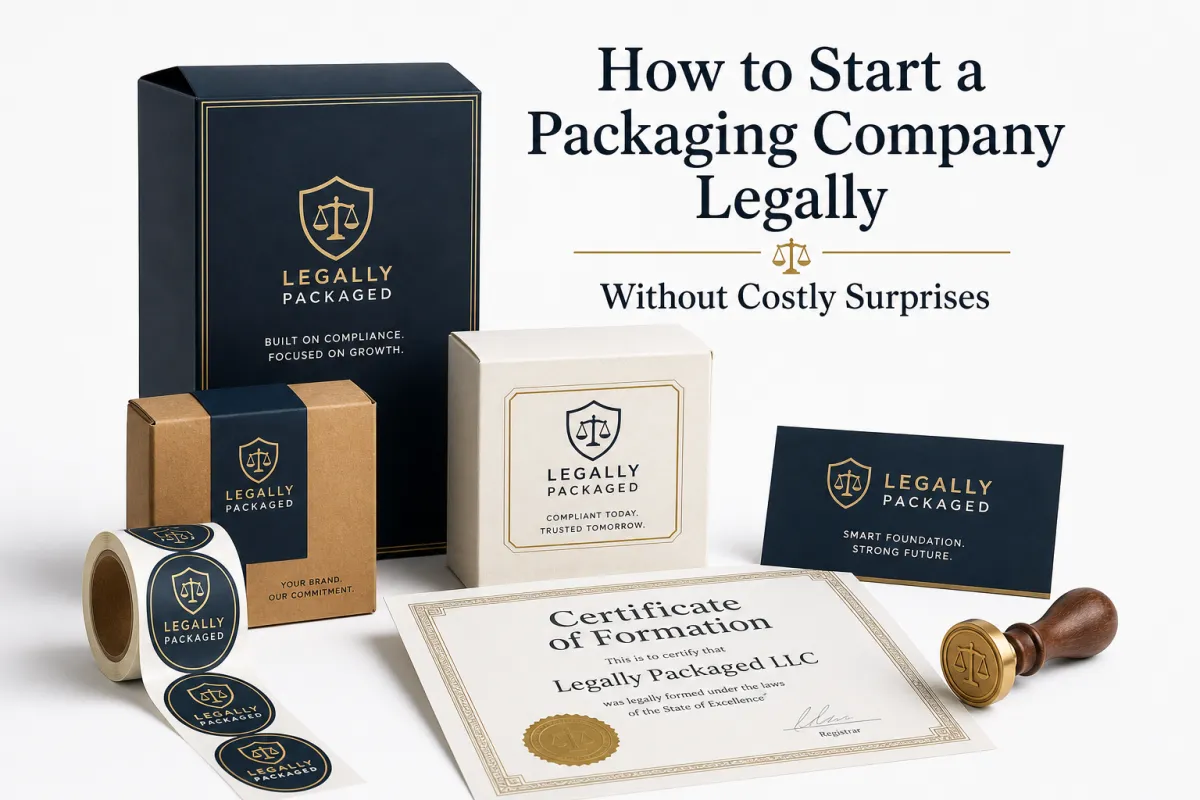
The legal baseline is ordinary, but every piece matters. You need a business entity, a registered business name, tax identification, local permits, insurance, written contracts, and compliance rules that fit the products and the location. If you plan to sell custom printed boxes, store finished cartons, or hold inventory of tape, labels, or mailers, the business may also need sales tax registration, resale paperwork, fire code review, or occupancy approval. That is the practical core of how to start packaging company legally.
A lot of new owners assume the process starts with a supplier and ends with a website. It does not. The legal setup affects who is liable if a shipment gets damaged, who pays if a claim is filed, and whether a landlord will even allow the operation in the building. It also affects banking. Many banks will not open a business account without formation documents and tax numbers, and many larger buyers will not approve a vendor until they see insurance certificates and a legal entity name that matches the invoice. Those are not side notes. They are the structure around the sale.
From a packaging buyer's point of view, that structure builds trust. A company that can show clean paperwork usually looks more stable than one with only a social media page and a cell phone number. That matters in branded packaging because buyers often place repeat orders, not one-off transactions. They need confidence that the seller can handle reorders, correct defects, and sort out disputes without improvising on the fly. If you are serious about how to start packaging company legally, the legal foundation is part of the brand promise.
A packaging company is not just a seller of boxes or mailers. It has to prove it can operate, collect taxes, protect customers, and absorb the risk that comes with physical goods.
The legal chain also changes depending on the business model. A broker who arranges custom packaging from third-party plants faces different issues than a converter that prints and finishes in-house. A warehouse-based reseller has different zoning and insurance questions than a light manufacturer using inks, adhesives, or cutting equipment. That is why how to start packaging company legally should always begin with the business model, not the logo or the website. The business model decides the paperwork. Not the other way around.
How to Start Packaging Company Legally: The Legal Framework
Start with the entity. For many owners, an LLC is the common middle ground because it can separate business and personal liability while staying relatively simple to manage. Corporations can make sense if the ownership structure is more complex or if outside investment is part of the plan. A sole proprietorship is the lightest setup, but it also gives the least protection, which is why it is usually a poor fit for how to start packaging company legally if the company will carry inventory, sign supply contracts, or handle client deposits.
Once the entity is selected, register the business name and obtain the federal tax ID, then complete any state tax registrations that apply. In many states, packaging companies that sell taxable goods need a sales tax permit or seller registration. If the company buys materials for resale, a resale certificate may also be needed so tax is not paid twice on qualifying purchases. That paperwork sounds dull, but it protects margins and helps prevent audit issues later. A packaging business that fails to collect or remit tax correctly can burn money on cleanup long after the launch excitement is gone.
Zoning is another place where new owners get surprised. An office suite is not the same as a warehouse, and a warehouse is not the same as a production floor. If the company stores cartons, pallets, adhesives, inks, or finished goods on-site, the building may need a specific occupancy classification. Fire marshals, landlords, and city inspectors may care about stack height, sprinkler clearance, loading access, or whether flammable materials are present. That is especially true for companies handling retail packaging or custom printed boxes stored in bulk before shipment. Legal setup is not just paperwork; it is space, use, and safety.
Contracts matter just as much. Supplier terms should define minimum order quantities, lead times, acceptable defect rates, and who pays for freight damage. Customer terms should cover proof approval, payment timing, ownership of artwork, change orders, and what happens if a buyer requests a rush. Non-disclosure agreements can be useful when custom logos, private label work, or package branding concepts are involved. And if a large buyer wants proof of insurance or specific quality standards, those requirements should be documented before the first order ships. That is one of the most practical parts of how to start packaging company legally: turn assumptions into written terms before they turn into arguments.
For owners who want a more standards-driven view of the packaging sector, the Institute of Packaging Professionals is a useful reference, while ISTA resources matter when shipping performance and transit testing enter the picture. If your packaging company will sell products that claim sustainability attributes, certification logic may also touch FSC chain-of-custody concepts. Those details are not always required, but they become important fast once a buyer asks for proof.
Startup Costs, Fees, and Pricing Decisions
The legal cost of launch is usually smaller than the operating cost, but owners often blur the two together and misread the budget. Entity formation may cost a few hundred dollars, depending on the state and filing method. Registered agent services often run from about $100 to $300 per year. Local licenses, permits, and business registrations vary widely, but a small office-based packaging brokerage can sometimes get through the administrative side for under $1,000. By contrast, a warehouse, print room, or converting operation can face several thousand dollars in permitting, occupancy, legal review, and insurance before a single box ships. That spread sits right at the center of how to start packaging company legally without getting ambushed by expenses.
Insurance is where many people underestimate exposure. General liability may be inexpensive for a low-risk office model, but product liability, inland marine coverage for inventory, and workers' compensation can add meaningful cost once physical goods enter the picture. A business that handles cartons, mailers, or branded packaging may also want coverage tied to transit damage, customer claims, or printing errors. The exact premium depends on revenue, materials, claims history, and whether the company manufactures or only brokers, so any quote should be treated as a starting point, not a promise. Insurance carriers love estimates right up until they do not.
Pricing strategy belongs in the legal conversation because a thin margin turns compliance into a risk multiplier. If a job includes freight, rush handling, possible spoilage, reprints, or a material shortage that forces a substitute, the sale price needs room for those realities. I have seen buyers focus on unit price alone and ignore the cost of a rejected proof, a late shipment, or a chargeback. That approach can sink a new packaging company before it ever builds momentum. The legal side of how to start packaging company legally includes the boring but fatal question of whether the margin can actually absorb the business risk.
There is also a very real difference between a low-overhead broker model and an inventory-heavy manufacturer. Brokers can often start with less cash because they do not own presses, cutters, or a warehouse full of stock. Manufacturers, however, may need capital for equipment, rent, utilities, insurance, waste, and labor before any revenue appears. To make that difference easier to compare, here is a simple view:
| Model | Typical upfront legal and setup burden | Common cash risk | Best fit |
|---|---|---|---|
| Packaging broker | Lower: entity, tax registration, basic permits, contract templates | Lower inventory exposure, but higher reliance on supplier performance | Owners testing demand with custom packaging and service-led sales |
| Inventory reseller | Moderate: entity, sales tax permit, warehouse zoning, insurance | Cash tied up in stock, storage, and freight | Businesses selling standard product packaging in repeat quantities |
| Manufacturer / converter | Higher: permits, occupancy review, safety procedures, insurance, legal review | Equipment, labor, waste, compliance, and downtime | Operators ready for long production runs and tighter process control |
For readers comparing product lines, it helps to think in terms of order economics. A run of 5,000 custom printed boxes might be priced very differently from 25,000 plain mailers because setup, print coverage, finishing, and freight all change the cost curve. In a legal startup plan, those differences are not just operational. They shape the contracts you need, the insurance you carry, and the way you manage deposit terms. That is another reason how to start packaging company legally cannot be separated from pricing.
If you want to see the range of products that often create these budget questions, the Custom Packaging Products page is a useful reference point for the kinds of items a packaging company might support. The product mix changes the legal and financial burden faster than most founders expect.
Step-by-Step Guide to Start a Packaging Company Legally
Start with the business model. Step 1: choose the business model. This decision drives everything else. A broker may need different insurance and fewer facility permits than a manufacturer. A reseller may need sales tax registration and warehouse approvals. A converter or printer may need safety procedures, equipment compliance, and tighter environmental controls. If you want how to start packaging company legally to stay manageable, do not start with a template. Start with what the company will actually do.
Step 2: form the entity and register the business name. Once the name is available, file the entity in the state where you plan to operate or where your legal structure makes the most sense. Then open a dedicated business bank account. Mixing personal and business money makes recordkeeping messy and weakens the liability separation you were trying to create in the first place. It also complicates tax filings, which is exactly where many new owners stumble. A clean bank setup is not glamorous, but it is central to how to start packaging company legally.
Step 3: secure tax registrations and local permits. Get the federal tax ID, register for state tax accounts, and confirm whether the city or county requires a general business license. If the company will sell taxable goods, collect the right sales tax certificate. If the company will buy inventory for resale, keep resale documents on file. If the company will store goods, check whether warehouse occupancy, fire, or environmental rules apply. These requirements are often manageable on their own, but missing one can delay a launch by weeks.
Step 4: prepare your legal documents before selling. Create supplier contracts, customer terms, invoices, proof approval forms, and a simple quality specification sheet for each product line. Even a one-page spec that lists board grade, finish, dimensions, print area, tolerances, and shipping method can prevent expensive disputes later. Packaging businesses often get into trouble because everyone assumed the same thing and nobody wrote it down. A good documentation system is one of the clearest signs that you understand how to start packaging company legally instead of just chasing orders.
Step 5: launch with one product line or one customer segment. A narrow launch reduces the chance of a legal or operational surprise. For example, a company might begin with one line of retail packaging or one category of custom printed boxes before adding stretch film, mailers, or display packaging. That gives you time to test the paperwork, shipping workflow, tax handling, and insurance coverage before scaling. It is far easier to expand a compliant process than to repair a broken one after volume increases.
Step 6: set up recordkeeping from day one. Keep copies of formation papers, tax registrations, certificates of insurance, permits, supplier agreements, proof approvals, and invoices in one system. If you ever face a state inquiry, a customer dispute, or a lender review, you will not want to dig through emails and text messages. A paper trail is not just for audits. It helps a packaging company prove what was ordered, what was approved, and what was delivered. That kind of evidence is part of how to start packaging company legally with less stress later.
Step 7: confirm your sales and shipping process matches the legal entity. Your quote, invoice, shipping label, and bank account should all point to the same company name and address where possible. Inconsistent documents make it harder to collect payment, harder to dispute a chargeback, and harder to show customers that they are dealing with a real operating business. That is especially important if the company sells branded packaging or package branding services to larger accounts.
Process and Timeline: What Happens First, Second, and Last
The cleanest sequence usually begins with a name search and entity choice. Nearly every later step depends on how the business is structured. If you file the wrong entity first, you may have to redo bank setup, tax registration, or operating agreements. From a practical standpoint, how to start packaging company legally is much easier when the structure is stable before the rest of the paperwork starts.
Next comes the tax and permit phase. Some registrations are fast and can be completed within a day or two. Others depend on state processing times, city review, or landlord approval. If the company is leasing space, the lease review can be a hidden gatekeeper because the landlord may require proof of insurance, use approval, or occupancy compliance before the business can move in. For a packaging operation that stores inventory or runs light production, this stage can take longer than expected. A careful owner plans for that and does not promise a launch date before confirming every approval.
Insurance, banking, and supplier onboarding can often happen in parallel once the entity exists and the basic registrations are approved. That is useful because these tasks do not all depend on the same government office. A bank may want formation papers and an EIN. A supplier may want a resale certificate and trade references. An insurer may ask about gross revenue, materials, storage practices, and whether the company manufactures or only resells. If you understand the dependencies, how to start packaging company legally becomes a project map instead of a guessing game.
The last checkpoint should be simple and disciplined. Confirm that sales tax collection, invoicing, shipping labels, customer contracts, and warehouse or office addresses all match the legal entity. Confirm that any required permits are active and displayed where needed. Confirm that the launch team knows how to handle claims, damaged goods, proof changes, and returns. A business can be technically open and still not be ready. Legal readiness and operational readiness should line up.
Here is a realistic sequence that keeps most small packaging companies out of trouble:
- Search the name and choose the entity.
- File formation documents and register the business name.
- Obtain the federal tax ID and state tax registrations.
- Check zoning, occupancy, and local business permits.
- Buy insurance and create standard contracts.
- Set up banking, invoicing, and recordkeeping.
- Launch one controlled product line first.
That order matters because the later steps depend on the earlier ones. It also keeps the company from taking orders before it can legally fulfill them. For a new owner, that single discipline can prevent the kind of avoidable penalty that turns a promising launch into a bureaucratic mess.
Common Mistakes When You Start a Packaging Company Legally
Mistake 1: treating the business like a hobby. This is the fastest way to expose personal assets. If the company is taking deposits, storing inventory, or making promises to commercial buyers, it should be formed and documented like a real business. Plenty of founders start with the assumption that they can clean up the structure later. In packaging, later can arrive after a disputed invoice, a damaged shipment, or an insurance claim. That is a painful time to discover the company was never set up properly.
Mistake 2: assuming one generic license covers everything. A packaging company may need a general business registration, sales tax permit, local occupancy approval, warehouse permissions, and in some cases fire or environmental review. There is a big difference between a home office that quotes custom packaging and a facility that stores pallets of finished product. If you skip the specific review, you may end up paying penalties or delaying a move-in. That is one of the most common traps in how to start packaging company legally.
Mistake 3: ignoring contracts until there is a dispute. By then, the damage is expensive. A good supplier agreement should say who pays for freight, what happens if the print is off-spec, how long the buyer has to inspect the goods, and whether reprints are the remedy or the exception. A good customer agreement should explain proof approval, payment timing, chargeback handling, and how claims are filed. The law does not magically fill those gaps for you. If the business does not write the rules, someone else usually does after a problem appears.
Mistake 4: underestimating tax and records obligations. This is especially true if the company sells across state lines, resells goods, or ships to customers in multiple jurisdictions. Even a small seller can create reporting work if the account grows quickly. A clean filing system reduces the risk of late payments, missing resale certificates, or sales tax mismatches. If you are serious about how to start packaging company legally, accounting discipline is not optional. It is part of the operating model.
Mistake 5: buying inventory or equipment before verifying the facility. I have seen owners assume a warehouse is approved for their intended use only to learn that the lease, sprinkler setup, or occupancy rules do not fit their operation. That can lead to storage fees, rushed relocation, or a delayed opening. If the company will carry product packaging or run small production equipment, the building review should happen before the big purchases.
There is also a subtler mistake: confusing “cheap to start” with “cheap to run.” A brokerage model may be relatively light on capital, but if it has weak contracts and no insurance, one claim can wipe out the early savings. A manufacturing model may require more upfront spending, but it can be easier to control quality if the process is documented and insured properly. The legal structure should reflect the actual risk, not just the cheapest path into the market.
Expert Tips and Next Steps After the Filing Is Done
The best packaging startups treat compliance like a calendar, not a one-time chore. Build a renewal tracker for annual reports, local permits, tax filings, insurance reviews, and any certificates that expire. If the company changes address, adds a warehouse, or starts handling a different material, update the records immediately. That small habit keeps how to start packaging company legally from turning into how to repair packaging company legally, which is a much more expensive job.
Create a launch binder or digital folder that includes formation documents, tax IDs, permits, insurance certificates, supplier terms, customer contracts, product specs, proof approval forms, and shipping procedures. Put the documents where someone on your team can actually find them. A binder is useful because packaging businesses move quickly; one missing approval can hold up a reprint, a shipment, or a payment. Clear records also make it easier to train new staff without relying on memory.
Review packaging-specific risks early. A custom logo business may be exposed to print defects, color shifts, material shortages, transit damage, and claims about delayed delivery. A business that sells branded packaging might also face artwork disputes or confusion over who owns the design files. These are ordinary risks in the trade, but they need to be reflected in both insurance and contracts. If you are selling to larger clients, be ready for them to ask about certificates, inspection rules, and quality expectations before they place the first order.
For product or process validation, some companies also use transit testing or performance standards from groups like ISTA, especially if shipping damage has been a recurring issue. That is not a legal requirement for every business, but it can be a smart way to support claims about performance. If the company markets sustainability attributes, keep documentation tight and be careful with claims. Packaging buyers are more skeptical now, and regulators are less patient than they used to be. No surprise there.
Next steps that make sense for most founders:
- Choose the entity that fits the actual business model.
- Verify zoning and occupancy before signing a lease.
- File tax registrations and obtain resale documents.
- Buy insurance before taking deposits or storing inventory.
- Set written terms for suppliers and customers.
- Test one product line, then expand after the process is stable.
If you are building a business around package branding, retail packaging, or a broader custom packaging service, keep the legal checklist as visible as the sales pipeline. The founders who move fastest are usually the ones who remove surprises early. That is the practical side of how to start packaging company legally: fewer assumptions, more documentation, and a launch plan that can survive real-world scrutiny.
Custom Logo Things can help with the packaging side of the journey, but the legal side still needs the same discipline. If you want the business to open cleanly, invoice correctly, and avoid fines, start with the entity, verify the permits, and build the compliance routine before the first order goes live. Do that first, and you are way less likely to spend month two cleaning up a mess that should have been prevented in week one.
Do I need an LLC to start a packaging company legally?
An LLC is not the only option, but it is a common choice because it can separate personal and business liability. The right entity depends on whether you are brokering, reselling, or manufacturing packaging products. A tax professional or business attorney can help compare LLC, corporation, and sole proprietorship tradeoffs for how to start packaging company legally.
What licenses do I need to start a packaging company legally?
Most owners need a basic business registration plus local permits and a tax registration number. If you sell taxable goods, you may also need a sales tax permit or resale certificate. Manufacturing or warehousing operations may trigger zoning, fire, and occupancy requirements, which is why how to start packaging company legally depends on the business model and location.
How much does it cost to start a packaging company legally?
Costs can range from a few hundred dollars for a simple broker setup to several thousand dollars for a warehouse or manufacturing launch. Formation fees, permits, insurance, legal review, and accounting support are the main startup expenses. Inventory, equipment, and lease deposits usually cost more than the paperwork itself, so the real budget for how to start packaging company legally is often larger than new owners expect.
How long does it take to start a packaging company legally?
Basic entity formation can be fast, but local permits, zoning checks, and insurance setup can extend the timeline. A simple service-based or broker model may launch sooner than a business that stores or manufactures product. Delays usually come from missing documents, lease issues, or waiting on state and city approvals, which is why a structured plan matters for how to start packaging company legally.
What is the biggest legal mistake new packaging owners make?
The biggest mistake is opening before the company is properly registered and insured. A close second is using weak contracts that leave no clear rules for defects, delays, or chargebacks. Both problems become expensive quickly when a customer order goes wrong, and both are avoidable if you treat how to start packaging company legally as a launch process instead of a form-filling exercise.


