A customer pulls a matte black shipping bag from the mailbox, opens it cleanly, and finds a velvet ring box that feels considered before the lid even lifts. That same outer bag, though, can create avoidable problems if it has no suffocation notice, no readable disposal cue, and a seal that can be opened and reclosed without obvious evidence. A premium surface does not replace basic packaging control, which is why a jewelry brands Matte Poly Mailers warning label guide belongs in the production conversation before artwork is approved.
Small printed details carry real weight on plastic shipping bags. A warning label is not decorative copy used to fill an empty corner; for thin plastic bags, especially those large enough to fit over a child’s head or likely to be handled after delivery, clear warning language can reduce misuse risk and help meet retailer, marketplace, or internal safety expectations.
Jewelry Brands Matte Poly Mailers Warning Label Guide: What It Covers
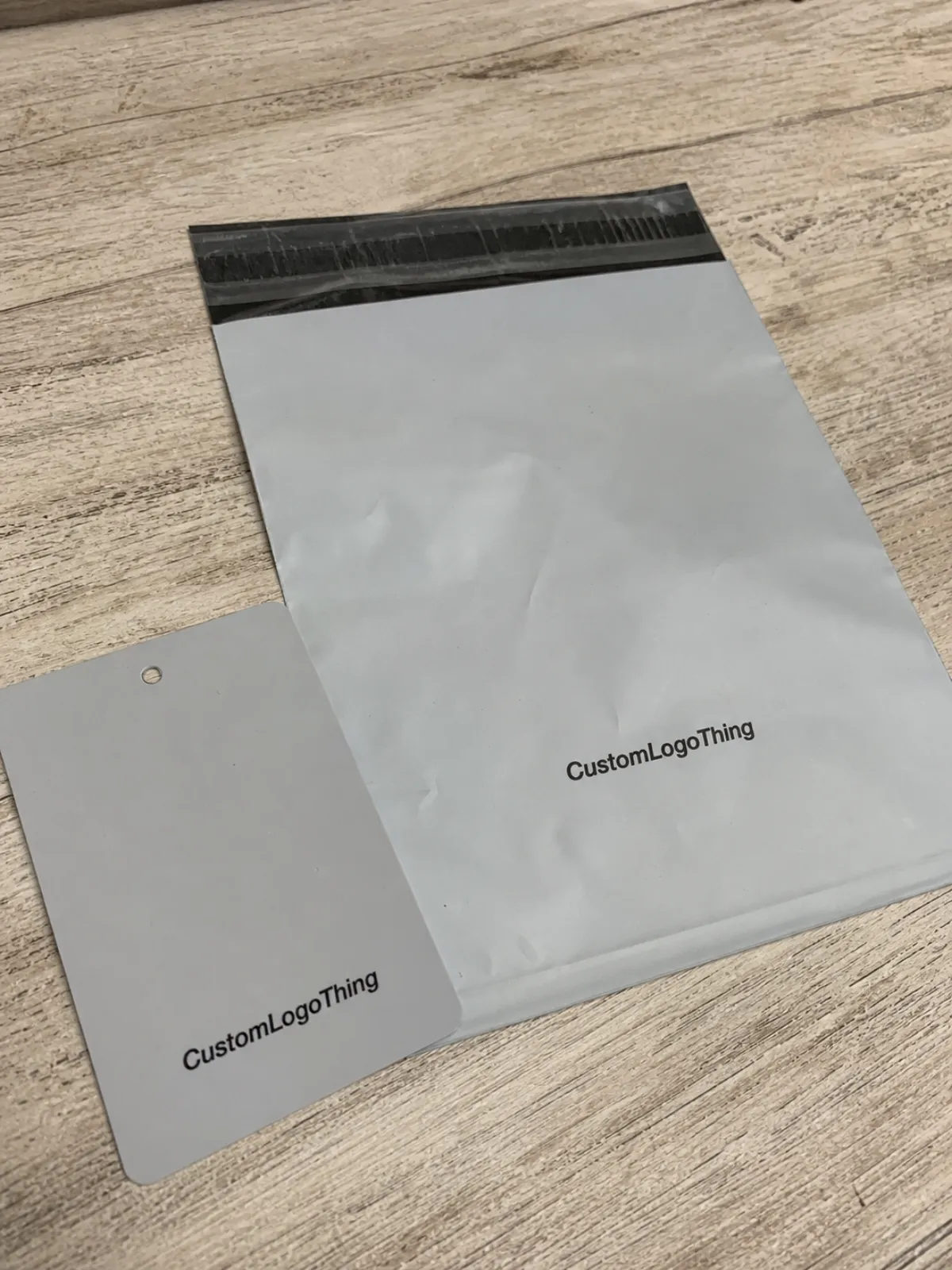
Matte Poly Mailers are lightweight polyethylene shipping bags with a low-gloss exterior. Jewelry brands use them for pouch shipments, small rigid boxes, necklace cards, polishing cloths, warranty cards, care inserts, and accessory orders that do not need a corrugated shipper. Most common e-commerce mailers are made from LDPE, co-extruded polyethylene, recycled-content polyethylene film, or a blend of these materials, often in the 2.0 to 3.5 mil range.
The first distinction is packaging layer. The outer shipping mailer is the carrier-facing bag. An inner protective poly bag may hold a pouch, chain, or carded item inside the order. Retail packaging is the branded box, sleeve, pouch, or insert the customer keeps. Each layer may need different labeling decisions because the size, film gauge, opening style, and customer access are not the same.
In production, the warning-label discussion often starts too late. Artwork gets approved, the logo looks centered, the pattern wraps nicely, and only then someone asks where the suffocation warning should go. That late scramble can lead to tiny type, weak contrast, or a sticker that packers have to apply by hand during a busy fulfillment window.
This guide is an educational production checklist, not legal advice. Requirements vary by jurisdiction, marketplace, retailer program, bag dimensions, film thickness, and distribution method. A brand selling through its own website may face different review steps than one shipping through large marketplaces, subscription programs, boutiques, or wholesale partners.
The practical decisions are straightforward but connected: material gauge, matte finish, label wording, print placement, contrast, barcode space, return-address layout, unit cost, production lead time, and reorder control. Handle those early and the mailer looks better, ships better, and avoids the patched-together feeling customers notice even when they cannot name the exact flaw.
How Matte Poly Mailers Work for Jewelry Shipments
A matte poly mailer usually starts as printed film. The structure may be a single LDPE blend or a co-extruded film with an opaque exterior layer, an inner layer chosen for strength and seal behavior, and a pressure-sensitive adhesive strip near the flap. Jewelry mailers often use white, black, blush, cream, charcoal, or custom-colored matte film, with one to three ink colors for branding and required information.
Jewelry brands like these mailers because they are light, moisture resistant, flexible, and efficient to store. A corrugated shipper is still the better choice for fragile glass components, high-value sets, heavy presentation boxes, or products that need crush protection. For a low-profile order containing a small box, pouch, insert card, and padded layer, a poly mailer can reduce dimensional weight and take up far less shelf space than pre-assembled cartons.
Size needs physical testing. A 6-by-9 inch or 7.5-by-10.5 inch mailer may work well for small jewelry shipments, but the real fit depends on box height, tissue bulk, invoice placement, and whether a return card is included. A bag that looks generous on a flat spec sheet can pull tightly across a rigid ring box once the flap is sealed.
The matte finish is mostly chosen for appearance and hand feel, but it affects print results. Low-glare film changes how ink reads, and dark mailers need opaque white ink or light-colored type to keep warning copy legible. A black-on-black layout may look refined in a mockup; on a packing bench under mixed warehouse lighting, the same copy can disappear.
Closure style also matters. A permanent peel-and-seal strip is common for one-way shipments. Dual adhesive strips are useful for returns because the customer can open the first strip and reseal the second. Tear strips, perforations, and tamper-evident adhesive patterns can help show whether a package was opened before delivery, which matters for jewelry even when the order is physically small.
Warning labels need to work with the bag’s construction. They should remain visible after the flap is folded and sealed, stay out of the carrier label zone, and avoid areas that wrinkle heavily around the jewelry box. Matte bags can scuff while moving through fulfillment bins, conveyors, sortation equipment, and carrier handling, so the smallest required type should not sit in the highest-abrasion area if there is a better panel available.
Shop-floor rule of thumb: if the warning disappears after a 4-by-6 inch shipping label is applied, it is in the wrong place, even if the flat proof looked clean.
If a brand is building the shipper from scratch, it helps to review Custom Poly Mailers alongside insert cards, labels, retail boxes, and return materials rather than treating the outer bag as a last separate purchase.
Warning Label Specs: Wording, Size, Placement, and Contrast
The most common warning category for poly mailers is a suffocation warning. The risk is direct: a thin plastic bag with a large enough opening can be dangerous if misused by babies or children. Typical warning copy includes a hazard statement, an instruction to keep the bag away from babies and children, and language that the bag is not a toy.
Exact wording and minimum type size can differ. Some state-level rules and retailer programs specify type height based on bag dimensions, while marketplaces may publish their own packaging requirements for sellers. Before print approval, check the sales channel, shipping destinations, bag opening, and film thickness. For broader packaging safety and transit-performance context, organizations such as ISTA can be useful references, especially if the brand is also evaluating shipment testing.
Contrast is a production requirement, not a design preference. Black ink on white, cream, blush, or light gray matte film usually reads well. White ink on black, navy, forest green, or deep burgundy can also work if the ink laydown is opaque enough. Pale gray type on a blush mailer may match the brand palette beautifully and still fail a basic check: can a packer, customer, or compliance reviewer read it at arm’s length without squinting?
Placement should be planned on the dieline, not guessed on a finished mockup. Common locations include the lower back panel, a clean side panel, or a flap-side area that remains exposed after sealing. Avoid the adhesive flap, fold line, trim edge, barcode area, return-address block, and the predictable 4-by-6 inch carrier label zone. On larger bags, or bags that may be folded in ways that hide the message, repeated warnings may be worth discussing with the compliance reviewer.
The label can still look polished. Use a clean sans serif font, adequate line spacing, and a defined block that does not fight the logo. For many small and mid-size jewelry mailers, a compact warning block on the back panel gives the best balance: quiet enough to preserve the brand presentation, clear enough to do its job.
Keep final warning language approved in writing. For higher-volume programs, regulated retail partners, marketplace sales, or multi-state distribution, legal counsel or a channel compliance team should review the wording before plates, cylinders, or digital production files are locked. One review step is far less expensive than remaking thousands of bags because a required phrase was missing or the type was too small.
Cost, Pricing, MOQ, and Unit Cost Drivers
Matte poly mailer pricing is driven by film type, bag size, gauge, print coverage, ink count, adhesive configuration, quantity, and any recycled-content or specialty-finish requirement. A one-color matte mailer in a stock-like size is a different cost structure from a full-flood custom color bag with dual adhesive strips, heavy white ink, and a carefully positioned warning block.
Minimum order quantity has a large effect on the final unit price. Smaller custom runs carry setup costs across fewer pieces. Larger orders spread fixed costs across more bags, but they require cash, storage space, and confidence that the dimensions and warning copy will not change. Many custom matte mailer programs begin around 1,000 to 5,000 pieces, with stronger pricing breaks at 10,000 pieces and above, depending on print method and material.
| Mailer Option | Typical Use | Common Cost Range | Best Fit |
|---|---|---|---|
| Stock matte mailer plus warning sticker | Short runs, launch testing, urgent shipments | About $0.12-$0.30 per mailer before labor, depending on size and sticker | Brands testing sizes or shipping under tight timing |
| Custom one-color printed matte mailer | Logo, return address, printed warning in same ink | About $0.18-$0.45 per unit at mid-range quantities | Small jewelry brands ready for a cleaner branded shipper |
| Full-coverage custom matte mailer | Flood color, pattern, logo, warning block, premium unboxing | About $0.28-$0.75+ per unit depending on coverage, gauge, and quantity | Brands with steady volume and strict visual standards |
| Dual-strip return mailer | Customer returns, exchanges, try-on programs | Often adds several cents per bag versus a single-strip closure | Jewelry brands with formal return workflows |
These ranges are directional, not a universal quote. Freight, domestic versus overseas production, plate charges, storage cartons, and rush timing can shift the number quickly. A warning label can affect cost if it requires another ink color, a separate print station, special contrast treatment, or revisions after proofing. If it prints in the same color as the logo and return address, the cost impact is usually smaller than applying separate stickers during fulfillment.
Common adders for jewelry brands include custom matte color matching, full-coverage flood coating, heavier gauge film for boxed jewelry, tear strips, metallic-looking inks, recycled-content film, and double adhesive return strips. If earrings, rings, necklaces, and bracelets ship in different formats, quote multiple sizes at the same time. Grouped planning may improve production efficiency, especially when the same ink set and warning copy carry across all sizes.
A supplier will typically need flat bag dimensions, film thickness, color target, ink colors, artwork files, warning copy, quantity, delivery zip code, packing method, and requested ship date. Compare total landed cost rather than only the per-bag number. Freight, overruns, setup fees, warehouse space, and labor saved by printing the warning directly can change the actual economics.
Custom Logo Things can help organize these details across Custom Packaging Products, particularly when the mailer needs to coordinate with insert cards, labels, hang tags, branded pouches, or retail boxes.
Process and Timeline: From Artwork Proof to Delivered Mailers
The strongest mailer projects start with size, not artwork. Pack the real jewelry presentation box, pouch, tissue, care card, invoice, return card, and protective wrap. Then measure the packed bundle, including height and any sharp corner pressure. A flat 6-by-9 inch bag may seem generous until a rigid box pushes against the seal and creates a strained closure.
Once size is confirmed, choose the material and gauge. Lighter gauges may work for soft pouches and small carded jewelry, while boxed jewelry often benefits from a stronger film in the 2.5 to 3.5 mil range. The right choice depends on product corners, order weight, carrier method, and whether the mailer travels by itself or inside a larger consolidation bag.
Artwork should use vector logos where possible. Warning text should remain editable until final approval, and the dieline should show the seal area, fold line, safe zone, trim edge, and shipping-label zone. If a barcode, QR code, or return address is included, leave quiet space around it. Crowded backs look messy and can create scanning problems.
Proofing is more than checking the logo. Review spelling, warning copy, type size, logo orientation, color callouts, adhesive strip position, and whether the warning remains visible when the bag is sealed. Print a proof at actual size if possible. A warning block that appears large on a laptop may be exactly right at 100% scale.
Production usually follows a steady sequence: film is printed, ink is cured, rolls are slit or folded, seals are formed, adhesive is applied, release liner is added, and finished mailers are counted into cartons. Custom ink colors, recycled film sourcing, plate making, high order volume, domestic freight, overseas transit, and revision rounds all influence turnaround.
As a planning range, straightforward custom runs may take roughly 12 to 20 business days after proof approval, while complex or imported programs can take longer. Build extra time before product launches, holiday drops, influencer mailings, and wholesale shipments. Packaging delays are frustrating because finished jewelry can sit ready while the shipper is still in production.
Keep one approved reorder file. Save the final artwork, dieline, warning language, color callouts, proof approval date, and supplier quote. Reorders move faster when no one has to rebuild the earlier decisions from memory.
Common Mistakes Jewelry Brands Make With Poly Mailer Labels
The first mistake is treating the warning as a late graphic element instead of a production detail. It affects layout, contrast, approval, and sometimes cost. If the warning is added after the brand pattern, shipping label zone, QR code, and social handle are already placed, the finished back panel may feel crowded or compromised.
Low contrast is the mistake that shows up most often in mockups. Charcoal text on a black matte mailer, pale gray on blush film, or cream on kraft-toned artwork can look elevated on screen but weak in real lighting. Fulfillment areas are not photo studios. Bags are stacked, rubbed, curled, scanned, and labeled quickly, so required copy has to survive a practical handling environment.
Placement errors are just as common. A warning under the adhesive flap is useless after sealing. Copy too close to the trim edge can distort during conversion. Copy inside the fold area can wrinkle. Copy in the center of the back panel may disappear under the carrier label. A full-size dieline prevents most of these issues before production begins.
Over-branding can work against the package. Logo repeats, icons, social handles, recycling marks, care symbols, promotional copy, and return instructions all competing for attention can make the warning harder to notice. A premium jewelry mailer often feels stronger with restraint: one confident brand moment, one clear shipping area, and required information that reads cleanly.
Another frequent issue is using one mailer size for every order. Oversized bags wrinkle around small pouches, hide printed warnings in folds, weaken the unboxing presentation, and may move poorly through carrier equipment. If the product mix includes ring boxes, necklace cards, bracelet pouches, and gift sets, two or three mailer sizes may be more efficient than forcing one universal size.
Do not change film thickness casually. Thinner film can stretch differently during converting, while heavier film can alter how matte ink lays down and how the flap closes around bulky boxes. If the spec moves from 2.0 mil to 3.0 mil, request a new sample or review production notes before approving the full run.
Stickers can work for short runs, but they introduce labor and variation. A sticker may peel, wrinkle, land crooked, or be skipped by a rushed packer. If stickers are necessary, create a placement standard and spot-check completed shipments. For longer runs, printed warning copy is cleaner and easier to control. Brands that need supplemental hang tags or safety labels can review Custom Labels & Tags as part of the broader packaging system.
Templates help with layout, but they do not confirm specific sales channels, bag dimensions, film gauge, or retailer requirements. If a brand sells through marketplaces, boutiques, subscription shipments, or multi-state distribution, the rules should be verified before production files are released.
Build a Safer, Cleaner Mailer Spec Sheet
A good spec sheet does not need to be elaborate. It needs to be complete. Start by gathering the largest and smallest packed jewelry dimensions, weighing a finished order, photographing how the bag is sealed, and marking where the shipping label is normally applied. Those four details solve a surprising number of design arguments.
Then create a simple mailer specification with these fields:
- Flat bag size: width by height, plus flap if specified separately.
- Film thickness: for example, 2.5 mil or 3.0 mil, matched to product weight and box corners.
- Material preference: virgin LDPE, co-extruded film, recycled-content polyethylene, or another approved film.
- Matte color: stock color, Pantone target, or custom flood print.
- Print colors: logo ink, warning ink, return address, recycling cue, and any pattern colors.
- Warning copy and location: final approved text placed outside the carrier label zone.
- Closure: permanent peel-and-seal, dual adhesive return strip, tear strip, or tamper-evident feature.
- Quantity and deadline: include launch date, requested delivery date, and storage limits.
Test one or two physical sizes before committing to a large order. Put real ring boxes, necklace cards, pouches, tissue, invoices, and return materials inside. Seal the mailer, shake it lightly, and stack 20 packed samples if available. Check whether the bag closes flat, whether corners stress the film, and whether the customer-facing shape still feels polished.
Run a visibility check. Print the warning at actual size, place it on the intended panel, then view it under office light, warehouse light, and after adding a 4-by-6 inch shipping label. If the warning feels faint, small, or hidden during this simple test, revise before production. For environmental claims or recycling cues, use careful language and review guidance from sources such as the U.S. Environmental Protection Agency so the copy does not overpromise.
Bring fulfillment into the conversation early. Packers know where labels land, how bags are stacked, whether the flap is easy to grab, and whether a return-strip placement will speed up or slow down daily shipping. Their input is practical, and practical input saves money.
Save the final approved artwork, warning language, dieline, proof date, and supplier notes in one shared folder. That record protects the brand from accidental changes during reorders and makes future packaging upgrades easier to compare against the current standard. If broader packaging improvements are being reviewed, Case Studies can help teams think through how different components work together.
A well-specified matte poly mailer is not only about compliance language. It is a small shipping system: film, ink, closure, warning copy, label space, and fulfillment behavior all working together so the package looks premium, reads clearly, and protects the customer experience from packing bench to doorstep.
FAQs
Do jewelry brands need warning labels on matte poly mailers?
Often, yes, especially when the plastic bag size, opening, and film thickness may fall under suffocation-warning rules or retailer requirements. Review shipping destinations, sales channels, and bag specifications before printing. Even when not explicitly required, many brands include a clear suffocation warning as a practical risk-reduction measure.
Where should a suffocation warning go on custom matte poly mailers?
Place it where it remains visible after sealing and is unlikely to be covered by the carrier label, barcode, postage, or return label. Common locations include the lower back panel or a clean side area away from the adhesive flap and fold line. Always check the layout on a full-size dieline, not only a flat mockup.
What size matte poly mailer is best for jewelry boxes and pouches?
The mailer should be large enough for the jewelry box, pouch, tissue, care card, invoice, and protective layer without stressing the seal. Avoid excessive extra space because loose mailers can wrinkle, look less premium, and move poorly through fulfillment. Test packed samples for earrings, rings, necklaces, and bracelets before choosing one standard size.
Does adding a warning label increase matte poly mailer pricing?
It can, depending on whether the warning uses an existing print color, requires a separate ink, or causes artwork revisions. If the warning is printed in the same color as other artwork, the cost impact is often smaller than adding stickers later. The biggest pricing drivers are usually quantity, bag size, film thickness, print coverage, and adhesive style.
Can jewelry brands use stickers instead of printed warning labels on poly mailers?
Stickers can work for short runs or stock mailers, but they add labor and can be applied inconsistently. Printed warnings are cleaner, more durable, and easier to control in higher-volume fulfillment. If using stickers, create a placement standard and check that the label does not peel, wrinkle, or get covered during shipping.