Jewelry Twisted Handle Paper Bags Material Thickness Guide
Jewelry bags usually fail where buyers look least: the rim, the fold, and the handle area. A flat proof can look polished, then buckle as soon as a rigid box presses against the mouth. That is why thickness is a buying decision, not just a print spec.
The goal is to choose the lightest structure that still carries the product cleanly, holds its shape, and feels appropriate for the price point. Too little paper looks flimsy. Too much paper adds cost, bulk, and stiffness that may not suit the jewelry inside.
What paper thickness really changes in a jewelry bag
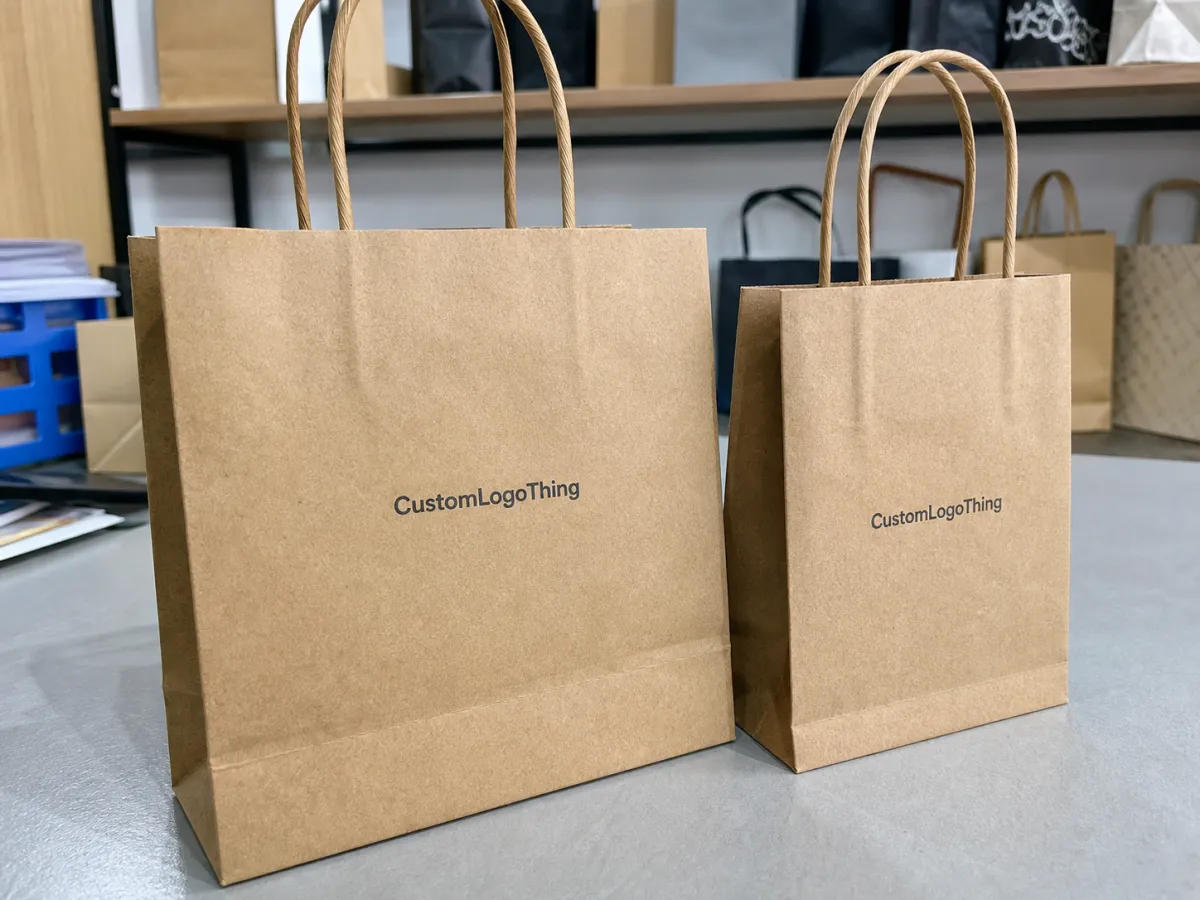
Paper thickness affects strength, hand feel, and presentation. GSM is useful, but it does not tell the full story. Caliper, fiber blend, coating, and crease behavior all change how the bag performs. Two sheets with the same GSM can feel very different in use.
Jewelry packaging creates concentrated stress. Ring boxes, bracelet boxes, and small gift sets push outward on the gussets and pull at the top opening every time the bag is lifted. If the rim is weak, the bag can lose shape even when the bottom seam is fine.
For buyers, the best starting point is simple: match the sheet to the actual item, the number of handoffs, and the image the brand wants at checkout. A good bag opens square, carries without sagging, and keeps the rim from collapsing under a light but rigid load.
For jewelry bags, the failure point is usually the rim or handle area, not the bottom seam.
That is why buyers often overbuild the base and underbuild the mouth. The bag may still hold weight, but once the top starts curling or wrinkling, it no longer reads as premium.
How twisted handles transfer weight and protect the rim
Twisted paper handles are part of the structure, not just a carrying aid. They spread load across the reinforced mouth so the top panel and sidewalls share tension. A well-built handle system often matters more than a heavier sheet with weak top construction.
Handle twist density changes the feel. Tighter twist usually looks cleaner and feels more compact. Looser twist can feel softer, but it may flatten sooner during retail use. Glue quality matters too, because a weak bond lets the handle patch creep or peel if the bags are stored warm or packed tightly.
Patch placement also affects durability. If the reinforcement sits too close to the edge, the paper can tear along the fold. If it sits too far in, the load path becomes awkward and the rim flexes where it should stay stable. A centered patch with enough margin is usually the safest approach.
Bag proportions matter as much as the handle. Width, gusset depth, and handle height should fit the heaviest standard jewelry package first, then allow room for tissue or a second item. A tight gusset can force the sidewalls outward, while short handles can distort the mouth during lifting.
A practical test is to fill the bag with the real product and lift it several times. A 200g necklace box and a soft pouch may weigh the same, but they stress the paper differently because one has hard edges and the other does not.
Paper grades, finishes, and reinforcement choices
Paper grade changes performance as much as thickness. Kraft paper gives a natural, fibrous look and usually strong tear resistance. Coated art paper gives a smoother surface and better print sharpness, which helps with logos, metallic accents, and dense color blocks. Recycled grades can also work well, though the surface and stiffness may vary more from lot to lot. If sourcing certification matters, FSC certified fiber is one of the clearest references.
Finish changes both look and handling. Matte lamination feels quieter and more controlled. Gloss increases color pop and helps with wipeability. Soft-touch gives a velvety feel, but it can show scuffs and pressure marks more easily. Uncoated paper feels the most natural and is often easier to recycle when the build stays simple.
Decorative treatments have tradeoffs. Heavy ink coverage, foil stamping, and spot UV can make a lighter sheet look richer, but they also add drying time and can expose weak fold lines if the substrate is too light. A 157gsm sheet with a well-set finish may outperform a plain heavier sheet, but only when creasing and cutting are correct.
In many cases, reinforcement is the better investment. A top board at the mouth, a bottom insert, or a stronger handle patch can fix the exact area that fails without moving to a much heavier paper grade.
Useful reinforcement options:
- Top board for a cleaner rim and more stable handle anchoring.
- Bottom insert for rigid boxes or stacked jewelry sets.
- Handle patch for better pull resistance and longer retail reuse.
- Inner tissue support for sharp corners, polished finishes, or delicate packaging.
For buyers who want a general packaging reference point, packaging.org is useful background reading. It will not choose the right build for you, but it helps keep spec discussions practical.
How to match thickness to the jewelry item
This is where most decisions get tested. A ring box, a bracelet box, and a soft pouch create different pressure patterns even when they weigh the same. Shape matters as much as weight.
| Jewelry item | Practical paper range | What usually matters most | Common risk if underbuilt |
|---|---|---|---|
| Light pouches, small cards, fine-chain accessories | 120gsm to 135gsm | Clean print, neat rim, comfortable handle | Bag feels soft and loses shape quickly |
| Single ring box or small pendant box | 135gsm to 150gsm | Rim strength and gusset stability | Top opening collapses during lifting |
| Bracelet box, medium gift set, multi-item order | 150gsm to 157gsm | Sidewall support and handle reinforcement | Side bulge and crease cracking at the fold |
| Heavier rigid packaging or premium launch set | 157gsm to 180gsm | Stiffness, patch quality, bottom insert | Handle pull stress and visible deformation |
These ranges are starting points, not rules. Coating, caliper, and reinforcement can move performance up or down. A 150gsm coated sheet with a top board may outperform a heavier uncoated sheet with no reinforcement.
For premium counter service, the bag also has to feel right in hand. Customers notice whether it stands upright or slouches before they leave the store. For lower-cost programs, a simple kraft build can still work well if the product is light and the handle area is reinforced cleanly.
Overbuilding has its own cost. A bag that is too thick for the item takes more carton space, folds less neatly, and can feel heavy in the wrong way. The most expensive-looking bag is not always the best choice.
Production steps, sampling, and lead time planning
The cleanest production starts with a dieline matched to the real product. Artwork should fit the structure, not force the structure to fit the artwork. Once the size is set, proofing should check more than color: handle comfort, fold behavior, panel alignment, and whether the jewelry box sits centered without pushing the gussets outward.
A useful sample review is hands-on. Put the actual packaging in the bag, lift it, set it down, and lift it again. Then check the top edge, the fold memory, and how the finish behaves on creases. If the bag has matte or soft-touch coating, lightly rub the sample against another carton to watch for marking.
The usual production flow is artwork, prepress, proof, production, assembly, inspection, packing, and freight booking. A straightforward run often takes 12-15 business days after proof approval. Foil, embossing, special handle construction, or new tooling can push that to 18-25 business days. Multiple proof rounds or custom inserts add more time.
Transit planning matters because jewelry bags are light but crush easily. The printed bag is the brand face, and the corrugated cardboard master carton is what keeps it from arriving bent. For longer routes or rough warehouse handling, the outer pack should protect the rim and handle patch, not just the printed panels. For a formal benchmark, the test methods from ISTA are a sensible starting point.
Before approving production, check these points:
- Does the bag open square with the actual jewelry box inside?
- Do the handles feel stable after two or three lifts?
- Does the rim recover cleanly after packing pressure?
- Do foil, varnish, or heavy ink stay clean at the fold lines?
- Does the outer carton protect the bags during stacking and transit?
Cost, pricing, MOQ, and quote drivers
Unit price depends on paper grade, GSM, print colors, finish, handle style, and any reinforcement that adds labor or material. A simple one-color kraft bag with standard twisted handles sits near the low end. Add coated paper, multiple print passes, foil, soft-touch, or a top board, and the price rises because the order needs more material or more hand assembly.
MOQ changes the math because setup cost is spread across the run. Many custom orders land around 1,000 to 3,000 pieces, but pricing usually improves at 5,000 pieces or more. At that level, it becomes easier to justify a slightly heavier sheet, a better finish, or stronger reinforcement without moving the unit price too far.
Freight should be quoted separately, not hidden inside the bag price. Jewelry bags are lightweight, but volume adds up fast, especially if the packing is rigid or the order is packed to hold shape. A low unit price can disappear if cartons arrive bent, crushed, or packed too loosely for export.
| Spec tier | Typical unit price at 5,000 pcs | Best fit | Main tradeoff |
|---|---|---|---|
| 120gsm kraft, 1-color print, standard twist handle | $0.18-$0.26 | Light jewelry pouches and simple gift sets | Natural look, but less premium print surface |
| 150gsm coated paper, 2-color print, matte lamination | $0.24-$0.36 | Small rigid boxes and everyday retail use | Better presentation, moderate cost increase |
| 157gsm art paper, soft-touch, foil, top board reinforcement | $0.38-$0.58 | Premium jewelry launches and gift programs | Best hand feel, highest material and labor cost |
The real comparison is not cheapest versus most expensive. It is whether the bag avoids rebagging, damage, and a weak first impression at the counter. A soft mouth or bad rim can force store staff to handle every order twice.
Common mistakes when choosing bag thickness
The most common mistake is choosing by GSM alone. Two papers with the same number can feel completely different because fiber mix, coating, caliper, and crease memory all change the result. Samples matter because the label does not show that difference.
Undersized gussets are another frequent problem. When a jewelry box pinches the sidewall, wrinkles appear, handles work harder, and the bag looks worn before it has done much. The bag may still function, but the presentation drops.
Artwork approval also gets ahead of structure too often. Heavy ink coverage, foil, and large solids need drying time and fold tolerance. If the paper is too light or the crease is too aggressive, cracking shows up quickly. Humid routes, stacked cartons, and busy back rooms reduce the margin for error even more.
Another mistake is ignoring how the bag will be used after the sale. Some bags are given once and discarded. Others are reused many times. If reuse is part of the brand experience, handle fatigue and rim recovery matter more than a purely visual finish. If reuse is not expected, the structure can be simpler as long as it still protects the product on the first trip home.
The practical path is straightforward: size the bag to the real jewelry package, choose a thickness that supports the rim, and add reinforcement only where the load lands. Used that way, the jewelry twisted Handle Paper Bags material thickness guide becomes a buying tool rather than a paper comparison chart.
Frequently Asked Questions
What thickness works best for jewelry twisted handle paper bags?
For lightweight pouches and small jewelry boxes, I usually prioritize stiffness and top reinforcement before chasing the heaviest sheet. For rigid boxes or multi-item purchases, move up one thickness tier and test the bag with the real load. The best spec is often the thinnest bag that still keeps the opening square and the handles comfortable.
Is GSM enough to compare jewelry bag paper thickness?
No. GSM tells you weight per square meter, not how stiff the sheet feels or how it behaves when folded. Caliper, fiber blend, coating, and reinforcement all change performance in use. Ask for both the paper spec and a sample, because similar GSM numbers can behave very differently.
How does thickness affect pricing and MOQ for jewelry bags?
Thicker or reinforced bags usually raise material cost, handling time, and shipping weight. MOQ changes the price curve because printing setup and paper purchasing get spread across the run. A useful quote should separate material, printing, finishing, and freight so the options are easy to compare.
How long do sampling and production usually take?
Sampling is fastest when the dieline and artwork are final and only the material thickness is being tested. Production lead time grows with custom sizing, multiple print colors, and special finishes. Ask for a schedule that includes proofing, assembly, inspection, and freight booking, not just press time.
What should I send for an accurate quote on twisted handle paper bags?
Send bag size, expected product weight, target paper feel, print coverage, and quantity. Include photos or dimensions of the jewelry boxes or pouches that will go inside. If you already have a target unit cost, share it so the supplier can suggest the best tradeoff.

