Knitting knit Beanies for Subscription boxes looks straightforward until the first sample arrives and the entire box plan starts depending on fit, handfeel, freight volume, and whether the logo survives the knit. A beanie can seem like a low-risk insert on paper, then become the item that throws off the budget because the crown is too shallow, the yarn feels scratchy, or the packaging adds more cube than expected.
That is why buyers keep circling back to this category. A good beanie gets worn. A novelty insert gets admired once, then buried in a drawer. For subscription programs, utility usually beats cleverness, and a clean, well-sized knit cap tends to feel more premium than a filler item pretending to be a gift.
The strongest programs treat the beanie as a product, not a giveaway. That mindset changes everything: the spec gets tighter, the packaging gets planned earlier, and the sample is judged like a retail item rather than a branded afterthought. The result is less dramatic on a mockup, but much stronger in the subscriber’s hands.
Why knit beanies for subscription boxes outperform flashier merch in box programs
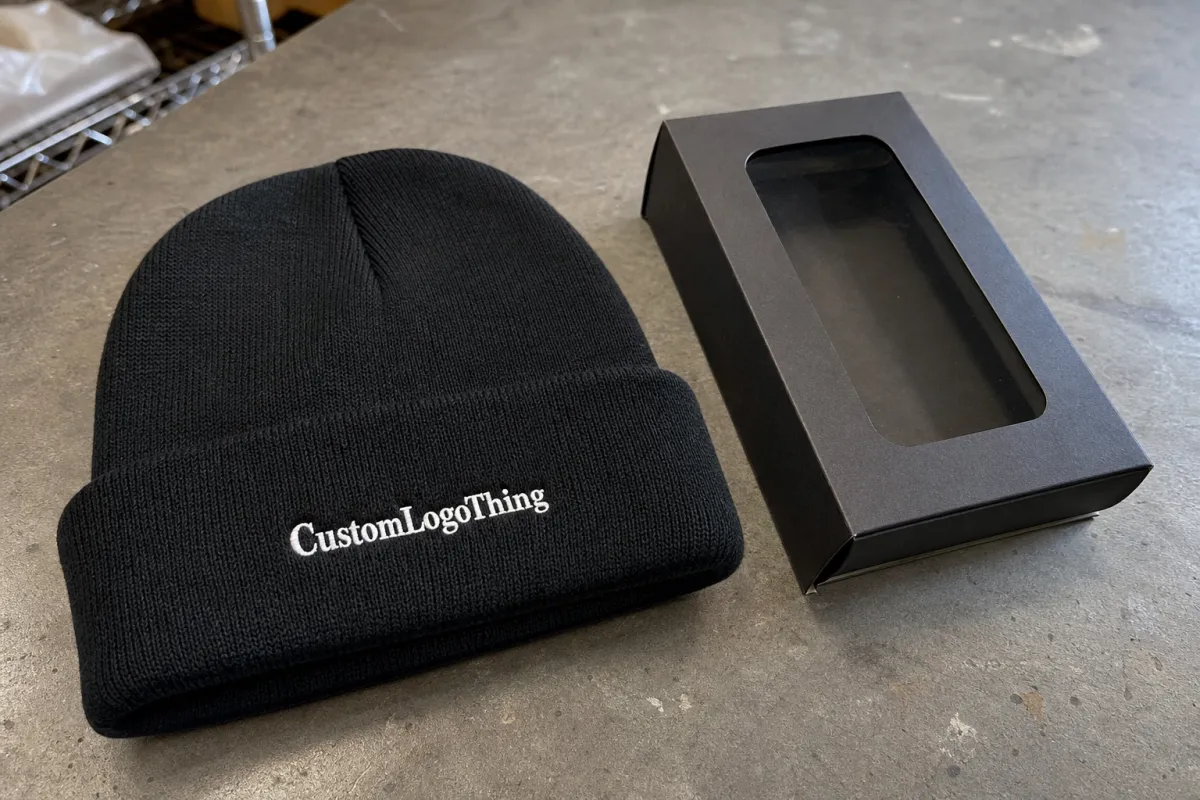
From a packaging buyer’s point of view, knit Beanies for Subscription boxes do three useful things at once: they deliver warmth, they carry brand color, and they fit a seasonal story without needing a long explanation. That is better than a gimmick item that only makes sense in a campaign deck.
People keep hats because the item has a real job. A decent knit beanie gets pulled out on a commute, on a walk, or on a cold morning when nobody is thinking about your marketing funnel. That repeated use matters more than a flashy first impression. If the subscriber wears it four or five times, the box did its job.
Utility also gives you more room to be selective. A beanie does not need a giant logo to feel branded. In practice, a tighter color story, a good cuff, and a soft handfeel do more for perceived value than overbuilding the decoration. Buyers often spend money on novelty and lose the thing that would have improved retention: comfort.
There is another reason this category holds up. It reads as a real product, not a token. A custom knit accessory built for a box program should match the audience, the season, and the pack-out space. That is different from grabbing a retail-style hat and slapping a logo on it. The best results usually come from simple decisions made early, not from decorative fixes later.
A beanie is only affordable if the subscriber keeps it. If it looks cheap in hand or fits awkwardly, the savings were fake.
Color choice matters more than trend-chasing decoration. A neutral base with one accent stripe often outperforms a loud, overdesigned pattern because it works across more wardrobes. For subscription box merch, broad appeal usually beats design ego.
The best-performing pieces are often the least noisy. They hold up in photos, they survive repeat wear, and they do not fight the rest of the box. That balance is hard to fake and easy to miss when the conversation stays stuck on logo placement.
How the sourcing process works from brief to boxed pack-in
The sourcing process starts with a brief that is better than “make it nice.” A supplier needs the audience, target unit cost, launch date, box dimensions, and the role the beanie plays in the campaign. Is it a hero item, a seasonal add-in, or a value booster? The answer changes the spec, the MOQ, and the packaging plan.
Good briefs also include the practical details people forget until week three: logo files in vector format, preferred yarn handfeel, color references, and any brand rules for labels or hangtags. If the beanie has to sit beside a printed insert or rigid mailer, bring in the Custom Packaging Products side of the order early. The box and the hat need to work as one system, not two separate purchases.
The handoff usually moves through four checkpoints:
- Tech pack and mockup - artwork, measurements, stitch type, yarn direction, and finish notes.
- Sample knitting - a first physical piece or photo proof so fit and color can be judged outside a screen.
- Revision and sign-off - adjustments to logo size, cuff depth, or yarn color before bulk production starts.
- Bulk build and pack-out - knit, finish, inspect, fold, bag, carton, and stage for shipping or box insertion.
That approval flow is where time disappears. A buyer can lose a week waiting on internal feedback about shade matching, then another few days asking for a second sample because the logo looked smaller in hand than on screen. None of this is unusual. It is just the part of the process that never gets mentioned in sales copy.
Pack-out rules change the order too. A beanie can ship flat, folded with tissue, bagged individually, or pre-inserted into the subscription box. Flat packing lowers cube and freight. Pre-insertion saves labor on the fulfillment side. Bagging protects from dust and handling, but it adds material, time, and usually a little extra cost. If the box is tight, those choices matter more than the artwork.
For box programs with multiple inserts, clarify whether the beanie is going in first or last. That affects carton orientation, compression marks, and how clean the folded presentation looks after transit. A good factory will ask those questions. If they do not, the buyer should.
Specs that change the final feel, fit, and retention rate
Specs are where knit beanies for subscription boxes either feel premium or fall apart. The first two to watch are fiber content and gauge. Acrylic is common because it is cost-effective, stable, and holds color well. Acrylic-wool blends add warmth and a softer hand. Cotton can work for lighter seasons, but it does not insulate the same way. Gauge changes the surface and the warmth: a 7-gauge knit looks chunkier and feels cozier, while a 12-gauge knit looks tighter, cleaner, and more retail-polished.
Fit is just as important. A lot of bad beanies are simply too short. For most adult subscription audiences, a cuff height around 2.5 to 3 inches and a crown depth around 8 to 9 inches is a safe starting point, with stretch that can comfortably cover roughly 20 to 24 inches in head circumference. That range is not universal. Bigger audiences, outdoor customers, and gender-neutral box programs need a little more room, not less.
Decoration changes the whole read of the product. Jacquard knitting gives you built-in branding and color blocking, which feels integrated but limits fine detail. Woven patches and embroidery make logos sharper, especially for smaller runs, but they introduce a more layered look. A sewn label is the quiet option. It is often the cleanest choice if the beanie already has strong knit patterning and does not need another loud element.
Material choice also affects wear life. Acrylic sheds less cost pressure and usually produces more consistent color batches. Wool blends can feel better on day one but may demand tighter wash instructions and more careful quality checks for pilling and shrinkage. If the subscription audience is likely to wear the hat often, that tradeoff deserves real attention instead of a quick yes from procurement.
| Option | Typical MOQ | Indicative unit cost | Best use | Tradeoff |
|---|---|---|---|---|
| Stock knit base with woven label | 300-500 pcs | $2.10-$3.80 | Fast launches and tighter budgets | Least custom, more generic body shape |
| Custom jacquard knit logo | 1,000-3,000 pcs | $3.50-$6.50 | Strong brand presence and clean integration | More sample time and fewer fine details |
| Knitted base with embroidered patch | 500-1,500 pcs | $2.80-$5.20 | Sharper logo detail on moderate runs | Patch adds labor and a more layered look |
| Premium blend with custom packaging | 1,000+ pcs | $4.50-$7.50 | Higher-end box programs and winter drops | Better perceived value, higher landed cost |
Packaging choices can make the same beanie feel collectible or forgettable. A kraft belly band, a tidy polybag, or a branded insert card changes the perception of value before the subscriber even tries it on. If you need outer cartons or display packaging to protect the item, the Custom Packaging Products catalog should be part of the same conversation as the knit spec.
For color, remember that yarn is not a monitor. PMS references help, but knitted goods are made from yarn cards, not ink. Navy can skew brighter, heather tones can go flatter, and dark logos can disappear in dense stitches. That is normal. It is also why a sample matters more than a polished mockup.
Build in a check for stretch recovery too. Some knits bounce back after handling; others relax and look baggy after a few wears. If the beanie is supposed to feel structured, ask for the sample to be worn and reshaped a few times before sign-off. That simple test catches more problems than another round of screen approvals.
Knit beanie pricing, MOQ, and quote variables buyers should know
Pricing moves with the build, not just the logo. Yarn quality, stitch complexity, number of colors, decoration method, packaging, and manual labor all push the quote up or down. A plain rib knit in one color is one thing. A multi-color jacquard with a woven patch, bagged individually, and packed to a box schedule is a different animal.
As order size climbs, unit cost usually drops fast at first, then flattens. Going from 500 to 1,000 pieces can shave off 12% to 20% per unit. Moving from 1,000 to 5,000 pieces often helps, but not dramatically unless the factory setup is already dialed in. That is why buyers should ask for tiered pricing instead of accepting a single number and calling it done.
A good quote should spell out the ugly parts plainly:
- Sample fees and whether they are credited back on bulk orders.
- Setup charges for knitting programs, patches, labels, or packaging tooling.
- Freight assumptions including whether pricing is EXW, FOB, or delivered.
- Overrun tolerance so the factory does not add extra units you never planned for.
- Pack-out details such as individual bagging, folding, carton counts, or fulfillment insertion.
If you want a cleaner comparison between options, ask suppliers to quote the same quantity across three versions: basic, mid-tier, and premium. That usually exposes where the real cost sits. In many programs, the jump from a stock body with a label to a custom jacquard knit is worth it only if the beanie is supposed to carry the whole winter story.
One more practical point: shipping can quietly eat the margin you thought you had. A bulk hat that ships flat may be cheap to make but expensive to move if you choose the wrong carton size or forget the fulfillment plan. Freight, carton dimensions, and insert labor belong in the landed cost, not in a separate spreadsheet nobody opens again.
If the order needs sustainable packaging, ask for paperboard and printed inserts made from FSC-certified stock. If the beanie is packed for e-commerce distribution or repeat handling, transit testing guidance from ISTA helps keep the outer pack from getting crushed before the subscriber opens it.
Production steps, timeline, and realistic lead time
Simple knit beanie orders can move faster than most people expect, but only if approvals stay tight. The usual path is artwork approval, sample knitting, revision if needed, bulk production, quality check, and final packing. Each step sounds short on paper. Each step can get stretched by a day or three if somebody is waiting on a sign-off email.
For a basic beanie with a single-color knit body and a label, a realistic lead time is often 12 to 18 business days after final sample approval. Custom jacquard styles, multi-color patterns, or complex packaging can push that into the 3 to 5 week range, and sometimes longer if yarn needs to be sourced first. That is not slow. That is normal production math.
Where time gets lost is easy to spot:
- Waiting on internal feedback about size or color.
- Requesting changes after the first sample instead of before it.
- Reworking packaging because the box team and the merch team were not talking.
- Adding a last-minute seasonal detail that forces another approval round.
Subscription box programs need more buffer than people think. Build in extra time before the ship date, especially if the beanies need to hit a monthly or holiday drop. One late carton can wreck a whole fulfillment schedule, and nobody wants to explain that a seasonal box missed the season.
There is also a difference between production time and delivery time. A factory can finish on schedule and still miss your window if the freight lane is tight or the carton count was wrong. Keep the shipping plan as visible as the creative plan. They are tied together whether anyone likes it or not.
Quality control should happen at more than one stage. A sample review is not enough. Ask for checks on stitch consistency, measurement tolerance, label placement, loose threads, and color matching against the approved yarn card. For higher-volume runs, a random inspection against a simple AQL framework is better than trusting the finished stack because it “looks fine.”
Common ordering mistakes that hurt margin and delivery
The first mistake is assuming one fit works for everyone. It does not. A one-size beanie may technically stretch, but that does not mean it fits a mixed audience comfortably. If the subscriber base includes different genders, head sizes, or age ranges, ask for dimensions that actually suit that spread.
The second mistake is approving a logo that only looks good on screen. Dense knit patterns can swallow thin lines, tiny text, and low-contrast shapes. If the logo needs to stay crisp, either enlarge it or move to a patch or embroidery. Otherwise, the finished piece may read like a smudge from three feet away. Not ideal.
The third mistake is pretending color will sort itself out later. It will not. Warm grays can turn beige, deep greens can dull down, and black-on-black designs can vanish. If the beanie is supposed to pop in the box, choose contrast on purpose and check the sample under normal indoor light, not just under a bright monitor glare.
The fourth mistake is treating packing as an afterthought. Carton counts, insert orientation, individual bagging, and freight assumptions all affect cost and timing. Buyers often get the product spec right and the fulfillment spec wrong, then wonder why the landed cost came in higher than expected.
The cheapest beanie is not cheap if the sample cycle drags on, the logo fails in knit, and the box team has to rework every pack-out.
There is another quieter problem: overdesign. A beanie can carry a lot, but not every brand needs stripes, contrast crown shaping, woven patches, and multiple labels all at once. More detail does not automatically mean more value. Sometimes it just means more chances for the spec to go sideways.
Compression is worth watching too. A soft knit that looks rich in the sample can arrive flattened if it was packed too tightly or stored too long before fulfillment. That is one reason flat packing should still preserve enough recovery in the fabric to spring back after opening.
Expert tips for better fit, packaging, and repeat orders
If the order matters, ask for a pre-production sample or at least a photo proof with measurements. That sounds obvious, which is exactly why it gets skipped. A sample catches problems before they become expensive, especially on fit, logo scale, and color balance.
Match the yarn weight to the subscriber profile. Outdoor and travel-focused buyers usually want a warmer, denser feel. Lifestyle boxes may prefer a softer, lighter knit that looks good in photos and does not overwhelm the rest of the package. A commuter audience and a wellness audience will not want the same hat. Pretending otherwise is how you end up with nice inventory nobody wears.
For broader appeal, use one strong accent color and keep the base neutral. Cream, charcoal, navy, olive, and black are popular for a reason: they work with a lot of wardrobes and reduce the risk of season-specific dead stock. A loud one-off color can be fun, but it is harder to repeat cleanly next season.
Reorderability matters more than most teams plan for. If the beanie does well, somebody will want it back. Keep the spec sheet simple enough that a second run does not require rebuilding the whole file from scratch. That means locking measurements, yarn callouts, label placement, and pack-out instructions in one place instead of scattered across email threads.
For brands using Custom Packaging Products alongside the beanie, make sure the outer carton, insert card, and bag size are all saved with the same item code or spec reference. Repeat orders go faster when operations does not need to decode a mystery file every time.
Repeat runs also benefit from a small archive of approved materials: yarn swatches, photos of the approved sample, a flat sketch with measurements, and the final packaging dieline. Those records save time when the next seasonal drop is moving quickly and nobody wants to re-open last quarter’s debate about cuff depth.
Next steps: what to send before you approve the order
Before you approve knit beanies for subscription boxes, gather the basics that actually shape the quote: quantity tiers, target unit cost, subscriber profile, logo files, target ship date, and box dimensions. That package gives a supplier enough context to price accurately instead of guessing.
Decide what the beanie is supposed to do. Hero item? Seasonal bonus? Upsell? The answer changes the spec. A hero item deserves better yarn, better fit, and better packaging. A value add-on can stay simpler, as long as it still feels intentional.
A clean quote request should include:
- Artwork in vector format and any brand color references.
- Desired material, or at least a softness and warmth target.
- Exact quantity by tier, not just one number.
- Whether the item ships flat, bagged, or pre-packed into the box.
- Any sustainability or carton requirements, including FSC paperboard if needed.
Then compare the sample against the audience, the launch calendar, and the pack-out plan. If those three line up, the order is probably sound. If one of them feels off, fix it now. Changing a beanie spec after bulk approval is the packaging version of paying retail for a mistake.
Handled well, knit beanies for subscription boxes can carry a campaign without bloating the budget or looking disposable. Handled lazily, they become the thing everyone remembers for the wrong reason. The difference is usually not the hat itself. It is the brief, the fit, and the packaging discipline behind it.
What makes a knit beanie a good fit for a subscription box?
It should feel useful, not gimmicky, so subscribers actually wear it after the unboxing. The best options balance stretch, softness, and a clean decoration method that still keeps the brand front and center.
What MOQ should I expect for subscription box beanies?
Simpler builds usually support lower starting quantities, while fully custom knit patterns often need a higher minimum. Ask for tiered pricing so you can see where the unit cost drops as the order grows.
What affects knit beanie pricing the most?
Yarn quality, stitch complexity, logo method, and packaging usually move the price more than small color changes. Freight, setup charges, and sample revisions can quietly push the real landed cost higher than the first quote.
How long does production usually take for knit beanies in a box program?
Simple runs can move faster, but custom-knit or heavily branded styles need more time for sampling and approval. Build extra buffer for seasonal launches so shipping does not slip into your fulfillment window.
Should I choose embroidery or a knitted logo for subscription box beanies?
Use knitted branding when you want a built-in look with strong color blocking and a cleaner retail feel. Use embroidery or a patch when the logo needs sharper detail, lower complexity, or more flexibility on small runs.