A repeat beanie order looks simple until the details start moving. One team remembers a navy cuffed knit hat. Another remembers a softer rib, a slightly shorter cuff, and a logo that sat a little higher than expected. The file in someone’s inbox says only quantity and price. That is usually enough to turn a routine restock into a slow repair job.
This Knit Hats with Logo reorder planning guide is for buyers who need the next run to match the first one closely enough that it still feels like the same product. Not identical in the laboratory sense. Identical where it counts: fit, decoration, color family, packaging, and delivery timing. Reorders drift when memory substitutes for documentation. That is the real issue.
Seasonal programs make the problem sharper. If a holiday drop sells through faster than expected, or a team store is carrying the same beanie across multiple months, the reorder window shrinks fast. A small miss on yarn color or logo placement may not sound dramatic on paper. On the finished hat, it can be the first thing a buyer notices.
“Same as last time” is a request, not a specification.
Knit Hats With Logo Reorder Planning Guide: Where Repeat Orders Usually Drift
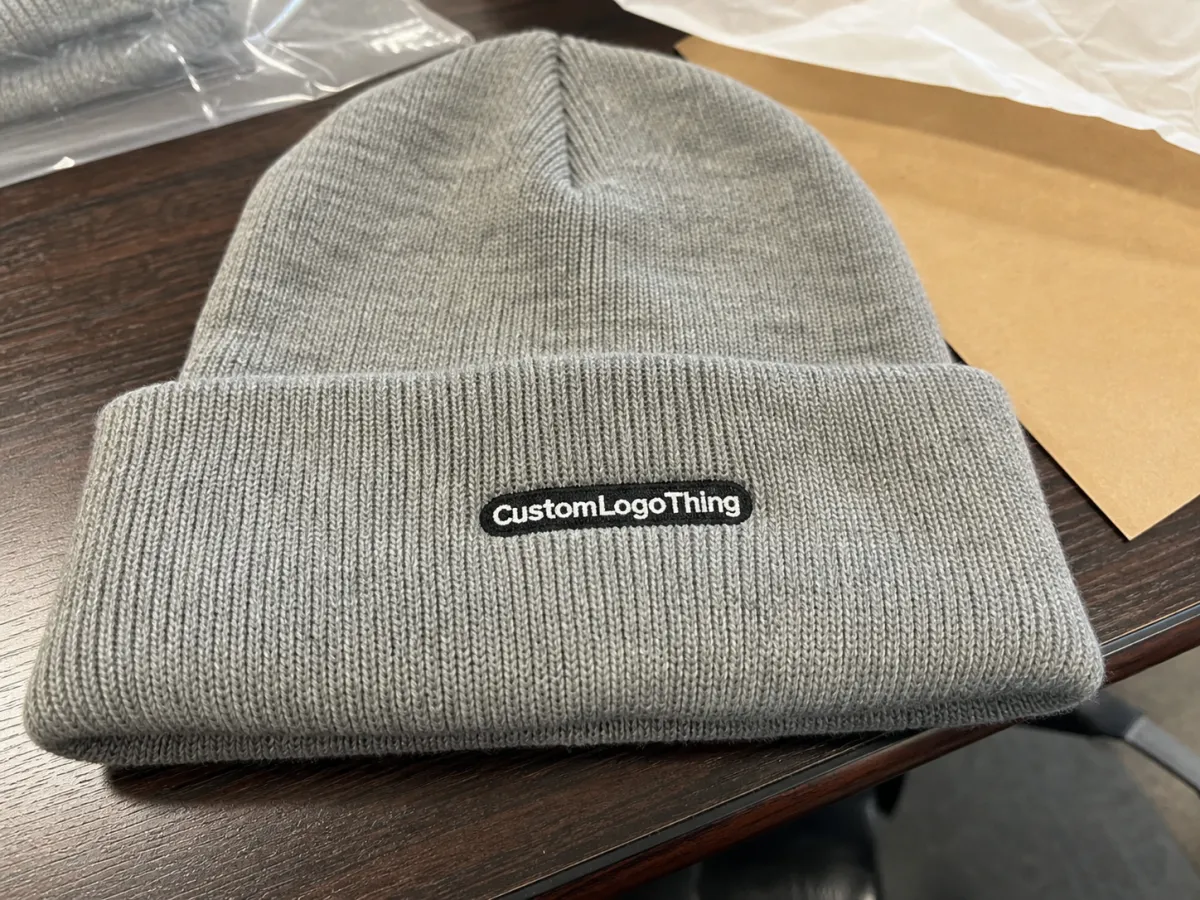
The first thing to understand is that a repeat order is only a repeat if the production record is complete. If the only evidence is a photo on a phone, the order is already shaky. The second issue is that knit hats are not flat products. Stretch, cuff depth, yarn gauge, and decoration method all change how the logo reads once the hat is worn.
Buyers usually assume the biggest risks are obvious, such as the wrong color or the wrong logo. The smaller failures are more common. A cuff that is 1/2 inch shorter can make the logo sit lower. A softer yarn can make the same embroidery look denser. A packaging change can affect how the product ships, even if the hat itself is correct. Those differences feel minor in isolation. Together, they change the order.
Three repeat-order situations show up again and again. Merch programs need to restock before inventory disappears. Internal team orders need consistency across departments and seasons. Retail promotions need the next batch to line up with the first so the product wall does not look pieced together from leftovers. In each case, the cost of guessing is delay.
The fix is not complicated. Save the approved sample, the final proof, the production notes, and the original PO in one place. If those pieces are scattered, the reorder inherits uncertainty before it begins. A well-kept file turns “make it like before” into a job the factory can actually execute.
What to Lock Down Before You Reorder
The details that must stay consistent are the ones that affect fit and visual identity. That usually means hat style, cuff height, knit construction, logo location, decoration method, and packaging requirements. If any of those change, the customer may still receive a usable beanie, but it is no longer the same product.
Some other details can change without altering the core spec. Ship-to address, carton count, and store split instructions are logistics items. They matter, but they should not be confused with the garment spec. Mixing the two makes quotes messy and can lead to mistakes in production instructions. Keep them separate.
A clean reorder record answers a few direct questions without forcing anyone to dig through old emails:
- What exact hat style was approved?
- How deep was the cuff, and where did the logo land?
- Was the decoration embroidered, patched, woven, or knit into the fabric?
- Did the order include polybags, retail labels, size stickers, or hangtags?
If the answer to any of those is “we think so,” the reorder is already on thin ice. The purpose of a Knit Hats With Logo reorder planning guide is not to add paperwork. It is to keep the second order from becoming a fresh design project disguised as a repeat.
It helps to treat the old order like a record set, not a memory. The approved proof shows the visible decisions. The production note explains what was accepted after the proof. The sample photo shows what the buyer actually signed off on in real light, not in a cleaned-up render. That combination is far more useful than a vague instruction to match the previous run.
Specs That Change the Hat You Get
Not all knit hats behave the same way. A rib-knit cuffed beanie holds shape differently from a looser slouch style. A standard cuffed cap usually gives the cleanest front panel for a logo, which is why it remains the most common reorder shape. A slouch fit can hide minor placement differences better, but it also changes how the decoration sits when the hat is worn. Shape drives the decoration window, and the decoration window drives the final look.
Yarn choice is another place where repeat orders can drift. Acrylic remains common because it is affordable, warm, and available in a wide color range. It also tends to be predictable in production, which matters on reorders. Wool blends can feel more premium and often hold heat well, but they can raise cost and introduce care concerns. If the original run used a specific blend, do not assume a similar-looking substitute will behave the same way.
Gauge matters more than buyers usually expect. A tighter knit typically produces cleaner edges and improves readability on small logos. A looser knit feels softer, but fine details can blur. That matters if the original artwork includes small type, thin outlines, or stacked elements. A logo that looked sharp on a denser knit may spread or soften on a looser one.
The decoration method is where visual changes become obvious fastest. Embroidery works well for strong, simple logos and gives a classic retail look. Woven patches handle finer detail and usually look more polished on branded merchandise. Leather patches can be effective on rugged or casual styles, though they are not the right answer for every brand. Jacquard knit embeds the artwork in the fabric itself, which can look refined but also locks the design into the knitting setup. Woven labels are better as secondary branding than as the main graphic.
Color is another place where expectations and production reality often diverge. If the order depends on a precise brand color, the request should say so early. If a close yarn match is acceptable, that should be written down too. Trying to force an exact match on a low-volume reorder can increase cost and delay the schedule, especially if the yarn has to be custom dyed. In many cases, a stocked yarn that sits very close to the target is the smarter choice.
Decoration size also deserves attention. A logo that is too large for the cuff can buckle at the edges. One that is too small may disappear in the knit texture. The original run often reveals the sweet spot, which is why buyers should keep the finished measurement, not just the art file. On knit goods, the hat and the artwork are never separate problems.
Cost, MOQ, and What Drives the Quote
Repeat pricing usually comes down to five variables: hat base, decoration method, number of colors, packaging, and timing. If any of those change, the quote changes with them. That is normal. What causes confusion is when a buyer expects a previous unit cost to hold even though the order no longer matches the previous build.
Minimum order quantity depends on the production route. Stock blanks usually allow the lowest minimums because the base product already exists. Semi-custom programs sit in the middle. Fully custom-knit hats generally require the highest minimum because machine setup, yarn allocation, and knitting time are tied to the specific design. When a minimum shifts, there is usually a production reason behind it.
| Option | Typical MOQ | Typical Unit Cost | Lead Time | Best For |
|---|---|---|---|---|
| Stock blank with embroidery | 24-100 pcs | $5.50-$9.50 | 7-15 business days | Small restocks and fast-turn programs |
| Semi-custom knit with patch or label | 100-300 pcs | $7.50-$13.00 | 12-20 business days | Recurring merch with stronger brand control |
| Fully custom-knit beanie | 300-500 pcs+ | $9.00-$18.00 | 20-35 business days | Distinctive retail programs and branded drops |
Those ranges are practical, not absolute. Freight, packaging, stitch count, special yarn, and rush timing can move them quickly. A simple embroidered reorder can be more expensive per unit than expected if it needs split shipping or custom inserts. The cheapest line item on a quote is rarely the whole story. Landed cost matters more than sticker price.
A useful rule of thumb: if a lower setup cost comes with a slower or riskier path, compare it against the actual date the hats need to be in hand. Saving a small amount while missing the selling window is a poor trade. If the reorder is urgent and the specs are close to the original, it may be worth paying for the simpler path instead of squeezing every dollar out of the quote.
Buyers also need to watch for hidden cost drivers in the request itself. Separate colorways, split destinations, and multiple packaging styles can all add handling. If the order is broken into too many small pieces, the unit price usually rises even when the hat spec stays unchanged. Production likes clean instructions. Fragmented instructions tend to cost more.
Timeline and Production Flow
A repeat order should follow the same logic every time: review the previous spec, confirm the artwork, check production availability, approve the proof, then lock the ship date. If those steps happen out of order, the job slows down. More often than not, the delay comes from approval, not the knitting itself.
Stocked blanks move the fastest because the base hat already exists. Semi-custom reorders need more coordination, especially if the patch, label, or embroidery thread changes. Fully custom-knit hats take the longest because the machine program, yarn, and knitting schedule all need to be set up around that specific order. If a supplier promises speed, ask what is already on hand and what still needs to be made.
Typical timelines are straightforward. A stocked blank reorder may ship in 7-15 business days after approval. Semi-custom repeat orders often take 12-20 business days. Fully custom knit hats with logo frequently need 20-35 business days, and custom yarn or split shipping can push that further. These ranges are useful only if the approval arrives on time. A perfect production slot means little if the proof sits untouched for three days.
Missing vector art and missing color references are the two most common avoidable delays. The next most common is a team that wants to “check one more thing” after the proof already matches the previous order. That habit can turn a controlled reorder into a moving target. Once the schedule starts slipping, every small decision becomes more expensive.
That is why a reorder plan should be built before inventory gets thin. If the hat is a fast seller or part of a seasonal program, the next order should start while there is still buffer stock on hand. Waiting until the shelf is empty usually means the buyer is paying in either time or flexibility.
Quality Control That Catches the Small Mistakes
Quality control on repeat beanies is less about catching obvious defects and more about confirming that the second run matches the first. Check logo width, placement from the cuff, panel count, finished dimensions, and the decoration method used. A logo can be technically correct and still look wrong if the knit stretches differently from the original sample.
The best check is still a physical one. A hat that looks centered on a flat proof may sit low when it is worn. A 1/4 inch change can be hard to see on a screen and easy to see on a head. Knit fabric moves. That movement matters more than many buyers expect, especially with cuffed styles where the fold changes the visible area.
Ask for a final measurement sheet and a color reference on every repeat run. If the order is supposed to match the original, the proof should show the same placement callouts and the same decoration size. For embroidery, thread density and fill direction can shift the appearance even when the stitches are technically correct. For patches, edge size and shape can alter the look just as much as color.
Packaging deserves the same level of attention. Polybags, cartons, labels, and insert cards all affect how the order reaches the end user. If the hats are shipping to stores, verify how they are packed so that the retail team is not forced to rework the cartons on arrival. If they are going into direct mail or distribution, transit testing standards such as ISTA are useful references for protecting the product in shipment. It is a small step that can prevent crushed knits and bent packaging.
Material checks matter too. If the order uses paper inserts or branded tags, make sure the paper spec fits the sustainability requirement before production starts. If the packaging needs forest-certified content, FSC guidance is a common benchmark. That is not about marketing language. It is about preventing a last-minute packaging substitution that fails compliance or buyer review.
What to Send for a Clean Reorder
The fastest reorder starts with the right documents. Send the original PO, the approved sample photo, the logo file in vector format, and the target in-hands date. Those four pieces tell the vendor what the order was, what it looked like, what artwork to use, and when it needs to arrive. Everything else builds from there.
If the destination changed, include the new ship-to address. Freight and routing affect both timeline and cost. If quantities are split by color, size, or location, say that clearly. If packaging changed, state whether the hats need polybags, stickers, hangtags, or cartons. If the new order is supposed to match the old one exactly, use that language plainly. If the new run needs an adjustment, say what changed and why.
Minor changes are rarely minor in production. A new yarn shade can require a different dye lot. A different logo size can alter stitch count. A packaging change can shift the labor cost and add days to the schedule. Buyers often hold back these notes because they seem small. They are not small once the order is in motion.
There is a cleaner way to think about the request: the reorder should tell the production team what to copy, what to confirm, and what to ignore from the previous run. That saves more time than sending a long email and hoping the important line gets noticed.
- Send the old PO and approved sample photo.
- Confirm quantity, destination, and delivery date.
- Provide the logo file and color references.
- List any packaging or labeling changes.
- Approve the proof quickly so production can move.
That sequence keeps the job controlled. It also reduces the chance that the next order becomes a new design conversation disguised as a restock. The most efficient reorder is the one with the fewest surprises and the clearest record.
How far ahead should I reorder knit hats with logo before stock runs low?
Start when inventory is around 30-50 percent remaining. That gives room for proofing, production, and freight without forcing a rush. If the yarn is custom, the logo method changed, or the order needs split shipping, build in extra time.
Can a repeat knit hat order match the same logo placement?
Usually yes, if the previous art file, approved proof, and sample record are available. The more complete the original documentation, the better the match. If those records are missing, the proof stage becomes more important.
What files speed up a knit hat reorder?
The original PO, vector logo file, Pantone references, approved sample photo, quantity, destination, and in-hands date are the key items. If packaging or labeling changed, include that too. Clear inputs reduce proof cycles and keep pricing accurate.
Can colors or packaging change on a reorder?
Yes, but each change can affect cost, lead time, or both. Packaging is usually easier to adjust than knit structure or decoration method. If color accuracy is critical, confirm the yarn availability before releasing the order.
What MOQ should I expect for repeat knit cap orders?
MOQ depends on whether the order uses stock blanks, semi-custom production, or fully custom knitting. Stock blank reorders usually allow the smallest runs, while custom-knit beanies need more volume because of setup. If the minimum changes, ask which build step caused it.
A repeat beanie order works best when the next run is treated like a documented continuation, not a memory test. Keep the spec tight, keep the proof honest, and keep the records together. That is the practical value of a knit hats with logo reorder planning guide: fewer assumptions, fewer delays, and a restock that arrives looking like the original instead of a rough interpretation of it.


