A knit beanie can look finished on a screen and still fail once the yarn, stitch count, and decoration method are working together in the real world. That is the practical value of a Knit Hats with Logo sample approval checklist: it catches shape issues, logo distortion, and comfort problems before a bulk run turns a small mistake into a large one.
A digital proof can confirm artwork, spelling, and rough placement. It cannot tell you whether the cuff pulls too tight, whether the crown stands too tall, or whether a logo that looked centered in a mockup shifts after the fabric stretches over a head. Knit goods behave differently from flat printed products. Texture changes the read. So does elasticity. So does the finishing method.
For buyers managing apparel, giveaways, or retail assortments, the sample is less about aesthetics than control. It is the first true checkpoint for cost, timing, and consistency. The better the sample review, the fewer surprises later in production, freight, and receiving.
Why a sample can save a knit hat order from costly surprises
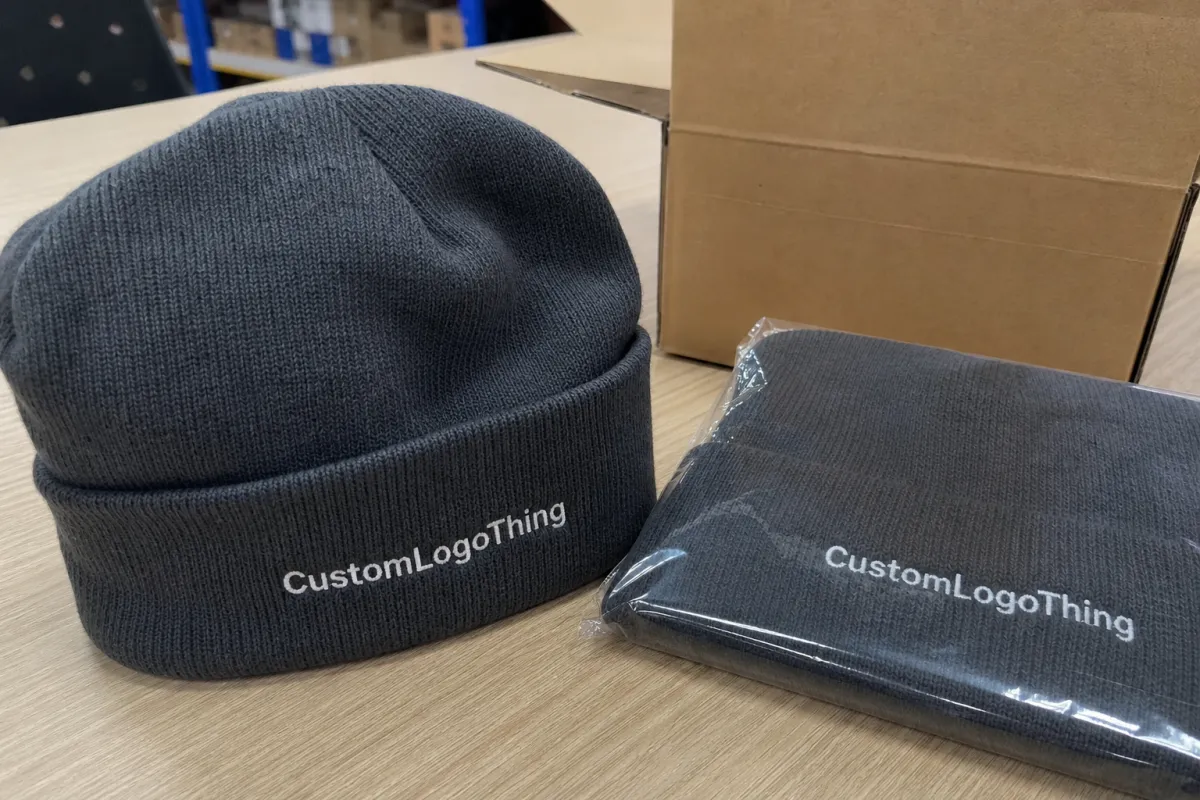
Yarn behaves in ways that mockups often hide. A rib knit compresses the artwork differently than the body panel. A thicker yarn can make fine details look softer. A logo that appears balanced on a flat render may drift once the fabric relaxes or stretches. Those shifts are small on paper and obvious in hand.
The most common issues show up quickly if you know where to look: color variation between yarn lots, stitch distortion along the edge of a logo, a crown that balloons instead of collapsing cleanly, and a fit that feels either loose enough to slide or tight enough to leave marks. None of those problems are cosmetic only. They affect wearability, shelf appeal, and how consistently the brand is presented across repeat orders.
Buyers sometimes trust the digital rendering a little too much because it is neat and fast. The problem is that a rendering cannot show thread pull, stitch density, or how a patch curves across a rounded surface. A physical sample can. It is the only point in the process where the product, not the file, does the talking.
Do not approve a knit sample from a single front photo. A side view, a close-up of the logo, and a real fit test tell a very different story.
If you need a general reference for packaging terminology or transit planning, Packaging.org is a useful starting point. For orders that will move through parcel networks or mixed freight, ISTA offers packaging and distribution guidance that helps buyers think beyond the hat itself and into handling risk.
What a knit hat logo sample should confirm before sign-off
A proof and a sample solve different problems. The proof locks down artwork, spelling, and general layout. The sample confirms how those decisions behave inside the actual build: yarn choice, stitch count, cuff height, crown shape, and the specific decoration method.
The decoration method changes the read more than many teams expect. A jacquard logo is knitted into the fabric, so detail softens slightly as it follows the stitch structure. Embroidery adds dimension but can pucker if the knit is too loose or the backing is too stiff. Woven patches hold detail well, yet they can look small on a thick beanie if the scale is not right. Sewn labels are clean and modern, but the placement still has to look intentional, not like an afterthought.
The cleanest review process uses one source of truth. Compare the sample line by line against the tech pack or spec sheet. If the spec says a 3-inch cuff and the sample measures 2.5 inches, that is not a minor variation. If the logo should sit 18 mm above the cuff seam, measure it. Knit products hide small errors until they are worn, which makes documentation even more useful.
Material choice also changes the final result. Acrylic is common because it is cost-effective and predictable in production. Recycled polyester can offer a lighter hand feel and may support sustainability claims if your brand is using them. Wool blends feel warmer and more premium, but they usually raise the price and may require tighter care instructions. The right material depends on budget, wear environment, and how the logo needs to sit on the surface.
Do not ignore the inside of the sample. Loose yarn tails, scratchy label edges, and rough seam finishing can turn a good-looking hat into a bad wearing experience. Those details matter because the end user feels them long before they inspect the logo from across a room.
How the process works from artwork handoff to approval
The process is more orderly than many first-time buyers expect, but only if each stage is defined early. It starts with artwork handoff, usually in vector format such as AI, EPS, or a clean PDF. The supplier then confirms yarn options, decoration method, color references, and quantity goals before knitting the first sample. After that comes finishing, inspection, transit to the buyer, review, and written sign-off.
Pantone references help, but they are not perfect on knit goods. Yarn is not ink on coated paper, and a dyed fiber reads differently under daylight than under fluorescent warehouse light. If color accuracy is critical, ask for the closest yarn shade and expect a tolerance range rather than a guarantee that every screen match will transfer directly to the fabric.
Placement instructions need to be exact. “Center the logo on the cuff” is too vague for production. “Place the logo 18 mm above the cuff seam, 48 mm wide, with at least 3 mm of border clearance” gives the maker something usable. Exact notes reduce revision loops. They also reduce the chance that a supplier interprets a polite but vague instruction as a green light for a build that is technically correct and practically wrong.
Revision rounds work best when they stay narrow. If the cuff height is right and only the logo sits too low, ask for a placement correction and leave the other pieces alone. Reopening yarn color, label style, and carton markings at the same time slows everything down. One change request, one output.
Choose one final approver before the sample arrives. Too many internal voices create a slow drift where marketing wants one version, sales wants another, and operations wants a third. One person can gather comments, but one person should make the decision. That is not bureaucracy. It is how a sample stage stays efficient.
Knit hat pricing, MOQ, and sample costs explained
Unit price depends on more than the number of stitches. Yarn type, knit complexity, logo method, color count, finishing details, and packaging all move the number. A simple cuffed beanie with one-color embroidery can land around $3.50 to $6.50 at moderate volume. Add a jacquard pattern, woven patch, pom-pom, or custom label, and the range can move to roughly $7 to $12 per piece. Those numbers are normal for custom work, not high-end exceptions.
Minimum order quantity changes the equation too. A supplier may be able to produce one clean sample, but the bulk order might still require 300, 500, or 1,000 pieces to keep the line efficient. Lower MOQs often mean more manual handling and less favorable machine time, which is why the per-unit price rises even when the design looks simple.
Sample fees vary with setup complexity. A straightforward sales sample can run about $25 to $40. A more finished pre-production sample with custom yarn matching, multiple logo elements, or special labeling may land in the $50 to $120 range. Some suppliers credit that fee back against the bulk order, but that should be stated in writing. Freight is often separate. Rush handling may add 10% to 20%.
| Option | What it confirms | Typical sample cost | Typical turnaround | Best use |
|---|---|---|---|---|
| Digital proof | Artwork layout, text, basic placement | Usually free | Same day to 2 days | Early visual alignment |
| Knitted sales sample | Fit, stitch behavior, yarn color, cuff height | $25-$80 | 5-12 business days | Most custom beanie programs |
| Pre-production sample | Final decoration, packaging, label placement, finish | $40-$120 | 7-15 business days | Retail-ready or higher-risk orders |
Packaging deserves its own line item. If the hats will ship retail-ready, confirm polybags, hang tags, size stickers, and carton labels before approval. If paper inserts or hang tags are part of the presentation, ask whether FSC-certified stock is available if that matters to your brand standards. It is easier to settle packaging early than to discover a mismatch after the sample has already been approved.
Production timeline, lead time, and turnaround checkpoints
Sample turnaround and bulk lead time are not interchangeable. A sample might take 5 to 12 business days to knit and finish, then another 3 to 7 days to reach the buyer depending on shipping method. Bulk production starts only after final approval, and that can add another 12 to 25 business days. During peak season, the schedule can stretch longer.
There are five checkpoints worth tracking: sample build, transit to the buyer, revision window, written approval, and production slotting. If one slips, the rest usually move with it. A supplier cannot fully reserve machine time until yarn, artwork, and sample notes are settled. A delayed answer on cuff height can cost more time than the original change.
Rush orders are possible, but they bring tradeoffs. Faster knitting may limit yarn options, reduce revision rounds, or increase freight costs. That does not make rush production a bad decision. It simply means the buyer should understand what is being compressed. Speed without a detailed checklist is how details get missed.
Transit also matters more than some teams expect. Cartons that will move through parcel networks or mixed freight should be packed with compression and handling in mind, not just stacked neatly for the camera. ISTA-style thinking helps here, even if the order is not going through a formal test lab. Ask about carton strength, label durability, and how the hats are folded so the cuff does not lose shape in transit.
Knit hats with logo sample approval checklist for final sign-off
This is the practical part of the knit hats with logo Sample Approval Checklist. Put the hat on a real head. Flat inspection helps, but wear test is what reveals whether the cuff sits correctly, whether the body stretches without warping the logo, and whether the crown holds a clean shape instead of collapsing into something too soft or too rigid.
Start with fit and silhouette. Does the hat feel snug enough to stay in place without leaving a mark? Is the cuff height correct? Does the body fall naturally, or does it stand up like it was blocked too stiffly? Shape problems are easy to miss on a table and hard to ignore in use.
Then inspect the decoration. Check logo size, placement, stitch clarity, and edge definition. For embroidery, look for puckering, loose threads, and backing impressions. For woven patches, verify that the border is clean and the patch still reads well from arm’s length. For jacquard knit logos, compare the color blocks against the approved artwork and confirm that the detail is clear enough for your brand standard.
Color needs two lighting checks. Review the sample in daylight and again under indoor light. Knit surfaces reflect light differently across ribbing and crown panels, so a navy that looks precise outdoors can appear nearly black in a warehouse office, while a heather gray may warm up or cool down depending on the bulb.
Packaging is part of the approval too. Confirm fold style, hang tag placement, size sticker position, and carton markings if the order is retail-ready. If the sample arrives in a polybag, make sure the bag is not flattening the cuff or pressing the logo into a temporary crease. The packaging should protect the product, not create a second problem.
- Fit: Try the hat on a real head and confirm stretch recovery after wear.
- Shape: Check cuff height, crown profile, and side balance.
- Logo: Measure placement, scale, and edge quality against the spec sheet.
- Color: Compare yarn and thread in daylight plus indoor light.
- Finish: Inspect labels, hang tags, folds, and carton markings.
Keep a written record with dated photos, marked measurements, and a clear approval note stating that the sample is approved for bulk as shown. That record may feel formal for a beanie order, but it saves a lot of argument later. A sample approved only in conversation is weak documentation when a production question comes back two weeks later.
Common mistakes that cause rework or delay on custom beanies
The biggest mistake is approving from photos alone. Screen images hide scale issues, texture differences, and fit problems, especially on chunky knit surfaces. A beanie can look balanced in a close-up and still sit awkwardly once it stretches over a head.
Another common miss is checking only the front view. The side seam, back placement, inside finishing, and crown shaping all matter. If the hat carries a label or patch on the back, that area needs review too. Buyers often care deeply about the front logo and then discover the back construction looks unfinished.
Mixed feedback slows everything down. If three people send separate notes, the supplier has to sort out what is mandatory and what is preference. One internal reviewer can gather comments, but one final voice should consolidate them into a single revision note. That small habit prevents a long chain of back-and-forth messages.
Skipping written approval creates risk as well. If the supplier produces exactly what was approved, but nobody kept a tracked record of measurements or placement, disputes get messy. Good documentation is not paperwork for its own sake. It is proof that both sides agreed on the same thing.
Finally, do not underestimate production constraints. Some changes sound tiny but require a full reknit, a new thread color, or a different patch build. Moving a logo up 5 mm may be simple. Asking for it to “read bigger but stay the same size” is not. Precision matters because knit goods are built from structure, not just image.
Expert tips and next steps before you place the order
A useful way to review a sample is to sort each issue into pass, revise, or reject. That keeps the discussion grounded. If the fit is right and the packaging needs cleanup, that is a revise. If the logo is off by more than the agreed tolerance, that is a reject. Clear criteria remove a lot of emotion from a process that can otherwise become subjective quickly.
Ask for a second physical sample after major revisions if the order has a large logo, multiple yarn colors, or a decoration near the cuff seam. One more round can prevent a great deal of waste. It is cheaper to spend another week on approval than to live with 2,000 hats that almost work.
Bundle all change requests into one message and attach marked-up photos. Circle the problem area, write the measurement you want, and state whether the change applies to the whole order or only one view. Production teams respond faster to clean notes because they can translate them into machine instructions without guessing what the buyer meant.
The best final move is simple: compare the sample against the spec sheet line by line, keep one written approval record, and do not release bulk production until the sample truly matches the order. That is the core of the Knit Hats with Logo sample approval checklist. It protects the budget, the timeline, and the brand impression all at once.
How do I know if a knit hats with logo sample is accurate enough to approve?
Check fit, logo placement, color, and silhouette on a real person rather than relying on a flat table photo. Then compare the sample directly to the approved spec sheet so the measurements, cuff height, and decoration method match line by line. Final approval should happen only after the buyer and production contact agree in writing that the sample reflects the intended order.
What should be on a knit hat sample approval checklist before production starts?
Include size, cuff height, logo method, logo scale, color references, finishing details, and packaging requirements. Add a quick inspection for stretch recovery, seam quality, and decoration durability so the hat performs well in use. Keep revisions specific so the factory can correct them before bulk knitting begins.
Do sample costs usually apply to the final knit hat order?
Sometimes the sample fee is credited back, but only if the supplier states that in advance. Custom samples with setup work, special yarns, or multiple revisions may remain a separate charge. Always confirm sample credit, freight, and revision policy before you approve the proof.
How long does a knit hat logo sample usually take to make?
Turnaround depends on yarn sourcing, decoration method, and how quickly the buyer replies with approvals or revisions. A simple sample can move faster than a complex jacquard or patch build, but shipping time still needs to be added. Ask for both the sample turnaround and the full production lead time so the schedule is realistic.
Can I approve a knit hat sample from photos instead of seeing the physical piece?
Photos help, but they do not replace a physical sample when fit, stretch, and texture matter. Use photos for early feedback, then rely on the physical sample for final approval whenever possible. If a physical sample is not practical, ask for close-up images, measurements, and a clear written sign-off record so the approval still rests on something you can defend later.


