Buyer Fit Snapshot
| Best fit | Kraft Handle Bags with Logo projects where brand print, material claims, artwork control, MOQ, and repeat-order consistency need to be specified before quoting. |
|---|---|
| Quote inputs | Share finished size, material target, print colors, finish, packing count, annual reorder estimate, ship-to region, and any compliance wording. |
| Proofing check | Approve dieline scale, logo placement, barcode or warning zones, color tolerance, closure strength, and carton packing before bulk production. |
| Main risk | Vague material claims, crowded artwork, missing packing details, or unclear freight terms can make a low unit price expensive after revisions. |
Fast answer: Kraft Handle Bags with Logo: Film, Print, MOQ, and Carton Packing should be specified like a repeatable production item. The safest quote records material, print method, finish, artwork proof, packing count, and reorder notes in one written spec.
Production checks before approval
Compare the actual filled-product size with the drawing, then confirm tolerance on folds, seals, hang holes, label areas, and retail display edges. Reserve space for logos, QR codes, warning copy, and material claims before decorative graphics fill the panel.
Quote comparison points
Review material grade, print process, finish, sampling route, tooling charges, carton quantity, and freight assumptions side by side. A quote is only useful when the supplier can repeat the same color, closure quality, and packing count on the next order.
Picture a customer walking out with 50 kraft handle Bags With Logo, then passing a dozen more potential buyers on the way to the car, train, or office. Packaging keeps working after the sale, long after the register has closed and the staff has moved on to the next order. For a retail buyer, cafe operator, or event marketer, kraft handle bags with logo are not just containers. They are a practical carry solution, a brand surface, and, if specified well, a durable piece of mobile media that keeps the logo in motion.
The catch is that the bag has to earn its place. A nice-looking bag that tears at the handle, prints muddy on brown stock, or arrives after the store opening is not a brand asset. It is a problem in paper form. Smart buyers treat kraft handle bags with logo as a specification decision, not a decoration choice. The real question is simple: where do they outperform alternative packaging, and where do they become an expensive gesture that looks better in a mockup than in daily use?
I have sat through enough packaging reviews to know that the strongest orders usually come from businesses that already understand the job the bag has to do. They know the weight of the product, the kind of customer handling it, and how much visual space the logo needs to claim. That kind of clarity cuts down on rework and keeps the budget from wandering into surprises. It also tends to produce kraft handle Bags with Logo That feel deliberate instead of generic.
Kraft handle bags with logo: why they punch above their weight
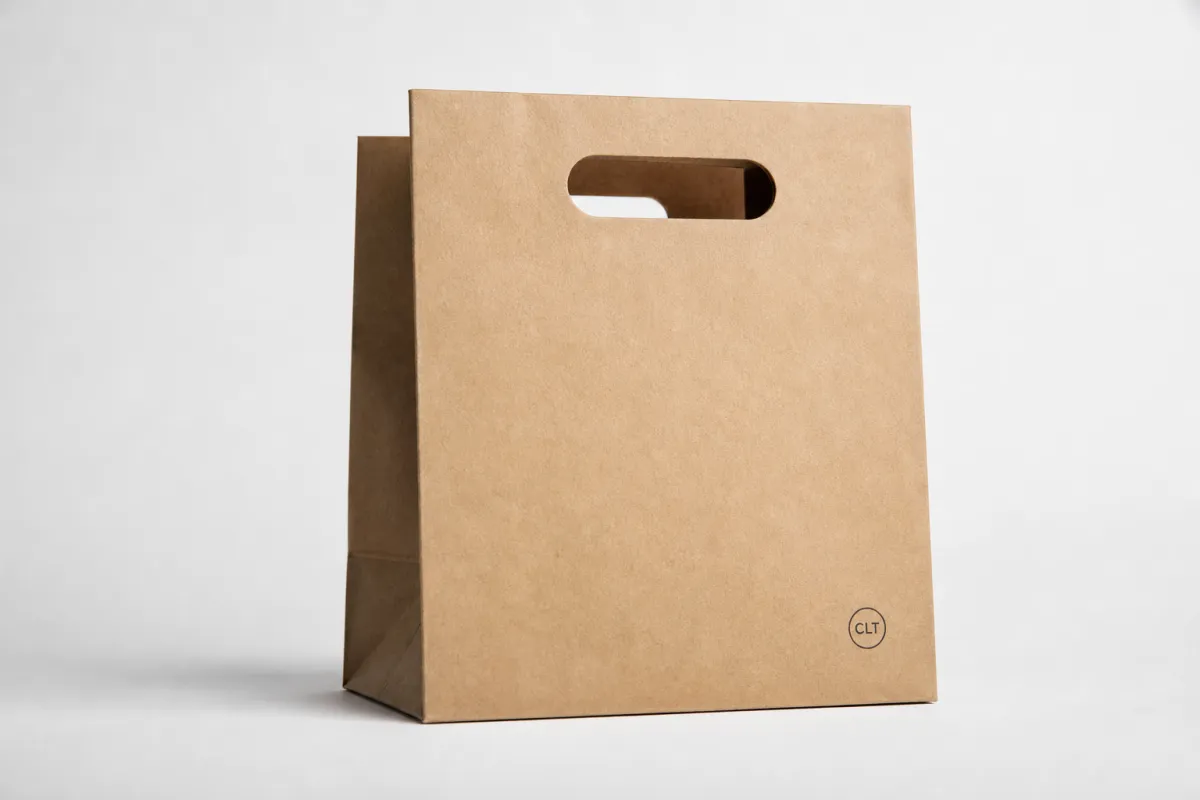
There is a packaging truth that gets missed a lot: the bag does not stay in the store. It travels. It rides in elevators, sits on restaurant chairs, gets photographed, and ends up in offices, lobbies, and kitchens. Kraft handle bags with logo benefit from that movement because every trip extends the brand impression beyond the point of purchase. A shopper carrying your bag through a crowded street is delivering visibility that many paid channels never match.
That is one reason kraft handle bags with logo show up everywhere from boutiques to bakeries to pop-up events. They feel natural, they look practical, and they sit in a useful middle ground between plain utility and visible branding. A luxury rigid box can feel too formal for a takeaway order. A plastic bag can feel cheap or out of step with a sustainability message. Paper carrier bags with handles, by contrast, often signal a cleaner, more thoughtful presentation without forcing the brand into an overly polished aesthetic.
In plain terms, kraft handle bags with logo are paper carrier bags made from kraft stock, fitted with handles, and printed, stamped, or otherwise branded with a logo or message. The stock can be plain kraft, bleached kraft, or recycled kraft. The handles can be twisted paper, flat paper, or rope. The logo can be centered, repeated, or tucked into a corner for a quieter look. Each choice changes how the bag performs and how it is perceived.
That is why the buyer's job is less about "Do we want branded bags?" and more about "What job does the bag need to do?" If the answer is basic takeaway transport, then kraft handle bags with logo should prioritize strength, cost, and speed. If the bag is part of premium retail presentation, then print clarity, handle feel, and paper finish matter more. If the bags will be seen at trade shows, then visibility and consistency may outweigh everything else.
A practical lens helps: kraft handle bags with logo are worth paying for when they improve the customer experience and keep the brand visible after checkout. They are less useful when the bag is oversized, underbuilt, or so elaborate that it becomes wasteful. A lot of buyers get this backwards. They start with design, then worry about function. The better order is function first, branding second, and decoration third.
For a cafe, that can mean a sturdy brown kraft bag that fits a pastry box and a beverage without collapsing at the bottom seam. For an apparel brand, it might mean a clean one-color logo on a 150gsm bag with twisted paper handles and a crisp fold. For an event giveaway, it may simply be a bag that holds literature, samples, and a catalog without making the recipient feel like they are carrying junk.
The reason kraft handle bags with logo keep winning those comparisons is not mystery. It is compatibility. They work across a wide range of categories, and they let the buyer control the balance between price, appearance, and durability. That makes them a strong option for businesses that want packaging to do more than just transport goods.
How kraft handle bags with logo work in real-world use
The basic workflow is straightforward. First, choose the bag size. Then decide the paper weight, handle style, and print method. After that, the artwork is prepared, proofed, and sent into production. Kraft handle bags with logo are simple in concept, but the details matter because a small change in stock or handle can alter the way the bag behaves in hand.
The bag itself serves two roles at once. It protects the product and it carries the brand. A bakery bag may need to hold one or two boxes, resist minor grease transfer, and stay upright long enough for the customer to reach a car. A boutique bag may carry a folded shirt, a candle, and a receipt envelope, while still looking neat in a photo. Kraft handle bags with logo have to balance those jobs without becoming bulky or flimsy.
Print method is one of the biggest variables. Flexographic printing works well for simple, repeatable artwork and larger runs. Offset printing gives more detail and cleaner image reproduction, especially for multi-color artwork. Digital printing is useful for shorter runs or variable graphics. Stamping or hot foil can create a more tactile, premium effect, though it is not always the best choice for high ink coverage or budget-sensitive orders. On brown kraft stock, color will naturally shift a little darker and warmer than it would on white paper. That is not a defect. It is how the material behaves.
Logo placement changes the message. A centered logo reads bold and direct. A small mark in the lower corner feels restrained and quiet. A repeated side print can turn kraft handle bags with logo into a walking billboard. The right choice depends on how much attention the brand wants to demand. A premium gift retailer may want understatement. A promotional campaign may want visibility from 20 feet away. Both approaches can work.
There is also the matter of material type. Plain kraft stock is the most familiar and often the most cost-effective. Bleached kraft gives a brighter canvas and can improve color clarity, especially for lighter brand palettes. Recycled kraft supports a stronger environmental story, but only if the sourcing and claims are clear enough to stand up to scrutiny. Premium finishes, such as soft-touch lamination or specialty coatings, can elevate appearance, though they also add cost and may complicate recyclability.
In food service, kraft handle bags with logo are often paired with bakery boxes, deli containers, or insulated inserts. In apparel, they are used for folded garments, shoes, and accessories. At events, they carry brochures, samples, and branded gifts. The same base spec can behave very differently in each context. A 120gsm bag may be fine for light retail goods, but it can feel underbuilt for bottled products or stacked takeout. A 170gsm bag with reinforcement at the handle area may be the better answer, even if the unit price rises slightly.
That is the real lesson here: kraft handle bags with logo are not one thing. They are a system of choices. When those choices match the product and the customer journey, the result feels effortless. When they do not, the bag becomes the weakest link in the whole order.
Key factors that affect strength, branding, and usability
Strength starts with construction. Paper weight, usually expressed as GSM, matters because it affects stiffness and load resistance. So does the bag structure: side gussets, bottom gussets, and the way the bottom is glued all influence how the bag holds up once a customer loads it with product. Kraft handle bags with logo may look similar from a distance, but a 120gsm bag with a standard bottom is not the same as a 170gsm reinforced bag with a wider base.
Handle style is equally important. Twisted paper handles are common and often economical. They are easy to produce, offer a decent grip, and suit many retail uses. Flat paper handles can be comfortable and cost-conscious, though they may feel less premium. Rope handles, usually cotton or polypropylene, add a more upscale feel and can improve carrying comfort for heavier contents. The tradeoff is price. In most programs, rope handles push the quote upward, sometimes enough to matter if the order volume is modest.
For buyers evaluating kraft handle bags with logo, a side-by-side comparison helps:
| Handle type | Typical feel | Relative cost impact | Best use case | Notes |
|---|---|---|---|---|
| Twisted paper | Practical, familiar | Low | Retail, cafes, events | Good all-round option for medium loads |
| Flat paper | Simple, light | Low to medium | Takeaway, light merchandise | Can feel less premium than twisted paper |
| Rope | Premium, comfortable | Medium to high | Boutiques, gifts, luxury retail | Better hand feel, often higher total cost |
Sizing is where many buyers lose money. Oversized kraft handle bags with logo waste paper, take up more shelf space, and let products shift around inside the bag. That extra void can make the presentation look sloppy. Undersized bags create the opposite problem: torn seams, stressed handles, and awkward packing at the counter. A good size should fit the item with just enough allowance for easy loading and a little movement, not a dramatic amount of empty space.
Print quality also deserves attention. A logo that looks sharp on a white art card may lose contrast on brown kraft. Thin lines can disappear. Small text can blur. Dark, bold artwork usually performs better. If a business wants a refined result, simple graphics often outperform dense compositions because the paper texture is already doing visual work. The bag does not need to shout to be effective.
Sustainability claims need discipline. Recycled content is useful information, but only if the percentage is known. Recyclability depends on local collection systems and any coatings or laminations used. The EPA's recycling guidance is a useful reminder that end-of-life claims should be specific, not vague. See EPA recycling guidance for a practical view of how materials are handled after use. If a supplier says a bag is "eco-friendly" without explaining why, that should trigger more questions, not a faster purchase order.
For branded packaging, trust matters. FSC-certified paper can support chain-of-custody claims if the supply is documented properly, and that is more credible than generic green language. If the supplier can explain what is certified, what is recycled, and what is simply paper-based, the buyer has something concrete to work with. The same applies to inks. Water-based systems or low-migration options may matter in food-adjacent applications, but the right answer depends on the end use and regulatory environment.
"The best kraft handle bags with logo are not the flashiest ones. They are the ones that hold up in the hand, print cleanly, and still look like the brand cared after 200 uses, not just on the sample sheet."
That is a good yardstick. If a bag works well for the customer, the brand exposure is almost incidental. If it fails, no amount of beautiful artwork can save the experience.
Production steps, lead time, and approval process
Most production problems do not start on the machine. They start in the brief. The cleanest orders for kraft handle bags with logo usually begin with clear dimensions, a defined product list, artwork files in vector format, and a real understanding of how the bag will be used. Once that is in place, the workflow tends to follow a predictable path: quote request, artwork check, mockup or proof, sample approval if needed, production, packing, and shipping.
Artwork review is where delays commonly appear. A logo file might be too low-resolution. A dieline may be missing or wrong. A color reference may be described casually instead of in a measurable format. If the bag includes special finishes, such as foil or spot varnish, the proofing stage usually takes longer. Changes after proof approval are another common source of delay. Once production has started, even a small design tweak can force a restart or reprint.
Lead time depends on the order type. Stock kraft handle bags with logo and a simple one-color print can move quickly, sometimes in a short production window if the supplier has the right blanks on hand. Custom sizes, custom colors, or nonstandard handle choices usually take longer. A realistic range for a straightforward custom run is often 12-15 business days from final proof approval, then additional time for shipping. If the order is tied to a store opening or seasonal launch, that buffer matters more than people expect.
Sampling can save the budget. A sample run or pre-production proof helps catch issues that do not show up on screen, such as handle comfort, crease behavior, bottom support, and whether the logo is still readable when the bag is folded or slightly crushed. For kraft handle bags with logo, those physical checks are not optional if the bags will carry heavier goods or be visible in public settings.
One of the best questions a buyer can ask is this: what part of the timeline is fixed, and what part is flexible? Production may be faster than revision cycles. Freight may be slower than the manufacturing itself. A supplier who can separate those phases clearly is usually easier to work with because the risks are visible instead of hidden in a vague promise.
If the bags are needed for a campaign or opening, build in time for at least one round of proof review and a small cushion for transit. That is not pessimism. It is normal planning. Packaging is often the last thing to arrive and the first thing customers notice.
There is also a practical tie-in to quality control. I would not treat retail bags the same way I treat a shipping carton, but I do borrow the same discipline from ASTM- and ISTA-style package testing: define the load, define the handling environment, then check whether the spec actually survives it. If a buyer knows the bag has to carry weight, move through a store, and be handled more than once, the brief should say so plainly. Kraft handle bags with logo perform better when expectations are stated in measurable terms rather than vague language.
Kraft handle bags with logo cost, pricing, and MOQ factors
Pricing is where many conversations become fuzzy, so it helps to break the quote into parts. The biggest cost drivers for kraft handle bags with logo are bag size, paper weight, handle style, print coverage, number of colors, and order volume. A larger bag uses more paper. A heavier stock costs more. Rope handles add cost. Full-panel printing costs more than a single logo mark. Small quantities nearly always raise the unit price because setup and labor are spread across fewer pieces.
MOQ, or minimum order quantity, is not a sales trick. It is usually tied to production efficiency. A supplier may need a certain number of bags to justify setup, print calibration, and machine time. For smaller brands, that can feel inconvenient, but it is normal in this category. The result is that a low-volume order of kraft handle bags with logo often has a higher unit price than a larger run, even if the product itself is not dramatically different.
For a practical starting point, buyers can treat pricing in bands. At a volume of around 5,000 pieces, simple one-color kraft handle bags with logo may land roughly in the $0.18-$0.28 per unit range depending on size and handle style. A more premium bag with heavier stock, rope handles, or broader print coverage may move into the $0.30-$0.55 range or higher. Those are not universal numbers, and freight can shift the total meaningfully, but they give a buyer a useful basis for comparison.
The table below shows how cost and use case usually line up:
| Spec choice | Typical price effect | Brand impression | Best for |
|---|---|---|---|
| 120gsm kraft, twisted handle, one-color logo | Lowest | Simple, practical | Cafes, quick-service retail, events |
| 150gsm kraft, twisted handle, two-color print | Moderate | Balanced, polished | Boutiques, gift shops, apparel |
| 170gsm kraft, rope handle, full-side print | Higher | Premium, highly visible | Luxury retail, launches, premium gifting |
| Recycled kraft, custom size, special finish | Highest | Positioned, distinctive | Brands with strict sustainability or presentation goals |
The key distinction is total program cost versus unit cost. A cheap bag that tears, looks thin, or undermines the product can cost more in the long run than a slightly better bag that avoids complaints and keeps the customer experience clean. That is especially true for premium retail, where the bag often functions as part of the purchase itself. Kraft handle bags with logo are one of the few packaging items that customers physically carry into public view, which makes the bag's performance visible in a way a carton never is.
Custom dimensions and specialty branding can also raise the budget quickly. If a business wants a very specific footprint, unusual gusset depth, or print on both sides with precise color matching, the quote will reflect that. The same is true for premium handle upgrades. It is not unusual for a buyer to save money by reducing print coverage or simplifying the artwork while keeping a stronger bag construction. In many cases, that is the smarter trade.
My view is straightforward: the cheapest quote is not the best quote if the bags are carrying heavy items, representing a premium brand, or being used in a high-visibility environment. Kraft handle bags with logo should be priced against risk, not just against the line-item on the invoice. You do not wanna discover the bag is underbuilt after the pallet lands and the opening week is already under way.
Step-by-step guide to choosing the right bag spec
Start with the product, not the artwork. Measure the item dimensions, estimate the weight, and think about how the customer will carry it. A pastry box, folded garment, candle set, or sample kit all stress the bag in different ways. Kraft handle bags with logo should fit the item with enough room for easy packing, but not so much space that the contents slide around.
Next, decide on paper stock and handle type based on use case. A bakery order often needs a bag that tolerates minor moisture and carries a low-to-medium load. A boutique order may need a cleaner presentation and a softer hand feel. That is why the same spec rarely works across all categories. The bag for a daytime cafe is not automatically the right bag for a premium fragrance launch.
Then define the logo treatment. One-color artwork is usually the most efficient and often the clearest on kraft stock. Multi-color artwork can look strong if the logo has enough contrast and the supplier can hold registration accurately. A minimal mark can feel elegant. A repeat pattern can create a more energetic retail look. Full-panel branding is useful for campaigns, but it can also increase cost and make the bag feel louder than the product deserves.
Before placing a large order, request a proof or sample. The screen version tells only part of the story. In hand, the bag reveals the real details: how the creases behave, whether the handles sit comfortably, if the bottom folds squarely, and whether the logo still reads well after handling. Kraft handle bags with logo that look fine on screen sometimes reveal weak contrast or awkward proportions once printed on actual kraft stock.
A simple checklist helps narrow the choice:
- What is the heaviest item the bag must carry?
- Will the bag be used once or repeatedly?
- Does the brand need a premium, natural, or utilitarian look?
- How much print visibility is actually useful?
- Is the bag part of a launch, a regular retail flow, or both?
That checklist sounds basic, but it prevents expensive guesswork. A buyer who answers those five questions usually gets a better bag on the first try. Kraft handle bags with logo reward specificity because the product itself is simple. The more clearly you define the job, the easier it is to spec the right paper weight, handle type, and print method.
One more practical point: ask whether the supplier can show a mockup at actual size, not just a logo floating in a template. Bag proportions matter. A bag that looks balanced at one size can look awkward when scaled down, especially if the logo is too large or too close to the top fold. Small formatting choices make a bigger difference than most buyers expect.
If the order is tied to a launch or a busy season, I would also recommend checking packing configuration, carton count, and palletization early. Those logistics do not sound glamorous, but they matter. Kraft handle bags with logo that arrive on time but are difficult to store or distribute still create friction for the team receiving them.
Common mistakes, expert tips, and what to do next
The most common mistake is choosing the wrong size. Buyers often focus on logo placement and forget that the actual product has to fit, leave, and travel safely. The second common mistake is overcomplicating the artwork. Dense text, thin lines, and too many colors can look fine in a file and weak on kraft stock. The third is underestimating weight. A bag that seems adequate for folded apparel may fail badly with bottles or boxed goods.
Another mistake is approving a proof that only looks good on screen. Screen color is not paper color. Kraft stock adds warmth and reduces contrast. If the design relies on subtle gradients or tiny type, the final result may disappoint. The safer route is usually bolder artwork, clearer spacing, and enough contrast to survive the paper tone. Kraft handle bags with logo usually reward restraint.
From a packaging buyer's point of view, samples are cheap insurance. Order at least one or two sample specs if the bag is going to support a major purchase or public-facing event. Compare them side by side. Put actual items inside. Carry them for a few minutes. Fold them. Open and close them. It sounds obvious, but that physical test often reveals the difference between a nice idea and a dependable spec.
Supplier comparison should go beyond price. Ask how consistent the print registration is across a run. Ask whether they can explain the paper grade in plain English. Ask how they handle artwork revisions and proof approval. A supplier that answers clearly is usually easier to work with than one that hides behind jargon. For kraft handle bags with logo, clarity is a quality signal.
"If the supplier cannot explain the bag spec in simple terms, the risk usually shows up later in the run."
It also helps to think about brand exposure in measured terms. If a bag is used 1,000 times in a month and each carry creates a few seconds of public visibility, the brand impressions add up fast. That does not mean every bag should be maximized for advertising. It does mean the print decision should be intentional. Some brands need a loud, high-visibility carrier. Others need a quiet, tasteful one. Kraft handle bags with logo can do both, but only if the brief is honest about the goal.
So what should a buyer do next? Start by auditing current packaging use. List the items packed most often, the weights involved, and the environments where the bags are handed out. Then request two or three sample specs with different paper weights or handle styles. Compare them for fit, comfort, and visual impact. If possible, include the operations team in the review because they know where packaging failures actually happen.
One useful comparison is to test a "good enough" bag against a slightly upgraded version. The cheaper bag may look fine in a spreadsheet, but the better one may reduce returns, improve presentation, and protect the brand from avoidable damage. That is why kraft handle bags with logo should be seen as a business tool, not just a print purchase.
Done well, kraft handle bags with logo are economical, visible, and easy for customers to use. Done poorly, they become a reminder that packaging was treated as an afterthought. The best results come from matching the bag to the product, the budget, and the customer journey, then checking the sample before the order goes live. The most practical next step is simple: lock the product dimensions, choose the handle style that fits the load, and approve a physical sample before you commit to the full run.
How much do kraft handle bags with logo usually cost?
Pricing depends on bag size, paper weight, handle style, print colors, and quantity. Higher volumes usually lower the unit price, while small orders and custom specs raise it. For clean comparison, ask for a quote that separates bag cost, print cost, and freight so you can see where the money is going.
What is the typical MOQ for kraft handle bags with logo?
MOQ varies by supplier and printing method, but custom runs often start higher than stock bag orders. Simple one-color printing may allow smaller runs than full-coverage or specialty-finishing jobs. If you are testing a new design, ask whether a sample batch or mixed-order option is available.
How long does production usually take for custom kraft handle bags with logo?
Lead time depends on artwork approval, bag customization, and current factory scheduling. Straightforward orders can move faster than custom sizes, unusual handles, or complex artwork. Build extra time for revisions, proof review, and shipping so the bags arrive before launch day.
Which logo print method works best on kraft handle bags?
The best method depends on artwork complexity, color needs, and order quantity. Simple designs often print cleanly with one-color methods, while detailed branding may need digital or offset printing. Ask for a sample or proof because brown kraft stock can change how colors appear.
Are kraft handle bags with logo good for sustainability-focused brands?
They can support a sustainability message when the paper content, inks, and overall design are chosen carefully. Look for clear details on recycled content, recyclability, and material sourcing instead of vague green claims. Keep the design efficient because less ink coverage and right-sized packaging often improve the story.


