Buyer Fit Snapshot
| Best fit | Kraft Packaging Sleeves Supplier projects where brand print, material claims, artwork control, MOQ, and repeat-order consistency need to be specified before quoting. |
|---|---|
| Quote inputs | Share finished size, material target, print colors, finish, packing count, annual reorder estimate, ship-to region, and any compliance wording. |
| Proofing check | Approve dieline scale, logo placement, barcode or warning zones, color tolerance, closure strength, and carton packing before bulk production. |
| Main risk | Vague material claims, crowded artwork, missing packing details, or unclear freight terms can make a low unit price expensive after revisions. |
Fast answer: Kraft Packaging Sleeves Supplier: Material, Print, Proofing, and Reorder Risk should be specified like a repeatable production item. The safest quote records material, print method, finish, artwork proof, packing count, and reorder notes in one written spec.
Production checks before approval
Compare the actual filled-product size with the drawing, then confirm tolerance on folds, seals, hang holes, label areas, and retail display edges. Reserve space for logos, QR codes, warning copy, and material claims before decorative graphics fill the panel.
Quote comparison points
Review material grade, print process, finish, sampling route, tooling charges, carton quantity, and freight assumptions side by side. A quote is only useful when the supplier can repeat the same color, closure quality, and packing count on the next order.
A kraft packaging sleeves supplier can turn a plain carton into something that feels deliberate, commercial, and ready for the shelf in a matter of seconds. That sounds modest until you compare it with the cost of redesigning an entire box line. In packaging, the sleeve often carries the visual load while the base carton stays reusable across sizes, flavors, or seasonal runs. Buyers who compare Custom Printed Boxes with a sleeve-based system usually end up weighing three things: speed, material use, and how often the artwork will change.
For teams comparing production options, a kraft packaging sleeves supplier also provides a useful benchmark against custom printed sleeves and paperboard bands. From a packaging buyer's point of view, the best kraft packaging sleeves supplier is more than a printer. It is a production partner that can talk about dimensions, dielines, board choice, finishing, prototyping, and the ugly realities of a packing line. If the fit is off by even a few millimeters, the sleeve can slip, scuff, or slow down assembly. If the graphics crowd the kraft stock, the design can flatten out and lose contrast. The work sits somewhere between packaging design, print engineering, and risk management, which is why a good partner matters so much.
There is a practical reason so many teams keep sleeves in their toolkit. A sleeve can hold compliance copy, barcodes, QR codes, seasonal messaging, ingredients, or retail promos without forcing a full box redesign. That makes sleeves especially useful for retail packaging, subscription kits, and fast-moving SKUs. A strong kraft packaging sleeves supplier gives a brand more room to move without rebuilding the whole structure every time the message shifts.
I've seen that play out on actual packing floors, not just in mockups. A well-made sleeve lets a brand stretch one carton across several products, and that can save a surprising amount of inventory headache. The trick is that the supplier has to understand the real-world use case, not just the artwork file. Otherwise you're gonna end up paying for a pretty sample that does not survive contact with production.
What a Kraft Packaging Sleeves Supplier Actually Does
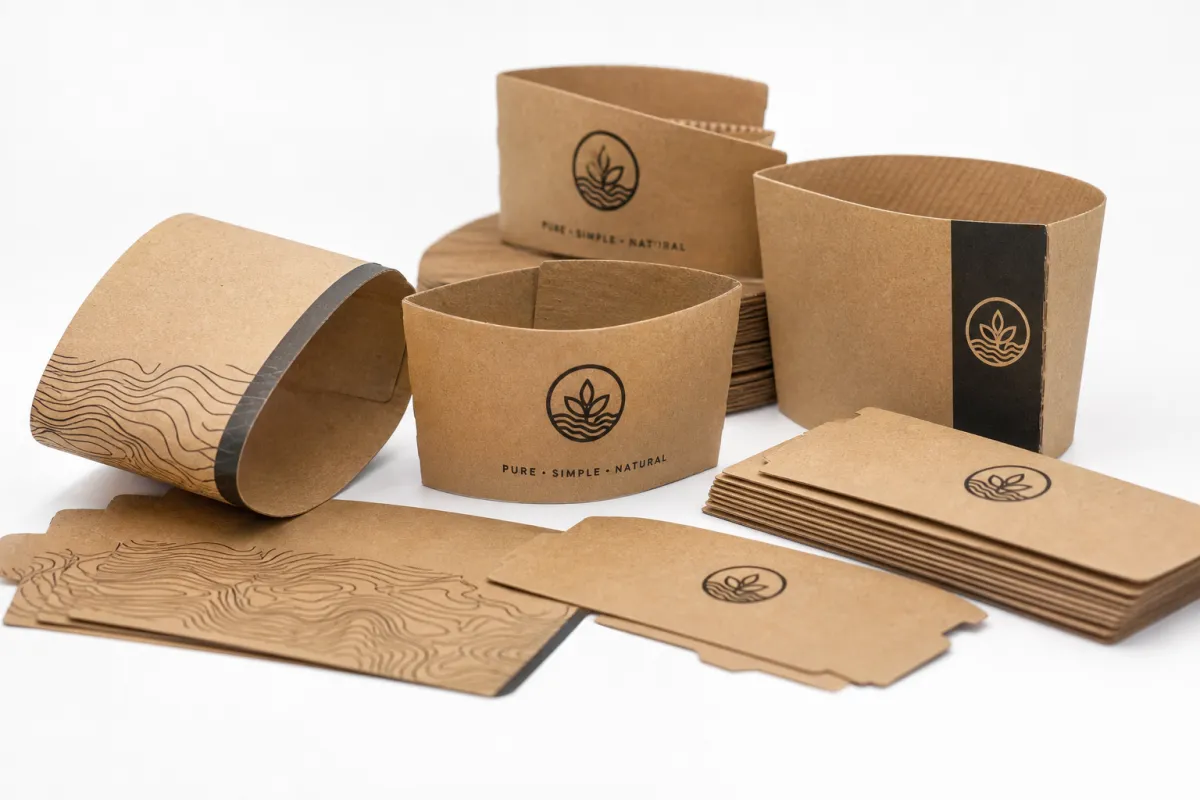
A kraft packaging sleeves supplier usually starts with a deceptively simple question: what exactly is the sleeve wrapping? A carton, bottle, tray, mailer, or bundle all behave differently once you start adding paperboard and print. The sleeve itself is a printed wrap, band, or slip-on label made from kraft board or kraft-style paper that sits around the pack and adds branding, product details, or a promotional callout. In practice, that makes it a useful tool for package branding, especially when the base pack is already fixed.
Picture a plain kraft carton on a retail shelf. Left alone, it reads as tidy but anonymous. Add a well-sized sleeve with a sharp logo, a few lines of copy, and a QR code, and the carton starts behaving like a branded system instead of an empty container. That change can happen without changing the carton construction. For a lot of teams, that is the entire appeal of working with a kraft packaging sleeves supplier: the brand gets a visible upgrade without paying for a new box tool.
The supplier's role reaches beyond printing. A capable kraft packaging sleeves supplier will help translate the design into a workable dieline, recommend board thickness, and explain whether the sleeve should use a tuck-in lock, glue seam, or simple friction fit. Those details sound small until production starts. A sleeve that is 2 mm too loose may pass a screen review and fail on the line. A sleeve that is too tight can jam during assembly and inflate labor time. Packaging has a talent for punishing tiny mistakes.
Brands often choose sleeves instead of full custom boxes for three reasons. Material use is lower. Artwork can be updated faster for seasonal campaigns, limited editions, or SKU refreshes. The same base carton can support different variants with only a sleeve change, which reduces inventory complexity. A kraft packaging sleeves supplier can help a brand keep the core pack steady while changing the outer graphics as often as the calendar demands. That matters in product packaging with multiple flavors, sizes, or regional language versions.
There is also a quiet strategic advantage. Sleeves can bridge operational efficiency and retail packaging impact. The box remains functional. The sleeve becomes the communication layer. A smaller team can still deliver a polished shelf presence, which explains why sleeves show up so often in direct-to-consumer, gift, wellness, and specialty food programs.
Set aside the theory for a moment. The real question is not whether sleeves look attractive. It is whether the supplier can make them consistently, at the right fit, and without burning time in prepress. That is the standard a serious kraft packaging sleeves supplier should meet.
How a Kraft Packaging Sleeves Supplier Works
The order flow is usually plain enough, but the details carry the risk. A project typically begins with product dimensions, artwork files, and a rough target quantity. From there, the kraft packaging sleeves supplier reviews structure, suggests a dieline, checks the board grade, and confirms the print method. Proofs, sampling, production, finishing, and shipping follow. Nothing exotic. The handoffs are where things usually go wrong.
Why are measurements so sensitive? Because a sleeve is not a generic wrap. It has to fit around the finished pack, not just the flat carton. Board thickness, fold allowance, seam placement, and how the product behaves once packed all influence fit. A sleeve that slides too easily can shift in transit. One that is too tight may tear at the fold or slow the packing team. A reliable kraft packaging sleeves supplier will ask for the real outside dimensions, not just the nominal box size.
The supplier usually needs a small set of technical inputs before quoting accurately:
- Substrate thickness and board type, such as kraft board or a kraft-lined stock.
- Finished dimensions of the carton or product bundle.
- Print coverage, color count, and whether the design is full bleed.
- Finish requirements such as matte coating, spot varnish, embossing, or foil.
- Quantity, reorder expectations, and preferred shipment schedule.
- End-use constraints such as retail hanging, shipping, food contact, or cosmetics.
Those inputs are not busywork. They are the difference between a sleeve that works and one that gets revised. A competent kraft packaging sleeves supplier will often push back on vague specs, because vague specs usually become expensive later. The fastest way to create a delay is to ask for a quote without enough facts for the factory to price the work honestly.
Dielines and prototypes are the real insurance policy. A dieline shows the cut shape, fold lines, seam, and safe areas. A physical sample, even a plain unprinted one, gives the team a chance to test fit, read text placement, check shelf impact, and confirm whether the assembly process makes sense. In packaging design, that step saves more money than it costs. If the sample fails, the issue can be corrected before mass production. If it passes, the buyer can move forward with less guesswork.
"The cleanest sleeve quote is not the one that looks cheapest on paper. It is the one that arrives with a correct dieline, a believable sample, and no surprises in production."
Quality control is another place where the best kraft packaging sleeves supplier earns trust. Registration has to stay aligned. Ink should remain consistent across the run. Crease accuracy matters because it affects how the sleeve folds and sits on the box. Cut alignment matters because a miscut edge can damage the visual finish. If adhesive is used, bond performance needs checking too. Even the bundled format matters: a tidy stack can save time on the line, while a sloppy bundle can create handling problems.
Timelines depend on complexity. A simple one-color sleeve with a standard finish can move quickly after artwork approval. A sleeve with special coatings, heavy coverage, or multiple proofs will take longer. A practical kraft packaging sleeves supplier will usually give milestone dates instead of vague promises: proof ready, sample shipped, production start, production complete, and freight handoff. That is the rhythm buyers should expect, and it is usually the difference between a calm launch and a late-night scramble.
For teams that want to benchmark packaging durability during transit, industry testing frameworks such as ISTA protocols give a useful reference point. Fiber sourcing questions often point to FSC, which is widely recognized for responsible forest management and chain of custody. Not every sleeve needs formal testing or certification, but those standards help buyers speak the same language as suppliers.
Key Factors That Decide Whether a Supplier Is a Fit
The first filter is material choice. Kraft board has a natural, earthy look that works well for organic foods, wellness products, artisan goods, and any brand that wants a quieter visual language. Not every kraft stock behaves the same, though. Some handle humidity better. Some take ink more cleanly. Some resist scuffing better under retail handling. A serious kraft packaging sleeves supplier will spell out those tradeoffs instead of pretending every board is identical.
Fit and structure come next. The sleeve has to match the product's length, width, depth, and opening style. If the base carton has tuck flaps, glue panels, or a nonstandard profile, the sleeve may need a slightly different wrap allowance. That is one reason sleeves can outperform Custom Printed Boxes for changing product families: the outer message can change while the core structure stays stable. The fit still has to be engineered. A bad fit can make a thoughtful design feel cheap in an instant.
Print and finish decisions can change both the look and the budget. One-color flexographic printing is often efficient for larger, simpler runs. Full-color digital printing is better for complex graphics or shorter quantities. Spot varnish can add contrast. Embossing can bring tactility. Foil can create a premium accent, though on kraft stock it should be used carefully so the natural texture still reads. A thoughtful kraft packaging sleeves supplier will tell you which effects improve the design and which ones are just cost inflation dressed up as sophistication.
Sustainability deserves a practical view, not a slogan. Recycled content, fiber sourcing, local production, and lower material use all matter. Yet the most sustainable sleeve is often the one that fits correctly, ships efficiently, and does not need to be remade. A sleeve that is too large and gets scrapped, or one that must be reprinted because the text is unreadable, has already failed the sustainability test. That is why a strong kraft packaging sleeves supplier focuses on waste prevention as much as recycled input.
Commercial fit matters just as much. Some suppliers are excellent at large, stable production runs. Others are better for frequent revisions, variable data, or small pilot orders. Ask whether the kraft packaging sleeves supplier can handle your current order volume and your likely reorder pattern six months from now. That question saves a lot of procurement pain. A supplier that fits a launch may not fit a mature line with twelve SKUs and quarterly artwork changes.
Compliance and end-use should never be afterthoughts. Food packaging may need different material and print considerations than cosmetics. E-commerce shipping sleeves face handling, abrasion, and vibration. Retail hang-sell applications need hanging holes, tear behavior, or display compatibility. Standards and expectations vary. For example, the ISTA testing framework is often used for transit durability, while FSC chain of custody matters for brands that want traceable fiber sourcing. A capable kraft packaging sleeves supplier should know where those concerns begin and where they can be ignored.
Here is the rule I see most often: the supplier that asks the best questions usually produces the cleanest result. A good kraft packaging sleeves supplier is not trying to sell you whatever is easiest to run. It is trying to make sure the sleeve matches the pack, the deadline, and the business model.
| Sleeve Option | Typical Use | Estimated Unit Cost at 5,000 Units | Why Buyers Choose It |
|---|---|---|---|
| Simple kraft band, one-color print | Basic branding, ingredient callouts, seasonal labels | $0.12-$0.20 | Low material use, quick production, strong for plain cartons |
| Full-color digital sleeve | Retail packaging, promotional launches, multiple artwork versions | $0.18-$0.35 | Better image detail, flexible artwork changes, good for short runs |
| Premium sleeve with spot varnish or embossing | Gift sets, premium product packaging, launch kits | $0.28-$0.60 | Higher shelf impact and a more tactile finish |
| Custom structural sleeve with adhesive or lock features | Bundles, mailers, multi-pack retail formats | $0.25-$0.55 | Improves fit and presentation for unusual pack formats |
The table above is directional, not a quote. Size, artwork coverage, substrate choice, and delivery lane can move the price up or down quickly. Still, the pattern is easy to read: the more setup, finishing, and precision a project needs, the more a kraft packaging sleeves supplier will charge. That does not automatically make it a bad decision. If a sleeve prevents a costly reprint or protects a retail launch, the higher unit cost may be the better buy.
Kraft Packaging Sleeves Supplier Pricing: What Drives Cost
Pricing usually comes down to six levers: quantity, board grade, print method, finishing, tooling, and freight. A kraft packaging sleeves supplier can quote the same visual design at very different prices depending on those choices. That is why buyers should never compare only the final line item. The quote structure matters. One supplier may include setup, proofing, and packaging; another may separate every step into add-ons and make the total look lighter than it really is.
Quantity changes the math quickly. A short run looks expensive because prepress, die-making, and machine setup are spread across fewer sleeves. At 500 pieces, the per-unit cost can feel high. At 10,000 pieces, the same setup cost is diluted. That is why a kraft packaging sleeves supplier often pushes buyers to think about forecast, not just the first order. The right quantity can lower cost without creating dead inventory that sits on a shelf and ages badly.
Print method is another major variable. Digital printing is efficient for short runs and versioned artwork. Flexographic printing can be more economical for longer, simpler runs. Lithographic methods may deliver richer color, but they also raise setup and handling requirements. The best kraft packaging sleeves supplier will explain which method suits the artwork instead of defaulting to the process it already owns.
Finishing can become a quiet budget sink. Matte varnish, soft-touch coatings, foil accents, embossing, and complex die cutting all add cost. None of them are automatically worth it. A strong kraft background with a single bold ink color sometimes looks better than a crowded premium finish. From a packaging buyer's point of view, the question should be simple: does the finish improve legibility, shelf stop power, or perceived value enough to justify the extra cents? If not, it is decoration, not strategy.
Tooling and revisions matter too. If the dieline is custom, a die may need to be made. If the artwork changes late, reproofing or remaking the die can add time and cost. A careful kraft packaging sleeves supplier will warn about those fees early. That transparency is a good sign. Hidden fees are usually a sign that future change requests will be painful as well.
Shipping deserves more attention than it usually gets. Sleeves may be lightweight, but they are also bulky. Freight can rise faster than expected, especially on larger quantities or long-distance lanes. Rush jobs can add expedited production or air freight costs. If artwork approval slips by a week, the budget can change more than the print spec. The cheapest quote is not always the lowest landed cost, and packaging buyers learn that lesson the expensive way.
The lowest price can also hide quality risk. A very low bid may come with soft tolerances, minimal proofing, or slow service. Those savings can vanish if sleeves arrive miscut or the line has to stop for adjustments. A dependable kraft packaging sleeves supplier reduces total cost by limiting defects, delays, and rework. That is the real commercial test.
If you are building a broader packaging program, it can be useful to compare sleeve pricing against other formats in your mix, including Custom Packaging Products. In some cases, a sleeve wins because the base carton already exists. In others, a custom box may be the better choice if the product needs stronger protection or a more integrated unboxing experience.
One more detail worth saying plainly: a good quote should tell you what is included. If a supplier avoids naming the proofing method, the paper grade, the finish, or the shipping assumptions, the number is less useful than it looks. The best kraft packaging sleeves supplier makes the quote readable, not mysterious.
Process and Timeline: From Quote to Delivery
The buying process should be disciplined, not slow for the sake of it. First, define the pack. Second, gather exact dimensions. Third, request quotes. Fourth, compare the proofs and sample plan. Fifth, approve the sample. Sixth, schedule production. Seventh, confirm delivery windows and receiving instructions. A competent kraft packaging sleeves supplier will help move those steps in order instead of letting them blur together.
How long does each stage take? Quoting can be quick if the dimensions and artwork are clear. Sampling usually takes longer, especially if the dieline needs adjustment or if multiple stakeholders want to review it. Production time depends on print method, finish, and quantity. For simpler sleeves, buyers often see production in the low two-week range after approval. Custom shapes, special coatings, or multiple revision rounds can add days or weeks. That is normal, not a red flag.
The hidden timeline risk sits in approvals. Marketing may want the brand feel perfect. Operations may want a sleeve that runs without slowing the line. Procurement may want a fixed price. Those priorities are all valid, but if the decision-making chain is long, the schedule slips. A steady kraft packaging sleeves supplier will keep milestones visible so the internal team can resolve questions before the press is booked.
Buffer time is not a luxury. It is part of the packaging schedule. Product launches often get delayed by packaging, not manufacturing. That happens because graphics, dielines, and SKU counts all need coordination. If the product is already on a hard launch date, the sleeve should be locked earlier than most teams think is necessary. A prudent kraft packaging sleeves supplier will push for that buffer instead of pretending a rushed schedule is harmless.
Where do delays show up most? Usually in three places: unclear artwork files, missing measurements, and late color changes. Another common bottleneck is internal sign-off. One person approves the logo, another changes the copy, and a third wants to shift the callout hierarchy. That sort of drift can turn a straightforward sleeve into a moving target. The best kraft packaging sleeves supplier keeps those revisions contained.
A supplier that understands timeline risk can save a project with one early catch. Maybe the seam lands over a barcode. Maybe the sleeve is oversized for the packing line. Maybe the chosen ink contrast is too weak on kraft stock. Catching those issues before production is the job. Reacting after the press is already booked is much more expensive.
My practical advice: ask for milestone dates in writing. Not just "delivery in three weeks." Ask for proof ready, sample shipped, approval deadline, production start, production complete, and freight handoff. That level of clarity makes a kraft packaging sleeves supplier easier to manage and easier to trust.
Common Mistakes Buyers Make With Kraft Sleeves
The first mistake is measuring the carton face and stopping there. A sleeve needs the full outside dimension, plus fold allowance and an understanding of how the board behaves once it is packed at volume. A package that looks perfect in a sample room can behave differently on a live packing line. A smart kraft packaging sleeves supplier will ask for the real packed dimensions for exactly that reason.
The second mistake is approving artwork that looks good on a monitor but does not print well on kraft. Thin lines, pale text, and low-contrast backgrounds can disappear quickly. Kraft stock has texture and color variation, which changes how ink reads. If the design depends on subtle gradients or tiny type, the brand message may suffer. That is not a supplier problem alone. It is a packaging design issue.
The third mistake is testing only the hand sample and skipping the line test. A sleeve can feel fine when one person slides it onto a box. It can still snag, tilt, or slow down a high-volume packing process. This happens often with retail packaging and subscription kits where labor speed matters. A proper test should include actual product, actual assembly, and actual handling conditions. A conscientious kraft packaging sleeves supplier will encourage that kind of trial.
Switching suppliers mid-project is another trap. Every factory interprets tolerances, dielines, and finishing instructions a little differently unless the documentation is exceptionally clear. If the first supplier made assumptions that were never written down, the next supplier may reproduce the sleeve differently. That creates inconsistency across reorders. A stable kraft packaging sleeves supplier helps prevent that by documenting approved specs in a way another team can understand later.
Over-customization is a quieter problem. It is easy to add a foil accent here, a second die cut there, and an emboss there because each addition feels small. The budget, however, does not see those as small. Every extra feature can raise cost, extend lead time, and add a new failure point. Sometimes the most effective package branding is the one with fewer moving parts. That can be hard for teams that want the sleeve to do too much.
Another mistake is treating the supplier as a vendor only. The earlier the kraft packaging sleeves supplier is involved, the more likely it is to flag issues before they become rework. That includes barcode placement, seam direction, safe area, and whether the artwork needs to shift for machine tolerances. Waiting until final art approval often leaves too little room for adjustment.
There is also a tendency to underestimate the role of total system fit. The sleeve is not isolated. It has to work with the carton, the fill method, the fulfillment workflow, and the shelf display. If one element changes, the sleeve spec may need to change too. Buyers who see the sleeve as part of the full product packaging system usually get better results from their kraft packaging sleeves supplier than buyers who see it as a last-minute add-on.
The good news is that these mistakes are preventable. They usually come down to better measurements, clearer artwork, and a more disciplined sample review. That is not glamorous advice. It is the advice that keeps the job moving.
What Should You Ask a Kraft Packaging Sleeves Supplier Before Ordering?
The fastest way to separate a serious kraft packaging sleeves supplier from a generic printer is to ask three things: can you confirm packed dimensions, can you provide a dieline sample, and can you explain how the sleeve will run on the packing line? A good answer should mention board thickness, seam placement, print method, and reorder support. If the reply stays vague, expect the same vagueness in production.
Ask for more than a unit price. A dependable kraft packaging sleeves supplier should be able to explain what is included, what is excluded, and where the main cost drivers sit. That usually means proofing, tooling, finishing, freight, and revision limits. If the quote reads like a riddle, it will probably behave like one later.
- Fit confirmation: How will the supplier verify the sleeve size against the packed product?
- Proof plan: Will you receive a digital proof, a flat sample, or a full mockup?
- Production method: Is the job best suited to digital, flexographic, or lithographic printing?
- Reorder support: Will the final specs be stored for future repeat runs?
Those questions are simple, but they reveal a lot. A kraft packaging sleeves supplier that answers clearly is usually easier to work with during artwork changes, launch pressure, and future replenishment. In packaging, clarity is often the cheapest insurance available.
Expert Tips and Next Steps for Choosing the Right Supplier
Start with three asks from every candidate: a quote, a dieline recommendation, and a sample or proofing plan. If a kraft packaging sleeves supplier cannot give you those three things in a clear way, the project will probably become more confusing later. Good suppliers think in systems. They do not just return a price.
Next, score each supplier on fit expertise, print quality, responsiveness, lead time realism, and pricing transparency. Notice that unit cost is only one factor. I would rather see a slightly higher quote from a kraft packaging sleeves supplier that documents assumptions well than a bargain quote with unclear tolerances. The second option usually costs more in time, not less.
Testing under real conditions is worth the effort. Heat, cold, humidity, shipping vibration, shelf handling, and retail opening all affect how a sleeve performs. A design that looks crisp in a studio can still buckle under warehouse conditions. If your product packaging is sensitive to moisture or abrasion, make that part of the review. A supplier that takes those tests seriously is a better long-term fit.
A small pilot order is often the smartest next move. It reveals issues with fit, assembly speed, graphic clarity, and pack-out behavior before volume scales up. It also gives your team a chance to refine the approval process. The pilot is where a kraft packaging sleeves supplier proves whether the polished presentation matches the real production experience.
Document every approved spec in one place. Keep the final dieline, board grade, ink specs, finish notes, and pack dimensions together so future reorders are cleaner. That becomes especially useful when packaging, procurement, and operations all touch the same file. The more teams involved, the easier it is for details to drift. A locked spec sheet protects the relationship with your kraft packaging sleeves supplier and saves a lot of back-and-forth.
There is also a communication habit that helps a lot: ask suppliers what they need to avoid mistakes. Some will want finished box dimensions. Some will want the packed sample. Some will want a PDF and an editable file. That one question can reveal whether the supplier is thinking ahead or just waiting for a purchase order.
If you are comparing options for branded packaging, remember that the sleeve is a tool, not a trophy. Its job is to help the product sell, ship, and repeat cleanly. A good kraft packaging sleeves supplier will keep that balance in view. That is the difference between packaging that looks promising and packaging that actually performs.
So the next step is straightforward: measure your pack, gather your artwork, shortlist two or three suppliers, compare samples, and lock a repeatable spec with the one that gives you the clearest answers. If you do that, you will spend less time chasing corrections and more time building a sleeve system that supports the brand. And that, honestly, is what a dependable kraft packaging sleeves supplier should make possible.
For teams building a repeatable packaging system, the smartest path is usually the most specific one: clear dimensions, clear expectations, and a kraft packaging sleeves supplier that can turn that brief into a clean production run. Get those pieces right, and the sleeve becomes one of the most efficient branding tools in the whole pack.
Frequently Asked Questions
How do I choose the best kraft packaging sleeves supplier for my product?
Compare fit expertise, proofing process, sample quality, and communication speed before looking only at price. Ask whether the supplier can recommend material thickness, dielines, and finishing options for your exact pack size. Check whether the kraft packaging sleeves supplier can support your current order volume and your forecasted reorder volume later.
What information should I send to a kraft packaging sleeves supplier for an accurate quote?
Send carton or product dimensions, quantity, artwork files, desired finish, target lead time, and any special compliance needs. Include whether the sleeve is for retail display, shipping, subscription boxes, or promotional packaging because use case changes specs. Share if you need a sample first, since prototyping can affect both timing and total cost.
Why do kraft packaging sleeves prices vary so much between suppliers?
Price changes with quantity, print method, material grade, finishing, tooling, and freight distance. A low quote may exclude setup, proofing, or tighter tolerances, while a higher quote may include more support and lower rework risk. Order size has a major effect because setup costs are spread across each unit, and every kraft packaging sleeves supplier calculates that spread a little differently.
How long does it usually take to produce kraft packaging sleeves?
Simple jobs can move quickly after artwork approval, while custom shapes, special finishes, or multiple review rounds extend the timeline. Sampling, proofing, and any dieline changes are often the longest part of the process, not the actual print run. Build buffer time into product launches so packaging does not become the bottleneck, and ask your kraft packaging sleeves supplier to map each milestone in writing.
What mistakes should I avoid when ordering from a kraft packaging sleeves supplier?
Avoid approving a sleeve without testing it on the actual packed product and packing line. Do not rely on screen colors alone, because kraft substrates can change the look of ink and contrast. Do not skip written specs, since vague instructions often lead to reorders and delays, especially when multiple people are reviewing the same packaging design.


