Buyer Fit Snapshot
| Best fit | Kraft Product Sleeves Supplier projects where brand print, material claims, artwork control, MOQ, and repeat-order consistency need to be specified before quoting. |
|---|---|
| Quote inputs | Share finished size, material target, print colors, finish, packing count, annual reorder estimate, ship-to region, and any compliance wording. |
| Proofing check | Approve dieline scale, logo placement, barcode or warning zones, color tolerance, closure strength, and carton packing before bulk production. |
| Main risk | Vague material claims, crowded artwork, missing packing details, or unclear freight terms can make a low unit price expensive after revisions. |
Fast answer: Kraft Product Sleeves Supplier: Material, Print, Proofing, and Reorder Risk should be specified like a repeatable production item. The safest quote records material, print method, finish, artwork proof, packing count, and reorder notes in one written spec.
Production checks before approval
Compare the actual filled-product size with the drawing, then confirm tolerance on folds, seals, hang holes, label areas, and retail display edges. Reserve space for logos, QR codes, warning copy, and material claims before decorative graphics fill the panel.
Quote comparison points
Review material grade, print process, finish, sampling route, tooling charges, carton quantity, and freight assumptions side by side. A quote is only useful when the supplier can repeat the same color, closure quality, and packing count on the next order.
Kraft Product Sleeves Supplier: What Buyers Need to Know
A good kraft product sleeves supplier does more than print a logo on brown board. It shapes how a product reads from aisle distance, how well the sleeve survives transit, and whether the packaging line keeps moving or starts wobbling for no good reason.
I have seen a sleeve look perfect in a mockup and then fail on the line because the board was a touch too soft for the pack geometry. That kind of miss is not rare. The difference between a passable sleeve and a dependable one often comes down to tolerances measured in millimeters, not marketing language.
The best suppliers think like converters, not just printers. They balance board choice, crease behavior, ink density, retail visibility, and sustainability claims inside one format. The cheapest quote usually ignores at least one of those variables, and that is usually where the trouble starts.
In practical terms, a strong kraft product sleeves supplier sits somewhere between designer, production engineer, and quality control partner. Sleeves may look simple, but they are really a compact packaging system. Small piece, outsized consequences.
What Does a Kraft Product Sleeves Supplier Actually Do?
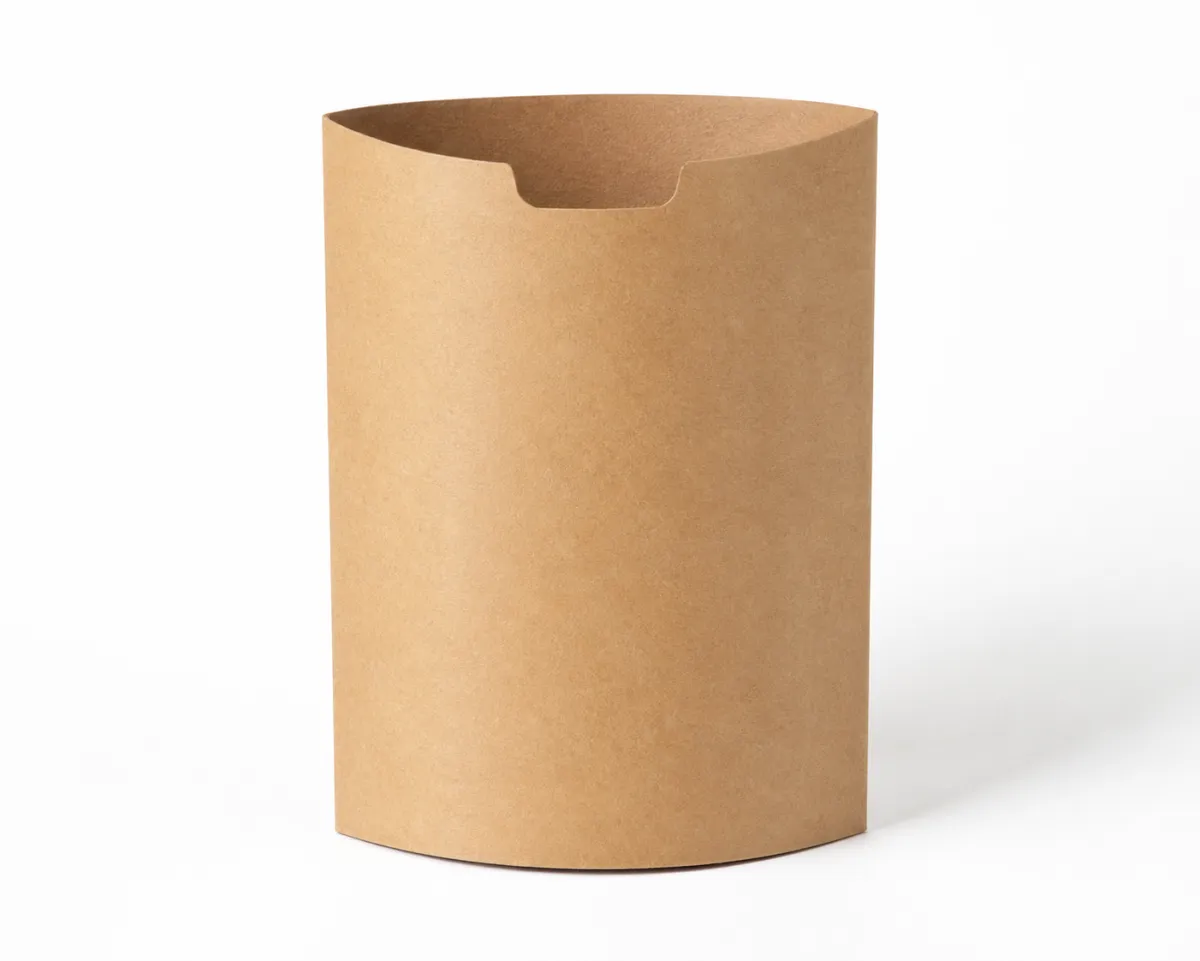
At the simplest level, a kraft product sleeves supplier turns a flat sheet of kraft board into a branded wrap that fits around an existing pack. In practice, that means picking the board, validating the dieline, printing the artwork, converting the sheet, and checking that the finished sleeve behaves properly on the actual container. The sleeve may be the only visible packaging layer a customer notices, so the work has to hold up both visually and mechanically.
Brands use kraft board sleeves for cartons, trays, bars, bottles, cosmetics, food products, and subscription boxes because sleeves give them a fast way to refresh artwork without redesigning the primary pack. That matters more than people think. If a seasonal promotion changes, or a product manager wants a limited-run message on shelf, a sleeve can be the shorter path. A good kraft product sleeves supplier can usually move faster than a full carton program because the structural demand is lower.
There is also a business reason buyers keep coming back to this format. A sleeve can support a new launch, a line extension, or a multilingual market update without forcing a full packaging restart. I have watched teams spend months arguing over a carton redraw when a sleeve would have solved the commercial problem in a fraction of the time. That is the sort of choice that looks small on paper and turns into real money later.
Not every supplier is equally good at every piece of the job. Some make attractive samples but miss on fit. Others run well on press but struggle with consistent board selection. The right partner is judged on repeatability, dimensional control, and pack-line compatibility, not on a polished sample photo shot under studio lights.
For a buyer, the real question is straightforward: can this kraft product sleeves supplier deliver a sleeve that looks right, stays put, and does not slow down packing, shipping, or retail handling?
How Does a Kraft Product Sleeves Supplier Fit Into the Pack?
Most sleeves begin as a flat kraft board that is die-cut to a specific dieline, printed, creased, folded, and converted into a wrap that slides, locks, or bands around the primary pack. That is the mechanical side. The real risk sits in the handoff between brand and supplier. The buyer needs to share finished dimensions, unit weight, artwork, packing constraints, and any retail or shipping rules that affect sleeve fit.
That brief should be treated like engineering input, not just a creative request. If the container changes even slightly, the sleeve can rub, creep, wrinkle, or open more than intended. A skilled kraft product sleeves supplier will ask about glue-free zones, crease orientation, board grain direction, and whether the sleeve is applied by hand or by machine. Those details sound fussy until a line stops because the sleeve keeps catching at the fold. Then they matter a lot.
Sleeves also sit alongside other packaging components. They can wrap cartons, trays, clamshells, rigid inserts, or even a plain substrate that needs branding without a full redesign. That flexibility makes a kraft product sleeves supplier useful for brands adding SKUs or testing a new channel. The same base product can be dressed for retail, club, or direct-to-consumer use with a different message and a different visual weight.
Here is the useful comparison: a carton redesign changes the pack architecture, while a sleeve changes the presentation layer. That distinction sounds subtle, but it drives scope, cost, and speed. A capable kraft product sleeves supplier helps the brand keep the container stable while improving shelf presence, adding required copy, or signaling a cleaner materials story.
There is a sustainability angle here too, but it needs honest handling. A sleeve can reduce material use relative to a full secondary carton, yet coatings, foil, dense ink coverage, and lamination can change recovery outcomes. A responsible kraft product sleeves supplier should explain what the construction means in practical recycling terms instead of hiding behind vague eco language.
Mechanical fit is as important as visual fit. A sleeve that survives a shelf display but scuffs in transit, twists during bundling, or opens too easily at the counter is not doing its job. In a packaging audit I sat through last year, the failure was not the artwork; it was a 1.5 mm tolerance drift that turned a neat sleeve into a loose wrap after humidity exposure. Tiny issue, very expensive mess.
What Should You Look for in Kraft Board Sleeves?
The first decision is the board itself. A kraft product sleeves supplier should be able to explain kraft grade, caliper, stiffness, surface texture, and fiber makeup without hiding behind jargon. Those factors affect how the sleeve folds, how crisp the crease holds, and how premium the pack feels in the hand. Two sheets that look nearly identical on a sample table can behave very differently once they hit the press and die-cutter.
Print behavior on kraft is another place where buyers get surprised. Brown stock changes color perception because the background is darker and less neutral than coated white board. Bright whites, pale pastels, and soft metallics can flatten out. A thoughtful kraft product sleeves supplier will warn you if the palette needs adjustment because a design built for SBS or CCNB may not translate cleanly to kraft without a few strategic changes.
Finishing choice matters as well. Natural uncoated kraft sends one message. Aqueous coating sends another. Varnish, embossing, foil stamping, and matte treatments each create a different balance of durability, cost, and shelf presence. The right kraft product sleeves supplier should explain how each finish affects scuff resistance, rub-off, handling, and any recycling claim. If that conversation never happens, the quote is incomplete.
Tolerances deserve more attention than they usually get. A sleeve can look elegant in a render and still fail when production speeds increase. The problem is often not the artwork. It is the crease rule, opening size, or wrap allowance. A detail-oriented kraft product sleeves supplier will ask how the pack is loaded, whether the product gets compressed during insertion, and whether the sleeve must account for normal variation in a filled container. That sort of questioning is a good sign, not an obstacle.
Compliance and proof are the final layer. Ask how the supplier supports recycled-content claims, FSC sourcing, and any food-contact concerns if the sleeve sits close to primary packaging for snacks, tea, or nutraceuticals. If the product is sold in a market with strict labeling rules, the supplier should be able to document the construction, not just describe it as eco-friendly. For reference, FSC explains chain-of-custody principles clearly at fsc.org, and the EPA has useful background on paper recovery and recycling at epa.gov.
There is no single best sleeve specification. A kraft sleeve for a shelf-stable snack bar is not the same as a sleeve for a premium bottle or a rigid gift box. What separates a good kraft product sleeves supplier from a weak one is the ability to match material and structure to the actual use case instead of pushing a generic sample kit. That is also where Custom Paper Sleeves earn their keep: they let the packaging serve the product, not the other way around.
How Do You Compare Quotes From a Kraft Product Sleeves Supplier?
Pricing is where the conversation gets real. A kraft product sleeves supplier usually builds a quote from several parts: material, print coverage, finishing, cutting, tooling, setup, proofing, quality control, packing, and freight. If one of those items is missing, the buyer is not seeing the full picture.
Quantity has a direct effect on unit cost. Lower volumes carry a higher per-sleeve price because setup time, die charges, plate costs, and press preparation are spread across fewer pieces. That is not a trick; it is basic economics. A good kraft product sleeves supplier will be transparent about it and explain where the breakpoints sit so a buyer can decide whether 2,500, 5,000, or 10,000 units makes the most sense.
Print complexity also moves the number. Heavy ink coverage, multiple colors, specialty finishes, and tight registration increase production effort and spoilage risk. On kraft, that effect can be more visible because the substrate amplifies certain design choices. A practical kraft product sleeves supplier will often suggest simplifying artwork or reducing coverage where that saves money without hurting shelf impact.
One of the most useful things a buyer can do is compare quote styles carefully. Some suppliers bundle tooling, samples, and freight into one line. Others separate everything. That makes the cheapest line item misleading. A lower print price from one kraft product sleeves supplier can become the more expensive order if sample revisions, shipping, or make-goods show up later.
Here is a simple way to compare common quote structures:
| Quote Style | What It Usually Includes | Buyer Advantage | Common Risk |
|---|---|---|---|
| All-in quote | Material, print, die, finishing, packing, freight | Easier budget planning | Harder to see where savings come from |
| Separated quote | Line-by-line pricing for each step | Better comparison between suppliers | Can hide missing costs if the buyer does not ask follow-up questions |
| Sample-first quote | Prototype, proofing, then production pricing | Useful for technical projects | Slower if approval cycles are unclear |
Hidden costs are where many buyers get burned. Revisions after proof approval, storage, rush freight, line downtime from poor fit, and replacement runs can easily outweigh the savings of a lower initial quote. A dependable kraft product sleeves supplier should help the buyer think in total order cost, not just unit price. On a 3,000-unit run, even a 2-cent swing per sleeve changes the total by $60 before anyone notices the freight line. That sounds small until a few more variables pile on.
For planning, short-run custom jobs usually sit in a higher unit-cost band than larger production runs. That is normal. If a sleeve project is richly printed, uses specialty finishing, or needs extra proofing, the price can move quickly. A buyer asking a kraft product sleeves supplier for a quote should expect the supplier to explain whether the main cost driver is board, ink, finishing, or tooling.
The best pricing conversation is specific. Ask for a value option, a balanced option, and a premium option. Then compare not just price, but stiffness, print coverage, lead time, and shipping terms. That gives the buyer a much clearer picture of what the kraft product sleeves supplier is actually offering.
Process and Timeline: From Brief to Delivered Sleeves
The workflow is usually more structured than buyers expect. A kraft product sleeves supplier typically moves through discovery brief, structural review, artwork placement, proofing, sample approval, tooling, production, finishing, packing, and delivery. Each step protects the next one. Skip the early questions, and the late-stage fixes get expensive fast.
Discovery is where the technical work starts. The buyer gives dimensions, product weight, substrate details, shipping expectations, retail display goals, and any packing constraints. The supplier then checks whether the sleeve needs more grip, a tighter wrap, a different board thickness, or a change in crease design. A competent kraft product sleeves supplier will not rush past this step just because the artwork already looks finished.
Timelines vary, but simple sleeve jobs can move quickly if the dimensions are stable and the approval chain is short. Custom structures, special coatings, color matching, and multiple proof rounds add time. In practical terms, a straightforward order may be ready in roughly 12 to 15 business days after proof approval, while more complex jobs often need longer. A reliable kraft product sleeves supplier will tell you where the bottleneck is before production starts.
What speeds the job up? Exact dimensions. Final artwork. A clear sustainability brief. Fast feedback on samples. What slows it down? Unclear specs, late approvals, file corrections, substrate changes, and finishing slots that are already booked. A serious kraft product sleeves supplier would rather wait for the correct sign-off than print something that misses the line tolerance by a few millimeters.
Planning backward helps a lot. Brands should work from the retail launch date or inventory depletion date, not from the day the quote is accepted. That way the sleeve order lands before the packaging line starts waiting. A smart kraft product sleeves supplier will encourage that kind of schedule because it reduces pressure on both sides.
Testing should happen before the full run, not after. Ask for real sleeves on real product units, then check the packs after transit, handling, and shelf display. If the product ships to retailers, run a small internal trial through the same packing motion used in production. A capable kraft product sleeves supplier should welcome that test because it catches problems while there is still time to fix them.
One useful reference point for shipping stress is the ISTA library of packaging test methods. You do not need to be an engineer to use the principle: if a sleeve cannot survive handling, stacking, and vibration without scuffing or drifting out of position, it is not ready for release.
Timeline management is really risk management. The kraft product sleeves supplier who gives the clearest timeline is often the one who has already thought through proofing, tool creation, press scheduling, and packing capacity.
Common Mistakes Buyers Make With Kraft Sleeves
The most common mistake is choosing by price alone. A cheap sleeve that scuffs, misfits, or slows the line is more expensive than a slightly better-made option. That sounds obvious, yet it happens constantly. Buyers see a low number, approve it, and then discover the real cost in rework, labor, and delayed shipments. A careful kraft product sleeves supplier can prevent that outcome, but only if the buyer asks the right questions.
Another mistake is assuming all kraft behaves the same. It does not. Fiber mix, shade, surface texture, and ink absorption can make two sheets feel and print very differently. One board may hold a clean crease; another may crack slightly at the fold or show visible fiber lift after a heavy impression. A knowledgeable kraft product sleeves supplier should be able to show sample comparisons so the buyer sees the difference before production.
Tolerance errors are also common. If the product size changes even slightly, sleeves can buckle, shift, or fail to present the brand the way the mockup promised. This is especially important for bottle necks, tapered cartons, and packages with inconsistent fill levels. A strong kraft product sleeves supplier will ask for the actual finished unit, not just a drawing, because real products reveal problems that CAD files hide.
Testing is another area where teams cut corners. They approve a flat proof, sign off on the artwork, and skip the real sample on the actual pack. That is risky. Ask for the sleeve on the finished product, then check shelf appearance, shipping durability, and unpacking behavior. If the pack feels awkward in hand or sticks at the opening, a kraft product sleeves supplier should hear about it before the run is locked in.
Documentation gaps create long-term confusion. Vague sustainability claims, missing spec sheets, or unclear finish descriptions can cause trouble months later when a retailer asks for evidence or a new buyer takes over the account. A professional kraft product sleeves supplier should provide written board specs, finish notes, tolerance ranges, and any FSC or recycled-content paperwork that supports the claims made on pack.
There is also a branding mistake that is easy to miss. Some teams choose a sleeve because they want the natural look, then overload it with decoration until it stops looking natural. Heavy ink coverage, foil, and glossy varnish can still work, but then the project is no longer a quiet kraft story. The right kraft product sleeves supplier will tell you if the design is fighting the substrate.
Honestly, the biggest pattern is this: buyers assume a sleeve is a light-touch packaging item, but the moment it has to fit, survive, and sell, it behaves like a technical component. That is why the right kraft product sleeves supplier is worth screening carefully.
What Should You Ask a Kraft Product Sleeves Supplier Before You Order?
The easiest way to evaluate a kraft product sleeves supplier is to use a scorecard. I would compare structural capability, print quality, sustainability proof, lead time, communication speed, and consistency across sample rounds. If a supplier scores well on only one of those and weakly on the rest, that is a warning sign rather than a win.
Ask for three scenarios instead of one quote. One should be a value option, one should be a balanced option, and one should be a premium version. That lets the buyer see how the sleeve changes when board thickness, finish, or print coverage changes. A thoughtful kraft product sleeves supplier should be able to explain those trade-offs without turning the discussion into a sales pitch.
Run a real-world test if you can. Put the sleeves on finished products. Move them through the actual packing line. Inspect them after transit and shelf handling. Compare how they look after compression, abrasion, and customer interaction. If the product is in a category where appearance drives repeat purchase, the test matters even more. A dependable kraft product sleeves supplier will value that data because it reduces downstream complaints.
Before production approval, get the specs in writing. Board grade, dimensions, finish, tolerance, quantity, and approved artwork should all be documented clearly. If the sleeve will support a packaging claim, keep the claim language tied to the actual construction. A responsible kraft product sleeves supplier should be comfortable with that level of specificity.
"The sleeve looked simple until we tested it on the line. After that, the details mattered more than the artwork."
That kind of comment is common because sleeve buying often starts with visuals and ends with mechanics. The buyer who understands both sides usually gets a better result. A good kraft product sleeves supplier makes that transition easier by connecting the design brief to production reality instead of pretending those two things are the same.
Here is a practical short list for the final selection round:
- Request physical samples, not just rendered proofs.
- Compare at least three quote structures.
- Verify board grade, finish, and tolerance in writing.
- Test the sleeve on the actual product unit.
- Ask for proof of FSC or recycled-content claims if those claims matter to the brand.
- Confirm lead time against your launch calendar, not against the supplier’s best-case assumption.
One more point buyers often overlook: consistency across repeat runs can matter more than one perfect sample. If the first batch looks great but the next batch varies in shade, crease strength, or fit, the packaging system becomes unreliable. A dependable kraft product sleeves supplier should show control over repeatability, not just sample-room polish.
So the practical next step is simple. Shortlist three suppliers, request physical samples, compare unit economics, verify sustainability claims, and choose the kraft product sleeves supplier that proves fit, price, and timeline together. If one of those three slips, the whole sleeve program usually does too.
Frequently Asked Questions
What should I ask a kraft product sleeves supplier before requesting a quote?
Ask for board grade, print method, finish options, MOQ, and tolerance limits so the quote reflects the real job. Request a dieline and a finished sample if possible, not just a printed flat sheet. A good kraft product sleeves supplier should answer those questions directly, not with vague assurances.
How much do kraft product sleeves usually cost?
Cost depends on substrate, print coverage, finishing, tooling, quantity, and freight. Lower volumes usually carry a higher unit price because setup costs are spread across fewer sleeves. The most useful pricing question for a kraft product sleeves supplier is not "What is your cheapest number?" but "What changes the cost most?"
How long does it take a kraft product sleeves supplier to produce custom sleeves?
Expect time for design review, proofing, tooling, production, finishing, and shipping. Simple jobs can move quickly, while complex structures, special finishes, or revision cycles add time. A realistic kraft product sleeves supplier quote should separate production time from approval time so nobody confuses one for the other.
Are kraft product sleeves good for retail display and shipping?
Yes, if the fit is tight enough to stay aligned and the board is stiff enough for handling and stacking. Add scuff resistance or a protective finish when sleeves will travel far or be touched often on shelf. A capable kraft product sleeves supplier will test both the visual and mechanical side of that equation.
What sustainability proof should I request from a kraft product sleeves supplier?
Ask for recycled content, FSC or chain-of-custody documentation, and clear coating or ink details. Confirm that the exact sleeve construction, not just the paper family, matches your recycling or recovery claims. That level of detail helps a kraft product sleeves supplier support your packaging story with facts instead of broad promises.
If you are choosing a kraft product sleeves supplier, the smartest move is to compare more than price. Look at structure, print quality, documentation, and the way the sleeve behaves on the actual product. That is where the real value shows up, and it is the part that tends to get overlooked until something goes wrong.