Buyer Fit Snapshot
| Best fit | Logo Mailing Bags for Boutiques projects where brand print, material claims, artwork control, MOQ, and repeat-order consistency need to be specified before quoting. |
|---|---|
| Quote inputs | Share finished size, material target, print colors, finish, packing count, annual reorder estimate, ship-to region, and any compliance wording. |
| Proofing check | Approve dieline scale, logo placement, barcode or warning zones, color tolerance, closure strength, and carton packing before bulk production. |
| Main risk | Vague material claims, crowded artwork, missing packing details, or unclear freight terms can make a low unit price expensive after revisions. |
Fast answer: Logo Mailing Bags for Boutiques: Film, Print, MOQ, and Carton Packing should be specified like a repeatable production item. The safest quote records material, print method, finish, artwork proof, packing count, and reorder notes in one written spec.
Production checks before approval
Compare the actual filled-product size with the drawing, then confirm tolerance on folds, seals, hang holes, label areas, and retail display edges. Reserve space for logos, QR codes, warning copy, and material claims before decorative graphics fill the panel.
Quote comparison points
Review material grade, print process, finish, sampling route, tooling charges, carton quantity, and freight assumptions side by side. A quote is only useful when the supplier can repeat the same color, closure quality, and packing count on the next order.
Why logo mailing bags for boutiques change first impressions
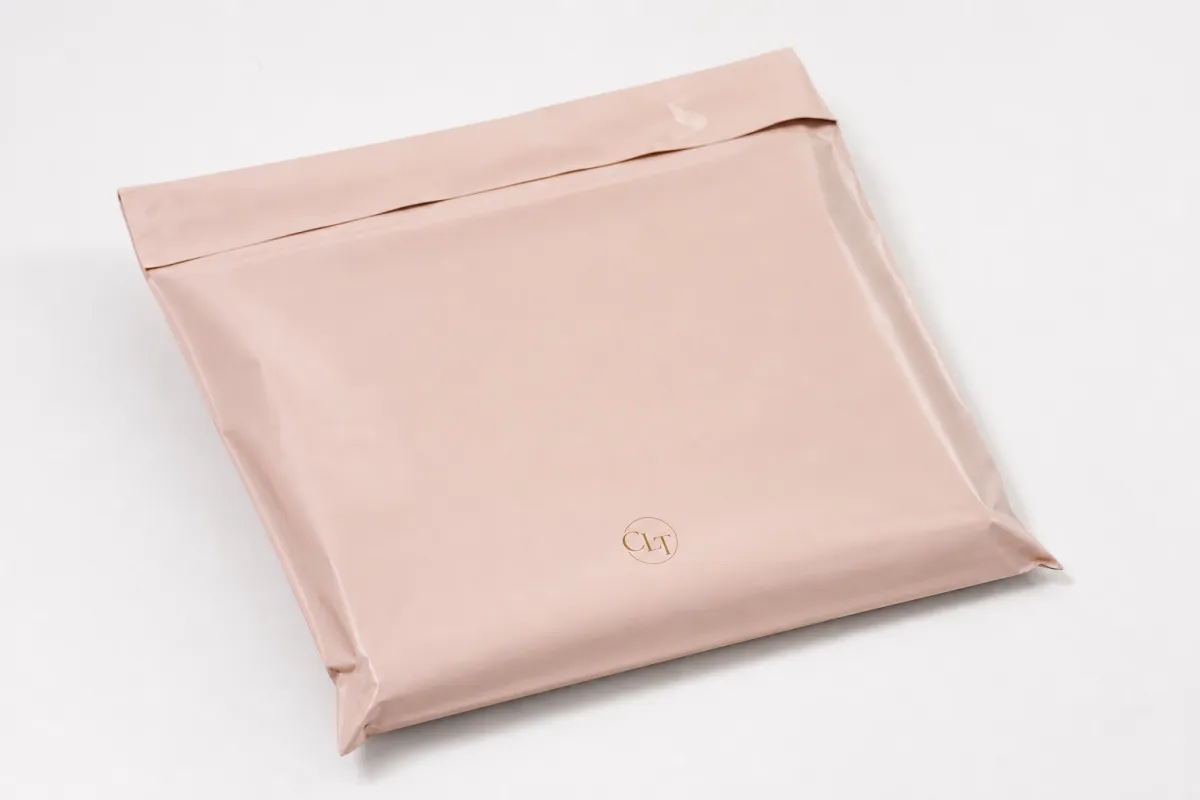
For a lot of boutique shipments, Logo Mailing Bags for boutiques are the first branded surface a customer actually handles, and that first touch can lift the whole order or quietly flatten it before the garment is even unfolded. A mailer that looks clean, fits well, and carries the brand with confidence tells the customer that the package was planned with care, while a scratched, oversized, or generic bag can make a thoughtful product feel strangely ordinary. That contrast is small on paper and noticeable in practice.
Logo mailing bags for boutiques are usually Printed Poly Mailers or mailing bags made for apparel, accessories, and other light retail goods that need protection and presentation in equal measure. They do more than wrap the product. They take part in the sale itself, because the parcel lands on a doorstep, gets stacked at a front desk, and is often opened in front of someone else before the customer has even reached the hangtag.
Boutique shipping carries different expectations from high-volume ecommerce. A boutique buyer usually wants the packaging to feel intentional, polished, and tied to the brand story, even when the order is modest. That means the bag has to support the experience without adding unnecessary cost or slowing the packing bench. Logo mailing bags for boutiques sit in that narrow space between visual polish and practical shipping work, which is why they deserve more attention than a quick stock choice.
Picture a premium knit top folded carefully inside a plain mailer that is larger than it needs to be and already scuffed from handling. The product may be excellent, yet the outer bag has already lowered the expectation. Now picture the same garment in a crisp, well-printed mailer with a sharp logo, a neat seal, and enough opacity to keep the contents private. The perceived value shifts before the customer has opened the parcel.
I usually think about logo mailing bags for boutiques as three pieces working together: appearance, film strength, and closure reliability. When one of those pieces is weak, the whole package feels off. When all three line up, the mailer does more than move the order from one place to another; it quietly strengthens the brand and makes the business look established.
A plain mailer gets the parcel from A to B, but it does not carry the brand story for you. A branded mailer should protect the item first and support the brand second, and if it cannot do both, the spec needs another pass.
That is the real reason logo mailing bags for boutiques draw so much attention from packaging buyers. They are a small line item with a large visual footprint. Once the right size, print method, and material come together, the result feels effortless to the customer and manageable for the person packing orders every day.
How logo mailing bags for boutiques are printed and built
The usual construction for logo mailing bags for boutiques starts with polyethylene film, often LDPE, LLDPE, or a blend of both. LDPE gives a softer hand feel and can offer good clarity options, while LLDPE usually improves puncture resistance and stretch. In everyday packing, that difference matters more than it sounds. A bag with weak film can split at the seam or corner when the contents include buttons, hardware, or a rigid insert. A better-chosen film behaves more predictably during packing and during transit.
Thickness is commonly measured in mils, and that number affects the way the mailer feels as much as the way it performs. A lighter boutique spec often sits around 2.5 to 3 mil for tees, blouses, and other lighter apparel, while 3.5 to 4 mil can make more sense for heavier knits, folded denim, or broader items that need more puncture resistance. Thicker does not automatically mean better. Extra gauge can raise cost and make the bag stiffer, so the right choice depends on the product mix, the shipping method, and the feel you want when the customer picks it up.
Printing is the point where logo mailing bags for boutiques become brand assets instead of simple shipping supplies. One-color and two-color branding often deliver the best value, especially for logos built from strong shapes and clean typography. More complex artwork, gradients, or full-coverage graphics call for tighter color control and more setup attention. Flexographic printing is common for straightforward runs. Gravure is often used where dense coverage and repeat consistency matter. Digital printing can fit shorter runs or pilot quantities, depending on the supplier and the target finish.
Artwork setup deserves real care. Thin strokes can disappear, tiny text can fill in, and slight registration shifts can change the whole feel of the design. On logo mailing bags for boutiques, a logo that looks elegant on a screen may print too delicately on an opaque film surface. Keeping the mark bold enough to survive production variation usually saves trouble later, and leaving a safe print area keeps the art away from the seal and the edges.
Structural details matter too. A good mailer usually includes a self-seal adhesive strip with enough tack to stay closed during transit, often with a 25-35 mm adhesive area depending on the format. Tamper-evident closures make it easier for customers to see whether a parcel was opened in transit. Side gussets add room for layered items and reduce the risk of overstuffing. Seam strength along the bottom and side welds is worth checking, because a mailer can look beautiful and still fail if the weld line is weak.
What arrives at the end of production is not a generic bag with a sticker added later. Logo mailing bags for boutiques are manufactured packaging items, formed from film, printed under controlled conditions, converted to final size, and packed in cartons for shipment. If you want to compare base formats before locking in the print approach, the Custom Poly Mailers category is the right place to start because it shows the broader family most boutique mailers come from.
Key factors that affect performance, branding, and feel
Size usually comes first. When logo mailing bags for boutiques are too small, packing gets awkward and seams take more stress than they should. When they are too large, the parcel looks loose and unrefined, and film, freight volume, and shelf space all get wasted. A proper fit lets the product settle naturally inside the bag without forcing the closure or leaving too much empty space. Soft goods like tees and scarves usually benefit from a little room, while bulkier pieces such as sweatshirts or folded jackets often look better in a tighter but still workable fit.
Film gauge changes how the package behaves in transit and how it feels at the counter. A thicker mailer normally improves puncture resistance and opacity, which helps when the product shape should stay private. It also feels more substantial in the hand, which matters for brands trying to support a premium impression. Cost and weight rise with that choice, though, and for small items shipped in high volume a heavier spec may not be the smartest answer. A boutique label selling higher-ticket apparel may find that the added material earns its keep.
Brand presentation reaches well beyond the logo itself. Matte finishes usually feel quieter and more upscale. Glossy finishes can feel brighter and more retail-forward. Dark backgrounds make light logos stand out, but they also need careful ink laydown to keep the art crisp. Placement changes the mood too. A centered logo often feels balanced, while an offset mark can read more editorial or fashion-led. With logo mailing bags for boutiques, the finish should fit the brand voice rather than chase the loudest mockup.
Opacity carries both practical and emotional weight. Many boutique customers expect discretion, especially when the item shape is easy to recognize or the order has a higher perceived value. A good mailer hides the contents and keeps the unboxing moment focused on the product itself. That is one reason logo mailing bags for boutiques often use solid color films or printed coverage that blocks visibility instead of clear or semi-transparent material.
Sustainability calls for careful wording. Mono-material polyethylene options are easier to explain than mixed structures, and many are recyclable where local collection programs accept film plastic. That does not mean every customer can recycle every mailer everywhere, so claims should stay specific. EPA recycling guidance is a better reference than vague green language, and brands should describe local acceptance rather than imply universal recyclability. For broader packaging and distribution testing standards, the ISTA resources are useful when you want to think about parcel durability, and the EPA’s recycling pages help set realistic expectations around recovery and collection.
Another detail gets missed often: the way the bag folds. A mailer that collapses neatly packs faster, stacks better in storage, and looks cleaner once it is filled. That can matter as much as print quality. A boutique team may touch the same package hundreds of times in a week, so the handling feel of logo mailing bags for boutiques affects efficiency as much as aesthetics.
If a packaging buyer has to decide where the extra cents should go, I usually put fit first, seal reliability second, and print polish third. A beautiful logo on the wrong size mailer still feels wrong. A plain but well-built mailer is easier to live with than a fragile one carrying a perfect graphic.
Logo mailing bags for boutiques: cost, pricing, and MOQ
Pricing for logo mailing bags for boutiques depends on several variables that add up quickly. Size is one. Film thickness is another. Print colors, coverage area, and whether the design calls for full-bleed artwork or a simple centered mark all change setup and production. Custom dimensions can raise cost more than many buyers expect, because the factory has to convert film in a specific format instead of using a standard blank. A clean quote starts with an exact bag size, a clear logo layout, and a quantity target based on real consumption rather than a hopeful launch number.
MOQ, or minimum order quantity, usually reflects the way the bags are printed and converted. Plate-based printing tends to reward higher volume because setup costs are spread across more units. Smaller runs carry a higher per-bag price because press setup, ink calibration, and finishing take the same effort whether the order is 1,000 pieces or 10,000. That does not make small runs a bad decision. It simply means the economics change. A boutique testing a new collection or seasonal look may be better served by a shorter run even if the unit cost is higher.
There are hidden costs worth checking too. Proofing may be included, or it may carry a small fee. Freight can move the final landed cost more than expected, especially on cartons of lightweight but bulky film goods. Revisions stretch lead time, and rushed approvals sometimes force compromises on color or material. When buyers compare quotes, I always recommend comparing the full landed number rather than only the base bag price. That is the clearest way to see whether one supplier truly offers better value.
| Option | Typical Use | Common MOQ | Approx. Unit Range | Notes |
|---|---|---|---|---|
| Plain stock mailer | Fast replenishment, no branding | Low to moderate | $0.08-$0.18 | Lowest setup burden, but no printed brand presence |
| One-color custom mailer | Most boutique apparel orders | Often 3,000-5,000+ | $0.12-$0.28 | Good balance of price, speed, and brand visibility |
| Two-color or heavier coverage | Sharper branding, stronger visual identity | Often 5,000-10,000+ | $0.18-$0.38 | Better for fashion labels that need stronger shelf and unboxing impact |
| Full-coverage or special finish | Premium campaigns, seasonal launches | Usually higher | $0.25-$0.55+ | Most visual impact, but the most sensitive to artwork and setup |
These ranges move with quantity, film gauge, ink coverage, and freight conditions, so they belong in planning, not in promises. A 5,000-piece order of logo mailing bags for boutiques with one simple print color can land in a very different range from a 10,000-piece order with a dark background and white underprint. Setting aside a buffer for proofs and shipping keeps the final number from becoming a surprise.
The business-value question sits behind the price question. A mailer is not just a consumable. For many boutiques, logo mailing bags for boutiques reduce the need for extra branded inserts, improve repeat purchase perception, and create a more consistent unboxing story across every shipment. That brand effect is hard to measure precisely, yet it is real enough to matter. A customer who feels the package was handled with care is more likely to associate the brand with quality before the product has even been tried on.
If you want to compare options in a wider packaging context, browse Custom Poly Mailers alongside your target quantities. That makes it easier to see whether a stock base, a short-run custom order, or a higher-volume printed run fits your budget and replenishment cycle.
Production process and turnaround for logo mailing bags for boutiques
The production path for logo mailing bags for boutiques is fairly direct, but every step affects the result. It starts with the specification: finished size, desired film thickness, closure style, print colors, and expected volume. After that comes artwork review. The supplier checks whether the logo fits the print area, whether fine lines need to be thickened, and whether the colors need a white base or a darker background to hold contrast. A proof is then produced, reviewed, and approved. Full production begins only after that approval.
Proofing deserves close attention. A logo that looks strong on a monitor can turn muddy if the stroke weight is too light or the spacing is too tight. That is especially true on logo mailing bags for boutiques, where the print surface is not paper and the ink behaves differently. A useful proof shows placement, size, and color relationship clearly enough for the buyer to catch problems before the press run starts. If a supplier offers a sample or digital mockup, treat it as a real checkpoint rather than paperwork.
Turnaround depends on order size and print complexity. A simple order can often move in roughly 12 to 15 business days after proof approval, while larger or more complex logo mailing bags for boutiques may take 18 to 25 business days or more, especially if the press is busy or the bag needs a special film. Rush orders can shorten the calendar, but they also reduce the available material and finishing choices. The fastest jobs are usually the ones where the artwork is final, the spec is clear, and the buyer answers questions quickly.
Lead time includes more than the printing window. File checks, proofing, queue time, packing, and transit all sit inside the calendar. That matters when inventory is tied to a launch date or holiday volume. A boutique should work backward from the first shipping day and leave room for approval delays. Waiting until the packaging room is already low makes every extra day feel longer than it should.
Real packaging standards are useful here. For products that need parcel durability testing, ISTA methods help frame how a package should hold up under distribution stress. The exact test depends on the shipment profile, but the basic principle is useful: a mailer should be judged by how it behaves in the real supply chain, not only by how it looks on a design board. That same practical mindset applies to logo mailing bags for boutiques.
The better suppliers will tell you what they can hold, what they cannot, and where the limits are. If a film color is difficult to match or a very small typeface may not reproduce cleanly, that information matters. The goal is not to force the spec into place. The goal is to choose a production path that delivers consistent logo mailing bags for boutiques without avoidable rework.
Common mistakes when ordering boutique mailing bags
The first mistake is choosing the wrong size. It sounds simple, yet it affects protection, appearance, packing speed, and freight efficiency all at once. A mailer that is too tight stresses seams and makes sealing awkward. A mailer that is too generous looks sloppy and uses more material than necessary. For logo mailing bags for boutiques, the right size usually comes from measuring the product in its folded or packed form and then adding just enough room for easy insertion and a clean seal.
Overcomplicated artwork causes trouble more often than buyers expect. Small logos, thin type, and dense line art can look beautiful in a presentation file and less beautiful on film. If the design carries too much detail, the final print can soften or blur, especially on smaller mailer formats. Simplicity often prints better and usually feels more premium because the eye reads it faster. A strong logo on logo mailing bags for boutiques does not need to show every idea at once.
Adhesive quality is easy to underestimate. If the seal is weak, the bag can open during transit, and the customer blames the brand rather than the packing line. Seam placement matters for the same reason. A poorly placed weld can leave less usable width or create a weak point near the closure. For a bag that will be touched, stacked, and shipped all day, closure reliability is not a minor detail. It is the part that protects the product.
Skipping physical samples leads to surprises. A proof can show a lot, but it cannot show feel, fold behavior, or the way the mailer sits around a real garment. I have seen boutique teams approve a design that looked excellent on screen, then discover that the first packed order looked boxy or that the opacity was not strong enough for the item inside. A test pack with actual product is usually time well spent.
Demand forecasting is the last common miss. A boutique may launch with enough stock for the first order wave, then run short when a social campaign or retail event pushes volume higher than expected. That leaves the team with a good design and no packaging to match it. For logo mailing bags for boutiques, a buffer is not waste; it is insurance against momentum you cannot predict perfectly.
Another mistake worth calling out is chasing the lowest price without checking the full spec. A thin bag, weak seal, or muddy print often costs more in returns, repacking, and brand damage than the original savings ever justified. A packaging buyer who watches the full chain usually ends up with better value, even if the unit price is a little higher.
Expert tips and next steps for your first order
Start with a simple spec sheet. List product dimensions, folded thickness, preferred mailer size, target film gauge, print colors, closure style, monthly volume, and whether you want a matte or glossy finish. That one sheet saves time on quoting and proofing. It also gives the supplier enough detail to recommend the right format instead of guessing. For logo mailing bags for boutiques, clear information at the start often makes the difference between a smooth order and a round of unnecessary revisions.
Ask for two or three samples if possible. Compare seal strength, opacity, surface feel, and how the print sits under normal store lighting rather than only in a photo. A bag that looks excellent under studio lights may feel different on a packing table. If your boutique ships jewelry, hardware, or textured fabric, pay attention to puncture resistance and how the film handles corners and sharp edges. Those details decide whether the package feels dependable.
Approve artwork on the exact bag size whenever you can. Screen scaling is not the same as film scaling. Logos that look balanced on a mockup can shift visually when the print zone gets larger or smaller than expected. A centered mark on logo mailing bags for boutiques often needs a little more breathing room than the same art on a hangtag or label because the bag itself moves during handling.
Build a reorder rhythm around your sales cycle. If your boutique sees weekly drops or seasonal spikes, set a trigger point so packaging is reordered before the last carton is opened. That keeps the team from rushing approvals under pressure. For many small retailers, the easiest way to manage logo mailing bags for boutiques is to decide the reorder point once, then follow it consistently instead of improvising every time inventory falls.
Here is a practical decision path that works well in the field:
- Choose the smallest size that still gives the product a clean fit.
- Pick the simplest print that still feels unmistakably branded.
- Use a film gauge that protects the item without adding unnecessary stiffness.
- Set a lead time that matches your replenishment window, not your optimism.
- Confirm the seal, opacity, and print legibility with a real sample pack.
If you are still narrowing the spec, compare the custom route against standard formats in the Custom Poly Mailers range and decide whether your first run should be a shorter pilot or a larger production order. That step alone can keep you from overspending on a design that may still need small adjustments.
My honest advice is straightforward: treat logo mailing bags for boutiques as part packaging, part brand signal, and part operations tool. When those three pieces are considered together, the result feels polished without becoming fussy, and the shipment arrives looking like it came from a business that pays attention. That is the effect you want every time a customer opens the parcel, and it is why logo mailing bags for boutiques are worth doing properly from the first order onward.
What size logo mailing bags for boutiques should I choose?
Measure the product in its folded or packed form, then add enough room for easy insertion and a clean seal. If the item is soft, like a sweater or scarf, leave a little extra depth so the seams do not stretch. If you are between two sizes, test both with a sample pack before placing the full order, because that small comparison usually shows which fit looks cleaner on the packing table.
Are logo mailing bags for boutiques recyclable?
Many are made from polyethylene, which can be recyclable where local collection programs accept film plastic. Mono-material PE bags are usually easier to explain from a sustainability standpoint than mixed-material structures. Always check local recycling rules and avoid broad environmental claims unless the material and the collection path truly support them.
How much do logo mailing bags for boutiques cost per unit?
Unit cost depends on size, thickness, print coverage, quantity, and whether the order needs custom tooling or special finishes. Smaller orders usually cost more per bag because setup and production overhead are spread across fewer pieces. The best comparison is a quote built from the exact dimensions, artwork, and quantity you plan to use.
What is a typical MOQ for logo mailing bags for boutiques?
MOQ varies by printing method and factory setup, but custom printed runs often start higher than plain stock mailers. Digital or short-run options can lower the entry point, while plate-based printing usually favors larger quantities. If you are testing a new design, ask whether a sample run or pilot order is available before committing to a full batch.
How can I make logo mailing bags for boutiques look more premium?
Use a restrained logo layout, strong contrast, and a finish that matches the brand mood, such as matte for understated luxury. Keep the artwork crisp and avoid crowding the print area with too many elements or tiny text. Pair the mailer with consistent packing habits so the bag arrives sealed neatly and feels intentional the moment it is opened.

