Logo Patch Beanies Packing Rules for Streetwear Orders
A logo patch beanie can pass decoration QC and still get rejected at receiving. That usually happens because the packing spec missed one detail: the fold, the bag, the barcode, or the carton count. Fulfillment teams judge the item by how quickly they can scan it and stack it, not by how clean the patch looks.
Logo Patch Beanies Packing Requirements for Streetwear Brand Fulfillment
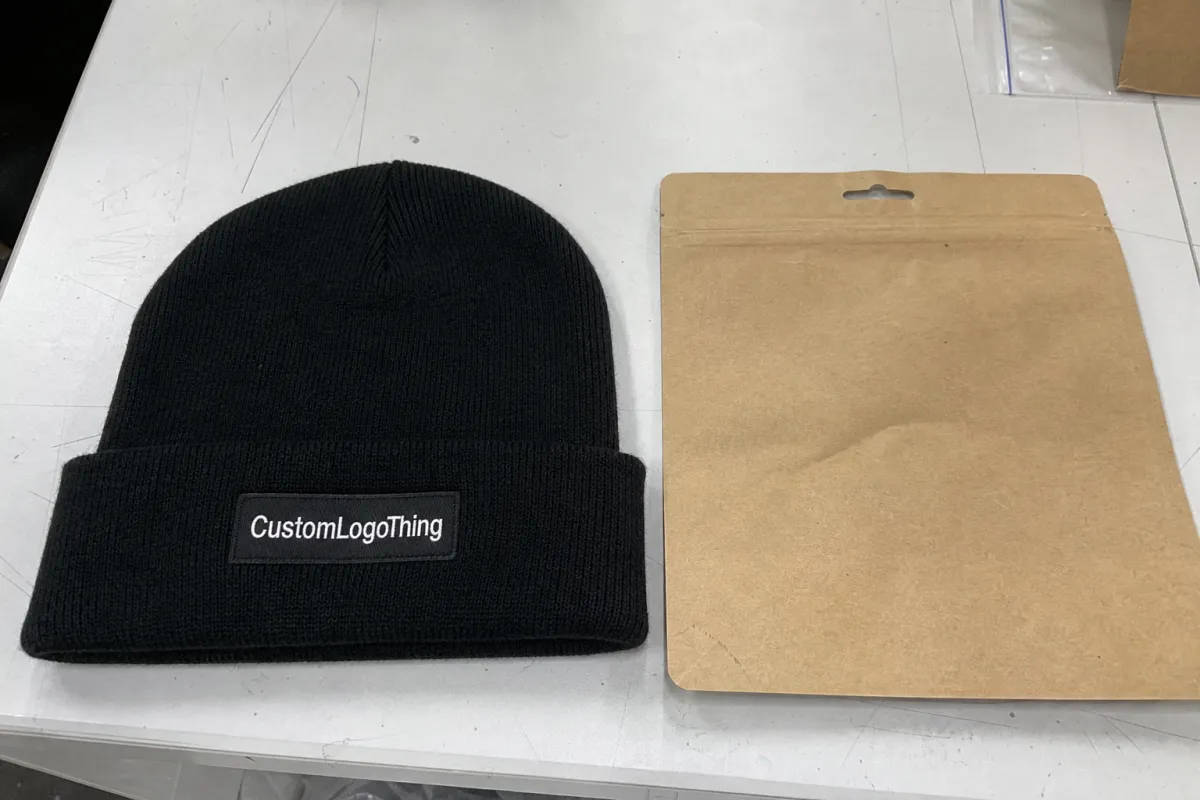
Streetwear buyers care about the patch, but warehouses care about count accuracy, label placement, and case-pack consistency. If the beanie arrives folded differently in every carton, receiving slows down. If the barcode is hidden under a seam, it gets reworked. If the master carton count is wrong, the line stops.
The product is not really finished after decoration. It is finished when the packing spec matches the channel and everyone uses the same version. That means a fixed fold method, a defined bagging method, a scan-ready label, and a carton count that stays the same from sample to shipment.
Three details get overlooked most often:
- Fold method: Keep the knit shape stable and avoid crushed crowns.
- Bagging: Use a polybag that protects the beanie without trapping too much bulk.
- Case pack: Keep inner and master carton counts clear so receiving can move fast.
“Receiving teams do not admire your branding. They count, scan, and reject anything that makes them pause.”
Presentation still matters. A neat pack improves shelf appeal and the customer opening experience. But presentation is secondary to compliance. DTC orders need a clean unit that moves straight into pick-and-pack. Wholesale orders need repeatability and simple math. Same beanie, different rules.
How Packing Rules Change by Sales Channel
Direct-to-consumer, wholesale, and mixed-channel orders should not be packed the same way. For DTC, the goal is a clean unit that ships fast and opens well. For wholesale, the goal is efficient intake, easy counting, and cartons that match the retailer’s receiving rules.
For DTC shipments, one beanie per polybag is common. A 1.5- to 2-mil clear LDPE bag is usually enough to protect the product without making the pack feel bulky. If the beanie ships with a hangtag, size sticker, or branded tissue, the placement should stay consistent so every unit looks the same.
Wholesale is less forgiving. Retailers and 3PLs often want fixed inner packs, master carton labels, barcodes that scan on the first pass, and sometimes assortment breakdowns by color or size. If they ask for 24 pieces per carton, they mean 24 pieces per carton. Not 23 and a guess. Not 25 because the factory found it convenient.
Here is the practical split:
| Channel | Typical Pack Format | Best For | Main Risk |
|---|---|---|---|
| DTC | Individual polybag, single barcode, ship-ready carton | Fast fulfillment and clean unboxing experience | Damage from loose packing or weak bag seals |
| Wholesale | Inner packs, master cartons, carton labels, PO-matched counts | Retail receiving and store intake | Chargebacks from count or label errors |
| Mixed channel | Dual-spec packing with separate carton maps | Brands shipping to both stores and customers | Confusion if one spec sheet tries to do everything |
Warehouses care about scanability and fixed quantities more than packaging flair. If you are sending product to a 3PL, keep the receiving math simple. If your shipment lands with unclear carton counts, they will not figure it out for you. They will hold it.
For shipments that may face transit abuse, it is smart to review ISTA transit testing standards. If you are using paper inserts or tissue, FSC-certified stock is an easy way to keep sourcing cleaner without adding complexity.
MOQ, Quote, and Unit Cost Drivers for Packing Specs
Packing changes are where quotes drift. A plain folded beanie in a standard polybag costs one thing. Add a custom header card, printed tissue, a branded sticker, a barcode label, and retailer-specific carton setup, and the math changes quickly.
These are the usual cost drivers on streetwear runs:
- Polybag: Clear standard bags often add about $0.04-$0.12 per unit, depending on thickness and size.
- Printed or custom bag: Often adds $0.10-$0.25 per unit, with higher MOQs and longer lead times.
- Tissue or insert card: Usually $0.02-$0.08 per unit, more if the print is heavy or double-sided.
- Barcode or size label: Often $0.01-$0.03 per unit, but setup and data prep still matter.
- Extra labor: Special fold, sticker placement, or assorting can add $0.05-$0.15 per unit.
MOQ increases when the pack spec stops being generic. Custom packaging materials often need 3,000 to 5,000 pieces to make sense. Mixed-color packs can push that higher because the factory has to sort, verify, and cartonize more carefully. Retailer-specific prep can also force a higher minimum if the vendor has to build a separate line process for your order.
Small brands often focus on unit price and miss landed cost. That is how a cheap-looking packing upgrade turns into a margin problem. Ask for the quote in layers:
- Garment cost.
- Decoration cost.
- Packaging materials.
- Packing labor.
- Carton and master label prep.
- Any retailer compliance work.
That breakdown keeps pricing honest and makes it easier to decide where the packaging upgrade actually pays off. A custom header card may be worth it if it improves shelf appeal. A fancy insert that nobody reads is just extra cost.
Process and Timeline: From Approval to Warehouse Intake
The fastest orders are the ones with the fewest surprises. If the packing spec is locked early, the factory can run once, verify it, and palletize without stopping for missing decisions. If the spec keeps changing, the schedule stretches.
A normal production flow looks like this:
- Artwork approval: Final patch, label, and carton art are approved.
- Pre-production sample: One or two units confirm the fold, patch placement, and bagging method.
- Packing spec signoff: Case pack, barcode format, and carton labeling are confirmed.
- Bulk production: Beanies are knitted, decorated, and prepared for packing.
- QC check: Count, color, and finish are checked against the PO.
- Cartonization: Units are packed into inner and master cartons.
- Booking and delivery: Freight is scheduled, labeled, and moved to the warehouse.
The biggest timeline killers are usually boring: missing barcode data, late packaging approval, a PO that says 48 per carton while the warehouse spec says 60, or retailer routing rules that appear after production has already started.
From approval to warehouse intake, a simple run often fits into 12 to 20 business days after the pack spec is locked, depending on decoration method and freight mode. Add custom packaging, split shipments, or retailer routing, and the schedule can stretch by one to two weeks.
For smaller orders, a photo-approved sample is often enough. For larger wholesale orders, a physical sample is safer if there is any doubt about fold thickness, barcode placement, or carton fill.
Step-by-Step Packing Workflow for Beanie Orders
If you want the order to run cleanly, build the workflow in the same order every time. The factory should not improvise. The warehouse should not guess. And your buyer should not have to decode a mystery carton.
A practical workflow for beanie orders looks like this:
- Fold: Use one fold method for all units so the shape stays uniform.
- Insert: Add tissue, card, or filler only if it supports shape or presentation.
- Bag: Use a consistent polybag size with a clear seal or closure.
- Label: Place barcode, size, or SKU labels in the same location every time.
- Count: Verify inner pack and master carton quantities before sealing.
- Carton: Apply carton marks, PO number, and case count to every box.
- Palletize: Stack by SKU and route, then wrap and tag each pallet clearly.
- Ship: Match the freight docs to the physical packout exactly.
A single spec sheet helps the factory, the warehouse, and the buyer stay aligned. That sheet should show the fold photo, bag size, label position, case pack, carton dimensions, gross weight target, and any retailer routing rule. If one team is reading a different version, the project is already slipping.
For mixed SKUs, keep the logic simple. Use one SKU = one barcode unless the retailer demands otherwise. If you need assorted color packs, define the assortment clearly, such as 2 black, 2 grey, and 1 olive per inner pack. If there are split shipments, note which cartons belong to which destination.
Good packing is not about looking expensive. It is about being predictable. A predictable pack is faster to receive, easier to audit, and less likely to trigger a back-and-forth with the warehouse.
Common Packing Mistakes That Trigger Rework or Chargebacks
The expensive mistakes are usually small: a label in the wrong spot, a carton count off by two, or a polybag that is too thin and splits in transit. These are the failures that create rework, labor charges, and unpleasant emails.
Here are the common ones:
- Packing by appearance: Good-looking packs that do not match the agreed count or barcode rules.
- Weak bag material: Thin bags tear, wrinkle, or make the beanie look crushed.
- Wrong label placement: Barcodes hidden by folds or seams slow down receiving.
- Bad carton spec: Overstuffed cartons crush knit structure before the product arrives.
- No pre-ship audit: Small errors turn into warehouse disputes once freight lands.
Chargebacks usually come from one of three problems: wrong count, wrong label, or wrong carton. If the warehouse has to do extra labor to fix your shipment, they will bill for it or reject it. That is why a simple pre-ship audit is worth the time. Check three cartons from the top of the pallet, three from the middle, and three from the bottom.
Carton weight matters too. For hand-received warehouse flows, keeping master cartons around 25-35 lb is often easier than pushing them to the limit. A soft knit like a beanie should not be packed so tightly that it comes out misshapen.
If you want real-world examples of how different pack specs affect delivery and receiving, see our Case Studies.
Expert Tips for Cleaner Counts and Faster Receiving
A few habits save money quickly. None of them are fancy, which is usually why they work.
First, build a carton map before bulk production. A carton map shows which colors, sizes, or assortments go into each inner and master carton. If the warehouse and factory both use the same map, receiving gets cleaner. Second, approve a photo pack sample before mass production. A photo is not perfect, but it catches obvious mistakes before they scale up.
Third, use master carton labels that tell someone something useful. Include the PO number, SKU, carton count, and destination. If cartons are shipping to more than one location, add routing info directly on the box.
Fourth, keep the factory spec and warehouse spec aligned. Brands often write one version for production and a different version for fulfillment. That is how problems spread. One spec sheet, one count logic, one label rule.
Fifth, spend money only where it changes something real. A better fold can improve shelf presentation. A stronger bag can protect product quality. A clearer barcode can speed intake. Those upgrades help. Decorative extras that add cost but no function usually do not.
If you are deciding whether a packaging upgrade is worth it, ask one question: does it reduce chargebacks, improve shelf presentation, or speed receiving? If the answer is no, skip it. Streetwear brands win by looking deliberate, not by overpacking every box.
Next Steps Before You Place the Order
Before you approve production, confirm five things: final pack count, bag type, barcode placement, carton dimensions, and required documents. If any of those are vague, the job is not ready.
Ask for a sample photo or, better yet, a physical pre-production sample. Make sure the warehouse signs off on the pack standard before freight leaves the factory. If the carton size is wrong, the pallet plan changes. If the barcode is in the wrong place, the 3PL will waste time fixing it. If the PO does not match the case pack, everyone loses time.
Put the packing rules in both the PO and the spec sheet. Do not assume the factory will remember a verbal instruction from a call three weeks ago. Written specs protect brand consistency, reduce rework, and keep the unboxing experience aligned with the brand identity you are building.
In short, the Logo Patch Beanies packing requirements for streetwear brand fulfillment are not a side detail. They are part of the product. Get them right and the order moves fast. Get them wrong and you pay to fix a problem that should never have shipped.
Frequently Asked Questions
What are the standard packing requirements for logo patch beanies in streetwear fulfillment?
Most buyers need a fixed fold, a consistent polybag or tissue setup, a clear barcode or size label, and a repeatable case-pack count. Retail and wholesale orders usually need tighter carton labeling and cleaner count verification than DTC orders.
Do logo patch beanies need individual polybags for DTC and wholesale orders?
DTC usually benefits from individual polybags because it protects shape and speeds pick-and-pack. Wholesale may allow bulk inner packs if the retailer or warehouse accepts them, but the spec must be written down.
How do packing specs affect the unit cost of logo patch beanies?
Every added material or labor step, like stickers, inserts, custom bags, or special folding, increases unit cost. Low-MOQ orders feel those costs faster because setup and prep are spread across fewer units.
What timeline should I expect after approving the packing spec?
If the spec is locked early, packing usually adds only a small amount to the normal production schedule. Late changes, missing barcode files, or retailer-specific prep can add days or even weeks of delay.
What should I send my supplier before production starts?
Send the final artwork, packing method, case-pack count, label placement, carton dimensions, and any retailer routing rules. Also ask for a sample photo or pre-production proof so the factory and fulfillment team are aligned before the full run.


