For a hotel team, Logo Patch Beanies material options for hotel staff uniforms are not a cosmetic side decision. They affect warmth, first impressions, maintenance, and how long the uniform still looks deliberate after repeated wear. A lobby team standing at the entrance during a damp cold snap needs a different build than a bell desk crew that spends most of the shift under covered arrivals. That gap is easy to miss if the sample only gets judged in a meeting room.
The most common mistake is assuming the softest sample will perform best. Comfort matters, but so do shape recovery, edge stability, and how the patch behaves once the beanie has been folded, pulled on, and cleaned several times. A beanie that feels plush on day one can lose its outline, pill early, or make the logo look crooked after a few shifts. Uniform buying rewards materials that behave well under ordinary pressure, not just the ones that photograph nicely.
There is also a branding layer that gets overlooked. A hotel beanie is part of a dress code, not a souvenir. A clean patch usually reads more controlled and more expensive than a fully knitted logo because the mark sits on a defined surface. That helps the uniform stay restrained, especially in properties that want warmth without drifting into promotional apparel.
A good uniform beanie should support the service experience quietly, not compete with it.
Logo Patch Beanies Material Options for Hotel Staff Uniforms: What Guests Notice First
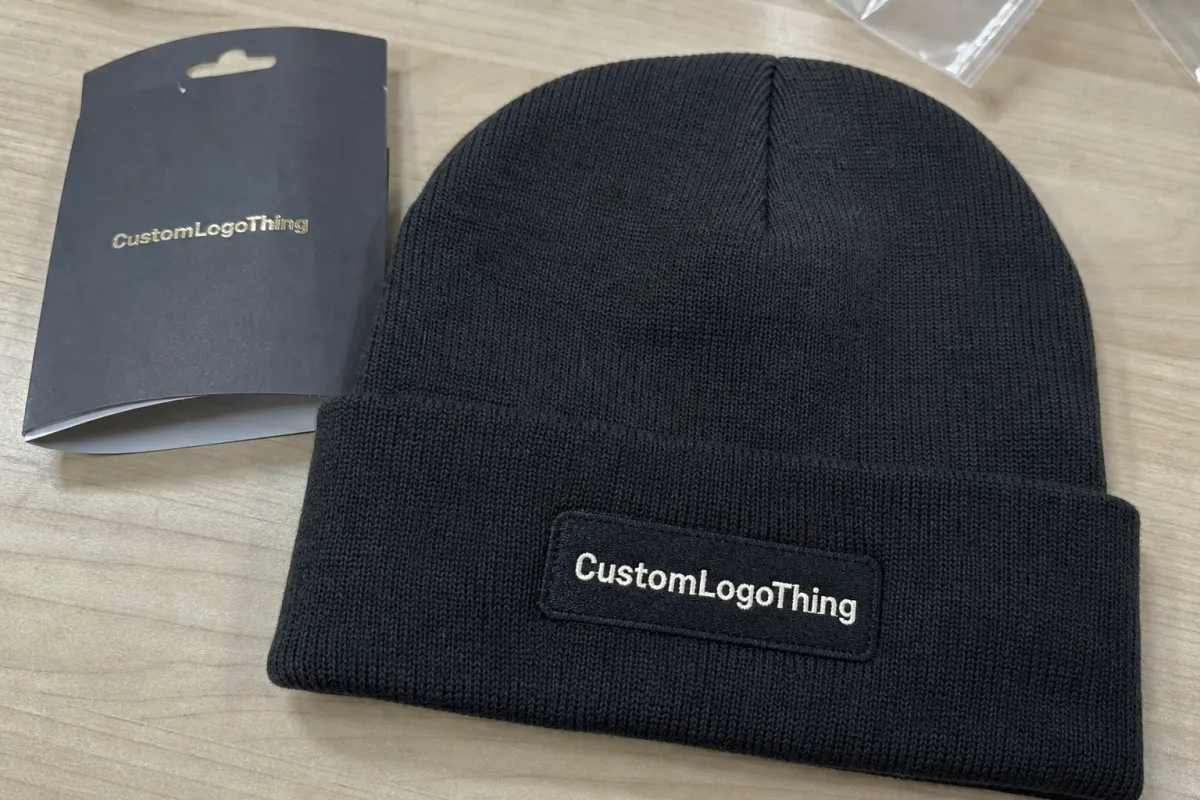
Guests notice consistency before they notice the yarn specification. If the cuff holds its line, the beanie sits at a tidy height, and the logo patch looks intentional, the staff uniform feels coordinated even from a distance. That is why Logo Patch Beanies material options for hotel staff uniforms deserve more scrutiny than they usually get during purchasing. The build reads as a whole, not as separate parts.
Body material, patch face, lining, and cuff depth all work together. A dense knit with a rigid patch can feel structured in a good way, but if the body is too soft for that patch weight, the front can pull out of shape. A light knit with a flimsy patch can look tired by the middle of a shift. The right combination depends on whether the beanie will be used mostly indoors, in and out of a lobby, or for outdoor-facing roles where wind and moisture matter more.
From a guest-facing perspective, a logo patch often outperforms a knitted logo because it gives more control over scale and readability. Fine typography, thin borders, and small symbols translate better on a patch face than they do in yarn. That matters in hospitality, where a brand mark needs to stay legible at a glance without turning the beanie into a billboard.
Patch decoration also simplifies production. A separate patch can keep the logo sharp while the body stays in a single knit color. That reduces the risk of muddy detail and helps batch-to-batch consistency, which is valuable when multiple locations order the same uniform item over time. In a hotel program, visual predictability is part of quality control.
For buyers, the practical lens is fit, finish, and maintenance. The beanie should sit low enough to look tidy, hold its shape after use, and still pass inspection after cleaning. Those three things usually matter more than whether the sample feels extra soft in hand. Once that is clear, the field of Logo Patch Beanies material options for hotel staff uniforms becomes much easier to narrow.
How Patch Type Changes Durability, Texture, and Branding
Patch construction changes the personality of the beanie. An embroidered patch carries thread depth and a classic uniform feel. A woven patch handles small text and intricate borders more cleanly. Faux leather creates a restrained, upscale look. Rubber and silicone bring texture, weather resistance, and a slightly more modern profile. None of these is universally best; each changes how the beanie sits, wears, and presents the logo.
Thickness matters. A heavy patch can make a soft knit feel stiff, especially if the beanie body is loose or lightly ribbed. On a denser rib knit, that same patch may sit neatly and help the cuff keep its form. Placement matters too. A patch centered on a flat cuff usually behaves better than one forced onto a curved crown, where tension and distortion can show up fast.
Edge quality is one of the easiest places to save money badly. Clean stitched borders, laser-cut edges, or molded edges resist fraying and lifting better than finishes that depend on loose thread tails. Hotels do not need a patch that looks sharp on arrival and then starts curling after a week of guest-facing wear. The logo should stay square, readable, and attached through ordinary service life.
- Woven patches suit fine lettering and small logos.
- Embroidered patches add texture and a more traditional uniform look.
- Faux leather patches usually read polished and understated.
- Rubber or silicone patches hold up well in damp or windy conditions.
Patch style also affects color control. If the logo includes thin lettering, tiny shapes, or multiple colors, a patch usually reproduces it more cleanly than direct knitting. That is especially useful for hotel branding, where the accessory should look consistent across departments and seasons. A small but sharp logo tends to look more disciplined than a larger, fuzzy mark.
As a buyer, I would match patch style to the property tone. Upscale urban hotels often work best with woven or faux leather in a restrained palette. Resort or outdoor-facing teams may benefit from embroidery or silicone, where texture and weather resistance are more important. The point is not to make the beanie louder. The point is to make the logo believable as part of the uniform.
Choosing Yarn, Lining, and Knit Structure for Daily Wear
Body material usually falls into three practical categories: acrylic, wool blends, and recycled polyester blends. Acrylic is common because it balances price, warmth, and consistent supply. It also dyes predictably, which makes color matching easier when the hotel wants one shade across several departments or property locations. For larger orders, that consistency can matter as much as handfeel.
Wool blends sit higher on the warmth scale and often feel more natural in cold weather. A blend in the 30/70 to 50/50 range, depending on the yarn and finishing, can give a better balance of warmth and durability than pure wool alone. The tradeoff is care. Wool-heavy beanies are less forgiving if the cleaning routine is rough, and they can feel itchier for some wearers. For staff who move between indoors and outdoors, the blend only works if the fabric is not too bulky.
Recycled polyester blends deserve a real look, especially for hotel brands that want a cleaner sustainability story. They can offer a smooth surface, good recovery, and a slightly more technical feel that pairs well with patch decoration. If the property is also paying attention to packaging, buyers often ask for FSC certified cartons, kraft paper wraps, or recycled inserts so the product story stays consistent from garment to shipper. The material message should not stop at the item itself.
Knit structure is just as important as fiber content. A tighter gauge, often in the 7- to 9-gauge range for uniform beanies, helps the fabric hold shape and gives the cuff a cleaner outline. Rib knits stretch well and fit a wider range of heads, which is useful when a hotel needs one style for several roles. A looser knit may feel softer, but it can relax too much under repeated use, especially once a patch adds weight to the front.
Lining changes comfort more than many buyers expect. An unlined beanie keeps the profile slim and works well for mild climates or staff who only need brief outdoor coverage. A fleece-lined or thermal-backed version adds warmth and reduces itch, but it also adds volume around the ears and can interfere with headsets or earpieces. For concierge, front desk, or guest services roles, that extra bulk may be enough to make an otherwise nice sample impractical.
Care and recovery need direct questions, not assumptions. Acrylic and polyester blends usually bounce back better after repeated wear, provided the knit density is adequate and the cuff is reinforced. Wool-rich styles can look more refined, but they demand more careful laundering. Ask for clear guidance on pilling, shrinkage, stretch recovery, and drying method. Those details determine whether the beanie still looks like part of the uniform after a month instead of a week.
Packaging is part of the decision too. A folded beanie packed into FSC certified corrugated cardboard with a kraft paper insert is more likely to arrive with its shape intact than one tossed loosely into a carton. If the brand wants a lower-impact presentation, biodegradable packaging can be specified, but it still has to protect the crown and preserve cuff memory. The EPA has a useful overview of recycled-content terminology at epa.gov/recycle, and FSC explains certification basics at fsc.org.
Cost, Pricing, MOQ, and Quote Variables for a Hotel Uniform Run
Pricing for Logo Patch Beanies material options for hotel staff uniforms depends on yarn type, patch construction, logo complexity, lining choice, quantity, and packaging. A simple acrylic body with a woven patch lands in a very different range than a wool-rich knit with faux leather trim, custom labels, and individual packing. Those differences are not just about appearance. They reflect labor, setup, finishing, and the number of production steps involved.
MOQ changes the whole equation. A boutique property may want a small initial run to test comfort and fit before ordering for every department. A larger hotel group may prefer a higher quantity so the cost drops and all locations stay consistent. Both approaches are reasonable, but they create different unit prices. Small runs usually carry heavier setup costs; larger runs spread those costs more efficiently.
Sample development also affects the quote. If the buyer wants to compare several builds before choosing one direction, expect at least one round of swatch review and possibly a preproduction sample. Minor revisions to patch size, cuff depth, yarn color, or logo placement can add time and expense, especially when the brand requires tight color matching. PMS alignment is valuable, but it needs to be priced and scheduled properly.
| Build | Typical unit price at 5,000 pcs | Best fit | Main tradeoff |
|---|---|---|---|
| Acrylic body + woven patch | $2.10-$3.10 | Budget-conscious uniform programs | Less natural handfeel than wool |
| Acrylic-wool blend + embroidered patch | $3.20-$4.60 | Colder climates and more polished lobbies | Higher cost and more care sensitivity |
| Recycled polyester blend + faux leather patch | $3.00-$4.40 | Modern branding and clean surface finish | Patch style must match knit density |
| Wool-rich blend + silicone patch + lined interior | $4.80-$6.80 | Premium outdoor-facing staff roles | More bulk and more finishing steps |
Those ranges are directional, not fixed quotes. Lower quantities usually sit higher on a per-unit basis, and specialty packaging changes the math quickly. A clean quote should separate body material, patch type, decoration, sample cost, and freight. That makes it easier to see whether two suppliers differ because of materials or because of setup and finishing overhead.
Distribution should be specified clearly. Individual tissue wrap, recycled poly bags, or carton dividers can all make sense depending on how the hotel receives inventory. If the order needs to be split across front desk, concierge, valet, and seasonal teams, the packing list should mirror that rollout plan. Repeated re-sorting at the property wastes labor and increases the chance of missing sizes or misplaced counts.
For sustainability-minded programs, ask for recycled materials in the inserts, corrugated cardboard for the shipper, and clear labeling if biodegradable packaging is used. None of those choices matters if the beanies arrive crushed or mismatched, so the packaging spec should support both presentation and protection.
Process and Lead Time: From Swatch Approval to Distribution
A clean production path reduces surprises. Start with the use case: where the beanies will be worn, how often they will be used, and whether staff will face cold wind, moisture, or long outdoor waits. Then choose the material direction, review swatches, approve artwork, and move to a sample or preproduction build before bulk manufacturing begins. That sequence sounds simple, but skipping a step usually creates the delays buyers later complain about.
Most schedule slips happen at the review stage. Artwork cleanup takes longer than expected if the logo file is low resolution or if the design includes thin lines that do not scale well to a small patch. PMS color matching can add another round if the hotel wants exact alignment with existing apparel. Patch placement can also push timing if the sample shows the logo sitting too high, too low, or too close to the cuff edge.
The fastest approvals usually come from sending one complete spec package. Include the logo file, target quantity, preferred material direction, cuff style, packaging preference, and required delivery date. With that information, the supplier can quote more accurately and flag issues early instead of discovering them after sampling begins.
Build in more time than the ideal date suggests. Custom knitwear often needs time for sampling, corrections, production, finishing, and shipping. If the beanies are required before the colder season or before a large event period, the order should start earlier than feels comfortable. Hotels with multiple properties should also decide whether they want one consolidated delivery or staggered shipments; a location-by-location rollout usually stretches the calendar.
Shipping quality matters too. If the supplier packs to ISTA-style transit expectations, the shipment is more likely to arrive ready for issue rather than flattened in the carton. For a uniform program, that can save receiving staff from a lot of reshaping and re-counting. That is not a luxury detail. It is part of whether the rollout feels organized.
Common Mistakes That Make Uniform Beanies Fail Early
The biggest failure is choosing a style that looks great in a mockup and feels wrong in actual service. A beanie can be too warm for indoor staff, too loose for active roles, or too stiff once the patch is attached. Those flaws do not stay hidden for long when the wearer is moving through a lobby, stepping outside, or taking the piece on and off during a shift.
Care instructions get ignored more often than they should. A material that cannot hold its shape after repeated cleaning will break the uniform standard quickly, no matter how good it looks on delivery. Ask for plain-language guidance: can it be gently washed, does it need flat drying, and how much stretch recovery is realistic? If a supplier cannot answer that clearly, the item is not ready for hotel use.
Overcomplicated color planning creates another problem. A beanie body in one color, a patch in another, and thread in a third can look busy instead of refined. That is especially true when the rest of the winter uniform already includes a coat, scarf, or jacket with visual detail. The beanie should support the existing system, not fight it for attention.
Another mistake is testing the sample with only one role. Front desk, bell staff, concierge, and valet teams do not always need the same fit or warmth level. Some people spend most of the shift inside. Others stand in wind or damp air. If one beanie is expected to cover all of them, the sample needs feedback from more than one wearer before approval.
It also helps to test the beanie with the rest of the winter kit. A style that looks fine alone may feel awkward once a coat collar, scarf, headset, or earpiece enters the picture. Bulk at the neck is noticeable. So is a patch that presses into outerwear or gets partially hidden by the collar. Small field tests catch problems that studio photos will never reveal.
For buyers comparing Logo Patch Beanies material options for hotel staff uniforms, these failures are usually preventable. They come from skipping the ordinary-shift test: how does the beanie behave after hours of wear, not just during approval?
Next Steps for a Cohesive Hotel Rollout
Start with the real wear conditions for each role. Note indoor temperature, outdoor exposure, shift length, and whether the staff member will move between warm and cold zones repeatedly. That simple worksheet usually narrows the options faster than a long discussion about preferences.
Then request two or three swatches and one sample build. Compare softness, shape, patch texture, and cuff recovery in natural light rather than under product photography or showroom lighting. The sample that looks best beside the desk uniform is often more useful than the one that merely feels premium in hand.
A decision matrix helps. Score each option on comfort, durability, pricing, and brand fit. If two styles are close, the one with better shape retention and easier care usually wins for hotel work. That is where logo patch beanies material options for hotel staff uniforms become easier to rank, because the choice is tied to function rather than taste alone.
Before ordering, confirm logo size, cuff depth, color approval, sizing tolerance, and packaging details. If the beanies will be distributed across multiple properties, record counts by location and department so the final packing list matches the rollout plan. Keeping the material code, patch spec, and approved artwork together also makes future reorders cleaner. That kind of file discipline prevents slow drift in color and construction over time.
Document the packaging standard as carefully as the garment standard. If the first order uses FSC certified corrugated cardboard, kraft paper inserts, or recycled materials in the shipper, keep that in the record. It makes future sourcing easier and helps the property preserve the same presentation when inventory is topped up months later.
The best hotel beanie is rarely the softest, the cheapest, or the most decorative. It is the one that keeps its shape, suits the climate, and fits the service role without drawing unnecessary attention. Keep that lens in place, and the decision becomes straightforward.
Frequently Asked Questions
What is the best material for logo patch beanies for hotel staff uniforms?
Acrylic is often the easiest starting point because it balances cost, softness, and care. Wool blends work well when the property needs more warmth and a slightly more refined handfeel. The best option depends on whether staff are mostly indoors, outdoors, or moving between both.
Are acrylic logo patch beanies durable enough for hotel staff use?
Yes, acrylic can perform well if the knit gauge is dense and the fit is not overstretched. It is a practical choice for larger quantity orders and mixed staff sizes. Durability improves when the patch type is selected to resist edge wear and the laundering routine is realistic.
Which patch type lasts longest on hotel uniform beanies?
Woven and stitched-edge patches usually perform well because they hold detail without a lot of loose texture. Faux leather and silicone can also last well if the attachment method is clean and the body knit is dense enough. The best answer depends on the beanie fabric and the expected wear cycle.
How do I estimate quote cost for hotel staff logo patch beanies?
Ask for pricing by body material, patch type, decoration, sample cost, and freight so the quote is clear. MOQ and total quantity affect unit cost quickly, especially for custom colors or specialty finishes. A line-item quote makes it easier to compare budget acrylic options against warmer or more premium blends.
What should I send before approving logo patch beanies for hotel staff uniforms?
Send the logo file, target quantity, preferred material direction, and any color standards the brand must follow. Include notes about where the beanies will be worn, since indoor and outdoor roles may need different warmth levels. Ask for a sample or swatch review before full production so the final item matches the hotel's uniform standard.


