A logo patch can make a product feel expensive, considered, and on-brand, or it can make the same item look like a rushed add-on. That gap usually has less to do with the logo artwork and more to do with the material underneath it. For beauty brands, that distinction matters because the patch often sits on the exact surfaces customers notice first: staff apparel, PR kits, tote bags, travel pouches, and retail packaging.
The phrase Logo Patches Material guide for beauty brands sounds narrow, but the buying problem is broader than it looks. A patch that works on a cotton apron may fail on satin. A finish that feels premium on a gift box may look bulky on a pouch. A supplier can make almost any shape, yet the wrong substrate, backing, or thickness can ruin the result before a single order ships.
That is why the material decision deserves more attention than the logo itself. Beauty branding is tactile. People touch the pouch, fold the box, wash the uniform, and carry the tote. The patch has to survive that reality, not just the mockup.
The best patch is rarely the flashiest one. It is the one that matches the surface, the use case, and the brand tone without creating production headaches.
Why beauty brands care about patch material more than the logo itself
A logo patch is a branded piece attached to another item, usually by sewing, heat, adhesive, or hook-and-loop. The same artwork can look polished in woven form, plush in embroidery, modern in silicone, or understated in leatherette. Those are not cosmetic differences. They change how people read the brand.
Beauty brands use patches across a surprising range of items. A salon uniform needs something durable and washable. A PR mailer needs something flat enough not to crush the box structure. A travel pouch needs a patch that can handle abrasion and bending. A retail tote may only need a clean visual accent, but if the patch frays after a few uses, the bag starts to feel cheaper than it should.
Material is the first filter because it determines feel, detail, thickness, and longevity. Embroidery gives texture. Woven construction gives sharper detail. PVC and silicone offer crisp edges and wipe-clean surfaces. Leatherette reads more restrained and premium. Felt feels soft but is generally better for short runs or less demanding use. None of these is universally “best.” Each one sends a different signal.
For beauty brands, that signal has to be consistent with the rest of the pack. A minimalist skincare line usually wants quiet precision, not a glossy badge with too much volume. A playful color cosmetics brand can handle more visual energy. A clinical or derm-focused line may want smooth, technical materials that feel clean rather than decorative. If the patch and the packaging are speaking different languages, customers notice the mismatch even if they cannot name it.
How patch materials work on packaging, apparel, and kits
Once you look past the logo file, patch materials are mostly about surface behavior. Some are soft and tactile. Others are rigid and highly durable. A few are flat enough for packaging but not ideal for repeated wear.
Embroidered patches use thread to build a raised surface. They work well for bold logos, casual brand language, staff apparel, and canvas bags. The texture adds depth, but small text can disappear quickly. If the logo relies on thin serifs or tiny spacing, embroidery may blur the detail.
Woven patches use finer threads and tighter construction. They are the safer choice when a logo has small type, narrow strokes, or detailed icons. They feel flatter than embroidery, which helps on pouches and packaging where bulk is a concern. The tradeoff is tactile richness. They look precise, but they do not have the same raised feel.
PVC and silicone patches are molded or formed. They are durable, wipeable, and sharp at the edges, which makes them useful for contemporary beauty branding. Silicone often reads a little softer and cleaner visually, while PVC can feel more structured. Both can work on bags, uniforms, and kits, but they are less forgiving if the brand wants something delicate or fabric-like.
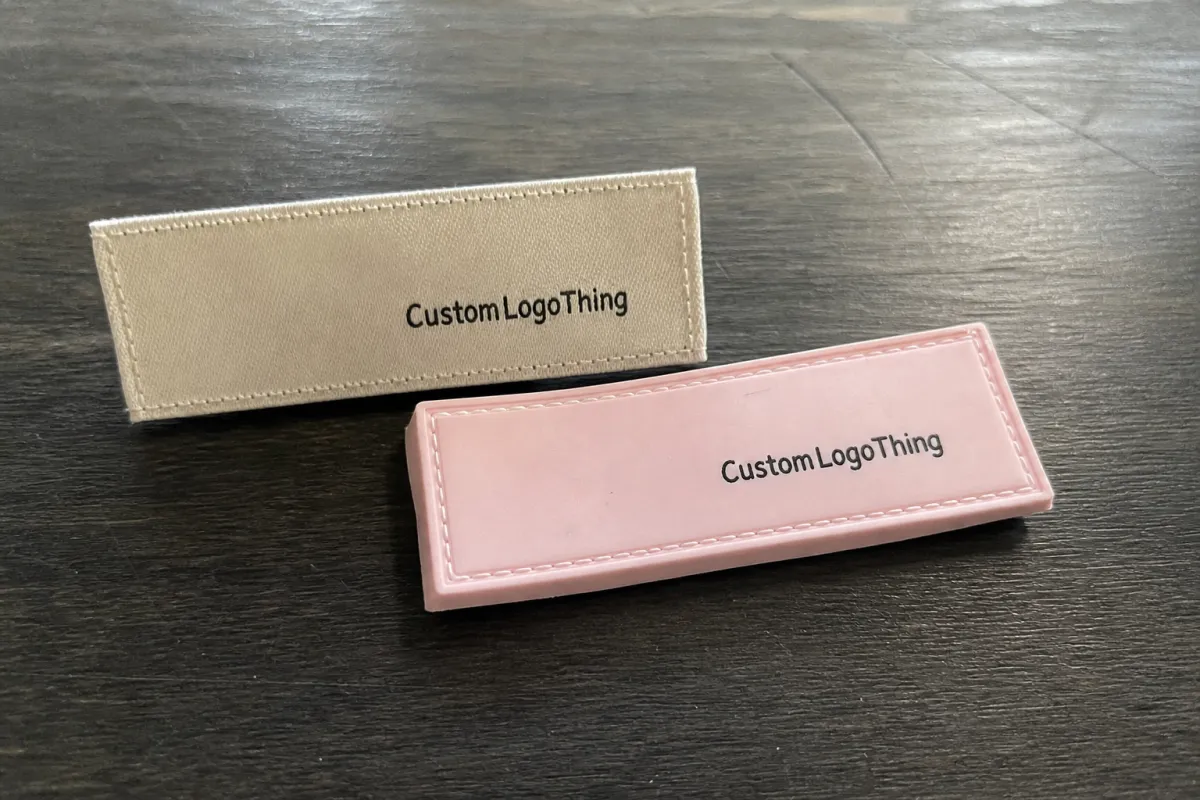
Leatherette has a premium, minimal look that suits neutral palettes and upscale kits. It is not the best choice for intricate logos, but it can make a simple mark feel intentional. On aprons, toiletry bags, and gift sets, it often looks more expensive than the price suggests, provided the color and finish are selected carefully.
Felt is softer and more craft-like. It can work for indie beauty campaigns or seasonal kits, but it is not the strongest option for moisture, abrasion, or repeated handling. Printed fabric is practical when the artwork has gradients, tiny details, or multi-color effects that would be difficult in thread or molding. It gives more graphic freedom, though the final result depends heavily on print quality and color control.
Backing matters just as much as the face material. Sew-on remains the most durable and the most reliable for uniforms, bags, and repeated use. Iron-on can be efficient, but it depends on fabric type and heat tolerance; it is a poor fit for heat-sensitive or highly synthetic surfaces unless the supplier has tested it properly. Velcro works for removable badges and changing event roles. Adhesive is usually short-term and better suited to temporary packaging applications than to daily use.
Surface compatibility is where many orders go wrong. Cotton can usually handle more attachment options. Polyester often needs careful heat testing. Satin, coated fabrics, and delicate pouch materials are less forgiving. On boxes and sleeves, the issue is less about washability and more about bulk: a patch that is too thick may warp the surface or create an awkward bump under inserts and closures.
For kits that ship through distribution channels, patch shape and material also affect packing. A thin woven patch nests well inside a flat PR box. A thick 3D molded badge can crush nearby inserts or add unwanted pressure points. If the kit already includes paperboard, tissue, inserts, and product samples, the patch should be chosen with the total package structure in mind.
For teams that want context on how physical branding elements behave in packaging systems, the Institute of Packaging Professionals is a practical reference point. It is not a design trend source; it is useful because it keeps the conversation grounded in handling, presentation, and material behavior.
Material choices, durability, and brand feel
Embroidered patches remain the classic choice. They are tactile, familiar, and visually warm. For lifestyle beauty brands or salon teams, that can be exactly right. The catch is detail loss. A logo with small type or thin lines may not survive the stitch build cleanly. If the design is simple and bold, embroidery performs well. If the artwork is precise and minimal, it can start to look heavy.
Woven patches are usually the smarter option for finer logos. The tighter weave allows for cleaner text and more controlled line work. They are flatter, which makes them easier to use on packaging-adjacent items like pouches, sleeves, and soft goods where thickness matters. The look is less plush than embroidery, but many beauty brands prefer the cleaner result.
PVC and silicone are the modern durability options. They are excellent for sharp shapes, clean edges, and wipeable surfaces. Silicone usually feels a little softer in appearance; PVC often looks more structured. They work well for beauty brands that want a technical, modern, or lab-clean identity. The downside is tonal mismatch. If the rest of the packaging is soft, matte, and delicate, a hard molded patch can feel out of place.
Leatherette sits in the premium-minimal category. It can look expensive without shouting about it. That makes it useful for premium kits, aprons, and travel cases. It pairs best with simple logos and restrained color palettes. It is not the answer for complicated artwork, but it can make a small mark look surprisingly polished.
Felt is softer and more seasonal in feel. It suits short-run campaigns, indie launches, and some natural-beauty positioning, but it is less durable than woven, silicone, or embroidered options. If the item will be handled often or exposed to moisture, felt is usually a compromise.
Printed fabric gives the most freedom for color transitions, fine art, and photographic detail. The main risk is visual flatness. If the brand identity depends on texture and depth, printed fabric may feel too lightweight. It is best used when detail matters more than dimensional effect.
Durability should be judged against the item’s actual use, not just a sample sitting on a desk. Uniform patches should tolerate wear and laundering based on the garment care instructions. Tote bags take friction every day. Pouches get squashed, stuffed, and tossed into travel bags. If the patch scuffs, peels, or frays early, the brand’s perceived quality drops with it.
Color matching deserves caution as well. Thread libraries do not behave like screen colors, so embroidered and woven pieces can shift slightly from a strict PMS expectation. Molded materials can be more consistent, but only if the supplier has tight process control. The safest path is physical reference approval, not relying on a mockup viewed on a monitor. Screens make everything look tidier than it is.
Sustainability claims should stay realistic. Recycled thread, vegan leather alternatives, and lower-waste production methods can fit certain beauty brands, especially when the rest of the packaging uses recycled materials, FSC certified paper, or carefully sourced paperboard. The patch should not break the sustainability story by introducing a heavy plastic component for no functional reason. Consistency matters more than slogans.
For kits that must survive shipping stress, the ISTA testing framework is useful background. It helps buyers think about vibration, compression, and handling rather than only the finished look. That matters when a branded patch is part of a multi-piece shipment rather than a standalone accessory.
| Patch material | Best for | Typical feel | Common price band per unit* | Notes |
|---|---|---|---|---|
| Woven | Fine logos, pouches, premium apparel labels | Flat, detailed | $0.35-$1.20 | Good balance of detail and cost |
| Embroidered | Classic uniforms, tote bags, lifestyle branding | Tactile, raised | $0.45-$1.60 | Better for simple artwork |
| PVC / Silicone | Modern branding, wipe-clean items, high durability | Smooth, dimensional | $0.60-$2.50 | Higher tooling complexity |
| Leatherette | Minimal luxury, premium kits, aprons | Sleek, understated | $0.55-$2.00 | Strong visual value on simple marks |
| Printed fabric | Gradient artwork, short-run campaigns | Flat, graphic | $0.25-$0.90 | Less texture, more color freedom |
* These are practical buyer ranges for moderate quantities, not universal factory quotes. Size, backing, edge finish, and quantity can move numbers a lot.
Cost, pricing, MOQ, and unit cost tradeoffs
Simple woven or printed patches usually come in at the lower end of the cost range. High-detail embroidery, custom molded PVC, and silicone options usually cost more because they need more setup, tooling, or production steps. That sounds obvious, but buyers still often compare quotes as if every patch were the same product.
Pricing shifts with size, color count, stitch count, edge finish, backing type, and order volume. A small woven badge with a clean merrowed edge is not comparable to a larger multi-color patch with velcro backing. More material raises the cost. More colors add labor or setup. Specialty backings can add both price and thickness. Bigger quantities usually reduce unit cost, but they also create storage pressure if the launch is short-lived.
MOQ is where budget decisions get real. Lower minimums usually cost more per unit. Higher minimums improve pricing but only if you can actually use the inventory. Ordering 3,000 patches to save a few cents each is not a bargain if the next campaign changes direction and the extras sit untouched.
A practical quoting request should ask for tiered pricing at 100, 300, 500, and 1,000 units. That gives a more accurate picture of the break points. If a supplier only offers one number, ask for the structure behind it. The difference between unit price and total cost can be misleading once sample fees, setup charges, application labor, and shipping are added.
Hidden costs deserve attention. Sampling can carry a charge. Revisions may add time and expense. If the supplier is also applying patches to pouches, apparel, or boxes, labor will be part of the quote. Rush production can raise cost quickly, and freight costs matter more than people expect when the kit includes multiple components.
For beauty launches, the right decision usually depends on how the patch will be used. A one-off PR box can prioritize turnaround and visual impact. Retail staff uniforms need durability and wash resistance. A seasonal merch drop may sit somewhere in the middle. The product’s job should lead the budget, not the other way around.
Production steps and lead time: from artwork to delivery
Patch production usually follows a predictable path. First comes artwork review. The supplier checks whether the logo has enough line weight, spacing, and color clarity for the chosen material. Then comes the mockup or proof. If the design is complex, a sample or pre-production version may be needed. After approval, bulk production begins, followed by finishing, packing, and shipment.
Most delays start with the same handful of issues: low-resolution artwork, too many revisions, unclear approvals, or a logo that is not suited to the material selected. A simple woven patch can move quickly. Embroidered pieces are usually straightforward unless the design is dense. Molded PVC and silicone often need more time because tooling and setup are more involved. If the supplier is also attaching patches to finished goods, that creates a second production stage.
Lead time should be treated as a working constraint, not an afterthought. For launches, influencer mailers, and event kits, buffer time is essential. Rush orders tend to narrow finish options and push cost up. That is not a supplier trick; it is just how production capacity works. Approving a physical sample early is the easiest way to avoid surprises later.
Samples are not busywork. A sample can show whether a patch curls on satin, feels too heavy on a pouch, or clashes with the tone of a matte box. It can also reveal whether the edge finish is too chunky or whether a glossy surface is overwhelming an otherwise soft package. For beauty brands managing multiple materials in one kit, that check is often the difference between a controlled rollout and a costly correction.
Step-by-step way to choose the right patch material
- Define the use case. Decide whether the patch is for apparel, tote bags, pouches, boxes, or promo items.
- Set the brand tone. Determine whether the look should feel soft luxury, clinical clean, playful, or minimal.
- Check artwork complexity. Small text, gradients, and thin lines narrow the material choices fast.
- Choose the backing. Sew-on, iron-on, adhesive, and Velcro behave very differently on real surfaces.
- Request sample options. Ask for physical samples or swatches, not only renders.
- Compare feel, cost, and durability side by side. The cheapest option is rarely the best if it wears badly.
- Lock the spec sheet. Record size, material, color reference, backing, and edge treatment for reorders.
That last step tends to get skipped, then the second batch comes back with slight differences. A clear spec sheet prevents a lot of unnecessary back-and-forth. If the patch needs to be reordered later, the written specification should include the material name, thickness, finish, attachment method, color reference, and approved sample reference.
For beauty brands, the right answer usually sits at the intersection of three things: how the item will be used, how the brand should feel, and how much production risk the team can tolerate. That is the real filter. Not the most eye-catching supplier image. Not the cheapest quote in isolation. The material has to work in hand, in use, and at scale.
Common mistakes beauty brands make with patch specs
The biggest mistake is choosing based on the mockup alone. Screens flatten texture, hide thickness, and smooth out shine. A patch that looks elegant digitally can feel too hard, too heavy, or too glossy in person.
Another common issue is using embroidery for logos that are too small or too intricate. If the text is tiny, the threads can crowd together. Woven, printed, or silicone options often preserve detail better.
Backing is another place where projects go off course. Adhesive may be fine for temporary packaging use but unreliable on delicate fabrics or curved surfaces. Iron-on can fail if the substrate cannot handle heat. Velcro is practical for removable badges, though it adds thickness and can feel out of place on refined packaging.
Thickness is easy to ignore until the prototype arrives. Then the team notices the pouch no longer folds neatly, the tote catches on itself, or the uniform patch feels stiff against the body. On soft goods, thinner is often the safer choice unless the visual strategy depends on dimensionality.
Late ordering causes more damage than most teams expect. A rush job may still be possible, but it reduces finish options and pushes price up. Production calendars have no sympathy for launch dates that appear at the last minute.
Skipping the physical sample is usually the most expensive mistake of all. Texture, edge shape, flexibility, and color balance are much easier to judge in hand. Reorder inconsistency is the last problem. If the spec is not locked, subtle shifts can creep into later batches and create awkward differences across campaigns.
Expert tips and next steps for smarter sourcing
Ask for a comparison sheet that shows material options, tiered pricing, and lead time side by side. A capable supplier should be able to explain tradeoffs clearly. If every answer is vague, that is already useful information.
Request photos of similar finished work. Beauty apparel, pouches, and retail packaging behave differently from sports merch or corporate giveaways. Evidence on comparable items matters more than polished catalog language.
Define artwork minimums before production starts. Set the smallest text size, line thickness, exact color references, and preferred finish. If the logo contains ultra-fine detail, say so early. That avoids the familiar problem of trying to force a bad file into a material that was never right for it.
Do not assume one patch type should cover every application. A patch that works on a tote may be too bulky for a pouch. One that looks great on a box may be too stiff for daily-use apparel. Same brand, different constraints. Better to tailor by use than to make one material carry everything.
For launch kits, prioritize consistency and turnaround. For uniforms, prioritize durability and washability. For broader packaging systems, check how the patch interacts with recycled paperboard, kraft inserts, FSC certified cartons, and the rest of the material stack. The patch should reinforce the system, not fight it.
Before ordering, approve the sample, confirm the MOQ, check the packing method, and verify the reordering spec. Those are basic checks, but they prevent the kind of expensive improvisation that usually shows up after the order is already in motion.
If the goal is a polished outcome, the most useful takeaway from the Logo Patches Material guide for beauty brands is straightforward: choose based on detail, durability, attachment method, and brand feel, then lock the specification before production starts. That is how a small branded element does real work instead of becoming a weak spot.
Which logo patch material works best for beauty brand uniforms?
Woven and embroidered patches are the most common choices for uniforms because they feel branded and can handle regular wear. Woven is better if the logo includes fine text or small details. Embroidery works well for simpler, bolder artwork. If the uniform is washed often, confirm the backing and attachment method before approving the order.
What is the most premium-looking patch material for beauty packaging?
Leatherette, silicone, and high-quality woven patches usually read as premium, depending on the overall brand style. Leatherette fits minimal luxury. Silicone suits modern, clean branding. Woven works well for detailed logos that need a refined finish. The best option is the one that matches the rest of the packaging, not the one that looks the most expensive in isolation.
How much do custom logo patches usually cost?
Simple woven or printed patches are usually the most affordable. Complex embroidered, PVC, or silicone patches cost more because of setup, tooling, or stitch complexity. Price changes with size, quantity, backing, colors, and finishing, so tiered quotes are the most useful way to compare suppliers.
How long does patch production usually take?
Simple patches are often faster to produce than molded or highly detailed options. Most projects need time for proofing, sample approval, bulk production, and shipping. Rush jobs are possible, but they usually increase cost and limit finish choices.
Can logo patches be used on cosmetic pouches and gift boxes?
Yes, but the material and backing need to match the surface. Flat, lighter patches work better for boxes and pouches; thicker or harder materials may add bulk or create awkward pressure points. Test the patch on the actual package before placing a bulk order.