For Gift Set Brands, the visible brand mark often does more selling than the box beneath it. That is exactly why a Logo Patches Material guide for gift set brands matters: the wrong patch can make a carefully built set feel cheaper than it is, even if the packaging budget was healthy.
Logo patches appear on apparel, pouches, sleeves, cases, boxes, and presentation packaging. They may be sewn on, heat-applied, adhesive-backed, or mounted with hook-and-loop. Material choice affects not only appearance, but also hand-feel, durability, assembly speed, and how well the patch survives shipping. A premium look on a sample card is not proof that the same material will hold up in production.
Below is a practical breakdown of how common patch materials compare on appearance, print detail, attachment, cost, and real-world use. The goal is not to chase the fanciest finish. It is to choose a patch that suits the product, the packaging surface, and the brand position without creating avoidable failures later.
Why gift set brands overpay for the wrong patch material
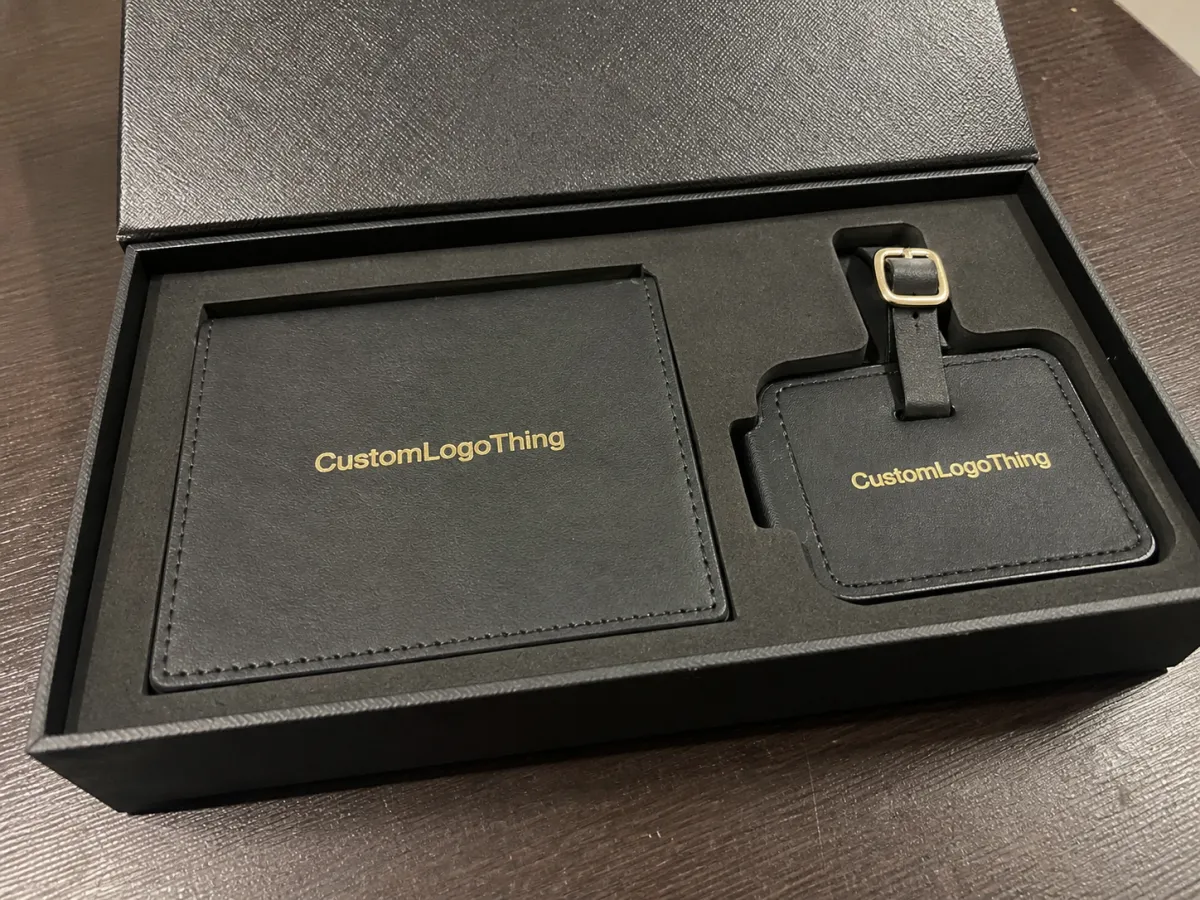
The patch often drives perceived value more than the box itself. A clean woven label on a structured pouch can make a modest set feel thoughtful and intentional. A shiny, stiff, or poorly stitched badge can drag down the whole presentation, even when the carton print and inserts are well executed.
That mismatch is common because buyers tend to judge patches from a photo, a digital mockup, or a short sample run. Those previews can hide edge wear, distortion, weak backing, or a surface finish that looks impressive until the first handling test. The question is not “What looks expensive?” It is “What survives handling, matches the brand, and still reads clearly at the size I need?”
Gift set brands also overpay when they select a material before confirming the application surface. A patch that works on denim may fail on coated paperboard. A badge that sits neatly on a pouch may pucker on a curved lid or a rigid sleeve. Small differences in substrate can change the result enough to make a mid-priced patch look like a bad one.
Premium packaging is a system. If one component feels cheap, the whole thing feels cheap. Consumers rarely give you a partial pass.
For brands building a broader packaging program, patch decisions usually sit alongside kraft paper, corrugated cardboard, inserts, tissue, and assembly methods. If sustainability is part of the brief, patches should be checked separately from the outer pack. A FSC certified box does not automatically make a PVC patch eco-friendly, and a recycled carton does not compensate for a weak adhesive back.
The practical trap is simple: buyers often approve the first option that appears premium enough, then discover it cracks in transit, curls at the edge, or prints muddy around the logo. Better specs come from matching material to use case, not from picking the most expensive-looking sample.
How logo patch materials change the final look and feel
Texture matters. So does edge definition, stitch density, thickness, and sheen. A matte patch with tight detail reads differently from a fluffy, glossy, or heavily molded one. That difference shows up quickly, especially when the gift set is photographed for e-commerce or social media.
Embroidered patches deliver a classic, tactile look. They work well for bold logos, varsity styles, outdoor brands, and sets that want a crafted feel. The tradeoff is detail loss: small text, thin lines, and fine icons can disappear into the stitch structure. If the logo is simple and strong, embroidery can look more substantial than a printed solution. If the logo is delicate, it can turn into a fuzzy approximation.
Woven patches are flatter and sharper, which makes them better for detail-heavy logos and cleaner modern branding. They usually preserve typography more accurately than embroidery, especially at smaller sizes. The downside is that they feel less dimensional in hand, so they can read as less luxurious if the rest of the pack is very tactile.
Leather and faux leather patches communicate premium quickly. They suit apparel bundles, travel accessories, notebook covers, and gift sets that want a restrained, upscale tone. Real leather brings natural grain and a warmer feel. Faux leather is often more consistent and easier to color-match. Both can look excellent if the thickness, embossing depth, and edge finish are controlled properly. If the material is too thin, the badge can curl; too thick, and it may sit awkwardly on soft packaging.
PVC and silicone patches create a bold, durable, slightly sporty look. They photograph clearly because edges are defined and colors are saturated. Silicone usually feels softer and more flexible, while PVC reads a bit firmer and more graphic. These materials are useful for travel, outdoor, utility, and tech-style sets. They can also feel out of place on understated luxury packaging, especially if the logo is very minimal.
Felt and printed fabric patches sit in different territory. Felt adds softness and a handmade, nostalgic feel. Printed fabric works better when gradients, tiny type, or image-based artwork matter more than texture. Neither one automatically signals luxury, but both can be the right choice if the brand story supports them.
There is always a tradeoff between detail clarity and tactile richness. Fine logos usually need woven or printed solutions. Bold logos can work in embroidery or PVC without losing impact. If the artwork has three fonts, a small line icon, and a gradient fade, it is probably asking too much from a chunky embroidered patch. That is not a materials problem; it is a design constraint.
Here is a compact comparison buyers can actually use:
| Material | Visual effect | Best for | Typical risk |
|---|---|---|---|
| Embroidered | Textured, traditional | Bold logos, casual and outdoor sets | Small text loss |
| Woven | Flat, crisp | Detailed logos, modern branding | Less tactile richness |
| Leather / faux leather | Premium, restrained | Luxury, travel, apparel packaging | Edge wear if spec is weak |
| PVC / silicone | Bold, durable | Tech, sport, outdoor gift sets | Can look bulky |
| Felt / printed fabric | Soft, casual | Creative, handmade, low-gloss sets | Lower perceived premium |
Key factors that decide the right material for your brand
Budget comes first for most teams, even if nobody says it bluntly. Unit cost changes with material, size, stitch count, number of colors, backing type, and edge finish. A simple embroidered patch for a 2-inch logo may sit in a lower price band than a molded PVC badge with custom tooling. Order size matters too: at 1,000 pieces, setup cost feels heavy; at 10,000 pieces, the same setup gets easier to absorb.
Brand position comes next. A luxury line usually wants quiet texture and low shine. A corporate gift set may favor a clean woven mark or faux leather plaque. Outdoor and sports brands often prefer materials that feel durable rather than delicate. More playful brands can use color and thickness to good effect. Eco-focused brands usually want the patch to sit comfortably beside recycled board, low-ink printing, and FSC paper components.
Durability is where many attractive patches fail. Ask how the material behaves under abrasion, moisture, heat, repeated bending, and warehouse handling. If the gift set ships long distance, sits in humid storage, or gets opened and closed repeatedly, those conditions matter. A patch that looks fine on day one but frays after a few bends is not premium. It is just expensive disappointment.
Artwork complexity narrows the field quickly. Thin lines, tiny icons, gradients, and small text push you toward woven or printed fabric. Embroidery handles stronger shapes better than delicate details. Leather embossing works best for simplified marks. PVC and silicone can hold detail well, but the design still needs enough line weight to mold cleanly. In production terms, the art should suit the method, not the other way around.
Attachment method matters more than many buyers expect. Sew-on is stable, but it requires support from the sewing workflow. Heat seal can be efficient on some fabrics, yet risky on delicate, coated, or heat-sensitive surfaces. Adhesive backing helps for quick assembly, but it is not always the right choice for long-term retail use. Hook-and-loop works for modular kits or reusable covers. Magnetic mounting is niche, but useful on rigid display pieces. Each option changes both assembly time and failure risk.
Compliance and tactile safety also matter, especially for children’s products, skin-contact items, and branded accessories worn close to the body. Ask about non-toxic inks, soft hand-feel, and any category restrictions early. If the set is sold into regulated channels, waiting until the final approval stage is usually too late. Fixing compliance after sampling tends to increase cost and delay launch.
Logo patches material guide for gift set brands: a step-by-step selection process
If you want a practical selection method, use this one. It saves time and keeps sales teams from steering you toward whatever happens to be on hand.
- Define the use case. Is the patch going on a garment, pouch, box sleeve, rigid case, or presentation wrap?
- Choose the brand message. Decide whether the goal is premium, rugged, minimalist, handmade, or promotional.
- Shortlist two or three materials. Do not overcomplicate it. You are reducing risk, not running a design committee.
- Request samples or mockups using the actual logo size, placement, and background color.
- Test real conditions. Bend it, rub it, expose it to moisture, and check readability from a normal viewing distance.
- Lock the backing and attachment style only after confirming how the patch will be applied in production.
That sequence works because it forces tradeoffs into the open. A patch that looks excellent on a blank white sample may disappear on a dark textile. A faux leather badge that feels luxurious may be too stiff on a soft pouch. A PVC patch may be durable, but if the brand sells minimalist stationery sets, it may look off-brand. Catching those issues before bulk production is far cheaper than fixing them after approval.
One useful habit is to photograph samples on the actual packaging substrate whenever possible. A patch that looks clean on paperboard may look different on satin, canvas, or textured fabric. The same applies to box surfaces like corrugated cardboard wraps or coated sleeves. Different materials change how light hits the logo, which changes perceived sharpness and color depth.
For larger programs, coordinate the patch choice with the rest of the kit: inserts, closures, printed wraps, and exterior packaging. The cleanest gift sets usually keep the patch, box print, and interior components in the same visual language. Mismatch is one of the fastest ways to make a premium product feel assembled instead of designed.
Cost, pricing, MOQ, and quote drivers you should know
Quote pricing is not mysterious. It is a stack of variables, each adding a small amount of pressure to the final number.
Material type is the biggest one. As a practical range, embroidered and woven patches usually sit in the lower-to-mid cost bracket. Leather and faux leather often land in the mid-range because the material and finishing are more involved. PVC and silicone usually cost more, especially when molds or tooling are required. Exact numbers still depend on size, shape, and how much detail you want to pack into a small area.
For a run of 5,000 pieces, a simple woven patch may price very differently from a molded PVC patch. Add a custom shape, multi-layer construction, or specialty edge finishing, and the quote moves quickly. That is normal. What is not normal is receiving a quote with no explanation of what is driving the cost.
Minimum order quantities vary. Woven and embroidered programs can often support lower MOQs because they are easier to run once set up. Molded materials usually need higher minimums because tooling cost has to be spread across the order. If a supplier offers an unusually low MOQ on a highly detailed molded patch, ask how they are achieving it. Sometimes the answer is fine. Sometimes the quality simply moves elsewhere in the build.
Watch the hidden costs:
- Custom molds for PVC, silicone, or molded-style leather pieces
- Pantone matching for exact brand color control
- Sample charges and revision fees
- Rush fees when the schedule gets squeezed
- Special packaging for kitting or assembly into gift sets
When requesting a quote, include the size, shape, artwork file, quantity, backing type, and the surface the patch will go on. If it is for a gift set, say so. That context changes the recommendation. A patch for apparel is not the same as a patch for a rigid presentation sleeve with adhesive application.
Chasing the lowest unit cost is risky if the patch will peel, fray, or look poor as soon as the box is opened. False savings often reappear later as returns, rework, or brand damage. In packaging, the cheap option is only cheap if it still performs after shipping.
| Patch type | Relative unit cost | MOQ tendency | Quote driver |
|---|---|---|---|
| Embroidered | Lower | Moderate to low | Stitch count |
| Woven | Lower to mid | Moderate to low | Detail density |
| Leather / faux leather | Mid | Moderate | Finish and backing |
| PVC / silicone | Mid to higher | Higher | Mold/tooling |
| Printed fabric | Lower to mid | Moderate | Print coverage and color count |
Production steps, timeline, and lead time from artwork to delivery
The standard workflow is straightforward: artwork review, material recommendation, sample approval, bulk production, finishing, quality check, and shipment. Problems usually start when the artwork is incomplete, the size is unclear, or the team keeps changing direction after sampling. That is where schedules slip.
Lead time depends on material and complexity. Simpler woven or embroidered runs are usually faster because they do not require molds. Molded PVC or silicone patches take longer because setup, sampling, and approval take more time. For many custom runs, a realistic timeline is often around 12-15 business days from proof approval for simpler constructions, while more customized pieces can take longer. If someone promises an unusually fast turnaround, ask what steps are being skipped.
Delays most often come from:
- Artwork revisions after sampling
- Slow color approvals
- Unclear placement instructions
- Changes in size or shape after quote approval
- Mismatch between patch production and gift set kitting
Rush orders are possible, but they usually cost more and leave less room for error. If you need to shorten turnaround, the best move is to finalize artwork early, approve samples quickly, and keep the attachment method simple. It also helps to align the patch schedule with box printing, insert fabrication, and final assembly. If the patch arrives two weeks before the rest of the kit, it adds storage time and awkward handling without helping the launch.
For brands using recycled materials or FSC paper components, coordination matters even more because the finishing sequence may differ from standard packaging. The patch should not become the bottleneck that holds up the entire gift launch.
Common patch material mistakes gift set brands keep repeating
The first mistake is choosing a material because it looks expensive in a photo, then finding out it cracks, sheds, or goes flat once it meets real handling. That happens often with overly stiff faux leather, weak adhesive backs, and low-grade molded materials.
The second mistake is forcing too much detail into the wrong method. If the logo has tiny type and thin lines, embroidery is often the wrong fit. The result is blurred text, filled-in spaces, and a patch that looks “close enough” from six feet away. That standard may work for a quick promo item, but it is weak for premium gifting.
The third mistake is ignoring the attachment method. A beautiful patch means nothing if it peels off a coated surface, puckers on fabric, or distorts a paperboard sleeve. If the patch is going on packaging rather than apparel, test it on the actual substrate, not on an optimistic prototype.
Another common error is choosing the wrong texture for the brand. Soft-feel patches on rugged outdoor sets can feel flimsy. Chunky embroidery on minimalist luxury packaging can look loud and dated. The material should support the story, not fight it.
Finally, too many brands skip real-world testing. Fold the item. Rub it. Ship it. Open and close it a few times. Put pressure on it in a box. Packaging tends to look perfect until it enters actual fulfillment. Then the weak points show up quickly.
Expert tips to lock in a better patch spec before ordering
Start with the product surface, not the mood board. A patch that works on denim may fail on coated paperboard or a slick synthetic pouch. Surface behavior should drive the decision, because the wrong attachment method will ruin the result no matter how good the material is.
If the logo is small, simplify it. Cleaner art often outperforms complicated art. A strong icon, clear wordmark, and reasonable line weight usually produce a better patch than a design packed with fine detail that disappears once production starts.
Ask for two quote options whenever possible: one optimized for appearance and one optimized for unit cost. That comparison makes the tradeoffs visible. Sometimes the premium option is justified. Sometimes the lower-cost route is nearly as good if the logo and placement are well designed.
Request a production sample or pre-production proof if the order is large or if the patch will be visible as a key part of the gift presentation. That matters most for multi-piece sets where patch finish has to match box print, insert color, and closure hardware. Consistency across the whole pack usually matters more than obsessing over one component alone.
Keep your spec sheet simple and complete. Include:
- Artwork file and Pantone references
- Patch size and shape
- Material type and finish
- Backing or attachment method
- Quantity and target delivery date
- Surface it will be applied to
If you are still choosing between materials, that is normal. A useful Logo Patches Material guide for gift set brands should not pretend every option is interchangeable. The right answer is the one that holds up, matches the brand, and stays within budget without creating problems later.
For a final sanity check, compare the patch against the full packaging system. If the box is corrugated cardboard with kraft paper sleeves and the rest of the kit uses recycled materials, the patch should look like it belongs there. If sustainability is part of the pitch, make sure the patch choice does not undermine it. That sounds obvious, but it is still one of the most common misses.
Next step: prepare your artwork, define quantity, choose two materials, and request samples using the actual application method. That is the fastest way to use a Logo Patches Material guide for gift set brands without paying for a patch that photographs well and performs badly.
FAQ
What is the best logo patch material for gift set brands that want a premium look?
Leather and faux leather usually read as premium fastest because they have a clean, elevated look. Woven patches are also strong if you want crisp detail and a modern finish. PVC or silicone can feel premium too, but the tone is bolder and more technical than classic luxury.
Which patch material is best if my logo has tiny text or fine lines?
Woven patches usually handle small details better than embroidery. Printed fabric can work when color accuracy matters more than texture. If the logo needs razor-sharp edges at small sizes, avoid bulky materials that blur the artwork.
How do I estimate patch cost before requesting a quote?
Start with size, quantity, and material type. Then add backing type, number of colors, and edge finish. If you are considering PVC, silicone, or molded leather styles, tooling or mold fees can affect the total a lot.
What lead time should gift set brands expect for custom logo patches?
Simpler embroidered or woven runs are usually faster. Molded or highly customized patches need more time for sampling and setup. Artwork approvals and sample revisions are the biggest schedule killers.
Can I use the same patch material across boxes, pouches, and apparel in one gift set?
Sometimes, but not always. A material that works on fabric may fail on paperboard or rigid packaging. It is usually smarter to match each surface with the best attachment and material combination, even if that means using more than one patch style across the set.


