For supplement brands, a patch is rarely just decoration. It can sit on shaker sleeves, gym bags, hoodies, retail kits, or packaging inserts, and each placement changes how the brand is perceived. Texture, edge quality, color accuracy, and backing all affect whether the piece feels deliberate or like an afterthought.
That matters because supplement buyers are used to scanning for cues: clean packaging, practical materials, and a finish that suggests the brand understands details. A patch can reinforce that signal quickly. It can also undermine it if the wrong material makes the logo fuzzy, stiff, too glossy, or flimsy under handling.
The best choice depends on where the patch will live, how much detail the logo carries, and how much wear it must survive. There is no single correct material. There is, however, a clear way to narrow the field without wasting time or money.
Why logo patches matter more than most supplement brands expect
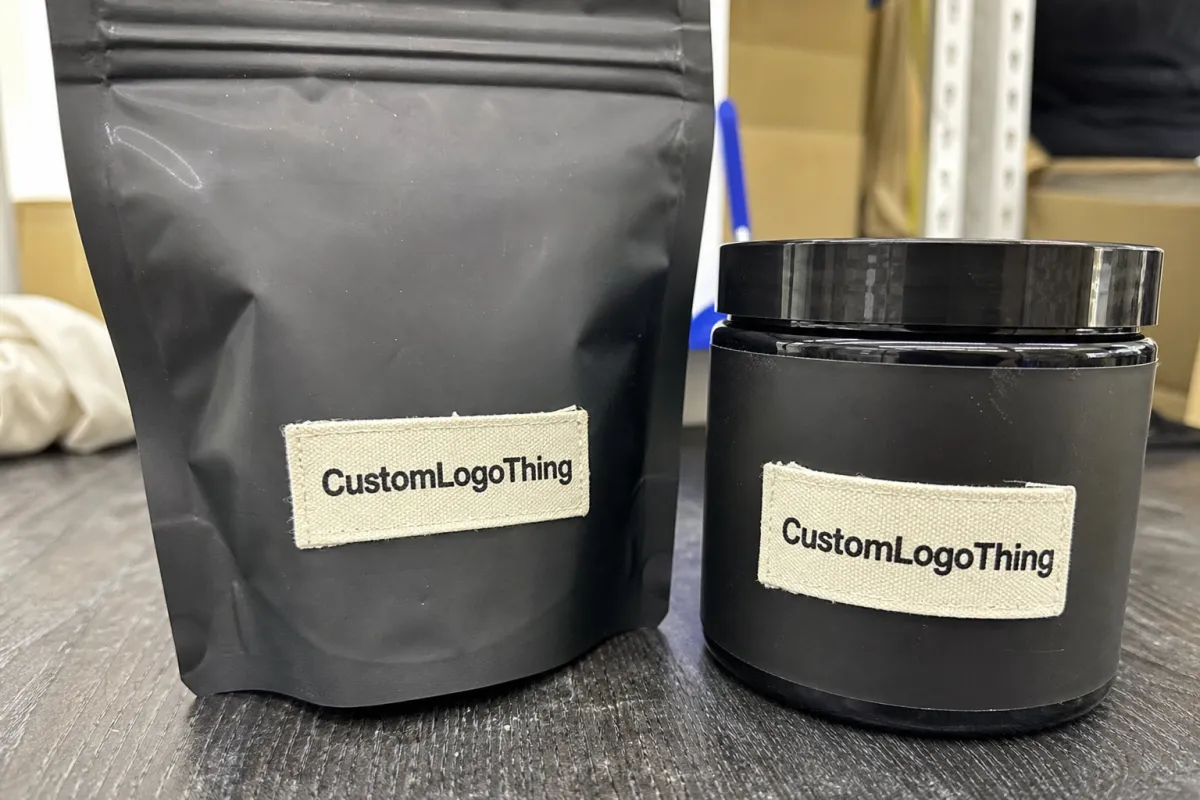
Most buyers start by asking what a patch costs. Fair enough. But the more revealing question is what the patch says before anyone opens the product. A woven patch can make a brand feel technical and controlled. Embroidery can push the same logo toward athletic energy. PVC or silicone reads more rugged and durable. Leather and PU leather skew premium and restrained.
That shift happens fast. People read texture almost instinctively, especially on merch and secondary packaging. A supplement line built around performance and discipline may benefit from a tighter, cleaner patch. A more lifestyle-oriented line may need something softer or more upscale. The material is part of the message, not separate from it.
Supplement brands also use patches differently from apparel-only labels. A gym hoodie might be washed weekly. A shaker sleeve may be wiped, flexed, and tossed into a locker bag. A retail insert might sit in a box but still needs to photograph well for social content or PR kits. These are not identical conditions, so the patch spec should not be identical either.
There is a practical side to this as well. Patches that are too thick can distort on curved surfaces. Overly detailed embroidery can turn small text into a blur. Glossy finishes can look cheap under harsh retail lighting. The wrong choice does not always fail dramatically; sometimes it just looks slightly off, which is worse because it erodes trust without announcing itself.
“A patch is small enough that people assume it is easy. It is not. The right finish can elevate the whole brand, while the wrong one makes even a good logo look cheap.”
How patch materials work on clothing labels and branded merch
Patches are a family of constructions rather than a single product type. Woven patches use fine threads to reproduce detail with a flatter surface. Embroidered patches build dimension through stitched thread. PVC and silicone are molded materials, so they can hold bold shapes, raised borders, and a more weather-resistant feel. Leather and PU leather are less about visual complexity and more about tone, restraint, and premium presentation.
The backing matters just as much as the face material. Sew-on is still the most dependable option for long-term use, especially on apparel that will be washed or handled often. Iron-on and heat-seal can work, but only when the garment fabric, temperature, and wash expectations line up. Adhesive backing is useful for temporary placement or certain packaging applications, though it should not be treated as a permanent solution. Velcro has its place on removable or interchangeable patches, usually on bags, jackets, or gear.
For supplement brands, the same logo may need multiple executions. A premium launch hoodie may suit embroidery. A reusable tote or cooler bag may be better with PVC or silicone because those materials tolerate moisture and friction more comfortably. A packaging insert made from kraft paper or corrugated board may call for a smaller, quieter patch so the whole package does not feel overbuilt.
Detail control is where material choice becomes visible. Woven patches often handle fine text better than embroidery because the thread layout stays tighter. PVC and silicone can keep solid outlines and color blocks crisp, but tiny serif text still tends to degrade. Leather and PU leather work best when the design is simplified, since the surface already contributes to the visual effect.
Edge treatment and border style also matter. A merrowed border can frame an athletic design well. A clean cut edge may suit a more modern patch. Debossing can look refined on leather-like materials, but only if the artwork has enough open space to breathe. The face material should support the logo, not force it to compromise.
Key factors when choosing a patch material for supplement packaging and apparel
Artwork complexity is usually the first filter. If the logo includes thin lines, tiny type, gradients, or multiple color transitions, embroidery can become a liability. Woven, printed textile, silicone, or even a simplified leather-like patch may preserve the design better. The rule is simple: if the art relies on precision, the material must be able to carry precision.
Brand positioning comes next. A performance supplement line often fits texture and contrast. A clinical, science-led brand may read better with a cleaner woven patch or a minimal debossed finish. High-energy pre-workout brands often tolerate bolder color and dimensional material, while premium wellness brands usually benefit from restraint. The material should match the tone of the rest of the packaging system, not fight it.
Durability is where buying decisions get more specific. A patch on a hoodie needs to survive laundering. A patch on a bag or cooler sleeve needs to handle abrasion, flexing, and occasional moisture. A patch on a retail insert might be judged more by shelf impact and photography than by wash resistance. Those are different use cases, and they should not be treated as the same spec.
There are also manufacturing realities. Some patch types need molds or dies. Others are faster to set up but require more careful stitch planning. A detailed design might need extra proof rounds. A molded PVC piece usually brings tooling into the conversation. Leather and PU leather can require tighter approval on deboss depth, edge finish, and color tone. None of this is a problem if it is planned for early.
Packaging alignment matters more than buyers sometimes expect. If your cartons are FSC certified, your mailers use post-consumer waste content, or your inserts are intentionally minimal, a patch that looks overly flashy can throw off the system. The same applies in reverse: a premium patch on a rough outer shipper can feel disconnected. Consistency is a quiet form of quality control.
One practical question usually clarifies the choice faster than anything else: where will this patch be seen, touched, and washed? If the answer is clear, the material decision becomes much easier.
Logo patches material guide for supplement brands: choosing the right option
If you want a clean decision path, begin with the logo itself. Some marks need precision. Some need texture. Some need durability above all else. A strong Logo Patches Material guide for supplement brands starts by matching those priorities to the material that preserves the mark rather than distorting it.
| Material | Best for | Typical strengths | Trade-offs |
|---|---|---|---|
| Woven | Detailed logos, small text | Sharp detail, flat finish, clean presentation | Less texture than embroidery |
| Embroidered | Classic athletic branding | Texture, thread relief, familiar sport look | Can lose tiny details |
| PVC | Rugged merch, moisture-prone items | Durability, dimensional look, bold shape | Requires mold setup, not ideal for tiny text |
| Silicone | Flexible, modern branding | Soft touch, weather resistance, clean color blocks | Fine detail still needs simplification |
| Leather / PU leather | Premium, understated branding | Elevated look, restrained texture, giftable feel | Not the best for complex art |
| Printed textile | Artwork with gradients or photographic elements | Strong detail reproduction, flexible design use | Less tactile depth |
Woven patches
Woven patches are a strong fit when clarity matters more than texture. They are useful for smaller logos, compact taglines, and brand marks that need to remain readable on sleeves, bags, or accessory labels. In supplement merchandising, woven is often the safest choice when the artwork includes small type or narrow spacing.
Embroidered patches
Embroidery delivers a familiar athletic feel with obvious thread relief. It works well on hoodies, caps, and gym bags when the logo is simplified enough to hold up in stitch form. If the design includes too much detail, the threads can crowd the art and weaken the read. That is not a design flaw so much as a construction limit.
PVC and silicone patches
PVC and silicone are practical picks for active-use items. They handle moisture and abrasion better than many textile options and are often chosen for shaker sleeves, gear bags, and reusable accessories. The trade-off is tooling. Custom molds and setup charges can push the project cost higher at low quantities, so they make more sense when the design is locked and the run size supports them.
Leather and PU leather patches
Leather-based patches, including PU leather, signal restraint and craftsmanship. They suit brands that want premium without loudness. A debossed logo on a warm-toned leather-like patch can make a supplement line feel more considered, especially when the rest of the package design is clean and minimal. Complex art is a poor fit here, though. The surface works best when the mark is simplified.
A quick working filter helps a lot:
- Use woven for detail and small type.
- Use embroidery for texture and an athletic feel.
- Use PVC or silicone for durability and moisture resistance.
- Use leather-like materials for a premium, understated finish.
If you want to see how tactile branding shows up across different packaging programs, our Case Studies page shows how material choices affect the overall presentation.
Cost, pricing, MOQ, and quote factors that change your budget
Patch pricing depends on more than the material alone. Size, shape, color count, border style, backing, texture depth, and finishing all change the quote. Two offers can look similar until one includes sew-on backing, a custom border, and proof revisions while the other assumes a simpler spec. Those are not equivalent products.
As a working range, woven patches in moderate volumes can sometimes land around $0.30 to $1.20 per unit, depending on size and detail. Embroidered pieces may sit in a similar range or rise when stitch counts are heavy. PVC and silicone often carry mold or tooling costs, which makes smaller runs more expensive on a per-unit basis. Leather and PU leather pricing varies widely based on debossing, color treatment, backing, and edge finish.
MOQ changes the economics quickly. Lower quantities spread setup costs across fewer pieces, so unit cost rises. Higher quantities lower the per-piece rate, but only if the brand can actually use that inventory before packaging or creative changes. That is why launch planning matters. Ordering 5,000 patches for a design that may refresh in three months is not a smart savings move.
Budgeting should also include sampling, proof revisions, rush fees, freight, and presentation packaging. If the patches need to arrive as part of a trade show kit or influencer box, the outer shipper, insert card, and protective packing may matter as much as the patch itself. Buyers often undercount these costs, especially when the patch sits inside a larger packaging system built around recycled materials or biodegradable packaging.
To compare quotes properly, confirm these details before approval:
- Exact finished size
- Attachment method
- Border style
- Material and texture type
- Color count and Pantone reference
- Proofing and revision terms
- Freight responsibility
That list sounds basic, but it prevents the most common pricing misunderstandings.
Production steps, process, and timeline from artwork to delivery
The normal production flow starts with artwork review and material recommendation. After that comes the digital proof, then sample approval or virtual sign-off, then production, finishing, inspection, and shipment. The process is straightforward, but delays usually show up when the artwork file is not ready or the logo needs simplification for the chosen material.
Lead time varies with construction. Simple woven or printed patches can move faster because they usually require less tooling. PVC, silicone, and leather-like patches often take longer because molds, dies, or debossing steps may be involved. As a realistic planning range, many custom patch projects land around 12 to 20 business days after proof approval, with extra time needed for sampling, revisions, or busy production periods.
Preparation saves time and frustration. Send vector artwork, Pantone references if color accuracy matters, the target size, quantity, backing preference, and the intended application. If the patch will go on apparel, mention the fabric type. If it will go on a reusable accessory, explain whether it will be washed, wiped, folded, or exposed to moisture. Those details affect both the recommendation and the final quality check.
Quality control should not be vague. Ask how the factory checks edge consistency, attachment strength, color matching, and size tolerance. Even if the patch looks right on a proof, the physical sample may reveal a problem: a border that is too thick, a logo that feels too compressed, or a finish that reads louder in hand than it did on screen. Catching that before production is the difference between a clean rollout and a batch of inventory that needs compromise.
If your packaging program includes corrugated cardboard outer shippers or kraft paper inserts, it is also worth confirming how the patch will be packed. A polished, retail-ready presentation can matter as much as the product itself for PR kits, launch boxes, and retail display materials.
Common mistakes brands make with patch materials
The first mistake is forcing a logo into a material that cannot support it. Thin lettering in embroidery is a common casualty. Fine lines can disappear, and small negative spaces can close up. The patch may still look acceptable from a distance, but it will not carry the same authority as the original mark.
The second mistake is choosing the wrong backing. Iron-on can be convenient, but it is not always the most durable option. For items that will be washed often or bent repeatedly, sew-on or another more stable attachment method is usually the safer call. Adhesive backing can be useful in temporary or packaging-related applications, but it should not be mistaken for a permanent solution.
Color shift is another trap. Thread, molded plastic, silicone, and leather all interpret color differently. A matte silicone patch can soften a bright brand color. A leather-like material can deepen the tone. That is normal, but it should be checked against the rest of the brand system before approval. If your packaging uses strict color discipline, a sample is far more useful than a screen render.
Skipping a physical sample often costs more than the sample itself. A proof can hide stiffness, thickness, sheen, or edge issues that become obvious in hand. That matters a lot when the rest of the packaging system is restrained, minimal, or built around sustainable materials. The patch should look like it belongs there.
Ordering based on unit price alone is usually a mistake too. A cheap patch that peels, frays, or misreads the logo can create replacement costs and inconsistent presentation across a launch. Lower sticker price is not the same as lower total cost.
Expert tips and next steps for selecting your patch spec
Start with the use case, not the prettiest sample. A retail hoodie, a trade show tote, a gym duffel, and a packaging insert can all justify different constructions even if they carry the same logo. That is normal. The patch should be chosen for its job, not as a one-size-fits-all decoration.
Ask for proof images that show scale, border style, and color placement. Then compare them against the actual item where the patch will live. A patch that feels balanced on a screen can look oversized on a sleeve or too small on a bag flap. Scale is often where otherwise good ideas go wrong.
Keep the logo simple enough to survive the chosen material. Sometimes the best improvement is removing a small tagline, enlarging the icon, or reducing the number of colors. On woven, leather-like, and molded materials especially, cleaner art often looks more premium because the material gets room to do its job.
When possible, ask for a swatch set or sample library. Texture, flexibility, and surface sheen are difficult to judge from a JPG. Once you hold a woven patch, PVC sample, or PU leather piece in your hand, the difference is obvious. That kind of comparison is more useful than another revision of a digital proof.
Before approval, a simple launch checklist helps:
- Final vector artwork
- Target size and placement
- Quantity and reserve stock
- Backing choice
- Delivery date
- Packaging application
- Color reference or Pantone target
If your brand uses FSC certified cartons, post-consumer waste mailers, or other lower-impact packaging components, keep the patch aligned with that system. A premium patch can still fit a responsible packaging strategy, but it should not feel like a random add-on. Consistency is what makes the whole package feel credible.
For broader packaging standards and transport testing references, the ISTA site is a useful source, and the FSC organization is a solid reference for responsible paper sourcing.
What is the best logo patch material for supplement brands with detailed artwork?
Woven patches usually handle small text and fine lines better than thick embroidery. Printed textile or silicone can also work when the design has gradients or very tight details. The best option depends on whether clarity, texture, or durability matters most.
Are PVC patches better than embroidered patches for supplement merch?
PVC is typically better for moisture resistance, bold shapes, and a modern rugged look. Embroidery is better when the brand wants classic texture and a softer, traditional feel. If the logo has tiny details, PVC may still need simplification, so artwork review matters.
How does MOQ affect patch pricing for a supplement brand?
Lower quantities usually increase unit cost because setup costs are spread across fewer pieces. Higher MOQs often lower the per-piece price, but only if the brand can use the inventory in time. Always confirm whether sampling, molds, or revision fees are separate from the unit quote.
What backing should I choose for branded clothing labels and patches?
Sew-on is the most durable and flexible option for long-term use. Iron-on or heat-seal can be convenient, but they depend on the garment fabric and wash conditions. Velcro is useful when patches need to be removable or interchangeable.
How long does production usually take after approving the proof?
Simple woven or printed patches can move faster than custom molded options. PVC, silicone, and leather-like materials may need more setup and finishing time. Artwork readiness, sampling, and revision rounds are the biggest factors affecting timeline.
Choosing the right patch is really about matching material to message, then matching both to real use. If you keep the artwork readable, the backing appropriate, and the finish aligned with your packaging system, the result feels intentional and durable. That is the practical value of a strong Logo Patches Material guide for supplement brands: it helps you buy once, buy better, and keep the branding consistent across apparel, merch, and packaging.