For Event Merch Teams, the patch spec matters as much as the artwork. A sharp logo on the wrong substrate can turn into a curled edge, stiff hand-feel, or a backing that fails after a few wears. Crowds, sweat, backpacks, travel, and rushed laundry cycles all punish weak choices. The patch that looks best on a screen is not always the one that survives a conference floor.
Logo patches solve a practical problem. They let teams brand tees, hoodies, hats, bags, outerwear, and staff uniforms without forcing every item through the same decoration method. That flexibility is valuable when the order includes mixed garments or different audience tiers. But patch material controls the final result more than most buyers expect. A woven patch can sharpen small text. Embroidery can add depth. PVC can handle abuse. Leatherette can signal premium. Choose badly, and the merch feels off before anyone notices the logo.
What Logo Patches Actually Do for Event Merch
Patches do three jobs at once: they brand, they decorate, and they help unify a merch program across different items. That makes them especially useful for event teams managing staff wear, sponsor gifts, attendee giveaways, and retail-style merch in one order. A patch can make a basic hoodie feel intentional or make a plain tote look like part of a considered set.
They are also useful when the decoration surface is awkward. Fleece, textured bags, thick outerwear, and structured caps can be harder to print cleanly than flat cotton. A patch gives the team another route. In some cases, it also makes the order easier to manage because the same patch can be applied across multiple SKUs with only a change in placement or backing.
That flexibility comes with a catch. Patches are not interchangeable. The wrong build can crack, curl, pucker, or detach after washing and wear. A patch that looks polished in approval art can fail in real use if the substrate, border, or backing is wrong for the garment. The most expensive mistake is the one that shows up after the event, when there is no time to correct it.
“The sample looked good” is not a performance spec. Ask how the patch behaves on the actual fabric, after heat, after washing, and after repeated abrasion.
How Patch Materials Affect Feel, Durability, and Brand Look
Patch material changes the tactile and visual outcome immediately. It affects detail sharpness, edge definition, weight, flexibility, and how the patch sits against the garment. If the goal is fine logo reproduction, woven or printed constructions usually outperform thick embroidery. If the goal is a classic, tactile mark with visible texture, embroidery tends to win. If the event merch has to survive weather and rough handling, PVC or other coated synthetics are often more resilient than soft textiles.
The short version: woven gives you detail, embroidery gives you texture, printed fabric gives you design freedom, twill is a practical middle ground, PVC gives you rugged durability, leatherette looks polished, felt brings a vintage tone, and satin finishes read more formal. None of those is universally best. Each one says something different about the brand before the logo is even read.
Edge construction matters almost as much as the face material. Merrowed borders create the raised, traditional patch frame many buyers expect. Laser-cut edges work better for unusual shapes and tighter outlines. Embroidered borders can look refined, but they add bulk. On lightweight tees or fitted garments, extra bulk quickly becomes a comfort issue.
Buyers usually focus on appearance first, then discover that feel and performance are the real differentiators. A patch can be visually correct and still be wrong for the item. That is why material choice should be tied to the garment and the expected use, not just the mockup.
| Patch Material | Best Detail Level | Feel | Typical Strength | Common Watchout |
|---|---|---|---|---|
| Woven | High | Smooth, flat | Good for small text | Less texture than embroidery |
| Embroidered | Medium | Thick, textured | Classic premium look | Fine detail can blur |
| PVC | High for bold shapes | Rubbery, structured | Very durable | Heavier, less breathable |
| Leatherette | Medium | Sleek, soft-structured | Premium gift appeal | Not ideal for rough outdoor use |
| Felt | Medium | Soft, vintage | Style-led branding | Can pill or wear faster |
Key Material Factors to Compare Before You Order
The cleanest way to evaluate patch options is to start with performance, not aesthetics. Durability comes first. Will the patch live on staff uniforms for months, or is it one-night swag that only needs to survive a show floor and a few photos? Abrasion resistance, wash tolerance, and UV exposure matter differently depending on the assignment.
Next comes logo complexity. Small text, thin linework, gradients, and high color counts push a design toward woven or printed constructions. Thick embroidery can look strong on simple marks, but tiny text under about 6 pt equivalent usually turns muddy fast. That is especially true on dense fills, where thread can swallow the negative space.
Attachment method is another filter. Sew-on is the most dependable for long wear. Iron-on can work on many cotton garments, but it is less reliable on stretch fabrics, waterproof shells, fleece, and items that see repeated high heat in laundering. Peel-and-stick is mainly for temporary placement, proofing, or presentation. Velcro is useful for role-based uniforms and reusable event staff wear. Magnetic systems are niche and usually reserved for short-term premium use.
Garment compatibility deserves its own review. A patch that sits neatly on a cotton tee may curl on fleece or crack on a waterproof shell. Curved caps need construction that follows the shape instead of fighting it. Bags can handle more weight than apparel. Stretch fabrics are the hardest category because they move, compress, and recover constantly.
Comfort and compliance matter too. A thick patch near the neck, shoulder seam, or underarm can scratch or create pressure points. If staff wear the item for 8 to 12 hours, that kind of problem quickly becomes a usability issue. For field teams, the patch needs to disappear into the garment after the branding has done its job.
For teams that want a production-side reference point, distribution and material handling standards from organizations like ISTA help frame shipping durability, while the EPA sustainable materials management guidance is useful when packaging and waste reduction are part of the spec. Those sources will not pick a patch type for you, but they do keep the process grounded in real-world constraints.
Logo Patches Material Guide for Event Merch Teams: Best Uses by Material
If you need a practical Logo Patches Material guide for event merch teams, the most useful approach is to match material to use case before thinking about style. Teams often reverse that order and end up with a patch that looks right but performs poorly. The best patch is the one that fits the garment, the event conditions, and the wear cycle.
Woven patches
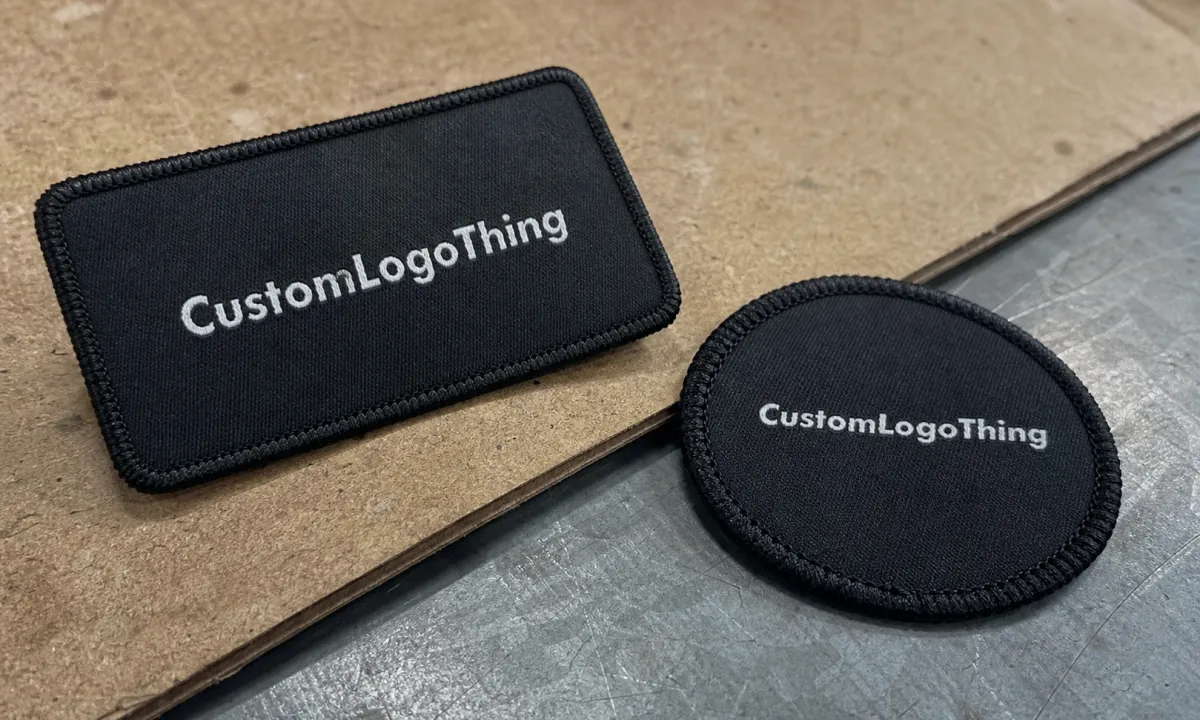
Woven patches are the strongest choice when the logo includes fine lines, compact details, or small text. The surface is smooth and relatively flat, which helps preserve clarity. They work well on hats, jackets, tech-event merch, and staff uniforms where readability matters. Woven construction also suits logos that need a clean, modern finish without extra bulk.
There is a tradeoff. Woven patches do not have the same depth as embroidery, so brands that want obvious texture may find them too flat. Still, for detail-heavy artwork, they usually outperform embroidered alternatives. For event teams handling a mix of sizes and placements, woven is often the safest default.
Embroidered patches
Embroidered patches give the most familiar classic patch look. The texture feels deliberate and premium, which is why they appear often on caps, heavier hoodies, outerwear, and traditional staff apparel. The raised thread pattern reads well from a distance and tends to feel more substantial in hand than flat constructions.
The weakness is precision. Thin type softens, small icons blur, and dense fills can create stiffness. If the design depends on fine detail, embroidery may not hold it cleanly. It is a better fit for simple marks, heritage-style branding, athletic cues, and event merch that benefits from a heavier hand-feel.
PVC patches
PVC patches are the durability workhorse. They resist moisture, keep their shape, and tolerate rough handling better than many textile-based patches. That makes them a practical choice for outdoor events, staff jackets, utility bags, and gear that will be packed, stacked, and reused. They are especially helpful when the merch needs to look sharp after a long day in difficult conditions.
The limitation is comfort and weight. PVC is more rigid and less breathable, so it can feel heavy on lightweight apparel. It also carries a more technical look, which is not ideal for every brand. Used well, though, it projects toughness clearly and without apology.
Leatherette patches
Leatherette sits in the premium-casual lane. It works well for corporate gifts, conference merch, branded totes, premium hoodies, and minimalist logos that benefit from restraint. Depending on the build, it can be embossed or debossed, which creates a subtle finish that often looks more expensive than it is.
Its weakness is abrasion and frequent washing. Leatherette is not usually the best choice for hard outdoor use or items that will be laundered constantly. It is a good fit when presentation matters as much as function, especially for merch that should feel elevated without looking overly ornate.
Felt patches
Felt has a soft, vintage character that works well for creative events, retro branding, campus merch, and relaxed lifestyle apparel. The material feels approachable and slightly nostalgic. That can be a strong fit for brands that want something less polished and more personality-driven.
Felt is not a high-abuse material. It can pill, compress, and show wear sooner than woven or PVC. If the event is about mood, texture, or style, felt is worth considering. If the patch has to survive repeated handling and laundering, it is a riskier choice.
Printed fabric and satin finishes
Printed fabric patches are useful when the artwork needs gradients, layered color, or graphic detail that embroidery cannot reproduce cleanly. Satin finishes add a smoother, more polished surface that can work well for polished event branding or presentation merch. These options are strongest when the design itself is the focus and tactile texture is secondary.
There is a practical comparison here with packaging choices. A matte woven patch communicates one kind of brand behavior; a polished leatherette or satin finish communicates another. The material choice is part of the message. It should match the event, the audience, and the rest of the merch system rather than standing apart from it.
If sustainability is part of the brief, ask what the patch substrate, backing, and packaging actually contain. Some suppliers can pair the order with FSC certified paper inserts, kraft paper cards, or mailers with post-consumer waste content. For verification, FSC is the cleaner reference point. If lower-plastic or biodegradable packaging is being offered, ask for the exact spec rather than relying on vague environmental language. Claims are cheap; documentation is not.
Cost, Pricing, MOQ, and Quote Drivers
Patch pricing is predictable once the spec is clear, but vague requests make it feel random. The main drivers are material type, size, color count, border treatment, backing, and quantity. A simple woven patch with a sew-on backing usually costs less than a Custom PVC Patch with a special mold and a more complex border. Larger sizes cost more. More colors cost more. Custom packaging costs more. Every extra decision shows up somewhere.
For budgeting, simple woven or embroidered patches often fall into a lower unit-cost band than PVC or leatherette. At common event quantities, a rough range of $0.25-$0.75 per unit for simpler woven or embroidered styles at 1,000-5,000 pieces is plausible, depending on size, colors, and finishing. PVC, leatherette, and more specialized hybrid builds can move into $0.60-$1.80+ per unit, especially when the order is smaller or the construction is more complex. Small runs are usually expensive on a per-piece basis because setup has less volume to absorb.
MOQ matters because it affects both price and flexibility. Lower minimums usually mean higher per-unit pricing. Larger runs improve the economics of simpler constructions and fewer color changes. If the event is annual and the design is stable, higher quantities often make sense. If the concept is still being tested, smaller runs reduce risk but cost more per piece.
Hidden costs are where budgets get surprised. Samples, tooling, rush fees, split shipments to multiple venues, rework after proof revisions, and custom retail-style packaging can all add to the total. Individual polybags and custom backing cards are common examples. The merch itself is only one part of the invoice.
For a cleaner quote request, send the basics in one pass:
- The logo file in vector format, if available.
- The target patch size in inches or millimeters.
- The garment or item the patch will be attached to.
- The backing type: sew-on, iron-on, Velcro, adhesive, or another option.
- The quantity and the event date.
- A reference image if a specific style outcome matters.
That simple package reduces back-and-forth and makes pricing more accurate. It also prevents the kind of quote gap that forces finance to reopen the conversation two days before approval.
Production Timeline and Approval Process
The standard workflow is straightforward: artwork review, material recommendation, digital proof, sample if needed, production, finishing, and shipping. Delays usually happen when the spec is incomplete or when approval takes too long. Simple orders move faster. Custom constructions, unusual sizes, and multiple sampling rounds take longer.
For planning, simple patch orders often take about 10 to 15 business days after proof approval. More complex options can run 15 to 25 business days or longer, especially if a physical sample is requested first. Rush production is sometimes available, but not always on every material or every backing style. If custom packaging or multi-location delivery is involved, add buffer time instead of assuming the schedule will hold.
Color approval is another place where teams lose time. PMS references help, but materials do not all interpret color the same way. Thread, woven yarn, printed surfaces, and coated finishes each shift color differently. A proof is useful, but it is not a substitute for a sample when color fidelity matters. If the brand depends on exact color relationships, request both.
The practical rule is simple: if the event date is fixed, order earlier than feels necessary. Patches do not care that the booth build starts on Wednesday. Late merch creates expensive decisions, and those decisions rarely improve quality.
Common Material Mistakes Event Teams Make
The most common mistake is choosing a material that looks premium in a mockup but performs badly on the actual garment. A thick embroidered patch can look polished in a deck and still feel clumsy on a lightweight tee. A PVC patch can look sharp and then hang awkwardly on a cap or add more weight than the wearer wants.
The second mistake is using tiny text on a construction that cannot hold it. That is how brand names become texture instead of language. If the design depends on small type, woven or printed fabric is usually the better option. The patch should support readability, not compete with it.
The third mistake is ignoring thickness. On lightweight apparel, bulky patches can curl or distort the fabric. On stretch garments, stiff patch builds can crack or pull. On fleece, adhesion and edge stability are often worse than buyers expect. The garment underneath is part of the engineering problem, not just a backdrop.
The fourth mistake is skipping sample approval. Proofs show layout, not always behavior. Real samples show color shift, border finish, hand-feel, and backing performance. For larger orders, sample approval is a low-cost insurance policy compared with reordering unusable merch.
The fifth mistake is assuming iron-on is universal. It is not. Iron-on can be fine on some cotton goods, but it is a weaker choice for stretch fabrics, waterproof shells, heavy laundering, and anything that sees repeated heat. If long-term attachment matters, sew-on or a reinforced backing is usually safer.
Expert Tips to Choose the Right Patch Material Fast
Start with the garment and the event environment. That filters the options quickly. A staff hoodie for an indoor conference is a different problem from a rain shell for an outdoor race. Decide where the merch will be worn, how often, and under what conditions. Then choose the patch.
If the logo is detailed, put woven or printed options near the top of the list. If the goal is a premium, traditional look, embroidery or leatherette makes sense. If the merch needs to survive rough handling, moisture, and repeated use, PVC deserves attention. If the event leans creative, retro, or stylistic, felt can be a good fit.
For fast internal review, use this checklist:
- Material: woven, embroidered, PVC, leatherette, felt, printed fabric
- Backing: sew-on, iron-on, Velcro, adhesive
- Edge: merrowed, laser-cut, embroidered border
- Size: exact diameter or width in inches or mm
- Care: wash frequency and heat exposure
- MOQ: minimum quantity and price break points
- Turnaround: proof, sample, production, ship date
If you need one rule to keep the order sane, use this: choose the material that survives the use case first, then refine for brand feel. The prettiest failure still fails. That is especially true for event merch, where wear, time pressure, and mixed use cases expose weaknesses quickly.
Packaging can support the same logic. If the team is trying to keep the whole order cleaner, ask for FSC certified inserts, kraft paper cards, and recycled mailers instead of default plastic-heavy packing. The packaging should reinforce the same brand story as the patch, not fight it.
One final screen for supplier competence: if the vendor can explain why a patch works on a specific garment and can speak clearly about wash behavior, backing compatibility, and edge performance, they likely understand production. If they can only point to attractive pictures, keep asking questions.
FAQs
What is the best logo patch material for event merch uniforms?
Woven or embroidered patches are usually the safest starting points for uniforms. Use woven for sharp detail and small text, or embroidery if you want a classic textured finish. The backing matters just as much as the face, so match it to the garment and wash cycle.
Are iron-on logo patches durable enough for event merch?
Sometimes. Durability depends on the fabric, heat exposure, and how often the item gets washed. Iron-on is less reliable on stretch fabrics, textured surfaces, waterproof shells, and heavily laundered garments. For long-term wear, sew-on or a reinforced backing is usually safer.
Which patch material is cheapest for large merch orders?
Simple woven or embroidered patches are often the most budget-friendly at scale. PVC and specialty finishes usually increase unit cost. Size, color count, and backing choice can matter as much as the patch type, so compare the full build rather than only the face material.
How do I choose between woven and embroidered patches?
Use woven when the logo has fine lines, tiny text, or sharp detail. Use embroidered when you want a thicker, more traditional texture. If the artwork is simple and bold, either can work. If the artwork is detailed, woven usually wins.
What should I send for a patch quote?
Send the logo file, target size, quantity, preferred backing, and the garment or item it will be attached to. Include the event date so the timeline can be judged realistically. A reference image helps reduce quote surprises and unnecessary revisions.
For event merch teams, patch selection is a production decision, not a style quiz. The right material depends on the garment, the event conditions, the wash cycle, and the budget. Get those four pieces right and the order gets easier to manage. Get them wrong and the patch becomes one more thing someone has to explain after the event is over.