If you are building a cosmetics brand, the logo patch is not a tiny afterthought. It gets photographed, touched, shipped, stuffed into drawers, and judged under unforgiving store lighting. A patch that looks elegant in a mockup can feel flimsy in hand; one that seems ordinary on screen can make the whole package feel more expensive. That is why a Logo Patches Material guide for cosmetics brands matters more than people expect.
Logo patches in beauty packaging are the branded pieces attached to pouches, boxes, bags, caps, staff uniforms, or promotional sets. They can be woven, embroidered, faux leather, PVC, silicone, or printed fabric. Material choice changes the feel, edge sharpness, washability, resistance to oils and alcohol wipes, and whether your brand reads as luxe, clinical, playful, or mass-market. The “cheap” option often becomes the costly one once it peels, scuffs, or forces a reprint.
This guide stays practical: material tradeoffs, price logic, timelines, and production checks that matter when a cosmetics brand is ordering patches for packaging, retail kits, or merchandise.
Why cosmetics brands care about logo patch materials
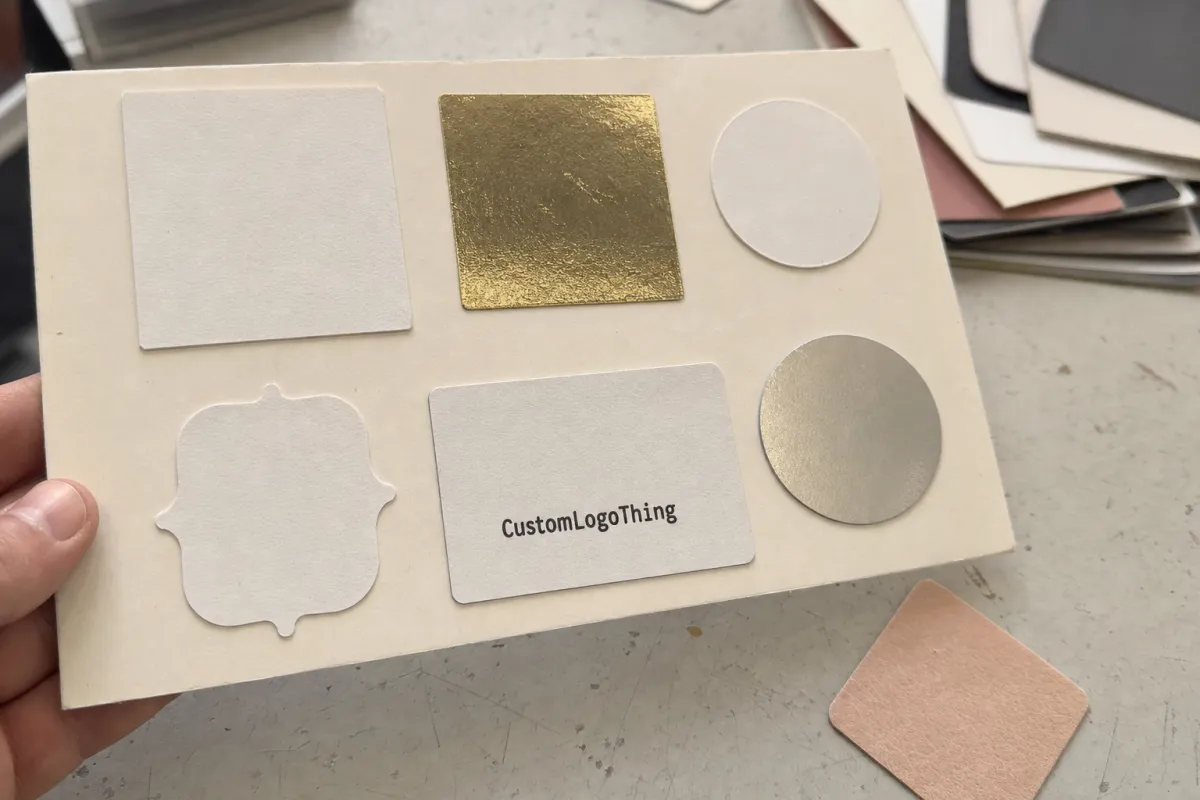
Skincare and beauty items get handled constantly. A box sits in a fulfillment line, a pouch gets tossed into a tote, a travel kit rides in luggage, and an influencer photographs the whole thing under a ring light. The patch has to survive the real journey, not just the photo shoot. If it looks flimsy, the product feels less trustworthy. Harsh, yes. True, also yes.
In cosmetics, logo patches show up on branded pouches, gift sets, reusable cotton bags, aprons, tissue sleeves, shipping inserts, and staff apparel. Some brands use them on corrugated cardboard presentation boxes as a tactile accent, while others place them on kraft paper bags or reusable travel cases. The patch becomes part of the brand system, not decoration bolted on at the end.
Material matters because it changes how the patch performs in the real world:
- Texture affects how premium the product feels in hand.
- Washability matters for bags, uniforms, and reusable items.
- Chemical resistance matters around oils, creams, alcohol wipes, and sanitizer.
- Edge sharpness matters if the logo includes thin lines or small type.
- Visual finish affects how the brand reads on shelf and in photos.
One thing buyers often miss: the patch material should match the rest of the packaging system. If the brand is positioning itself with FSC certified cartons, recycled materials, or biodegradable packaging, a loud plastic-looking patch can create a mismatch that customers notice immediately, even if they cannot name it. That does not mean every patch needs to be eco-themed. It means the patch should not fight the rest of the experience.
For buyers who need documentation, ask what testing or spec references the supplier can provide. Packaging teams should be able to explain durability, finish behavior, and any relevant migration concerns where applicable. For shipping-sensitive kits, compare decisions against ISTA packaging transport test standards so the patch choice does not ignore the actual journey.
How logo patches work on beauty and packaging items
A patch is usually built from four parts: the face material, the backing, the attachment method, and the edge finish. Simple on paper. Less simple in production, because each choice changes the others. A woven patch with heat-seal backing behaves differently from an embroidered patch sewn onto a fabric pouch. A faux leather badge with embossing will not read the same as a printed satin label. Same logo. Very different result.
Where cosmetic brands use patches
Most cosmetics brands use patches on soft goods first. Think travel pouches, makeup bags, spa aprons, staff uniforms, product sleeves, launch kits, and limited-edition gift sets. Some use them on rigid presentation boxes, usually as a decorative accent rather than a structural element. On a box, the patch should enhance the packaging, not make it look like a craft project gone rogue.
Placement matters almost as much as material. A centered patch on a pouch can look clean and balanced. A patch that sits too high or too low can make an otherwise good design look accidental. The same artwork can also look larger or smaller depending on the surface texture and the scale of surrounding branding.
Attachment methods change the result
- Sew-on: best for durability. Good for bags, pouches, apparel, and anything washed or handled often.
- Heat seal: cleaner and faster for some fabrics. Good when you want a neat finish without visible stitching.
- Adhesive: fine for prototypes or short-term display, not the best choice for long-term cosmetics packaging.
- Hook-and-loop: useful for removable branding on staff items or reusable promotional kits.
Attachment method also affects photography. Matte and soft-touch finishes tend to look more refined under store lighting. Glossy surfaces can catch reflections and flatten the logo if the angle is wrong. In product photography, that can be the difference between “premium” and “why does this look like an office supply.”
Sampling is the safety net. The same artwork can look crisp on woven material, stiff on faux leather, and overly casual on printed fabric. If your brand is planning a multi-SKU rollout, get physical samples before approving the full run. Guessing is a very expensive hobby.
Key material factors: durability, texture, and brand fit
Good patch selection starts with use case, not the mood board. A patch for a single-use gift set can be chosen differently than a patch for a reusable travel pouch that gets handled every day. That sounds obvious until you see brands spend money on a delicate finish for a bag that lives in suitcases. Then everyone acts surprised when it scuffs.
Durability
If the item will be touched often, transported frequently, or packed in bulk, the patch needs abrasion resistance. Woven and PVC/silicone patches generally hold up well. Embroidered patches can also last, but the thread surface may show wear sooner if the item rubs against other products in transit. For highly handled items, avoid fragile printed coatings unless the brand only cares about a short display life.
In practical terms, durability is not just about surviving a few uses. It is about keeping the logo legible after folding, packing, opening, and cleaning. A cosmetic pouch may never go through heavy washing, but it will be bent, squeezed, and dragged around far more than a rigid box.
Texture and brand personality
Texture sends a message faster than copywriting does. A soft woven patch feels refined and controlled. Embroidered patches feel more tactile and casual-luxury. Faux leather or PU reads upscale and minimal when the embossing is clean. Silicone can feel sporty or technical. None of those are bad. They just fit different brands.
A minimalist skincare line often does well with smooth faux leather, debossed marks, or a simple woven label. A colorful body-care brand may prefer embroidered or printed fabric because the texture supports a more expressive look. A clinical brand usually wants clarity and clean edges, not too much ornament.
Detail level
Small typography is where many patch projects go sideways. Fine lines, tiny icons, and condensed fonts need a material that can carry detail without turning the logo into visual soup. Woven patches are usually better than embroidery for tiny text. Printed fabric can handle gradients and photo-like art, but the finish has to be controlled or the result looks cheap. If a logo includes hairline strokes, ask the supplier for a minimum line thickness before approving artwork.
As a rule of thumb, embroidery starts to struggle when linework gets too fine, while woven constructions can keep cleaner edges on small branding elements. For intricate logos, ask for a close-up photo of a sample, not just a flat mockup.
Moisture and chemical resistance
Beauty products live around oils, creams, alcohol wipes, and humidity. That means the material should tolerate residue and occasional cleaning. PVC/silicone generally resists water well. Faux leather can work nicely, but you should test for surface cracking and scuffing after repeated handling. Some finishes also show sanitizer marks more easily than buyers expect, which is a charming surprise if you enjoy reorders.
If the item will sit near testers, makeup remover, or hand sanitizer in a retail environment, the material should be checked for surface staining and edge lifting. That is especially true for heat-applied patches on coated fabrics.
Sustainability and compliance
If your brand claims sustainability, the patch cannot be a random contradiction. Look for recycled threads, PVC-free options, or materials that align with your packaging program. If you use post-consumer waste paperboard, FSC-certified cartons, or other lower-impact packaging components, the patch should support that story honestly. Don’t oversell a patch as “eco” just because it looks brown. That is marketing theater, not a real claim.
| Factor | Best-fit materials | Typical buyer tradeoff |
|---|---|---|
| High handling | PVC/silicone, woven | Durability over softness |
| Luxury look | Faux leather, woven | Premium feel over lowest cost |
| Fine detail | Woven, printed fabric | Sharp artwork over heavy texture |
| Short-run promo | Printed fabric, adhesive sample patches | Speed over long-term wear |
| Eco-aligned brand | Recycled thread woven patches, PVC-free options | Lower impact over maximum texture options |
Logo patches material guide for cosmetics brands: best options by use case
Here is the practical part. If you are building a Logo Patches Material guide for cosmetics brands, you need to match material to use case, not just pick the prettiest sample.
Woven patches
Best for detailed logos and a clean, premium look. Woven patches are made from tightly woven threads that can capture small type and sharper edges better than embroidery. They work well for cosmetic pouches, soft gift bags, and any item where you want a polished look without a heavy raised texture.
Good for: skincare sets, pouch branding, minimal logos, fine typography.
Watch out for: very thick texture is limited, and the patch can look flatter than embroidery if the brand wants a tactile feel.
Woven is often the safest first sample for a new cosmetics packaging program. It usually sits in the middle on price, handles detail well, and does not push the brand too far toward sporty or craft-like territory.
Embroidered patches
Embroidered patches have presence. They feel tactile and can look strong on lifestyle-oriented beauty merchandise, influencer kits, or staff apparel. The downside is detail loss. Tiny text can blur, and overly thin lines can disappear into the thread texture. If the logo is simple and bold, embroidery can be excellent. If the artwork is delicate, not so much.
Good for: gift sets, branded uniforms, casual-luxury lines, simple icons.
Watch out for: small fonts, gradients, and high-detail logos.
Embroidery also adds physical depth. That can be useful if the brand wants a more hands-on, textured impression, but it is not the right answer for every skincare identity.
Faux leather or PU patches
These are strong choices for upscale, minimal branding. They work especially well with embossed or debossed marks, which feel restrained and premium. They fit clean skincare or haircare branding where the packaging wants a quiet, expensive look. The main caution is long-term wear: some PU materials can crack or scuff if the formulation is weak or the item gets rough handling.
Good for: premium pouches, travel cases, minimal branding, embossed logos.
Watch out for: cracking, corner wear, and finish inconsistency across batches.
Buyers should also check surface grain consistency. A patch can look beautiful in the first sample and slightly cheaper in the repeat run if the grain, sheen, or color tone drifts. That is why one approved sample is not enough by itself.
PVC/silicone patches
PVC and silicone patches are durable, water-resistant, and visually bold. They are a good fit for travel kits, reusable bags, and promotional items that need to survive moisture or frequent handling. They are less subtle than woven or faux leather, though, so the brand needs to accept a more technical or sporty vibe. For some beauty brands that is perfect. For others, it is a hard no.
Good for: travel kits, reusable bags, outdoor-friendly promos, water-resistant branding.
Watch out for: luxury mismatch, heavier look, and tooling cost for custom molds.
PVC and silicone are usually the most forgiving in wet environments. If the item will see bathroom counters, makeup spills, or packed gym bags, these materials deserve a serious look.
Printed fabric or satin patches
Printed patches are useful when the artwork has gradients, fine art, or multiple colors that would be awkward in thread or molded material. Satin can bring a soft sheen, while printed fabric is flexible for promotional runs. The risk is obvious: if the print quality is weak or the finish is too shiny, the patch reads less premium. For cosmetics brands, that is usually acceptable only when the artwork demands it.
Good for: color-heavy branding, promotional packaging, short-run campaigns.
Watch out for: lower perceived premium value if finishing is basic.
Printed materials can be a sensible bridge for launch testing. If the brand is still refining its visual identity, they allow faster iteration before committing to a more expensive molded or embossed construction.
Simple recommendation matrix
- Luxury and minimal: faux leather or woven
- Detailed logo: woven
- Bold, durable, washable: PVC/silicone
- Casual lifestyle brand: embroidered
- Complex art or gradients: printed fabric
If you are unsure, order a safer version and a premium version. Side by side, the difference is usually obvious. Brands often think they want the most expensive one until they see it next to the packaging. Then the better-fitted choice wins.
Cost, pricing, and MOQ: what changes the quote
Patch pricing is not just about material. Several variables hit the quote at once, and the supplier will usually price them together. The main cost drivers are size, number of colors, material type, backing, edge finish, and special effects like metallic thread, embossing, or custom molding. Bigger patch, more detail, more cost. Predictable, but still easy to underestimate.
As a rough buying range, woven and printed options are usually the most budget-friendly. Embroidered sits in the middle. Faux leather and custom PVC/silicone tend to push costs up because of tooling or finishing complexity. For a 5,000-piece run, a broad range might look like $0.18-$0.45 per unit for simpler woven or printed patches, and $0.35-$0.90+ for faux leather, molded PVC, or specialty embossed pieces, depending on size and finish. That is not a quote. It is the kind of range that helps you stop pretending all patches are priced the same.
MOQ realities matter too. Simple sew-on woven patches can often support lower runs. Custom-mold PVC, embossed PU, or highly customized finishes usually require higher minimums because the setup is heavier. If you are testing a new packaging concept, start with a simpler spec before investing in premium effects everywhere.
Do not look only at unit cost. Setup fees, sampling charges, and shipping can change the total landed cost quickly. A lower unit price with expensive tooling can be worse than a slightly higher unit price on a simpler construction. If you are budgeting for launch, ask for the full landed quote and separate one-time costs from repeat-order costs.
Typical buyers also forget waste. If a complex patch has a higher reject rate in approval or production, the apparent unit price no longer tells the full story. That matters most for smaller runs, where every loss is visible.
If you want to see how material choices fit into a real packaging program, check our Case Studies for examples of how brands balance appearance, durability, and production complexity. You can also compare patch specs against the rest of the packaging, including boxes, inserts, and mailers, so the system feels intentional.
Process, timeline, and production steps for patch sampling
The cleanest patch jobs follow a predictable workflow: artwork review, material recommendation, sample or mockup, approval, mass production, and final inspection. If any of those steps gets rushed, the risk goes up. Usually the mistake is not the material itself. It is the missing detail that nobody clarified early enough.
Sampling matters because it shows you what the final piece will actually look like, not what it looks like on a screen. That is especially important for a Logo Patches Material guide for cosmetics brands, because the same logo can land differently across woven, PU, PVC, and embroidered constructions. You want to know that before 10,000 units are in motion.
What slows production
- Complex artwork with tiny details or many color changes
- Custom dye matching or precise Pantone requirements
- Embossing molds or custom PVC tooling
- Revision rounds after sampling
- Special backings or attachment methods
For timing, simple woven or printed patches can often move faster, sometimes around 10-15 business days after proof approval depending on the vendor and quantity. Custom faux leather or PVC usually takes longer because tooling and production setup add steps; 15-25 business days is a more realistic planning window for many custom jobs, with longer timelines if approvals drag. If you need them for a launch, leave buffer time. Production never seems urgent until the marketing calendar is on fire.
What should you send upfront? A vector file like AI, EPS, or editable PDF is best. Include Pantone colors, size, shape, attachment method, and where the patch will be used. Tell the supplier whether it is for a pouch, box, uniform, or gift set. That kind of detail reduces back-and-forth and keeps the proof from turning into a guessing game.
Approving the sample early saves time later. Fixing patch placement after production is the sort of surprise that burns budget and morale at the same time.
For quality control, ask for clear photos or inspection references showing front, back, edge finish, and attachment method. If you are ordering multiple SKUs, confirm that the approved color and size are locked across the whole run, not just one sample.
Common mistakes when choosing patch materials
The most common mistake is choosing by appearance alone. A patch can look beautiful in a close-up photo and still fail in actual use. If the item is handled daily, shipped in bulk, or exposed to moisture, the material needs to survive that environment. A pretty failure is still a failure.
- Picking a material without considering wear. A soft finish may look premium but scuff too easily.
- Using tiny text on textured surfaces. This is how logos become unreadable.
- Choosing a luxury look that clashes with the brand system. A glossy patch on a calm, clinical skincare line can feel off.
- Ignoring attachment compatibility. Not all materials are equally good for sew-on, heat seal, or adhesive applications.
- Skipping sample testing. That is where color shift, edge fray, cracking, and adhesive failure show up.
Another mistake is forgetting the full packaging context. If your cartons are FSC certified and your shipper uses recycled materials, a patch that looks overly synthetic can throw off the whole presentation. On the other hand, if the brand is aiming for a bold, contemporary look, a PVC or silicone patch may be exactly right. The answer depends on the product and the audience, not on a generic “best material” list copied into a spreadsheet.
Buyers also underestimate how quickly artwork changes can cascade into cost changes. A logo that looks fine at 25 mm may need a different construction at 40 mm. Thin script, fine borders, and multi-color gradients often force a more expensive method. If the design is still in flux, hold off on locking a premium material too early.
And yes, there is also the “we’ll just figure it out in production” approach. That one usually costs more.
Expert tips and next steps for a better patch order
Start with the end use. Is the patch for retail display, a subscription box insert, a staff uniform, or a reusable pouch? The job matters more than the trend. A patch that performs well on a rigid gift box may be a bad pick for a makeup bag that gets washed. Different surfaces, different stress, different answer.
My practical advice: order two material samples when possible. Pick one safe option and one premium option. Put them under store lighting, camera flash, and natural light. Handle them. Bend them. If the item is a pouch or bag, rub it lightly against itself or another sample. That tiny test often tells you more than a polished sales sheet ever will.
Ask for a pre-production proof that shows logo size, thread count or print quality, edge treatment, and backing method. If the supplier cannot show those details clearly, stop and ask again. A patch spec sheet should list size, shape, colors, material, attachment, quantity, and target delivery date. Basic stuff. Apparently still worth repeating.
For sustainability-aligned beauty brands, ask whether the patch options can align with your packaging claims. If the carton is made with post-consumer waste content or the secondary packaging uses biodegradable packaging materials, keep the branding choices coherent. No need to be preachy. Just consistent.
For launch planning, build the patch into the packaging timeline early. A two-day artwork decision can still turn into a two-week delay if sampling, revisions, or tooling need attention. The safest path is usually not the cheapest or most dramatic one. It is the one that survives production, shipping, and first use without embarrassing the brand.
If you are building a new packaging program, short-list 2-3 materials, request samples, compare them under real lighting, then approve the option that balances brand feel, durability, and budget. That is the smartest path, not the flashiest one. The right Logo Patches Material guide for cosmetics brands is the one that matches how the product is handled, sold, and remembered.
What is the best logo patch material for cosmetics brands that want a premium look?
Faux leather and woven patches usually give the cleanest premium feel. Faux leather works well for minimalist, embossed branding, while woven is better if the logo has fine detail. Sample under real lighting because texture changes how premium the patch reads.
Which patch material is most durable for cosmetic bags and travel kits?
PVC/silicone is usually the most water-resistant and scuff-resistant. Woven patches also hold up well if the bag gets handled often. Avoid fragile printed finishes if the item will be tossed in luggage or used daily.
How much do logo patch materials usually affect the price?
Material choice can shift the price a lot, especially between woven and custom-mold PVC or embossed PU. More colors, larger sizes, and special finishes increase unit cost. Setup fees and MOQ can matter as much as the patch itself, so ask for the full landed quote.
What file should I send when ordering custom logo patches for cosmetics packaging?
Send a vector file like AI, EPS, or PDF with editable outlines if possible. Include Pantone colors, size, attachment method, and where the patch will be applied. A clean file speeds up sampling and reduces revision delays.
How long does patch sampling and production usually take?
Simple woven or printed patches can move faster than custom molded or embossed options. Complex materials, tooling, and revision rounds add time. Build in time for sample approval so production does not get delayed by avoidable changes.


