Trade show teams often spend more time on the logo file than on the patch itself. That is understandable; artwork feels like the creative decision. But once the patch is on a uniform, material is what people see, touch, and remember. A stitched mark can look crisp on a screen and muddy on a polo, or feel premium on a jacket and awkward on a lightweight shirt.
That is why a Logo Patches Material guide for trade show teams matters. The same logo can read as polished, budget, rugged, or unreadable depending on the surface, the border, the backing, and the garment it lands on. At a convention, the patch is not a design exercise. It is a functional object under harsh lighting, repeated handling, and a long day of movement.
From a buying perspective, patch material also changes the entire approval process. One option may be ideal for detail but too flat for a premium jacket. Another may look rich but distort small text. A third may survive heavy use yet feel too casual for a corporate booth. The challenge is not finding the “best” patch in theory. It is finding the one that survives the event without looking like a compromise.
Quick reality check: the nicest sample under studio lighting is not always the best patch on a moving, sweating, bending staff member at a crowded booth.
That practical lens helps keep the decision grounded. If the patch is going on polos, your priorities are different than if it is going on backpacks or outerwear. If the logo includes micro-text, the material choice narrows fast. If the team plans to reuse uniforms for multiple shows, durability matters more than a first-impression flourish.
Event branding rarely stops at the garment. Many teams are also coordinating printed inserts, badge kits, and shipping materials, sometimes with recycled or FSC-certified paper. That broader package does not change the patch itself, but it does shape expectations. A polished booth kit with a flimsy patch feels inconsistent. A modest kit with a well-made patch can feel surprisingly sharp.
How different patch materials perform on uniforms, hats, and promo gear
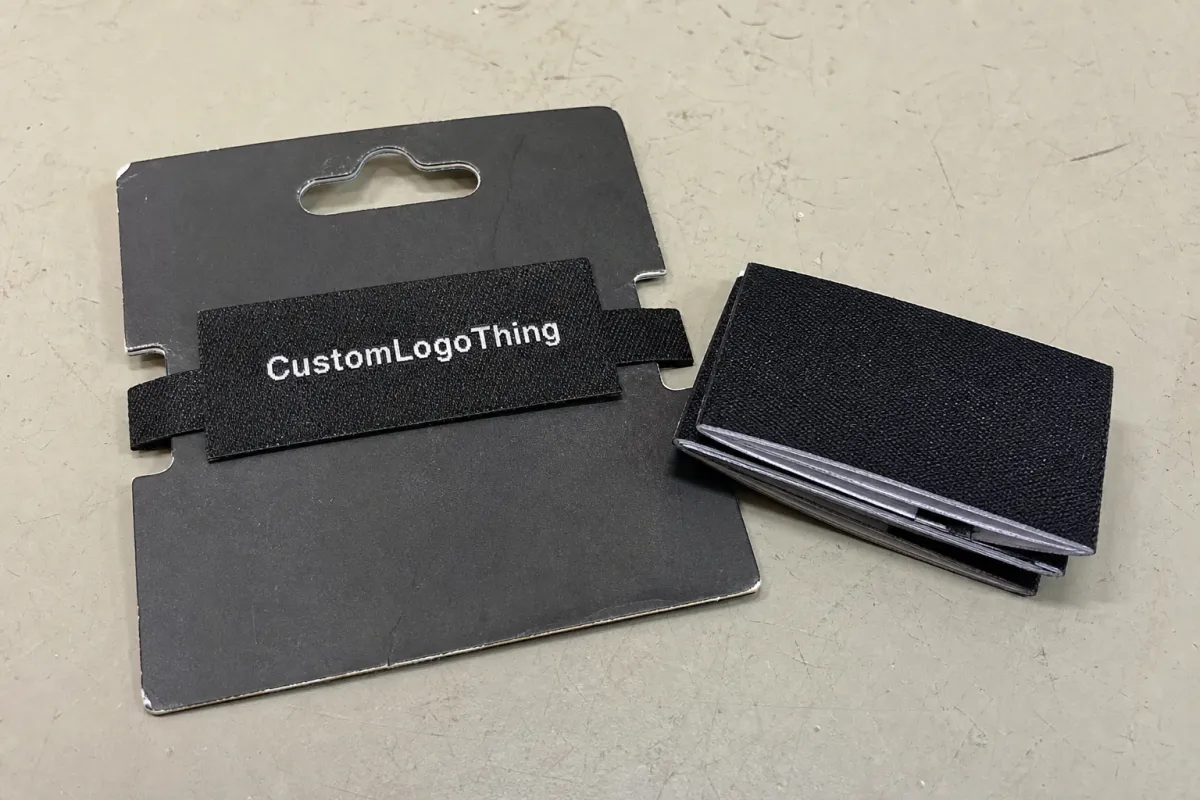
Most patch choices fall into a few familiar buckets. Woven is best for detail, embroidered is best for texture, PVC is best for durability, leather is best for premium branding, and printed or sublimated patches are best for complex color blends. Chenille and felt sit in their own lane, usually for bold, fashion-driven looks rather than precise corporate marks.
Woven patches use tightly packed threads that allow for smaller text and cleaner edge definition than standard embroidery. They sit relatively flat, which makes them a good match for staff polos, lightweight shirts, and caps where bulk is a problem. If a logo has fine outlines, a tight tagline, or a small icon that needs to stay legible at a distance, woven often solves the problem without adding visual clutter.
Embroidered patches rely on thicker thread and a raised surface. They bring texture and a familiar branded feel, especially on jackets, outerwear, and caps. That depth can look expensive when the artwork is simple. The tradeoff is readability. Small letters, thin lines, and dense marks tend to blur. If the patch needs to read like a sign, embroidery may not be the right tool.
PVC patches are molded from soft, flexible material and usually hold shape very well. They are a strong option for rugged event gear, outdoor activations, or staff apparel that takes abuse. Color separation is usually clean, and the edges can look sharp. The downside is tone: PVC can feel more tactical or casual than a traditional corporate uniform. That is not bad, but it should be intentional.
Leather patches often signal premium quality. They work well on jackets, beanies, premium bags, and apparel with a heritage or upscale feel. The material can make a brand look restrained and expensive without shouting. The caveat is detail. Very small logos, tiny type, and complicated color systems do not translate well. Leather also has practical limits around washing and heat exposure, so it should be matched carefully to the garment.
Chenille and felt create a varsity or fashion-style effect. They are soft, bold, and visually distinct. They can look excellent on statement pieces, but they are poor substitutes for precise logo reproduction. If the design depends on tight readability, these materials can flatten or obscure the artwork.
Printed or sublimated patches are the strongest option when the artwork includes gradients, multi-color fades, or photo-style detail. They preserve information that stitched materials would simplify away. The tradeoff is tactile depth. Printed patches can look clean, but they often feel less substantial than embroidery or leather, especially under close inspection.
Backing matters just as much as the material itself. Sew-on is the most permanent option. Iron-on is convenient but not ideal for every garment. Velcro is useful for rotating roles or reusable event uniforms. Adhesive is generally short-term only. Magnetic backing is niche and only makes sense in very specific use cases.
That choice can make or break the result on performance fabrics, waterproof shells, and delicate textiles. Heat can damage some garments. Thick stitching can distort stretch materials. A heavy patch on a soft polo may sag or pull after a few hours of wear. The more delicate the garment, the flatter and lighter the patch usually needs to be.
For teams that need a quick side-by-side view, this table keeps the decision practical:
| Patch material | Best use | Typical strengths | Typical tradeoff |
|---|---|---|---|
| Woven | Polos, hats, detailed logos | Fine text, flat feel, clean edges | Less texture than embroidery |
| Embroidered | Jackets, caps, bold branding | Classic texture, strong presence | Small text can blur |
| PVC | Outdoor or rugged event gear | Durable, colorful, shape-holding | Less formal appearance |
| Leather | Premium apparel and accessories | Upscale look, strong branding cue | Not ideal for tiny details |
| Printed / sublimated | Complex color artwork | Gradients, photo-style detail | Less tactile depth |
Key factors that change patch quality, cost, and unit price
Patch pricing is driven less by the idea of the logo and more by the mechanics of production. The main variables are logo complexity, patch size, number of colors, material thickness, border style, backing type, and quantity. Those seven factors have far more influence on the final number than most buyers expect.
Design complexity is the first thing that shifts the quote. Tiny text, thin lines, and detailed artwork usually push the order toward woven or printed styles. Standard embroidery handles a lot, but it is not a rescue format for everything. Once the design gets too small, stitch density can overwhelm the artwork and make the result look heavier than intended. A patch that reads well from six feet away but falls apart at arm’s length is not really premium; it is just expensive confusion.
Material choice affects both appearance and cost. Embroidered patches are often the least expensive at scale for simple logos because the production process is straightforward. Woven patches can rise slightly in price when the thread count is higher or the artwork is especially tight. PVC and leather generally cost more because of tooling, finishing, or the extra labor involved in turning the design into a finished piece. Specialty borders, mixed textures, and custom shapes add more cost again.
Here is a realistic pricing pattern many buyers encounter:
- Embroidered: often the most budget-friendly at scale for simple logos.
- Woven: usually similar or slightly higher when detail needs to stay sharp.
- PVC and leather: commonly priced higher because of tooling, finishing, and low-volume setup.
- Specialty finishes: custom shapes, mixed textures, and layered designs can push the cost up quickly.
For larger runs, a simple embroidered patch might land around $0.80-$1.80 per unit. Woven patches can sit in a similar range or slightly above, depending on size and detail. PVC and leather often start closer to $1.50-$3.50+ per unit, with custom shapes or premium edging raising the number further. Those are broad market ranges, not promises; supplier, quantity, and artwork all matter. Still, the pattern is consistent: more detail usually means more labor, and more labor means more money.
Minimum order quantities also shape the quote. A run of 50 pieces can feel disproportionately expensive because setup costs are spread over fewer units. At 250 or 500 pieces, the unit price often drops enough to make the order look very different. That is why small event teams sometimes get sticker shock. The machine setup does not care that the booth only has a handful of staff.
Brand positioning matters too. Some teams want a straightforward, cost-conscious look and choose embroidery. Others want a more refined finish and pay extra for leather or PVC because the patch is part of the booth presentation. That is a sensible decision if the patch helps staff look coordinated and intentional. A uniform that feels cohesive can do quiet work on the show floor.
For sustainability-minded exhibitors, patch orders are sometimes paired with recycled paper inserts, kraft paper packaging, or other lower-impact materials in the event kit. That kind of alignment can help the whole presentation feel more considered. Just keep expectations realistic: a patch is one component in a much larger system. It should fit the brand tone, not pretend to solve every environmental concern by itself.
logo patches material guide for trade show teams: choosing the right option
The simplest way to choose is to work in this order: garment first, then reading distance, then brand tone. That sequence prevents a lot of avoidable mistakes. A patch can look excellent on a mockup and still fail once it is sewn onto real apparel.
For staff polos and lightweight shirts, low-profile materials usually work better. Woven patches are often the cleanest fit because they stay flat and preserve readability. Soft embroidery can also work if the logo is bold and the patch is not oversized. The key is to avoid a heavy, stiff patch that fights the fabric or feels distracting during a long event day.
For jackets, backpacks, and outerwear, thicker materials are easier to justify. Embroidered, PVC, or leather patches tend to feel more substantial on heavier garments. They also read as deliberate instead of improvised. A patch that complements the garment weight usually looks more expensive, even when the unit cost is not especially high.
For high-detail logos, woven or printed options usually win. If the design includes tiny type, layered marks, or very thin outlines, embroidery may simplify it too much. For bold icons, clean shapes, and vintage branding, embroidery or leather can be stronger because the texture adds presence without burying the artwork.
The best material is not the one that looks most impressive under a spotlight. It is the one that stays legible, comfortable, and intact after a day of wear, packing, and handling. Trade show badges, uniforms, and accessories all get touched more than most people expect. That is where weak construction shows up.
A practical decision filter helps narrow the field quickly:
- Will the logo read from 3-6 feet away?
- Does the patch feel right on the actual garment?
- Does the material match the brand tone?
- Does the backing suit the use case?
- Does the unit price fit the event budget?
Velcro-backed patches deserve a separate mention. For teams that rotate roles, use VIP identifiers, or switch languages or titles during the show, Velcro can be genuinely practical. It saves time, reduces the need for multiple shirt sets, and keeps uniforms more flexible across different sessions or audiences.
Process, timeline, and lead time from artwork to delivery
The production flow is straightforward on paper: submit artwork, confirm the patch type and size, approve a proof or sample, move into production, then finish with packing and shipping. The timeline usually gets strained not by production itself but by approvals. One more logo adjustment, one more color change, one more debate over backing, and the schedule starts slipping.
Artwork quality is the first bottleneck. A low-resolution file or a design built in the wrong format can create extra revisions before production can even begin. That is especially true for woven, embroidered, and molded patches, where the original artwork has to be translated into thread paths, stitch density, or tooling. If the file needs cleanup, expect more back-and-forth. That is normal, but it should be built into the schedule early.
Lead times vary by material and complexity. Simple embroidered or woven patches can sometimes be produced in about 10-15 business days after proof approval for standard runs. PVC, leather, and other custom or specialty orders often need 15-25 business days or more, especially when sampling is part of the process. Shipping sits on top of production, so the actual calendar time is longer than the factory number.
Rush orders are possible in some situations, but they usually come with less flexibility and a higher price. If the event date is fixed, it is better to protect the schedule early than to assume the factory can absorb a last-minute change. Manufacturing has limits. So does freight.
Trade show teams should also leave room for uniform distribution, booth kit packing, and any separate freight deadlines. A patch order that arrives “on time” but misses the packing window can still cause a problem on the show floor. The event calendar is unforgiving that way. A two-day slip can cascade into a much larger logistics issue once shipping and kit assembly are already locked.
For teams that care about transit quality, organizations such as the International Safe Transit Association are useful references for handling and packaging standards. Not every patch order needs formal testing, but if uniforms, inserts, and accessories are traveling together, the packing method matters more than many buyers assume. A good patch can arrive damaged if the rest of the shipping system is careless.
Common mistakes that make patches look cheap on the show floor
The biggest mistake is choosing from a catalog photo alone. Screen images flatten texture, hide edge quality, and disguise thread density. Real samples or close-up material photos are far more useful because they show the actual surface and thickness. If the supplier cannot show you what the patch really looks like, treat that as a warning sign.
Size is the next trap. A patch that is too large can overwhelm a polo or cap. Too small, and the logo disappears across the aisle. For chest placement on polos, many teams end up around 2.5 to 3.5 inches wide. On jackets or bags, 3 to 4.5 inches may fit better. Exact dimensions depend on the garment and the logo shape, but proportion matters more than any single number.
Another common mistake is using embroidery for artwork that should have been woven. The label “premium” can mislead buyers into thinking embroidery is always the better choice. It is not. If the logo has micro-text or thin outlines, the final patch can become fuzzy or cramped. Texture is not the same thing as quality.
Poor backing selection causes plenty of frustration too. Iron-on backing on performance fabrics can fail or create heat damage. Sew-on is more secure, but not convenient for every application. Velcro with rough edging can look sloppy if the shape is overly irregular or the finish is inconsistent. The backing should fit the garment and the use case, not just the production shortcut.
Finally, teams often forget to test the patch on the actual garment color and texture. A patch that looks perfect on white cotton may look dull on dark heather polyester. A stiff patch can behave very differently on stretch fabric than on a structured jacket. That is why sample review should happen on the real apparel, under bright light, from a few feet away. That view is closer to what attendees will actually see.
Buyer rule: if the patch only looks good when held six inches from your face, it is not a trade show patch. It is a desk toy.
Expert tips for getting better samples, pricing, and final results
Ask for actual material swatches or close-up texture photos, not just a flat proof. A proof is useful for placement, size, and color direction. It does not tell you how the patch feels or how much it stands off the garment. That physical depth changes the look a lot more than many buyers expect.
If the logo is complex or the event is high-stakes, it is often worth ordering one sample set with two material options. That does cost more up front. It can also save a much more expensive reprint if the first choice looks wrong on the actual uniform. The price of a sample is small compared with the cost of redoing a full team order under time pressure.
Before approving the order, ask for exact specifications:
- Size in inches or millimeters
- Material and surface type
- Backing
- Attachment method
- Border style
- Color count
- Tolerance for variation
That last point matters more than most people think. Slight variation is normal in stitched, molded, and printed goods. If the brand team expects exact Pantone matching in every piece, that expectation needs to be stated early. Otherwise, approval turns into a complaint cycle nobody has time for once production starts.
Compare pricing at multiple quantities before settling on a number. In some cases, moving from 100 to 250 units drops the unit cost enough to justify the larger order, especially if the patches will be reused for future shows or internal events. The smaller order can look cheaper until the setup fees are spread across it. Then the math changes fast.
One practical way to control cost is to split the patch hierarchy. Give leadership or VIP staff a more refined version and use a simpler version for the full booth team. That keeps the visual identity clean without forcing every uniform into the highest-cost finish. It is a small planning move, but it can save real money across a large staff list.
Next steps for ordering the right patches before your event
Start with a fast audit. What garments are you using? Where will the patches be worn? Does the team care most about readability, comfort, durability, or premium appearance? Those three questions usually narrow the field more than any catalog page can.
Then shortlist two materials, not five. Five options sounds thorough; in practice, it slows everything down and creates more internal debate than useful comparison. Two serious contenders are enough for most teams. Woven versus embroidered is a common pair. PVC versus leather is another, depending on garment type and brand tone.
Gather logo files, estimate quantities by staff group, and confirm deadline dates before requesting quotes. If you need booth staff patches, VIP patches, and extras for replacements, separate those counts. A vague total usually leads to vague pricing and a round of clarification that burns time.
When samples arrive, compare them side by side under bright light and at a few feet of distance. That is the view that matters. Not an arm’s-length inspection in a quiet room, but the real show-floor view: overhead lights, motion, and someone trying to hand an attendee a flyer at the same time.
Lock the material choice early so production, backing, and shipping all line up with the event date. A solid Logo Patches Material guide for trade show teams should make the decision clearer, not more theatrical. The right patch is the one that fits the garment, the budget, and the timeline without drama.
What is the best logo patches material for trade show teams with small text?
Woven patches usually handle small text and fine lines better than standard embroidery. Printed or sublimated options can also work when the logo has gradients or tiny details. If the text must stay readable from a few feet away, avoid overly raised textures.
Are embroidered or woven patches better for booth staff uniforms?
Embroidered patches feel more textured and traditional, which works well for bold logos. Woven patches sit flatter and are better for detailed logos or softer apparel. For polos and lightweight shirts, woven often looks cleaner and feels less bulky.
How much do custom logo patches cost for trade show orders?
Pricing depends on size, material, backing, colors, and quantity. Embroidery is often the most budget-friendly at scale, while PVC and leather usually cost more. The unit price usually drops as quantity increases, but setup and detail level still matter.
What is the usual turnaround time for custom patches?
Simple patch styles can be produced faster than complex or specialty materials. Artwork approval, sampling, and shipping all affect the final timeline. If you have a hard event date, build in buffer time instead of cutting it dangerously close.
Can trade show teams use iron-on patches on all garments?
No. Heat-sensitive and performance fabrics may not handle iron-on backing well. Sew-on is safer for permanent use, and Velcro is better when patches need to be swapped. Always match the backing to the actual garment, not just the idea of convenience.