Wedding boutiques sell an atmosphere long before they sell a dress. That is why the Logo Patches Material guide for wedding boutiques matters more than buyers sometimes expect. A patch can look polished in a mockup and still land badly on satin robes, denim jackets, garment bags, or staff uniforms once real lighting, handling, and washing enter the picture. Texture, backing, and edge quality all show up fast in a bridal setting, where everything is viewed up close and photographed constantly.
Logo patches are branding elements sewn, heat-applied, pinned, or attached with hook-and-loop backing to robes, outerwear, tote bags, packaging accessories, and display pieces. The right patch spec does more than hold a logo. It supports the boutique’s tone, signals attention to detail, and keeps the brand from looking generic. That sounds simple. It rarely is.
Logo patches for bridal brands: what actually matters
For bridal brands, the patch has to work in two environments at once: the showroom and the camera. Warm LEDs, flash photography, and reflective fabrics make weak edge finishing, loose stitching, and mismatched color stand out faster than buyers expect. A patch that looks acceptable from a few feet away can look clumsy at arm’s length, which is where boutique customers actually see it.
The starting point is not style. It is use case. A patch on a robe needs softness and drape. On a denim jacket, it can have more structure. On a tote bag or staff apron, durability matters more than delicacy. One spec rarely performs equally well across all three.
Three details usually decide whether a patch feels premium:
- Texture — does it feel soft, crisp, or plasticky?
- Edge finish — is the border clean or prone to fray?
- Color accuracy — does the logo still read correctly under showroom lighting?
Buyers sometimes get distracted by metallic thread, oversized raised embroidery, or high-contrast finishes that look dramatic in a supplier catalog. Those options can work, but only if they fit the brand language. A boutique with an airy, romantic look usually needs restraint. Too much shine can fight the dress line, the packaging, and the overall customer experience.
“If the patch only looks good from a distance, the material choice is probably wrong for bridal retail.”
The most useful filter is simple: choose for feel, durability, and the exact item the patch will sit on. Not for trendiness. Not for the first sample that photographs well.
How patch materials behave on wedding boutique products
Attachment method changes the result as much as the material itself. Sew-on remains the most reliable choice for robes, jackets, and bags that get regular wear. Iron-on can be efficient and inexpensive, but it depends on fabric tolerance, proper heat, and correct pressure. Hook-and-loop is practical for staff roles that change or for removable display pieces. Adhesive backing is useful for short-term samples, event signage, and prototype testing, but it is not a long-term solution for most boutique products.
Material weight affects drape. That is the hidden issue buyers often miss. A thick embroidered patch on a lightweight satin robe can pull the fabric and create a stiff, awkward spot. On denim, that same patch can look balanced. On a soft garment bag, it may feel heavy. Patch and fabric have to cooperate, or the brand finish starts to look improvised.
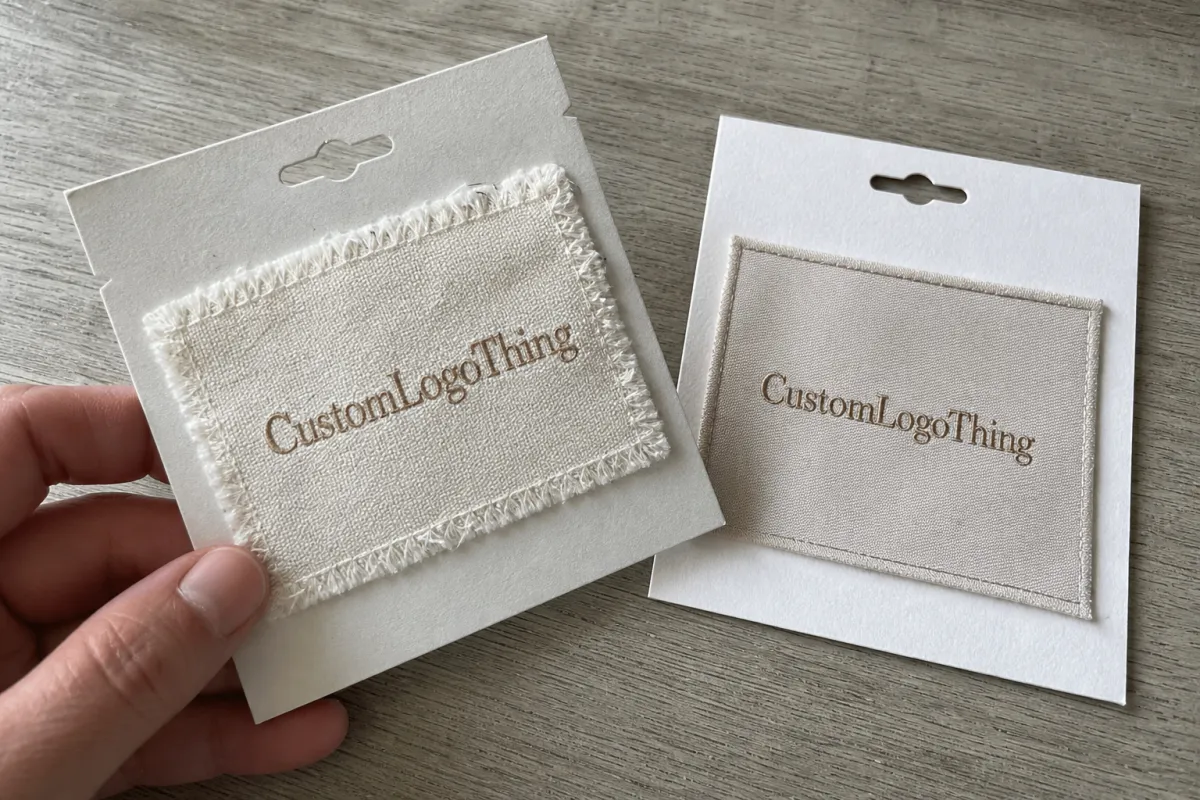
Detail reproduction also changes by material. Embroidery gives visible depth, but tiny text can fill in if the stitch density is too high. Woven patches usually preserve small lettering better because the surface is flatter and the weave is tighter. Leather and faux leather create a strong, upscale look, but they work best with bold logos and simplified graphics. PVC and silicone are durable and moisture-resistant, though they can read too sporty or technical if used too broadly in a bridal environment.
Wash care matters for robes and staff apparel. These pieces get worn, handled, folded, packed, and washed, often more roughly than brands hope. If a patch is expected to survive repeated laundering, ask about colorfastness, edge stability, and whether the backing can tolerate heat and detergent. For garment bags and storage pouches, rubbing and pressure during transit matter almost as much as wash performance.
It also helps to think about the patch as part of a larger packaging system. A boutique that uses kraft paper hang tags, corrugated cardboard shipping cartons, or biodegradable packaging inserts should choose a patch finish that fits the rest of the presentation. If the brand specifies recycled materials or FSC certified packaging, the patch should feel like part of that same visual language. Consistency is not decoration; it is a quality signal.
Material choices that fit wedding boutiques best
The best patch material depends on brand positioning, use case, and budget. Bridal boutiques do not all want the same feeling. A soft, romantic showroom has different needs than a minimal, editorial space or a premium resale concept. Here is the practical breakdown.
Felt for soft, romantic branding
Felt suits cozy, handmade-feeling branding. It has a gentle texture and can look good on robe trims, staff sweatshirts, and event gifts. It is also one of the more budget-friendly choices on bulk runs. The downside is detail loss. Small text can disappear, and the surface can read casual if the design is too thin or too simple. Felt performs best when the logo is bold and intentionally understated.
Embroidered patches for classic depth
Embroidered patches are the familiar premium option for a reason. They add depth, handle repeated wear well, and feel more substantial than printed decoration. For wedding boutiques, embroidery works especially well on jackets, tote bags, and staff apparel because texture adds value. The cost rises with stitch count and color changes, though. Dense, multi-color artwork costs more than a simple one-color mark, and tiny elements can crowd together quickly.
Woven patches for fine detail
Woven patches are often the best fit for small text, fine lines, and logos that need to stay readable. The surface is flatter than embroidery, so details stay cleaner. This is often the strongest answer in a Logo Patches Material guide for wedding boutiques when the logo includes a tagline, script wordmark, or delicate icon. Woven patches are refined, though less plush than embroidery, so they do not always deliver the tactile depth some brands want.
Leather and faux leather for luxury positioning
Leather and faux leather patches work well for boutiques with a modern-luxury or editorial direction. They feel strong on garment bags, jackets, and premium retail merchandise. They also pair well with restrained packaging like kraft paper tissue wraps or simple boxes made from FSC certified paperboard. The limitation is detail. Fine type and intricate flourishes do not reproduce as cleanly here as they do on woven patches. Debossing or laser engraving can help, but the logo still needs to be simplified before production.
PVC or silicone for durable, bold applications
PVC and silicone patches are durable, flexible, and resistant to moisture. That makes them useful for outerwear, event gear, and staff pieces that get wiped down often. The tradeoff is tone. Bridal branding usually leans softer and more emotional than athletic or industrial branding. If the patch is too shiny or too chunky, it can feel out of place. These materials are best used sparingly, where durability matters more than romance.
Satin and specialty fabric bases for elegant presentation
Specialty fabric bases can create a dressier look, especially for presentation pieces or limited-run boutique items. Satin-backed patches can echo bridal textures well, but they are not always the toughest option for daily wear. They can snag, fray, or show handling marks faster than sturdier alternatives. Good for presentation. Less ideal for constant use. That tradeoff is real.
| Material | Best for | Typical feel | Relative cost | Detail level |
|---|---|---|---|---|
| Felt | Soft-branded robes, gifts, casual merch | Warm, soft, relaxed | Low | Low to medium |
| Embroidered | Jackets, staff apparel, tote bags | Textured, classic, premium | Mid | Medium |
| Woven | Small logos, fine text, clean branding | Smooth, neat, refined | Mid | High |
| Leather / faux leather | Luxury accents, garment bags, premium merch | Structured, modern, upscale | Mid to high | Medium |
| PVC / silicone | Weather-resistant staff or event use | Durable, bold, technical | Mid | Medium |
For boutiques that care about sustainability claims, verify them carefully. Not every patch option is naturally low-impact, and packaging language should not be assumed. If a supplier says a finish is eco-friendly, ask what that means in practice: recycled content, reduced waste, water-based adhesives, or lower-impact packaging. Packaging.org is a good general reference for packaging materials and sustainability topics: packaging.org.
Cost, pricing, MOQ, and unit cost basics
Patch pricing is driven by more than size. Material choice matters, but so do stitch count, number of colors, border style, backing type, shape complexity, and whether the design needs special finishing. Buyers often focus on per-unit cost and ignore setup fees, which can make a supposedly inexpensive order feel expensive fast.
For planning purposes, these are realistic range estimates for custom logo patch orders at common quantities:
- Felt or basic woven: about $0.70-$1.80 per unit at 500-1,000 pieces, depending on size and backing.
- Embroidered: about $1.20-$3.50 per unit at 500-1,000 pieces, with higher pricing for dense thread coverage.
- Leather or faux leather: about $1.80-$4.50 per unit at 500-1,000 pieces, especially if engraving or debossing is involved.
- Specialty finishes: often $2.50-$6.00+ per unit when custom shapes, metallic accents, or premium backings are included.
At larger volumes, unit costs usually drop. At lower minimums, they rise. That is normal, not a red flag. For a boutique testing a new brand direction, a low minimum order quantity can be useful even if the unit cost is higher. If the patches are for a limited event run, staff robes, or a seasonal refresh, paying more per piece can still make sense because excess inventory is the real waste.
Hidden costs deserve a separate line item. Ask about digitizing or artwork conversion, setup fees for custom shapes or tooling, sample or prototype charges, rush fees, and shipping or duty if the order crosses borders. Those charges are often modest individually and annoying collectively.
The most practical rule is to match budget to use case. Staff apparel needs durability first. Bride gifts need presentation first. Retail merch needs a balance of cost and perceived value. Display samples need visual impact, but not necessarily long-term wash resistance. A patch spec that works for a trunk show may be wrong for robes that are washed weekly.
If the patch is part of a broader retail presentation, think about the full kit. A well-made patch can still feel underwhelming if it arrives in flimsy packaging. Many boutiques use corrugated cardboard mailers with tissue wrapped in kraft paper or FSC certified inserts. That gives the patch a proper setting and protects the item through transit instead of leaving it to bounce around in a weak carton.
For shipping-sensitive orders, package testing guidance from ISTA can be useful, especially if patch-bearing items travel with garments or boxed gifts: ista.org. Heat, pressure, stacking, and vibration can all affect how a branded kit arrives.
Production steps and turnaround: from artwork to delivery
The production process is usually straightforward, but delays tend to come from the same few places. First, send the logo in a clean vector format if possible. Then confirm size, material, backing, and border style. After that, the supplier sends a proof. If you need a sample or prototype, approve that before the full run begins. Then production runs, inspection follows, and the order gets packed for shipment.
Most delays are not caused by the factory side. They happen when artwork is incomplete, revisions pile up, or the material changes after the proof stage. Color decisions can also slow everything down. The biggest bottleneck is often internal approval, not manufacturing.
Turnaround depends on complexity. Simple woven or felt patches can move relatively quickly, while embroidered, leather, and specialty-finish options usually take longer because they may need more prep, sampling, or finishing steps. A realistic planning window is often 10-15 business days after proof approval for simpler runs, and 15-25 business days or more for premium or highly detailed versions. Rush orders can sometimes be handled for launches, trunk shows, or peak bridal-season resets, but rush pricing is normal and should be expected.
Ask for a production calendar tied to proof approval, not only a loose shipping estimate. That tells you when decisions are due and what happens if the schedule slips. It also helps the boutique coordinate with garment delivery, gift packaging, and staff onboarding. If the branded kit includes patches plus packaging, make sure the timelines line up with any paperboard boxes, tissue, or reusable storage items.
Common mistakes boutique buyers make with patch materials
The first mistake is choosing a material because it looked great in a product photo. Photos flatter aggressively. A patch that looked crisp online may feel too stiff, too shiny, or too casual once it reaches the showroom.
The second mistake is using tiny text on the wrong material. Felt and heavy embroidery can blur small lettering. If the logo includes a fine tagline, a woven patch usually reads better. This is one of the most common problems in the Logo Patches Material guide for wedding boutiques, because bridal brands often favor delicate script and then expect every material to preserve it equally well. Materials have limits.
The third mistake is choosing a backing that does not fit the garment. Some adhesives can damage delicate fabrics or fail after repeated washing. That matters for satin robes, lightweight blends, and any piece with hand-finished details. If a patch must last, sew-on is usually the safer route. If it needs to be removable for staff use, hook-and-loop may be the better fit.
The fourth mistake is overdesigning. Metallic thread, gradients, micro icons, and tiny negative spaces can look impressive in a mockup and disappointing in production. Every material tolerates detail differently. If the patch type cannot hold the logo cleanly, simplify the artwork. That is not a downgrade. It is a production decision.
The fifth mistake is ignoring the use context. Staff uniforms, retail packaging, garment bags, and resale merchandise all need different specs. A patch that feels polished on a presentation bag may be too stiff for a robe and too understated for outerwear. One patch for every application sounds efficient, but it usually creates compromise.
Expert tips for a better bridal brand finish
Keep the logo simple enough to survive texture changes and distance viewing. If the patch needs to be readable across a showroom, the mark should still make sense when scaled down. Thin flourishes and tight lettering are usually the first details to disappear.
Order a prototype on the actual garment type before committing to a full run. Not a random swatch. The actual robe, jacket, or bag. That one step catches most issues with scale, drape, and color shift.
Use matte finishes and softer textures when the boutique leans romantic, airy, or refined. Reserve sharper contrast, thicker borders, and more structured materials for outerwear, tote bags, and staff uniforms. The material should support the brand mood instead of flattening it into generic merchandise.
Ask for edge samples, color swatches, and backing options before final approval. If two material choices are close, compare them side by side. In practice, a slightly more expensive patch can look dramatically better under real lighting and hold up better over time.
If the boutique packages patch-bearing items for retail or gifting, check how the full kit feels together. A patch looks more premium next to clean tissue, rigid or corrugated cardboard packaging, and simple recycled fillers. Excess plastic usually does not add luxury. It adds clutter.
Next steps: choose the right patch spec before you quote
Before requesting pricing, map where the patch will be used: garment, accessory, packaging, or display piece. Then match one material to one primary use case. That alone makes quoting cleaner and the final result more predictable.
Shortlist two material options and compare them on feel, cost, and turnaround. If deciding between woven and embroidered, ask which one handles the logo detail best. If deciding between leather and faux leather, ask how the finish fits the brand voice and how it will age. Choose with the boutique environment in mind, not only the sample photo.
Request a sample or proof using the real logo, real colors, and the final backing choice. Then check readability, texture, and appearance under showroom lighting. If it survives that test, the order is usually on the right track.
The core lesson behind the Logo Patches Material guide for wedding boutiques is restraint. Pick the material that supports the brand, the garment, and the customer experience. Done well, the patch reads as thoughtful. Done badly, it looks like an afterthought, and buyers usually notice that in seconds.
What is the best logo patch material for wedding boutique robes?
Embroidered or woven patches usually work best because they feel polished and hold up on robes. If the logo has small text, woven often reads more cleanly than thick embroidery.
Are leather or faux leather patches too formal for bridal branding?
Not necessarily. They work well for modern, luxury, or minimal boutiques. For softer romantic brands, felt or a muted woven patch may feel more natural.
How much do logo patches usually cost for wedding boutiques?
Pricing depends on material, size, stitch count, backing, and quantity. Felt and basic woven patches are usually the lowest-cost options, while embroidered and specialty finishes cost more.
What patch material is best for small logos and fine text?
Woven patches are usually the safest choice for tiny text and sharp detail. Embroidery can work, but very small lettering may fill in or look crowded.
How long does it take to produce custom logo patches?
Simple runs can move faster, while embroidered, leather, or highly detailed patches take longer. Proof approval, samples, and artwork fixes are the biggest timeline variables.