For bakery operators, a patch is rarely just decoration. It is a compact branding tool that can pull together aprons, hats, pastry bags, delivery uniforms, and market booth apparel without forcing a full redesign of packaging or garments. Done well, it sharpens presentation quickly and usually at a lower cost than replacing printed bags, embroidered uniforms, or custom cartons.
The practical problem is familiar: bakery teams need a consistent look that survives washing, grease, flour dust, and regular staff turnover, but they also need a reasonable MOQ and a price that does not trap cash in slow-moving inventory. That is why patch construction, artwork prep, and ordering volume matter more than most first-time buyers expect.
Why bakery brands use logo patches to improve shelf appeal and staff presentation
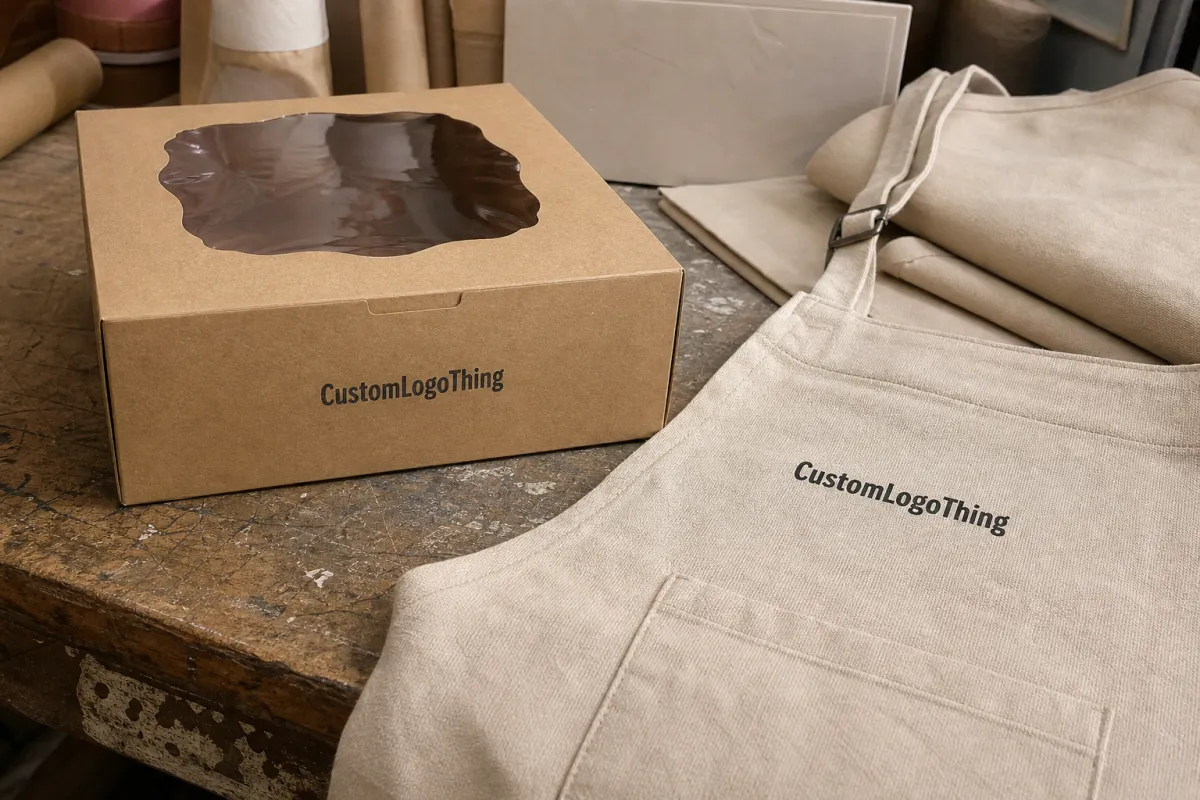
A bakery patch does not need much size to do visible work. A small woven or embroidered logo on an apron chest, cap band, or tote bag can unify the whole look, especially in open-kitchen retail settings where customers see staff from several angles. It also photographs well, which matters for catering photos, social content, and customer-shared product shots.
There is a second layer of value that gets missed when people focus only on appearance. A patch gives you one brand marker that can be repeated across front-of-house staff, bakers, decorators, delivery drivers, and pop-up market teams, even when the garments differ. That matters for seasonal launches too, because ordering patches for a holiday crew is easier than changing an entire uniform program.
Cost can be surprisingly efficient. One patch placed on multiple touchpoints spreads branding spend across aprons, hats, and tote bags instead of forcing separate decoration methods for each item. For many bakeries, that is a cleaner use of budget than printing every packaging item with a new design.
“A patch is small, but from a buyer’s point of view it can change how the whole operation feels: tighter, more intentional, and easier to standardize across locations.”
There is also a packaging angle. Patches can reinforce brand recall on gift bags, catering carriers, and retail merchandise without requiring a full production run of new boxes or sleeves. If the goal is to keep the look premium but manageable, a clear logo patches MOQ Guide for Bakery Brands becomes a guide to controlling cost while improving presentation.
Patch construction options that work for bakery uniforms and soft goods
Not every patch type behaves the same on a bakery uniform. The best choice depends on detail level, wash frequency, and the fabric it will sit on. For aprons and jackets, the main options are embroidered, woven, PVC, and printed patches, and each one has a different hand feel and cost structure.
Embroidered patches are the classic choice for bold bakery marks, simple icons, and logos with strong outlines. They have texture, depth, and good shelf presence, but very tiny text can get lost. Woven patches hold small lettering and fine line art better because the weave supports more detail in a flatter finish. If the logo includes script text, thin borders, or small flourishes, woven often performs better.
PVC patches work well when the goal is an easy-to-clean surface and strong color blocks. They handle moisture better than fabric-based patches, but the look is more industrial, so they do not suit every bakery identity. Printed patches can reproduce gradients and complex artwork, but they are usually less tactile and may feel less premium on artisan bakery apparel unless the design truly needs that print capability.
Backing choice matters just as much as the face construction. Sew-on is usually the safest for repeated laundering because the attachment is mechanical and durable. Iron-on is convenient for quick application, but heat, steam, and detergent cycles can weaken it over time. Velcro makes sense for temporary uniforms or rotating event staff. Adhesive backings are more limited and tend to fit temporary placement rather than a busy bakery environment.
Thread color matching, edge finishing, and shape all affect the final look. A merrowed edge gives a classic stitched border, while die-cut or custom contour cuts are better for irregular logos or badge-style shapes. If the brand leans minimal, a crisp cut edge can look sharper than a heavy border. If it leans traditional, merrowed edging often feels more natural.
For bakery use, the working environment should drive the spec, not the mockup alone. Aprons pick up flour dust and grease. Delivery jackets get folded, packed, and washed more often than people expect. Cap bands rub against foreheads and sweat. A patch that looks perfect on screen may still be the wrong choice if the backing cannot tolerate heat or the border starts fraying after a few wash cycles.
Logo patches MOQ guide for bakery brands: sizing, artwork, and spec decisions
The phrase logo patches MOQ Guide for Bakery Brands matters because MOQ is rarely a single fixed number. It changes with patch size, stitch count, construction, number of colors, and whether the order includes one design or several placement variations. A 2-inch chest patch in a simple woven format can be quoted very differently from a 4-inch embroidered apron patch with a custom outline and multiple thread colors.
For bakery uniforms, sizing usually falls into a few practical ranges. Small chest patches are often around 2 to 3 inches wide, which is enough for a logo mark or short wordmark. Apron-center patches may run 3 to 4.5 inches wide, where the design has more presence without overwhelming the garment. Sleeve or cap accents are often smaller and benefit from simpler artwork because tiny detail disappears fast at that scale.
Artwork prep can reduce quoting surprises and make a lower MOQ more realistic. Buyers should send vector files when possible, preferably AI, EPS, or PDF with clean paths. If the logo has gradients, shadows, or extremely fine text, those elements usually need simplification before production. PMS color references help too, although exact match depends on thread availability or print method. A good supplier will usually point out which details need to be removed or thickened before the first proof is made.
Complex logos often need a test adjustment before the bulk run is approved. That is especially true when a logo has thin serif text, nested outlines, or small icons that will shrink too much at patch size. In real production, the best-looking patch is often the one that is edited slightly for stitchability rather than copied pixel-for-pixel from the website logo.
Before quoting, a buyer should work through a short decision list:
- What garment will carry the patch: apron, cap, jacket, tote, or bag?
- Will it be washed often, or only used for events?
- Does the brand need a premium feel or a functional team ID?
- How much detail does the logo really need at patch size?
- Is the order one SKU or several placements across different items?
Those answers help a supplier recommend the right spec instead of just quoting the most expensive version. Clear file naming, a labeled placement photo, and a concise spec sheet usually do more for pricing accuracy than a long email thread after the fact.
Cost, pricing, MOQ, and what changes your unit cost
For buyers comparing quotes, the main cost drivers are usually straightforward once they are laid out clearly: material type, stitch count, mold or tooling needs for specialty shapes, number of colors, edge finishing, and the backing method. The more custom the construction, the more likely you are to see tooling fees or setup charges appear on the quote.
Higher MOQ usually lowers cost per piece. That is basic production math. If the factory can spread setup charges, digitizing, and prep over 2,000 pieces instead of 300, the unit cost falls. Smaller runs are still useful, especially for holiday campaigns, limited-time bakery launches, staff pilots, or test orders, but buyers should expect the per-piece price to be higher when the order size is small.
Typical pricing usually moves in ranges rather than hard numbers. For a simple woven or embroidered bakery patch, small-run pricing may sit roughly in the low single dollars per piece, while larger orders can fall well below that. Complex PVC, printed, or highly detailed shapes tend to cost more. Exact quotes depend on size, finishing, color count, and the amount of setup work required.
| Patch type | Typical use | Common MOQ range | Relative unit cost | Notes |
|---|---|---|---|---|
| Embroidered | Bold logos, apron chest marks | 100-500 pcs | Mid | Best for simple shapes and strong texture |
| Woven | Small text, fine detail, badge logos | 100-300 pcs | Mid to lower-mid | Flatter look, better detail retention |
| PVC | Moisture-prone or modern uniform looks | 100-300 pcs | Mid to higher | Durable surface, more industrial appearance |
| Printed | Complex artwork or gradients | 50-200 pcs | Variable | Good for artwork that cannot stitch cleanly |
In many quote sheets, buyers will also see separate lines for digitizing, sample fees, color changes, rush handling, and shipping. Setup charges are common when the factory needs to prepare the embroidery file, mold, or printing plate. Some suppliers include that in the piece price, while others show it separately. Always ask for the total landed estimate, not just the headline unit price.
One useful way to think about the economics is this: if you are equipping several locations or replacing uniform patches across a rolling schedule, a higher MOQ can reduce unit cost enough to justify a small stock buffer. But if you are launching a seasonal concept, the safer route may be a smaller test batch even if the per-piece price is higher. Inventory risk is a cost too.
For additional context on packaging and supply-chain decision-making, the Packaging & Processing Women’s Leadership Network and related industry resources can be useful references, especially when you are trying to standardize presentation across apparel and packaging touchpoints.
Process and timeline from artwork approval to delivery
The workflow is usually straightforward, but speed depends on how prepared the buyer is. Most orders move through these stages: quote request, artwork review, digital mockup, proof or sample approval, production, quality check, and shipment. If the patch has a complex shape or very fine detail, the supplier may recommend a physical sample before the full run.
Timeline varies by construction, order size, and revision count. For many standard patch orders, production often falls somewhere around 12 to 20 business days after approval, with shipping added on top. If there is a sample step, add more time. If you need a rush order, you may be able to compress the schedule, but rush handling usually raises the price.
Most delays happen for predictable reasons. Artwork arrives low resolution. The buyer wants to match thread colors from a web image instead of a Pantone reference. The patch size changes after the proof is drawn. Or the team takes several days to approve a mockup while the launch date keeps moving closer. Those are avoidable delays if you prepare the file set first.
Here is what helps shorten lead time:
- Send a final vector logo file.
- State the patch size and placement clearly.
- Choose the backing type before quoting.
- Share the garment fabric if possible, such as canvas apron, twill shirt, or cap band.
- Give the supplier a target in-hand date, not just an order date.
That last point matters more than many buyers realize. If the patches are tied to a store opening, menu launch, or staff onboarding window, the supplier can recommend a schedule that fits the real deadline instead of a theoretical one. The cleanest orders are usually the ones where the timeline is defined before the quote is finalized, not after approval is already delayed.
Quality checks, wash testing, and wear performance for bakery environments
Bakery work is harder on apparel than many buyers expect. There is heat from ovens, constant motion, flour in the air, occasional grease exposure, and repeated washing. That means patch quality is not just about how it looks on day one. It is about how the border holds up after ten wash cycles and whether the backing still bonds or needs stitching reinforcement.
The most useful quality checks are practical ones: clean border finish, consistent stitch density, accurate color matching, secure corners, and resistance to edge fraying. If the patch is embroidered, look closely at thread tension and underlay coverage. If it is woven, check whether small text remains legible. If it is PVC or printed, inspect the surface for color bleed, cracking risk, or uneven edges.
A common mistake is approving a patch without testing it on the actual garment fabric. A patch that looks excellent on a paper backer may behave differently on a waxed apron, heavy canvas, soft twill, or knit cap. Fabric stretch and thickness change how the attachment holds. That is why a sample attached to the real apron or cap is more valuable than a loose sample in a plastic sleeve.
Care instructions should also be part of the decision. Iron-on patches are convenient, but they may not tolerate high heat or industrial laundry cycles as well as sewn attachment. Sew-on backing is usually safer for long-term uniform use, especially when staff wash garments frequently. Some teams stitch around the patch edge even if there is an adhesive or heat-activated layer underneath, simply to improve long-term retention.
For buyers who care about sustainability and material sourcing, it is reasonable to ask whether the patch components or packaging align with recognized standards such as FSC for paper-based materials or whether shipping and handling can be planned to reduce waste. When you are sorting through shipment and durability questions, the Environmental Protection Agency’s packaging and waste resources at epa.gov can also offer useful background on material handling and waste reduction.
Before placing a full order, ask for a sample or short-run proof and inspect it under the same conditions your staff will face. Heat. Washing. Daily wear. If it survives those, you have something worth scaling.
Why choose a custom patch supplier that understands bakery branding
Bakery buyers do not just need a patch vendor; they need a supplier who understands how branding works across uniforms, retail gift items, and service teams that move fast. A good supplier will translate the logo into production-friendly specs, explain which details need simplification, and quote the options clearly enough that you can compare material, MOQ, and finish without guessing.
That kind of support saves time because it reduces revision cycles. It also prevents waste. If a patch is overdesigned for the garment or underbuilt for the wash load, the purchase becomes a short-lived fix instead of a usable brand asset. Good quoting matters here: the difference between a simple woven patch and a highly detailed embroidered version is not just aesthetics; it can change lead time, tooling fees, and unit cost.
The strongest suppliers tend to be the ones that give you practical choices instead of vague promises. They will tell you if your logo needs trimming, if your MOQ is lower with a different patch type, or if a standard shape will save money over a custom contour cut. That is the kind of clarity bakery operators need when they are balancing staff presentation, launch deadlines, and inventory control.
The real value of the logo patches MOQ guide for bakery brands is simple: it helps you Order the Right patch the first time, with fewer surprises in pricing, durability, and fit.
Next steps: gather specs, request a quote, and confirm your production plan
If you are ready to move forward, pull together the basic spec set before asking for pricing. The cleaner the request, the better the quote. A strong request should include your logo file, preferred patch size, backing type, placement photo, garment material, color preferences, and target quantity. If you already know the opening date or staff onboarding schedule, include that too.
It helps to request at least two options: one lower-MOQ test run and one best-value bulk quote. That gives you a useful comparison between risk and savings. Ask for a mockup on the actual apron, cap, or tote bag whenever possible, because patch size can look very different once it is placed on a garment.
For bakery brands with rotating teams or seasonal programs, timing matters. If you know a holiday line is coming, or a new retail location is opening, place the patch order early enough to leave room for proof approval and shipping. A lot of rushed orders happen simply because the design approval started too late.
Use this logo patches MOQ Guide for Bakery brands as your checklist before ordering: confirm the patch style, choose the backing, simplify the artwork where needed, check the MOQ, and ask for a landed price that includes setup charges and shipping. If you do that, the final order is much more likely to fit the garment, fit the budget, and fit the timeline.
FAQs
What is the usual MOQ for logo patches for bakery brands?
MOQ depends on patch type, size, and detail level, but simpler designs usually allow lower quantities than highly customized styles. Buyers should ask whether the quote changes at tiered quantities so they can compare sample-run pricing against bulk savings. If multiple bakery locations will share the same patch, a higher MOQ often lowers unit cost enough to justify stocking extras.
Which patch type is best for bakery aprons and uniforms?
Embroidered patches work well for bold logos and strong texture, while woven patches handle small text and fine details better. Sew-on backing is often the safest choice for repeated washing, though some teams prefer iron-on or Velcro for temporary placement. The best option depends on fabric type, wash frequency, and how premium the brand needs the uniform to feel.
How do I reduce unit cost without hurting patch quality?
Simplify the artwork, reduce the number of thread colors, and choose a standard shape instead of an unusual custom outline. Order a larger quantity if you know the patch will be used across multiple stores, since higher volume usually lowers the per-piece price. Use the supplier’s spec guidance early so the design is production-friendly before quoting begins.
How long does production usually take after artwork approval?
Timeline depends on patch style, sample requirements, and shipping method, but production is usually faster when artwork is final and clean. Proof approval is often the biggest variable, so buyers should respond quickly to mockups and color confirmations. If there is a fixed opening date or launch window, mention it upfront so the supplier can recommend a realistic schedule.
Can I order a small test run before a larger bakery uniform order?
Yes, many buyers start with a smaller run to confirm size, color, backing, and wear performance on the actual garment. A test run is especially useful when the logo is detailed, the aprons are a specialty fabric, or staff will wash uniforms frequently. After approval, the supplier can usually scale the same approved spec into a larger production order.