On a crowded pet aisle, a bag has only a few seconds to earn trust. A Logo Patches Supplier Quote for pet treat brands is not just a request for pricing; it is a packaging decision that affects how the product feels before the shopper reads the ingredients panel. A stitched, woven, or molded patch adds texture, shadow, and structure. Flat print rarely carries the same weight.
From a buyer’s perspective, patches solve a practical problem. Many pet treat packs use the same base materials: kraft paper, matte film, stand-up pouches, resealable zippers, and muted colors that all start to blur together on shelf. A patch gives the package one more layer of identity. It also creates flexibility. One base pouch can support different flavors, seasonal items, or subscription exclusives by changing only the patch rather than reprinting the entire pack.
That matters because pet treat brands sell more than snacks. They sell a feeling of care, consistency, and quality control. A tactile logo element helps signal that the brand made deliberate choices, not just acceptable ones. In a category where natural claims, grain-free claims, and “human-grade” language already crowd the front panel, a patch can be the detail that makes one pack feel more finished than the next.
“The brands that stand out on shelf usually do one thing better than the rest: they make the package feel intentional. A patch helps do that without redesigning the whole system.”
There is also a recall effect. People handle treat packaging. They squeeze it, turn it over, and tuck it into carts or shipping boxes. A textured logo stays in memory better than a badge buried in artwork. The difference is small on a digital mockup and obvious in retail. That is why a serious Logo Patches Supplier Quote for pet treat brands should be treated like a packaging spec, not a novelty purchase.
Why pet treat brands use logo patches to raise shelf trust
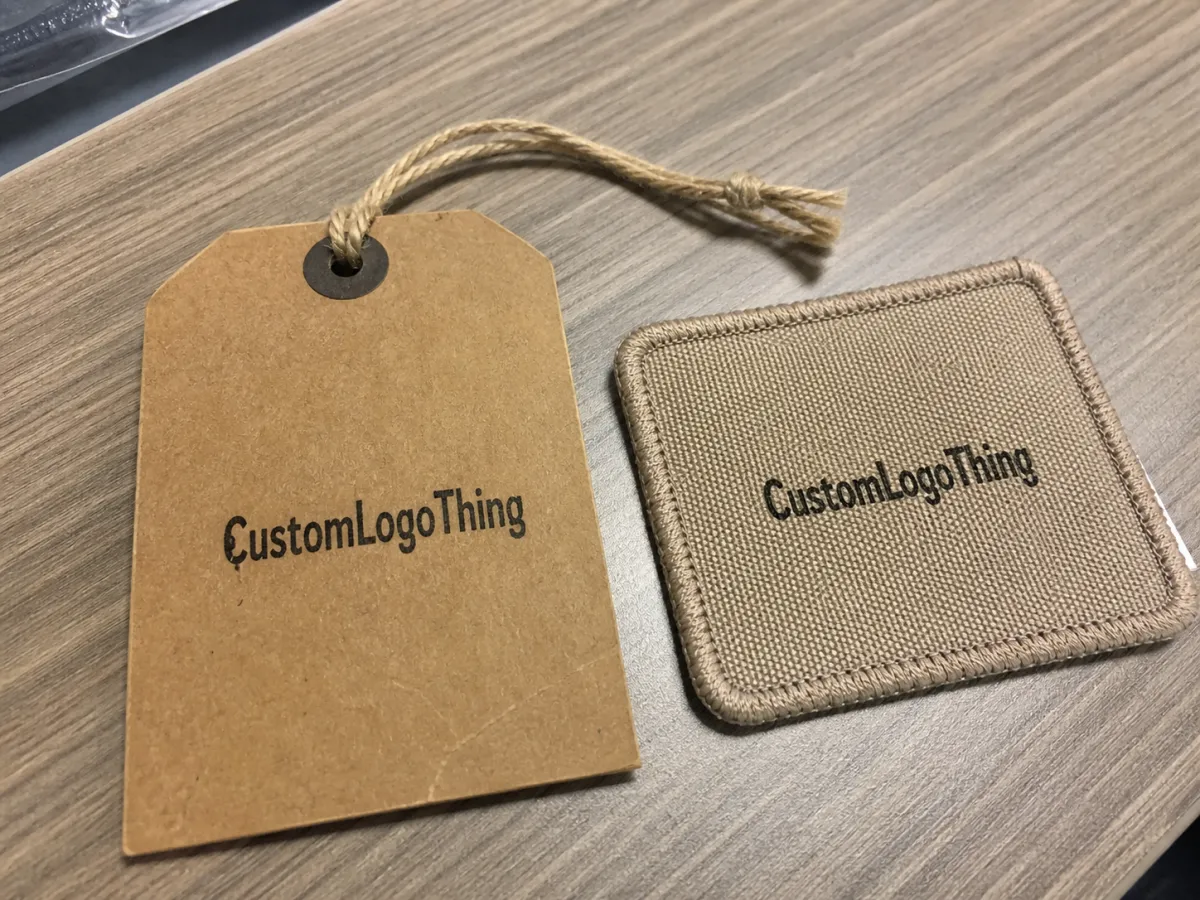
A logo patch works because it breaks visual sameness. Pet treat packaging often leans toward the same visual cues: earth tones, matte finishes, kraft textures, and simple iconography. Those choices are safe, but they can also make products blend together. A patch introduces a second surface and gives shoppers another way to identify the brand quickly.
That tactile signal helps especially with premium treats, artisan chews, biscuits, and gift sets. These products often justify a higher price through presentation as much as formulation. A woven or embroidered patch can make a pouch feel more crafted. PVC or silicone can make a pack feel sturdier and more contemporary. Leatherette can push the package toward a more premium, natural look. Each option changes the retail reading of the product.
Patches also support line architecture. A core patch style can stay consistent across the range, while color, shape, or finish distinguishes puppy formulas, training treats, dental chews, or limited seasonal runs. That keeps the shelf organized and reduces the need for constant print redesigns. For brands managing multiple SKUs, that is more than a cosmetic benefit. It is a control mechanism.
Another practical reason: a patch gives packaging teams a way to build a premium signal without changing the base pouch every time the product changes. That can reduce waste on small or uncertain runs. It also makes test launches easier, since the same pouch can be reused across several item types while only the badge changes.
None of this works if the patch looks cheap. Loose edges, weak backing, fuzzy lettering, or a size that overwhelms the pack can make the package look less trustworthy. The best patch choice is the one that fits the packaging material, survives handling, and still reads cleanly from normal shelf distance.
Patch styles and materials that suit pet treat packaging
The right patch depends on the substrate, the brand position, and how much the package will be handled before purchase. Pet treat brands usually narrow the choice to woven, embroidered, PVC, leatherette, or silicone. Each option sends a different message and behaves differently in production.
Common patch materials
- Woven patches: Best for fine detail, small text, and crisp logo edges. They usually read cleaner than embroidery when the mark includes thin lines or compact lettering.
- Embroidered patches: Better for texture and a hand-finished look. They fit rustic, artisanal, or heritage-style brands.
- PVC patches: A practical choice where wipe-clean handling and moisture resistance matter. They feel structured and hold bold shapes well.
- Leatherette patches: Often chosen for a premium, natural presentation. They pair well with kraft pouches, matte black bags, and gift packaging.
- Silicone patches: Durable, flexible, and easy to clean. These work well for frequent handling and display-heavy retail environments.
Attachment method matters almost as much as material. Sew-on is the most secure, but it is not always practical for finished pouches. Iron-on works better on fabric wraps or secondary packaging than on most retail treat bags. Adhesive backing can simplify application on sample packs or short runs, though the bond should be tested before a full order. Hook-and-loop is usually better for reusable merch or display systems than for primary packaging.
For pet treat buyers, the real issue is not whether a patch looks good in a render. It is whether it holds up after packing, shipping, shelf handling, and the occasional customer squeeze. Treat oils, dust, abrasion, and temperature shifts all affect performance. A patch that looks solid in a digital proof can still fail if the backing lifts, edges fray, or the surface finish scratches during transit.
| Patch type | Best use case | Typical strength | Typical unit range |
|---|---|---|---|
| Woven | Detailed logos on premium pouches | Good detail, moderate texture | $0.18-$0.45 |
| Embroidered | Artisanal or rustic branding | High texture, stronger visual depth | $0.22-$0.55 |
| PVC | Moisture-prone or wipe-clean packages | Very durable, bold shapes | $0.28-$0.70 |
| Leatherette | Natural, premium presentation | Premium look, moderate durability | $0.30-$0.80 |
| Silicone | Heavy-handling, reusable branding | Excellent abrasion resistance | $0.35-$0.85 |
These are typical market ranges, not fixed quotes. Material type, patch size, color count, backing, finish, and order quantity all move the number. A 50 mm woven patch with three colors is a different job from a 90 mm leatherette badge with debossing and edge stitching. The quote should reflect that difference clearly.
Buyers who manage packaging quality systems often ask for more than a sample image. They ask about tolerance ranges, backing performance, and whether the supplier can cite a transit or durability test standard. For packaging transit logic, many teams reference ISTA procedures. For recycling and waste reduction context, the EPA’s guidance can be a useful reference when the patch is part of a broader paper-based or mixed-material pack: EPA recycling and waste reduction guidance.
Artwork, size, and placement specifications buyers should confirm
Suppliers need clean artwork. Vector files are the baseline, ideally AI, EPS, or editable PDF. If the logo includes small type, that should be called out early because tiny lettering can disappear in a woven or embroidered patch. Pantone references help too, particularly when the patch must sit inside an existing brand color system.
Stitch count, border style, backing type, edge finish, and contour shape should be settled before production starts. Those choices affect both appearance and cost. A simple 60 mm woven patch with two colors and a merrowed border is far easier to price and repeat than a custom-cut piece with five micro details and mixed finishes.
Size is not a mood-board decision; it is a packaging decision. On a small 100 g pouch, a 70 mm patch can dominate the front panel. On a larger resealable bag, a 40 mm patch may look too small and lose impact. Many pet treat brands land in the 45-80 mm range for front-panel patches, but bag width, zipper placement, and the amount of copy on the pack all change the answer.
Placement should be considered with the same discipline. Front-panel placement offers the strongest shelf visibility. Side-panel placement works well for families with multiple SKUs because it can act as a consistent accent. Top-flap or hang-tag placement suits gift sets and seasonal packaging. Zipper-line placement can draw the eye, though only if it does not interfere with opening or resealing.
- Front panel: Best for shelf visibility and immediate recognition.
- Top flap or hang area: Good for gift sets and seasonal packaging.
- Side panel: Useful for SKU differentiation across a range.
- Secondary merch: Better for bandanas, display cards, or reusable totes than for primary pouches.
Ask the supplier to show the patch on the actual pack artwork before approval. A placement mockup often exposes problems that are easy to miss in a flat spec sheet: a badge that overlaps copy, sits too close to a zipper, or feels crowded by icons and claims. That small check can save a lot of rework later.
For brands that track sustainability claims carefully, patch material and backing should be considered alongside inks, films, and cartons. If the outer system uses FSC-certified paper components or recycled content claims, the patch should not create a mismatch in tone or performance. The package should feel like one system, not a collection of unrelated parts.
Logo patches supplier quote: cost, pricing, MOQ, and unit cost drivers
This is the point where a buyer needs specifics. A Logo Patches Supplier Quote for pet treat brands can vary sharply because several cost drivers stack together: material, dimensions, color count, backing, finish, setup charges, and order quantity. Add digitizing, mold fees, sample costs, and any kitting or packaging labor, and the total can move faster than most first-time buyers expect.
For a small pilot run, a woven or embroidered patch may sit around $0.22-$0.55 per unit at 1,000-3,000 pieces. At 5,000 pieces, the same patch may drop into the $0.14-$0.32 range if the specs are straightforward. PVC, leatherette, and silicone usually cost more, especially if the design requires a custom mold or extra finishing. Those numbers are directional, not promised.
MOQ is not just a supplier preference. It reflects setup economics. If a vendor has to digitize artwork, cut tooling, or create a mold, fixed costs are spread across fewer units on a low-volume order. That is why a brand testing a new flavor often pays more per patch than a brand placing a repeat run. The tooling cost is the same; the batch size changes the math.
The cleanest way to compare quotes is to make every supplier quote the same spec sheet. Same size, same patch type, same number of colors, same backing, same edge finish, same application method, and same sampling requirement. If one quote is 18% lower but excludes digitizing or sample approval, it is not truly lower. It is just incomplete.
That’s also where packaging teams make better decisions than spreadsheets alone suggest. A simpler design can outperform a more complex one. A one-color leatherette badge with a clean debossed logo may look more premium than a busy multi-color patch that costs more and reads worse at shelf distance. In this category, restraint often looks more expensive than complexity.
Ask for a line-item breakdown of:
- Unit price at each quantity tier
- Digitizing or mold fees
- Sample or prototype cost
- Lead time for first run and repeat orders
- Packaging, kitting, or assembly fees
- Shipping terms and carton quantities
That is how a buyer protects margin and avoids rework. Not by chasing the lowest number on the page, but by comparing total landed cost, risk of delay, and the probability of a second round of corrections.
Process and lead time: from artwork approval to production steps
The usual workflow is simple enough: inquiry, spec review, digital proof, sample or mockup approval, production, inspection, and shipment. The actual lead time depends on how complete the artwork is and how many revisions happen before approval. If the logo is already in vector form and the patch size is known, the process moves faster. If the brief is still changing, every stage slows down.
For many custom patch orders, proofing takes 1-3 business days, sampling takes about 5-10 business days, and production can run 12-20 business days after approval. Those ranges tighten when materials are in stock and the design is straightforward. They stretch when a mold has to be made, PMS colors need close matching, or the order arrives during a busy season.
Most delays come from three places: unclear artwork, slow proof feedback, and sample revisions. That sounds obvious, but it is one of the main reasons launch dates slip. A buyer who answers proof questions within 24 hours is usually in a better position than one who waits four days between comments. Packaging timelines rarely forgive indecision.
Application also affects timing. If the supplier attaches the patch to the package, that finishing step has to be built into the schedule. If the brand applies the patch in-house, production may move faster, but internal labor and equipment capacity become part of the equation. Either way, the quote should separate patch manufacture from finishing work.
For shipping and transit planning, many teams still use ISTA logic to gauge how much abuse the package should survive. That is useful when treat packs are being boxed, routed through fulfillment centers, or included in subscription kits: ISTA standards and resources. A patch may be decorative, but it should also survive the same handling as the rest of the package.
Good suppliers explain where the time goes. They separate sampling from production, define what triggers a delay, and say whether repeat orders can be turned faster. If they cannot explain that clearly, the quote may not give enough control over launch timing.
How to choose a supplier that fits pet treat brand requirements
Price matters, but it is not the only test. A supplier for pet treat packaging needs to be accurate, responsive, and consistent. The first order is one thing. The third reorder is where capability shows up. If color drifts, backing quality changes, or sample accuracy slips, the brand starts carrying hidden packaging risk.
Pet treat brands also need a supplier that understands the visual language of food-adjacent products. The patch should not look like a giveaway if the brand is aiming for a premium shelf price. At the same time, it should not be so ornate that it fights the package or makes the product feel overly decorative. The best vendors ask the right questions before they quote because they know those trade-offs affect both appearance and cost.
Look for experience in related categories such as snacks, coffee, tea, candles, and other premium retail goods. These products share the same pressures: attractive packaging, repeatability, durability, and reliable surface finish. Ask whether the supplier can support repeat production without visible color drift. Ask how sample approval is handled. Ask what tolerances they hold for size and stitch count.
Communication speed matters too. A supplier that answers within one business day and sends a line-item quote is easier to work with than one that replies slowly with a single unexplained number. Transparency is not extra service. It is how brands keep their launch schedule and manage inventory.
- Look for spec clarity: Can they quote from a proper tech pack or only from a logo file?
- Check sample discipline: Do they offer pre-production samples or only digital proofs?
- Assess repeatability: Will future runs match the first approved piece?
- Confirm communication: Do they explain lead time and exclusions clearly?
If you have category examples, share them. If not, ask for case studies or prior work that shows patch quality on retail packaging. A good supplier should be comfortable discussing what they can control and what depends on order structure, material choice, and finish selection.
Next steps to request a quote and move to sampling
To get a usable quote, send a complete brief. Include the logo file, preferred patch type, approximate size, quantity, color count, backing method, packaging surface, application method, and target launch date. If you are unsure about the material, give the supplier two options and ask them to price both. That produces far better data than guessing.
It also helps to request two scenarios: a pilot run and a scale-up run. The pilot shows what the brand can test without overcommitting. The scale-up shows where unit economics improve if the product performs well. That comparison is especially useful for pet treat brands launching new flavors, seasonal packs, or subscription exclusives.
Ask for a sample image or physical prototype before full production if the patch will sit on premium retail packaging. The sample should verify size, color, attachment method, and overall feel on the actual bag or box. A small sample fee is easier to absorb than a bad first run.
Use a simple decision sequence:
- Send artwork and specs.
- Compare quotes using identical parameters.
- Review sample or mockup.
- Confirm lead time and shipping terms.
- Approve the first production batch only after sample sign-off.
If the brief is still forming, pause before placing the order. A rushed quote can still be an expensive quote. For a logo patches supplier quote for pet treat brands, the best results usually come from clear artwork, realistic sizing, and an honest view of how the package will be handled from production through shelf display.
FAQs
What should I include when requesting a logo patches supplier quote for pet treat brands?
Include artwork, dimensions, patch style, backing type, quantity, color count, and where the patch will be used on the package. Share your target launch date so the supplier can align pricing and lead time with your schedule.
Which patch material works best for pet treat packaging?
Woven and embroidered patches work well for premium, tactile branding, while PVC and leatherette are stronger choices for moisture resistance and wipe-clean handling. The best option depends on your package material, handling conditions, and desired retail look.
How does MOQ affect patch pricing for pet treat brands?
Lower MOQs usually increase unit cost because setup and sampling fees are spread across fewer units. Larger reorders often reduce per-piece pricing and make it easier to standardize across multiple flavors or SKUs.
How long does production usually take after approval?
Lead time depends on material, sample revisions, and order size, but clean artwork and fast approvals shorten the process significantly. Ask the supplier to separate sample time from production time so you can plan inventory accurately.
Can I order a sample before placing a full run?
Yes, and it is the safest way to confirm size, color, attachment method, and overall appearance on your packaging. A sample helps prevent costly revisions after production begins.


