For fitness brands, a Logo Patches Supplier Quote for fitness brands is usually the first place design, durability, and unit economics meet. It looks simple on paper. In production, it is where the real trade-offs start: a patch can make a hoodie feel finished and premium, or it can throw off the drape, rub on the skin, or look heavier than the garment can support.
That is why experienced buyers ask for a Logo Patches Supplier Quote for fitness brands before sampling or final trim approval. They want to know whether the logo should be woven, embroidered, PVC, silicone, or leather. They want the MOQ, production window, and backing options spelled out early. They also want to avoid discovering too late that a detail-heavy mark needs to be simplified to produce cleanly at scale.
The best quotes are not just price lists. They give a buyer enough information to choose the right construction for the garment, the launch timeline, and the wear conditions. On activewear, that matters more than it does on casual merch because the patch has to survive movement, sweat, friction, repeated washing, and the occasional rough pack-out.
Why fitness apparel buyers request patch quotes before sampling
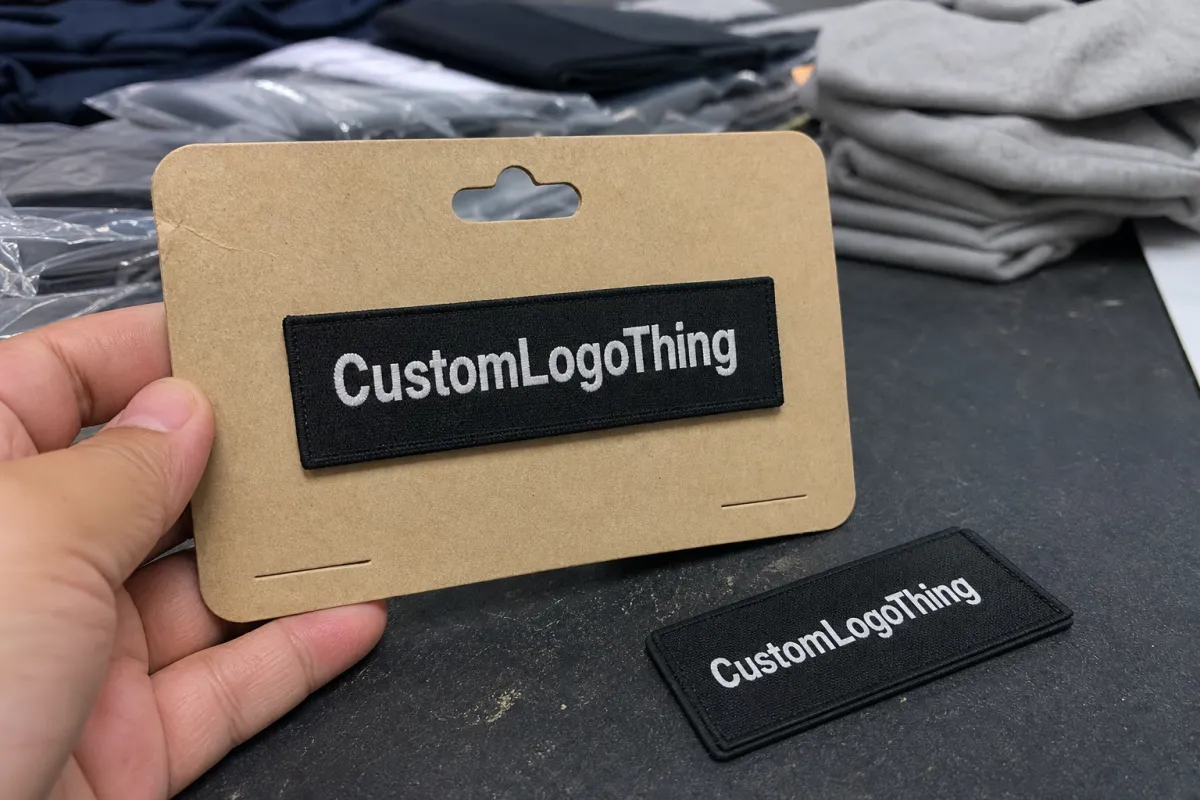
Patch selection affects perception fast. A dense embroidered badge on a heavyweight hoodie reads differently from a soft silicone mark on a compression top, even if the base fabric is identical. Buyers know that a patch can change the product story, so they ask for a Logo Patches Supplier Quote for fitness brands before they approve samples.
There is also a practical reason. Patch construction can affect stretch behavior, seam comfort, and edge stability. A thick patch on a fitted garment can create pressure points or distort the panel. A patch with too much detail can lose legibility once it is reduced to a small size, especially if it is sewn onto a textured surface. On caps and bags, the issue shifts from stretch to structure: the patch needs to sit flat without curling or lifting at the edges.
Budget planning is another driver. Trim costs are easy to underestimate because the difference between construction methods can be wider than expected. A simple logo may be quoted as embroidered, woven, PVC, silicone, or leather, and each option brings its own setup, finish, and lead time. A useful Logo Patches Supplier Quote for fitness brands should make those differences visible instead of burying them in a single lump sum.
“The fastest way to lose time is to approve the garment first and the trim second. Good buyers price the patch early, then build the rest of the program around the real numbers.”
Patch quotes also help with internal approval. Procurement teams use them to compare materials, check MOQ, and confirm whether the artwork needs to be simplified. That is especially valuable for launches built around small drops, seasonal capsules, or influencer-led releases, where timing is tight and rework is expensive.
Patch styles that fit fitness branding without adding bulk
The right patch is the one that suits the garment surface and the brand position, not the one with the most effects. A logo patches supplier quote for fitness brands should usually present a few realistic options so the buyer can compare appearance, feel, and production risk.
Embroidered patches are still a strong choice for hoodies, caps, and staff uniforms. They offer texture and a familiar premium finish. They also handle bold shapes well. The limitation shows up when the artwork includes tiny text, hairline strokes, or fine gradients. Those details can fill in or blur, especially once the patch is scaled down.
Woven patches are often better for compact logos and sharper lettering. Because woven construction can capture finer detail than embroidery, it suits modern fitness brands with smaller marks, slogans, or secondary icons. Woven patches also tend to sit flatter, which is useful on apparel that moves with the body.
PVC patches and silicone patches are popular for brands that want a clean, athletic look with a wipe-friendly surface. They perform well on gym bags, outerwear, caps, and accessories. They can hold bold color blocking and layered shapes very cleanly. The trade-off is feel: these materials can be firmer than textile-based options, so they are not always the best fit for soft garments or close-to-skin placement.
Backing choice matters just as much as the face material. The quote should show how the patch will be attached, because the wrong attachment method can erase any benefit from the right surface material.
- Sew-on backing for the most durable attachment on apparel and bags.
- Heat-seal or iron-on backing for flat surfaces that can tolerate heat, though many athletic fabrics cannot.
- Velcro backing for team kits, staff gear, or interchangeable branding.
- Adhesive backing for presentation samples or temporary placement, not repeated laundering.
- Merrow border or heat-cut edge depending on shape, artwork, and desired finish.
For performance apparel, thickness deserves special attention. A patch that looks rich in a flat sample can feel wrong once it is attached to a compressive legging, a stretch panel, or a fitted tee. On high-motion products, buyers usually want the profile as low as possible without sacrificing legibility. A good logo patches supplier quote for fitness brands should flag that risk instead of treating every logo the same.
| Patch style | Best use | Typical strengths | Common watch-outs |
|---|---|---|---|
| Embroidered | Hoodies, caps, staff uniforms | Textured, familiar premium feel | Small text can fill in |
| Woven | Detailed logos, compact marks | Sharper small lettering, lower profile | Less texture than embroidery |
| PVC | Gym bags, outerwear, accessories | Durable, wipe-clean, bold shapes | Can feel firmer on soft garments |
| Silicone | Performance apparel, modern branding | Soft-touch look, strong color blocking | Artwork needs clean shape control |
Specifications that affect artwork, durability, and approval
Most quote errors start with incomplete specs. A reliable logo patches supplier quote for fitness brands depends on the buyer providing the right technical details up front. The essential inputs are straightforward: size, shape, border style, base material, backing type, and application method.
Size affects both price and visibility. A 40 mm badge and an 80 mm badge can carry the same logo, but they do not behave the same in production or on the garment. Larger patches usually require more material, more handling, and sometimes more sewing time. Smaller patches can reduce cost, but only if the design still reads cleanly once the details are compressed.
Artwork detail is where many patches fail. Thin lines, micro text, and subtle gradients are difficult to reproduce cleanly. Woven construction generally handles fine detail better than embroidery. PVC and silicone work well for bold shapes, clean edges, and simple color blocking. If a design depends on tonal shifts or photographic effects, a patch may be the wrong decoration method altogether. A solid logo patches supplier quote for fitness brands should say that plainly instead of forcing a weak build.
Color matching needs a practical approach. Pantone references are a useful starting point, but texture changes how color appears. Thread sheen, woven yarn density, matte silicone, and glossy PVC all shift the final look. Thread substitution can also happen when a precise shade is unavailable. Buyers should allow a small visual tolerance, especially if the patch needs to match an existing label, zipper pull, or trim program.
Durability matters more on fitness products than on casual apparel. Patches on training gear may face repeated laundering, sweat exposure, sunlight during transit, and friction against equipment. If the patch sits near a seam or a high-movement area, edge wear becomes a bigger risk. Not every order needs lab testing, but buyers should ask about wash performance, abrasion resistance, and whether the backing suits the garment care instructions. For broader packaging and transit context, references from the International Safe Transit Association can help when shipping performance is part of the program, and the Forest Stewardship Council is useful when material sourcing or packaging sustainability is part of the brief.
Clean specs reduce back-and-forth. Back-and-forth adds cost and extends the timeline. That is true on almost every trim order, but fitness brands feel it more because collection calendars are tighter and launch windows are less forgiving.
Cost, pricing, MOQ, and what drives your quote
Patch pricing is shaped by a small set of predictable variables. Buyers get the clearest comparison when every supplier is quoting the same size, same material, same backing, and same finish. If one quote is for embroidered, another for woven, and a third for molded PVC, the numbers are not directly comparable.
The main price drivers are usually:
- Patch size and total surface area.
- Artwork complexity, especially small text and fine detail.
- Number of colors or thread changes.
- Backing type, such as sew-on, iron-on, Velcro, or adhesive.
- Border style, including merrowed, heat-cut, or laser-cut edges.
- Order quantity, which spreads setup across more pieces.
- Packaging or fulfillment needs, especially if the buyer wants custom bagging or split shipping.
Lower quantities almost always carry a higher unit cost because setup, proofing, and machine preparation are spread across fewer pieces. That is not a warning sign; it is how the math works. A 300-piece run can cost materially more per unit than a 5,000-piece run, even if the patch artwork stays the same. For a new fitness capsule or a limited launch, that can still be the right call if the goal is to test the market before scaling.
MOQ is where first-time buyers often get surprised. Some patch styles can be produced at modest quantities, while more specialized builds need a higher minimum to make economic sense. Woven and embroidered patches are often easier to run at lower volume. Molded or custom-shaped PVC and silicone patches may push the minimum upward because tooling, finishing, and setup are more involved. A useful logo patches supplier quote for fitness brands should state the MOQ by option rather than hiding it in the notes.
Extra charges can show up in several places: custom die cutting, special backings, rush production, additional samples, split shipping, or retail-ready packaging. Those costs are normal if they are visible before the purchase order is issued. They become a problem only when they appear after approval.
As a rough benchmark, buyers should expect small-run patch pricing to vary widely by construction. Simple woven or embroidered pieces at lower volumes may fall somewhere from a few tenths of a dollar to well over a dollar each, depending on size and detail. Molded PVC or silicone patches often land higher because tooling, color fill, and finishing add cost. The exact number depends on the artwork and the spec, which is why a precise logo patches supplier quote for fitness brands starts with complete inputs rather than assumptions.
Production steps and lead time from artwork to bulk delivery
Most patch orders move through the same sequence: artwork review, digital mockup, sample approval, bulk production, quality check, and packing. The pace of that sequence depends heavily on file quality and buyer response time. If the logo arrives as a low-resolution image, the process slows before it even reaches sampling.
Missing Pantone references are another common delay. So is changing the logo after the sample has already been prepared. Every revision affects the file, the proof, and sometimes the schedule. A good logo patches supplier quote for fitness brands should assume the buyer wants speed, but it should also leave room for one or two realistic proof corrections.
Simple sew-on woven patches usually move faster than molded PVC or silicone builds, especially when the artwork is straightforward and the order size is moderate. More complex constructions need extra time for tooling, mold preparation, or color adjustment. If the order includes custom packaging, multiple sizes, or mixed colorways, the lead time stretches further. That is not unusual; it just needs to be planned for before the garment ship date.
A practical rule for fitness brands: build a buffer before the seasonal launch, not after it. That buffer covers proof review, sample sign-off, and any final corrections. It also reduces the pressure to accept a weak construction just to meet a ship date.
For buyers who want tighter control over quality, the key checkpoints are simple:
- Edge finish for clean outlines and no fraying.
- Color consistency across production lots.
- Adhesion or backing performance where applicable.
- Stitch inspection on embroidered and sewn constructions.
- Surface finish on PVC or silicone pieces.
How our quote process supports fitness brand buyers
Fitness buyers usually want two things at once: speed and certainty. The quote process should support both. When a buyer sends the artwork, target quantity, preferred patch style, backing preference, and application method together, the response can be fast without becoming vague. That is the base line for a clean logo patches supplier quote for fitness brands.
The part that helps most is option-based pricing. A useful quote should not only show one path. It should show the difference between woven and embroidered, sew-on and Velcro, or a standard border and a custom cut shape. That gives the buying team a real comparison: premium look versus lower cost, softer feel versus tougher surface, quicker production versus more complex construction.
Communication matters just as much as numbers. Buyers need quick answers on proof revisions, sample notes, and production confirmation. If the art changes, even slightly, the team should know whether that affects the spec, the MOQ, or the delivery date. That kind of clarity is what keeps procurement moving.
Quality control should be built into the quote conversation too. Fitness branding is often used on products that stretch, move, and get washed repeatedly. The quote should reflect checks for stitch consistency, edge finish, adhesion where relevant, and color stability. A quote that ignores those checks may look cheaper, but it often costs more later.
Next steps to request an accurate fitness patch quote
The fastest way to get a usable logo patches supplier quote for fitness brands is to send complete information the first time. That does not mean sending a perfect package. It means sending enough detail for the supplier to price the right construction and avoid assumptions.
Please prepare these items:
- Logo file in vector format if possible, or the clearest available high-resolution artwork.
- Preferred patch style, or two options if you are still deciding.
- Finished size and approximate shape.
- Quantity needed for the launch or replenishment.
- Garment or accessory type such as hoodie, cap, duffel bag, or staff uniform.
- Backing preference and application method.
- Target delivery date so the schedule reflects the actual need.
If you are matching an existing collection, include a reference photo or a clear description of the current piece. That helps avoid small but expensive mismatches in texture, border style, or color tone. If you are still choosing between a premium appearance and the lowest possible unit cost, ask for two or three quote options on the same artwork so the comparison is honest.
One final check matters more than most teams expect: confirm how the patch will be attached before approval. A patch that works on a structured cap may not be right for a stretch hoodie panel or a high-friction bag strap. The correct build depends on the product, not just the logo. Once those details are settled, the logo patches supplier quote for fitness brands becomes much easier to trust.
What details do I need for a logo patches supplier quote for fitness brands?
Provide artwork, size, quantity, patch material preference, backing type, and where the patch will be applied. Include your target delivery date so the quote reflects the real production window.
Which patch type is best for gym apparel and activewear?
Woven patches are usually best for small text and detailed logos. PVC or silicone works well when you want a durable, wipe-clean patch with a modern look. Embroidery suits brands that want a textured, premium finish.
Why does MOQ change the unit cost on fitness brand patch orders?
Setup, sampling, and machine preparation are fixed costs that are spread across the order. Higher quantities usually reduce unit cost, while small runs carry a higher per-piece price.
How long does production usually take after sample approval?
Timing depends on patch style, quantity, and current production load. Simple constructions are usually faster, while custom molded or highly detailed patches need more time.
Can patches hold up to repeated washing and training use?
Yes, but the right backing, edge finish, and material choice matter. For active use, choose a construction designed for abrasion, movement, and the laundering method used by the garment.


