Getting a Logo Patches Supplier Quote for trade show teams usually comes down to three things: how the patch is built, how it will attach, and whether it can arrive before the booth opens. The cheapest line item is rarely the best one if it misses the deadline, distorts a logo, or falls off after one day of wear. Trade show buyers need more than a number. They need a quote that reflects the actual job the patch has to do.
That job is more demanding than it looks. On a show floor, staff are packing kits, moving between the booth and storage, lifting boxes, shaking hands, and wearing the same branded pieces for long stretches under harsh lighting. A patch has to read clearly at arm’s length, survive repeated handling, and work on the fabric it is attached to. If it fails on any of those points, the whole uniform program feels less intentional.
The practical challenge is that patch pricing is shaped by details buyers sometimes leave out of the first request. Size, thread count, edge finish, color count, backing, and artwork quality all affect the final quote. The more specific the brief, the less guesswork there is on both sides. That matters when an event calendar is fixed and there is no room for a second production run.
Why trade show teams need patches that stay sharp under pressure
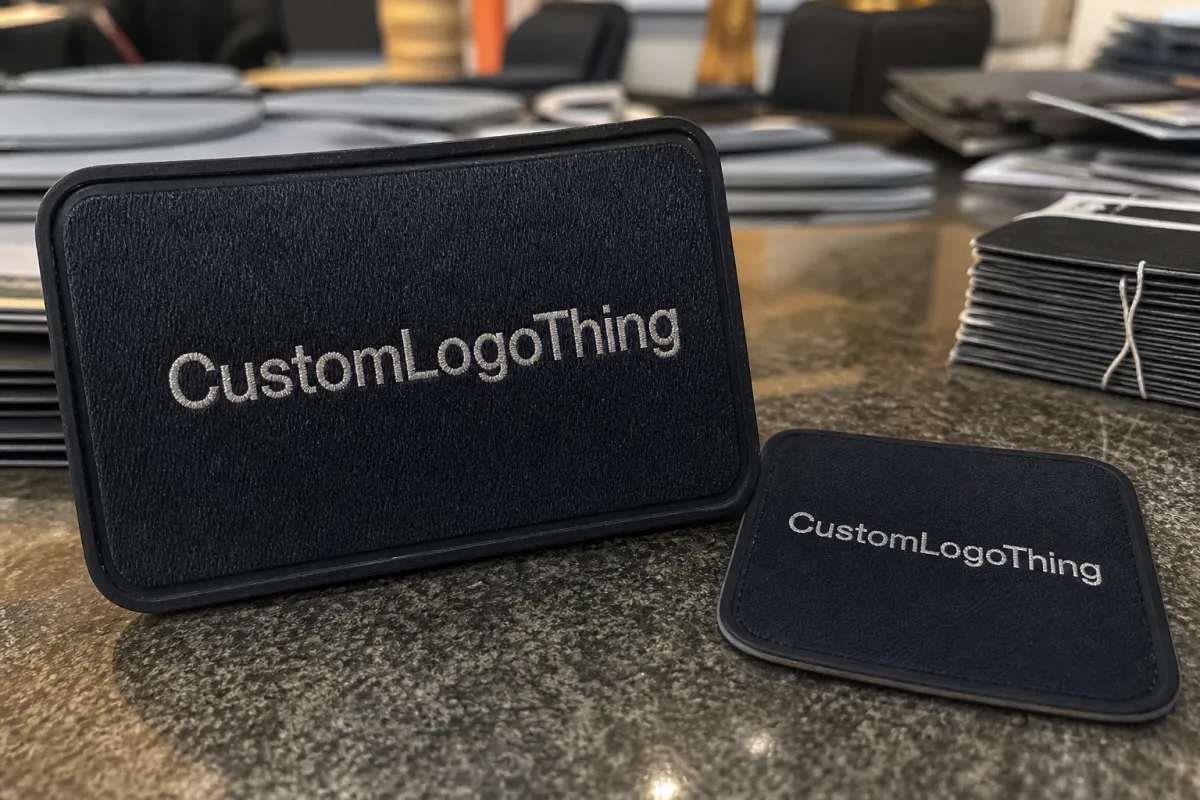
Trade show environments are visually crowded. Booth graphics, staff shirts, lanyards, tote bags, giveaways, and printed collateral all compete for attention. A patch helps unify those pieces without requiring every item to be fully decorated from scratch. It is a small branding component, but it often has an outsized effect because it sits on the person who is doing the selling, greeting, demoing, or directing traffic.
That makes durability more important than most first-time buyers expect. An embroidered logo that looks crisp in a mockup may read differently once it is stitched at a small size. A woven patch can hold fine lettering better, but only if the artwork is prepared properly. A PVC patch can make strong shapes and bold edges, yet it may not suit a lightweight polo the way it suits a jacket or backpack. The best patch is the one that fits the use case, not the one that looks most attractive in isolation.
For trade show teams, consistency is often the main goal. One logo style may need to appear across polos, outerwear, hats, bag straps, and reusable kit items. A patch can make that possible without forcing every garment to be identical. That flexibility is especially useful when a program includes sales staff, booth hosts, installers, and support people who all need to look like part of the same team but may not wear the same garment type.
From a buyer’s standpoint, a patch quote should help answer a basic question: will this hold up for the event it is being made for? If the answer depends on a guessed fabric, a vague color match, or an untested attachment method, the quote is too thin to be useful.
“A useful patch quote explains the build, the finish, and the production path. If those pieces are vague, the final result usually is too.”
That clarity is what separates a simple price estimate from a working production plan.
Patch styles, backing options, and logo details that affect the final result
The style you choose affects both appearance and performance. Embroidered patches are the classic option: textured, familiar, and durable enough for most staff apparel. They work best when the logo has solid shapes, moderate detail, and enough open space for stitched areas to stay legible. They are less ideal when the design has tiny type or very thin lines.
Woven patches are better for tighter detail. Because they use thread interlacing rather than raised embroidery fill, they can hold small text, sharper outlines, and compact logos more cleanly. For trade show teams, that matters on smaller placements such as chest patches, sleeve patches, or hat fronts where every millimeter counts.
PVC patches are usually selected when the brand wants a bolder, more dimensional look. They stand up well to handling and are common on outerwear, bags, and heavier event gear. Leather-style patches create a more understated, premium impression and are often used on jackets, beanies, and lifestyle pieces where the brand wants texture without a bright, stitched look. None of these is automatically better. The garment and the logo should drive the choice.
Backing is just as important as face construction. Sew-on is the most versatile option and remains the safest choice when fabric types vary. Heat-seal or iron-on backing can work well, but only if the garment can take the heat and the surface is suitable for bonding. Peel-and-stick is useful for positioning during prep, not as a permanent attachment. Hook-and-loop is common for uniforms that need patches removed and reused between events. Magnetic attachment exists, but it is limited in practical apparel use and is rarely the first choice for a full trade show program.
The logo itself shapes the quote more than many buyers expect. Border style, stitch density, thread count, merrowed edges, and custom silhouettes all affect labor and machine time. A two-color badge with a standard border is a different production job from a complex mark with fine lettering, a cut-to-shape outline, and multiple fill zones. Tiny details can force a change in construction, and that can alter both cost and the final look.
For trade show use, the best construction is usually the one that matches the garment and the viewing distance. A woven patch may be the cleanest choice for a small chest logo on a polo. A PVC patch may be better on a jacket where staff need a stronger visual cue. If the patch is going onto a removable vest or a credential holder, a temporary attachment method may save time and reduce wear.
| Patch style | Best use | Strengths | Typical trade show fit |
|---|---|---|---|
| Embroidered | Classic uniforms and jackets | Textured look, familiar, durable | Good for bold logos and staff apparel |
| Woven | Small text and fine detail | Sharper lines, tighter lettering | Good for compact chest or sleeve placement |
| PVC | High-impact branding | Bold color blocks, dimensional feel | Good for outerwear, bags, and premium event gear |
| Leather-style | Premium or understated branding | Refined appearance, softer visual tone | Good for jackets, caps, and lifestyle merch |
Specifications buyers should confirm before requesting a quote
A quote is only as good as the spec sheet behind it. Before pricing is requested, the buyer should confirm size, shape, quantity, color count, backing type, and edge finish. If those inputs are missing, the supplier has to estimate. That is how a quote turns into a moving target.
Patch size is usually measured by the widest point. That sounds simple until the artwork is scaled up or down by even half an inch. A 2-inch patch and a 2.5-inch patch can look close in a presentation but differ enough in stitch count, border length, and material use to change the cost and the lead time. On larger runs, that difference can add up quickly.
Artwork format matters as much as size. Vector files, such as AI, EPS, or vector PDF, are the easiest to separate for production. If only a raster image is available, it should be high-resolution and clean enough for the supplier to rebuild without guessing. Low-resolution logos with blurry text are a common cause of proof delays, especially when the mark includes small lettering or fine internal lines.
Color references should be provided whenever matching is important. Pantone references are still the cleanest way to reduce ambiguity. If a company uses a strict brand standard, that standard should be included in the request. Otherwise, thread or material colors may drift farther than the buyer expects, especially across different patch constructions.
Garment compatibility is another point that gets missed too often. A patch that sits flat on cotton may pucker on nylon, stretch unevenly on performance fabric, or feel bulky on fleece. If the same logo is going onto several products, the buyer should spell out which item gets which backing. That avoids the all-too-common problem of approving one patch that works well on one garment and poorly on the rest.
- Approved logo file in the best available format
- Final size measured by the widest point
- Quantity by size or by team group
- Backing preference based on garment type
- Delivery address and required in-hands date
- Garment sample or photo if attachment fit is important
Those six items are enough to get a quote that can actually be compared. They also help prevent a second round of questions that can slow a project by days.
Cost, pricing, MOQ, and what shapes the unit cost
Pricing for patches is shaped by a small number of variables that have a big effect: construction, size, color count, detail level, backing, and quantity. A clean embroidered or woven patch with limited colors will usually price lower than a specialty PVC or leather-style piece, especially if the logo shape is unusual or the border is complex. The first quote is really a summary of production effort.
MOQ, or minimum order quantity, often surprises buyers who only need a small staff set. The reason is straightforward: setup, digitizing, proofing, and machine preparation do not shrink proportionally when the quantity is low. A small run can therefore have a noticeably higher unit price than a larger order, even if the design itself is simple. That does not mean the low-quantity order is overpriced; it just means fixed costs are being spread over fewer pieces.
Quote structure can also hide differences. One supplier may separate digitizing, setup, and shipping. Another may bundle some of those costs into the unit price. Two quotes that look far apart at first may be much closer once every line is counted. Buyers comparing only the per-piece number often miss the real total.
For rough planning only, a simple woven or embroidered patch may fall into a lower per-unit range on larger quantities. A 5,000-piece run with a straightforward construction might land around $0.18-$0.28 per unit, while a more detailed, specialty, or limited-run version can cost more. PVC, leather-style, custom shapes, and specialty backings usually push the price upward. The exact number depends on the actual build, not just the category name.
There are a few practical ways to reduce cost without damaging the design. Simplifying the border, trimming unnecessary colors, choosing a size that still reads clearly, or selecting a backing that fits the garment can all lower production friction. What should not happen is an attempt to save money by making the logo unreadable or the attachment unreliable. That is a false economy for event work.
Here is the better way to think about value: compare the total landed cost, the production risk, and the likelihood that the patch will survive the event schedule. The lowest quote is not always the best buy if it carries hidden charges or creates a fit problem during application.
| Cost factor | How it affects price | What buyers can do |
|---|---|---|
| Patch size | Larger patches use more material and time | Confirm the smallest size that still reads clearly |
| Color count | More color zones can increase labor and setup | Reduce unnecessary colors where brand rules allow |
| Backing type | Specialty attachments often cost more | Match the backing to actual garment use |
| Quantity | Fixed costs spread better over larger runs | Consolidate team needs into one order if possible |
For many trade show buyers, the best savings come from accuracy, not compromise. A well-specified order avoids waste, rework, and emergency shipping.
Process and timeline: from artwork review to shipment
The production path is usually simple on paper: request, artwork review, quote, proof, approval, production, finishing, quality check, shipment. In practice, the slowest step is often the one the buyer controls. Proof approvals, file corrections, and internal sign-off delays can matter more than the actual machine time.
Clean preparation speeds everything up. If the logo file is usable, the size is fixed, the quantity is final, and the backing is already chosen, the supplier can quote more accurately and move the order through proofing without extra revisions. If the buyer is still deciding whether the patch goes on polos or jackets, the timeline becomes harder to pin down.
Lead time depends on more than quantity. A simple embroidered patch run may be straightforward, but a design with tiny text, multiple thread changes, custom tooling, or specialty backing will take longer. Peak event seasons add pressure too. A supplier may be juggling staff apparel, giveaways, and last-minute show orders at the same time, which makes early approval more valuable than it sounds.
Rush service is possible in some cases, but only when the spec is uncomplicated and the artwork is already prepared. Buyers sometimes assume speed is purely a matter of paying more. It is not. The design still has to be producible, and the proof still has to be approved. If the patch needs simplification before production, that correction is what determines the schedule.
Shipping also deserves a few questions. If the order has to travel to an event warehouse, a fulfillment center, or a temporary prep location, the packaging should be able to handle repeated sorting and handling. Packaging standards from sources such as ISTA packaging test standards can be a useful reference point for buyers who think about transit performance as part of the overall quality picture.
How a dependable supplier supports trade show teams without guesswork
A dependable supplier does more than turn a file into a price. The real value shows up in the questions they ask and the problems they flag early. If a logo has thin type that may not stitch cleanly, they should say so. If the requested backing is a poor fit for the fabric, they should suggest a better one. Those are not upsell moves. They are basic production judgment.
That kind of judgment matters because patch programs are often mixed. One event team may need sew-on patches for polos, hook-and-loop for reusable uniforms, and a separate build for bags or jackets. The supplier has to keep those variations straight without forcing the buyer to manage every technical detail alone. The clearer the advice, the less room there is for a costly misread.
Quality control is another sign of competence. The patch should be checked for stitch coverage, border consistency, color alignment, edge finish, and attachment strength. A patch that looks good in a proof can still fail if the edge is rough, the backing is wrong, or the logo loses clarity when scaled to the requested size. For trade show use, that check is not optional. Staff will be wearing the product under close scrutiny.
There is also a practical difference between a supplier who only takes orders and one who understands event timing. Trade show deadlines are not forgiving. If the shipment misses the window, the damage is immediate. A useful supplier helps prevent that by keeping the spec tight, the proofing fast, and the production plan realistic. In other words, the quote should fit the event, not just the artwork.
For teams that are also evaluating packaging or material choices across their event kit, EPA sustainable materials guidance can provide a broader reference point. It is not a patch standard, but it does help procurement teams think about the full footprint of the event materials they are approving.
Next steps to request an accurate logo patch quote
Before asking for pricing, gather the final logo file, intended patch size, approximate quantity, backing preference, garment type, and required in-hands date. If there are different uses across the team, list them separately. A patch that performs well on a cotton polo may not be the best choice for a nylon shell or a thick fleece layer, and the quote should reflect that.
If placement matters, include garment photos. That small step can prevent a long chain of clarification emails later. It also helps the supplier determine whether sew-on, heat-seal, hook-and-loop, or another method is the safest fit for the fabric and the way the item will be used.
For budget planning, it often helps to request two versions of the same order: one with the preferred build and one with a cost-reduced option. That creates a real comparison point. A modest change in size, border style, or backing can lower the price without changing the brand impression in any meaningful way.
Approval discipline matters as much as production discipline. If the proof sits unreviewed, the schedule slows even when the factory is ready. The best way to keep an event order on track is to know in advance who can approve the final proof and how quickly that decision can be made.
If the goal is a quote that can be compared cleanly and produced without second-guessing, ask for a Logo Patches Supplier Quote for trade show teams with the full spec set attached. That is the difference between a workable production quote and a placeholder number that still needs interpretation.
What should I include when I request a logo patches supplier quote for trade show teams?
Include artwork, size, quantity, patch style, backing type, and the date you need the order in hand. If possible, add garment details so the supplier can recommend the best attachment method.
Which patch type is best for trade show team uniforms?
Embroidered patches work well for a classic textured look, while woven patches are better for small text and fine detail. PVC or specialty styles are useful when the brand needs stronger color blocks or a more dimensional finish.
Why does MOQ affect patch pricing so much?
Many patch orders require setup, proofing, and production time that do not scale down linearly for very small runs. Higher quantities spread those fixed costs across more units, which lowers unit cost.
How long does patch production usually take after proof approval?
Timing depends on style, quantity, and current workload, but proof approval usually starts the production clock immediately. Simple orders move faster when the artwork is ready and no sample is needed.
Can the same patch design be used on different garments for one event team?
Yes, but the backing and attachment method may need to change depending on fabric type and how the garment will be worn. A supplier should confirm compatibility for polos, jackets, hats, and tote bags before production begins.


