Why toy retailers use logo patches to lift perceived value
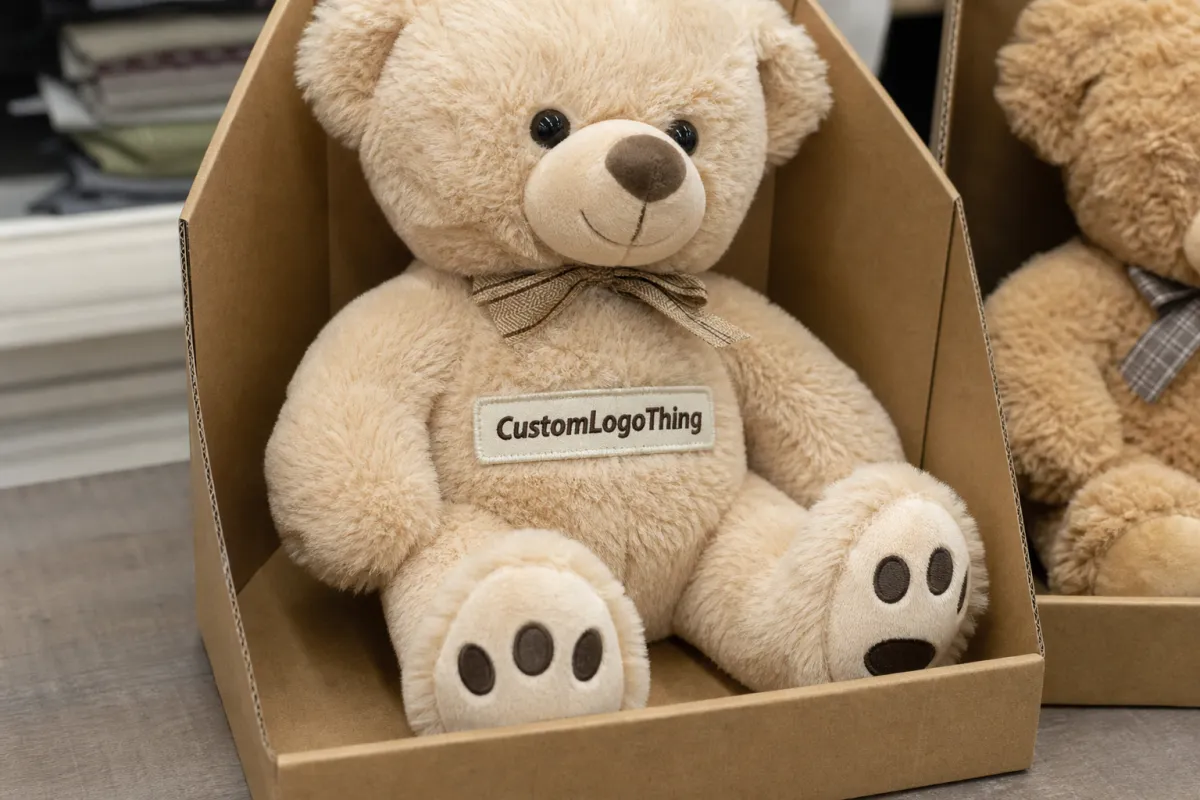
Logo Patches Supplier Quote for toy retailers requests usually begin with a deceptively simple aim: make a small item feel more finished without redesigning the product itself. A stitched patch on a plush tag, backpack accessory, costume piece, or collector sleeve changes how the item reads at shelf distance. It adds relief, sharper edges, and a brand cue that printed ink often cannot match.
That matters because retail value is visual first and tactile second. A flat mark can disappear into fabric or glossy packaging. A patch stands off the surface. It catches light, holds its outline, and gives the product a more deliberate look. For blind-box items, licensed ranges, plush add-ons, and impulse-buy accessories, those few seconds of attention can decide whether the item feels collectible or ordinary.
From a buyer’s perspective, the attraction is not only cosmetic. Patches can be repeated across small SKU families, used in store-exclusive sets, or tied to seasonal programs without changing the base product every time. That keeps the line visually consistent. It also reduces the drift that happens when every small run is treated as a one-off.
There is a merchandising side to this that gets overlooked. Patches work on caps, mini backpacks, soft toys, costume garments, and branded giveaway items because they create texture without adding much bulk. Compared with embroidery alone, a patch often gives tighter visual control. Compared with a woven label, it feels more substantial. Compared with a heat transfer, it usually reads as more durable and less disposable.
A well-made patch is not decoration for its own sake. It is a small signal that the item was designed, not just marked.
That is why buyers keep asking for a Logo Patches Supplier Quote for toy retailers instead of treating patches as an afterthought. The quote has to balance appearance, repeat ordering, child-safety expectations, and the economics of small-run retail programs. Miss one of those and the project stops being attractive very quickly.
Patch styles and material options that work in toy retail
The best patch style depends on where the product will live. A soft plush accessory needs a different finish than a backpack, and a collectible item has different visual demands than a low-cost giveaway. A useful Logo Patches Supplier Quote for toy retailers should be built around that actual use case, not just the artwork file.
Here are the main construction types buyers usually compare:
- Embroidered patches: strong texture, good for bold logos, classic retail look, and a durable feel on soft goods.
- Woven patches: better for fine detail and small text, with a flatter surface that stays legible at smaller sizes.
- PVC patches: flexible, colorful, and modern in appearance; often used for accessories and premium novelty items.
- Leatherette patches: useful when the brand wants a cleaner, more fashion-oriented finish without real leather.
- Printed fabric patches: useful for complex artwork, gradients, or multi-color illustrations where stitching would blur the image.
- Chenille patches: bold, tactile, and nostalgic; best when the branding can carry a larger footprint.
For toy retail, embroidered and woven patches are the most common starting points because they balance cost, durability, and broad appeal. PVC can work well for bags, hats, and premium accessories. Leatherette makes sense when the product line is trying to read more adult, giftable, or collector-focused. Chenille is usually a deliberate style choice rather than a default.
Backing choice matters just as much as face material. Sew-on is the most universal and often the safest choice for soft goods. Heat seal can be useful for compatible fabrics, though not every surface takes it well. Adhesive backing is best treated as temporary or supplementary, not a substitute for real attachment. Hook-and-loop gives flexibility for removable branding, but it adds thickness and may not suit smaller items.
| Patch style | Best use in toy retail | Typical quote impact | Buyer note |
|---|---|---|---|
| Embroidered | Plush tags, soft accessories, branded apparel add-ons | Often moderate; stitch count drives cost | Strong texture, but small text can blur |
| Woven | Compact logos, fine detail, licensed marks | Usually efficient at medium volume | Best for legibility at smaller sizes |
| PVC | Premium accessories, bold character branding | Can be higher because tooling and molding matter | Good for a clean, contemporary look |
| Chenille | Statement pieces, collector-style merch | Often higher due to construction and finish | Needs more space to read clearly |
Color matching changes the final look more than many buyers expect. A patch with four solid colors and clean borders can be quoted very differently from one with eight shades, gradient effects, or tiny negative spaces. If the logo must stay legible on a compact item, simplifying the art is usually smarter than forcing every detail into a 35 mm patch. That tradeoff shows up constantly in retail development, and the cleanest versions are often the ones that survive production best.
Specifications that shape a reliable order
A clean specification sheet saves time and money. If you want a useful Logo Patches Supplier Quote for toy retailers, send enough detail to price the job accurately the first time. That means artwork format, dimensions, colors, border style, backing type, and the attachment method. A vague brief usually produces a vague quote, and vague quotes are hard to compare.
For toy retail specifically, softness and snag resistance matter. A patch that looks good in a sample photo can still be wrong if it catches on fabric, scratches a plush surface, or feels too stiff for the product it is attached to. Buyers should ask whether the edge is merrowed, laser-cut, heat-sealed, or turned under. Those details change both appearance and handling.
Proofing reduces risk more than almost anything else. Send vector artwork when possible. Include Pantone references if color consistency matters across multiple SKUs. Ask for a placement mockup that shows the patch on the actual product, not just floating on a white page. If you plan to reorder, define the approved sample standard in writing so the next run does not drift.
Compliance questions should come early, not after production starts. Ask for material composition, adhesive details if a backing is involved, and whether any components raise age-specific concerns. If the patch will be attached to a toy or children’s product, your broader compliance review should account for the product category, the market, and the finished assembly. Packaging and outer cartons may also need testing or handling standards, and retail teams sometimes reference ISTA methods for transit resilience when shipping finished goods to distribution centers.
For multi-SKU programs, the cleanest process is usually the simplest:
- Lock the logo size before requesting pricing.
- Limit the color palette where possible.
- Standardize backing and attachment across the line.
- Confirm the approval sample before running volume.
That kind of discipline helps a Logo Patches Supplier Quote for toy retailers stay readable, especially when you are balancing private-label requirements, seasonal promotions, and multiple product formats at once.
Pricing, MOQ, and what changes your quote
Price depends on a few levers that move faster than many buyers expect. Size, stitch count, material, color count, backing, packaging, and volume all influence the final number. A 50 mm woven patch with two colors and sew-on backing is a different job from a 90 mm chenille patch with custom shape cutting and individual polybagging. The quote should reflect that difference clearly.
A realistic logo patches supplier quote for toy retailers usually gets better once quantity moves past the smallest sample tier. Small prototype runs can carry a higher per-unit cost because setup and production handling are spread across fewer pieces. In many cases, buyers will see pricing improve meaningfully at 1,000, 3,000, and 5,000 piece breaks, though the exact step-down depends on construction and production method.
Typical pricing can look like this:
- Simple woven patch: about $0.18-$0.35 per unit at mid-volume, depending on size and color count.
- Embroidered patch: about $0.22-$0.45 per unit at mid-volume, with stitch count and border style driving the range.
- PVC or specialty patch: about $0.35-$0.80 per unit, sometimes higher if tooling or custom shape work is involved.
- Chenille or premium finish: often above standard embroidered pricing because the build is more labor-intensive.
Those are working ranges, not promises. The quote can move up or down depending on the supplier’s production method, artwork complexity, and whether you need packaging extras. Common add-ons include digitizing, sample setup, rush production, custom backer cards, and split shipments to different warehouses. If the supplier charges separately for each of those, the unit price alone will not tell you much.
That is why the smartest way to read a quote is side by side. Compare the same patch size, same quantity, same backing, same shipping term, and same packaging requirement. If one vendor includes artwork setup and another does not, the lower headline number may be misleading. A good quote makes the assumptions visible.
For buyers working with environmentally conscious packaging programs, the paper components around the patch can matter too. If your patch is packaged on printed cards or inserted into a retail kit, ask about recycled content and chain-of-custody options. The FSC standard is not about the patch itself, but it can be relevant to the presentation layer that surrounds it.
Process and turnaround: from artwork to delivered carton
The process is usually straightforward if the brief is complete. Inquiry, artwork review, quote approval, proofing, sampling if needed, production, quality check, and shipping. The schedule usually slows down at the proof stage, not in the actual making of the patch. That distinction matters, because many buyers blame manufacturing time when the real delay is unresolved artwork.
For a fast logo patches supplier quote for toy retailers, send three things first: the logo file, the quantity range, and the target delivery date. If you also include the product type, placement area, and preferred attachment method, the supplier can usually narrow the quote more accurately on the first pass. When a buyer sends only a sketch and a deadline, the response is slower and less reliable.
Repeat orders move faster because the specifications are already locked. New designs need more back-and-forth, especially if the artwork has to be simplified to work at patch scale. A first-time woven patch may need one round of digital proof and one physical sample. A repeat order with unchanged specs may go straight to production once the buyer confirms quantity and delivery terms.
Plan around your retail calendar, not the factory calendar. Seasonal buying windows, promotional launches, and private-label rollouts leave less room for revision. If the patch is tied to a display program or a coordinated product drop, the order should be placed early enough to absorb proof changes without forcing a rush fee. Tight schedules are survivable. Tight schedules with unclear artwork usually are not.
Good suppliers will tell you where the risk is. They will flag artwork that is too detailed, colors that will not reproduce cleanly, or a backing choice that does not fit the product surface. That honesty is worth more than a slightly lower unit price, because the cost of a reprint or missed launch is usually higher than the difference between vendors.
Lead times vary by construction, order size, and approval speed, but a practical planning window for standard custom patches is often measured in weeks rather than days. Simple woven or embroidered runs can move faster than specialty PVC or chenille jobs, especially if tooling is required. If your schedule is tight, the safest move is to separate proof time from production time when you review the quote.
Why a toy-retail supplier should understand safety, consistency, and scale
The best supplier is not just making a patch. The best supplier understands how a finished component behaves inside a retail program. That matters especially if you are asking for a logo patches supplier quote for toy retailers across multiple SKUs, multiple stores, or multiple replenishment cycles. The patch has to look the same on batch one and batch four. If the color drifts or the border changes, the brand starts to look unmanaged.
Consistency sounds boring until a buyer has to manage returns, complaints, or mismatched shelf presentation. A patch that varies in dimension by even a few millimeters can create alignment issues on a plush tag or accessory panel. That is why quality control should cover edge finish, stitch integrity, adhesion strength if applicable, and visual alignment against the approved proof.
Scale also matters. A supplier that can handle a small pilot run and then move into replenishment without changing the look of the patch is more valuable than a vendor that only performs at one order size. Toy retail frequently starts with a limited test, then expands if sell-through is strong. The supplier has to follow that curve without forcing a redesign.
Responsiveness is part of quality. Fast answers, clear proofs, and realistic lead times reduce launch risk. If you are waiting three days for every clarification, the project is already getting expensive. Buyers should expect the supplier to be specific about materials, minimums, and delivery windows rather than hiding behind generic promises.
That approach also aligns with standard sourcing discipline: ask for the same specification across all quotes, compare like for like, and keep the approval trail clean. A supplier who can explain why one construction is better for your product surface is usually a stronger long-term partner than one who only pushes the lowest number.
Next steps to request a quote and move to approval
If you want an accurate estimate, prepare the request like a buyer who expects to compare options. Include the logo file, desired patch size, quantity range, product type, delivery deadline, backing preference, and the way the patch will be attached. Add a product photo or mockup if you have one. That single step often cuts revisions in half.
Ask for two or three quote scenarios rather than one. For example, request a base option, a premium option, and a faster-turn option. That gives you a clean view of the tradeoffs between finish, minimum order quantity, and timing. It also makes it easier to defend the choice internally if purchasing, product, and retail teams all need to sign off.
Before full production, request a sample or digital proof. For first-time toy retail programs, that is not optional in practice. It is the cheapest way to catch a mismatch in size, color, attachment, or surface feel. If the patch will be attached to a product with strict handling or brand expectations, approval samples pay for themselves quickly.
When the quote arrives, compare the whole package:
- Unit price at the same quantity tier
- Setup or digitizing charges
- Packaging and shipping terms
- Revision limits and proof costs
- Lead time to the delivery address you actually need
If you are ready to move, use Contact Us to send the spec sheet and request a quote. If you still need to pressure-test the economics, ask for alternate constructions before you approve. That is the cleanest way to avoid paying for a more complex patch than your retail item actually needs.
For toy retailers, the right logo patches supplier quote for toy retailers is not just a price. It is a documented plan for how the patch will look, attach, ship, and repeat across the line.
What do I need to request a logo patches supplier quote for toy retailers?
Provide the logo artwork, patch size, quantity, backing preference, and where the patch will be used on the product. Include your target delivery date so the supplier can account for production time and shipping. If possible, add color references and a product photo or mockup to reduce revision rounds.
Which patch type is best for toy retail products?
Embroidered and woven patches are common for soft goods and branded apparel add-ons. PVC or leatherette may suit premium-looking retail accessories, while chenille can work for bold, tactile branding. The best choice depends on the product surface, age group, and the shelf presentation you want.
How does MOQ affect my patch quote?
Lower quantities usually raise the per-unit price because setup and production costs are spread across fewer pieces. Some patch styles have higher minimums due to tooling or the production method. If you need flexibility, ask for quotes at multiple quantity tiers so you can see where pricing improves.
How long does production usually take after approval?
Lead time depends on artwork approval, sample requirements, patch complexity, and order size. Simple repeat orders often move faster than first-time custom runs. Shipping method and destination also affect the final delivery timeline, so it is better to plan from the actual receipt date, not the factory completion date alone.
Can I get a sample before placing a full order?
Yes, many suppliers can provide a sample, prototype, or digital proof before production. Samples help confirm size, color, backing, and finish before you commit to bulk quantities. For toy retailers, sampling is especially useful when patches will be attached to products with strict brand or safety expectations.


