Buyer Fit Snapshot
| Best fit | Logo Printed Box Bands projects where brand print, material claims, artwork control, MOQ, and repeat-order consistency need to be specified before quoting. |
|---|---|
| Quote inputs | Share finished size, material target, print colors, finish, packing count, annual reorder estimate, ship-to region, and any compliance wording. |
| Proofing check | Approve dieline scale, logo placement, barcode or warning zones, color tolerance, closure strength, and carton packing before bulk production. |
| Main risk | Vague material claims, crowded artwork, missing packing details, or unclear freight terms can make a low unit price expensive after revisions. |
Fast answer: Logo Printed Box Bands: Branding That Gets Noticed should be specified like a repeatable production item. The safest quote records material, print method, finish, artwork proof, packing count, and reorder notes in one written spec.
Production checks before approval
Compare the actual filled-product size with the drawing, then confirm tolerance on folds, seals, hang holes, label areas, and retail display edges. Reserve space for logos, QR codes, warning copy, and material claims before decorative graphics fill the panel.
Quote comparison points
Review material grade, print process, finish, sampling route, tooling charges, carton quantity, and freight assumptions side by side. A quote is only useful when the supplier can repeat the same color, closure quality, and packing count on the next order.
Logo Printed Box Bands: Branding That Gets Noticed
Logo printed box bands do a curious kind of work. They are small, flat, and easy to dismiss at the sampling stage, then they become the part of the package people remember. Put one around a plain mailer box and the same carton that looked serviceable five minutes ago starts reading as polished, intentional, and ready to hand over. That is the real power of logo printed box bands: they make the box look like it belongs to the brand, not just to the warehouse.
I have seen this effect more than once in sample reviews. A team will assume the carton needs a full redesign, then a well-sized band changes the read of the whole package. Not because the band is flashy. Because it is specific.
There is a reason they keep showing up across launches, seasonal sets, subscription shipments, and event kits. A full custom carton can be excellent, but it is also slower to approve, harder to stock, and more expensive to change. Logo printed box bands offer a visible brand surface without forcing a structural redesign. They deliver a strong visual payoff while keeping the base packaging format intact. For companies balancing speed, budget, and presentation, that matters.
The catch is simple. A band can improve perception, but it cannot rescue a weak box. If the carton crushes, the insert rattles, or the closure looks sloppy, the band just frames the problem more neatly. Treat logo printed box bands as part of the package system, not decoration. Fit, print quality, paper choice, and application method all matter. Get those right and a modest box can look far more expensive than it is.
Logo Printed Box Bands: What They Are and Why They Work
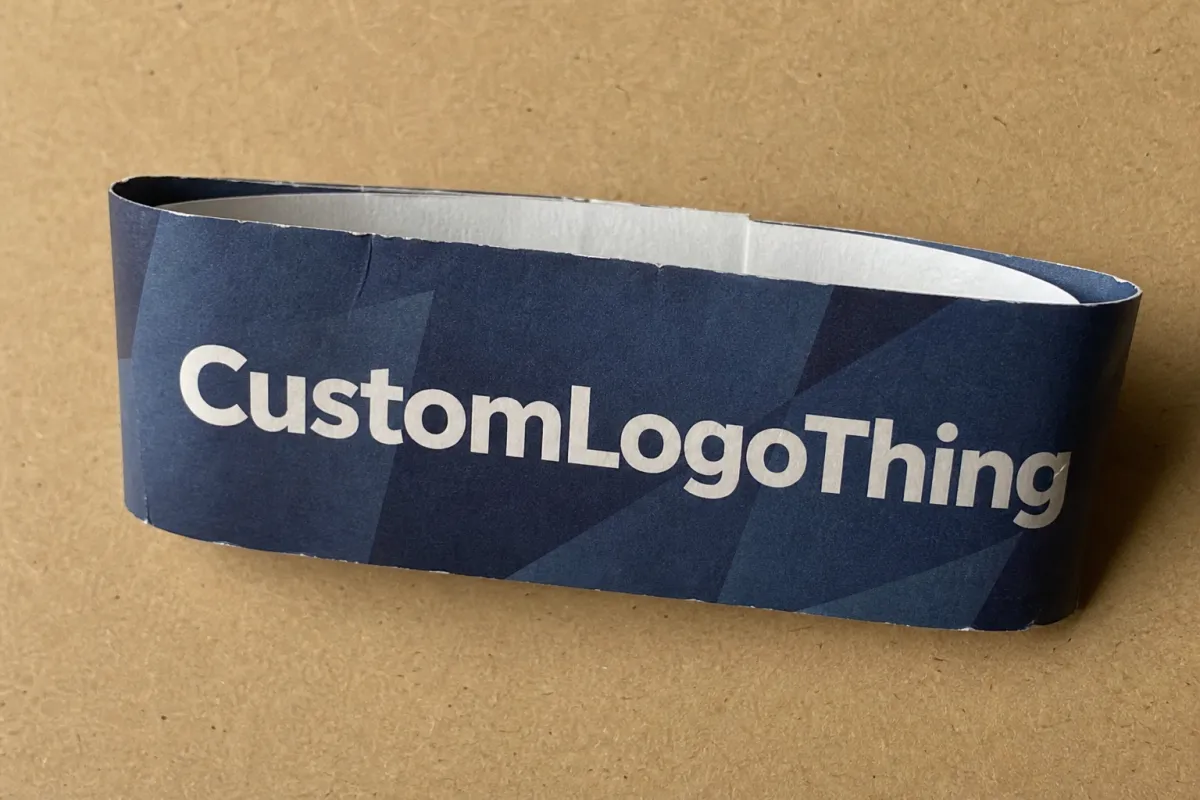
At the most basic level, logo printed box bands are printed wraps made from paper or card that sit around the outside of a box. They may carry a logo, a campaign line, a QR code, product details, or seasonal artwork. Some are narrow front-panel bands that lock at the back. Others wrap more broadly across the lid and front face. A few cover nearly the full perimeter like a sleeve. The format varies, but the purpose stays the same: add branding without changing the carton structure.
That is why they work so well. People judge packaging in layers. A buyer sees the box before the product. A customer sees the brand before they inspect the finish. A gift recipient sees the presentation before they decide whether to keep the outer pack. Logo printed box bands exploit that order. They give the eye something clear to read before the package has even been opened. Packaging research has long shown that visible branding changes perceived value, and the effect is strongest when the branded area feels deliberate rather than crowded.
They also solve a practical inventory problem. Many brands use the same base box across multiple SKUs, regions, or campaigns. That approach keeps storage manageable and reduces carton complexity. A band lets one plain box serve several stories. Holiday artwork can live on one run, a product launch can live on another, and the box itself stays unchanged. For companies moving through multiple promotions in a year, logo printed box bands can reduce over-ordering of custom cartons while still delivering a custom look.
That flexibility explains why they show up across so many use cases:
- Launches: You need the packaging to look intentional before the first shipment leaves.
- Subscription boxes: The branding has to repeat reliably, month after month, without rebuilding the carton each time.
- Retail and gifting: Shelf presence and presentation both matter, often in the same glance.
- Event kits: The package has to carry a theme without a custom box that only works once.
- Short runs: A small batch can test the look before a larger packaging commitment.
That last point deserves more attention than it gets. Plenty of brands want the visual impact of custom packaging, but they do not want to lock up cash in a carton order before the artwork, offer, or product mix is settled. Logo printed box bands make that decision easier. They let you test the look on a smaller, lower-risk surface. If the design lands, you scale it. If it misses, the correction is a band revision, not a warehouse full of unusable boxes.
"A strong box band should sharpen the package, not clutter it. If the eye has to work too hard to understand the brand, the design is already asking too much."
There is a sustainability angle too, though it should stay honest. A band can reduce the need for full-print coverage on the carton itself, which may mean less ink and a smaller printed area. That is a real material difference, not marketing perfume. The rest depends on stock choice, adhesive use, shipping configuration, and whether the band can be recycled with the box. If responsible sourcing matters, ask about FSC-certified paper and check the broader package system. FSC remains a useful reference point here: FSC.
Transit still matters more than presentation. A box band should survive handling, but the carton has to take the abuse. If the package will move through distribution, it should be tested against the actual route rather than judged only by the sample table. ISTA testing guidance is useful for that part of the conversation: ISTA. Pretty branding is nice. A package that arrives intact is better.
How Logo Printed Box Bands Are Made and Applied
The production path for logo printed box bands is not complicated, but it rewards precision. Artwork preparation comes first, then sizing, stock selection, printing, cutting, finishing, and packing. Each step depends on the one before it. A missing measurement or a vague spec at the beginning tends to become an expensive correction near the end. Packaging is unforgiving that way.
Dimensions are the first decision. The band has to fit the folded box, not the flat dieline fantasy. A tuck-top mailer, a rigid gift box, and a corrugated shipping carton each behave differently. A band that sits cleanly on a smooth folding carton may wrinkle on a rougher surface. A front-panel wrap that looks elegant on one box size can feel awkward if it is stretched across two panels with the seam landing in the wrong place. The box style matters as much as the artwork.
Material choice comes next. The usual options are straightforward, but they change the look in meaningful ways:
- Uncoated paper or light card: easy to write on, softer in appearance, often lower in cost.
- Kraft stock: a natural feel that suits earthy or restrained branding.
- Coated paper: sharper detail, stronger color, and better support for photography.
- Card stock with special finish: useful when the band needs a more elevated feel.
Printing method matters just as much. Digital print is often the practical answer for short runs and variable artwork because setup is faster and order minimums are lower. Offset print makes more sense at higher volumes, especially when color consistency has to hold across thousands of pieces. Flexographic printing can work well for repetitive layouts and certain paper wraps. Logo printed box bands are not interchangeable just because they look similar in a quote sheet. The print method should match the volume, the artwork, and the finish you want in hand.
Application is where a packaging idea becomes a production line. The band has to be secured in a way that makes sense for labor, speed, and appearance:
- Glue dots: Fast for light assembly and useful on lower-volume jobs.
- Tape tabs: Good when the front face needs to stay clean and the lock point should stay hidden.
- Tuck-in designs: Effective when the band is folded to create a self-locking closure.
- Pre-applied bands: Useful when the pack-out is centralized and boxes need to arrive ready to ship.
Each method has a different labor cost and a different failure mode. Glue dots can be quick but may lose grip on dusty or textured surfaces. Tuck-in styles look crisp, yet they demand tighter dimensional control. Pre-applied bands shift labor to the source, which can simplify the receiver's process while increasing assembly time and sometimes freight volume. There is no universal winner. The right choice depends on the box, the run size, and where the labor sits in the workflow.
Fit is the part buyers underestimate most often. A good band sits flat, tolerates a little variation, and avoids corner buckling. The overlap should be enough to hold securely, but not so large that the seam dominates the design. On many jobs, a controlled 0.25 to 0.5 inch overlap is cleaner than a forced wrap that fights the carton. Good logo printed box bands look effortless because the spec behind them was exacting.
The band also has to respect the geometry of the box itself. A narrow face may only allow a front-panel band with a back seam. A larger mailer can handle a full wrap. A rigid lid-and-base style may need the band to sit lower so the lid opens without tearing the wrap. Score lines, board thickness, closure style, and print placement all affect the final result. That is why logo printed box bands should be engineered around the carton instead of dropped onto it as an afterthought.
If the goal is a tidy result, build the spec around the actual package, not a rough guess:
- Measure the box after folding, not just from the flat dieline.
- Mark the seam position before approving the artwork.
- Check how the band behaves at corners and score lines.
- Confirm whether the band will ship flat, folded, or pre-assembled.
Logo Printed Box Bands Cost, Pricing, and MOQ Factors
Pricing for logo printed box bands comes down to a small group of variables, and none of them are mysterious. Size, material, print coverage, number of colors, finish, fold style, and quantity all shape the quote. If a supplier skips those questions and still gives a clean number, the quote is probably rough rather than ready. A cheap estimate without the right inputs is not a deal. It is a correction waiting to happen.
Quantity is usually the biggest lever. Smaller runs cost more per unit because setup has to be spread across fewer pieces. Larger runs bring the unit price down, but they require more cash up front and more storage space. A 1,000-piece order and a 10,000-piece order can land in very different cost bands even with the same artwork. That is the nature of printing economics. Scale changes everything.
For planning, it helps to think in ranges instead of promises:
| Option | Best for | Typical Material / Finish | Common Price Signal at 5,000 Units |
|---|---|---|---|
| Simple one-color band | Promotions, basic branding | Kraft or uncoated paper | $0.08-$0.18 per unit |
| Full-color CMYK band | Launches, subscription boxes | Coated paper or light card | $0.14-$0.30 per unit |
| Premium finish band | Gifting, luxury presentation | Matte, soft-touch, foil, or spot UV | $0.28-$0.60 per unit |
| Pre-attached or kitted band | Assembly-heavy programs | Any of the above plus labor | + $0.03-$0.12 per unit |
Those numbers are planning signals, not fixed quotes. Actual pricing for logo printed box bands depends on run size and the details that tend to get ignored in early conversations. A clean one-color wrap is cheaper than a full-bleed design with heavy coverage. Foil stamping, spot UV, unusual die-cuts, and window openings can push the price up quickly because they add setup, tooling, or waste.
The cost drivers that surprise buyers most often are usually the quiet ones:
- Die-cut complexity: More custom shapes mean more setup and more waste.
- Proofing rounds: Extra revisions add time and can add fees.
- Freight: Flat-packed bands move efficiently, but kits with multiple components do not.
- Assembly labor: Pre-applied bands reduce work for the customer, but somebody has to do the attaching.
- Packaging format: Flat, folded, or bundled packs affect handling, box count, and shipping cost.
MOQ changes the economics in a meaningful way. A smaller minimum order quantity is useful for testing fit or launch appeal, but the per-unit price will be higher. A larger MOQ lowers the unit cost and increases commitment. That can be perfect for an established package program and awkward for a design that might change next quarter. The right answer depends on whether the band is still being proved or already part of a steady system.
Most quote problems come from missing basics. A clear request for logo printed box bands should include:
- Box dimensions, including folded dimensions if possible.
- Band width and whether it wraps one panel or the full perimeter.
- Artwork files in vector format where available.
- Brand colors, finish preference, and any special effects.
- Quantity by SKU, not just one blended number.
- Target delivery date and shipping location.
That level of detail gives the supplier something real to price. Anything less forces guesswork, and guesswork is expensive in packaging.
Production Process, Timeline, and Turnaround for Logo Printed Box Bands
The timeline for logo printed box bands usually looks shorter in a proposal than it feels in execution. The process often includes quoting, artwork prep, proofing, print setup, production, cutting, finishing, packing, and freight. If one measurement is wrong, the schedule can stall at several points at once. That is why early specification matters so much. The first hour of planning can save the final week of panic.
A straightforward domestic project often moves along these lines:
- Quote and spec review: 1-2 business days.
- Artwork proof: 1-3 business days, longer if revisions are needed.
- Production: 5-10 business days for standard digital or offset runs.
- Finishing and packing: 1-3 business days.
- Freight: 2-7 business days depending on distance and service level.
Rush work exists, but it usually costs more and leaves less room for error. Clean files, confirmed dimensions, and in-stock material can compress the schedule. Unclear artwork, missing measurements, or a last-minute decision about the finish can stretch it out quickly. That is not the printer being difficult. That is the job still being defined.
The artwork stage is often the slowest part. Proof rounds, color checks, seam placement, and layout corrections all take time. A lot of packaging pain starts with the assumption that the supplier can simply "make it fit." Logo printed box bands are still print pieces. If the seam falls on the wrong face or the logo sits too close to a fold, the result can look off even when the print itself is technically perfect.
Send these items first if you want the process to move:
- Vector logo files: AI, EPS, or PDF is better than a flattened screenshot.
- Final copy: Leave no slogan text or legal line undecided.
- Exact box sample or dimensions: Real samples reduce guesswork fast.
- Dieline or wrap spec: Especially useful if the band crosses more than one panel.
- Target delivery date: So production and freight can be priced realistically.
Overseas sourcing can reduce unit cost, but it usually increases lead time. That tradeoff works for stable programs with predictable demand. It works less well when the launch date is fixed and the freight estimate is still moving. Domestic sourcing often gives you tighter control over proofing and turnaround. Overseas sourcing can win on price at scale. Neither option wins by default. The right choice depends on the timeline, volume, and how much risk the project can absorb.
Production time is not the same as warehouse-ready time. Cutting, finishing, and packing all take real hours, and freight can be the slowest part of the chain. That is especially true for logo printed box bands that are kitted with inserts, cartons, or other printed components. If one item in the set is late, the whole order waits.
If the launch date is fixed, build backward from delivery instead of forward from print start. Add time for proofing. Add time for freight. Add a buffer on top. Buyers who skip the buffer often pay for it later in rush charges and avoidable stress. Packaging has enough variables without inventing more.
Design Choices That Make Logo Printed Box Bands Look Premium
Good design does not mean packing more artwork onto the band. It means making logo printed box bands read fast and feel deliberate. When the logo gets lost in a busy pattern, the band looks cheap. When typography collides with the seam, the layout feels careless. When the colors ignore the box underneath, the package starts looking like a patch instead of a system.
Contrast is the first thing to get right. The logo should be visible from a short distance, which means dark-on-light or light-on-dark combinations usually work better than muddy mid-tone choices. Whitespace helps too. People often treat whitespace like lost space. It is not lost at all. On a narrow wraparound band, it gives the eye a place to rest and makes the logo feel more confident.
Typography should match the brand and the use case. A luxury gift brand can support restrained type with generous spacing. A playful consumer brand can go bolder, but it still needs hierarchy. Keep the logo primary, secondary copy smaller, and any legal or SKU details out of the spotlight. Logo printed box bands work best when the message is clear at a glance.
Finish changes perception almost as much as layout does:
- Matte: Calm, modern, and less reflective under retail lighting.
- Gloss: Brighter and more eye-catching, though fingerprints can show more easily.
- Soft-touch: Tactile and premium-feeling, with a higher cost.
- Foil accents: Best used as controlled highlights, not as the entire design language.
- Spot UV: Useful for contrast between dull and shiny areas.
Proportion matters more than many buyers expect. A narrow band can look like a label that never got finished. A wide one can swallow the box and make the package feel heavier than it is. The right width depends on box size, closure style, and how much art needs to live on the face. Smaller cartons usually benefit from a cleaner, tighter band. Larger mailers and rigid boxes can carry more visual density without looking crowded.
One useful test is simple: if the band is removed and the box still feels like the brand, the band was supporting the package rather than carrying all of it. That is usually the sweet spot for logo printed box bands. They should amplify the box, not compete with it.
Visual language should match the promise being made. Minimal brands usually look best with restraint. Eco-focused brands often read well on kraft textures with fewer inks. Luxury brands tend to benefit from stronger stock and tighter finishing. Playful brands can use color blocks, pattern, or illustration, but the logo still needs room to land. The strongest packages do not shout every element at once. They pace the message.
Good rules of thumb for a premium-looking result:
- Keep the seam on the back or on the least visible side.
- Leave safe margins of at least 0.125 inch, more if the band folds.
- Use vector art for the logo and 300 dpi raster art at final size.
- Check color on the actual stock, not only on a monitor.
- Proof the band on a box sample before locking the run.
Common Mistakes With Logo Printed Box Bands
The mistakes around logo printed box bands are predictable, which is frustrating because nearly all of them can be avoided. Bad measurements are the first one. A band that is even slightly off can twist, overlap awkwardly, or miss the intended seam. That kind of error does not just affect appearance. It makes the whole package feel unplanned, and customers notice that faster than most teams expect.
Low-resolution artwork is another repeat offender. A logo copied from a website might look passable on a screen and terrible on paper. Print work needs clean vector files whenever possible. If a raster image has to be used, it should be sharp at final size. Blurry logos on logo printed box bands are not a design direction. They are a production mistake dressed up as one.
Approval without checking fold behavior causes a different kind of mess. Logos land across seam lines, text drifts too close to the edge, and QR codes get blocked by overlap. The band may print correctly and still fail in practice. Always confirm the bleed, the seam location, and the safe area before sign-off. The sample stage exists to catch exactly these problems.
Material choice can also go wrong fast. The cheapest stock is not automatically the best choice. Thin paper can wrinkle, tear, or show handling marks if the carton is packed tightly. A weak band can make a premium product feel fragile, even if the product itself is excellent. Logo printed box bands should support the perceived value of the box, not undercut it.
Labor planning gets overlooked far too often. Flat-packed bands ship efficiently, but they need time later. Pre-applied bands save the receiver work, but they add effort at the source. If that labor is not planned for, the cost simply moves to a part of the process that nobody budgeted. Packaging math has a habit of finding the weakest assumption.
The errors I would put in the avoid-at-all-costs group are these:
- Skipping a sample or digital proof.
- Assuming one band size will fit every carton in the line.
- Ignoring closure style and corner geometry.
- Choosing a finish that clashes with the box surface.
- Forgetting that shipping and handling can scuff delicate stock.
Skipping the sample is the worst one. It saves almost no time and creates a problem that is far more expensive to fix once boxes are already in the warehouse. For logo printed box bands, a sample is cheap insurance.
Expert Tips and Next Steps for Ordering Logo Printed Box Bands
If you want better results with logo printed box bands, start with the boring work and do it properly. Measure the box. Decide the band width. Choose the print method. Pick the finish. Then request a sample or digital proof before you place the order. That sequence sounds plain because it is plain. Still, a surprising number of buyers reverse the order and then spend days untangling a quote, a proof, or a fit issue that should never have happened.
A one-page spec sheet helps a lot. Keep it short, but make it precise:
- Box dimensions and box style.
- Band width and wrap method.
- Quantity by SKU.
- Brand colors and finish preference.
- Artwork files and file format.
- Needed delivery date.
That one page can save days. Sometimes it saves more.
If the design is new, begin with a pilot run. A smaller batch lets you test fit, color, handling, and assembly without locking money into a large inventory position. Once the band is proven, scale is easier to manage. That matters even more for subscription programs, seasonal packaging, or systems assembled by multiple teams. Logo printed box bands become far easier to control when the first run is treated as a real test instead of a hopeful guess.
Before you place the order, ask the supplier direct questions:
- What are the setup fees?
- How many proof rounds are included?
- Will the bands ship flat, folded, or assembled?
- Can you match a brand color or Pantone reference?
- What stock thickness do you recommend for this box style?
- Can the bands be bundled with inserts or other branded pieces?
Direct questions cut through sales fluff quickly. A good supplier will answer them plainly and point out the tradeoffs without hiding them. A weak one stays vague. Packaging buyers are better off with the first kind every time.
Standards and compliance should stay practical. If the carton ships through parcel networks, ask about transit performance and carton integrity. If the stock needs responsible sourcing, ask about FSC certification. If the package has to survive rough handling, ask whether the design has been tested against relevant ISTA methods. Standards do not exist to make the project sound technical. They exist to keep the package from failing once it leaves the building.
My final recommendation is straightforward: do not treat logo printed box bands like decorative tape. They are a branding system. When the sizing is right, the stock is right, and the application method is right, they make a plain carton feel deliberate, premium, and ready to ship. The best next step is not a bigger design. It is a tighter spec: measure the box, confirm the seam, approve a sample, then order the run.
FAQ
What are logo printed box bands used for?
They add branding to plain boxes without reprinting the entire package. They work well for retail, gifting, subscription, and event packaging. They also help a box look more finished and more expensive without a big jump in packaging cost.
How do I choose the right size for logo printed box bands?
Measure the box face or wrap area, then confirm the overlap or seam allowance. Check whether the band wraps one panel, two panels, or the full perimeter. Ask for a paper proof or sample before approving a full run, because fit problems are easier to catch on a sample than in a warehouse.
What affects the price of logo printed box bands the most?
Quantity, material, print coverage, finish, and cutting complexity drive most of the cost. Smaller orders usually have a higher unit price because setup is spread across fewer pieces. Special finishes and assembly labor can raise the quote fast, especially if the bands are pre-attached.
How long do logo printed box bands take to produce?
Timelines depend on artwork approval, print method, finishing, and shipping distance. Clean files and final measurements speed things up a lot. Rush orders are possible, but they usually cost more and leave less room for revisions.
Can logo printed box bands work on shipping boxes and mailers?
Yes, as long as the band fits the box shape and stays secure in transit. They are especially effective on rigid mailers, tuck-top cartons, and plain corrugated boxes. For rough shipping, choose a sturdier stock and a simple application method so the band does not wrinkle or shift.
If you are planning logo printed box bands for a new box, start with the measurements, then lock the artwork, then get a sample. That sequence saves time, money, and a lot of avoidable frustration.
Related packaging resources
Use these related guides to compare specs, costs, quality checks, and buyer decisions before making the final call.

