Buyer Fit Snapshot
| Best fit | Logo Printed Paper Mailers projects where brand print, material claims, artwork control, MOQ, and repeat-order consistency need to be specified before quoting. |
|---|---|
| Quote inputs | Share finished size, material target, print colors, finish, packing count, annual reorder estimate, ship-to region, and any compliance wording. |
| Proofing check | Approve dieline scale, logo placement, barcode or warning zones, color tolerance, closure strength, and carton packing before bulk production. |
| Main risk | Vague material claims, crowded artwork, missing packing details, or unclear freight terms can make a low unit price expensive after revisions. |
Fast answer: Logo Printed Paper Mailers: Branding That Ships Better should be specified like a repeatable production item. The safest quote records material, print method, finish, artwork proof, packing count, and reorder notes in one written spec.
Production checks before approval
Compare the actual filled-product size with the drawing, then confirm tolerance on folds, seals, hang holes, label areas, and retail display edges. Reserve space for logos, QR codes, warning copy, and material claims before decorative graphics fill the panel.
Quote comparison points
Review material grade, print process, finish, sampling route, tooling charges, carton quantity, and freight assumptions side by side. A quote is only useful when the supplier can repeat the same color, closure quality, and packing count on the next order.
Logo Printed Paper Mailers: Branding That Ships Better
Logo printed paper mailers do more than move a product from a warehouse to a doorstep. They shape the first impression before the customer sees the item. That matters more than most teams admit. If the packaging looks intentional, the brand feels more credible. If it looks flimsy or generic, that impression tends to stick.
These mailers are paper-based shipping envelopes or bags printed with a logo, message, pattern, or product cue. Some are plain kraft with a one-color mark. Others use white paper, recycled stock, or specialty finishes for a sharper retail look. They sit in the useful middle ground between protection, branding, and shipping efficiency.
That mix is why logo printed paper mailers show up in e-commerce, apparel, beauty, subscription, and specialty retail packaging. They can support a cleaner materials story than plastic options. They can also deliver a more polished unboxing without forcing a brand into a rigid box. The sections below break down how they are made, what drives cost, and how to choose a format that still performs once the order enters the real world.
Logo printed paper mailers: why they stand out in transit
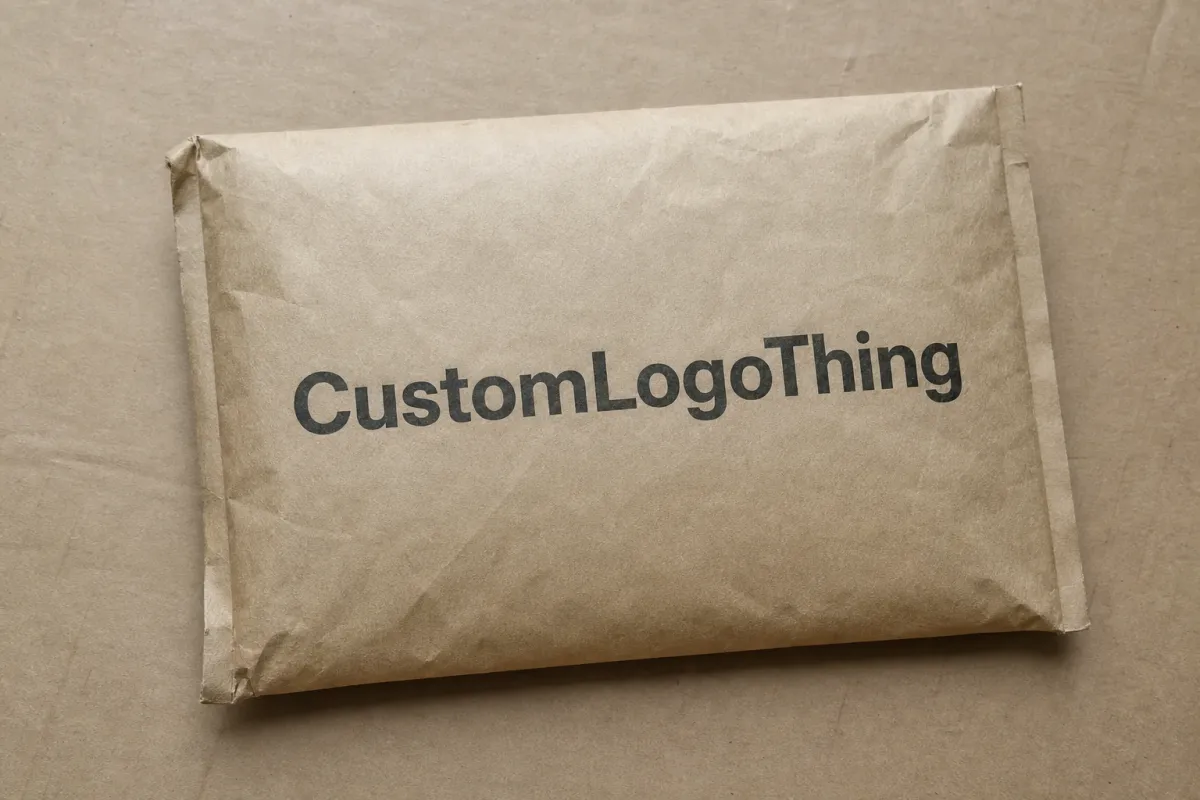
A plain mailer gets the shipment out the door. A branded one does that and keeps the brand visible through every handoff. Warehouse staff see it. Carriers see it. The customer sees it before opening anything. That repeated exposure is useful. The package often travels farther than the ad that brought the customer in.
Logo printed paper mailers stand out because the branding is visible at every stage. The mark is there during pick and pack. It is still there on the sorting belt. It shows up on the doorstep. In categories where parcels all look similar, that repetition helps memory stick.
They also make a brand look more deliberate. Plain kraft already feels practical. Add a clean logo or repeat pattern and the mailer stops looking like an afterthought. That can support a premium position, but it can also help a value brand look organized and dependable. Those are different jobs. Good packaging needs to decide which one matters more.
Paper mailers also communicate material choices without a lecture. Recycled content, FSC sourcing, or a lower-plastic shipping approach can be visible right away, as long as the claim is accurate. Shoppers notice packaging first. They do not need a long explanation to form an opinion about whether the brand feels honest.
Design restraint helps. A loud mailer is not automatically a better one. Heavy ink coverage can muddy fine detail on textured paper. Too much decoration can distract from the product inside. The stronger versions usually keep the branding simple, the structure solid, and the visual identity readable after shipping abuse.
For brands building a wider packaging system, these mailers fit well alongside other custom formats such as Custom Packaging Products and, in some product categories, Custom Poly Mailers. The right choice depends on product weight, moisture exposure, and the kind of experience you want the customer to remember.
Practical rule: if the mailer still looks clean after warehouse handling, transit, and a bad day for the carrier, the spec is probably close.
Production process and timeline for logo printed paper mailers
Most packaging problems start with timing, not art direction. A mailer can look strong in a mockup and still fail the assignment if the artwork, stock, or print method is rushed. The production path is predictable enough, but the details matter more than people expect.
The process usually starts with artwork setup. The logo needs to be placed in a print-ready file. Repeats need to be checked if the design uses a pattern. Bleed, safe area, and line thickness need attention. Vector artwork is usually the safest option because it scales cleanly. Raster files can work too, but only if the resolution is high enough for the final size.
Material selection comes next. Kraft, white paper, and recycled-content paper each behave differently. Kraft softens some colors and gives the mailer a natural tone. White paper usually makes the logo pop more clearly. Recycled stock can add texture and slight variation, which works for some brands and not for others. The choice affects appearance and lead time because not every paper grade is stocked the same way.
After that, the supplier prepares a proof. A digital proof confirms placement and layout. It does not tell the full color story. Ink shifts depending on substrate, coating, calibration, and drying behavior. If color is critical, a physical sample or press proof is safer than trusting a screen.
Printing may use digital, flexographic, or another standard method depending on run size. Digital printing usually works best for shorter runs, faster setup, and artwork changes. Flexographic printing tends to make more sense at higher volumes because setup costs are higher but unit economics improve with scale. Some orders also need die-cutting, folding, gluing, or coating as part of finishing.
Quality checks come after printing. A good supplier inspects registration, ink coverage, seal strength, and consistency across cartons. That sounds basic because it is. It is also the step that catches the annoying problems: a logo too close to the edge, a fold line clipping text, a color shift nobody noticed in the proof.
Simple runs often land around 12-18 business days after proof approval. Custom sizing, multiple color changes, or specialty paper can stretch that out. Larger orders usually take longer, especially when finishing is involved. Rush jobs exist, but they come with tradeoffs: higher freight cost, less proof time, or fewer material choices.
The biggest hidden delay is revision time. Three rounds of feedback can turn a one-week decision into a three-week slog. Supply risk is the other time sink. A specific kraft grade or recycled sheet can disappear from stock, and swapping materials after approval can change print results enough to trigger another review.
For packaging performance and testing standards, the International Safe Transit Association keeps useful guidance at ista.org. It will not pick the mailer for you, but it does explain why transit behavior matters as much as appearance.
Key factors that shape quality, sustainability, and branding
Material choice is the first quality lever. Kraft paper signals practicality. Recycled stock points toward a lower-impact material story. White paper gives the branding a cleaner backdrop. Specialty papers can raise perceived value, though they may also increase cost and complicate disposal instructions.
Sizing matters more than people want to admit. A mailer that is too large arrives puffy and awkward. One that is too tight stresses the seams. Fit affects appearance, but it also affects shipping efficiency. Oversized mailers waste carton space. Undersized ones fail at the fold line or split under handling.
Print quality lives in the small details. Line thickness, negative space, and ink density all matter. Thin script fonts and delicate icons can vanish on textured kraft. Dark ink can look excellent on white paper. Light tones on muted stock can turn faint and washed out. Good production artwork is not just a prettier logo file. It is a version tuned for the actual substrate.
Sustainability claims need discipline. Recyclable, recycled content, compostable, and FSC-certified are different statements. A mailer may be recyclable in theory but still run into local limits because of coatings, adhesives, or contamination from labels and tape. If a supplier says the mailer is recyclable, ask what the real disposal path looks like and whether the claim applies to the full finished item or only the paper layer.
FSC certification can help because it shows the paper came from responsibly managed sources. For background on forestry standards and chain-of-custody claims, fsc.org is the place to check the wording. Packaging claims move fast. Sloppy language does not age well.
Branding strategy should match the product. A luxury skincare line may want restrained printing, soft tones, and a neat unboxing moment. A minimalist apparel brand may prefer one strong logo on kraft with low ink coverage. A high-volume utility brand may care more about clear identification and damage resistance than mood. The best mailer follows the business model, not just the creative brief.
Supply consistency also matters. Seasonal volume spikes demand a format that can be reordered without drama. Swapping paper grades can shift shade, stiffness, and fold behavior. That kind of change barely shows on a presentation board. It shows immediately in a busy fulfillment room.
Cost and pricing: what drives the quote for logo printed paper mailers
Packaging pricing is rarely one number. It is a stack of choices. The same logo printed paper mailers can produce very different quotes depending on paper grade, print area, color count, order quantity, and whether the branding appears on one side or both. Buyers who chase the lowest unit price sometimes miss the setup math hiding underneath.
Quantity is the biggest lever. At lower volumes, setup costs are spread across fewer units, so the price per piece rises. At higher volumes, the per-piece cost drops even though the total spend goes up. A 10,000-piece order can look much better on paper than a 1,000-piece run. That tradeoff is normal, even if it is annoying for smaller brands.
Minimum order quantities, or MOQs, matter just as much. Some suppliers can work with smaller runs through digital printing. Others need a higher floor because of press setup or material sourcing. A low MOQ helps test demand, but it usually comes with a higher unit price. That is the cost of flexibility, not a mistake.
Setup fees are the other obvious line item. These can include artwork prep, plate creation for flexographic printing, die setup, and proofing. Freight can swing the landed cost. Rush charges can too. Storage might show up if the order ships in a larger batch than the brand can use right away. A quote that looks cheap at first can get expensive once every line is added.
| Option | Typical order fit | Approx. unit cost range | Strengths | Tradeoffs |
|---|---|---|---|---|
| Digital-printed kraft mailers | Short runs, frequent artwork changes | $0.70-$1.40 | Fast setup, flexible design changes, good for launch testing | Higher per-unit cost at scale |
| Flexo-printed paper mailers | Medium to large runs | $0.18-$0.45 | Better economics at volume, consistent branding across large orders | Higher setup cost, less ideal for frequent revisions |
| Recycled-content paper mailers | Sustainability-led brands | $0.30-$0.80 | Strong environmental positioning, useful for brand storytelling | Can show more texture variation and slightly looser color consistency |
| Specialty-finish paper mailers | Premium presentation, retail-heavy brands | $0.55-$1.20 | Elevated look, stronger shelf and unboxing appeal | Higher material and finishing cost, often longer lead times |
Those ranges are directional, not universal. A 5,000-piece order with two-color coverage on common kraft stock may land near the lower end. A smaller order with custom sizing, white paper, and tight registration requirements may sit much higher. Freight can matter more than expected, especially if the shipment needs to move quickly or travel far.
Value matters too. A slightly higher quote can still be the better buy if it cuts damage claims, improves repeat recognition, or supports a stronger position in the market. Packaging is not just a cost center. It is visible. It travels with the order. It carries part of the brand's job.
If you want a neutral source for broader waste and recycling context, the U.S. Environmental Protection Agency keeps useful information at epa.gov/recycle. That helps when comparing paper-based mailers with other shipping formats and separating real disposal outcomes from polished packaging copy.
Step-by-step guide to ordering logo printed paper mailers
The ordering process runs smoother when the product definition comes first. Measure the item or bundle that will ship inside the mailer. Record length, width, thickness, and weight. If the product is fragile, note whether it needs padding or a stiffer paper construction. If it is apparel or soft goods, fit and presentation may matter more than impact resistance.
Once the product profile is clear, decide what the packaging needs to say. Some brands want the logo centered and bold. Others prefer a small mark with a repeat pattern or subtle typography. Color choice matters too. Black on kraft feels different from deep green on white paper. The design should match the customer and the channel, whether that means retail, subscription, or direct-to-consumer shipping.
Artwork preparation is where many delays begin. Use a vector logo if possible. Confirm the resolution required for imagery. Ask the supplier about bleed, trim, and safe area. If the brand has Pantone standards or specific logo clear space rules, send them early instead of waiting for proof review. Clear files cut down on preventable revisions.
Next, request quotes from at least two suppliers. Compare more than price. Ask about material source, print method, MOQ, Lead Time, sample policy, and whether freight is included. Ask how revisions are handled too. A supplier with a clean proofing process can save more money than a slightly cheaper offer with weak communication.
Before full production, approve a sample or pre-production proof. That step matters most when the design depends on a specific shade, a fine line, or a subtle texture. A digital proof confirms layout. A sample tells you how the mailer feels in hand and how the logo reads under real light. That is where hidden problems tend to show up.
Plan inventory before the order lands, not after. Build in reorder points, storage space, and a trigger for the next purchase. If the mailer is part of the customer experience, running out is not a minor hiccup. It changes the shipment. It changes the brand experience too.
- Measure the product and define the fit.
- Choose the visual direction and print coverage.
- Prepare clean production artwork.
- Request comparable quotes from multiple suppliers.
- Approve a sample or proof before the full run.
- Set reorder thresholds so the program stays consistent.
Common mistakes that weaken logo printed paper mailers
Overcomplicated artwork is one of the quickest ways to weaken a paper mailer. A design that looks sharp on screen can turn muddy on textured paper if the lines are too thin or the spacing is too tight. Small text, tiny icons, and delicate gradients often misbehave once they hit the press. Printing does not care much about wishful thinking.
Guessing the size is another common mistake. A mailer chosen by eye may look fine on a sample table and fail in actual use. The shipment arrives loose and sloppy, or tight enough to strain the seams. Good sizing is based on product dimensions, weight, and a realistic shipping tolerance. Guessing is expensive.
Transit abuse should be part of the spec. A mailer needs to handle pressure, abrasion, stacking, and the occasional moisture problem. Paper mailers can perform well, but only when the stock, seam construction, and closure method match the product. Heavy or sharp-edged contents can push a lighter paper format beyond what it should be asked to do.
Another misstep is designing for screens instead of print. Bright RGB colors, ultra-fine type, and effects built for backlit displays can disappoint on paper. Production-ready files need to reflect the actual substrate and press behavior. That sounds technical because it is. Packaging punishes shortcuts.
Operational mistakes cause trouble too. Ordering without a forecast can lead to stockouts or emergency reorders. Rush fees follow. Material choices narrow. A second issue is inconsistency. If multiple orders go out over time without a clear spec sheet, the branding can drift enough to be obvious across shipments.
The easiest fix is to treat the mailer as part of the product, not as leftover shipping material. That changes how the decision gets reviewed. Durability, print accuracy, and customer perception get checked together. The question stops being whether the mockup looks nice and becomes whether the package still makes sense after a carrier network and a customer opening it in bad lighting.
Expert tips and next steps for a better branded rollout
Start small if the format is new. A test run of one or two sample configurations can show whether the mailer fits the product, survives packing, and reads clearly at a glance. That matters even more if the team is moving from plastic to paper or switching from a plain mailer to a printed one for the first time.
Build a packaging scorecard. Rank each option on protection, cost, print quality, sustainability claims, lead time, and brand fit. A scorecard forces the conversation away from personal taste and toward actual tradeoffs. It also makes supplier comparisons easier because everyone gets judged by the same yardstick.
Ask for three documents together: a spec sheet, a production timeline, and a quote. Separating them creates confusion later. Put them side by side and the differences become easy to spot. One supplier may be cheaper but slower. Another may use a higher-grade paper and require a larger MOQ. That is the kind of comparison that survives scrutiny.
A small internal rollout helps too. Let warehouse staff handle the mailer. Watch how easily it folds, seals, stacks, and labels. If it makes sense, ask customers what they notice first. The answers are usually practical. They mention sturdiness, color accuracy, or whether the packaging feels appropriate for the product price.
Helpful checklist before you place the order:
- Confirm product dimensions and weight range.
- Decide whether the brand wants bold, minimal, or sustainability-led design.
- Verify logo file quality and print specifications.
- Compare lead time, MOQ, and freight across suppliers.
- Request a sample or proof and inspect it under normal lighting.
- Set a reorder point before inventory gets tight.
For packaging teams that want a cleaner decision process, the best sequence is simple: define the package, test the package, then scale the package. That order sounds almost too obvious. It still prevents a lot of expensive mistakes. Packaging is painful to fix once it is already inside the fulfillment flow.
If you are comparing broader shipping formats, weigh paper and film-based options across protection, print quality, and disposal pathways. A branded paper mailer may win on perception and the materials story, while another format may handle water or rough transit better. The answer depends on the product, the route, and the promise being made to the customer.
My practical recommendation is to keep the design disciplined and the sourcing clear. Ask for material details, print method details, and real timeline commitments. Then choose the mailer that protects the item, presents the brand cleanly, and can be reordered without drama. That is how logo printed paper mailers earn their place.
The strongest logo printed paper mailers are the ones that survive transit, print cleanly, and make the brand recognizable the second they hit the doorstep. The next move is straightforward: define the product fit, lock the print spec, and test one sample before you commit to volume. That sequence keeps the packaging honest and the rollout under control.
FAQ
What are logo printed paper mailers made of?
Most are made from kraft paper, white paper, or recycled-content paper. Some include coatings, liners, or adhesive systems that change strength and recyclability. The best material depends on product weight, transit conditions, and the visual style you want.
How much do logo printed paper mailers usually cost per unit?
Unit cost depends on quantity, print coverage, material grade, and setup fees. Smaller orders usually cost more per mailer than larger runs. Ask for a quote that separates setup, freight, and print charges so the comparison is honest.
How long does the logo printed paper mailer production process take?
Timing depends on artwork approval, sample requests, print method, and order size. Simple runs can move faster than custom formats with multiple colors or finishes. Build in extra time for revisions and shipping, especially if the mailers are tied to a launch.
Are logo printed paper mailers recyclable?
Many are recyclable, but the answer depends on coatings, inks, adhesives, and local recycling rules. Plain paper mailers usually have better recycling odds than heavily coated versions. Always confirm disposal guidance with the supplier and avoid vague sustainability claims.
What logo file works best for printed paper mailers?
Vector files are usually best because they stay sharp at different sizes. High-resolution artwork helps preserve edges, contrast, and small details. Before ordering, confirm bleed, safe area, and color expectations with the printer.


