Buyer Fit Snapshot
| Best fit | Logo Tissue Paper for Ecommerce projects where brand print, material claims, artwork control, MOQ, and repeat-order consistency need to be specified before quoting. |
|---|---|
| Quote inputs | Share finished size, material target, print colors, finish, packing count, annual reorder estimate, ship-to region, and any compliance wording. |
| Proofing check | Approve dieline scale, logo placement, barcode or warning zones, color tolerance, closure strength, and carton packing before bulk production. |
| Main risk | Vague material claims, crowded artwork, missing packing details, or unclear freight terms can make a low unit price expensive after revisions. |
Fast answer: Logo Tissue Paper for Ecommerce: Material, Print, Proofing, and Reorder Risk should be specified like a repeatable production item. The safest quote records material, print method, finish, artwork proof, packing count, and reorder notes in one written spec.
Production checks before approval
Compare the actual filled-product size with the drawing, then confirm tolerance on folds, seals, hang holes, label areas, and retail display edges. Reserve space for logos, QR codes, warning copy, and material claims before decorative graphics fill the panel.
Quote comparison points
Review material grade, print process, finish, sampling route, tooling charges, carton quantity, and freight assumptions side by side. A quote is only useful when the supplier can repeat the same color, closure quality, and packing count on the next order.
Logo Tissue Paper for Ecommerce: A Practical Guide
Logo tissue paper for ecommerce is often the first branded surface a customer touches, and that first contact can shape the rest of the unboxing experience in a way that is easy to underestimate. Before the box lid lifts, before the product is fully visible, the paper already tells a story: polished or plain, deliberate or rushed, premium or forgettable. After years of reviewing packaging samples and production proofs, I can say this with confidence: the smallest layer in the box is often the one customers remember most.
For DTC brands trying to raise perceived value without adding much weight, cost, or packing complexity, logo tissue paper for ecommerce is one of the quietest upgrades with the strongest visual payoff. It gives a package a more finished interior, and it does so without asking the fulfillment team to rebuild the whole system around it. That combination is why the material shows up so often in apparel, beauty, gift sets, and subscription boxes.
Beyond presentation, logo tissue paper for ecommerce helps organize pack-out, cushions finishes from light scuffing, hides dust and handling marks, and gives the warehouse team a repeatable way to present each order. A well-chosen sheet size, print style, and paper grade can make the whole unboxing feel more controlled without making shipping harder. In practice, it is less about decoration and more about making the packaging behave the same way every time.
There is also a buyer-side reason to pay attention to logo tissue paper for ecommerce: it can improve consistency across product lines. One shirt, one candle, and one accessory may all ship in different outer boxes, yet branded tissue gives them a common visual language. That matters when the brand wants a premium first impression without moving into Custom Rigid Boxes or heavy inserts. It is a modest material with a surprisingly large role.
Logo Tissue Paper for Ecommerce: The Small Detail Customers Notice First
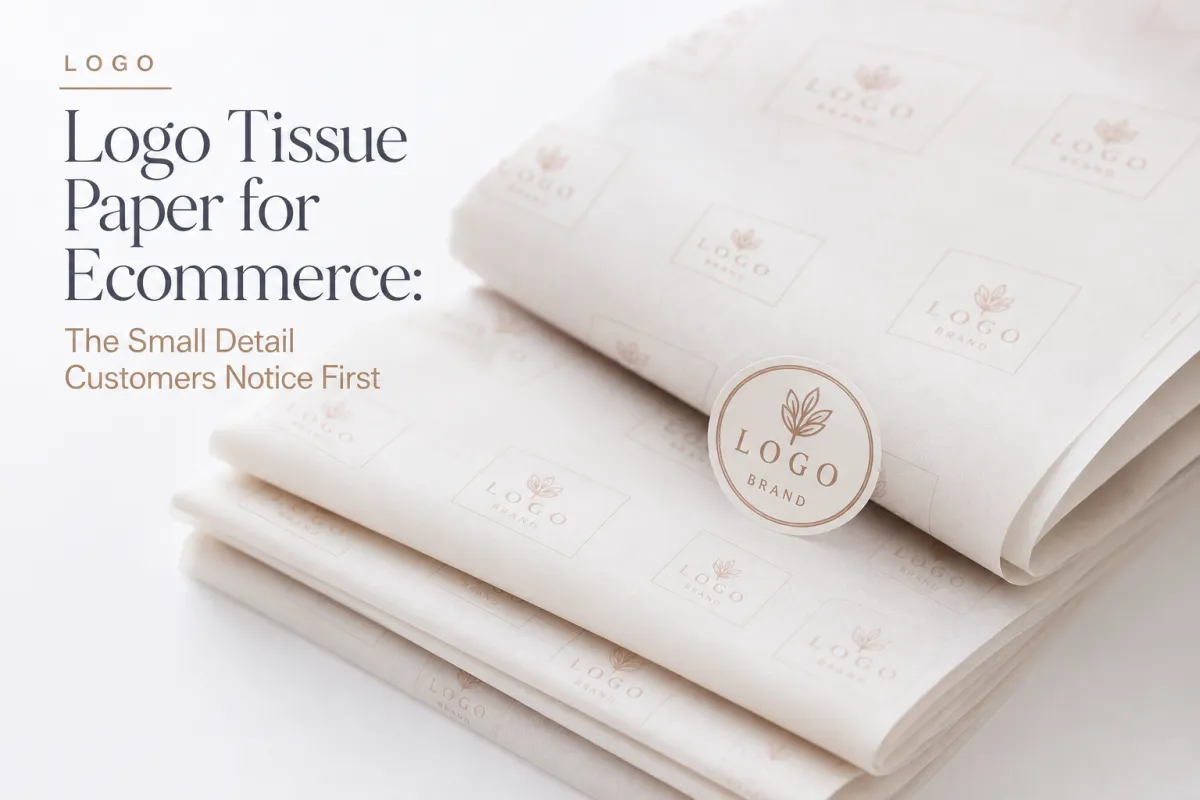
Logo tissue paper for ecommerce usually becomes the first branded layer in the order, and that position gives it real influence. Customers do not measure the sheet weight or ask about the ink coverage, but they do notice whether the package feels thoughtful. A neatly folded sheet can signal care before the product is even visible, while a wrinkled or badly sized wrap can make the rest of the packaging feel less finished than it really is.
From a packaging buyer’s point of view, logo tissue paper for ecommerce is an efficient way to make mailers and cartons feel more complete. It can sit inside a poly mailer with folded apparel, line a retail-style box, or wrap individual items in a gift set. The paper adds a soft reveal, and because it is light, it usually does not affect shipping weight in any meaningful way. That is one reason it works so well for brands trying to keep postage controlled while still improving presentation.
It also helps on the operations side. Logo tissue paper for ecommerce can distinguish product groups, support SKU organization, and reduce the chance that similar items are packed loosely or without a visual cue. In a busy warehouse, that matters. A good tissue spec is not just a branding choice; it becomes part of the pack-out system. When the team knows exactly how the sheet folds around a product, order assembly tends to stay more consistent from shift to shift.
A common ecommerce scenario makes the value clear: a DTC clothing brand wants a premium unboxing feel, yet the fulfillment team already works with fixed carton sizes, a tight labor budget, and a fairly fast pick-and-pack rhythm. Logo tissue paper for ecommerce fits that situation well because it adds presentation without pushing the operation toward a more complex package structure. It is one of those materials that can do a lot of work quietly, which is often what the best packaging components do.
Practical rule: if the tissue improves the unboxing but slows packing by more than a few seconds per order, the spec probably needs a second look.
Another reason logo tissue paper for ecommerce matters is the visual continuity it creates across channels. A customer may see the same logo on a website, in social content, and then again on the tissue inside the box. That repetition helps the packaging feel like part of the brand system rather than a separate purchase made at the end of the process. It is not flashy, but it works.
For many brands, the goal is not luxury for luxury’s sake. It is a cleaner, more reliable presentation that supports the product price point and makes the order feel intentional. That is where logo tissue paper for ecommerce earns its place.
How Logo Tissue Paper for Ecommerce Works in the Unboxing Process
Logo tissue paper for ecommerce works best when it is built into the packing sequence, not added as an afterthought. In a typical workflow, the packer folds the tissue, places the product or product set inside, and then wraps the item fully or uses the paper as a top layer. The sheet may sit inside a mailer, a corrugated carton, or a subscription box, depending on the product and the brand promise. That sequence sounds simple, but it shapes the whole customer experience.
When the product is wrapped correctly, logo tissue paper for ecommerce creates a small reveal. The customer opens the shipper, sees the branded tissue first, and then uncovers the product in a controlled way. That pause can make the package feel more premium even when the container itself is plain kraft board or a standard mailer. It is a low-weight way to add drama, which is useful for ecommerce brands that need to keep freight and dimensional weight under control.
The paper also performs a protective function. It is not a substitute for proper structural packaging, but it does help keep items from rubbing directly against each other and can reduce light scuffing on polished surfaces. In apparel, that means cleaner folds. In cosmetics, it helps with presentation. In candles and accessories, it keeps small parts from shifting around and making the box feel loose. For logo tissue paper for ecommerce, presentation and light protection usually go hand in hand.
Here are common product categories that benefit most:
- Apparel: shirts, sweaters, scarves, and boxed garment sets that need a neat fold and a branded reveal.
- Accessories: jewelry, belts, eyewear, small leather goods, and items that fit well in a layered presentation.
- Beauty and cosmetics: skincare sets, gift kits, and bottles that look more polished when separated by tissue.
- Candles and home fragrance: items that benefit from a softer visual presentation and a more controlled interior wrap.
- Giftable goods: bundles where the packaging needs to feel special even before the product is seen.
Logistics matter here too. Logo tissue paper for ecommerce should match the way the fulfillment team actually packs orders. If the tissue tears too easily, folds poorly, or requires three extra steps, it can slow throughput and frustrate staff. If the paper is too thin, the logo may show through awkwardly or the sheet may wrinkle too fast. The best results usually come from balancing sheet strength, print coverage, and fold style to suit the product dimensions.
That is why sample testing is worth the time. A sheet that looks great on a design screen may behave very differently on a real packing line, especially if the products vary in shape or if the team packs under time pressure. For logo tissue paper for ecommerce, the real test is not only whether it looks good in a mockup; it is whether it folds cleanly, holds up during handling, and still feels polished after the carton is closed.
If you think about it from the customer side, imagine opening a box where the tissue is the same size every time, the logo is centered consistently, and the fold lands in the same place on every order. That consistency is what makes logo tissue paper for ecommerce feel professional. The customer may not consciously analyze it, but they notice the orderliness.
For brands shipping mixed product lines, the paper can also act as a visual separator. A darker tissue inside a white carton, or a lightly printed pattern over recycled white stock, can create enough contrast to make the package feel designed rather than improvised. That is part branding and part pack-out discipline, and logo tissue paper for ecommerce does both jobs at once.
Key Factors That Shape Logo Tissue Paper for Ecommerce
Paper quality is the first thing to get right with logo tissue paper for ecommerce. Buyers often focus on print first, but the stock itself controls how the tissue feels, folds, and survives handling. A good sheet needs enough strength to hold a crease without tearing, enough opacity to support the brand artwork, and enough smoothness to print cleanly. If the tissue is too flimsy, it can crumple in the hand. If it is too coated or too slick, it may not fold the way the packer expects.
Opacity matters more than many teams expect. Logo tissue paper for ecommerce can look elegant in a sample pack and then feel underwhelming if the sheet is too translucent against dark products or bright overhead lighting. That is especially true when the logo coverage is light and the artwork is thin. A slightly heavier paper or a denser print layout can solve that problem, but those choices usually affect cost and turnaround. There is always a tradeoff somewhere.
Print style is another major decision. Some brands prefer a one-color repeat pattern that keeps the sheet economical and easier to produce. Others want a full-sheet look with stronger coverage so the tissue becomes a visual feature in its own right. The more ink coverage you add, the more you affect manufacturing complexity, drying, and unit price. Logo tissue paper for ecommerce does not need to be loud to be effective, but it does need enough contrast to be seen after folding.
Sheet size should match the actual use case. If the sheet is too small, the team will be forced into awkward overlaps or extra folds. If it is too large, there will be waste and slower packing. The right size depends on the product dimensions, the number of wraps needed, and whether the paper is covering the product fully or just acting as a top layer. In packaging, a quarter inch too large or too small can change how tidy the final pack-out looks.
Color choice also matters. Neutral tissue can feel refined, while a bold brand color can add energy. Color still needs to coordinate with the rest of the pack system: cartons, labels, inserts, and any adhesive seals. Logo tissue paper for ecommerce works best when the interior palette feels like one system rather than a collection of separate graphics. If the carton is kraft, the tissue can either complement that texture or create a strong contrast. Both can work, but the decision should be intentional.
On the sustainability side, the most useful conversations usually involve recycled content, source certification, and print methods. Many buyers want a paper that aligns with recycled-content goals and broader sourcing standards, and organizations such as the FSC can be useful reference points for responsible fiber sourcing. The U.S. EPA also provides guidance on sustainable materials purchasing at epa.gov. That does not make any paper automatically better, but it gives buyers a framework for asking sharper questions.
There is also a practical compliance angle. If a brand’s packaging program is being reviewed for broader shipping performance, the tissue itself is only one piece of the puzzle. The full system may need to pass drop or distribution testing, and standards such as ISTA are often part of that conversation. For that reason, logo tissue paper for ecommerce should be chosen as part of the whole package stack, not in isolation. If the inner wrap makes the item look polished but the outer system fails under transit stress, the customer still has a bad experience.
Short version: the best logo tissue paper for ecommerce is the one that fits the product, the pack line, and the brand’s budget without adding waste or rework.
That may sound obvious, yet it is easy to get distracted by visuals and forget the handling side. A sheet that folds quickly, prints cleanly, and fits the box consistently will usually outlast a more dramatic option that slows the team down.
Production Process and Timeline for Logo Tissue Paper for Ecommerce
Logo tissue paper for ecommerce usually follows a fairly standard production path, even though the details shift from supplier to supplier. The process begins with artwork submission, where the logo file, repeat pattern, color targets, and sheet dimensions are reviewed for print readiness. If the file has thin lines, low contrast, or unclear placement, prepress may suggest adjustments before anything goes to proof. That early check saves time later because tissue printing is less forgiving than a screen on a laptop.
Once the artwork is approved, a proof is prepared. Depending on the supplier, that proof may be digital, a press sample, or both. For logo tissue paper for ecommerce, the proof stage is where many projects slow down, not because the process is difficult, but because stakeholders want to see exactly how the logo repeats, where the edges land, and how the color reads against the chosen stock. That pause is normal and worth taking seriously. A small correction here is easier than a full rerun later.
After proof approval, the job moves into print setup. This can include plates, screens, or other setup steps depending on the print method and the equipment involved. The tissue is then printed, converted to the requested sheet size, counted, packed, and prepared for shipment. If the order is custom cut, custom colored, or printed with heavier coverage, the schedule may stretch a little because drying, slitting, and boxing all need room in the sequence. Logo tissue paper for ecommerce is simple in concept, but the production line still needs discipline.
Here is a practical timeline framework many buyers use as a starting point:
- Artwork review and proofing: 1-3 business days if files are clean.
- Setup and print preparation: 2-5 business days depending on print method and color complexity.
- Production and converting: often 5-10 business days for standard runs.
- Packing and freight booking: 1-3 business days, sometimes more if cartons or pallets need special handling.
That does not mean every order lands in that window. A repeat order of logo tissue paper for ecommerce can move faster than a first-time custom run because the artwork, spec, and color expectations are already established. A new project, especially one with custom sizes or multi-color art, may take longer because the supplier needs extra time to verify everything before it goes into production. The main lesson is simple: clear approvals shorten the calendar.
Several things can slow the schedule down. Artwork revisions are one. Color matching questions are another, especially if the brand wants the tissue to coordinate with a printed carton or a particular Pantone target. Custom sheet sizes can also add time because they affect converting and packing. Even internal delays on the buyer side matter. If the approval sits in an inbox for four days, the schedule shifts by four days. That sounds basic, but it is one of the most common causes of missed launch dates.
For seasonal drops and product launches, early planning matters. If logo tissue paper for ecommerce is part of a campaign, the packaging should be ordered before the warehouse gets busy, not after. Planning ahead gives the buyer more options on price, proofing, and inventory timing. It also reduces the chance of rushing into a spec that looks fine on paper but is not ideal for the real pack line.
One more practical point: repeat orders are easier to manage if the team keeps a simple spec sheet. Sheet dimensions, paper weight, ink coverage, approved artwork, and target reorder timing should all live in one place. That way logo tissue paper for ecommerce can be reordered without re-litigating the same decisions every time.
Logo Tissue Paper for Ecommerce Cost, Pricing, MOQ, and Quotes
Logo tissue paper for ecommerce is usually priced by a mix of paper grade, print coverage, sheet size, order volume, and packing format. Those variables matter because tissue is a thin, lightweight product, which means a small change in spec can shift the economics fairly quickly. A heavier stock, a more complex print, or a larger sheet can raise both material and manufacturing cost. Shipping also matters, especially if the order is packed in bulk cartons or palletized for a larger distribution center.
For a rough planning range, many buyers see pricing somewhere around $0.10-$0.24 per sheet on larger repeat runs with lighter print coverage, while more customized logo tissue paper for ecommerce can land closer to $0.18-$0.40 per sheet depending on sheet size, color count, and quantity. Setup or artwork charges may apply as well, and those can sit anywhere from a modest proof fee to a few hundred dollars depending on how the supplier structures the job. These numbers are directional, not universal, but they help frame the conversation.
Minimum order quantity matters a lot for smaller brands. Some suppliers want enough volume to justify the print setup, which means a buyer may need to order several thousand sheets at a time. That can be a good thing if the brand has steady order volume, but it can also create storage pressure if usage is still uncertain. Logo tissue paper for ecommerce works best when MOQ aligns with monthly or quarterly consumption, not just with the lowest advertised unit price.
A good quote comparison should be based on more than the sheet price. Ask whether the number includes artwork support, proofing, plates or setup, packaging, and freight. A quote that looks cheaper on the front end can become more expensive once shipping or setup is added. It is also smart to ask how the paper is packed, since bulk box count and pallet configuration affect warehouse storage and receiving time. Logo tissue paper for ecommerce should be easy to receive, count, and use; otherwise, the savings may disappear in handling.
Here is a simple way to compare common options:
| Option | Typical Use | Cost Drivers | Best For |
|---|---|---|---|
| One-color repeat print | Branded reveal with controlled cost | Paper weight, sheet size, MOQ, setup | Apparel, accessories, subscription packs |
| Two- to three-color print | Stronger brand presence and higher contrast | Ink coverage, registration, proofing time | Beauty sets, premium gift bundles, seasonal launches |
| Full-sheet coverage | High-impact presentation with a bold interior look | More ink, more drying time, higher setup complexity | Brands that want the tissue to be a visible design element |
| Custom size and color | Exact fit for product and brand system | Converting, color matching, inventory planning | Special box sizes, high-consistency pack-outs |
MOQ also shapes inventory strategy. If the minimum is 5,000 sheets and usage is only 500 sheets a month, the brand is sitting on ten months of supply. That may be fine if storage is cheap and the design is stable, but it can be risky if packaging changes frequently. In contrast, a growing brand with predictable replenishment might prefer a larger MOQ because it reduces per-sheet cost and avoids repeat setup fees. Logo tissue paper for ecommerce is one of those items where buying behavior should follow actual consumption, not just price admiration.
The cheapest sheet is not always the best value. If the paper tears during packing, if the print disappears against the product, or if the sheet size forces awkward folding, the savings get eaten by labor and inconsistent presentation. That is especially true for logo tissue paper for ecommerce, where the packaging itself becomes part of the brand promise. A slightly higher unit cost can be worth it if the pack-out is cleaner and the customer experience feels more polished.
If you are comparing quotes, ask three questions: Does the sheet fit the product? Does the print hold up in the box? Can the warehouse team pack it quickly and consistently? Those answers usually matter more than chasing the lowest number on the page.
Common Mistakes When Ordering Logo Tissue Paper for Ecommerce
One of the biggest mistakes with logo tissue paper for ecommerce is choosing artwork that looks strong on a screen but weak on the printed sheet. Fine lines, low-contrast colors, and tiny logo elements can disappear once the design is repeated across thin paper. The result is a sheet that feels branded in the file but almost plain in the box. If the logo is too delicate, the real-world paper simply will not carry it the way a digital mockup suggests.
Another common issue is forgetting about pack-out reality. A sheet that is too large for the product can turn into a folding problem, while a sheet that is too small may not cover enough of the item to feel purposeful. Logo tissue paper for ecommerce should support the actual assembly motion at the packing table. If the team has to re-fold every order, the spec is probably costing more than it should. If the paper creates loose corners or uneven reveals, the unboxing loses that crisp, organized feel.
Color expectations are also easy to misunderstand. A rich hue on a monitor may print lighter, flatter, or slightly warmer depending on the stock and ink system. That matters most when the tissue sits next to dark products, metallic finishes, or very bright box interiors. If the opacity is not right, the logo may show through in a way that feels messy rather than refined. With logo tissue paper for ecommerce, the interaction between paper, ink, and product surface is just as important as the logo itself.
Brands also make trouble for themselves by underestimating storage and replenishment. Tissue is light, but it still takes space when packed flat in cartons. If a brand orders a large run of logo tissue paper for ecommerce without thinking through usage rate, the cartons can sit in the wrong corner of the warehouse and become a nuisance. Reorder timing matters too. If usage spikes during promotions or holiday periods, the team needs a buffer so the paper does not become the thing that stops shipping.
Lead time is another blind spot. A buyer might approve artwork late and then assume the run can still arrive before launch. Sometimes that happens, but more often the schedule is tighter than expected, especially if there is a proof correction or a setup question. For logo tissue paper for ecommerce, planning early usually buys more flexibility on pricing, proofing, and delivery timing. Waiting until the last minute usually narrows the options.
There is also a tendency to treat the tissue as a decorative afterthought instead of a brand asset with operating requirements. The paper should coordinate with the rest of the package, but it also has to survive the real handling environment. If it tears in the warehouse, wrinkles badly in transit, or looks inconsistent from one shift to another, the customer experience suffers. That is why logo tissue paper for ecommerce should always be reviewed through both a brand lens and a production lens.
Here are the mistakes I see most often:
- Artwork that is too fine or too low contrast for tissue printing.
- Sheet sizes that create waste or slow the packing team down.
- Ignoring opacity and how the design reads against dark products.
- Failing to confirm lead time before a launch or seasonal push.
- Ordering more inventory than storage and usage can comfortably support.
All of those issues are preventable with a little planning. And that planning does not need to be complicated. A short spec review, a real sample, and a conversation with the fulfillment team can avoid most of the common surprises. That is especially true for logo tissue paper for ecommerce, where the material is simple but the user experience is highly visible.
Expert Tips and Next Steps for Logo Tissue Paper for Ecommerce
If you are starting a project with logo tissue paper for ecommerce, begin with one or two high-volume use cases instead of trying to solve every SKU at once. Test the sheet size, print density, and fold style on the items that ship most often. That gives you a practical baseline, and it keeps the first order focused on the real packaging motion rather than on a theoretical ideal. Most brands learn more from a small, well-tested run than from a broad but vague spec.
Request samples or mockups that show the logo on the actual paper stock, not just on a digital preview. The texture, opacity, and fold lines all affect the final look. A sheet that appears balanced in a design file may look too busy once it is printed and folded. With logo tissue paper for ecommerce, the stock itself is part of the design, so the physical sample matters as much as the artwork.
Build a simple internal checklist before you place the order. It can cover approved artwork, sheet dimensions, target usage per month, storage space, reorder trigger, and who signs off on the proof. That kind of checklist reduces back-and-forth later and keeps the packaging consistent. For logo tissue paper for ecommerce, consistency is the thing that makes the brand feel dependable over time.
If the packaging program is larger than the tissue itself, think about the whole system. Tissue, cartons, inserts, labels, and mailers should all feel like they belong together. That does not mean every piece needs to match exactly. It means the package should feel intentional and stable, especially when the customer opens it under bright light or on a kitchen counter. Logo tissue paper for ecommerce can carry a lot of that visual burden if it is chosen with the rest of the system in mind.
Before placing the first order, gather these inputs:
- Product dimensions and approximate fold requirements.
- Monthly usage estimate and seasonal peak volume.
- Brand color targets and approved logo files.
- Preferred paper feel, opacity, and sustainability goals.
- Current packing method and any warehouse handling limits.
Then ask for a quote that includes proofing, setup, packing, and freight. That gives you a real comparison point rather than a partial number. If you are still deciding between print styles, ask for two versions side by side so you can compare the look and the handling behavior. That is usually the fastest way to make a smart decision about logo tissue paper for ecommerce.
One last thought from a packaging buyer’s angle: the most useful tissue is the one that makes the operation easier and the brand stronger at the same time. If logo tissue paper for ecommerce does both, it earns its place very quickly. If it only does one of those jobs, the spec probably deserves another look.
Actionable takeaway: start with your top-selling SKU, confirm the sheet size with a real sample, and compare the printed result against your current pack-out before you place a full order. That single test will tell you whether the tissue is doing its job or just looking good on a screen.
What is custom logo tissue paper for ecommerce used for?
It is used to wrap products, add a branded reveal, and create a cleaner unboxing experience inside mailers or cartons. It also helps protect lightweight items from rubbing together and can make fulfillment look more organized.
How do I choose the right sheet size for logo tissue paper for ecommerce?
Start with the product dimensions and how many folds you want around the item. Choose a size that packs efficiently on your line without wasting paper or making the wrap awkward to handle.
What affects the price of logo tissue paper for ecommerce the most?
Paper grade, print coverage, number of colors, order quantity, and whether special packaging or setup is required. Shipping cost and minimum order quantity also change the final unit cost.
How long does production usually take for printed ecommerce tissue paper?
Timeline depends on proof approval, print method, volume, and whether the order is a repeat run or a new custom project. Fast approvals and clear artwork usually shorten the turnaround.
Can logo tissue paper for ecommerce be made with sustainable materials?
Yes, many projects use recycled content or sourcing standards that support sustainability goals. The key is to balance eco goals with print quality, opacity, and the way the paper performs during packing.
If you are weighing logo tissue paper for ecommerce for a new launch or a packaging refresh, the best next step is to gather your dimensions, estimate monthly usage, confirm your branding goals, compare a real sample against your current pack-out, and lock the spec before launch timing gets tight.