Buyer Fit Snapshot
| Best fit | Buy Custom Rigid Boxes with Inserts projects where brand print, material claims, artwork control, MOQ, and repeat-order consistency need to be specified before quoting. |
|---|---|
| Quote inputs | Share finished size, material target, print colors, finish, packing count, annual reorder estimate, ship-to region, and any compliance wording. |
| Proofing check | Approve dieline scale, logo placement, barcode or warning zones, color tolerance, closure strength, and carton packing before bulk production. |
| Main risk | Vague material claims, crowded artwork, missing packing details, or unclear freight terms can make a low unit price expensive after revisions. |
Fast answer: Buy Custom Rigid Boxes with Inserts: Specs & Pricing should be specified like a repeatable production item. The safest quote records material, print method, finish, artwork proof, packing count, and reorder notes in one written spec.
Production checks before approval
Compare the actual filled-product size with the drawing, then confirm tolerance on folds, seals, hang holes, label areas, and retail display edges. Reserve space for logos, QR codes, warning copy, and material claims before decorative graphics fill the panel.
Quote comparison points
Review material grade, print process, finish, sampling route, tooling charges, carton quantity, and freight assumptions side by side. A quote is only useful when the supplier can repeat the same color, closure quality, and packing count on the next order.
Buy Custom Rigid Boxes with Inserts: Specs & Pricing
A product can look polished in a render and still disappoint the moment it starts moving through a warehouse, shifts inside a carton, or lands with a scuff on the finish. I have seen that happen more than once in sample reviews: the artwork was fine, the box structure looked premium, and then the real issue showed up in the interior fit. That is why many brands buy Custom Rigid Boxes with inserts instead of relying on loose fill, a simple folding carton, or a package that only looks expensive from the outside. The insert does the quiet, essential work. It holds the item steady, protects corners and edges, and gives the unboxing moment a cleaner, more deliberate rhythm.
From a packaging buyer's point of view, this format earns its keep in three directions at once. It supports product packaging during handling, improves retail packaging presentation, and strengthens package branding the second a customer lifts the lid. Candle brands, cosmetics makers, glass jar suppliers, electronics accessory lines, confectionery producers, and curated gift kits all tend to benefit when they buy Custom Rigid Boxes with inserts, because the packaging helps reduce returns, limit replacement shipments, and make the first impression feel finished. If you are still comparing formats, the broader Custom Packaging Products range is a useful place to see how rigid packaging sits beside other custom printed boxes and branded packaging options.
Most buyers begin with the visual side and only later discover that fit matters more than decoration. A box can carry foil, embossing, and a crisp print finish, yet still fail if the product moves inside it. That is the difference an insert makes, and it is why brands that buy custom rigid boxes with inserts usually end up with a steadier packout and a more controlled presentation. In plain terms, the shell should look good, but the insert has to do the heavy lifting.
Why buy custom rigid boxes with inserts can cut damage
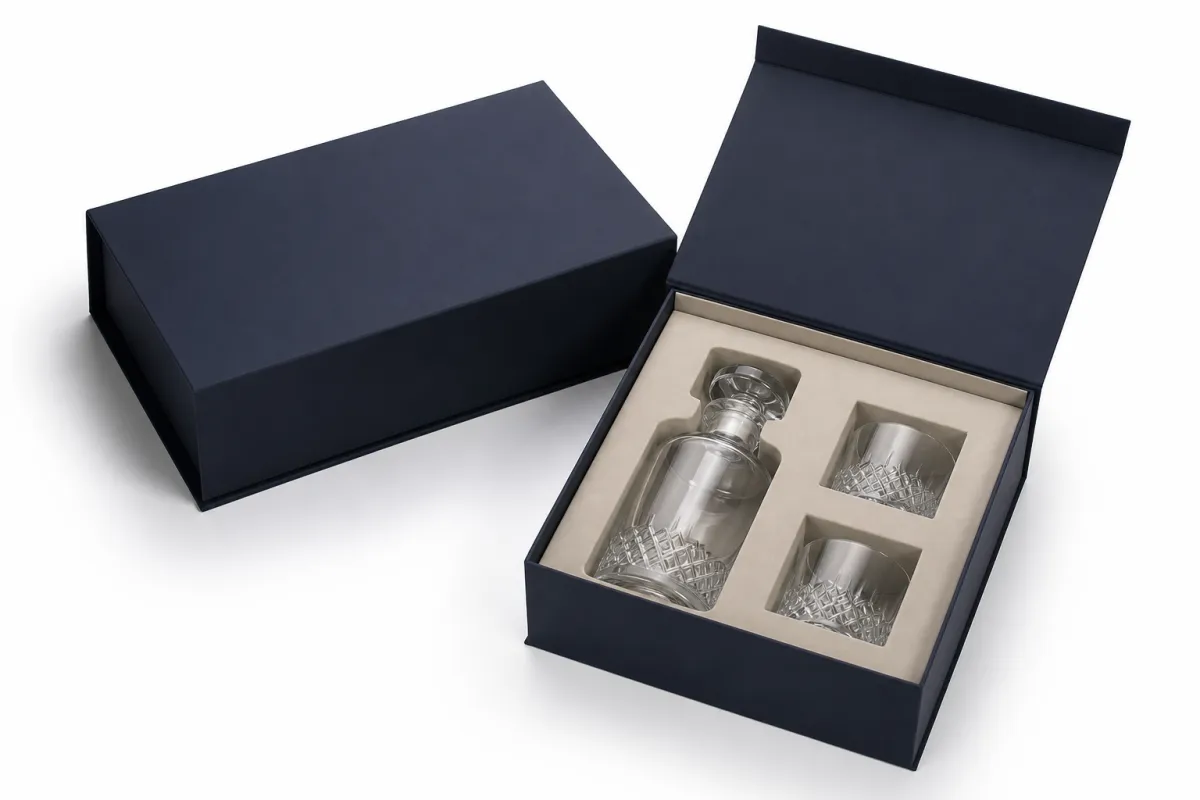
The format works because the two protective elements support each other. A rigid board shell resists crush better than a lightweight folding carton, and the insert limits movement inside the pack. Together, they reduce the two problems that show up again and again in premium shipping: corner damage and product rub. When the item cannot slide, bounce, or tilt, it has a much better chance of reaching the customer in the same condition it left the line.
That matters most with fragile or polished items. A glass bottle, lacquered accessory, printed electronics kit, or scented candle can pick up marks from small shifts during handling. When you buy custom rigid boxes with inserts, you are not just buying a more polished presentation piece. You are buying a restraint system for the product itself. The insert becomes part of the protection strategy, which is why the format performs so well for sets, bundles, and giftable items that need to feel organized as soon as the lid opens.
In day-to-day use, this packaging style fits a few very common categories well:
- Candles and fragrance - the insert keeps glass vessels from touching the outer wall.
- Cosmetics - jars, droppers, and bottles stay put without cosmetic scuffing.
- Electronics accessories - chargers, earbuds, cables, and adapters remain separated.
- Confectionery - assortments look cleaner and ship with less shifting.
- Curated gift kits - multiple pieces stay aligned so the set feels intentional.
That cleaner alignment does more than protect product. It changes how the buyer reads the brand. A set that sits neatly in a die-cut cavity feels considered. A set that arrives crooked, with one piece floating against another, feels rushed. The difference shows up fast in branded packaging for retail shelves, influencer kits, subscription drops, and seasonal launches where presentation helps sell the story before the product is even used.
A rigid box without an insert is often only half a solution. The shell handles the outside world; the insert handles the product.
Testing matters when the shipping path is tougher than a warehouse handoff. For parcel transit, many teams use ISTA methods to check drop, vibration, and compression behavior before a launch goes live. That is not a branding exercise; it is a practical way to see whether the packaging system actually protects the item under normal distribution stress. When a buyer plans to buy custom rigid boxes with inserts, the full journey deserves attention, not just the shelf face. The box has to look right, yes, but it also has to survive the boring, rough parts that nobody sees.
There is also a cost angle that gets overlooked. A rigid box costs more than a plain folding carton, yet damage is expensive too. One cracked jar, one bent accessory, or one replacement shipment can erase the packaging savings from a much larger order. For that reason, many brands buy custom rigid boxes with inserts as a prevention measure rather than a cosmetic upgrade. The packaging becomes part of the margin protection plan.
What Custom Rigid Boxes with Inserts Are Made Of
At the core, a rigid box is a thick paperboard structure, usually built from greyboard or chipboard around 1.5 mm to 3 mm thick, then wrapped in printed or laminated paper for the outer finish. That wrap can be a clean matte paper, a textured sheet, or a coated art paper that carries full-color artwork. Buyers often think first about print, but board thickness and wrap construction decide how the box feels in the hand and how well it holds up during use.
The insert is where the protection strategy becomes specific. When you buy custom rigid boxes with inserts, you can choose the cavity material based on product weight, presentation style, and budget. The common choices are:
- EVA foam - excellent for precise retention, especially with dense or delicate items.
- Molded pulp - a more natural look, often selected for fiber-based or eco-leaning brands.
- Cardboard insert - lighter and usually more economical for simple kits and accessory sets.
- Polyfoam or specialty foam - useful when shock control matters more than a natural visual.
Each option brings a different feel. EVA gives a tight, engineered fit, which works well if the product has clean geometry and a premium price point. Molded pulp communicates a less synthetic look and can suit brands that want a more responsible material story. Cardboard inserts are simpler to produce and easy to print or die-cut, which makes them useful for lighter product packaging where the goal is organization rather than heavy shock absorption.
Closure style shapes the buying decision as well. Lift-off lids are common because they create a classic reveal. Magnetic closures add more ceremony and are popular in luxury custom printed boxes. Shoulder boxes create a strong opening moment because the inner tray rises slightly as the lid comes off. Sleeves, ribbons, and interior reveal panels can add another layer of presentation, though each one should earn its place through the product and the budget instead of being added just because it looks attractive in a sample room.
For finish selection, a buyer can combine several treatments to build the final feel:
- Soft-touch lamination for a velvety, restrained surface.
- Matte or gloss lamination to control glare and durability.
- Foil stamping for metallic accents, logos, or borders.
- Embossing and debossing to create depth without heavy ink coverage.
- Spot UV to highlight select graphics or a logo mark.
There is no single right stack of materials. A premium serum line may need a rigid shell with soft-touch wrap, foil logo, and EVA cavity. A confectionery set may be better served by a printed paper wrap, cardboard insert, and a more open interior layout. That is why it helps to buy custom rigid boxes with inserts from a partner that talks in terms of fit, board, and finish instead of only talking about artwork. If the conversation stays at the mockup stage, the sample usually tells the real story later.
Sustainability belongs in the conversation too, though it needs to be handled carefully. Recycled board, paper-based inserts, and FSC-certified wraps all support a cleaner materials story, yet the final recyclability depends on the total build. Heavy plastic coatings, magnets, or mixed-material inserts can make recovery harder. If sourced responsibly, FSC claims can be verified through chain-of-custody documentation from FSC. For many brands, that balance between appearance and material selection is exactly why they buy custom rigid boxes with inserts instead of a more decorative but less functional build.
Buy custom rigid boxes with inserts: size, fit, and print specs
Size starts with the product, not the box. That sounds simple, yet it is where a lot of packaging design mistakes begin. Measure the item carefully, then build clearance for finger access, tolerances, and the insert wall thickness. If the product is wrapped, sleeved, or bagged before packing, include that extra dimension as well. Once the inner size is confirmed, the outer dimensions can be set around board thickness and closure style.
When you buy custom rigid boxes with inserts, fit usually decides whether the package feels premium or awkward. A cavity that is too loose allows movement. A cavity that is too tight can damage labels, corners, or finishes during packing. For that reason, I recommend confirming three details before moving to production:
- Cavity depth - the product should sit fully without forcing the lid closed.
- Cavity shape - rounded corners, cutouts, and finger notches all affect usability.
- Retention method - snug fit, friction fit, ribbon lift, or layered insert.
For a single-item presentation box, the insert may only need one cavity and a finger pull. For a duo or full set, the layout becomes more structural. A bottle and dropper need different clearances. A candle and wick trimmer should not touch. A skincare trio needs visible separation so the set looks organized instead of crowded. Careful packaging design pays off in day-to-day fulfillment. It also saves a lot of second-guessing when packers are moving fast.
Print and decoration should support the structure, not compete with it. Full outside coverage is common, but many high-end brands keep the exterior restrained and use a vivid interior print or a branded reveal message on the inside lid. That approach works well for retail packaging because the customer sees a controlled outside face on the shelf and a more expressive moment at opening. If you buy custom rigid boxes with inserts for a launch, consider whether the inside should carry assembly instructions, a product story, care notes, or simply a clean brand mark.
Here is a practical way to think about the specification stack:
- Board - 2 mm, 2.5 mm, or 3 mm greyboard/chipboard depending on product weight.
- Wrap paper - coated art paper, specialty textured paper, or FSC-certified paper stock.
- Insert - EVA, molded pulp, cardboard, or foam based on retention and look.
- Decoration - foil, emboss, deboss, spot UV, or a matte/soft-touch finish.
- Retail details - barcode panel, warning copy, country-of-origin text, or set contents.
If your packaging needs also include sleeve cartons, folding cartons, or shipper-ready outer packs, it helps to compare them early with the rigid build. Many teams find that a better mix of custom packaging products can simplify fulfillment instead of complicating it. A rigid box with an insert is excellent for presentation, but the outer pack still needs to fit the distribution method.
On the compliance side, think about the route the box will travel. If the item is sold in retail only, the packaging can lean more heavily into presentation. If the same unit also ships direct to consumer, the pack must tolerate more handling. That may mean stronger board, deeper corner protection, or a higher-retention insert. For any brand that wants to buy custom rigid boxes with inserts at scale, the best specification is the one that matches the real journey, not the ideal one.
Buy custom rigid boxes with inserts: cost, pricing, and MOQ
Pricing is easier to understand once you separate what drives it. The main cost factors are board thickness, box size, insert material, print coverage, the number of colors, and finishing choices such as foil or soft-touch lamination. Magnetic closures, ribbon pulls, and window features add more labor and more component cost. The insert is not just an afterthought; depending on the shape and cavity count, it can be one of the more expensive parts of the build.
As a rule, unit cost drops as quantity rises, while the first order also carries setup expenses. Dieline engineering, sample preparation, insert tooling, and make-ready time all sit in the background of the quote. That is why the first run can look expensive on paper and then become much more efficient on repeat orders. If you plan to buy custom rigid boxes with inserts for a growing product line, it is usually smarter to think about the first three orders together instead of judging one pilot run in isolation. That first quote can feel a little heavy, but it is often carrying the setup work for the entire program.
For practical planning, here is a realistic pricing frame for common builds. These are broad ranges, because size, artwork coverage, and destination freight can change the final number quite a bit.
| Configuration | Best for | Typical unit price at 1,000 units | Notes |
|---|---|---|---|
| 2 mm board, printed wrap, cardboard insert | Light kits, confectionery, starter retail packaging | $1.25-$2.10 | Good balance of cost and presentation |
| 2.5 mm board, soft-touch lamination, EVA insert | Cosmetics, accessories, premium product packaging | $2.30-$4.00 | Tighter fit and stronger perceived value |
| 3 mm board, molded pulp insert, foil logo | Gift sets, eco-leaning brands, shelf display | $2.60-$4.40 | Natural look with solid structure |
| Magnetic closure, specialty wrap, foam insert, spot UV | Luxury launches and delicate glass items | $3.80-$6.50 | Highest presentation level and more labor |
Those numbers only help if the comparison stays honest. A cheaper structure can still be the wrong choice if it creates product movement or weakens the unboxing experience. A very expensive finish may not make sense if the customer sees the box once and discards it. The smartest brands buy custom rigid boxes with inserts by balancing look, protection, and unit economics rather than chasing the most ornate build available.
MOQ expectations vary by supplier and structure. Simpler rigid builds may start at a lower quantity, while premium finishes, magnets, and custom die-cut inserts often push the minimum upward because the setup work is more involved. A practical planning range for many programs is 300 to 1,000 units for smaller launches, then 1,000 units and above for better price efficiency. The most economical MOQ is not always the smallest one. It is the one that fits storage space, cash flow, and forecast confidence.
To get a quote that is actually useful, send complete information. The most helpful input includes exact product dimensions, product weight, quantity, insert style, print files, finish preferences, and the shipping destination. If the order is headed to a warehouse, add the receiving zip code or country so freight can be estimated properly. If the product line is still in development, send the closest prototype measurements and note where tolerance may change.
That is how buyers avoid surprise costs. A vague request usually gets a vague number. A complete brief usually gets a quote that reflects reality. If your budget is tight, say so early. A good packaging partner can often adjust board thickness, decoration, or insert material to keep the project viable without weakening the overall result. That is the practical side of buying custom rigid boxes with inserts, and it saves a lot of back-and-forth later.
Production process, timeline, and lead time
A clean production schedule usually follows the same sequence. First comes file review and dieline confirmation. Then the insert is engineered around the product. After that, a sample or pre-production proof is prepared for approval. Once approved, full production begins, followed by inspection, packing, and shipping. The order sounds simple, but every stage can shift if the artwork is late or the structure changes midstream.
For most programs, the sample lead time is shorter than the full production lead time, and buyers should treat those as two separate milestones. A sample may take 5 to 10 business days depending on the complexity of the build and whether the insert needs tooling. Production often runs 12 to 20 business days after approval, though specialty finishes and large quantities can extend that window. If you buy custom rigid boxes with inserts for a launch date, give the schedule breathing room. The box is only one part of the rollout, and freight can be the part that sneaks up on people.
Timelines usually stretch for a few predictable reasons:
- Artwork is not final, so proofing pauses.
- The insert requires a second test fit.
- Special finishes need additional curing or drying time.
- The packing plan changes after sample approval.
- Freight or customs timing adds extra days outside production.
That last point matters. A factory can finish on schedule and still miss your launch if shipping was not booked with enough margin. A buyer who plans to buy custom rigid boxes with inserts should always separate production time from freight time and warehouse receiving time. For domestic deliveries, that might only mean a few extra days. For international movement, the buffer should be larger. I am a big fan of building a cushion here; it is not glamorous, but it keeps launches from getting knocked sideways by one late pallet.
Lead time also depends on how much testing you want before release. If the product is fragile or has a premium finish, it makes sense to test packout, drop behavior, and closure performance before the full run. That is where a disciplined spec process pays off. A simple hand sample can tell you whether the lid closes properly, but it will not tell you whether the product shifts under vibration or corner impact. For a premium launch, those checks are worth doing.
Here is a practical way to plan the sequence:
- Lock product dimensions and insert style.
- Approve artwork and structural notes together.
- Review the sample, including the interior fit.
- Confirm quantity and freight destination.
- Add schedule buffer before inventory is needed.
That kind of sequencing keeps packaging from becoming a bottleneck. If the box is treated as part of the launch plan instead of a late-stage purchase, the whole program runs better. Brands that buy custom rigid boxes with inserts early in the timeline usually end up with fewer surprises at receiving and fewer rushed decisions near launch day.
Why choose Custom Logo Things for rigid boxes
Custom Logo Things is a good fit for buyers who want a packaging partner that pays attention to structure as well as graphics. That distinction matters. A box can look attractive in a mockup and still be awkward in production if the insert tolerance is off or the closure style is not matched to the product. A team that understands both structure and presentation can help you buy custom rigid boxes with inserts that fit the product, the budget, and the way the package will actually be used.
Clear communication is a major part of that value. When dimensions, finish choices, and insert details are laid out early, the quote reflects the real build rather than a generic assumption. That is especially useful for brands comparing premium custom printed boxes with less expensive structures. Often, the right answer is not to overbuild the package. It is to choose the smallest, most purposeful rigid solution that still protects the item and supports the brand story.
Repeat ordering is another reason many businesses like a steady packaging partner. Once the shade, fit, and insert geometry are approved, future runs should match as closely as possible. That consistency matters for replenishment programs, retail rollouts, and seasonal campaigns where the customer expects the same unboxing feel every time. If you buy custom rigid boxes with inserts for a signature line, consistency becomes part of the brand promise.
There is also value in spec review before production starts. A small adjustment in board thickness, cavity size, or finish choice can cut cost without hurting the result. Sometimes a more efficient insert material is enough. Sometimes the same box structure can stay in place while the decoration is simplified. A good packaging team helps you avoid unnecessary extras that make the package feel expensive but do not improve the customer experience.
If you are still mapping the larger packaging program, it helps to browse the full product packaging lineup and compare rigid boxes against other formats. That comparison often clarifies whether the product truly needs a rigid shell or whether another structure can do the job at lower cost. The point is not to push the most expensive option. The point is to choose the box that supports the product and the brand without waste.
From my side, the strongest buyers are the ones who know what they need the package to do. Protect the product. Present the product well. Make packing easier. Keep the order repeatable. When those goals are clear, it becomes much easier to buy custom rigid boxes with inserts that deliver value instead of extra complexity.
What to send before you request a quote
The fastest path to a useful quote is a complete brief. A half-filled request usually leads to back-and-forth, because the packaging team has to guess at dimensions, insert shape, and shipping assumptions. If you want to buy custom rigid boxes with inserts efficiently, send the facts first and the decision cycle gets much shorter.
At minimum, include the following:
- Exact product dimensions - length, width, height, and any unusual curves or protrusions.
- Product weight - important for board thickness and insert choice.
- Quantity - needed for MOQ and unit cost planning.
- Insert preference - EVA, molded pulp, cardboard, or foam.
- Artwork files - logo, copy, color references, and print-ready assets if available.
- Finish preferences - matte, gloss, soft-touch, foil, embossing, or spot UV.
- Destination - country or zip code for freight planning.
- Target launch date - so lead time can be matched to the schedule.
If you already have product photos, send those too. Photos help the packaging team understand labels, closures, delicate surfaces, and any part of the item that should never touch the cavity wall. If the product is still in prototype form, note what is temporary and what is final. That distinction saves time and keeps the quoting process accurate. It also keeps everyone from designing around a feature that is about to change.
Budget guidance is useful as well. A target range does not lock the project into one answer; it simply helps the supplier adjust board thickness, insert material, and decoration choices before the estimate is built. That is especially helpful for brands trying to buy custom rigid boxes with inserts for a new launch, because the first production run often needs to balance excitement with controlled spending.
If you are comparing options internally, one good way to speed approval is to submit a single brief with two packaging paths: a presentation-first version and a cost-controlled version. That lets the team see the trade-offs clearly. A brand might discover that a cardboard insert and soft-touch wrap meet the brief just as well as a more expensive foam build. Or it may discover that the product really needs the tighter retention of EVA. Either way, the decision becomes easier.
The most complete request is usually the one that answers the same practical question a factory asks every day: what must the box do, what must it look like, and where does it need to go? If you can answer those three things, it is much simpler to buy custom rigid boxes with inserts that fit both the product and the business plan.
FAQ
How do I choose the right insert material for custom rigid boxes with inserts?
Match the insert to the product weight, fragility, and presentation goal. EVA works well for a tight, premium fit around dense items, molded pulp suits brands that want a more natural profile, and cardboard is often enough for lighter kits or simple accessory sets. If the item has awkward edges, mixed components, or a polished surface, ask for a sample or insert mockup before full production.
What do you need to quote custom rigid boxes with inserts accurately?
The most accurate quote comes from exact product dimensions, product weight, target quantity, insert style, artwork files, finish preferences, and the shipping destination. If you also share your target budget, the quote can be built around a realistic material and decoration stack instead of a generic premium build that may be more expensive than you intended.
Can I order a small MOQ for custom rigid boxes with inserts?
Small runs are sometimes possible on simpler structures, but custom inserts and premium finishes can raise the minimum. If you are launching a new product, ask for tiered pricing so you can compare a pilot run against a larger order. The most cost-efficient MOQ is usually the one that balances storage space, cash flow, and unit price.
How long does production take for custom rigid boxes with inserts?
Timing depends on artwork readiness, sample approval, insert complexity, and finish selection. A sample usually comes before full production, and the clock can reset if the structure changes after approval. For planning, leave room for freight and warehouse receiving so the boxes arrive before the inventory team needs them.
Are custom rigid boxes with inserts suitable for shipping and retail display?
Yes, if the board thickness, insert fit, and outer carton are designed for the actual trip the package will take. Rigid boxes are excellent for retail presentation, but shipping performance depends on the full packout, not just the outer shell. For fragile products, test movement, crush resistance, and corner protection before launch.
If you are ready to buy custom rigid boxes with inserts, start with the product dimensions, then build the insert and finish choices around that reality. That keeps the package attractive, keeps the product secure, and keeps the budget under control. For a brand that cares about presentation and repeatable fulfillment, the practical takeaway is simple: lock the fit, confirm the structure, and only then finalize pricing and artwork. That order of operations saves time, and it usually leads to a better box too.

